

Thai dialogue with translation · A2 · 12 lines
รถไฟไปกรุงเทพฯออกชานชาลาไหนคะ Which platform does the train to Bangkok leave from?
Comic · 11 panels
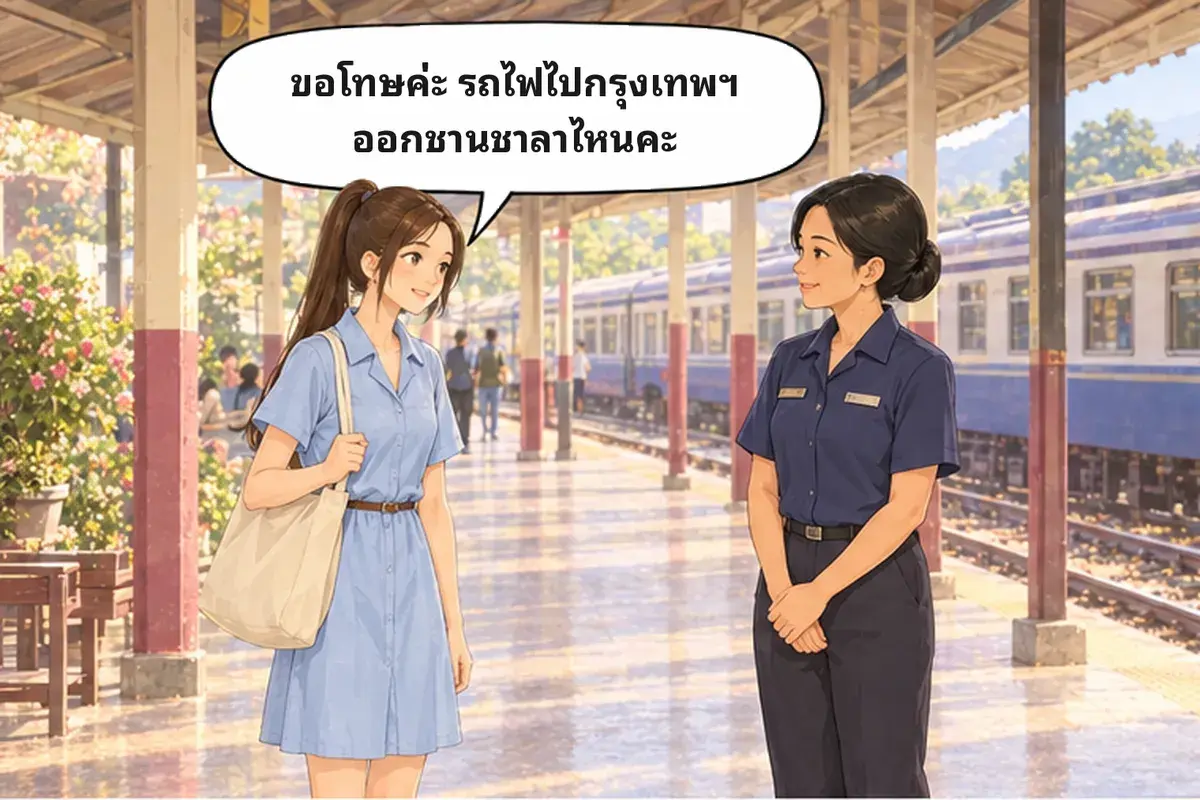
- ยานา
ขอโทษค่ะ รถไฟไปกรุงเทพฯออกชานชาลาไหนคะ
Excuse me. Which platform does the train to Bangkok leave from? (woman speaking)
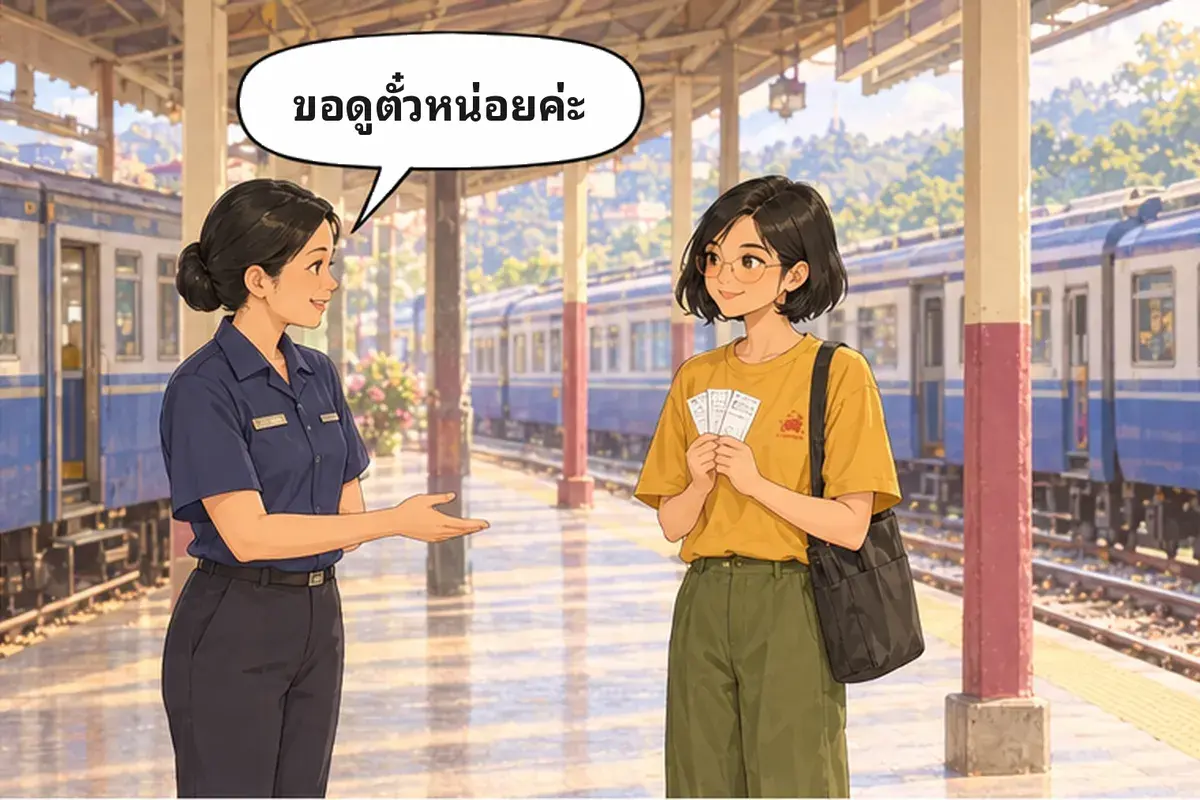
- พนักงาน
ขอดูตั๋วหน่อยค่ะ
Can I see your tickets, please? (woman speaking)

- ปู
นี่ค่ะ สามใบ
Here you go. Three tickets (woman speaking).

- พนักงาน
ชานชาลาสองค่ะ รถไฟมาแล้ว ขึ้นได้เลยค่ะ
Platform two. The train is here, so you can board right away (woman speaking).
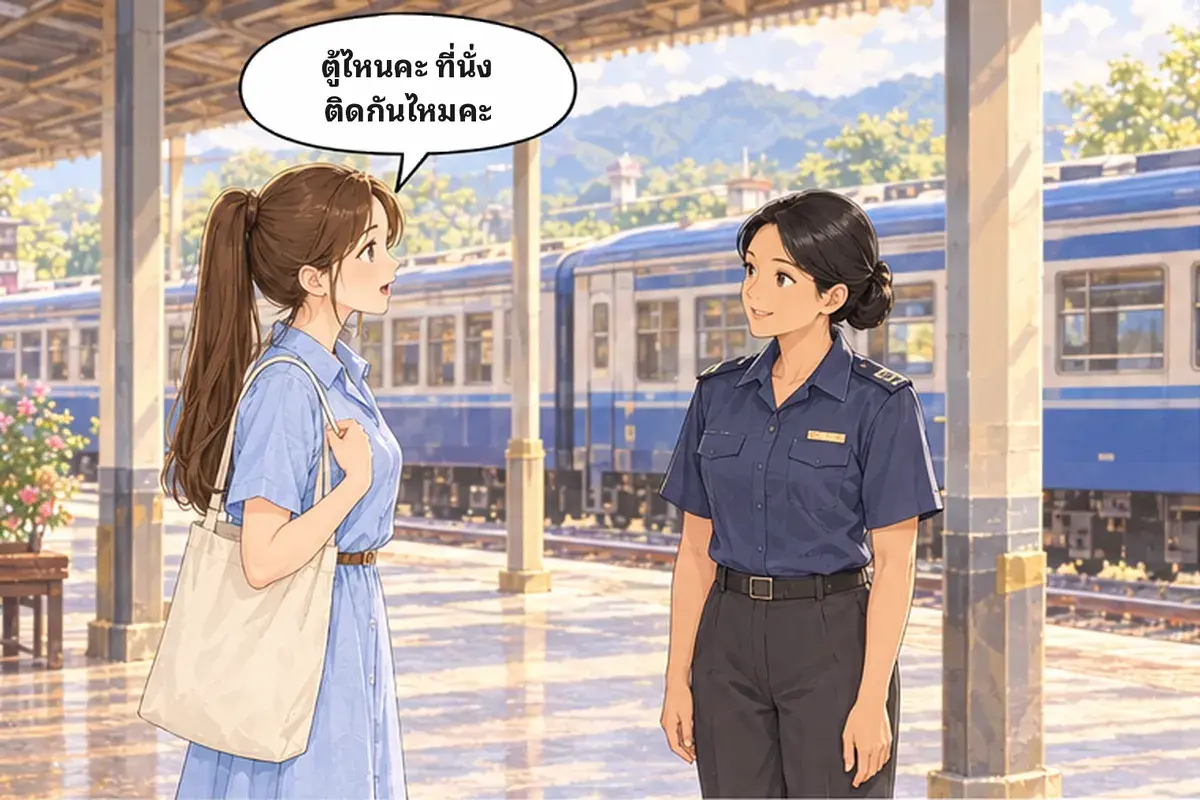
- ยานา
ตู้ไหนคะ ที่นั่งติดกันไหมคะ
Which train car? Are the seats next to each other? (woman speaking)
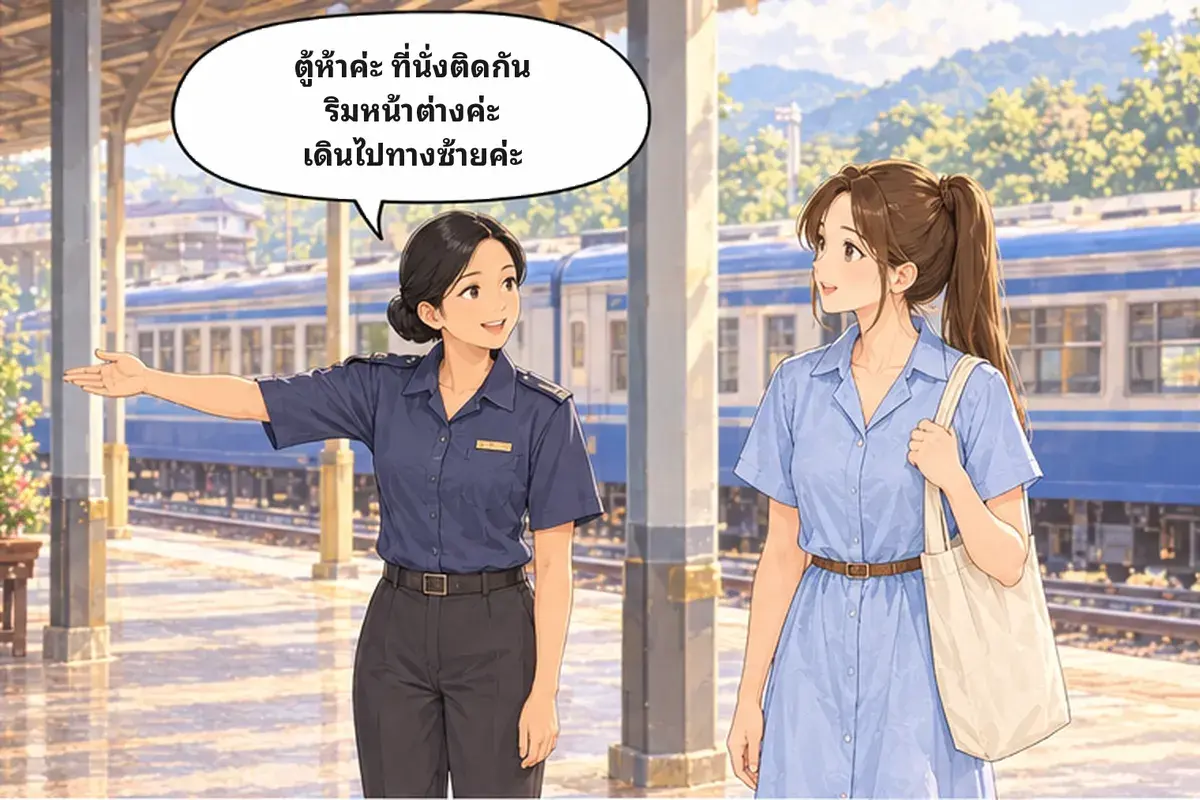
- พนักงาน
ตู้ห้าค่ะ ที่นั่งติดกันริมหน้าต่างค่ะ เดินไปทางซ้ายค่ะ
Train car five. The seats are next to each other, by the window. Walk to the left (woman speaking).

- ลุงชัย
ดีมาลากกระเป๋าเดินทางไปก่อน กระเป๋าหนัก ผมถือไปส่งถึงตู้ครับ
Dima, go ahead and roll the suitcase. The bags are heavy. I'll carry them to the train car (man speaking).
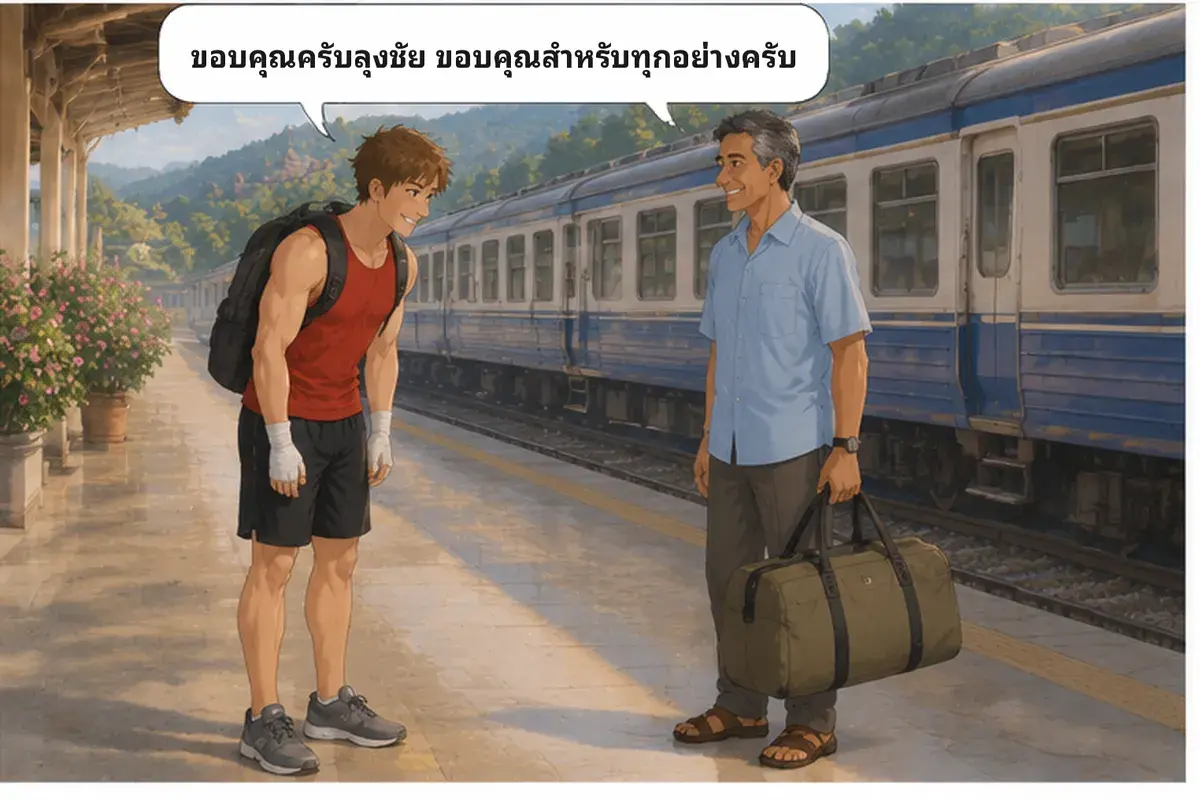
- ดีมา
ขอบคุณครับลุงชัย ขอบคุณสำหรับทุกอย่างครับ
Thank you, Uncle Chai. Thank you for everything (man speaking).
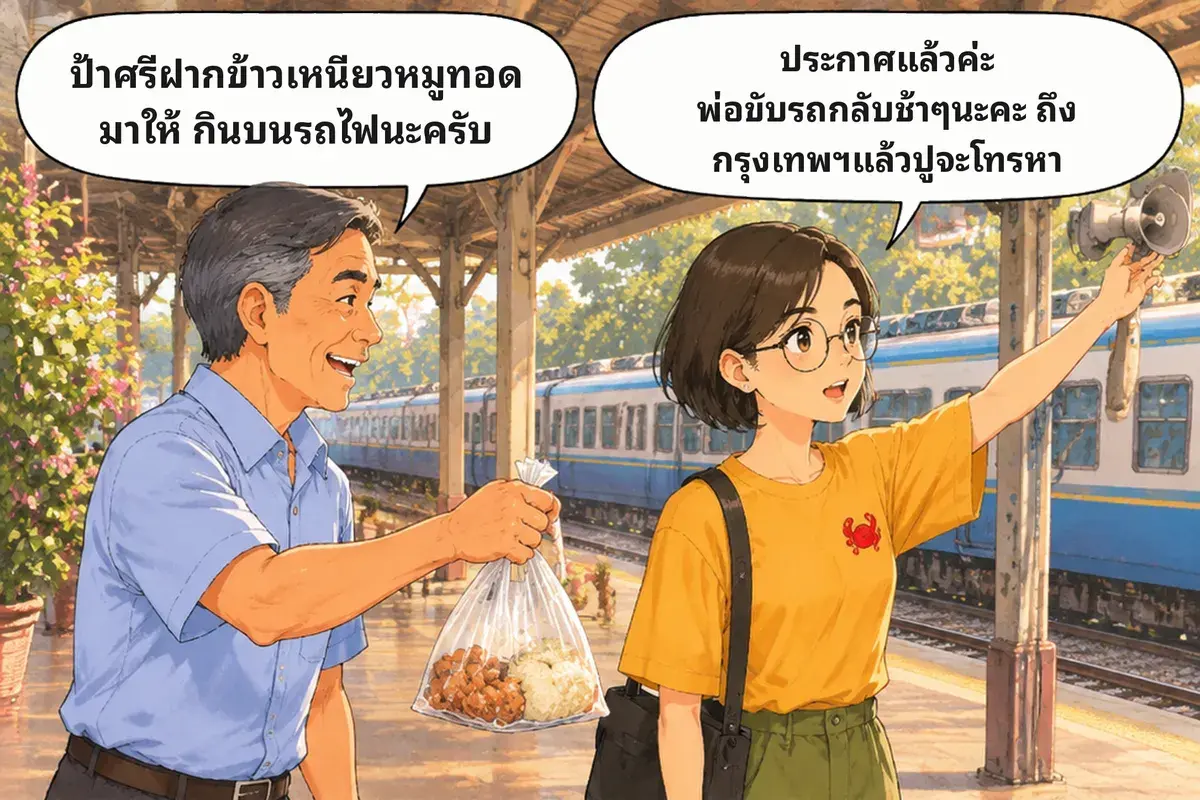
- ลุงชัย
ป้าศรีฝากข้าวเหนียวหมูทอดมาให้ กินบนรถไฟนะครับ
Auntie Sri sent you sticky rice with fried pork. Eat it on the train (man speaking).
- ปู
ประกาศแล้วค่ะ พ่อขับรถกลับช้าๆนะคะ ถึงกรุงเทพฯแล้วปูจะโทรหา
They've made the announcement. Dad, drive back slowly. Once we get to Bangkok, I'll call you (woman speaking).

- ลุงชัย
ได้ ถึงแล้วโทรมานะ ยานาดีมาเดินทางปลอดภัยนะครับ
OK. Call me when you get there. Yana, Dima, have a safe trip (man speaking).

- ยานา
ขอบคุณค่ะลุงชัย แล้วเจอกันนะคะ
Thank you, Uncle Chai. See you later (woman speaking).
Grammar for this text
- ชานชาลาสองค่ะ — "Platform two." You name the platform or the car by its number right after the word: ตู้ห้าค่ะ — "Car five." The car number is printed on the ticket, but it doesn't hurt to ask the staff.
- ที่นั่งติดกันไหมคะ — "Are the seats next to each other?"
ติดกันmeans "side by side." The answer: ที่นั่งติดกันริมหน้าต่างค่ะ — "The seats are together, by the window" (ริมmeans "edge":ริม หน้าต่าง— by the window). - ดีมาลากกระเป๋าเดินทางไปก่อน — "Dima, go ahead and roll the suitcase." A suitcase on wheels is rolled —
ลาก; a bag in your hand is carried —ถือ. - ผมถือไปส่งถึงตู้ครับ — "I'll carry them to your car."
ไปส่งmeans "to see someone off, to take something all the way," andถึงmeans "to, as far as." The older man carries the heavy bags himself, and arguing isn't the custom: it's better to just say thank you. - ขอบคุณสำหรับทุกอย่าง — "Thank you for everything." You say this at the end of a long stay, not for a single favor.
- ป้าศรีฝากข้าวเหนียวหมูทอดมาให้ — "Auntie Sri sent you sticky rice with fried pork."
ฝาก…มาให้means "to send something for someone through another person."ข้าวเหนียวหมูทอดis a cheap meal for the road, sold in the morning near train stations and markets. - ประกาศแล้วค่ะ — "The announcement has been made."
ประกาศmeans "to announce; an announcement." At the station, a few minutes before departure, they announce that the train is leaving. - ถึงกรุงเทพฯแล้วปูจะโทรหา — "Once we get to Bangkok, I'll call you."
ถึง…แล้วmeans "once we've arrived." In her family, Pu refers to herself by name. - ถึงแล้วโทรมานะ — "Call me when you get there." This is how the person seeing you off asks you to let them know you arrived.
Words and grammar of the unit: Say goodbye and promise to come back.
Learn the words from the texts with flashcards
In the app, you can tap any word in a text to see its translation, forms and examples, and new words stick with flashcards. 15 minutes a day.
Start for freeEverything is open for free. No card needed to sign up.