
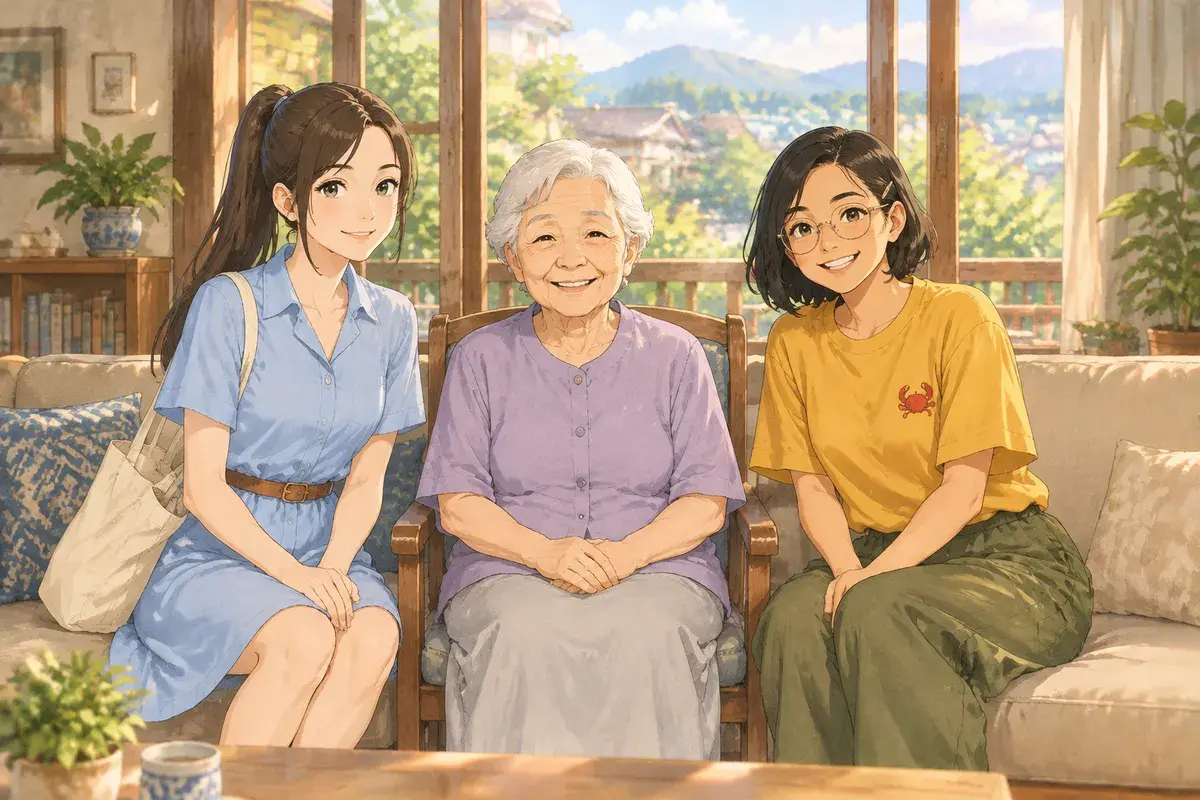
Thai dialogue with translation · A2 · 14 lines
ย่าพูดคำเมืองค่ะ Grandma speaks Kham Mueang
Comic · 14 panels
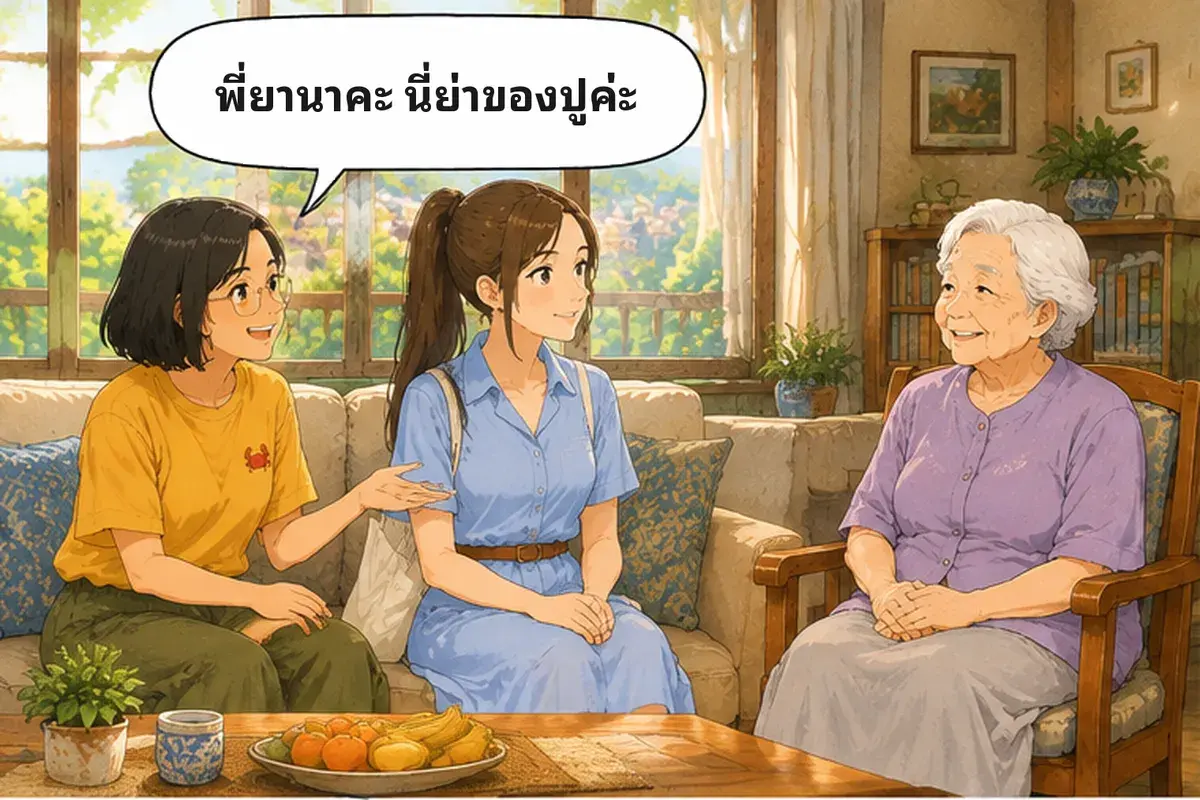
- ปู
พี่ยานาคะ นี่ย่าของปูค่ะ
Yana, this is my grandma (woman speaking).
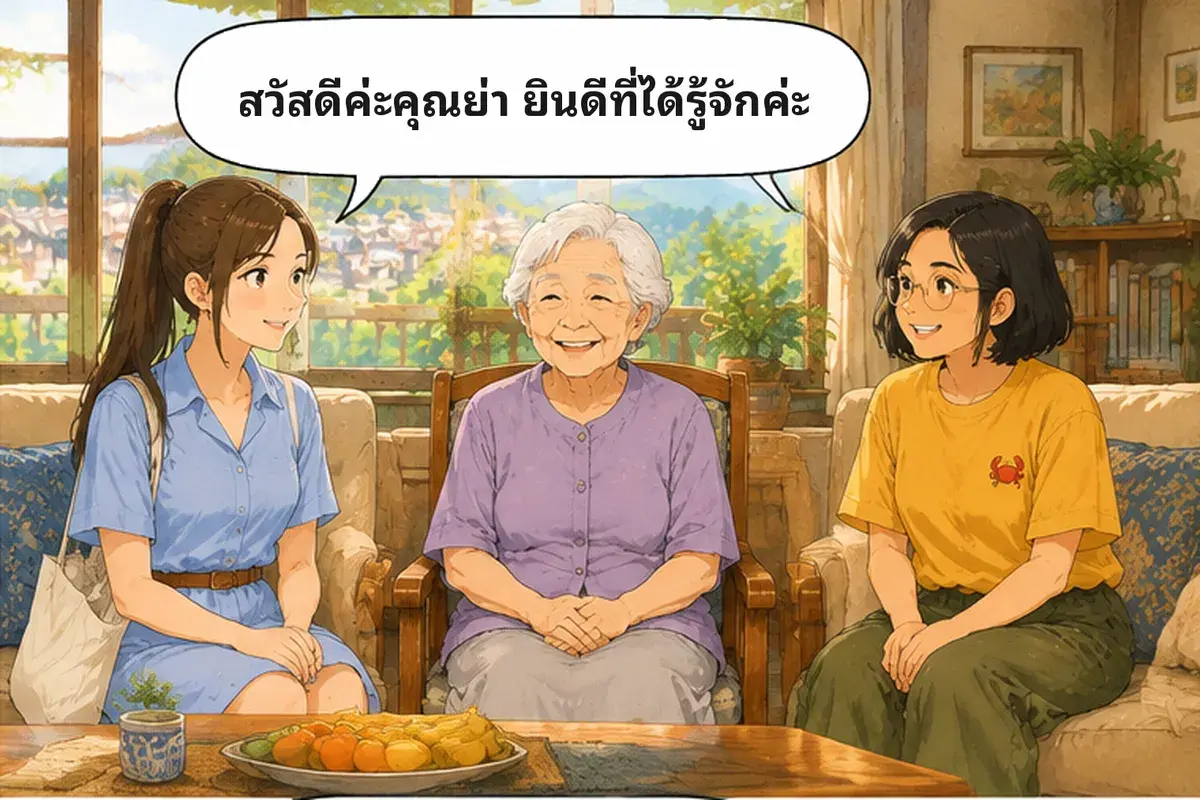
- ยานา
สวัสดีค่ะคุณย่า ยินดีที่ได้รู้จักค่ะ
Hello, Grandmother. Nice to meet you (woman speaking).
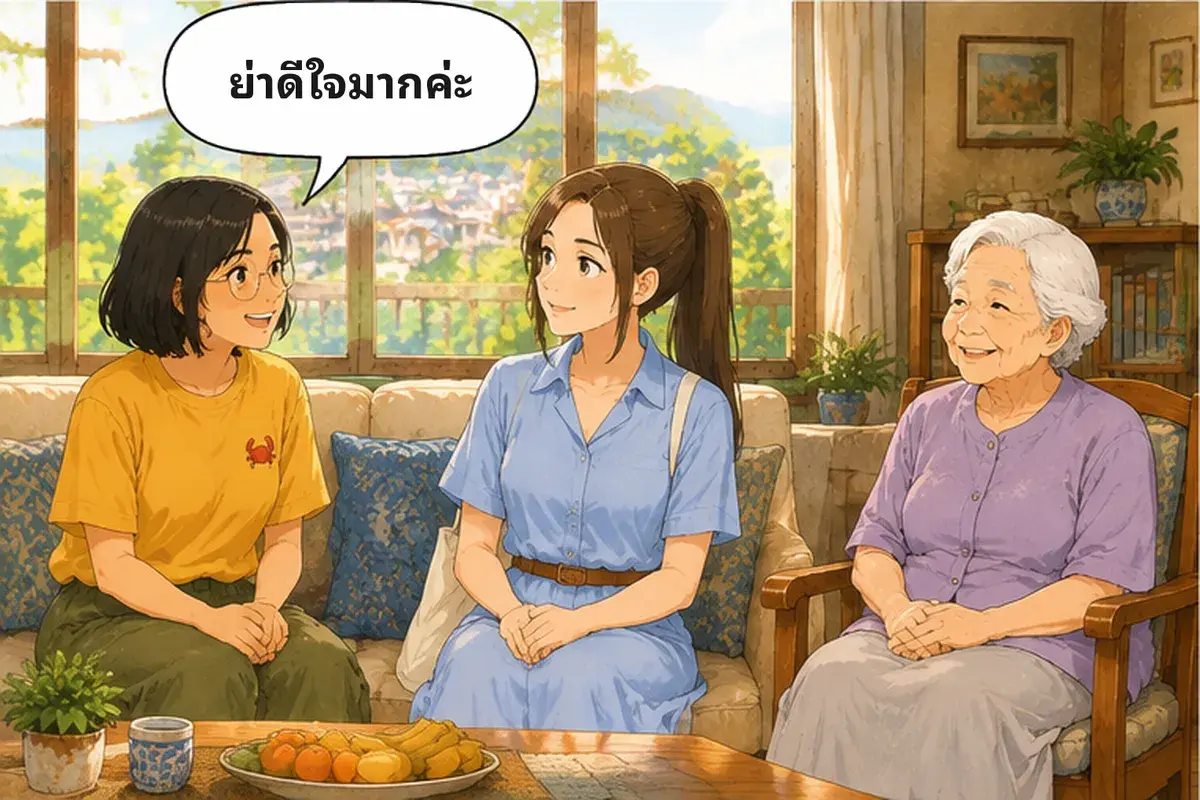
- ปู
ย่าดีใจมากค่ะ
Grandma is very happy (woman speaking).
- ยานา
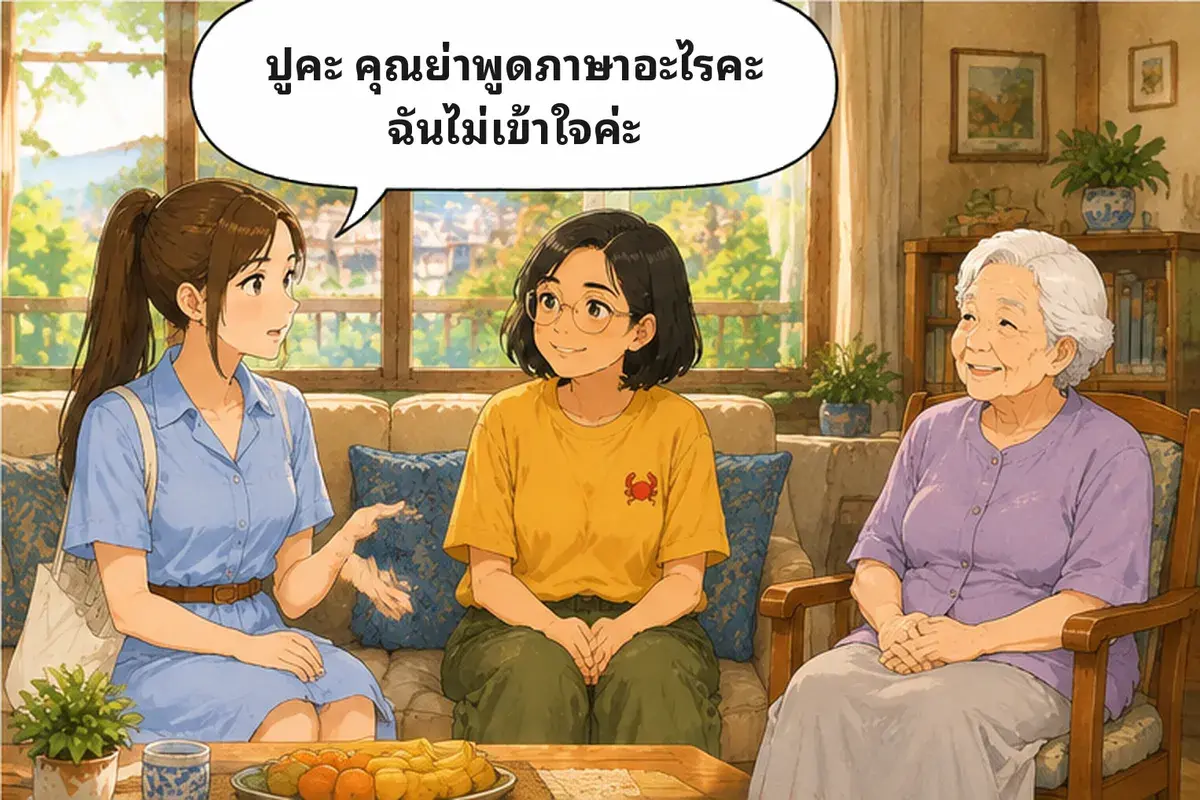
ปูคะ คุณย่าพูดภาษาอะไรคะ ฉันไม่เข้าใจค่ะ
Pu, what language is your grandmother speaking? I don't understand (woman speaking).
- ปู
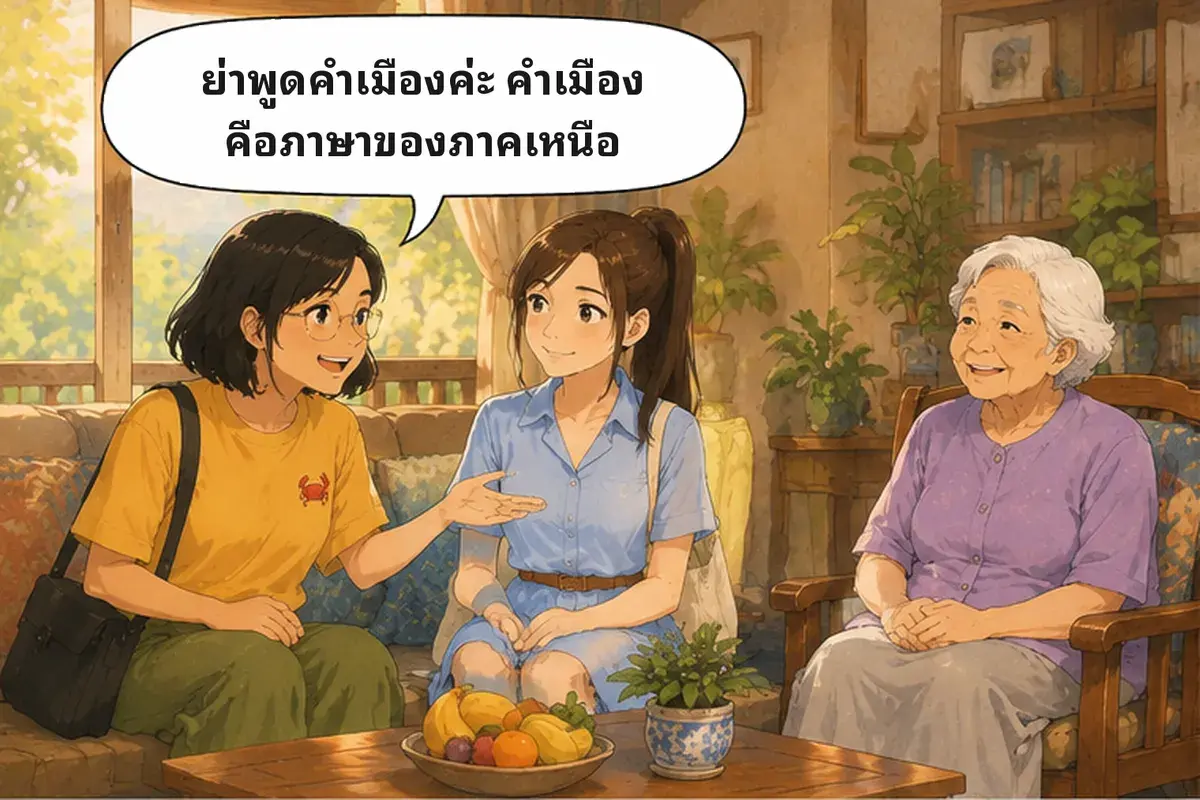
ย่าพูดคำเมืองค่ะ คำเมืองคือภาษาของภาคเหนือ
Grandma speaks Kham Mueang (woman speaking). Kham Mueang is the language of the North.
- ปู
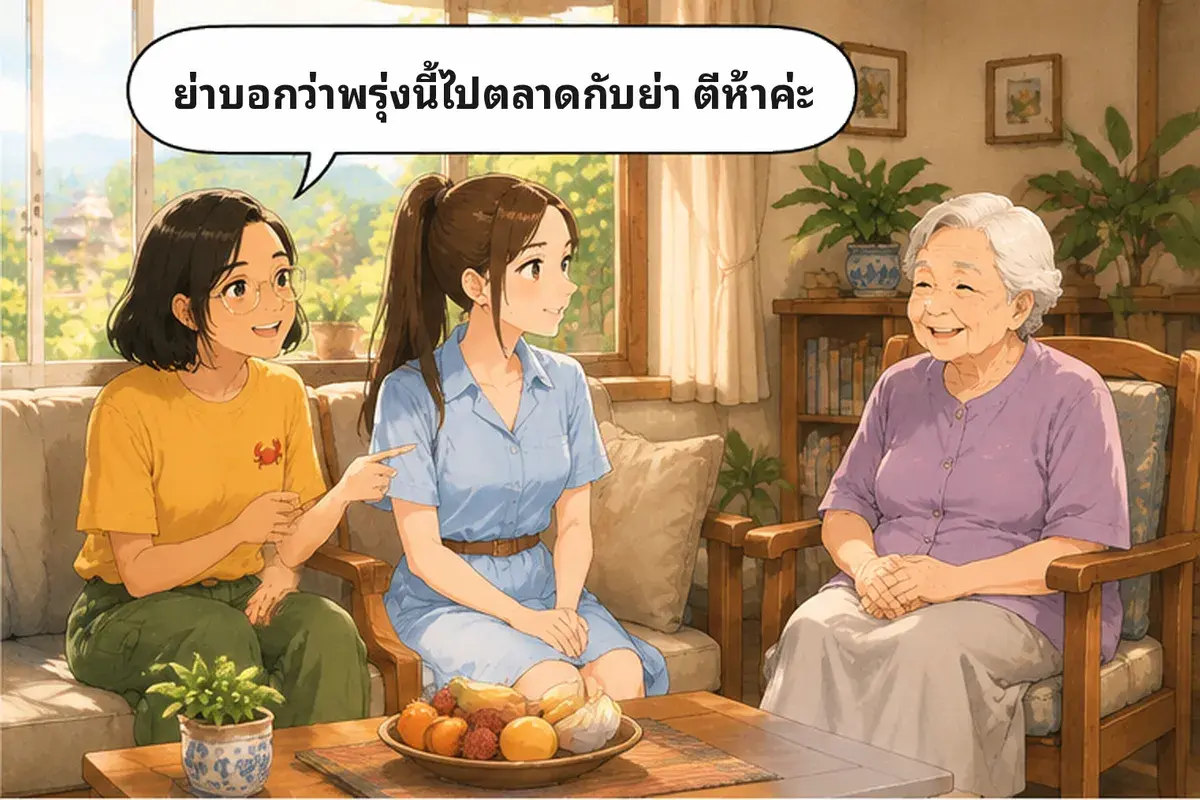
ย่าบอกว่าพรุ่งนี้ไปตลาดกับย่า ตีห้าค่ะ
Grandma says you're going to the market with her tomorrow. At five in the morning (woman speaking).
- ยานา
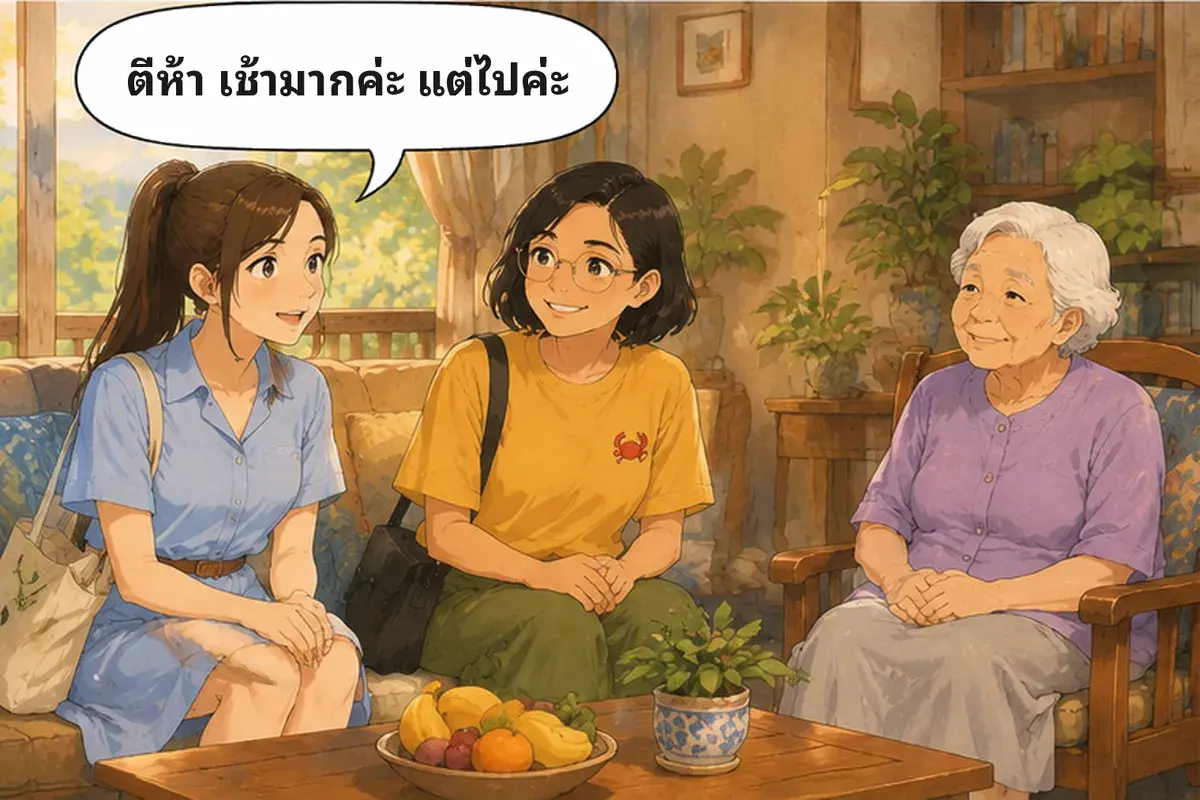
ตีห้า เช้ามากค่ะ แต่ไปค่ะ
Five in the morning? That's very early. But I'll go (woman speaking).
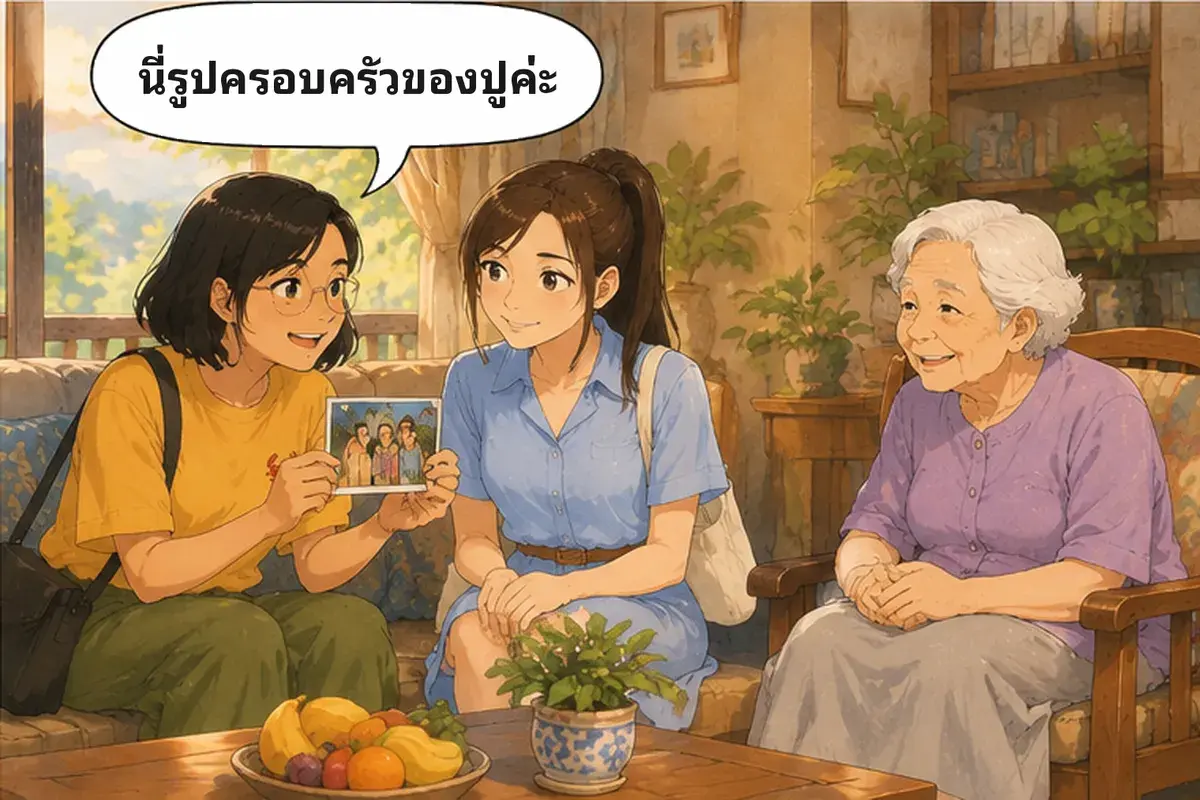
- ปู
นี่รูปครอบครัวของปูค่ะ
This is a photo of my family (woman speaking).
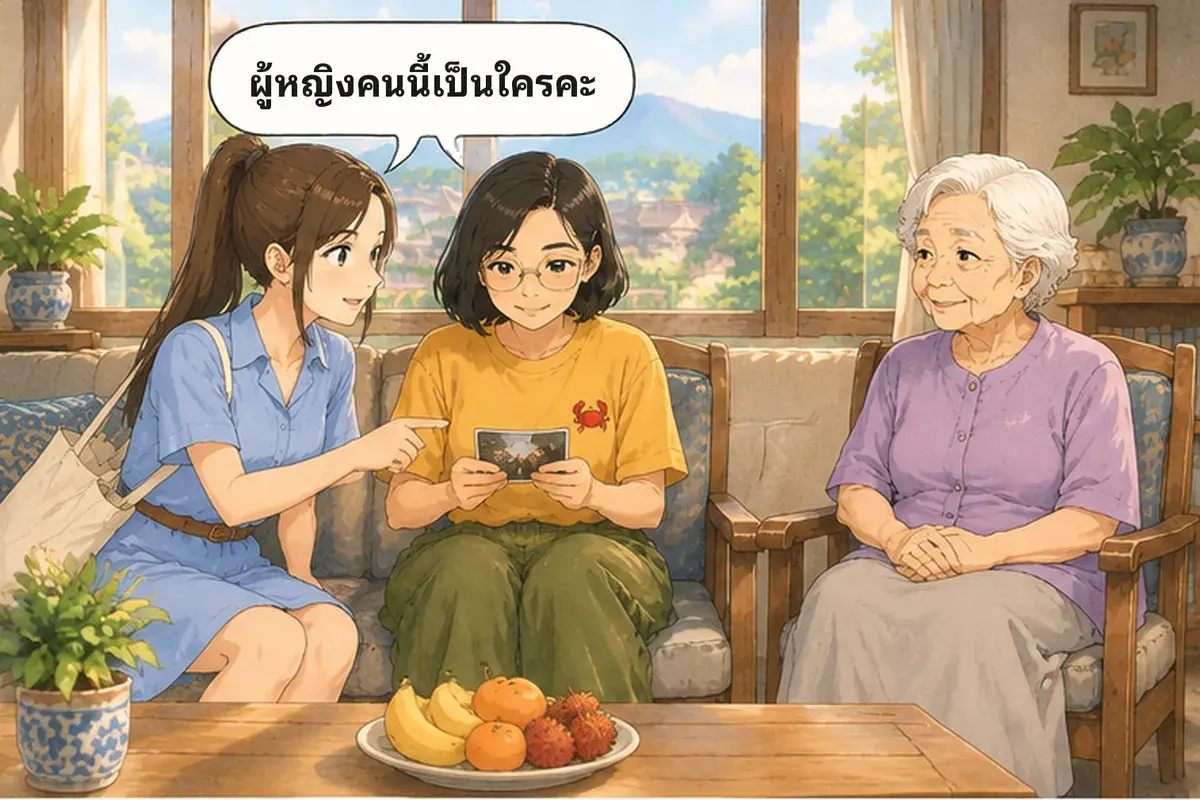
- ยานา
ผู้หญิงคนนี้เป็นใครคะ
Who is this woman? (woman speaking)
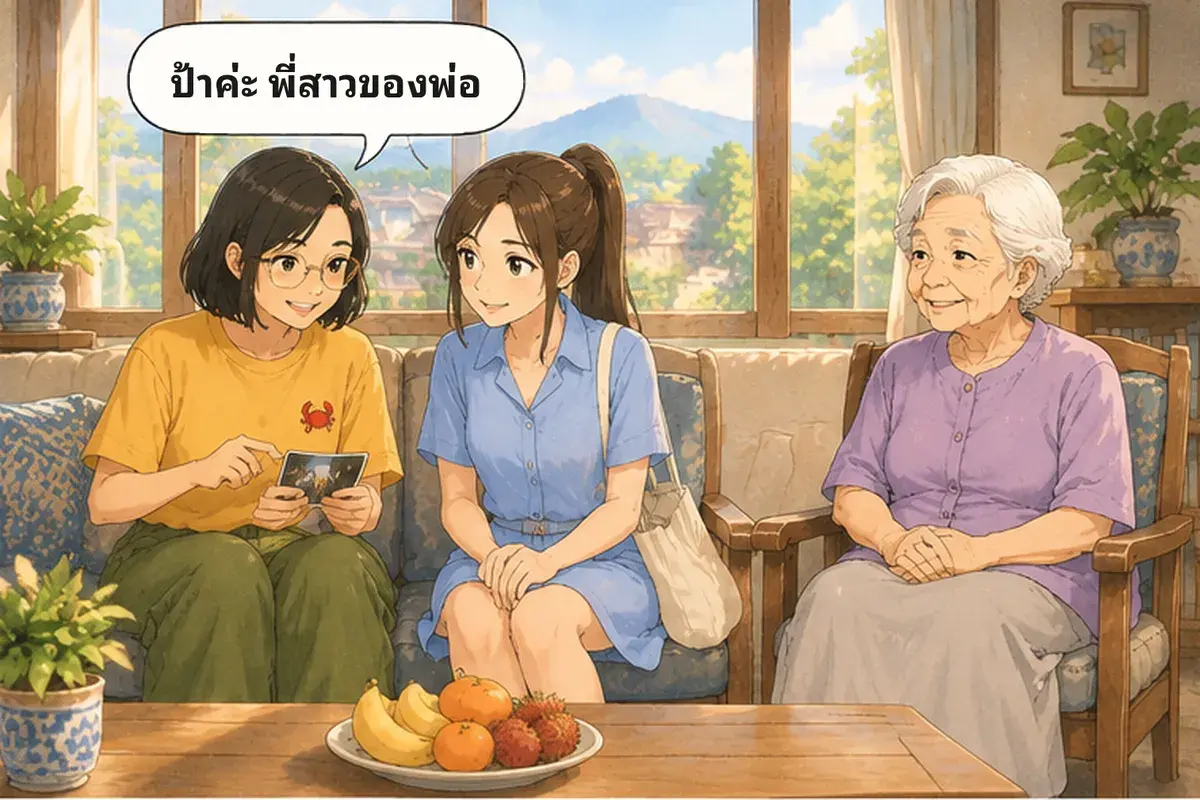
- ปู
ป้าค่ะ พี่สาวของพ่อ
That's my aunt, my dad's older sister (woman speaking).
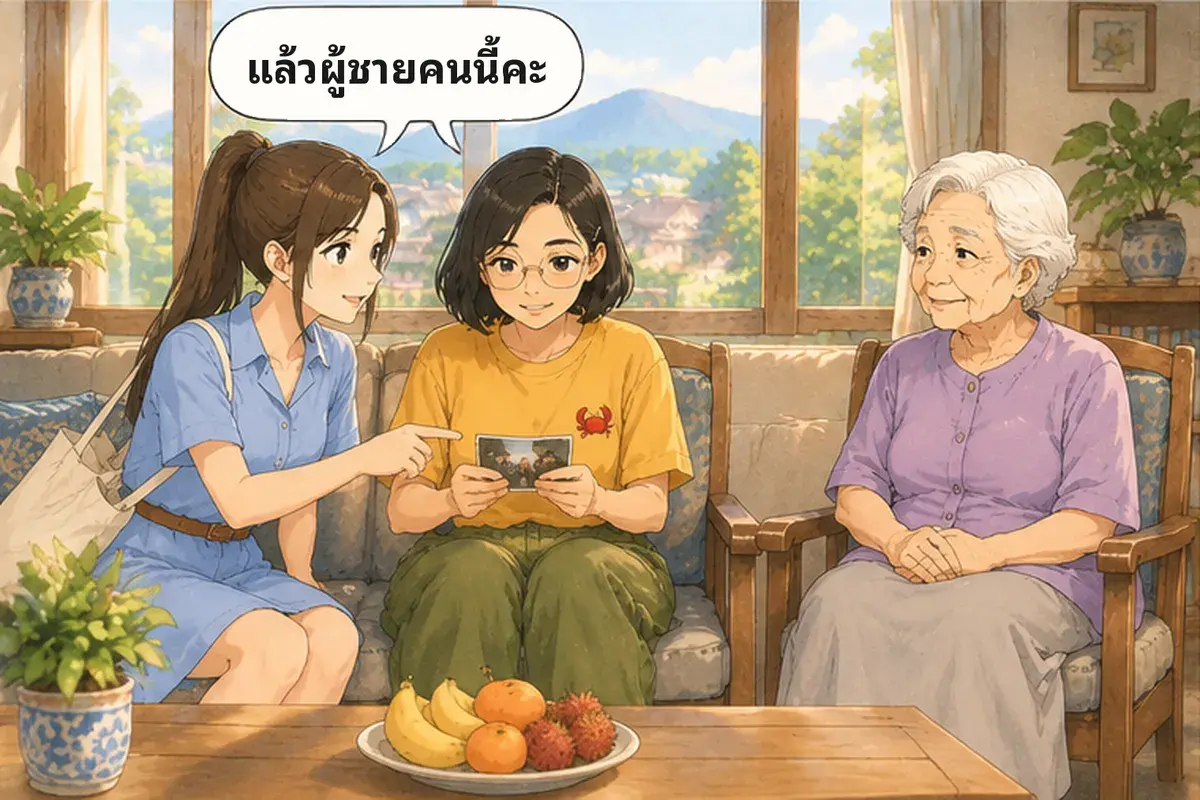
- ยานา
แล้วผู้ชายคนนี้คะ
And this man? (woman speaking)
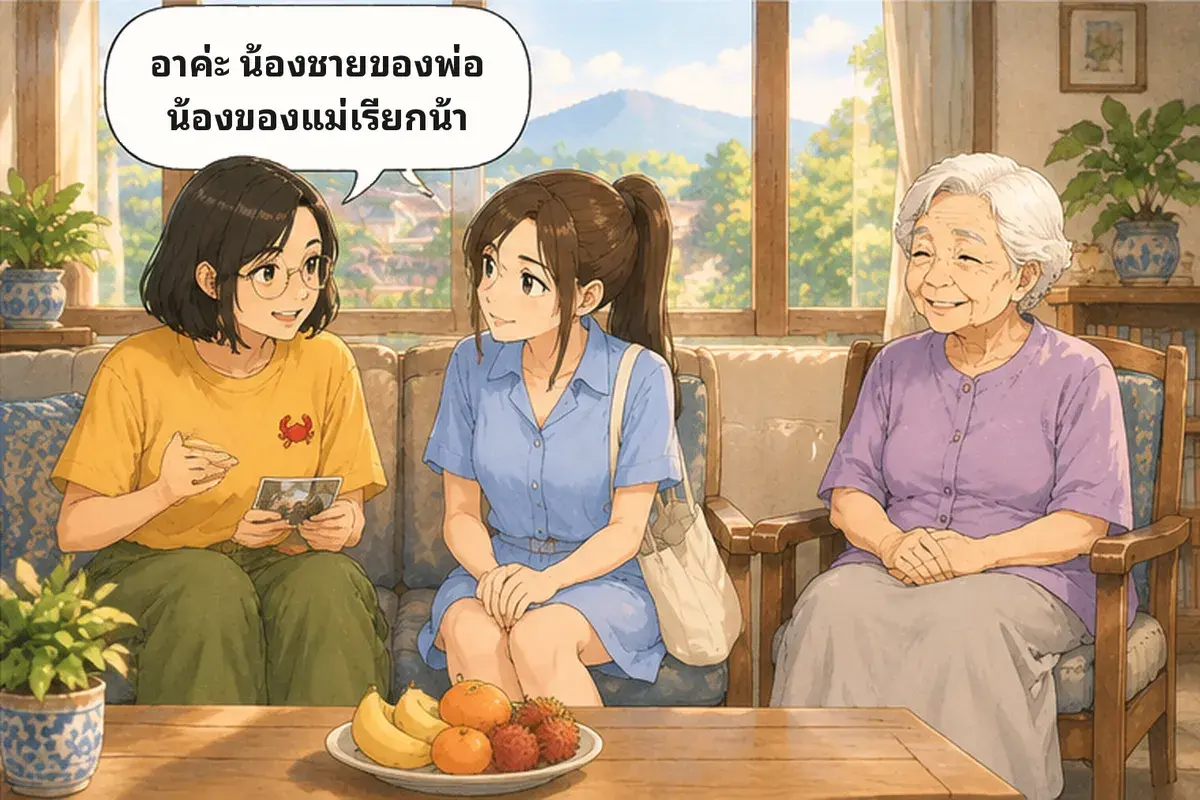
- ปู
อาค่ะ น้องชายของพ่อ น้องของแม่เรียกน้า
That's my uncle, my dad's younger brother (woman speaking). Mom's younger brothers and sisters are called naa.
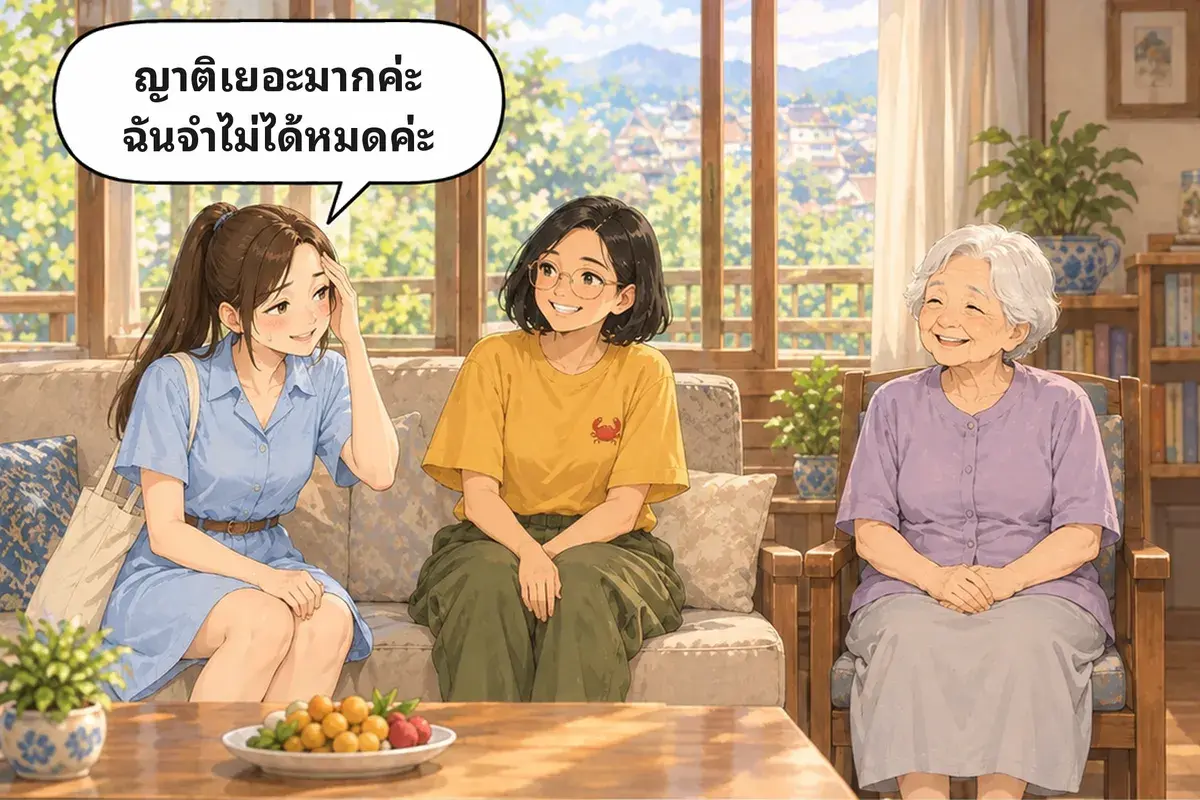
- ยานา
ญาติเยอะมากค่ะ ฉันจำไม่ได้หมดค่ะ
So many relatives! I can't remember them all (woman speaking).
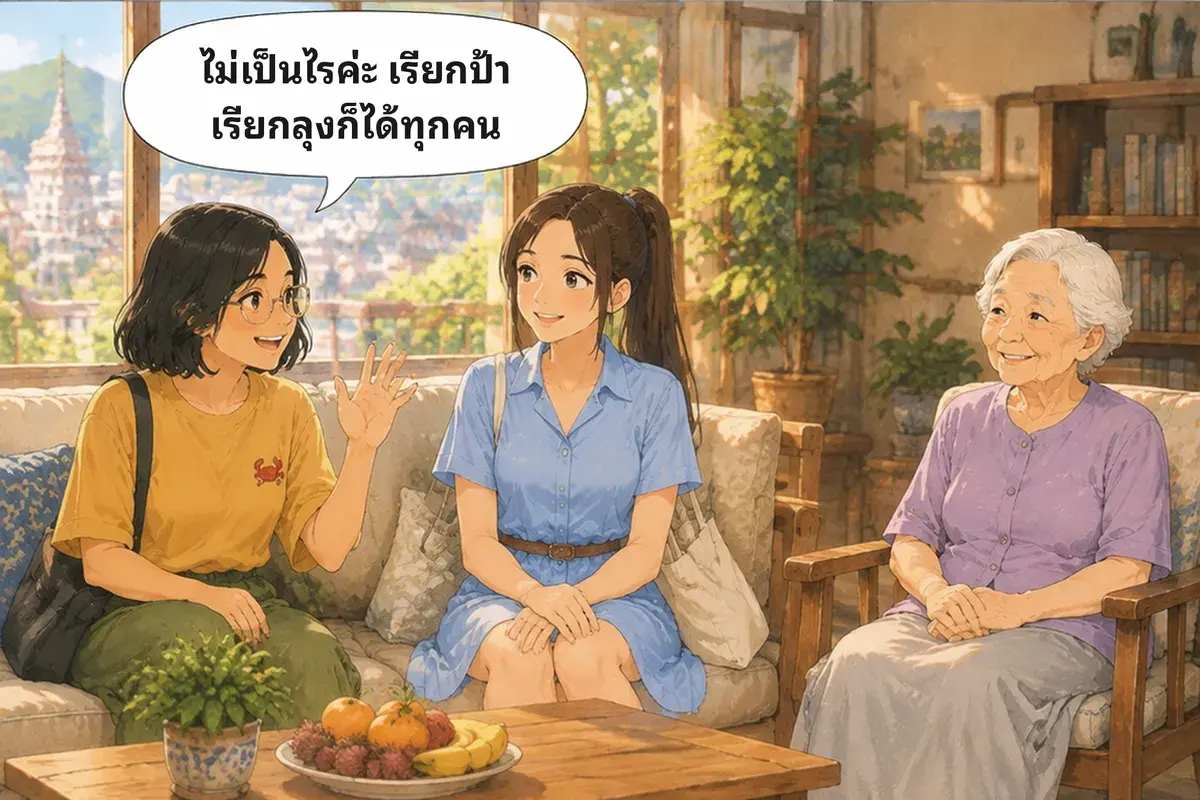
- ปู
ไม่เป็นไรค่ะ เรียกป้าเรียกลุงก็ได้ทุกคน
Never mind. You can call everyone Auntie or Uncle (woman speaking).
Grammar for this text
- นี่ย่าของปูค่ะ — 'this is my grandma'. Pu calls herself by her own name, as people do in the family. ย่า (yâa) is Dad's mom; someone else's grandmother is politely คุณย่า (kun-yâa), as in สวัสดีค่ะคุณย่า.
- ย่าพูดคำเมืองค่ะ — คำเมือง (kam-mʉʉang), literally 'words of the city', is the northern dialect; older people speak it. If you don't understand, just say so: ฉันไม่เข้าใจค่ะ.
- ย่าบอกว่าพรุ่งนี้ไปตลาดกับย่า — บอกว่า (bɔ̀ɔk-wâa) — 'says that…': this is how you pass on someone's words. What was said comes right after it, unchanged.
- พี่สาวของพ่อ — Dad's older sister: she is ป้า. น้องชายของพ่อ — Dad's younger brother: he is อา. น้องของแม่เรียกน้า — Mom's younger brothers and sisters are called น้า. More in the unit grammar.
- เรียกป้าเรียกลุงก็ได้ทุกคน — 'you can call everyone Auntie or Uncle'. This is the way out when you get lost in the family tree: ป้า or ลุง works for any older person.
Words and grammar of the unit: Meet a friend's family.
Learn the words from the texts with flashcards
In the app, you can tap any word in a text to see its translation, forms and examples, and new words stick with flashcards. 15 minutes a day.
Start for freeEverything is open for free. No card needed to sign up.