
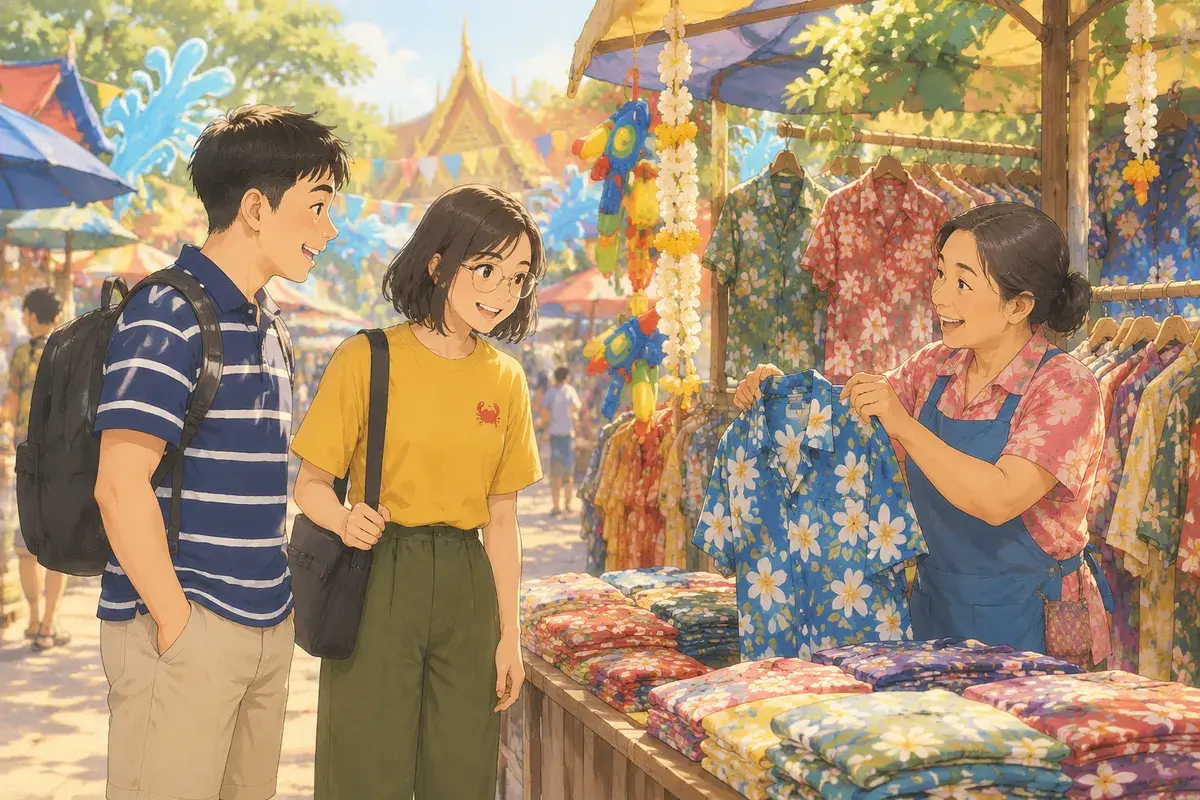
Thai dialogue with translation · A2 · 12 lines
เสือกับเสื้อเสียงไม่เหมือนกัน “Tiger” and “shirt” don't sound the same
Comic · 8 panels
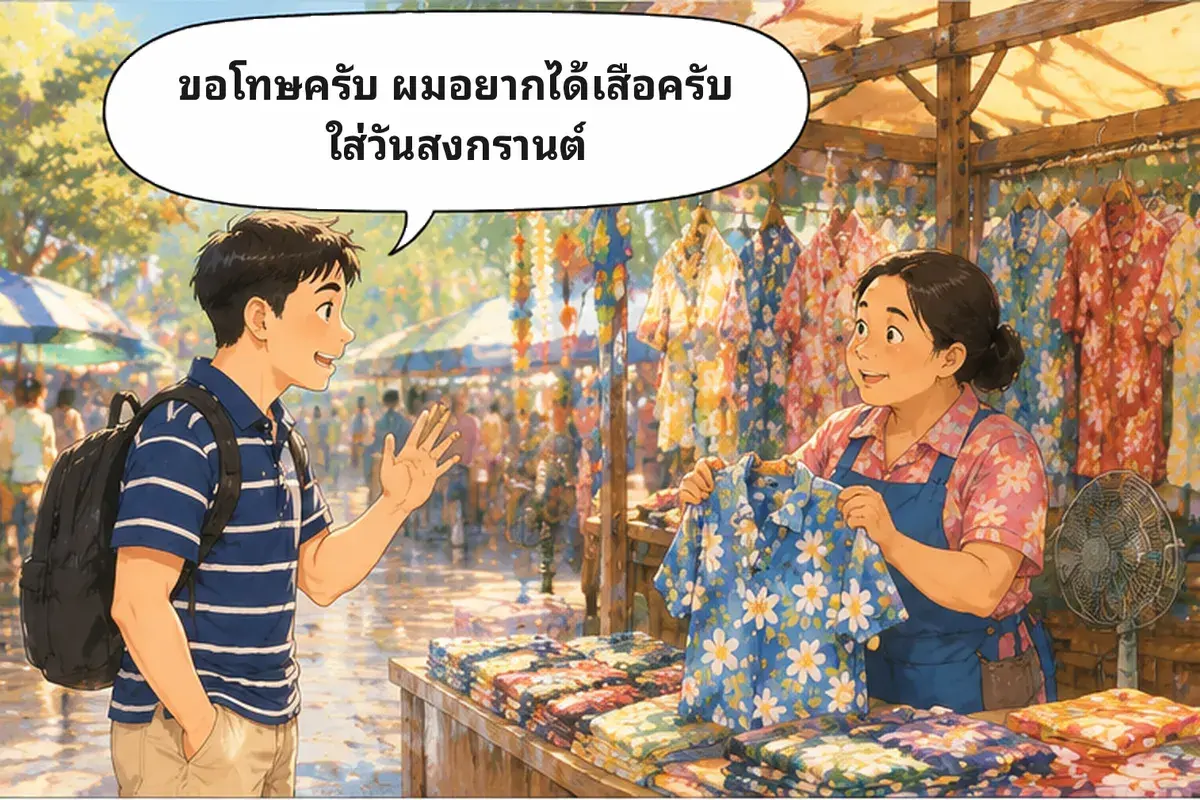
- เคน
ขอโทษครับ ผมอยากได้เสือครับ ใส่วันสงกรานต์
Excuse me, I'd like a tiger to wear on Songkran (man speaking).
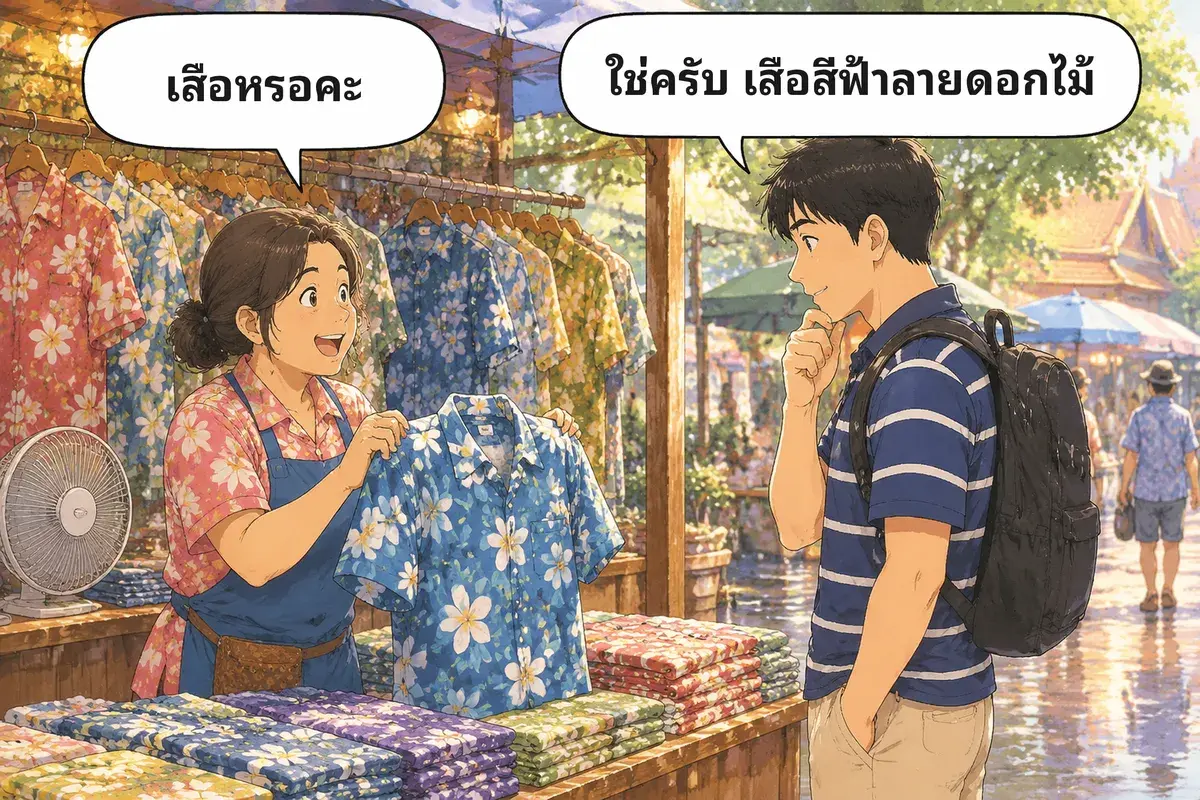
- แม่ค้า
เสือหรอคะ
A tiger? Really? (woman speaking)
- เคน
ใช่ครับ เสือสีฟ้าลายดอกไม้
Yes. A light blue tiger with a flower pattern (man speaking).
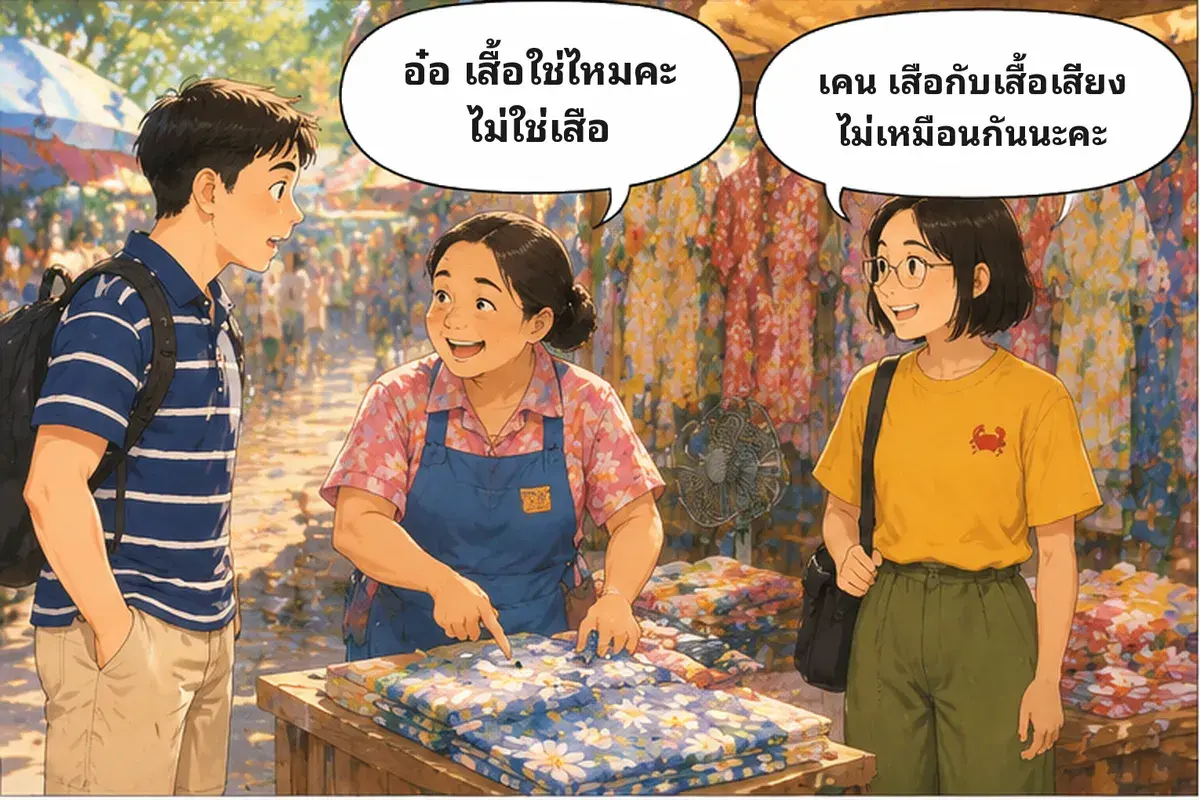
- แม่ค้า
อ๋อ เสื้อใช่ไหมคะ ไม่ใช่เสือ
Oh, I see! A shirt, right? Not a tiger (woman speaking).
- ปู
เคน เสือกับเสื้อเสียงไม่เหมือนกันนะคะ
Ken, “tiger” and “shirt” don't sound the same (woman speaking).
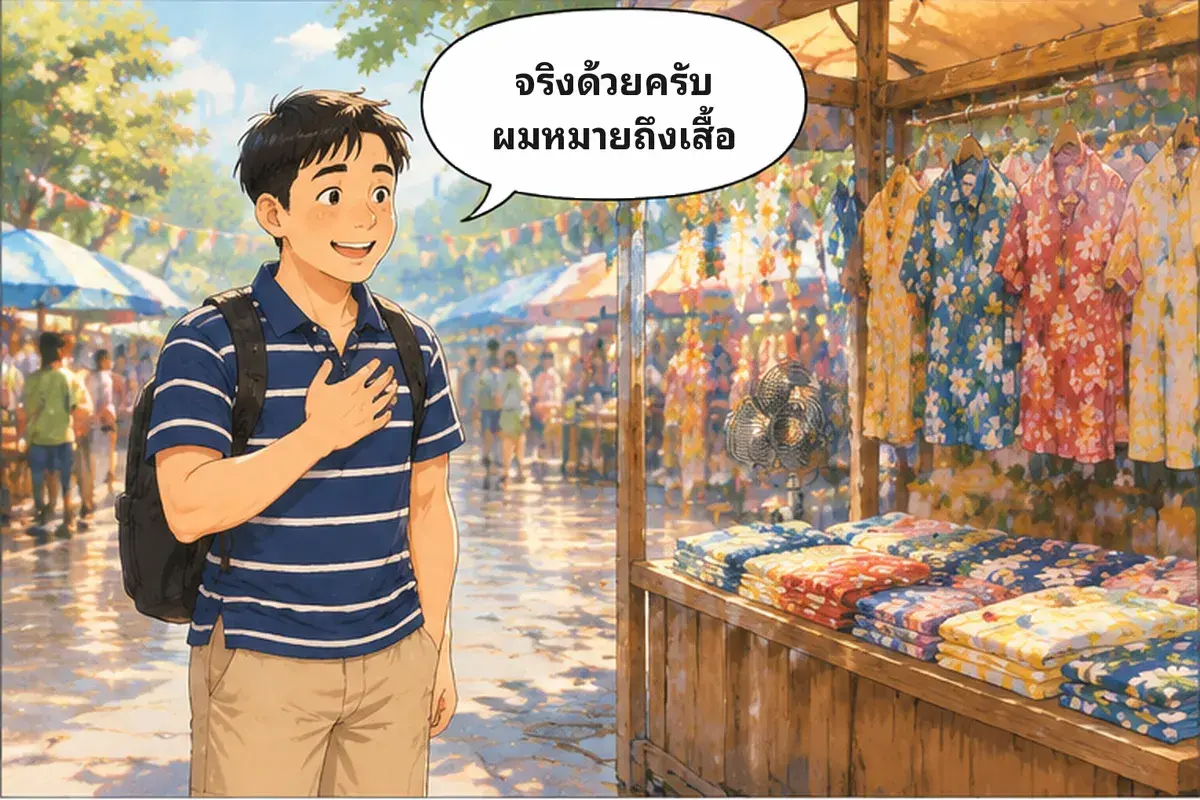
- เคน
จริงด้วยครับ ผมหมายถึงเสื้อ
That's true! I meant a shirt (man speaking).
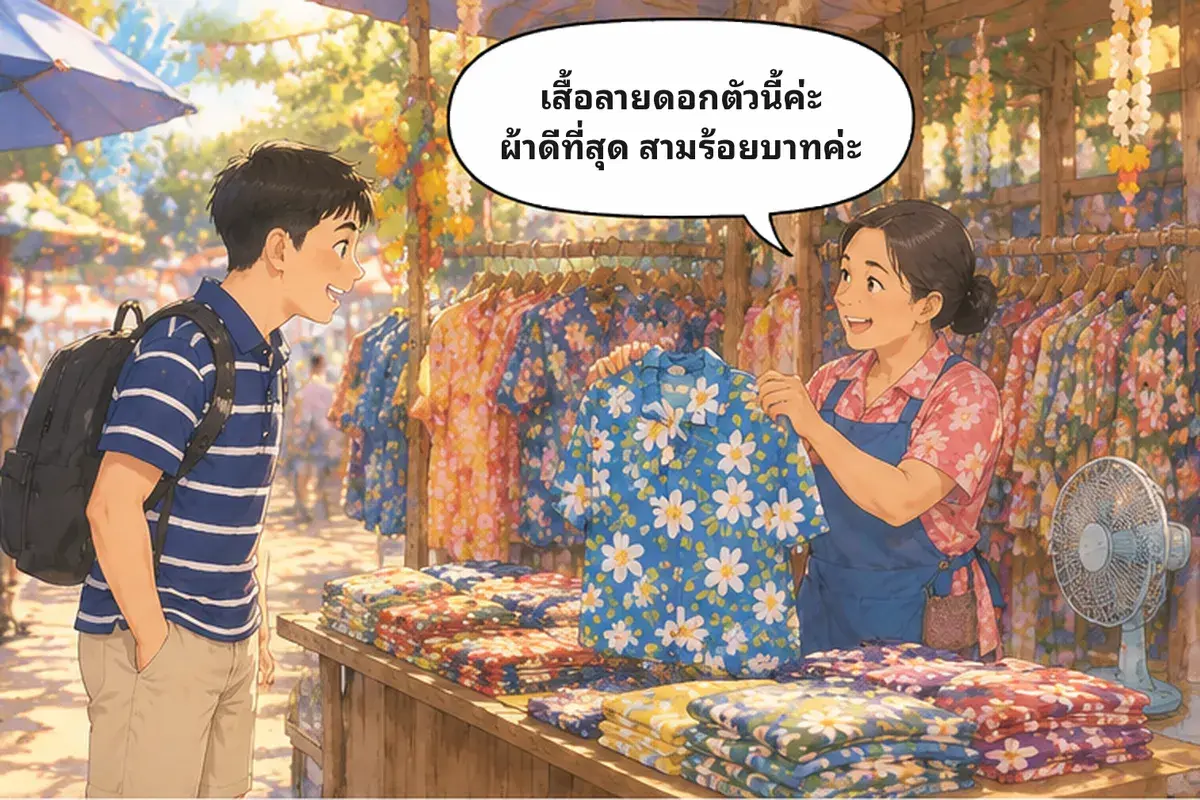
- แม่ค้า
เสื้อลายดอกตัวนี้ค่ะ ผ้าดีที่สุด สามร้อยบาทค่ะ
This flower-print shirt here. The fabric is the best. It's three hundred baht (woman speaking).
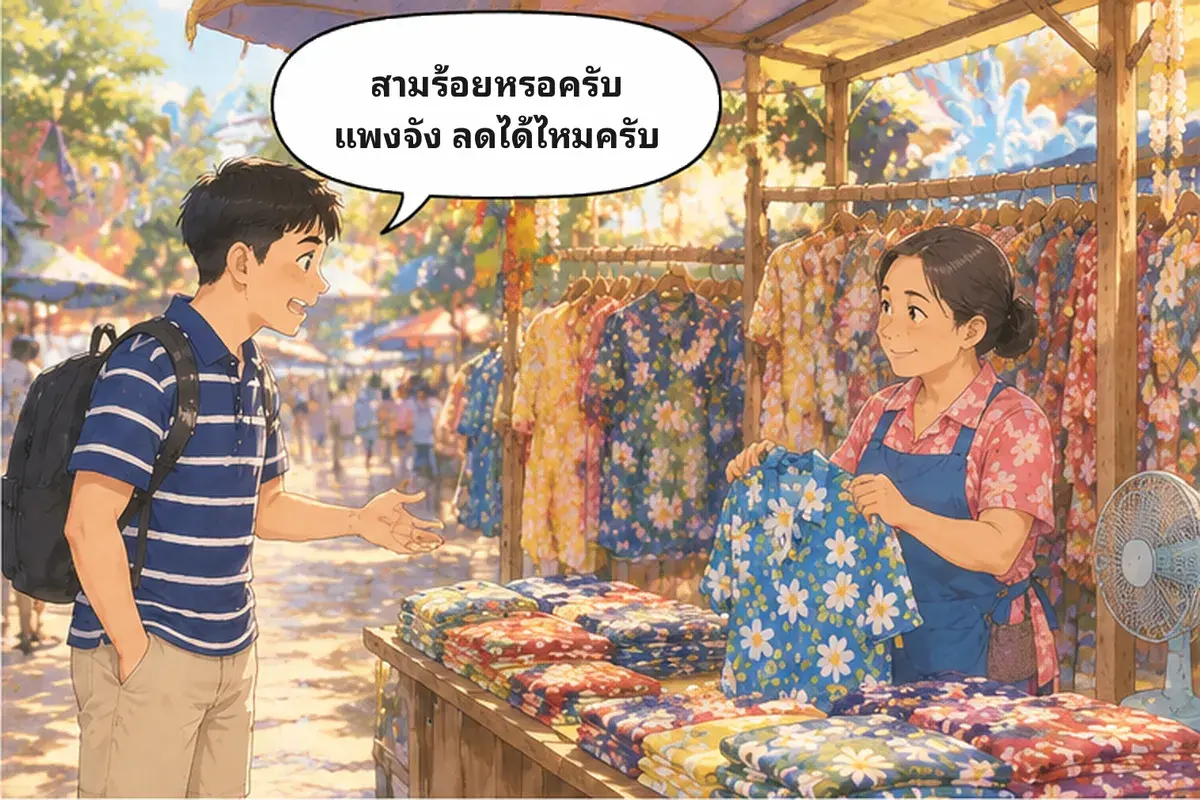
- เคน
สามร้อยหรอครับ แพงจัง ลดได้ไหมครับ
Three hundred? Really? That's so expensive. Can you lower the price? (man speaking)
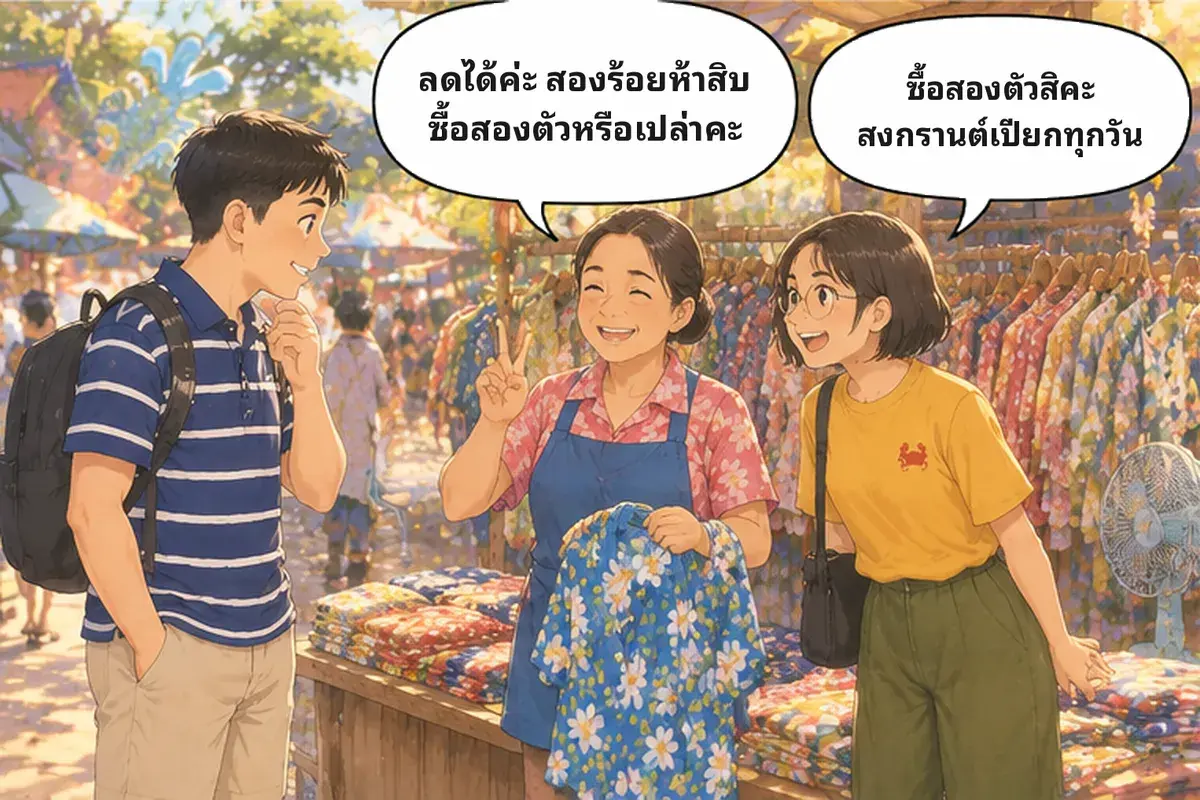
- แม่ค้า
ลดได้ค่ะ สองร้อยห้าสิบ ซื้อสองตัวหรือเปล่าคะ
Yes, I can lower it. Two hundred fifty. Are you buying two or not? (woman speaking)
- ปู
ซื้อสองตัวสิคะ สงกรานต์เปียกทุกวัน
Go on, buy two! At Songkran you get wet every day (woman speaking).
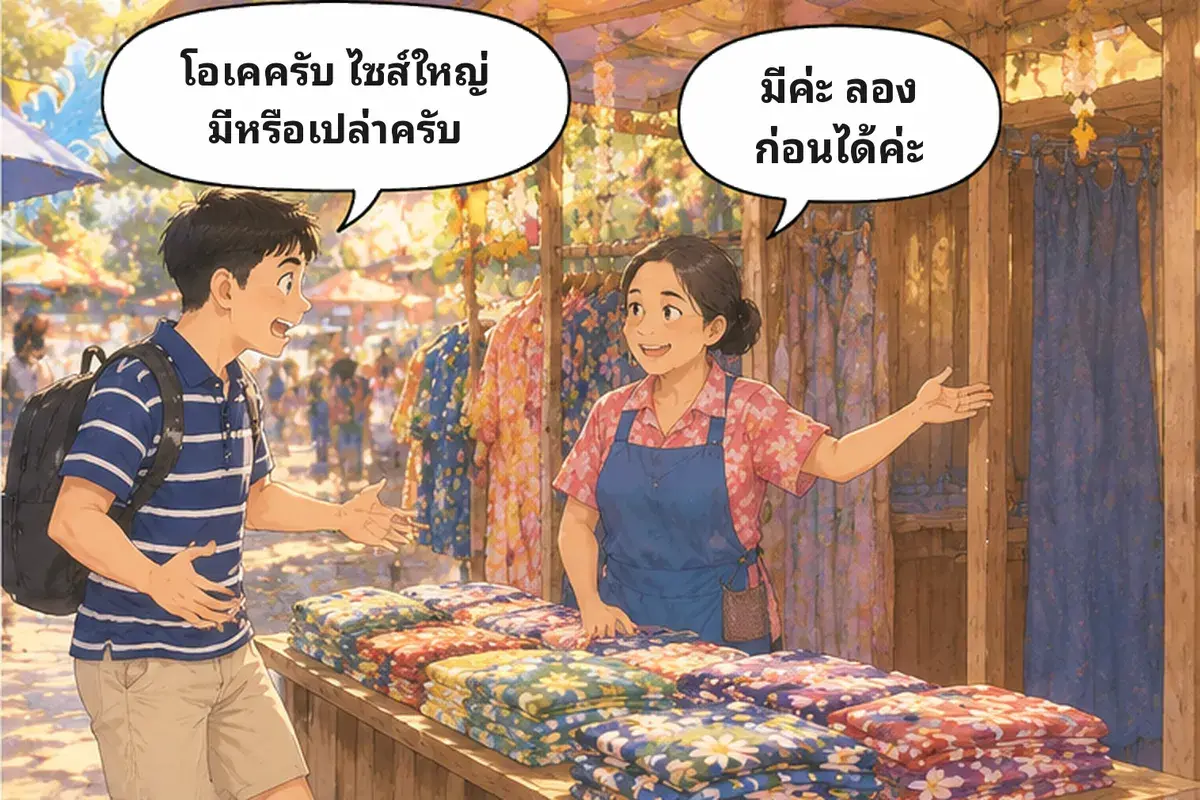
- เคน
โอเคครับ ไซส์ใหญ่มีหรือเปล่าครับ
OK. Do you have a large size or not? (man speaking)
- แม่ค้า
มีค่ะ ลองก่อนได้ค่ะ
Yes, we do. You can try it on first (woman speaking).
Grammar for this text
- อยากได้เสือครับ — Ken said
เสือ(sʉ̌ʉa, rising tone), 'tiger', but meantเสื้อ(sʉ̂ʉa, falling tone), 'shirt'. In writing the difference is one tone mark; by ear, only the tone tells them apart. - เสือหรอคะ — 'a tiger?!'. The seller is surprised:
หรอrepeats what she heard. Then she guesses and checks: เสื้อใช่ไหมคะ — 'a shirt, right?'. - ผมหมายถึงเสื้อ — 'I meant a shirt':
หมายถึงmeans 'to mean'. จริงด้วย — 'that's true!': you say it to admit the other person is right. - เสื้อลายดอก — 'flower-print shirt' (
ลายดอก— 'flower pattern'): people wear these shirts at Songkran. ผ้าดีที่สุด — the topic comes first ('the fabric'), then the sentence about it: 'the fabric is the best'. - ซื้อสองตัวหรือเปล่าคะ — 'are you buying two or not?': sellers usually give a better price for two. The same pattern: ไซส์ใหญ่มีหรือเปล่าครับ — 'do you have a large size?'.
- สงกรานต์เปียกทุกวัน —
เปียกmeans 'wet': at Songkran people splash each other with water, so a spare shirt comes in handy.
Words and grammar of the unit: Check what you heard and show surprise.
Learn the words from the texts with flashcards
In the app, you can tap any word in a text to see its translation, forms and examples, and new words stick with flashcards. 15 minutes a day.
Start for freeEverything is open for free. No card needed to sign up.