

Thai dialogue with translation · A2 · 14 lines
ที่นี่กันเองจ้ะ It's all casual here
Comic · 14 panels

- ดีมา
สวัสดีครับป้าศรี ผมเอาข้าวซอยหนึ่งชามครับ
Hello, Auntie Sri. I'll have one bowl of khao soi (man speaking).
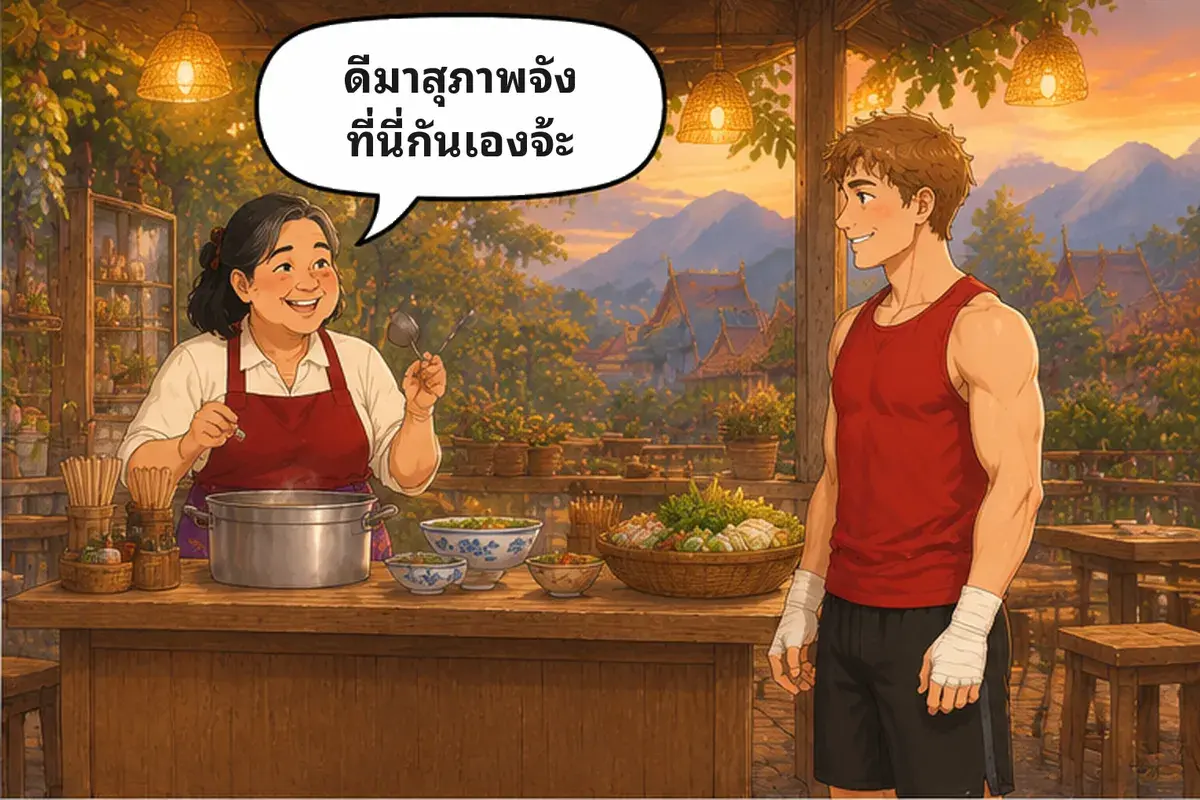
- ป้าศรี
ดีมาสุภาพจัง ที่นี่กันเองจ้ะ
Dima, you're so polite! It's all casual here.
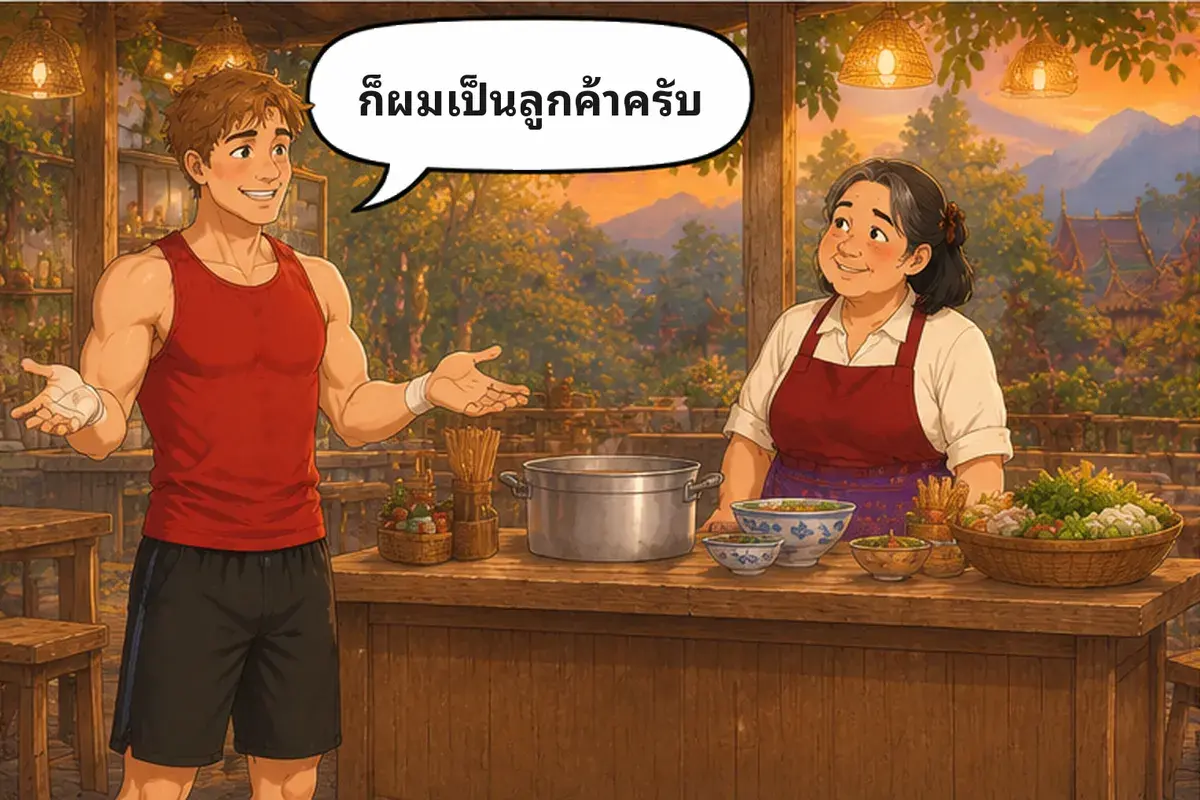
- ดีมา
ก็ผมเป็นลูกค้าครับ
But I'm a customer (man speaking).

- ป้าศรี
งั้นลูกค้าเอาเนื้อหรือไก่ล่ะจ้ะ
Well then, will the customer have beef or chicken?

- ดีมา
เนื้อครับ แล้วขอบะหมี่เพิ่มด้วยครับ
Beef. And extra egg noodles too, please (man speaking).

- ป้าศรี
ได้จ้ะ ป้าตักเอง
Sure. I'll dish it up myself.

- ดีมา
ขอบคุณครับ หอมจังครับ
Thank you. It smells so good (man speaking).

- ป้าศรี
กินสิ ข้าวซอยยังร้อนอยู่นะ
Go on, eat! The khao soi is still hot.

- ดีมา
อร่อยมากเลยครับ ผมถูกใจร้านป้าแล้วครับ ร้านมีอะไรอีกบ้างครับ
It's really delicious! I already really like your stall. What else does your stall have? (man speaking)
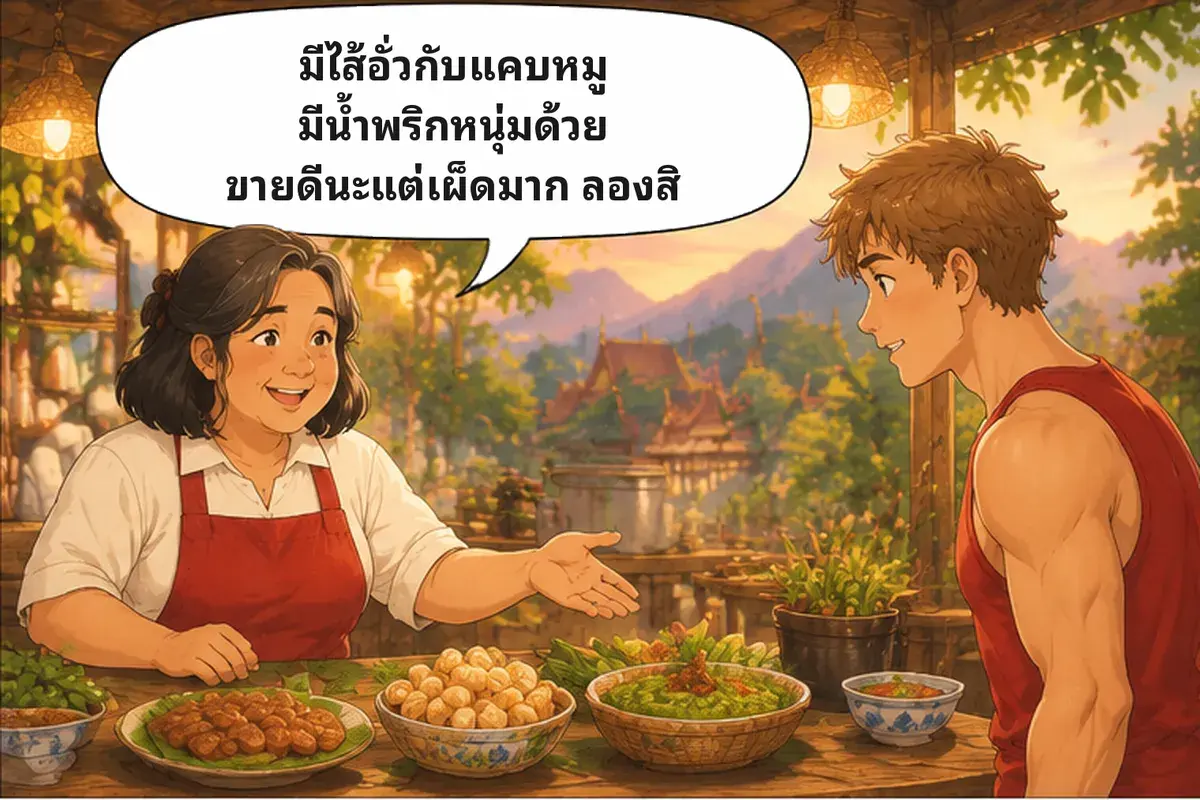
- ป้าศรี
มีไส้อั่วกับแคบหมู มีน้ำพริกหนุ่มด้วย ขายดีนะแต่เผ็ดมาก ลองสิ
There's sai ua and pork rinds. There's also nam prik num. It sells well, but it's very spicy. Go on, try it.

- ดีมา
ผมลองแล้วครับ ไม่เผ็ดเลย ขอน้ำสองแก้วด้วยครับ
I've tried it. It's not spicy at all. Two glasses of water too, please (man speaking).

- ป้าศรี
ไม่เผ็ดเลย แล้วขอน้ำทำไมล่ะจ้ะ
Not spicy at all? Then why are you asking for water?

- ดีมา
ก็อากาศร้อนครับ ทั้งหมดเท่าไหร่ครับ
Well, the weather's hot. How much is it altogether? (man speaking)
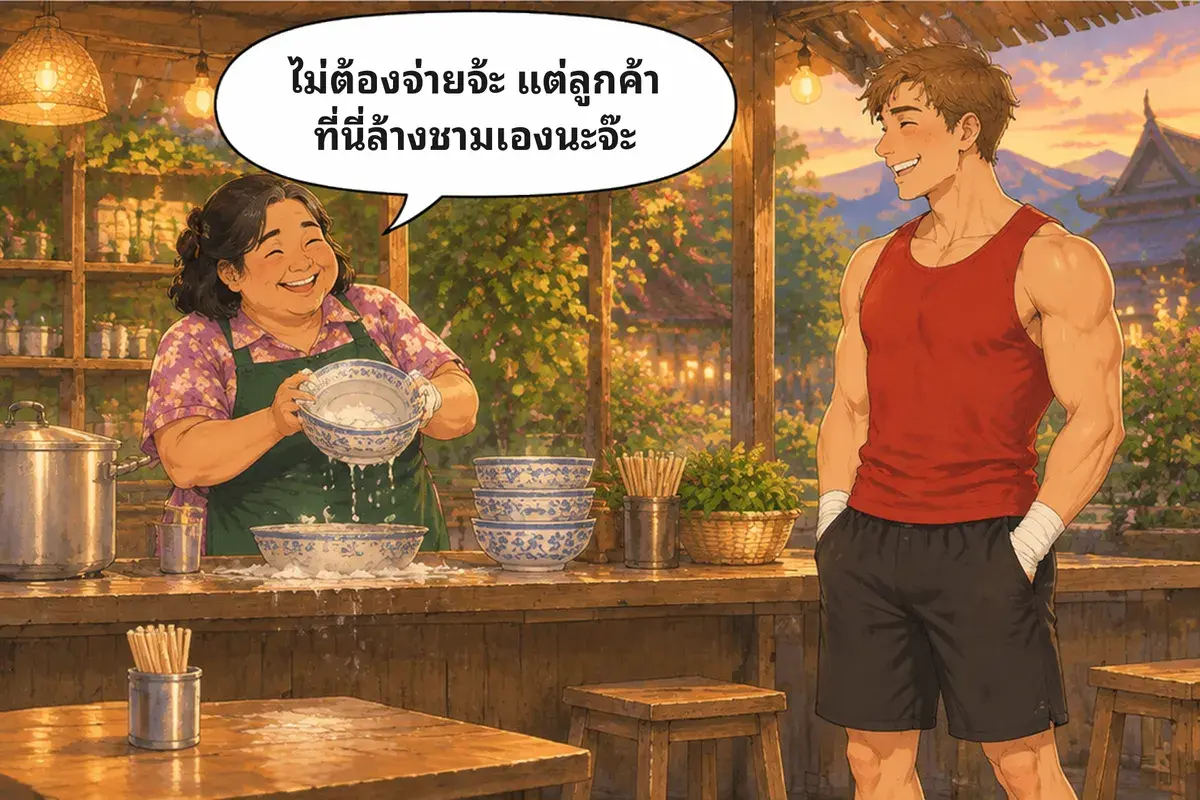
- ป้าศรี
ไม่ต้องจ่ายจ้ะ แต่ลูกค้าที่นี่ล้างชามเองนะจ๊ะ
You don't have to pay. But customers here wash their own bowls, OK?
Grammar for this text
- ที่นี่กันเองจ้ะ — It's all casual here.
กันเอง(gan-eeng) means "casual, informal, as among family": a host says it to put a guest who is too polite at ease. - งั้นลูกค้าเอาเนื้อหรือไก่ล่ะจ้ะ — Well then, will the customer have beef or chicken?
งั้น(ngán) is a spoken "then, in that case"; plainเนื้อ(nʉ́ʉa) means beef.ล่ะat the end of a question means "so…?": the talk goes on, and the question sounds lively. - ขอบะหมี่เพิ่มด้วยครับ — And extra egg noodles too, please (man speaking). ขอ… เพิ่ม asks for more of something, and
ด้วยat the end means "and also…, please". - กินสิ — Go on, eat!
สิgives a gentle push: hosts and older people say it when they offer food, and it sounds warm, not rude. To a stranger you addครับorคะafterสิ. - ไม่เผ็ดเลย — Not spicy at all:
เลยafterไม่means "not at all". Dima is showing off, but then he asks for water, and Auntie Sri catches him: แล้วขอน้ำทำไมล่ะจ้ะ — Then why are you asking for water?
Words and grammar of the unit: Order northern Thai food.
Learn the words from the texts with flashcards
In the app, you can tap any word in a text to see its translation, forms and examples, and new words stick with flashcards. 15 minutes a day.
Start for freeEverything is open for free. No card needed to sign up.