

Thai dialogue with translation · A2 · 14 lines
ทุกคนมีหน้าที่จ้ะ Everyone has a job
Comic · 11 panels
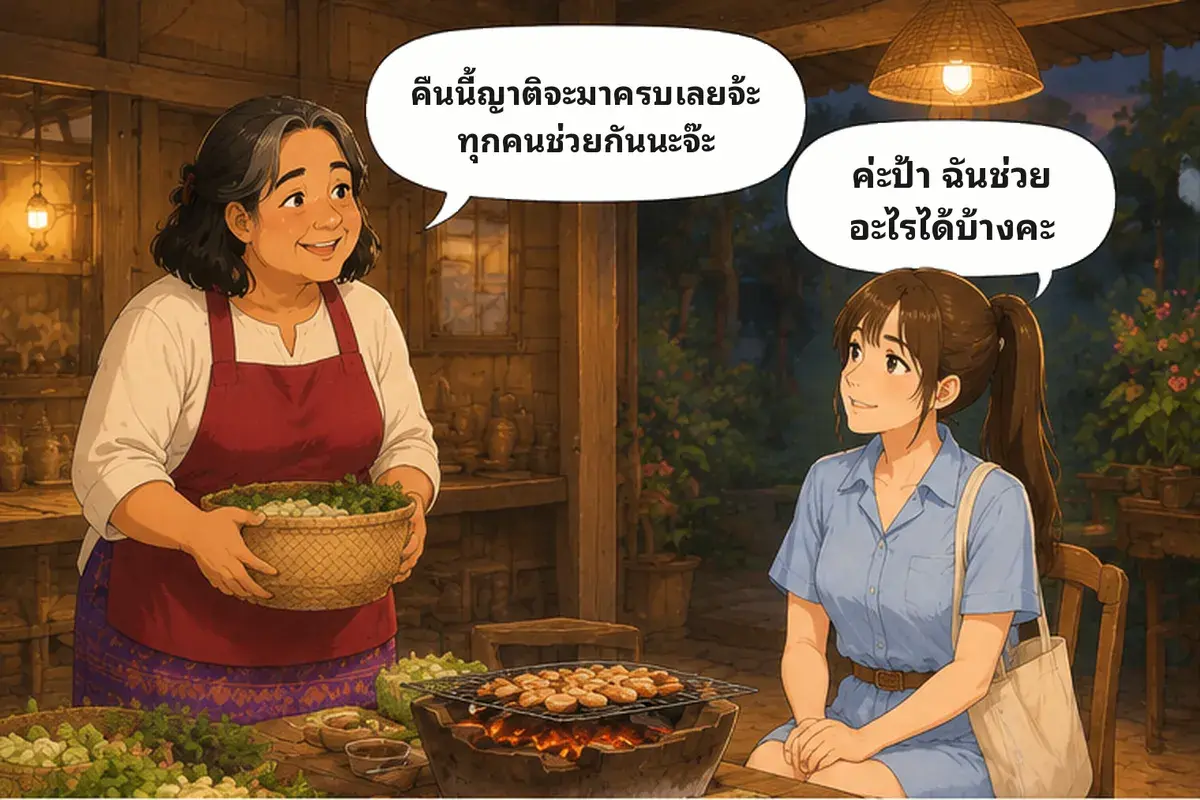
- ป้าศรี
คืนนี้ญาติจะมาครบเลยจ้ะ ทุกคนช่วยกันนะจ๊ะ
All the relatives are coming tonight. Let's all help each other, OK?
- ยานา
ค่ะป้า ฉันช่วยอะไรได้บ้างคะ
OK, Auntie. What can I help with? (woman speaking)

- ป้าศรี
ป้าแบ่งหน้าที่ให้ทุกคนแล้วจ้ะ ยานาช่วยล้างผักชีกับพริกในตะกร้าตรงนั้นให้ป้าหน่อยนะ
I've already divided up the jobs among everyone. Yana, please wash the cilantro and chilies in the basket over there for me, OK?

- ยานา
ได้ค่ะ แต่ฉันไม่กินพริกนะคะ
Sure. But I don't eat chilies (woman speaking).
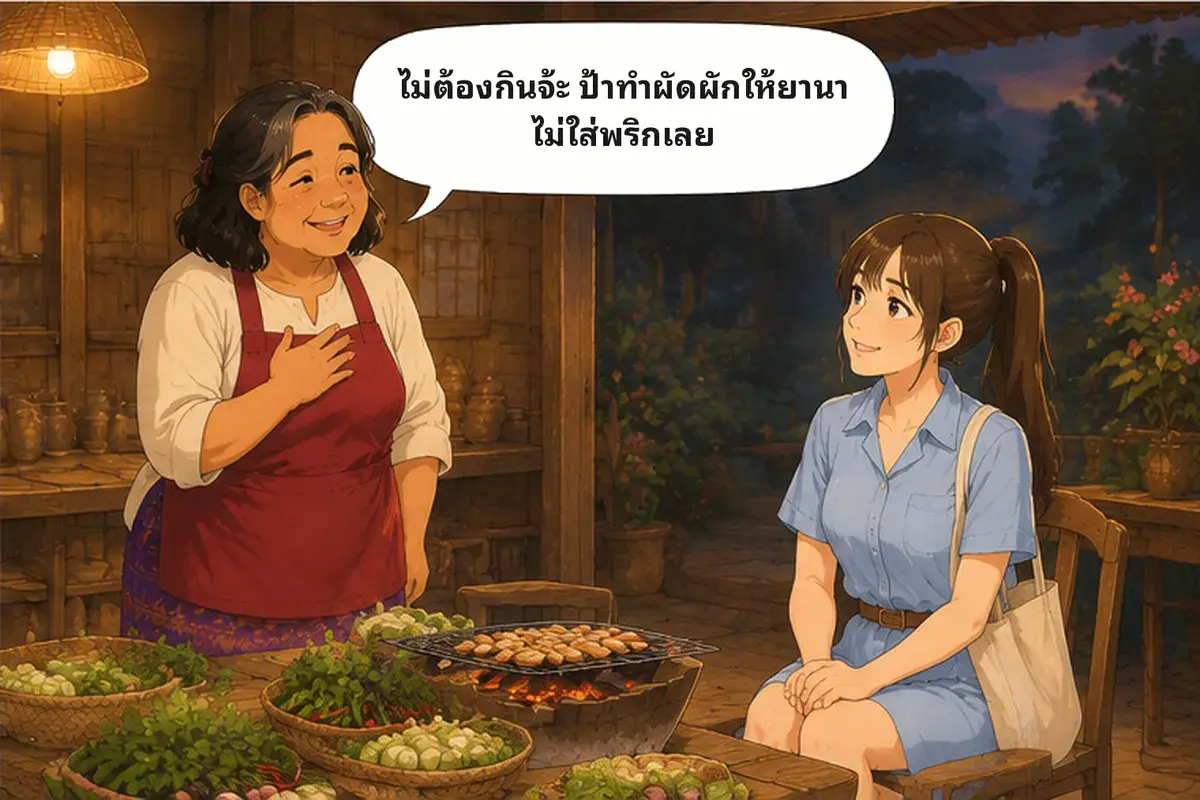
- ป้าศรี
ไม่ต้องกินจ้ะ ป้าทำผัดผักให้ยานา ไม่ใส่พริกเลย
You don't have to eat them. I'll make stir-fried vegetables for you, with no chilies at all.
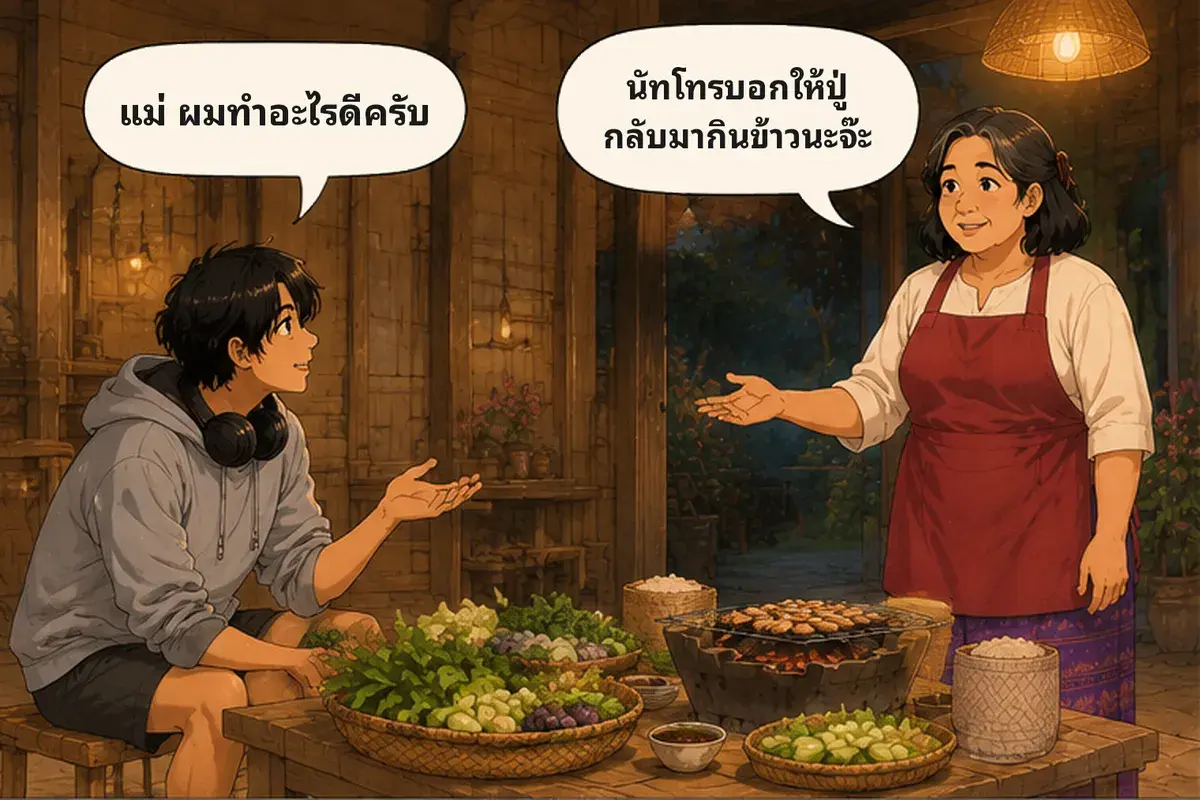
- นัท
แม่ ผมทำอะไรดีครับ
Mom, what should I do? (man speaking)
- ป้าศรี
นัทโทรบอกให้ปู่กลับมากินข้าวนะจ๊ะ
Nat, call Grandpa and tell him to come back and eat, OK?

- นัท
ปู่อยู่ที่นาครับ ไม่มีสัญญาณโทรไม่ได้ ผมไปเองครับ
Grandpa's at the rice field. There's no signal, so I can't call. I'll go myself (man speaking).
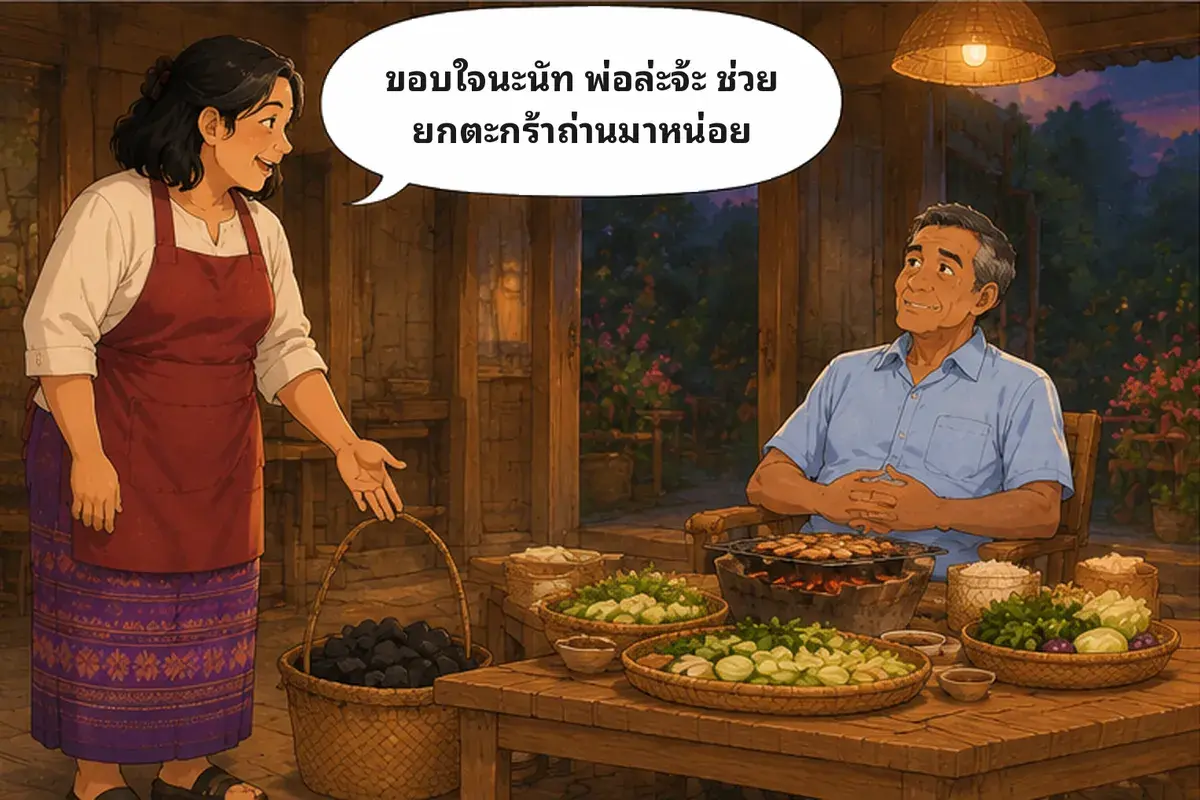
- ป้าศรี
ขอบใจนะนัท พ่อล่ะจ้ะ ช่วยยกตะกร้าถ่านมาหน่อย
Thanks, Nat (to someone younger). What about you, Dad? Please carry the basket of charcoal over here.
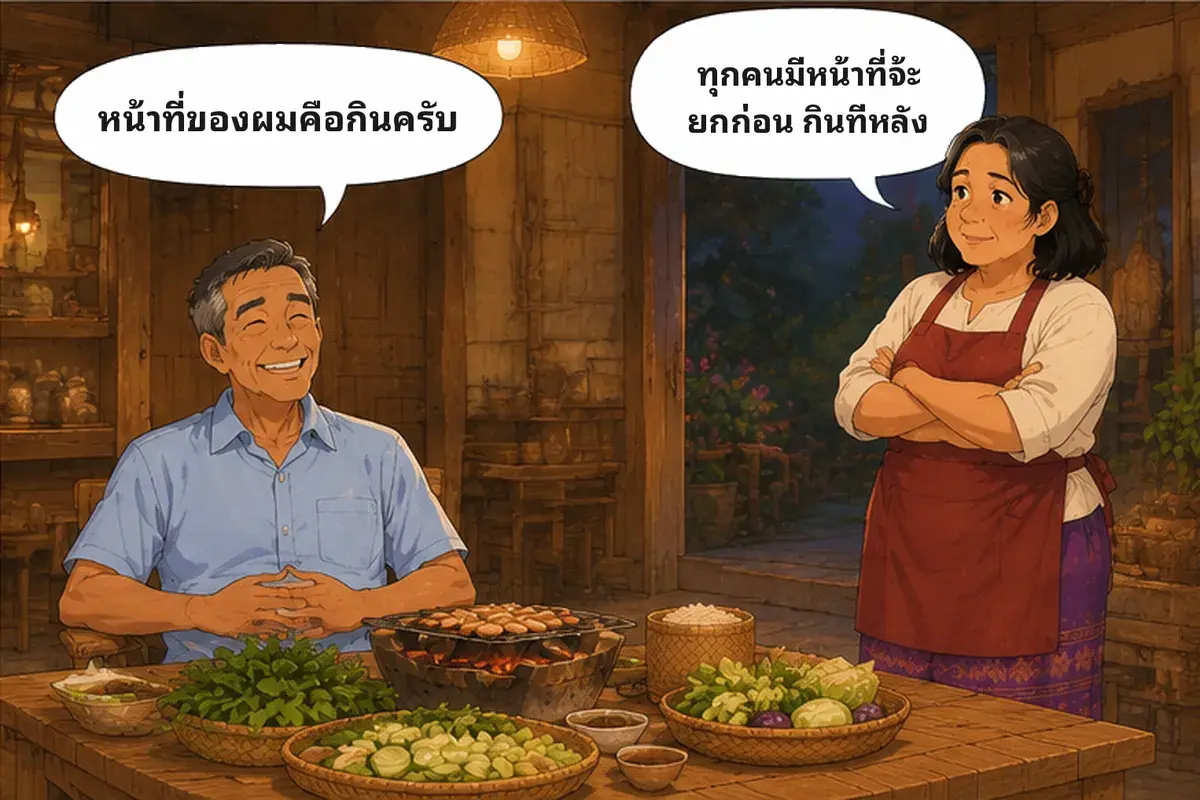
- ลุงชัย
หน้าที่ของผมคือกินครับ
My job is eating (man speaking).
- ป้าศรี
ทุกคนมีหน้าที่จ้ะ ยกก่อน กินทีหลัง
Everyone has a job. Carry first, eat later.

- ดีมา
แล้วผมล่ะครับป้า
And what about me, Auntie? (man speaking)

- ป้าศรี
ดีมาไปร้านสะดวกซื้อซื้อน้ำแข็งให้ป้าหน่อย ฝากซื้อน้ำเปล่าด้วย
Dima, please go to the convenience store and buy some ice for me. And pick up some water too while you're there.

- ดีมา
ได้ครับ เดี๋ยวผมไปเลย
Sure. I'll go right now (man speaking).
Grammar for this text
- ให้ป้าหน่อยนะ — for me, please. Auntie Sri calls herself
ป้า(bpâa), soให้ป้าmeans 'for me', a bit like an English aunt saying 'give Auntie a hand'. The request is built from parts:ช่วย+ what to do +ให้+ who it's for +หน่อย. - โทรบอกให้ปู่กลับมากินข้าวนะจ๊ะ — call Grandpa and tell him to come back and eat, OK? After
บอกthere's no word for 'to': right afterให้comes the person who should do it (ปู่), then the action.นะจ๊ะ(ná-já) is an affectionate particle of older people. - ซื้อน้ำแข็งให้ป้าหน่อย — buy some ice for me. The same pattern: action, what,
ให้, who it's for. And ฝากซื้อน้ำเปล่าด้วย — pick up some water too while you're there:ฝาก(fàak) asks someone to do something on the way. - ทำผัดผักให้ยานา — I'll make stir-fried vegetables for Yana. Auntie Sri says Yana's name instead of 'you', so it's clear who the dish is for.
- หน้าที่ของผมคือกิน — my job is eating.
หน้าที่(nâa-tîi) is a job someone gave you, a duty;คือ(kʉʉ) works like an equals sign. Uncle Chai rarely jokes, but when he does, it hits home. - ทุกคนมีหน้าที่จ้ะ — everyone has a job.
มี หน้าที่means 'to have a job to do': that's how the family answers excuses.
Words and grammar of the unit: Ask for help and hand out jobs.
Learn the words from the texts with flashcards
In the app, you can tap any word in a text to see its translation, forms and examples, and new words stick with flashcards. 15 minutes a day.
Start for freeEverything is open for free. No card needed to sign up.