

Thai dialogue with translation · A2 · 14 lines
หลังช้างไม่ใช่เก้าอี้ An elephant's back isn't a chair
Comic · 14 panels

- ตาคำ
ยินดีต้อนรับนะ ตาเคยเป็นควาญช้าง ตอนนี้ตาดูแลช้างที่นี่
Welcome! I used to be an elephant keeper. Now I take care of the elephants here.

- ดีมา
ตาครับ ผมขี่ช้างได้ไหมครับ
Grandpa, can I ride an elephant? (man speaking)
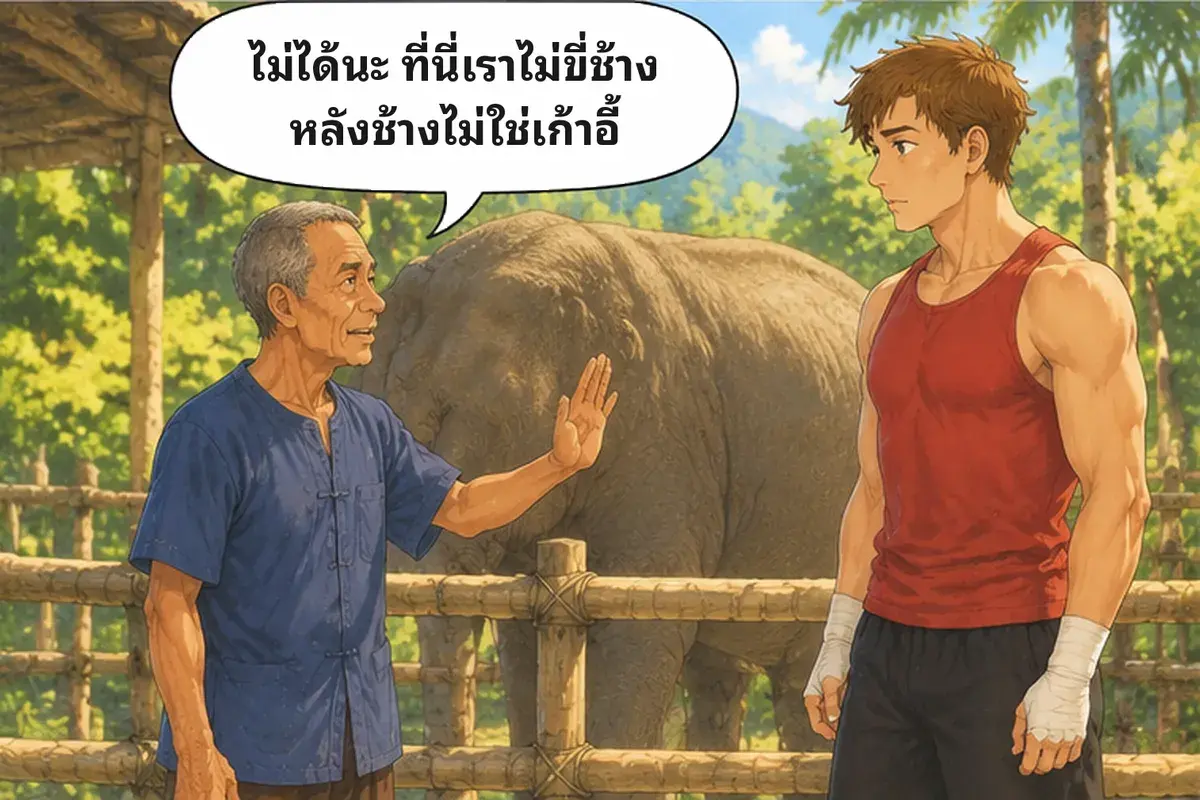
- ตาคำ
ไม่ได้นะ ที่นี่เราไม่ขี่ช้าง หลังช้างไม่ใช่เก้าอี้
No, you can't. We don't ride elephants here. An elephant's back isn't a chair.
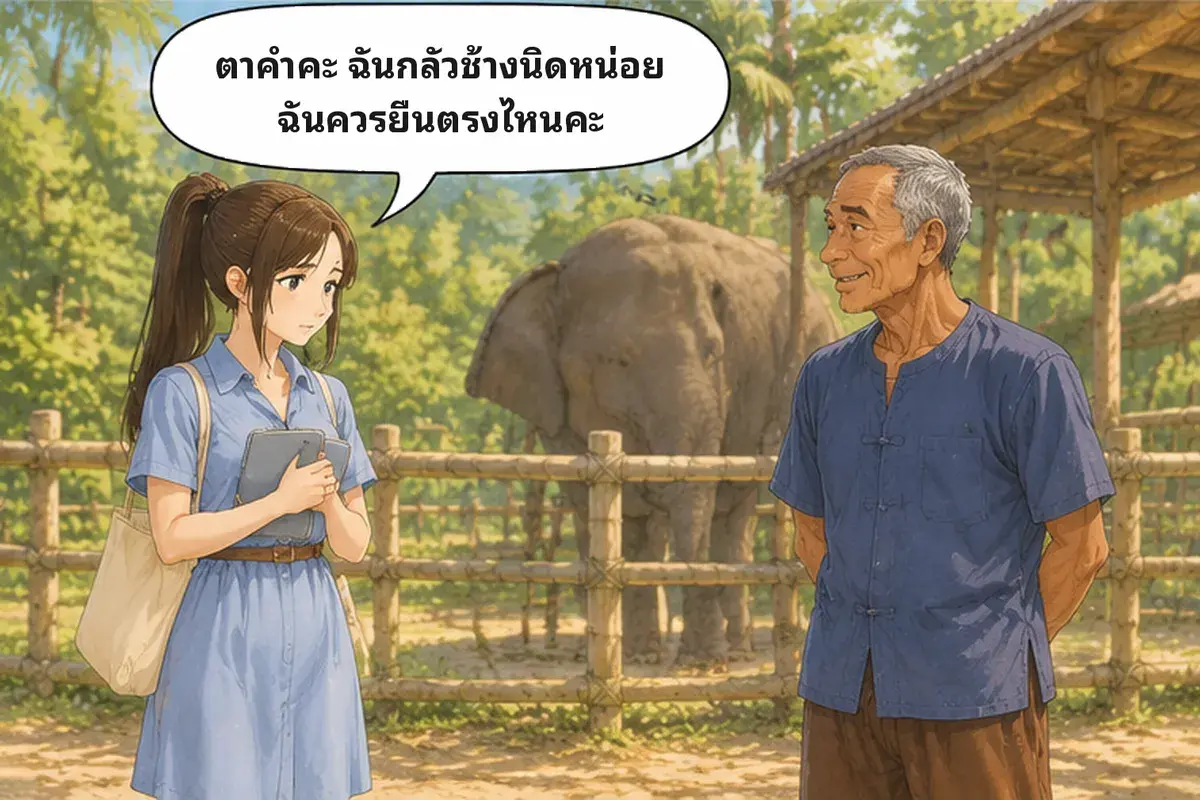
- ยานา
ตาคำคะ ฉันกลัวช้างนิดหน่อย ฉันควรยืนตรงไหนคะ
Grandpa Kham, I'm a little afraid of elephants. Where should I stand? (woman speaking)
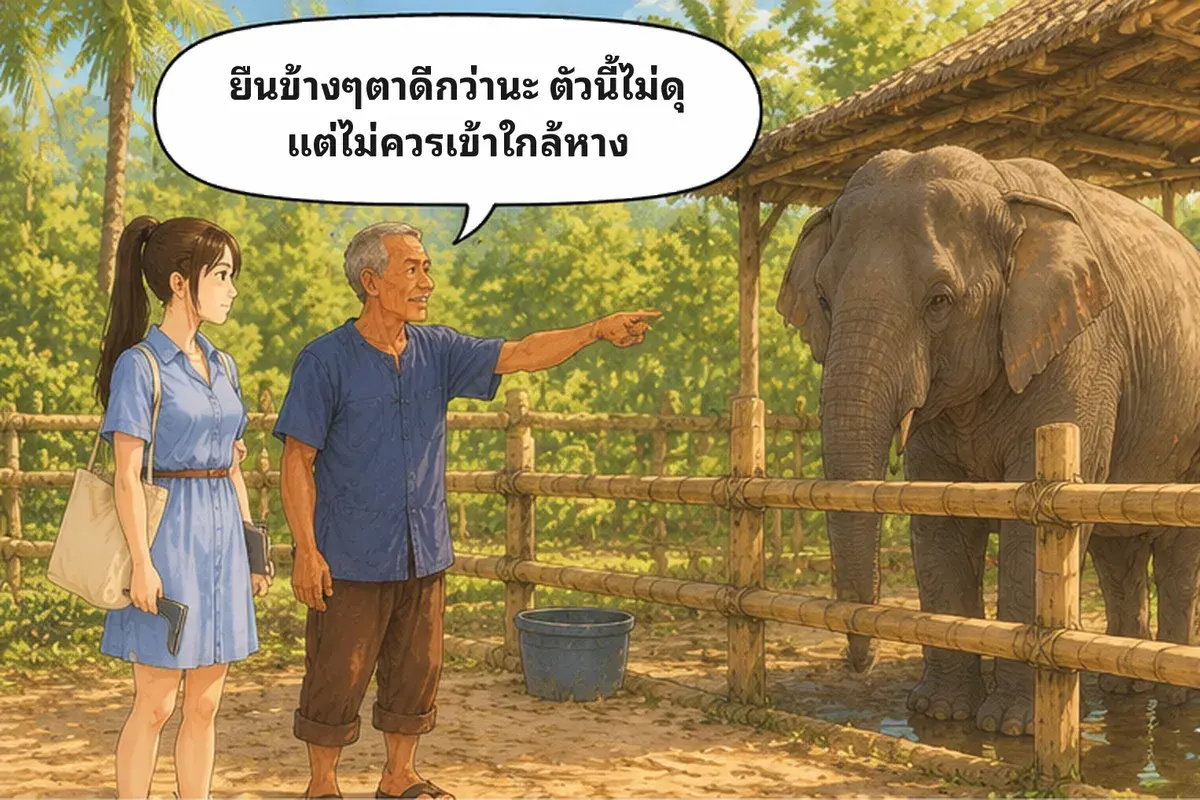
- ตาคำ
ยืนข้างๆตาดีกว่านะ ตัวนี้ไม่ดุ แต่ไม่ควรเข้าใกล้หาง
Better stand next to me. This one isn't fierce, but you shouldn't go near its tail.
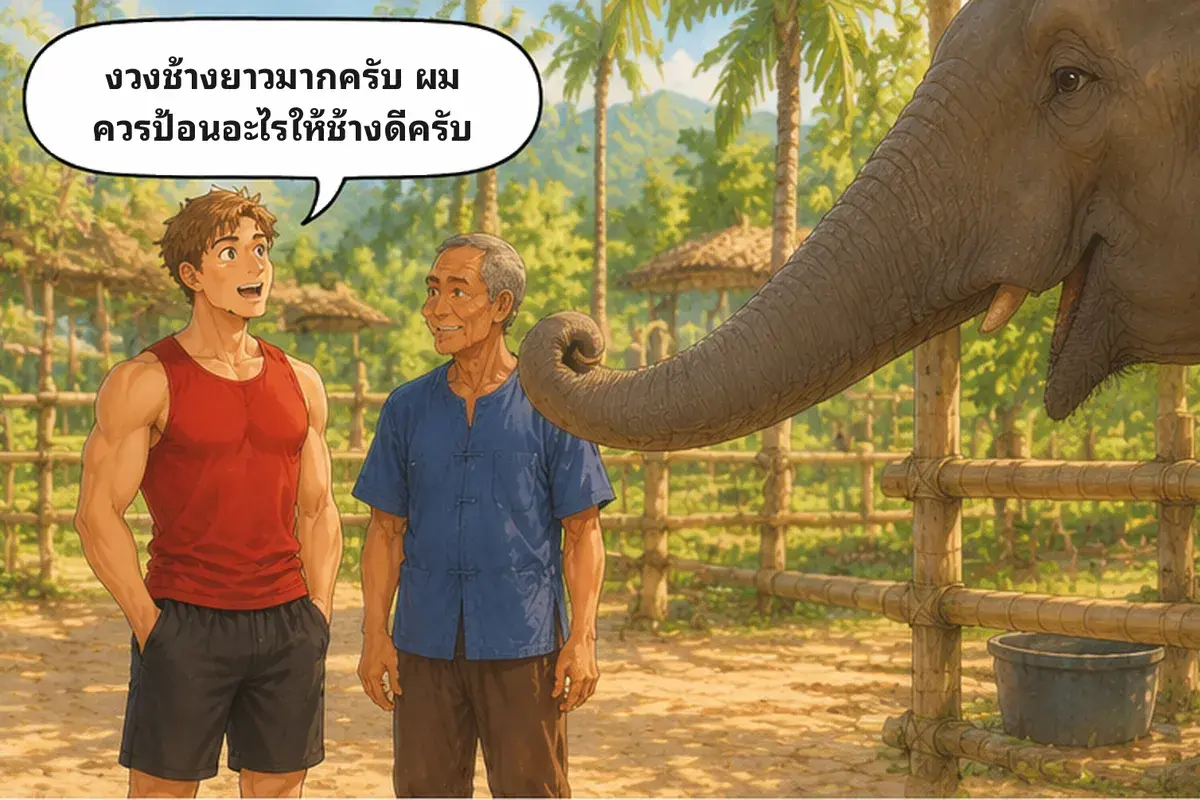
- ดีมา
งวงช้างยาวมากครับ ผมควรป้อนอะไรให้ช้างดีครับ
The elephant's trunk is so long! What should I feed the elephant? (man speaking)

- ตาคำ
ป้อนอ้อยนะ ป้อนทีละอัน อย่ารีบ
Feed it sugarcane. One piece at a time. Don't rush.
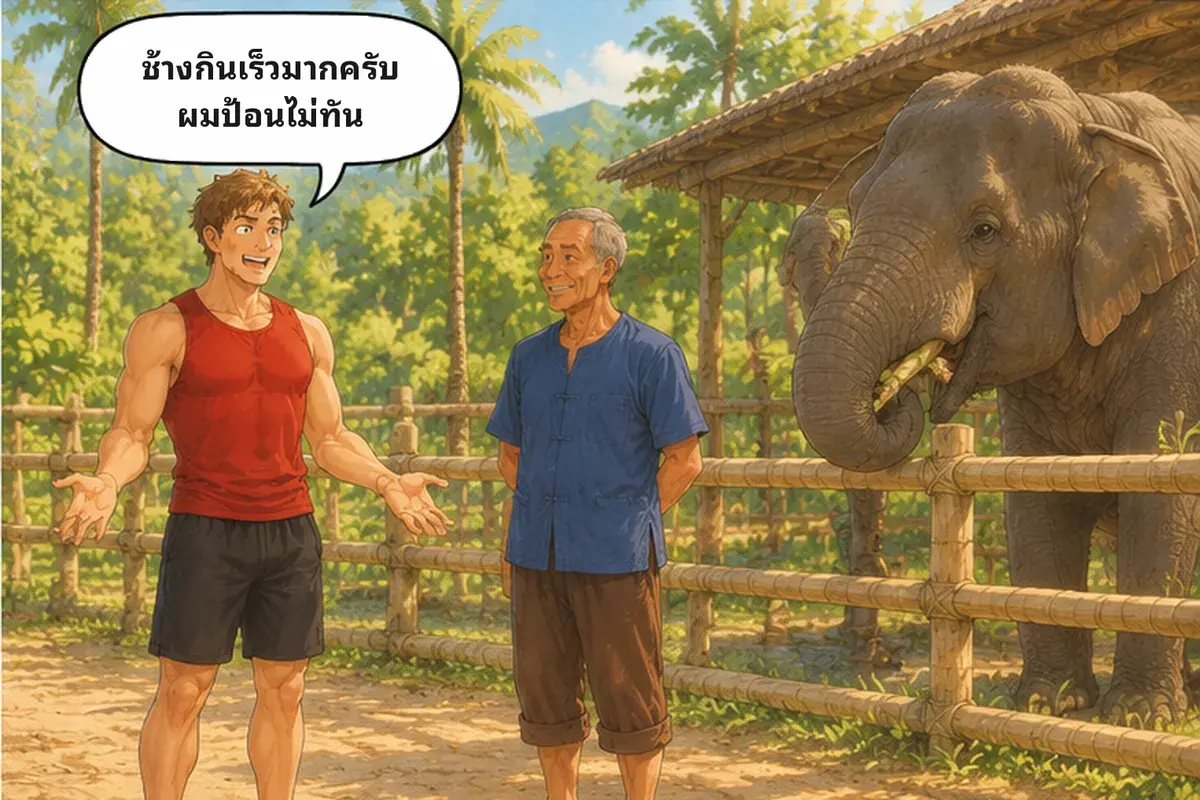
- ดีมา
ช้างกินเร็วมากครับ ผมป้อนไม่ทัน
The elephant eats really fast! I can't feed it fast enough (man speaking).

- ตาคำ
ตอนนี้เราอาบน้ำให้ช้างกัน ใช้แปรงอันนี้ขัดนะ
Now we're going to bathe the elephant together. Use this brush to scrub it, OK?

- ยานา
ที่นี่โคลนเยอะค่ะ ดีมาควรระวังข้อเท้านะคะ
There's a lot of mud here. Dima, you should be careful with your ankle (woman speaking).

- ดีมา
ไม่เป็นไรครับ ข้อเท้าผมไม่เจ็บแล้ว
No problem. My ankle doesn't hurt anymore (man speaking).

- ยานา
ดีมาคะ งวงช้างอยู่ในกระเป๋ากางเกงแล้วนะคะ
Dima, the elephant's trunk is already in your pants pocket! (woman speaking)
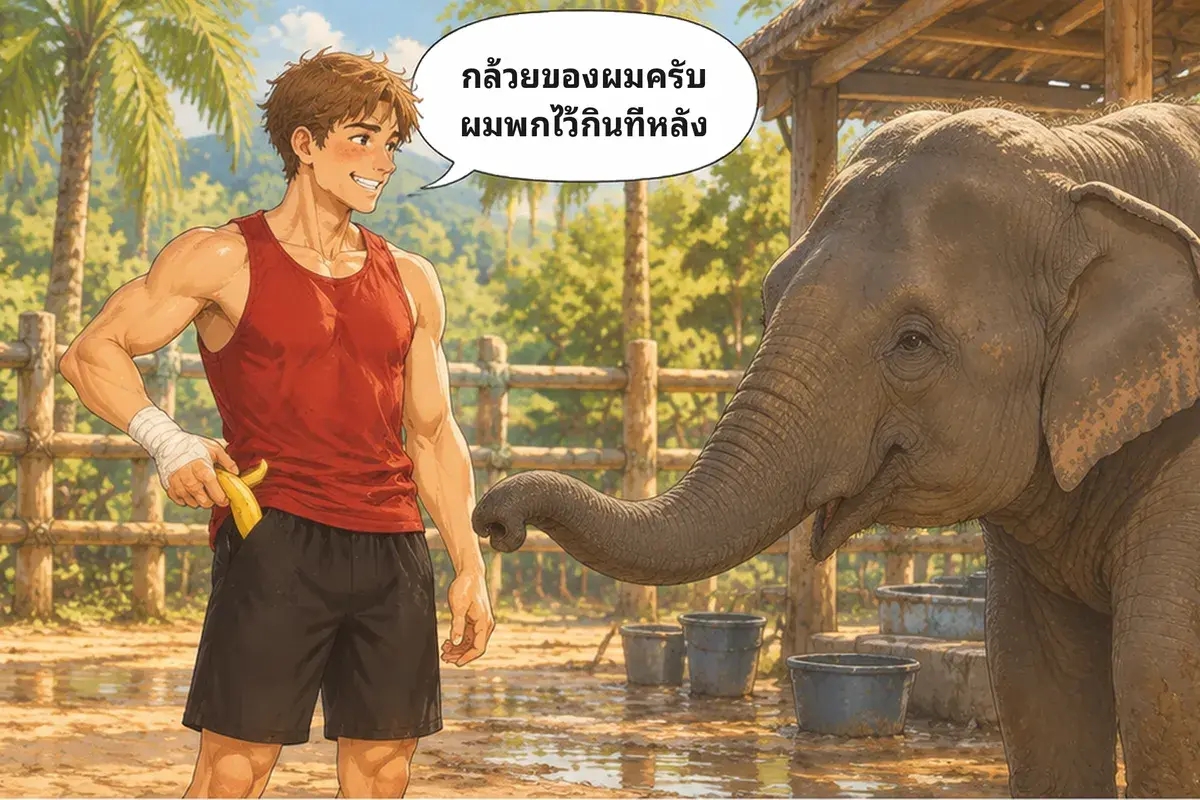
- ดีมา
กล้วยของผมครับ ผมพกไว้กินทีหลัง
That's my banana! I was carrying it to eat later (man speaking).

- ตาคำ
ครั้งหน้าไม่ควรพกกล้วยนะ ป้อนช้างเลยดีกว่า
Next time you shouldn't carry a banana with you. Better just feed the elephant right away.
Grammar for this text
- หลังช้างไม่ใช่เก้าอี้ — An elephant's back isn't a chair. In parks that really take care of elephants, people bathe and feed them but don't ride them. Grandpa Kham says no,
ไม่ได้ นะ(mâi-dâai ná), and explains why right away. - ยืนข้างๆตาดีกว่านะ — Better stand next to me. Grandpa calls himself
ตา(dtaa), "grandpa", as older people in a family do.ดีกว่าmeans "better this way", andนะmakes the advice softer. - ไม่ควรเข้าใกล้หาง — You shouldn't go near the tail.
ไม่ควร(mâi-kuuan) sounds softer than the "not allowed" of signs, but the advice is serious: near an animal, it's best to listen to the keeper. - ผมควรป้อนอะไรให้ช้างดีครับ — What should I feed the elephant? (man speaking) The pattern for asking advice:
ควร+ verb + question word +ดี. - ป้อนทีละอัน — Feed it one piece at a time.
ทีละ(tii-lá) goes before a classifier: one stalk, one person, one elephant at a time. Then comes a short request, อย่ารีบ — Don't rush. - ครั้งหน้าไม่ควรพกกล้วยนะ — Next time you shouldn't carry a banana, OK? An elephant can smell food in your pocket: its trunk is long, and its nose is sharp.
Words and grammar of the unit: Give and ask for advice.
Learn the words from the texts with flashcards
In the app, you can tap any word in a text to see its translation, forms and examples, and new words stick with flashcards. 15 minutes a day.
Start for freeEverything is open for free. No card needed to sign up.