

Thai dialogue with translation · A1 · 8 lines
สองตัวสามร้อยได้ไหมครับ Can I get two for three hundred?
Comic · 6 panels
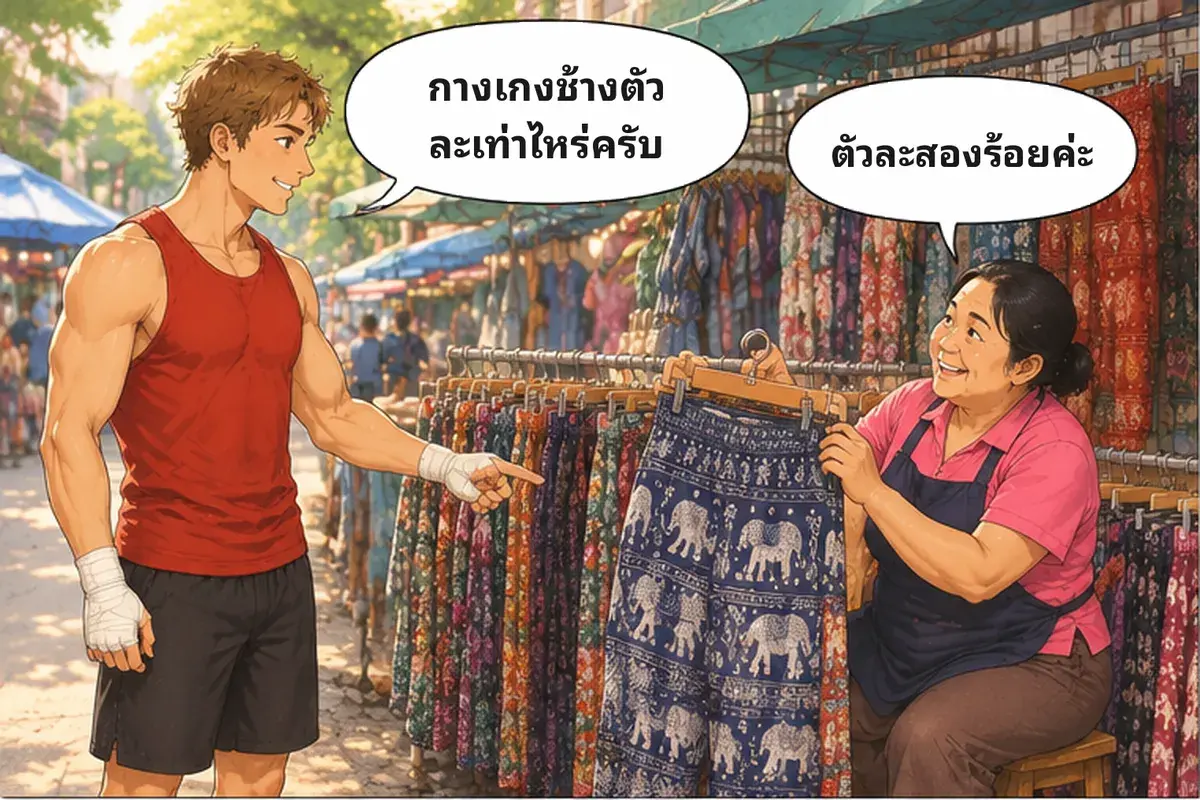
- ดีมา
กางเกงช้างตัวละเท่าไหร่ครับ
How much are the elephant pants each? (man speaking)
- แม่ค้า
ตัวละสองร้อยค่ะ
Two hundred each (woman speaking).

- ดีมา
สองตัวสามร้อยได้ไหมครับ
Can I get two for three hundred? (man speaking)
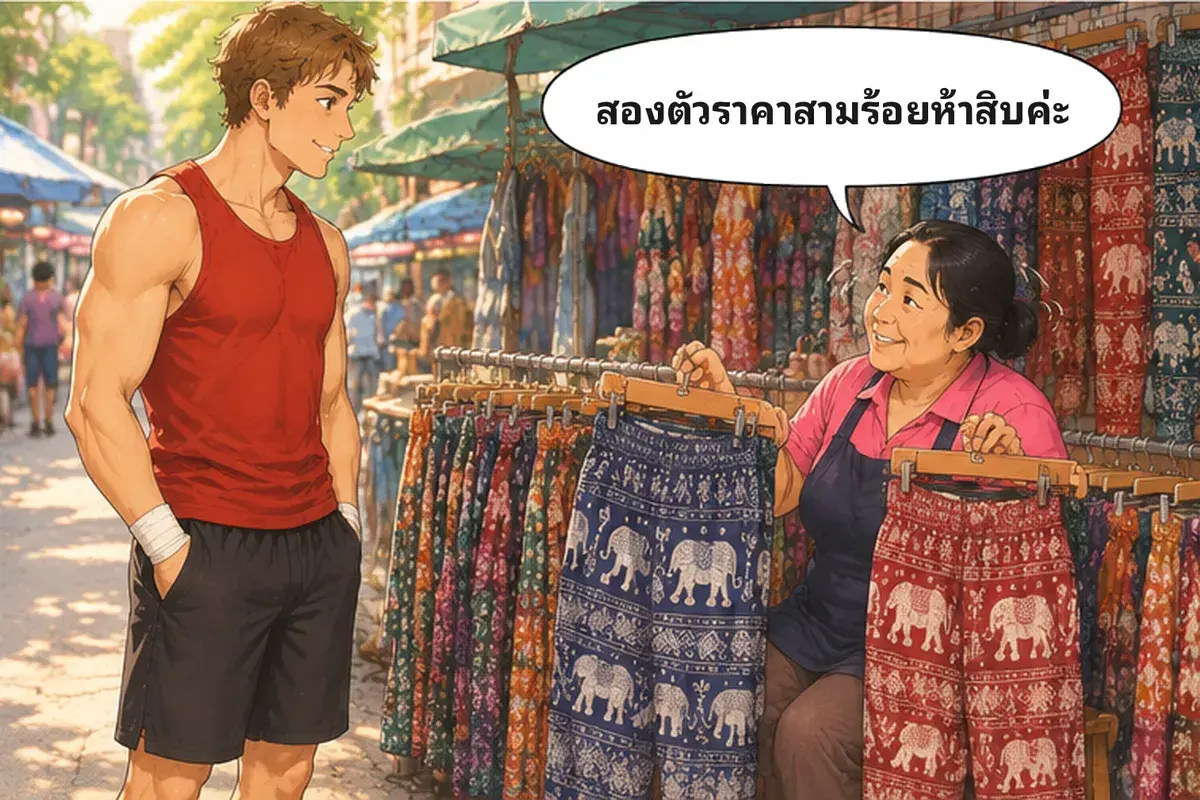
- แม่ค้า
สองตัวราคาสามร้อยห้าสิบค่ะ
For two, the price is three hundred and fifty (woman speaking).
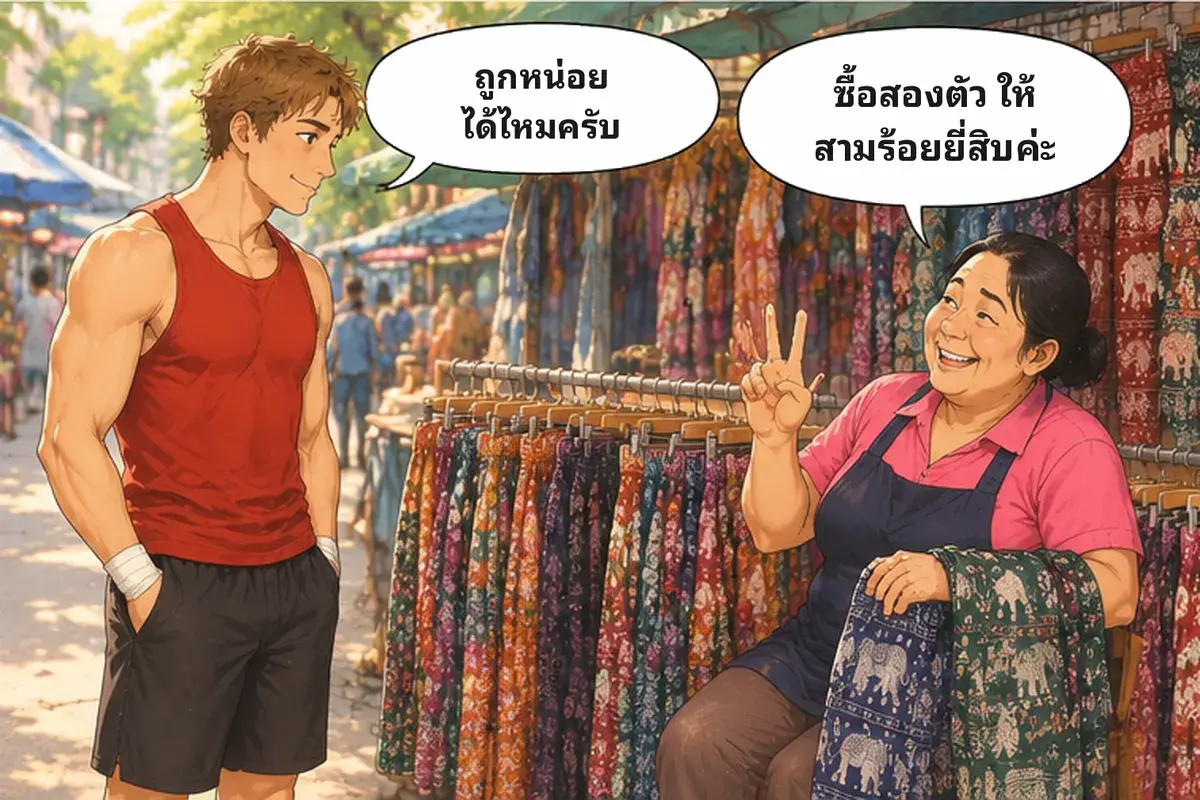
- ดีมา
ถูกหน่อยได้ไหมครับ
Can you make it a little cheaper? (man speaking)
- แม่ค้า
ซื้อสองตัว ให้สามร้อยยี่สิบค่ะ
If you buy two, I'll let you have them for three hundred and twenty (woman speaking).
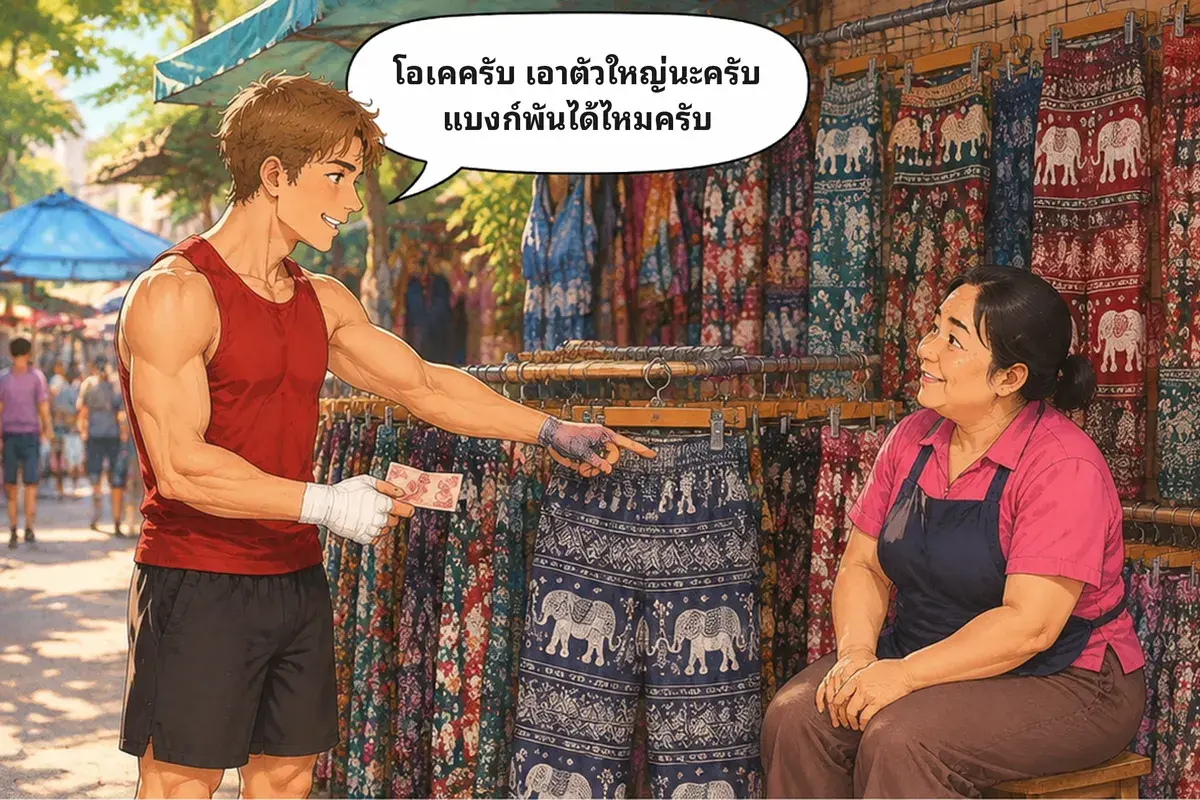
- ดีมา
โอเคครับ เอาตัวใหญ่นะครับ แบงก์พันได้ไหมครับ
OK. I'll take the big size, please. Is a thousand-baht bill OK? (man speaking)
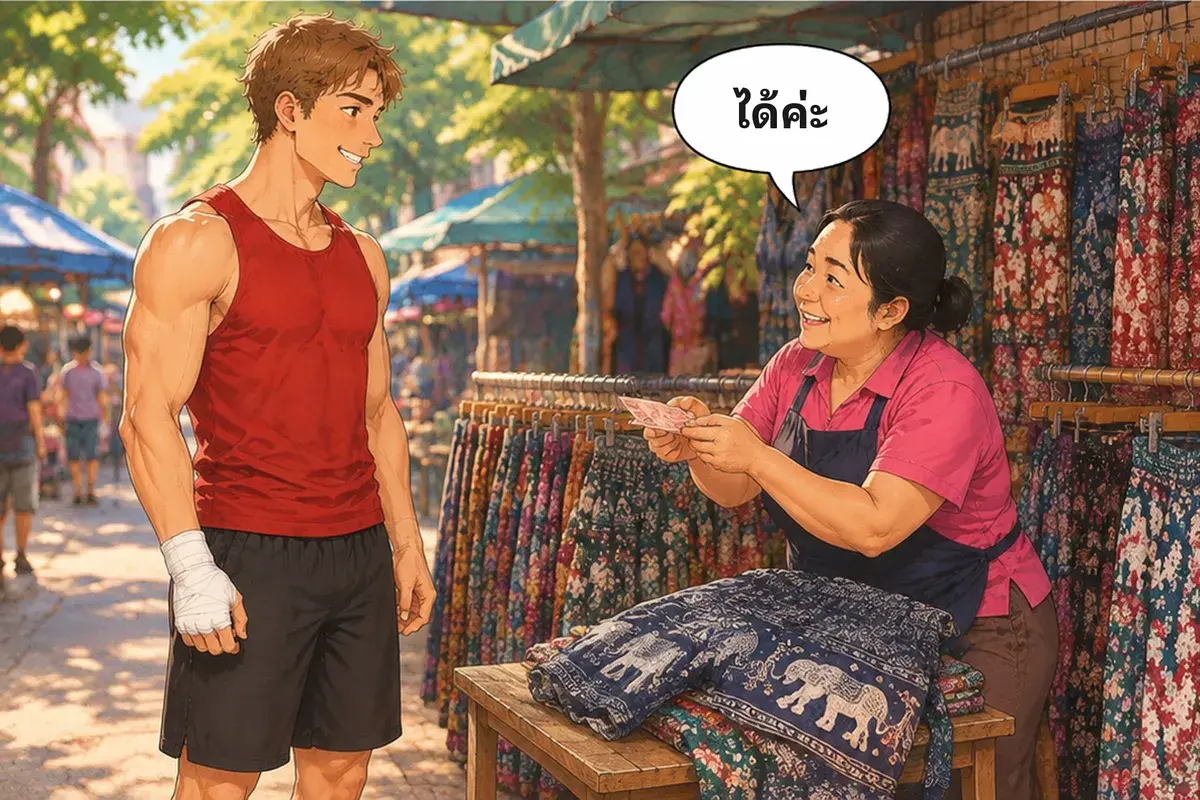
- แม่ค้า
ได้ค่ะ
Yes, that's fine (woman speaking).
Grammar for this text
- กางเกงช้างตัวละเท่าไหร่ครับ — 'how much are the elephant pants each?'. Elephant pants are a tourist favorite. The price here is per piece, so the unit is ตัว (dtuua): the counting word for clothes (and animals), the way a kilo is for fruit.
- สองตัวสามร้อยได้ไหมครับ — 'can I get two for three hundred?'. You name a price for several pieces yourself: the number, ตัว, the price. This is the most polite way to bargain. ได้ไหม means 'can I? is it OK?'; the rule for ได้ comes in unit 5.
- สองตัวราคาสามร้อยห้าสิบค่ะ — ราคา (raa-kaa) means 'price'. The seller says 350: between your 300 and the usual 400. That's bargaining, not a no.
- ถูกหน่อยได้ไหมครับ — 'a little cheaper?'. หน่อย (nɔ̀ɔi) makes the request softer, like 'a little' or 'please'.
- ซื้อสองตัวให้สามร้อยยี่สิบค่ะ — 'if you buy two, I'll let you have them for 320'. ซื้อ 'to buy' is the condition, ให้ 'to give' is the offer. Two verbs in a row, with no 'if' and no 'then'.
- เอาตัวใหญ่นะครับ — 'the big size, please'. Here ตัว means 'piece, size', and the describing word comes after it: ตัวใหญ่.
- แบงก์พันได้ไหมครับ — 'is a thousand-baht bill OK?'. Street sellers often have no change, so it's a good habit to ask first.
Words and grammar of the unit: Bargain at the market.
Learn the words from the texts with flashcards
In the app, you can tap any word in a text to see its translation, forms and examples, and new words stick with flashcards. 15 minutes a day.
Start for freeEverything is open for free. No card needed to sign up.