

Thai dialogue with translation · A1 · 11 lines
ถุงนี้ของใครคะ Whose plastic bag is this?
Comic · 7 panels
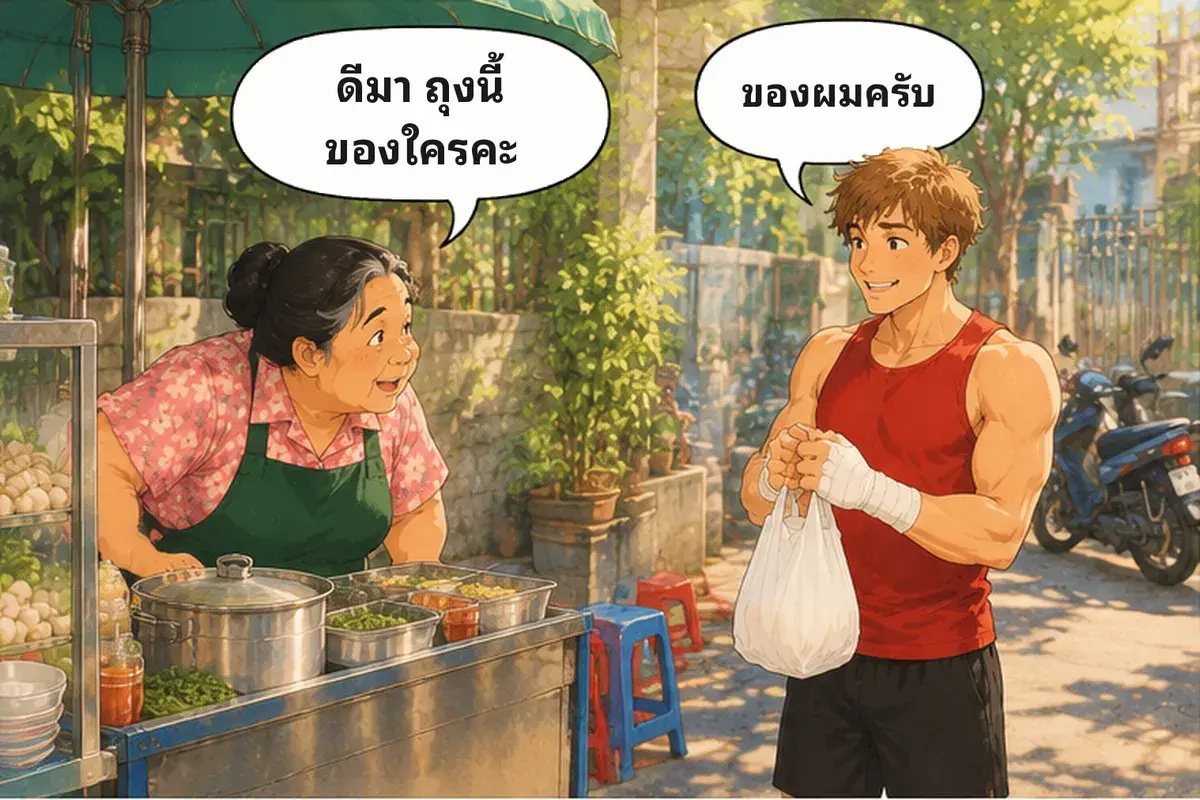
- ป้านี
ดีมา ถุงนี้ของใครคะ
Dima, whose plastic bag is this? (woman speaking)
- ดีมา
ของผมครับ
It's mine (man speaking).
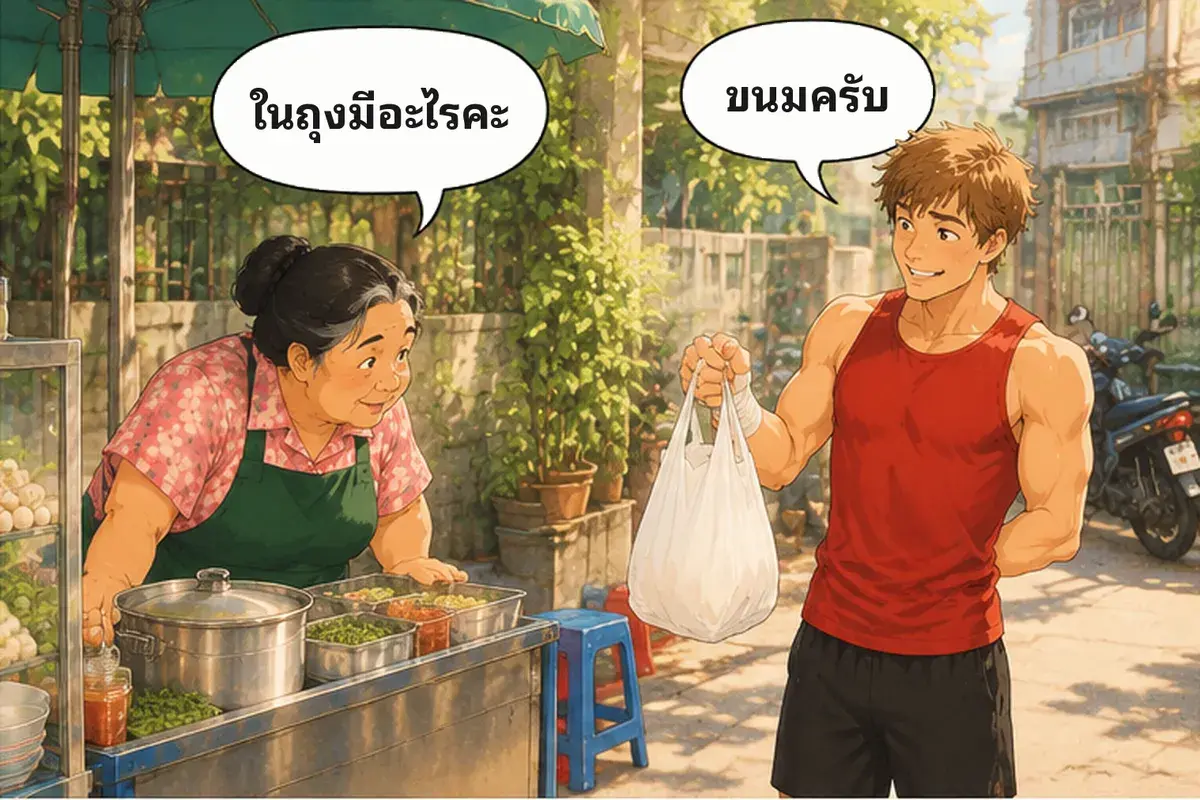
- ป้านี
ในถุงมีอะไรคะ
What's in the plastic bag? (woman speaking)
- ดีมา
ขนมครับ
Snacks (man speaking).
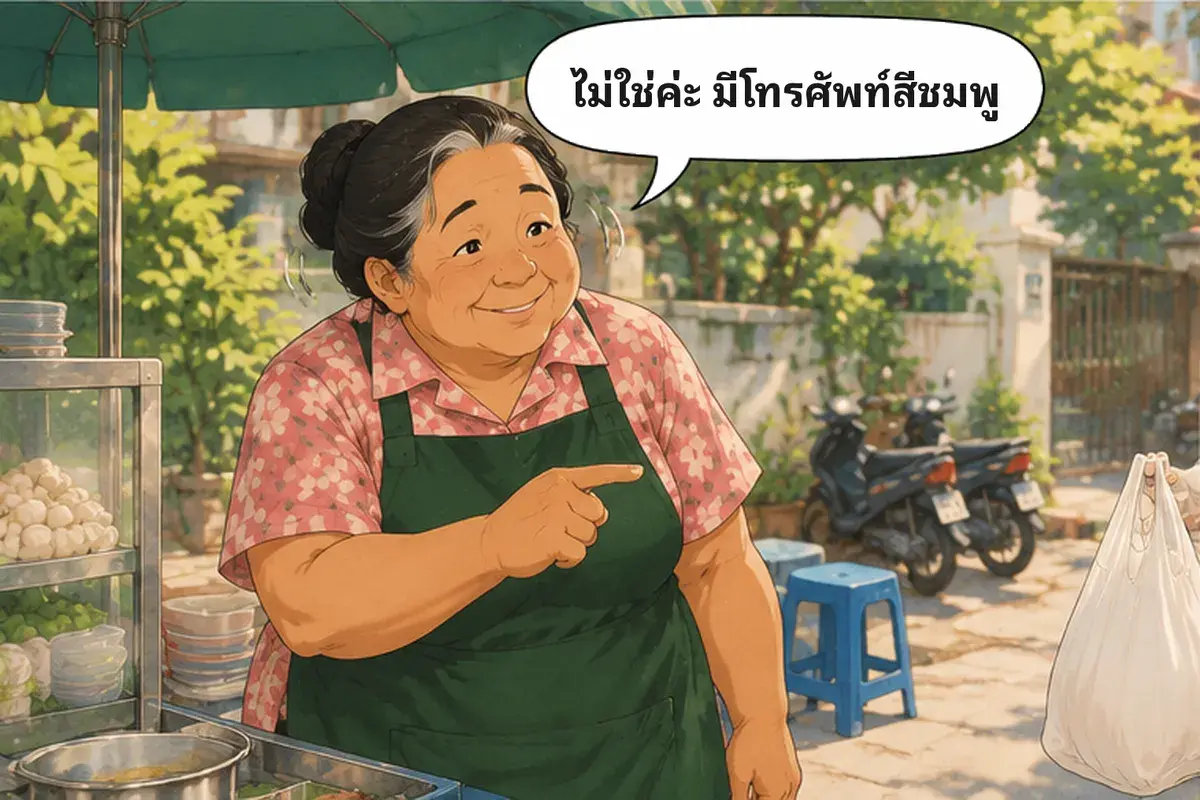
- ป้านี
ไม่ใช่ค่ะ มีโทรศัพท์สีชมพู
No, it isn't. There's a pink phone (woman speaking).
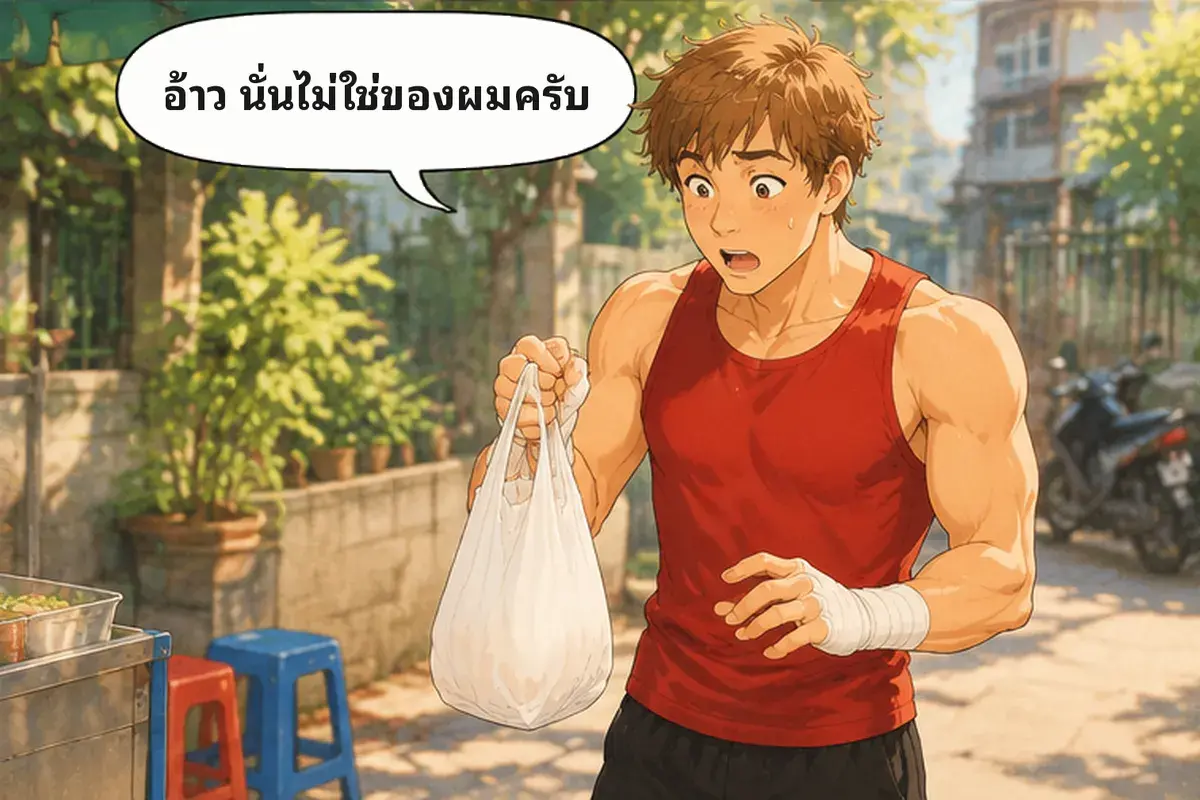
- ดีมา
อ้าว นั่นไม่ใช่ของผมครับ
Oh! That's not mine (man speaking).
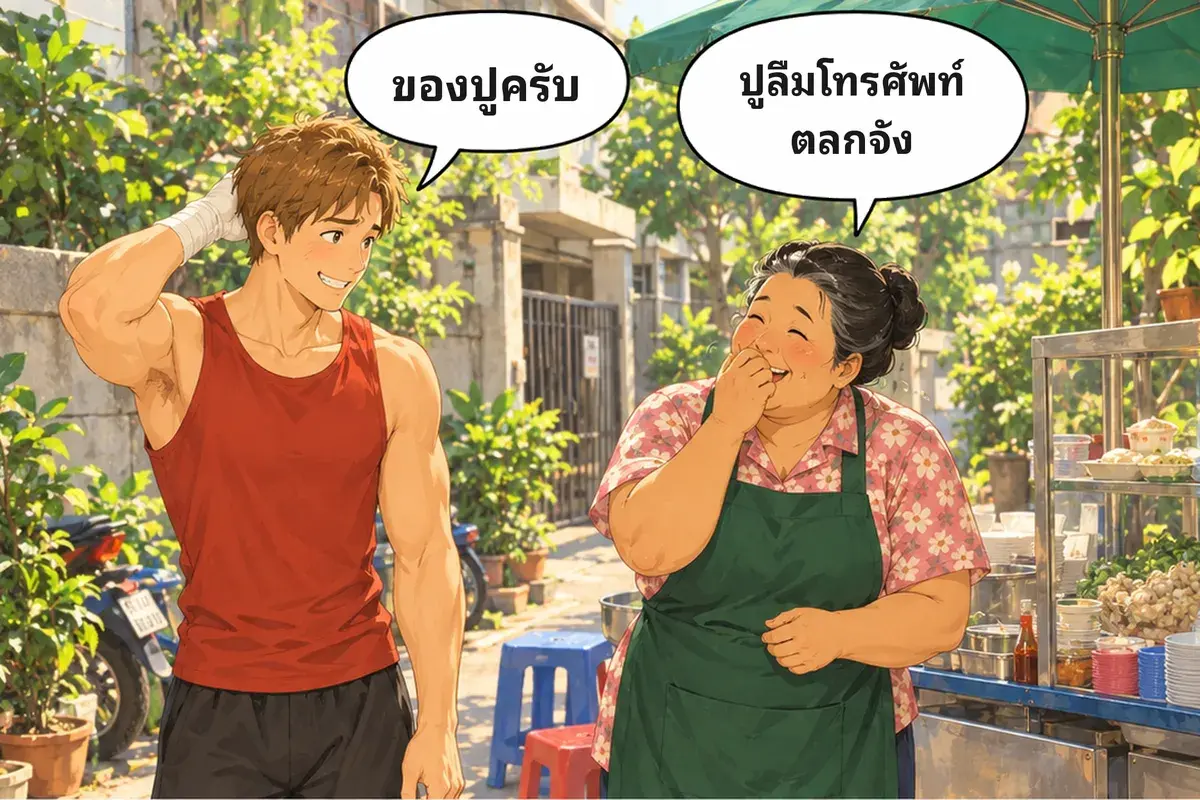
- ดีมา
ของปูครับ
It's Pu's (man speaking).
- ป้านี
ปูลืมโทรศัพท์ ตลกจัง
Pu forgot her phone. That's so funny!
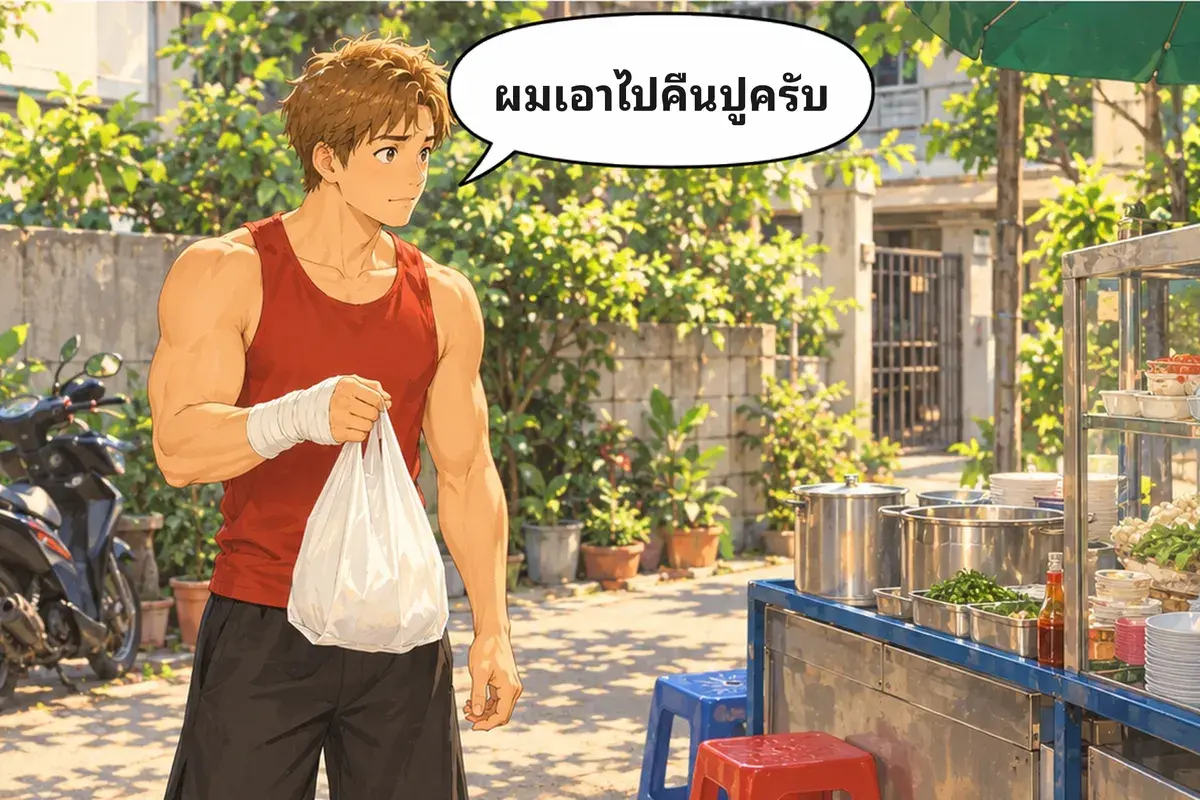
- ดีมา
ผมเอาไปคืนปูครับ
I'll take it back to Pu (man speaking).
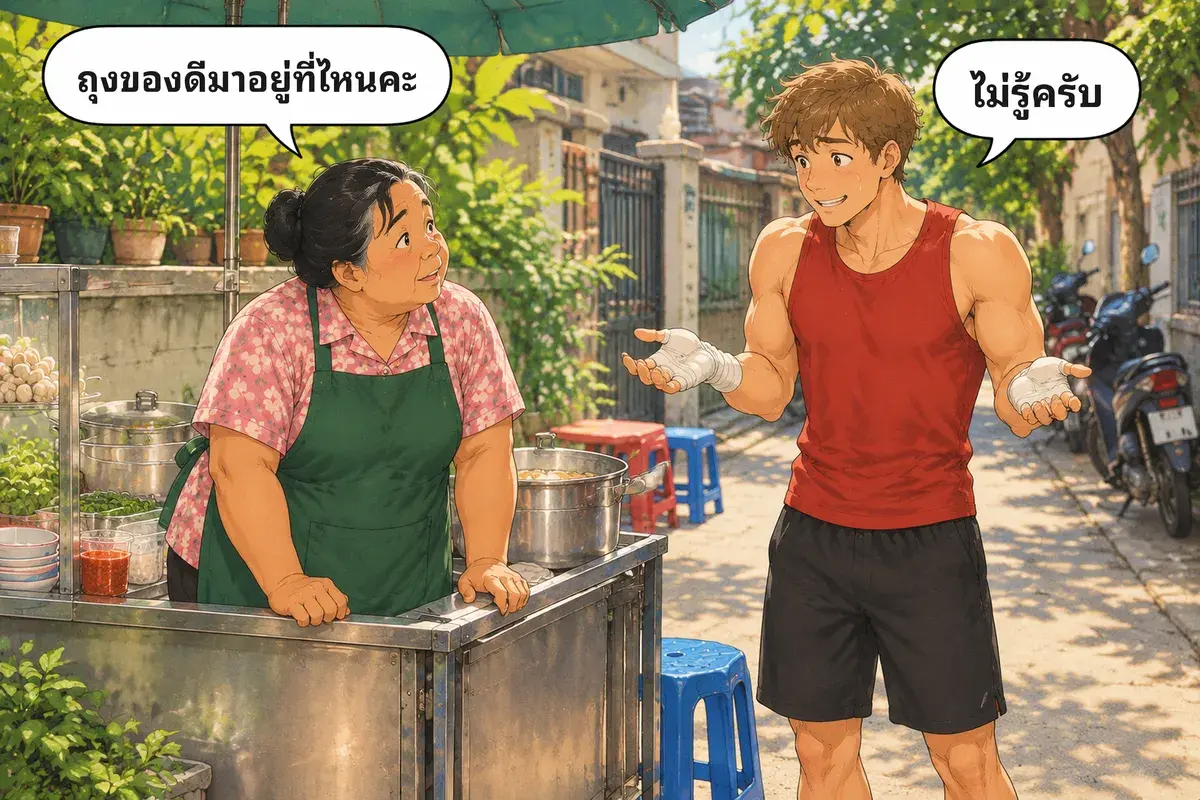
- ป้านี
ถุงของดีมาอยู่ที่ไหนคะ
Where's your plastic bag, Dima? (woman speaking)
- ดีมา
ไม่รู้ครับ
I don't know (man speaking).
Grammar for this text
- ถุงนี้ของใครคะ — 'whose bag is this?'. ของ ใคร means 'whose': ใคร (krai) 'who' stands where the name will be in the answer, and no question particle is needed. In ใคร the
คandรat the start are two consonants said together. - ของผมครับ — 'it's mine'. There's no word for 'my': ของ ('belonging to') plus the owner, ของ ผม mine, ของ ปู Pu's. 'Dima's bag' works the same way: ถุงของดีมา.
- ไม่ใช่ค่ะ — 'no, it isn't'. ไม่ใช่ answers 'no' to 'is it …?' and goes before a noun. Before a verb or an adjective, just use ไม่.
- อ้าว — 'oh!'. A short cry when things turn out differently from what you expected. It has the falling tone and is said with surprise.
- ผมเอาไปคืนปูครับ — 'I'll take it back to Pu'. Three verbs in a row: เอา ไป คืน, 'take — go — give back'. After คืน you name the person right away, with no word for 'to'.
- ไม่รู้ครับ — 'I don't know'. The most useful answer to a question you can't answer.
Words and grammar of the unit: Shop for clothes.
Learn the words from the texts with flashcards
In the app, you can tap any word in a text to see its translation, forms and examples, and new words stick with flashcards. 15 minutes a day.
Start for freeEverything is open for free. No card needed to sign up.