

Thai dialogue with translation · A1 · 8 lines
ทั้งหมดเท่าไหร่ครับ How much is it altogether?
Comic · 4 panels
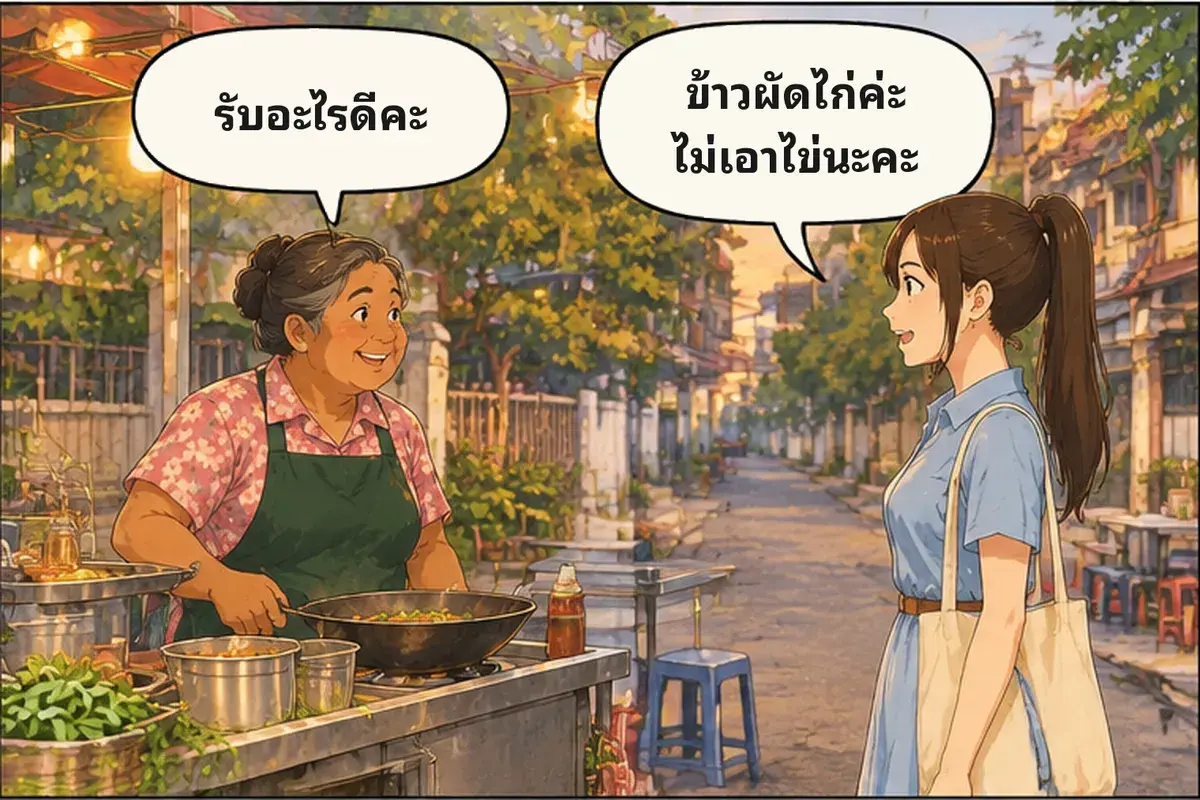
- ป้านี
รับอะไรดีคะ
What would you like? (woman speaking)
- ยานา
ข้าวผัดไก่ค่ะ ไม่เอาไข่นะคะ
Chicken fried rice. I don't want an egg, please (woman speaking).

- ดีมา
ข้าวผัดหมูครับ เอาไข่ด้วยครับ
Pork fried rice. And an egg too, please (man speaking).
- ป้านี
ไข่ดาวหรือไข่เจียวคะ
Fried egg or omelette? (woman speaking)
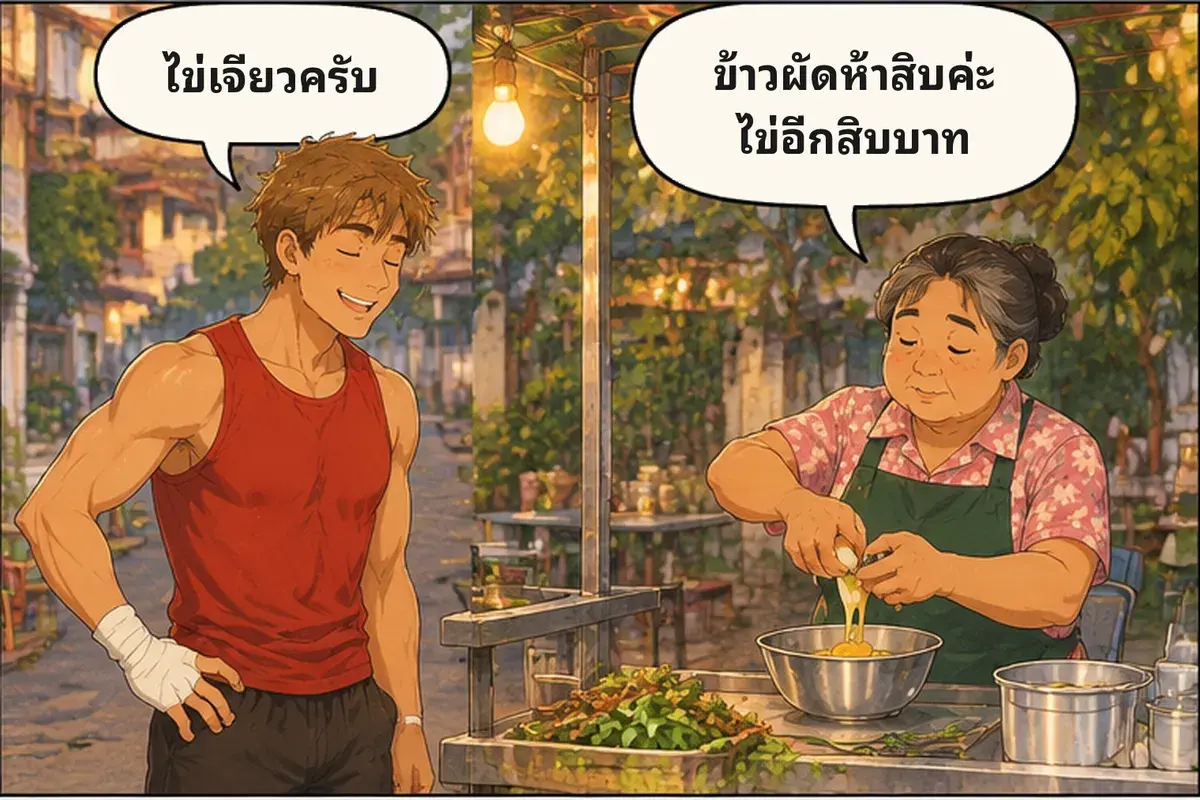
- ดีมา
ไข่เจียวครับ
Omelette (man speaking).
- ป้านี
ข้าวผัดห้าสิบค่ะ ไข่อีกสิบบาท
Fried rice is fifty. An egg is another ten baht (woman speaking).
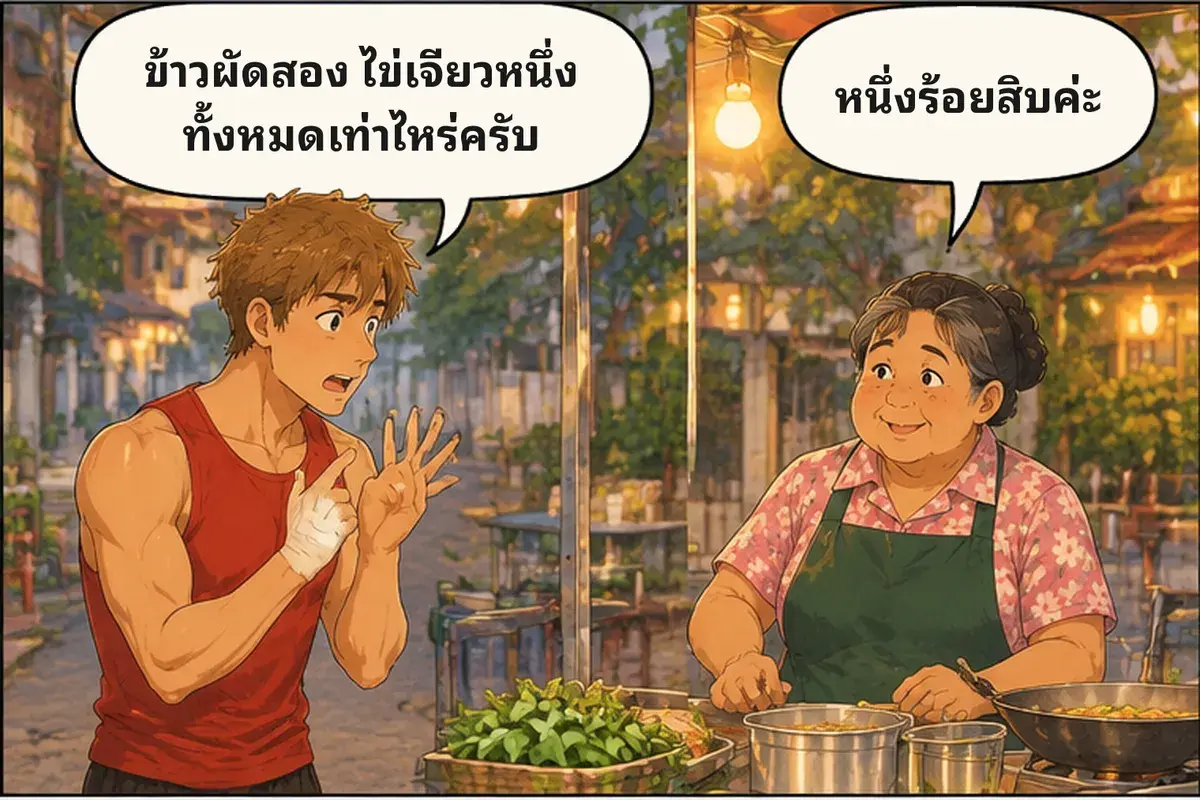
- ดีมา
ข้าวผัดสอง ไข่เจียวหนึ่ง ทั้งหมดเท่าไหร่ครับ
Two fried rice and one omelette. How much is it altogether? (man speaking)
- ป้านี
หนึ่งร้อยสิบค่ะ
One hundred and ten (woman speaking).
Grammar for this text
- รับอะไรดีคะ — 'what would you like?': this is how a stall owner starts the conversation. You know all three words from unit 1: รับ, อะไร, ดี.
- ไม่เอาไข่นะคะ — 'no egg, please'. ไม่เอา is 'I don't want': ไม่ goes before the verb. ไข่ is egg; it often goes into fried rice and pad kra pao, so it's better to say this right away. Reading ไข่:
ไcomes first but is said afterข— kài. - เอาไข่ด้วยครับ — 'an egg too, please': เอา — 'I'll take', ด้วย — 'and also'.
- ไข่ดาวหรือไข่เจียวคะ — 'a fried egg or an omelette?'. If you ask for an egg, the vendor will ask which one: ไข่ดาว is a sunny-side-up fried egg, ไข่เจียว is a puffy Thai omelette fried in plenty of oil.
- ไข่อีกสิบบาท — 'the egg is ten baht more': an extra charge, as in the previous dialogue.
- ข้าวผัดสอง ไข่เจียวหนึ่ง — 'fried rice, two; omelette, one'. The number goes after the dish with no other words: this is a quick way to repeat an order and check it.
- ทั้งหมดเท่าไหร่ครับ — 'how much is it altogether?'. Say it when you've ordered everything, and you'll hear the total. It works at a stall, at a market and in a café.
- หนึ่งร้อยสิบ — 'a hundred and ten': first the hundred (หนึ่งร้อย), then the rest (สิบ). People often say it shorter: ร้อยสิบ. Check: 50 + 50 + 10 = 110.
Words and grammar of the unit: Order food to go.
Learn the words from the texts with flashcards
In the app, you can tap any word in a text to see its translation, forms and examples, and new words stick with flashcards. 15 minutes a day.
Start for freeEverything is open for free. No card needed to sign up.