

Thai dialogue with translation · A1 · 7 lines
ขอผัดไทยค่ะ Pad thai, please
Comic · 7 panels

- ยานา
ขอผัดไทยค่ะ
Pad thai, please (woman speaking).
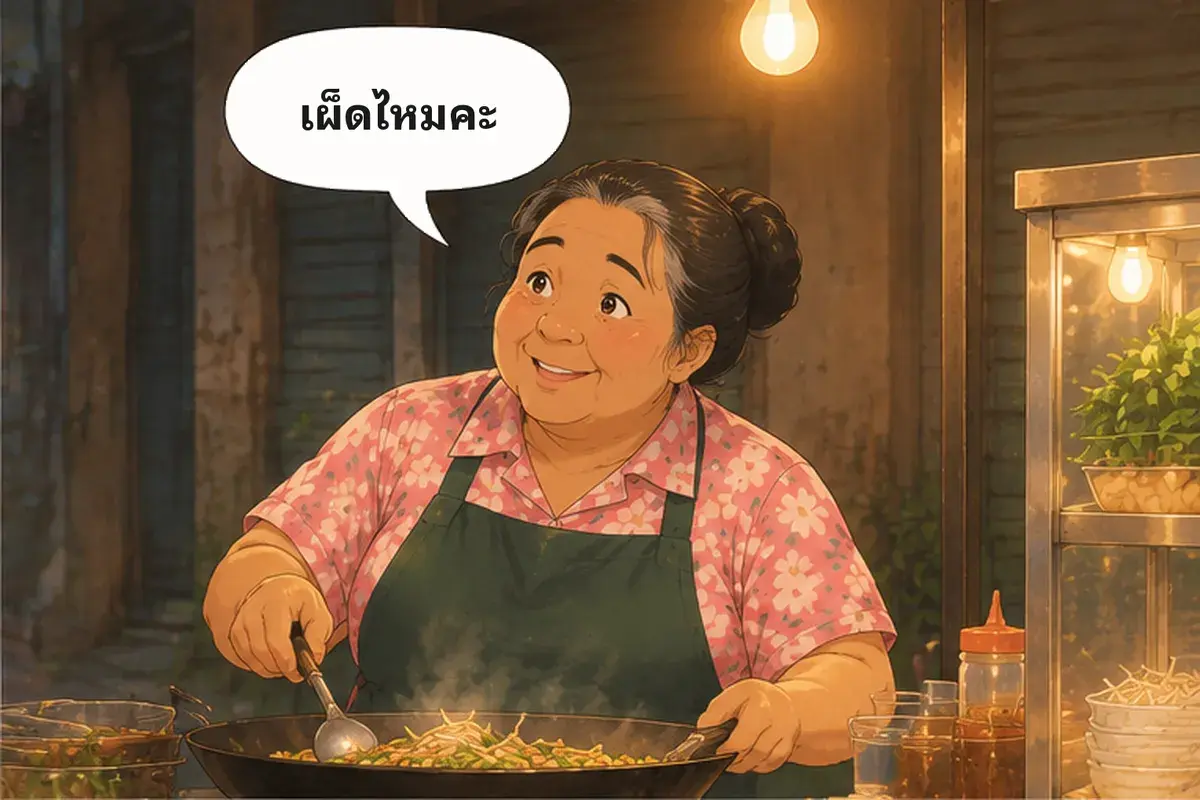
- ป้านี
เผ็ดไหมคะ
Spicy? (woman speaking)

- ยานา
ไม่เผ็ดนะคะ
Not spicy, please (woman speaking).
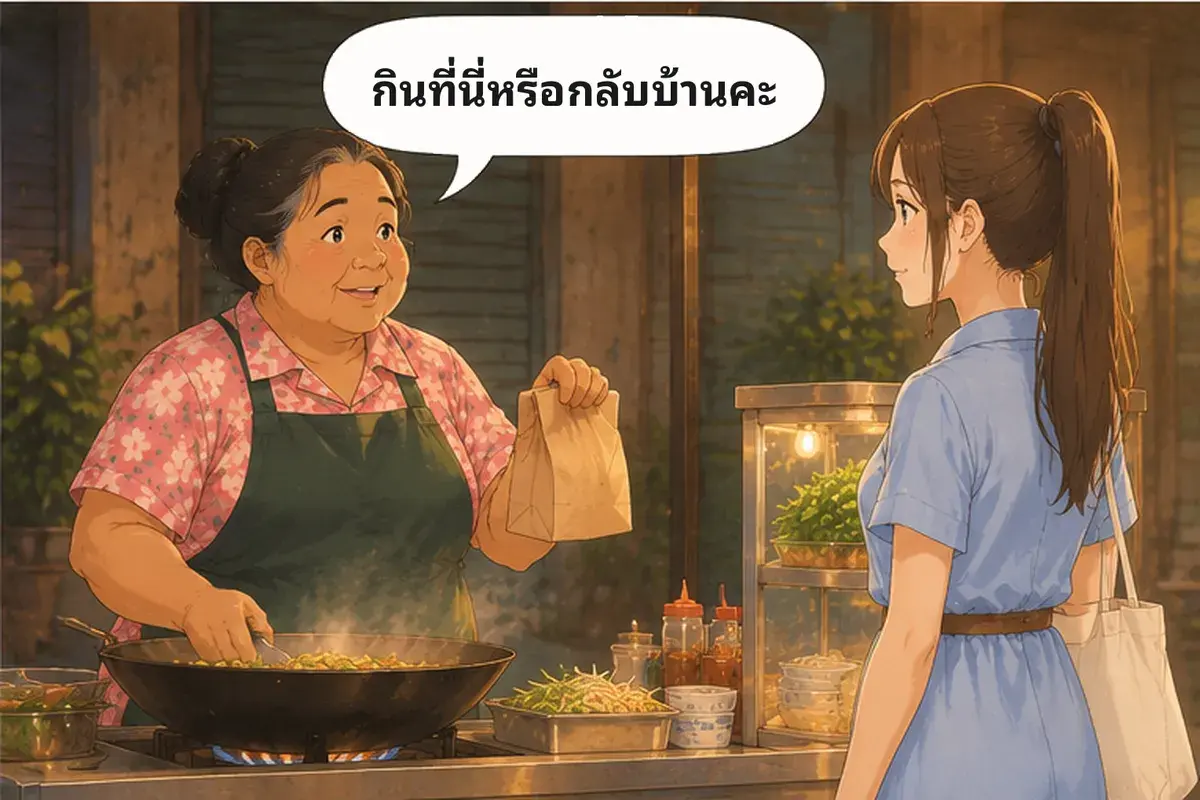
- ป้านี
กินที่นี่หรือกลับบ้านคะ
Will you eat here or take it to go? (woman speaking)

- ยานา
กลับบ้านค่ะ ข้าวผัดด้วยค่ะ
To go. And some fried rice too, please (woman speaking).
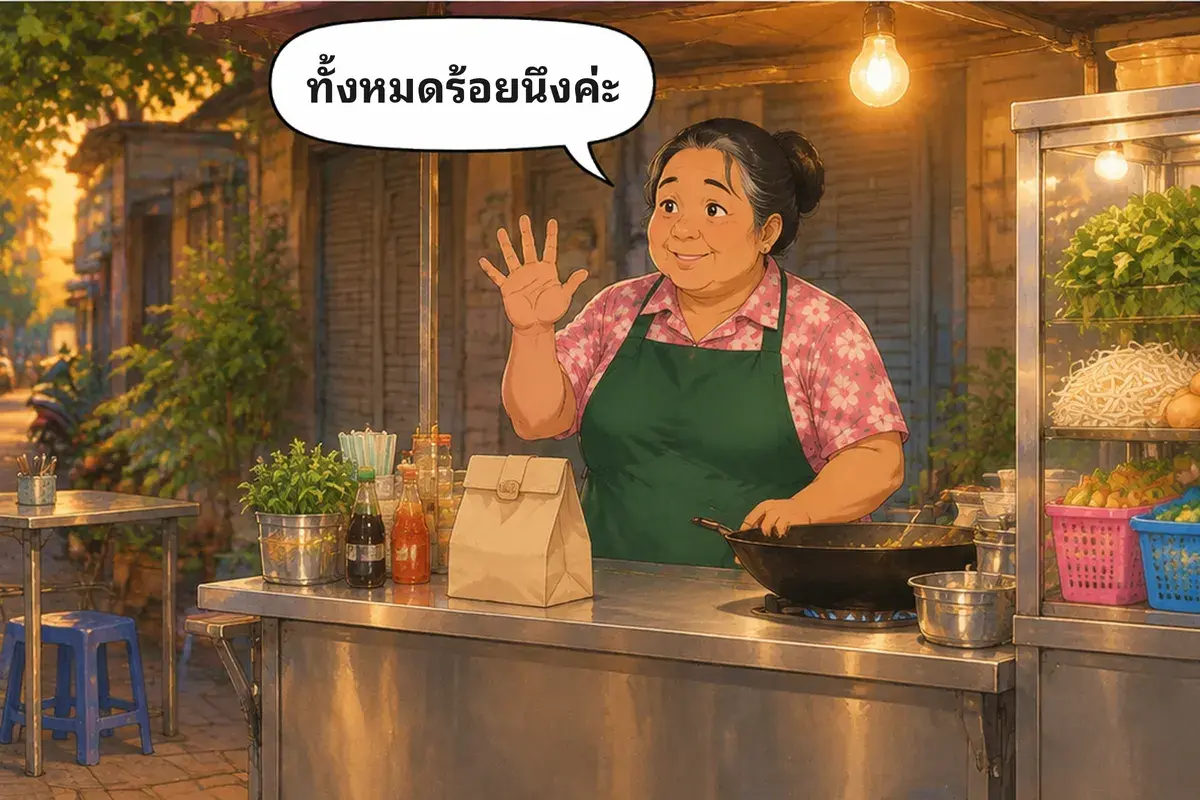
- ป้านี
ทั้งหมดร้อยนึงค่ะ
That's a hundred altogether (woman speaking).
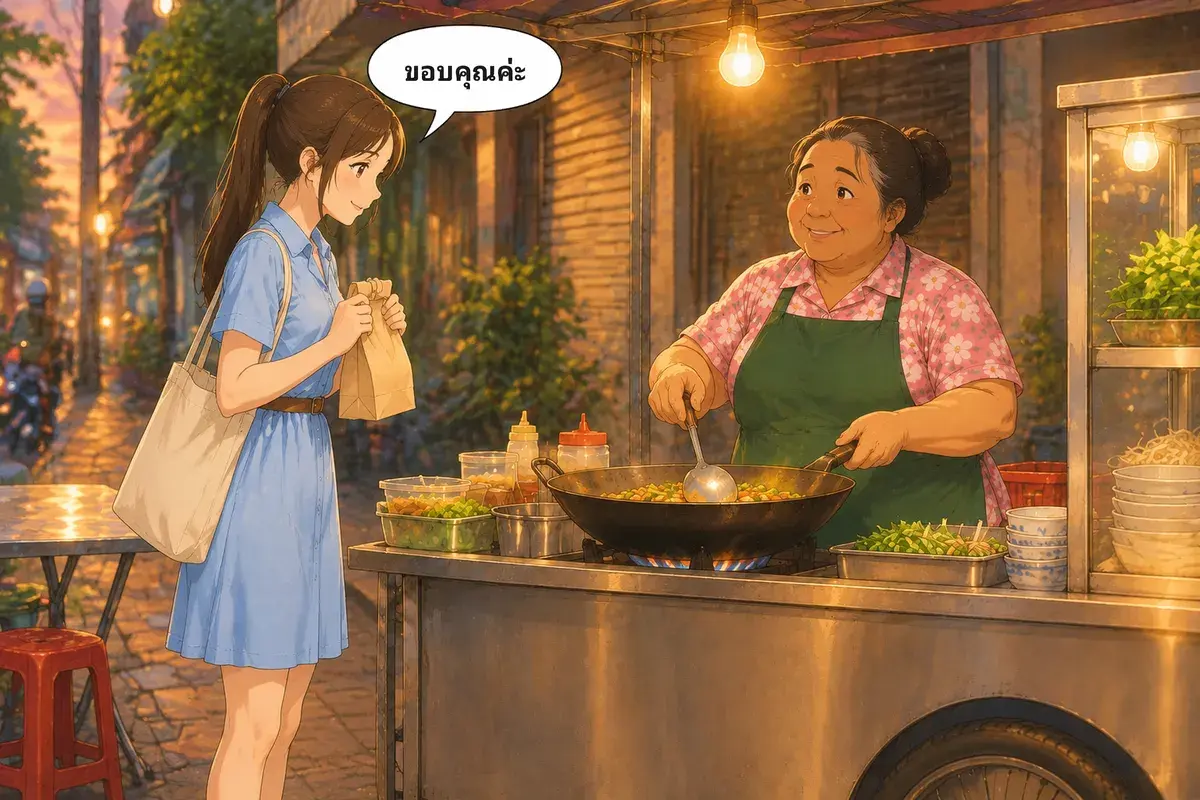
- ยานา
ขอบคุณค่ะ
Thank you (woman speaking).
Grammar for this text
- กินที่นี่หรือกลับบ้านคะ — a set phrase, 'for here or to go?' (gin tîi-nîi rʉ̌ʉ glàp-bâan ká). You'll hear it at every stall and café. How it's built comes later; for now learn it whole. Answer with one word: กลับบ้านค่ะ — 'to go' (literally 'go back home'). If you're staying, say ที่นี่ (tîi-nîi) 'here' from unit 1.
- เผ็ดไหมคะ — 'spicy?'. The food is cooked to order, so the cook asks right away. ไหม turns a sentence into a yes/no question — the rule is in the unit grammar.
- ไม่เผ็ดนะคะ — 'not spicy, please': ไม่ (not) goes before the word, and นะ makes the request softer, as in unit 1. Yana doesn't eat spicy food and says this at every stall. Reading ไม่: the vowel
ไis written first but said afterม. - ข้าวผัดด้วยค่ะ — 'and some fried rice too': ด้วย (dûai) at the end of a line means 'and also, please'. That's how you add to an order without starting over.
- ร้อยนึง — 'a hundred' (rɔ́ɔi-nʉng). นึง is the spoken form of 'one'; this is how a round price is said. The full form is หนึ่งร้อย (nʉ̀ng-rɔ́ɔi), used in formal speech.
- ทั้งหมด — 'in total, altogether': this is how the total is given.
Words and grammar of the unit: Order food to go.
Learn the words from the texts with flashcards
In the app, you can tap any word in a text to see its translation, forms and examples, and new words stick with flashcards. 15 minutes a day.
Start for freeEverything is open for free. No card needed to sign up.