

Thai dialogue with translation · A1 · 10 lines
ผมขึ้นผิดฝั่ง I got on on the wrong side
Comic · 8 panels

- โจ
ดีมา ทำไมมาสาย
Dima, why are you late?

- ดีมา
ขอโทษครับพี่โจ ผมขึ้นผิดฝั่ง
I'm sorry, Joe. I got on on the wrong side (man speaking).

- โจ
ไปถึงไหน
How far did you get?

- ดีมา
ถึงสถานีสุดท้ายครับ
To the last station (man speaking).
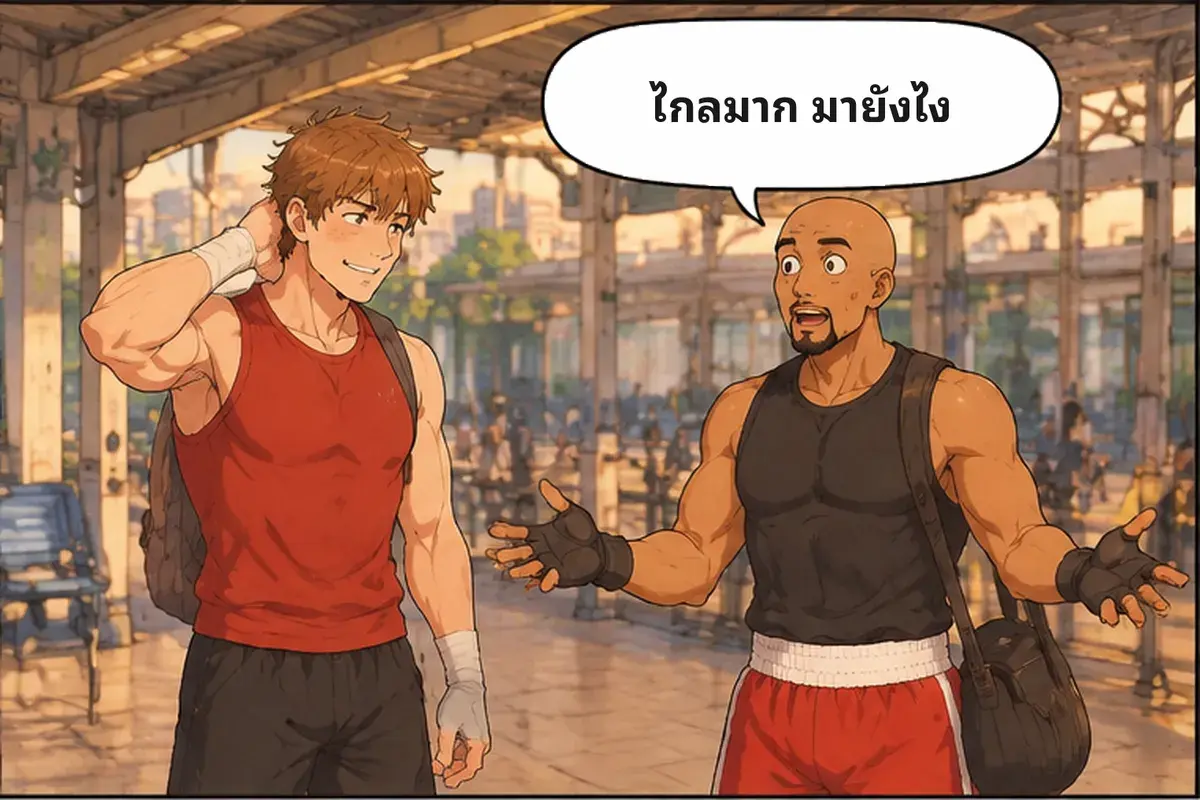
- โจ
ไกลมาก มายังไง
That's really far. How did you get here?

- ดีมา
นั่งมอเตอร์ไซค์ครับ ผมรีบ
I took a motorcycle taxi. I was in a hurry (man speaking).
- โจ
ค่ามอเตอร์ไซค์เท่าไหร่
How much was the motorcycle taxi fare?

- ดีมา
สองร้อยครับ แพงมาก
Two hundred. Very expensive (man speaking).
- โจ
ไม่เป็นไร ครั้งหน้าดูป้ายก่อนขึ้นนะ ไปซ้อม
Never mind. Next time, look at the sign before you get on, OK? Go practice.

- ดีมา
ขอบคุณครับพี่โจ
Thanks, Joe (man speaking).
Grammar for this text
- ทำไมมาสาย — Why are you late?
มา สายmeans 'to be late': hereสายmeans 'late' (its other meaning is 'line').ทำไม(tam-mai) means 'why'. There's noครับ: the coach talks to his student in a casual way. - ขอโทษครับพี่โจ — I'm sorry, Joe (man speaking).
พี่before a name means 'older one': that's how Dima calls his coach, and it's how people call older people they know. In English we just say the name.ขอโทษis the polite 'sorry': that's what you say when you're late. - ผมขึ้นผิดฝั่ง — I got on on the wrong side (man speaking).
ผิด+ noun means 'the wrong …':ผิด ฝั่งis 'the wrong side of the platform'. In the same way,ผิด สายmeans 'the wrong line'. - ไปถึงไหน — How far did you get?
ถึงmeans 'to get to, to reach',ไหนmeans 'where': 'where did you get to?' - ถึงสถานีสุดท้ายครับ — To the last station (man speaking).
สุดท้ายmeans 'last' and comes after the noun:สถานี สุดท้ายis 'the last station, the end of the line'. - นั่งมอเตอร์ไซค์ครับ — I took a motorcycle taxi (man speaking).
นั่งmeans 'to sit', and with a vehicle it means 'to ride'.มอเตอร์ไซค์is a motorcycle taxi. ผมรีบ — I was in a hurry (man speaking). To tell someone not to hurry, sayไม่ต้อง รีบ. - ค่ามอเตอร์ไซค์เท่าไหร่ — How much was the motorcycle taxi fare?
ค่า+ a thing means 'the cost of …, the fee for …' (unit 11). A long ride by motorcycle taxi is expensive: two hundred baht instead of forty on the Skytrain. - ครั้งหน้าดูป้ายก่อนขึ้นนะ — Next time, look at the sign before you get on, OK?
ครั้งหน้าmeans 'next time' (ครั้งmeans 'time, occasion'). On a Skytrain platform, the sign above the track shows the last station of the line, so you can tell which way the train is going.
Words and grammar of the unit: Buy a ticket and get around by Skytrain.
Learn the words from the texts with flashcards
In the app, you can tap any word in a text to see its translation, forms and examples, and new words stick with flashcards. 15 minutes a day.
Start for freeEverything is open for free. No card needed to sign up.