

Thai dialogue with translation · A1 · 9 lines
กินเผ็ดได้ไหมจ๊ะ Can you eat spicy food?
Comic · 7 panels

- ป้านี
กินเผ็ดได้ไหมจ๊ะ
Can you eat spicy food?
- ดีมา
ผมกินได้ครับ
I can eat it (man speaking).

- ยานา
ฉันกินเผ็ดไม่ได้ค่ะ
I can't eat spicy food (woman speaking).

- ป้านี
เผ็ดนิดหน่อยได้ไหมจ๊ะ
Is a little spicy OK?
- ยานา
ไม่ได้ค่ะ ไม่ใส่พริกนะคะ
No, I can't. No chili, please (woman speaking).

- ดีมา
ผมเอาเผ็ดครับ
I'll have it spicy (man speaking).
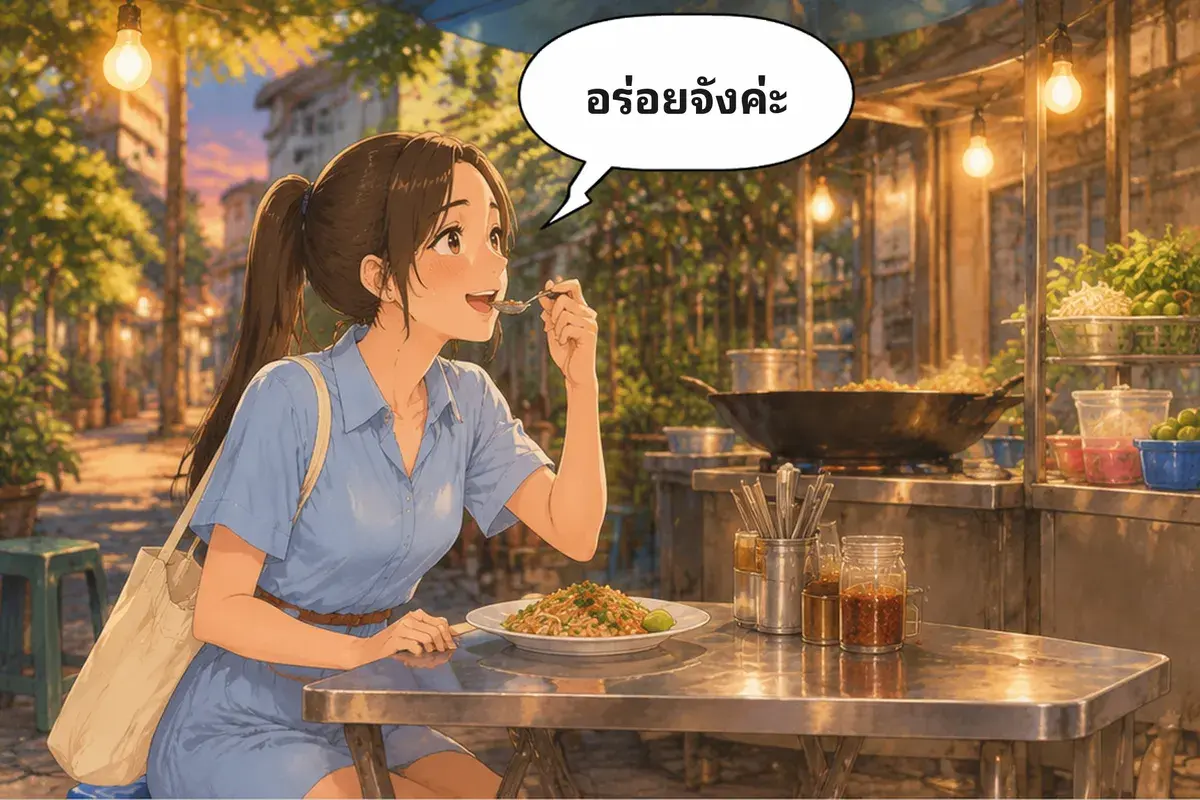
- ยานา
อร่อยจังค่ะ
So delicious! (woman speaking)

- ดีมา
โอ๊ย เผ็ดจังครับ
Ouch, so spicy! (man speaking)

- ป้านี
เอาน้ำไหมจ๊ะ
Do you want some water?
Grammar for this text
- กินเผ็ดได้ไหมจ๊ะ — this is how Auntie Ni asks 'Can you eat spicy food?'. ได้ (dâai) comes after the verb and means 'can, may'. ไหม at the end makes it a question. จ๊ะ (já) is a friendly particle of older people.
- ผมกินได้ครับ — 'I can eat it'. The answer repeats the verb with ได้, or it can be even shorter: ได้ครับ.
- ฉันกินเผ็ดไม่ได้ค่ะ — ไม่ได้ (mâi-dâai) is 'can't, not allowed': ไม่ comes right before ได้. A man says ผม … ครับ, a woman says ฉัน … ค่ะ.
- เผ็ดนิดหน่อยได้ไหมจ๊ะ — 'Is a little spicy OK?'. นิดหน่อย (nít-nɔ̀ɔi) is 'a little'. For a Thai, 'a little' is still quite hot, so Yana says no to that too.
- ไม่ได้ค่ะ and ไม่ใส่พริกนะคะ — 'no' and 'no chili, please'. ใส่ (sài) is 'to put into food', พริก (prík) is chili, ไม่ใส่ is 'without'. นะ softens the request. Ask for no chili before the cooking starts.
- เผ็ดจังครับ — 'So spicy!'. จัง (jang) makes the word stronger, like English 'so'.
Words and grammar of the unit: Order food not spicy and ask for the check.
Learn the words from the texts with flashcards
In the app, you can tap any word in a text to see its translation, forms and examples, and new words stick with flashcards. 15 minutes a day.
Start for freeEverything is open for free. No card needed to sign up.