

Thai dialogue with translation · A1 · 7 lines
ชวนปูไปเที่ยวทะเล Invite Pu on a trip to the sea
Comic · 6 panels
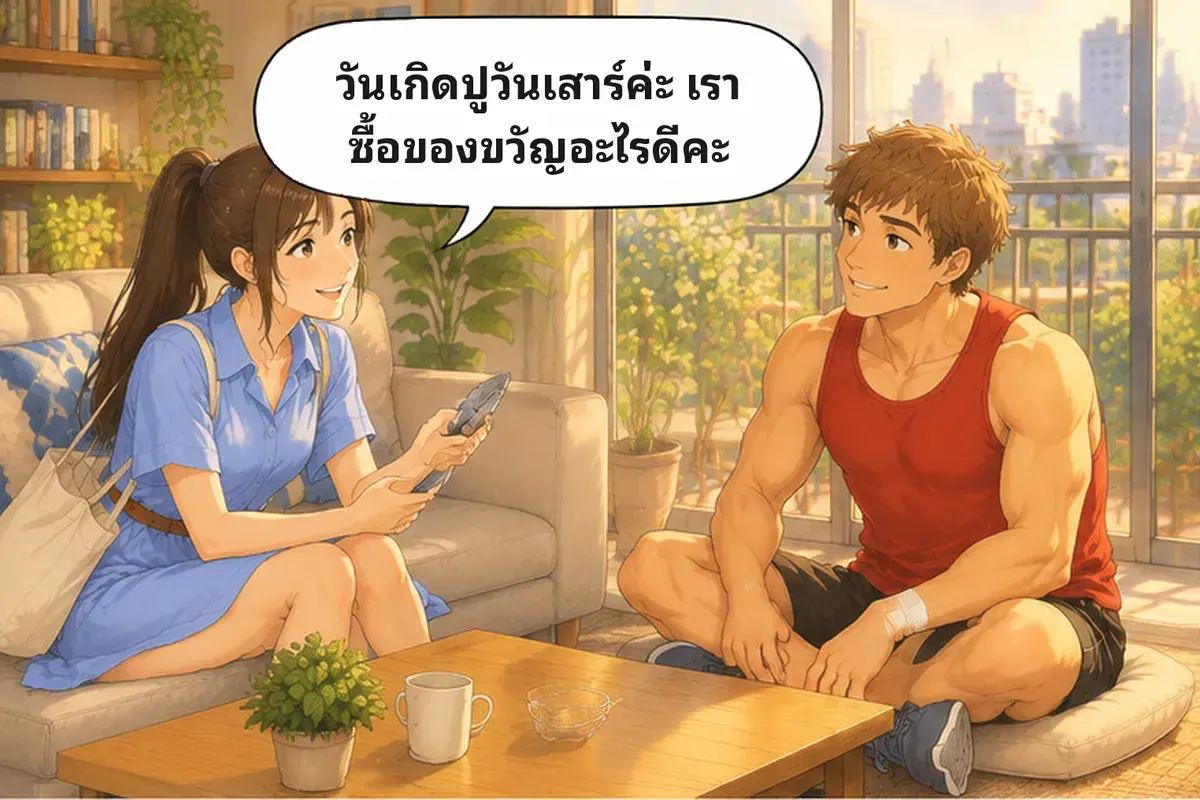
- ยานา
วันเกิดปูวันเสาร์ค่ะ เราซื้อของขวัญอะไรดีคะ
Pu's birthday is on Saturday. What present should we buy? (woman speaking)

- ดีมา
ผมเลือกไม่เก่งครับ ปูชอบอะไรครับ
I'm not good at choosing. What does Pu like? (man speaking)

- ยานา
ปูรักทะเลค่ะ ว่ายน้ำเก่งด้วย
Pu loves the sea (woman speaking). She swims well, too.
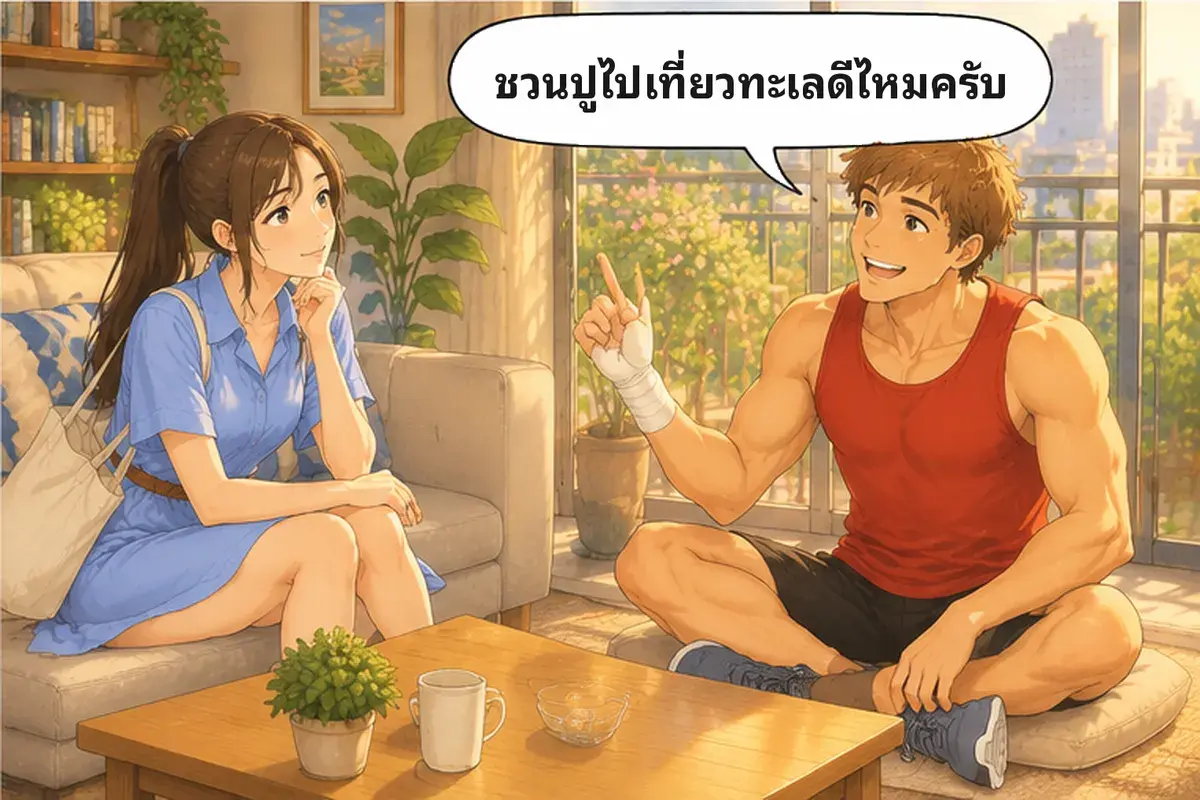
- ดีมา
ชวนปูไปเที่ยวทะเลดีไหมครับ
How about inviting Pu on a trip to the sea? (man speaking)

- ยานา
ดีค่ะ ปูไม่ชอบไปคนเดียว เราไปด้วยกันนะคะ
Good. Pu doesn't like going alone. Let's go together, OK? (woman speaking)
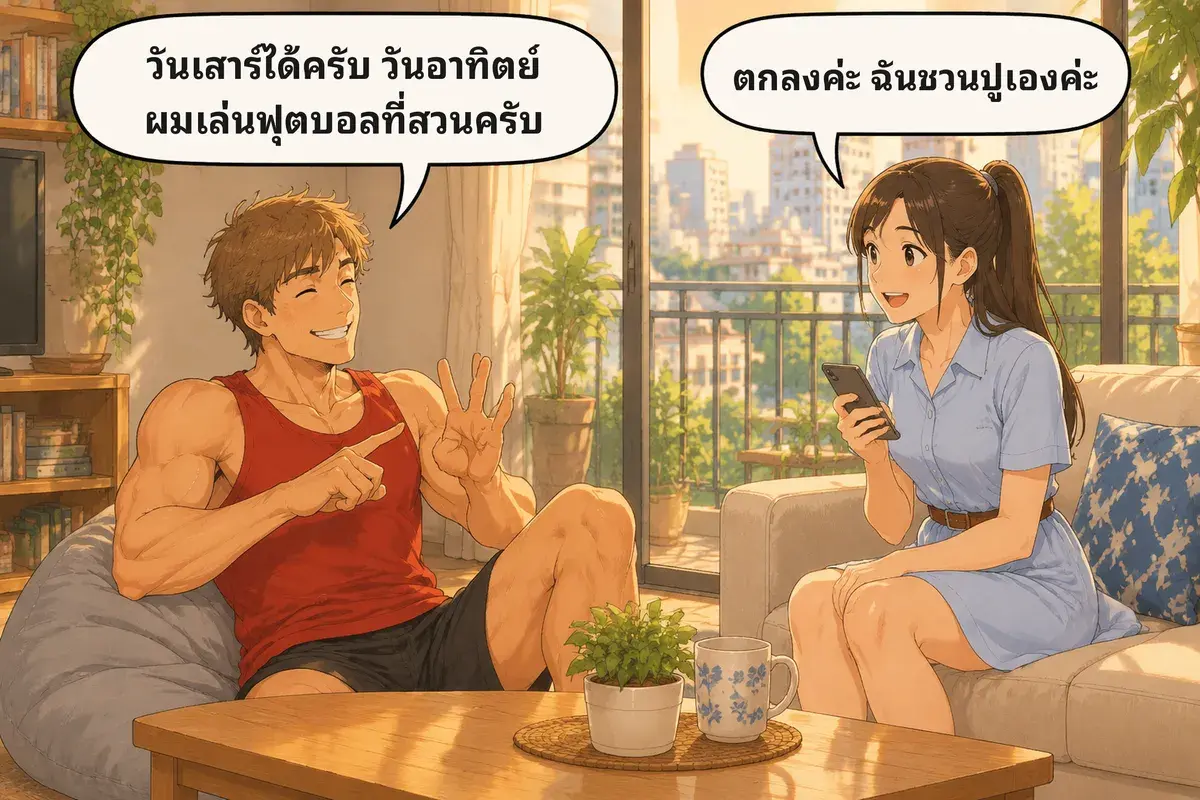
- ดีมา
วันเสาร์ได้ครับ วันอาทิตย์ผมเล่นฟุตบอลที่สวนครับ
Saturday works. On Sunday I play soccer in the park (man speaking).
- ยานา
ตกลงค่ะ ฉันชวนปูเองค่ะ
Deal. I'll invite Pu myself (woman speaking).
Grammar for this text
- วันเกิดปูวันเสาร์ค่ะ — 'Pu's birthday is on Saturday'. There's no
เป็น(to be): the two words just stand side by side, 'Pu's birthday — Saturday'. Dates are often said this way; the three words for 'to be' come in unit 20. - เลือกไม่เก่งครับ —
เก่ง(gèng, good at) goes after the verb: 'not good at choosing'. Same with ว่ายน้ำเก่ง — swims well. - ปูรักทะเล —
รักmeans 'to love': stronger thanชอบ(to like). ชวนปูไปเที่ยวทะเลดีไหมครับ — 'how about inviting Pu on a trip to the sea?':ชวน+ who +ไป+ where, andดีไหมat the end means 'how about it?'.เที่ยว— to go out, to travel for fun. - ปูไม่ชอบไปคนเดียว — 'Pu doesn't like going alone':
คนเดียว(alone) goes after the verb. เราไปด้วยกันนะคะ —ด้วยกัน(together), andนะsoftens it: 'let's go together, OK?'. - วันอาทิตย์ผมเล่นฟุตบอลที่สวนครับ —
เล่นฟุตบอล— to play soccer,ที่สวน— in the park. The day of the week comes at the start of the sentence, likeคืนนี้in text 1. วันเสาร์ได้ครับ — 'Saturday works'. - ฉันชวนปูเองค่ะ —
เองmeans 'myself': 'I'll invite Pu myself'.
Words and grammar of the unit: Invite a friend to the movies.
Learn the words from the texts with flashcards
In the app, you can tap any word in a text to see its translation, forms and examples, and new words stick with flashcards. 15 minutes a day.
Start for freeEverything is open for free. No card needed to sign up.