

Thai dialogue with translation · A1 · 9 lines
โชคดีจ้ะ Good luck!
Comic · 5 panels
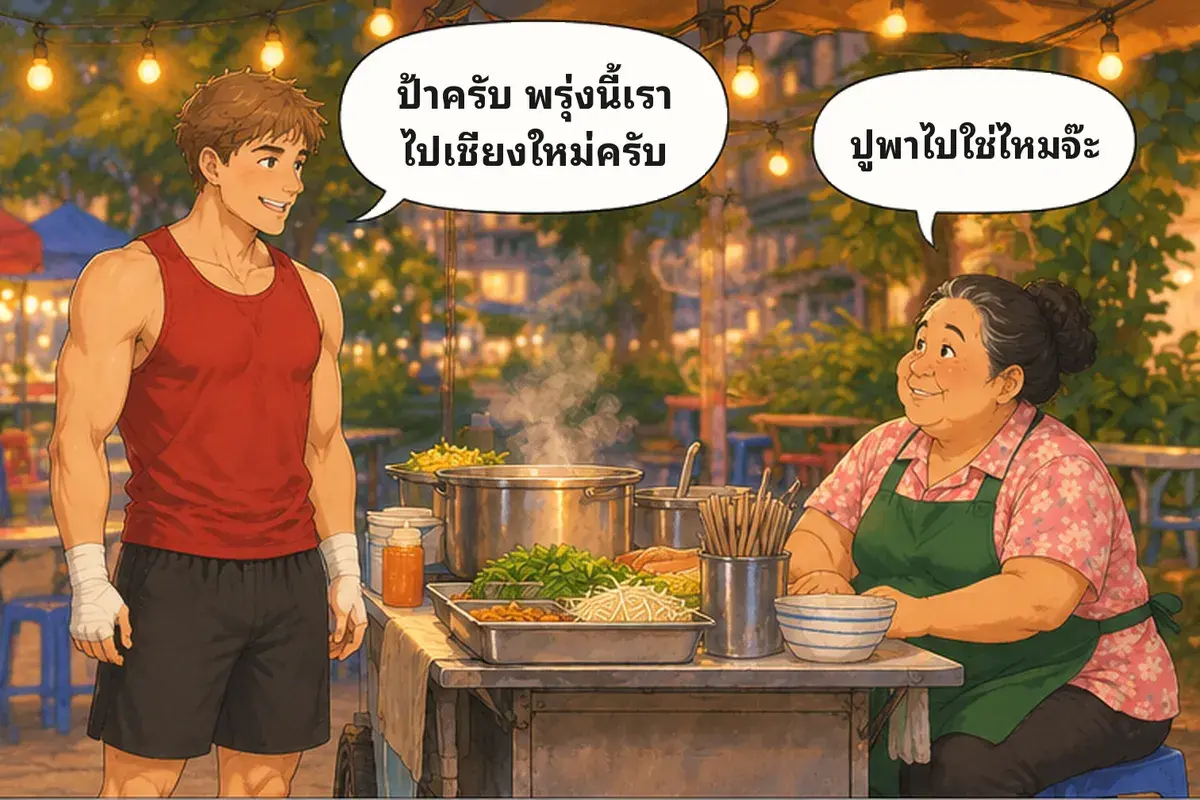
- ดีมา
ป้าครับ พรุ่งนี้เราไปเชียงใหม่ครับ
Auntie, we're going to Chiang Mai tomorrow (man speaking).
- ป้านี
ปูพาไปใช่ไหมจ๊ะ
Pu is taking you, right?
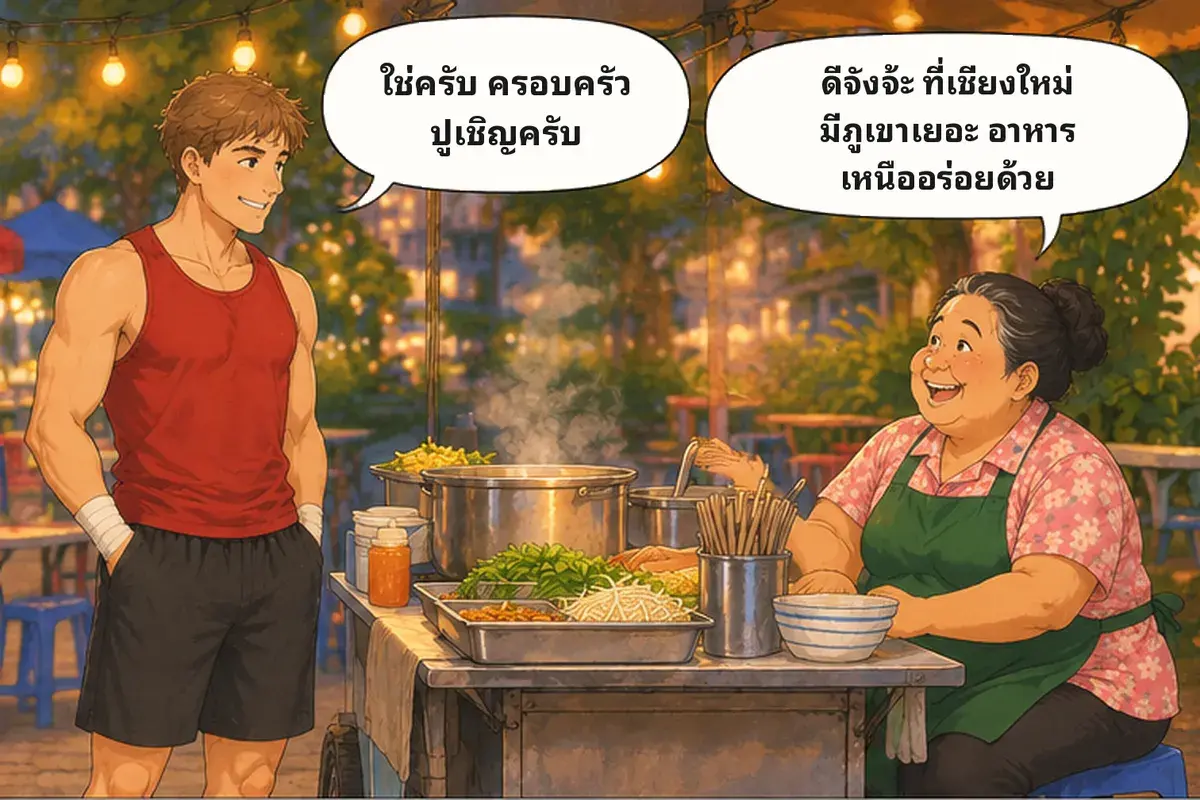
- ดีมา
ใช่ครับ ครอบครัวปูเชิญครับ
Yes. Pu's family invited us (man speaking).
- ป้านี
ดีจังจ้ะ ที่เชียงใหม่มีภูเขาเยอะ อาหารเหนืออร่อยด้วย
How nice! There are lots of mountains in Chiang Mai. And northern food is delicious, too.
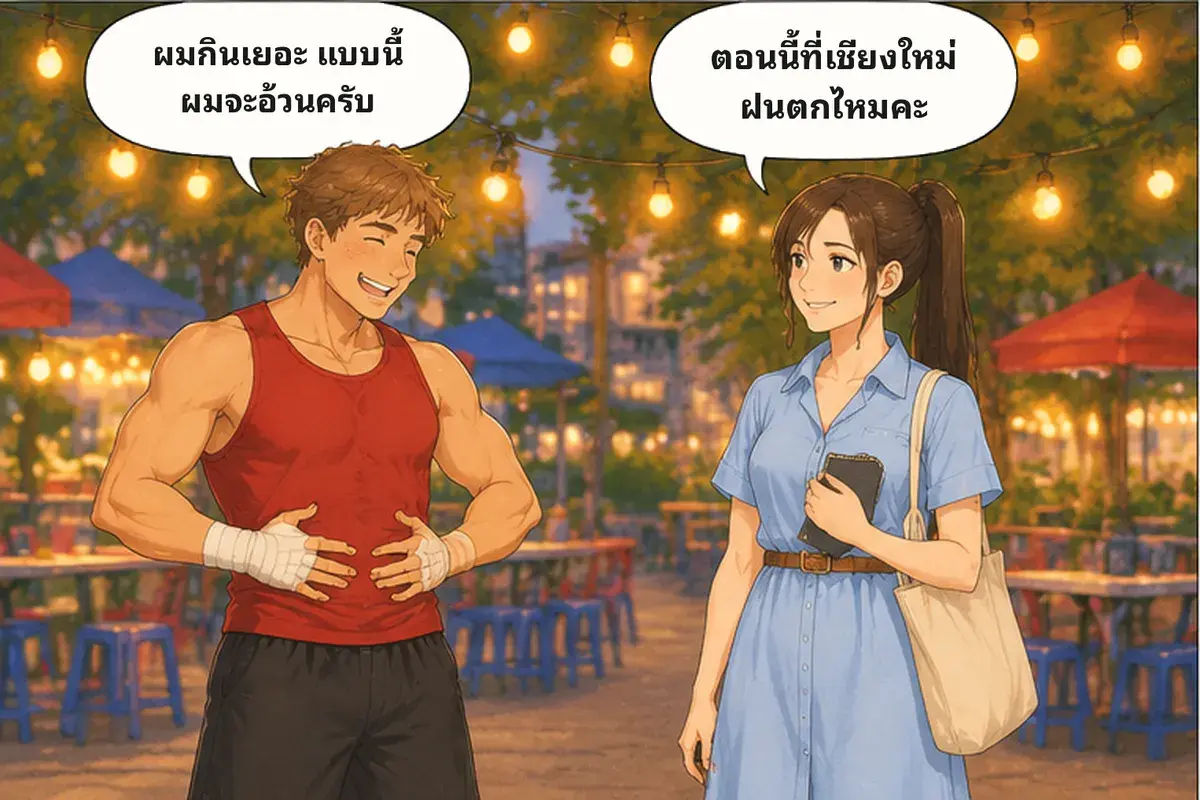
- ดีมา
ผมกินเยอะ แบบนี้ผมจะอ้วนครับ
I eat a lot. At this rate I'll get fat (man speaking).
- ยานา
ตอนนี้ที่เชียงใหม่ฝนตกไหมคะ
Is it raining in Chiang Mai now? (woman speaking)
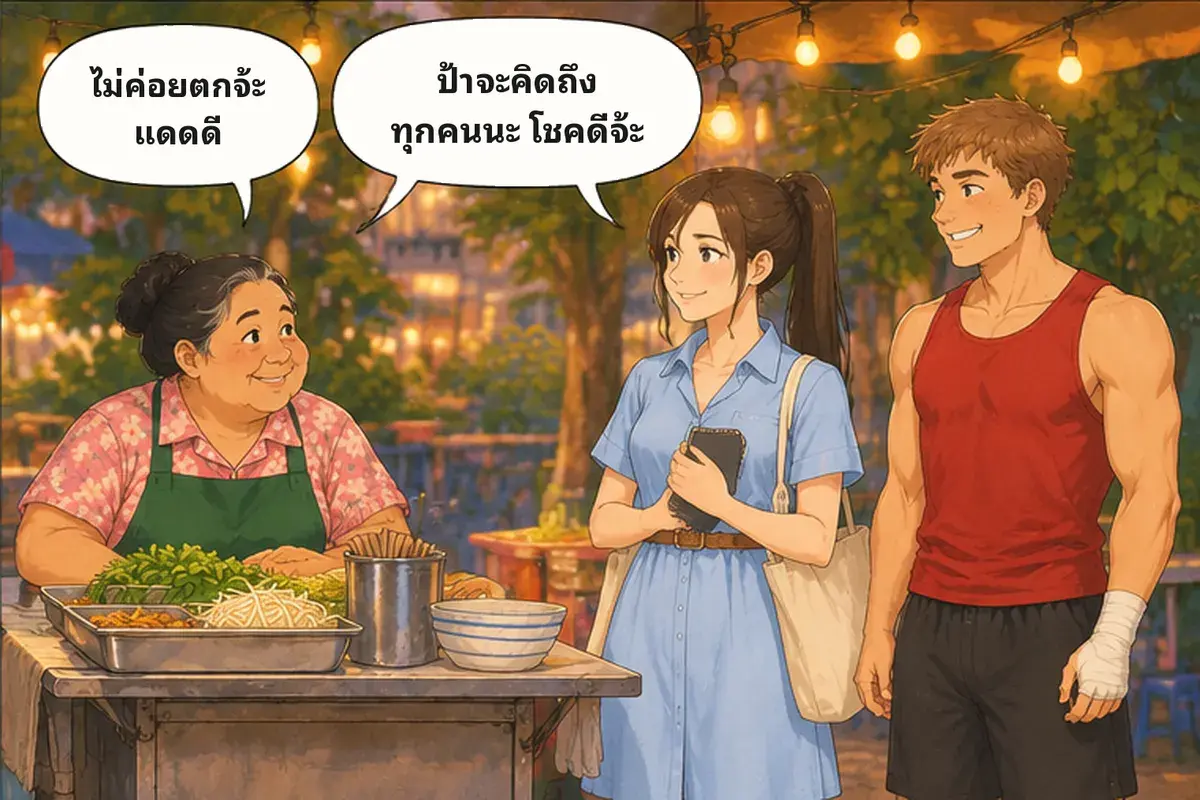
- ป้านี
ไม่ค่อยตกจ้ะ แดดดี
It doesn't rain much. The sunshine is nice.
- ป้านี
ป้าจะคิดถึงทุกคนนะ โชคดีจ้ะ
I'll miss you all. Good luck!
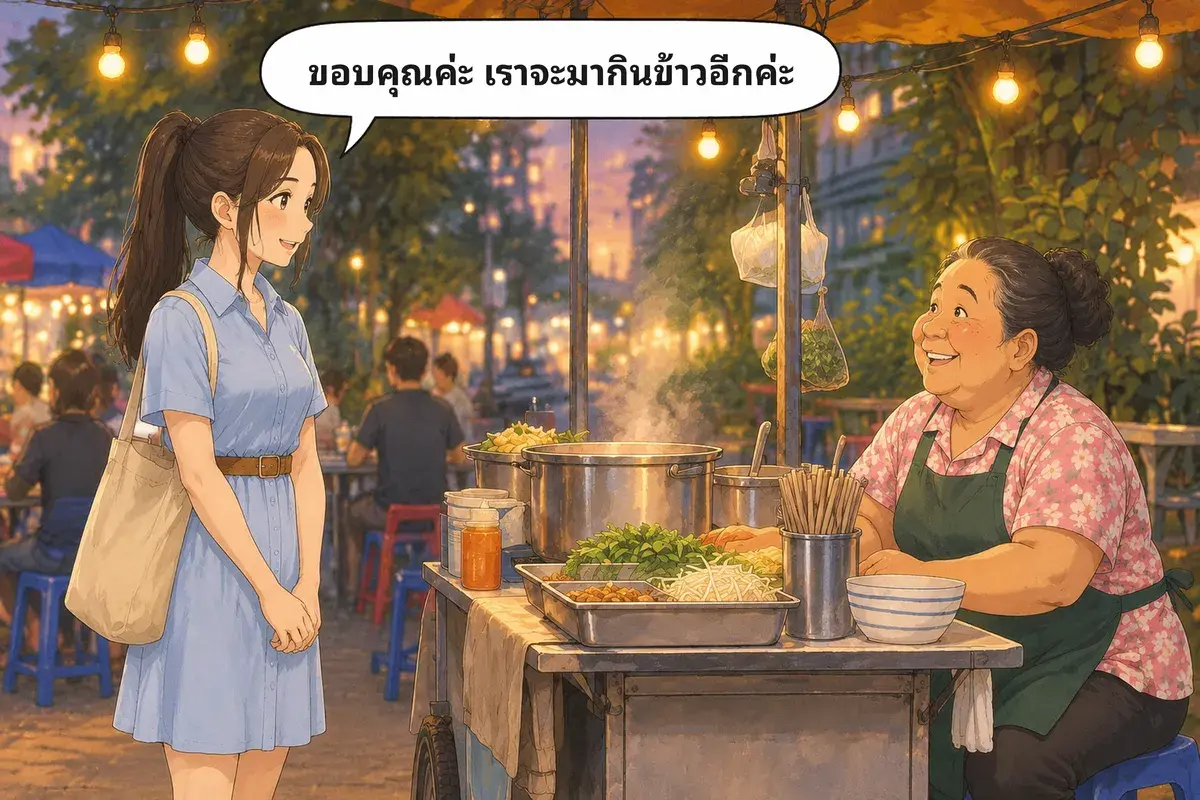
- ยานา
ขอบคุณค่ะ เราจะมากินข้าวอีกค่ะ
Thank you! We'll come and eat here again (woman speaking).
Grammar for this text
- ปูพาไปใช่ไหมจ๊ะ — Pu is taking you, right?
พา(paa) — to take a person with you: ปูพาไป — Pu is taking you there.จ๊ะ(já) is an affectionate particle of an older woman. - ครอบครัวปูเชิญครับ — Pu's family invited us (man speaking).
เชิญ(chəən) means both 'to invite' and 'please, come in'. It's a polite word for guests: you hear it at the door and see it on signs. - ฝนตกไหมคะ — Is it raining? (woman speaking)
ฝน ตก— it's raining, literally 'rain falls'. The answer repeats the verb: ไม่ค่อยตกจ้ะ — Not much.แดด ดี— sunny, literally 'the sunshine is good'. - แบบนี้ผมจะอ้วนครับ — At this rate I'll get fat (man speaking). Dima is joking about himself. Friends joke about weight, but don't say
อ้วนto someone you don't know. - ป้าจะคิดถึงทุกคนนะ — I'll miss you all. Auntie Ni calls herself
ป้า(auntie) instead of 'I'.คิดถึง(kít-tʉ̌ng) — to miss. - โชคดีจ้ะ — Good luck! (chôok-dii) People say it when someone is leaving on a trip or has an exam or another big day ahead.
Words and grammar of the unit: Talk about the weather and people.
Learn the words from the texts with flashcards
In the app, you can tap any word in a text to see its translation, forms and examples, and new words stick with flashcards. 15 minutes a day.
Start for freeEverything is open for free. No card needed to sign up.