

Thai dialogue with translation · A1 · 9 lines
ฉันเป็นนักออกแบบค่ะ I'm a designer
Comic · 6 panels
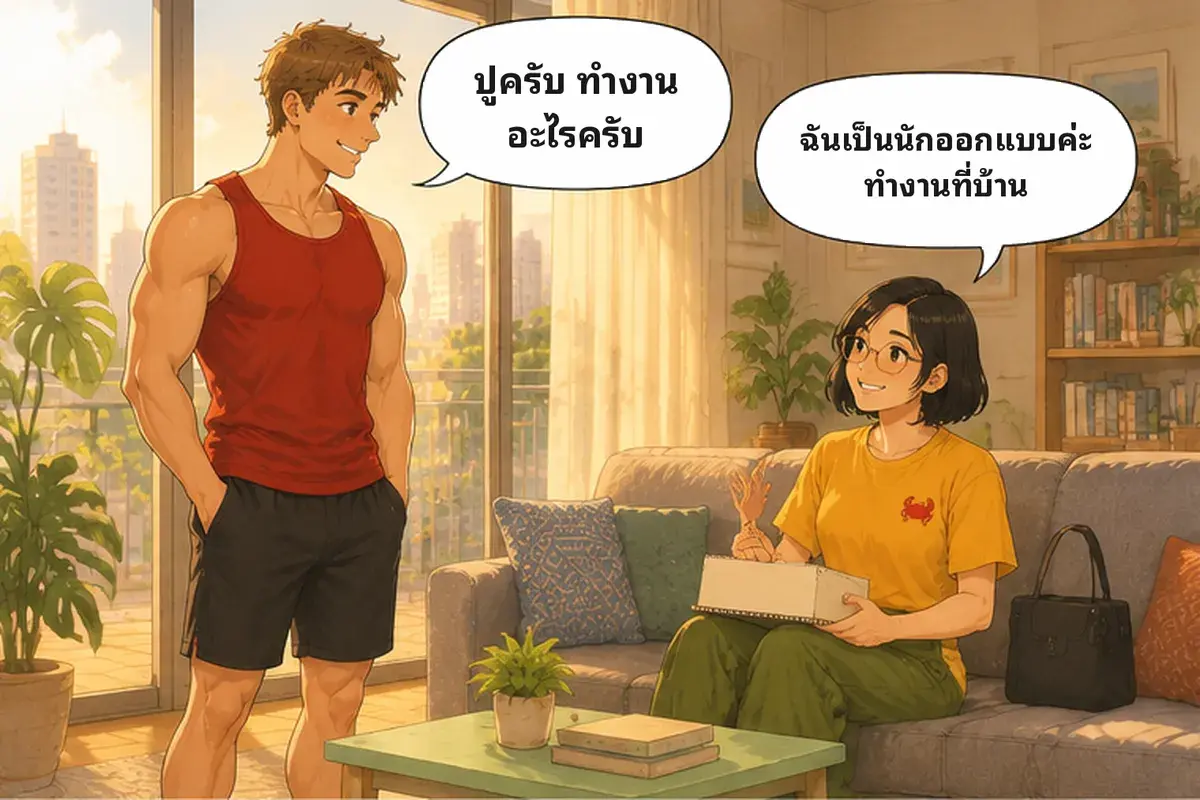
- ดีมา
ปูครับ ทำงานอะไรครับ
Pu, what do you do for work? (man speaking)
- ปู
ฉันเป็นนักออกแบบค่ะ ทำงานที่บ้าน
I'm a designer. I work at home (woman speaking).
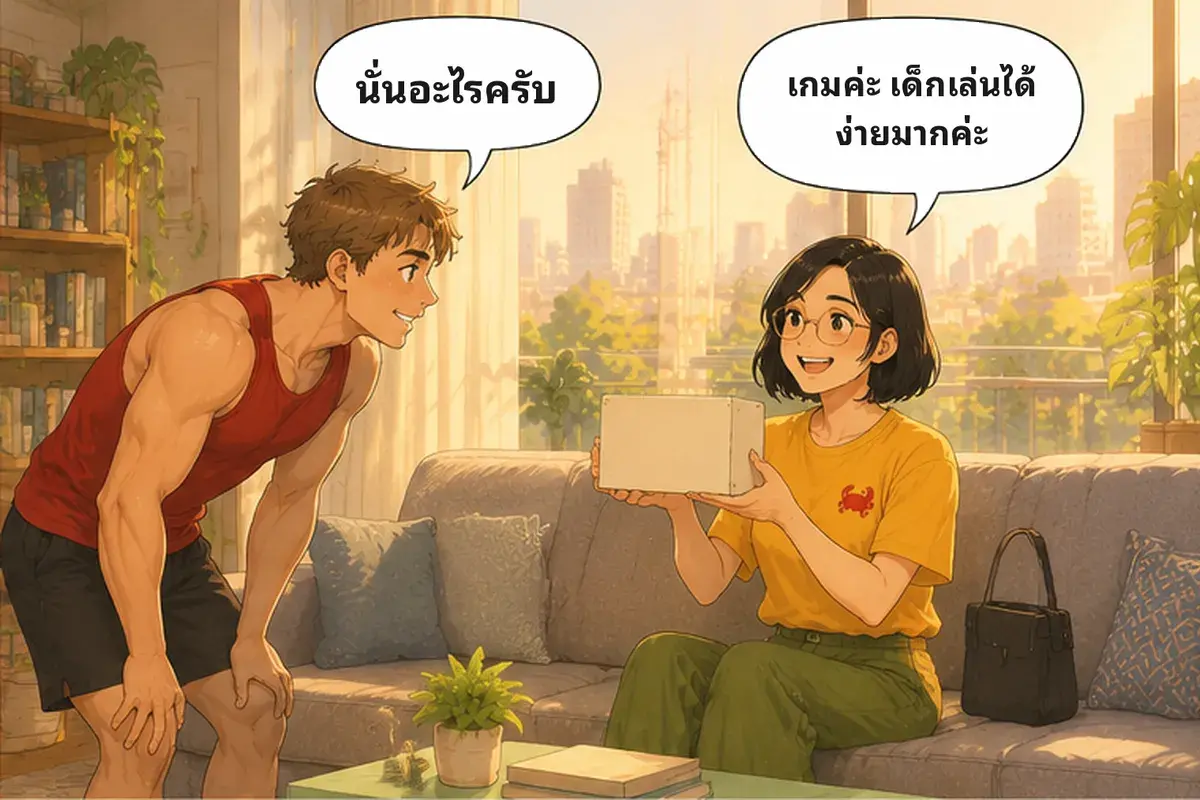
- ดีมา
นั่นอะไรครับ
What's that? (man speaking)
- ปู
เกมค่ะ เด็กเล่นได้ ง่ายมากค่ะ
A game. Children can play it. It's very easy (woman speaking).
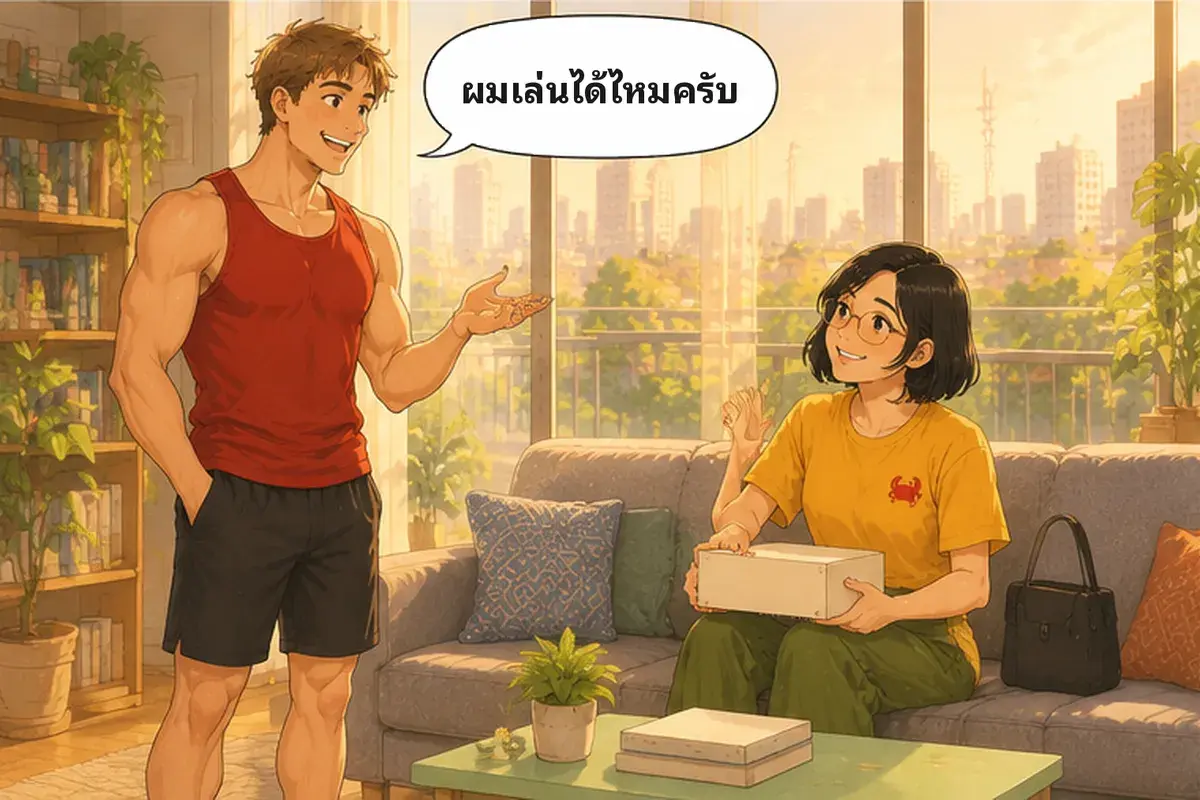
- ดีมา
ผมเล่นได้ไหมครับ
Can I play? (man speaking)
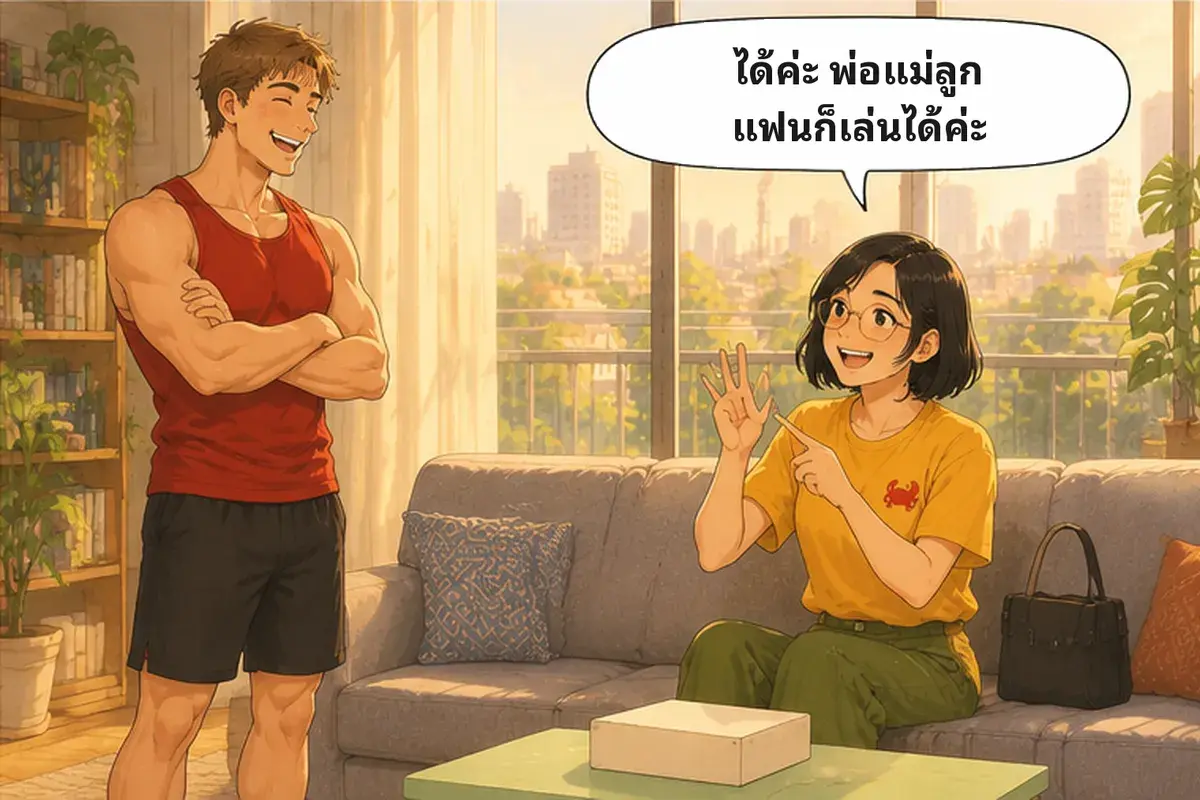
- ปู
ได้ค่ะ พ่อแม่ลูกแฟนก็เล่นได้ค่ะ
Sure. Dads, moms, children and partners can play too (woman speaking).
- ดีมา
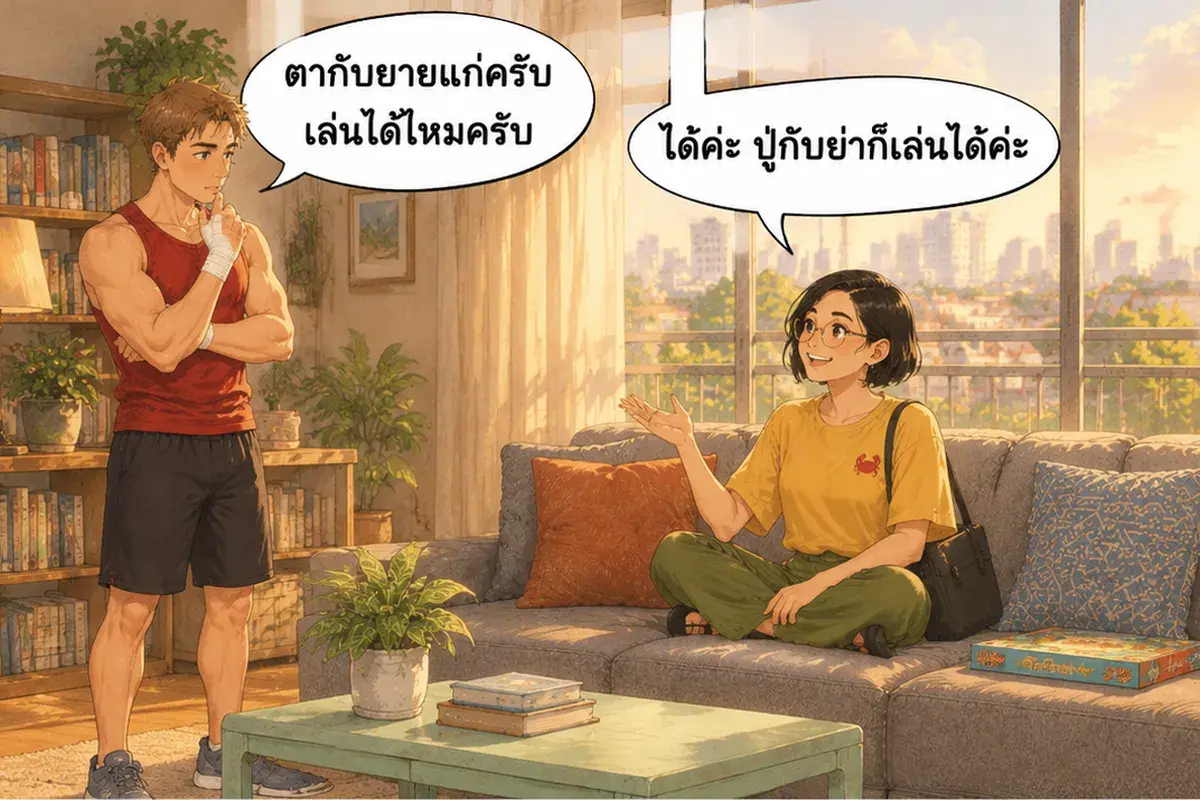
ตากับยายแก่ครับ เล่นได้ไหมครับ
Grandpa and Grandma on Mom's side are old. Can they play? (man speaking)
- ปู
ได้ค่ะ ปู่กับย่าก็เล่นได้ค่ะ
Yes. Grandpa and Grandma on Dad's side can play too (woman speaking).
- ดีมา
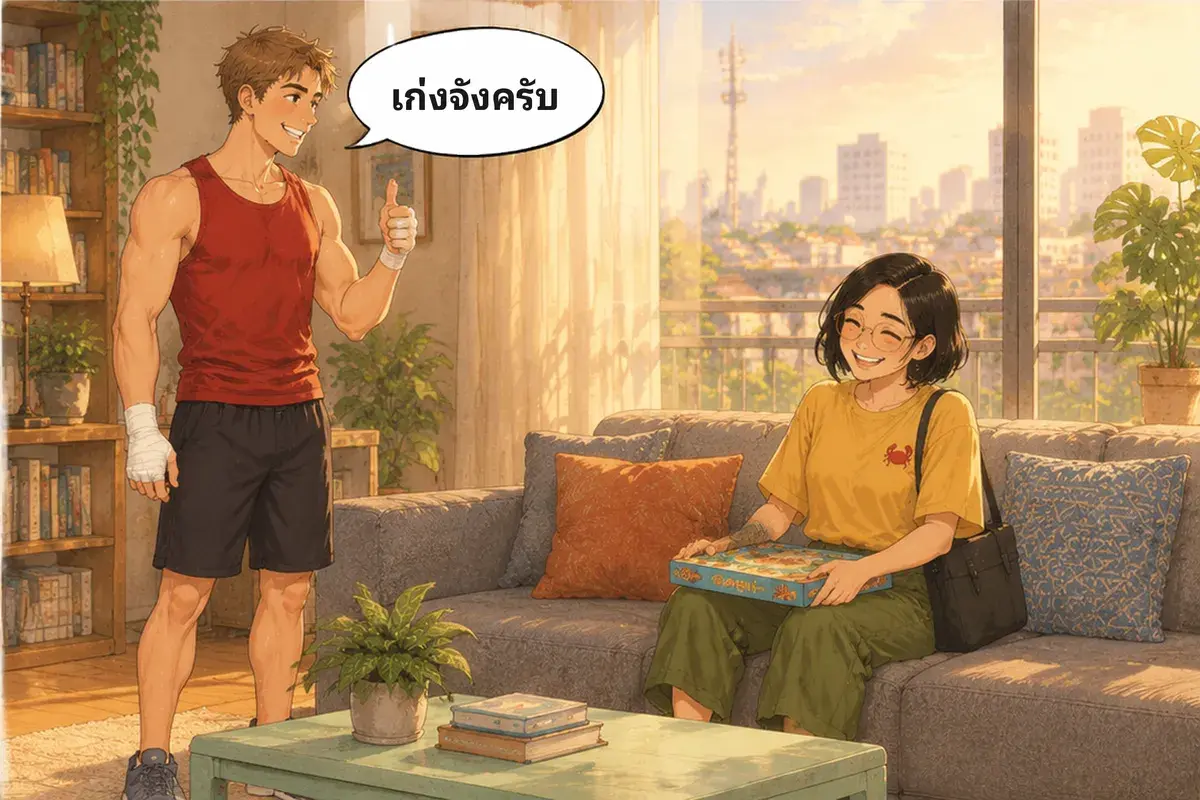
เก่งจังครับ
You're so good! (man speaking)
Grammar for this text
- ฉันเป็นนักออกแบบค่ะ — 'I'm a designer'. นัก- (nák) at the start of a word means 'a person who does this': นักเรียน (nák-riian) student, นักมวย (nák-muai) boxer, นักออกแบบ (nák-ɔ̀ɔk-bɛ̀ɛp) designer.
- ทำงานที่บ้าน — 'I work at home'. ที่ (tîi) means 'at, in', บ้าน (bâan) means 'house, home'. The subject is left out here: in Thai that's normal when it's clear who you mean.
- เด็กเล่นได้ — 'children can play'. The order is 'who — what they do', with no particles; ได้ (dâai) means 'can' (unit 5).
- พ่อแม่ลูกแฟน — 'dads, moms, children, partners'. Thai can list words one after another without 'and'. ลูก (lûuk) is someone's child (a son or a daughter), แฟน (fɛɛn) is a boyfriend or girlfriend, a husband or wife.
- ตากับยายแก่ครับ — 'grandpa and grandma are old'. ตา (dtaa) and ยาย (yaai) are your mom's parents. แก่ (gɛ̀ɛ) means 'old' only about people; about things it's เก่า (gào).
- ปู่กับย่า — your dad's parents. Don't mix up ปู่ (bpùu) with the name Pu (ปู, bpuu, 'crab'): the mark
่overปmakes the tone low, not mid (unit 5).
Words and grammar of the unit: Talk about yourself and your family.
Learn the words from the texts with flashcards
In the app, you can tap any word in a text to see its translation, forms and examples, and new words stick with flashcards. 15 minutes a day.
Start for freeEverything is open for free. No card needed to sign up.