

Thai dialogue with translation · A1 · 12 lines
เป็นพี่น้องใช่ไหมคะ You're brother and sister, right?
Comic · 11 panels
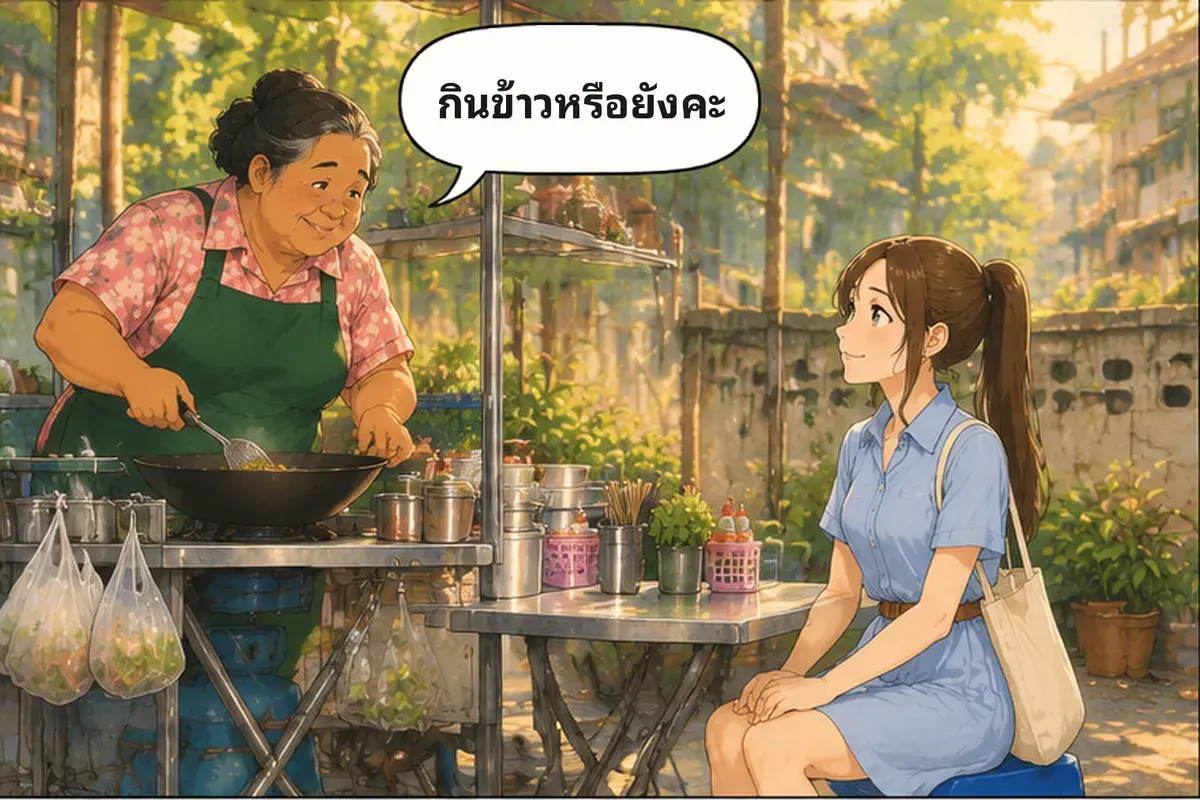
- ป้านี
กินข้าวหรือยังคะ
Have you eaten yet? (woman speaking)
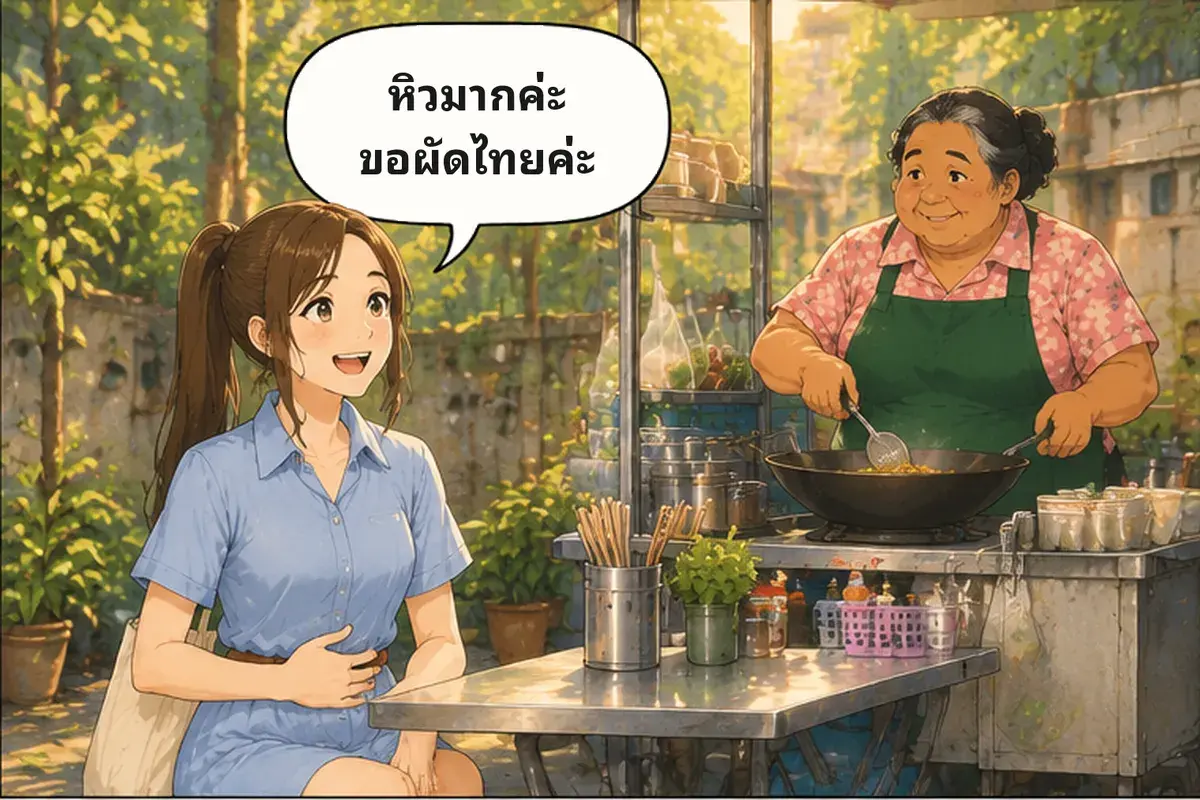
- ยานา
หิวมากค่ะ ขอผัดไทยค่ะ
I'm very hungry. Pad thai, please (woman speaking).

- ป้านี
ยานากับดีมาเป็นพี่น้องใช่ไหมคะ
Yana and Dima are brother and sister, right? (woman speaking)

- ยานา
ใช่ค่ะ ฉันเป็นพี่
That's right. I'm the older one (woman speaking).
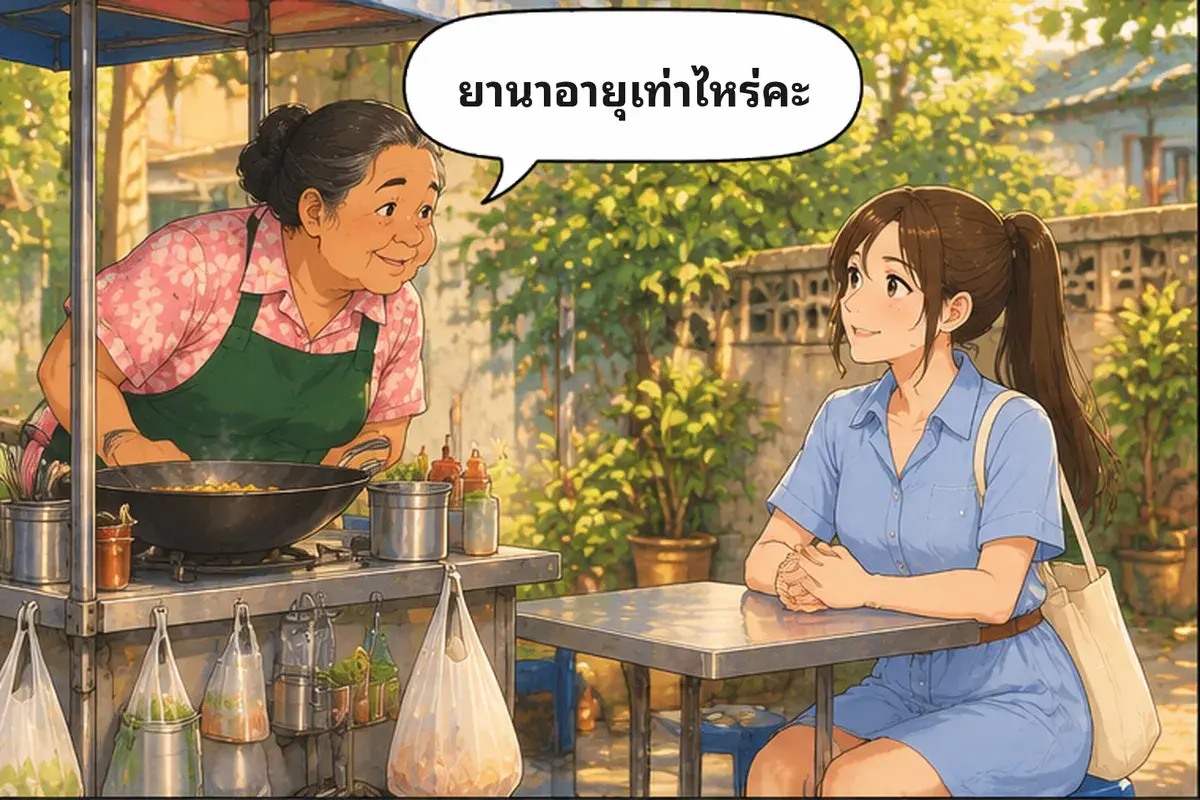
- ป้านี
ยานาอายุเท่าไหร่คะ
How old are you, Yana? (woman speaking)
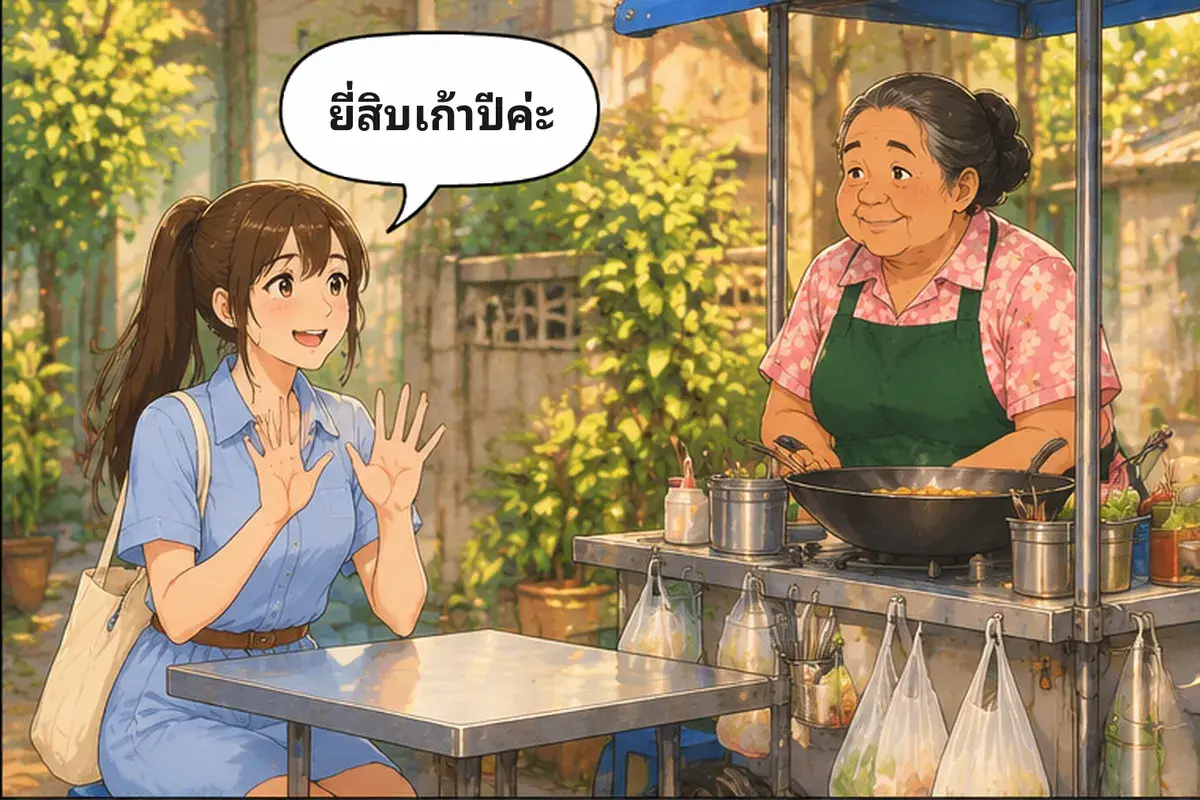
- ยานา
ยี่สิบเก้าปีค่ะ
Twenty-nine years old (woman speaking).
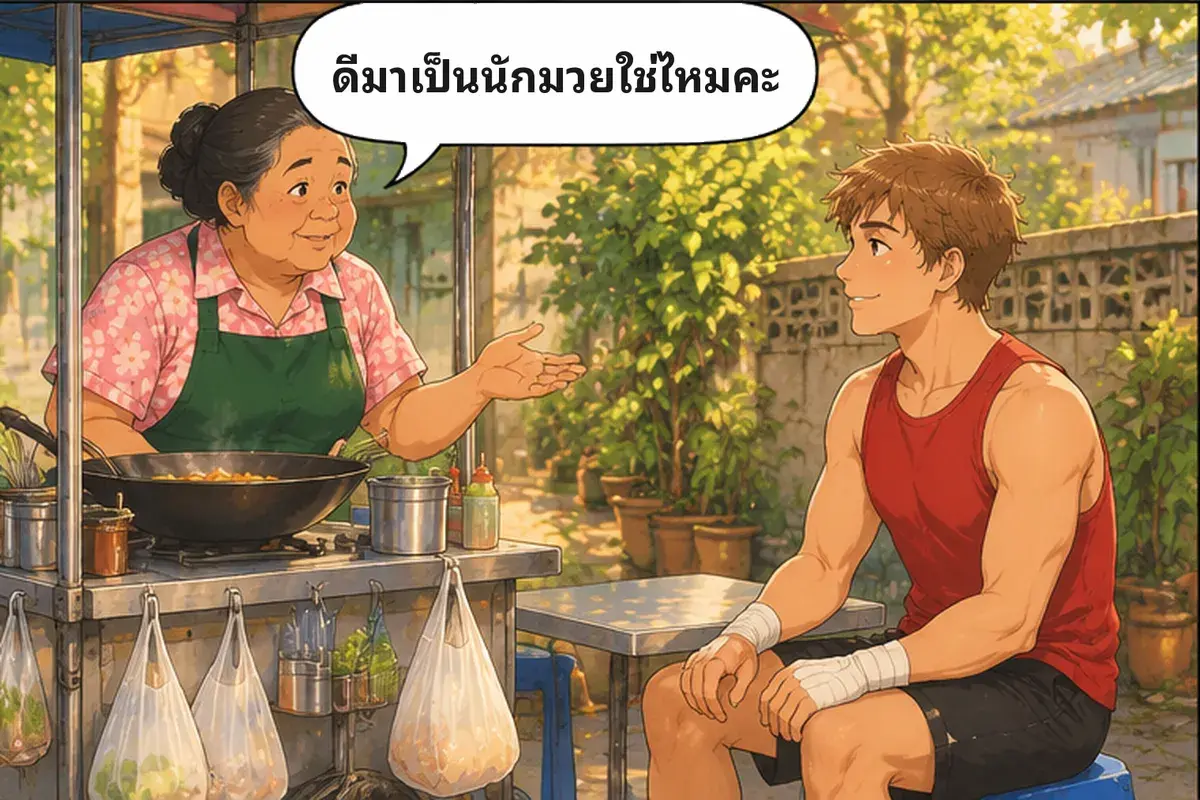
- ป้านี
ดีมาเป็นนักมวยใช่ไหมคะ
Dima is a boxer, right? (woman speaking)

- ดีมา
ไม่ใช่ครับ ผมเป็นนักเรียน
No. I'm a student (man speaking).
- ดีมา
เรียนภาษาไทยกับมวยไทยครับ
I'm learning Thai and Muay Thai (man speaking).
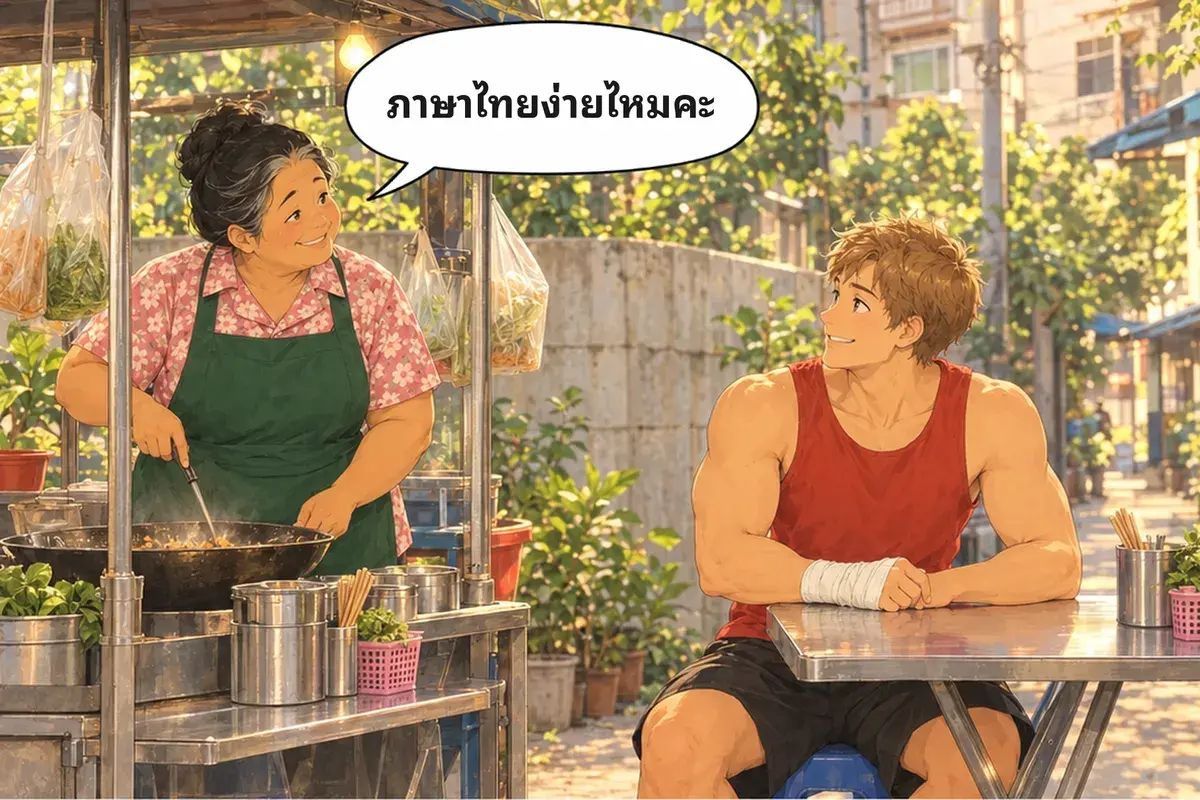
- ป้านี
ภาษาไทยง่ายไหมคะ
Is Thai easy? (woman speaking)
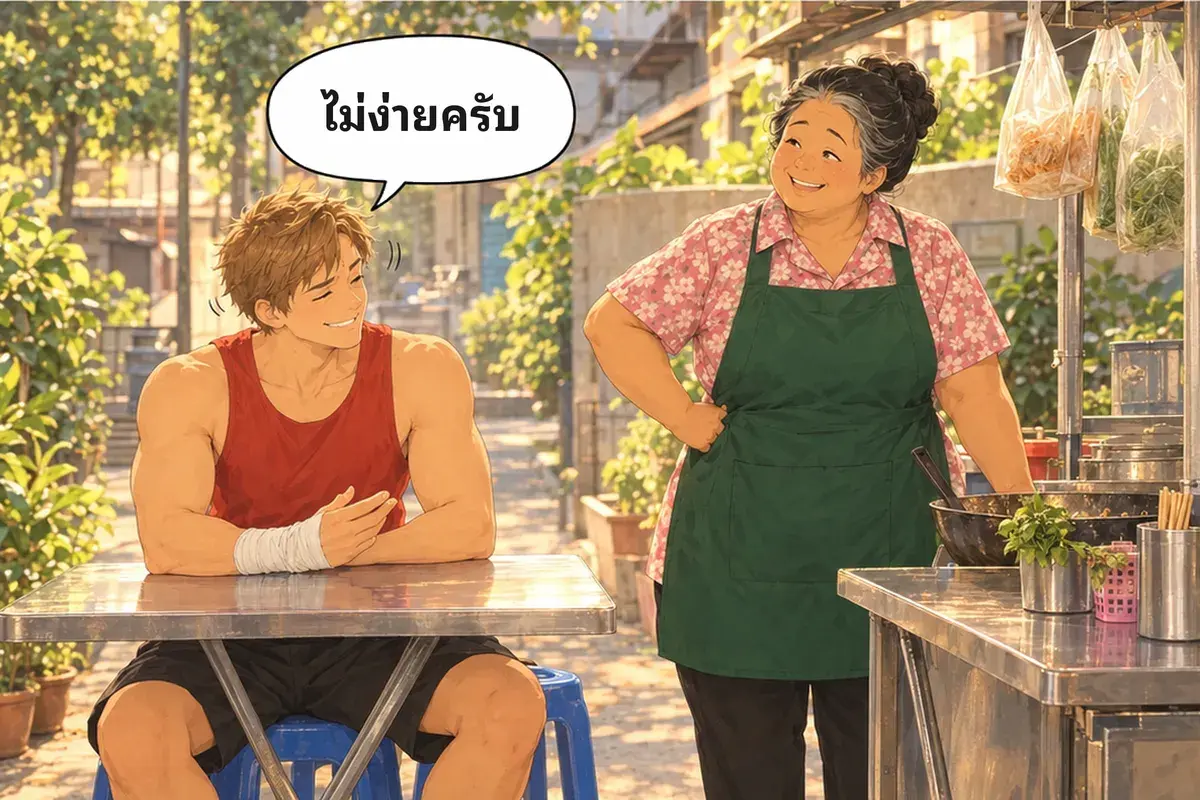
- ดีมา
ไม่ง่ายครับ
It's not easy (man speaking).
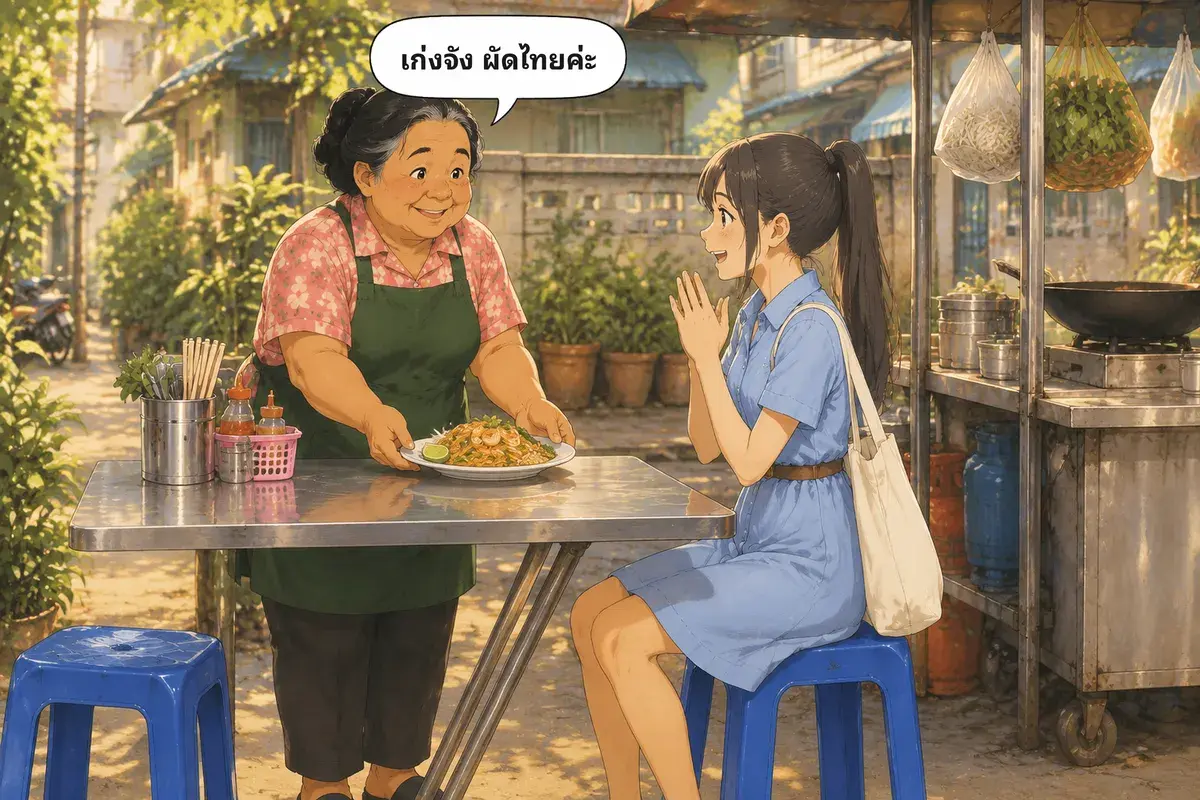
- ป้านี
เก่งจัง ผัดไทยค่ะ
You're so good! Here's your pad thai (woman speaking).
Grammar for this text
- กินข้าวหรือยังคะ — literally 'have you eaten rice yet?' (gin-kâao-rʉ̌ʉ-yang ká). People say it to those they see every day, and it means about the same as 'How are you?'. You don't need to answer in detail. For now, learn the phrase as a whole; how it's built (หรือยัง, 'yet?') comes in level A2. คะ at the end is the polite question particle (unit 1).
- เป็นพี่น้องใช่ไหมคะ — 'you're brother and sister, right?'. ใช่ไหม (châi-mái) goes at the end when you're almost sure and want the other person to confirm. The answer is ใช่ ('yes, that's right') or ไม่ใช่ ('no'). The rule is in the unit grammar.
- ฉันเป็นพี่ — 'I'm the older one'. เป็น (bpen) goes between 'who' and 'what'; พี่ (pîi) is the one who is older. This is how you answer 'which of you is older?'.
- อายุเท่าไหร่คะ — 'how old are you?'. You know เท่าไหร่ (tâo-rài) from prices (unit 2). Answer with a number and the word ปี (bpii) 'year': ยี่สิบเก้าปีค่ะ — 'twenty-nine years old'.
- ไม่ใช่ครับ — 'no, that's not right'. Before 'what someone is', the negative is ไม่ใช่, not ไม่เป็น.
- เก่งจัง (gèng jang) — 'you're so good!', 'well done!'. Thais say it to a foreigner who speaks Thai; จัง means 'so, very' (unit 3).
Words and grammar of the unit: Talk about yourself and your family.
Learn the words from the texts with flashcards
In the app, you can tap any word in a text to see its translation, forms and examples, and new words stick with flashcards. 15 minutes a day.
Start for freeEverything is open for free. No card needed to sign up.