
Serbian story with translation · B1 · 14 lines
Опет сам код Радмиле I'm at Radmila's again
Comic · 14 panels

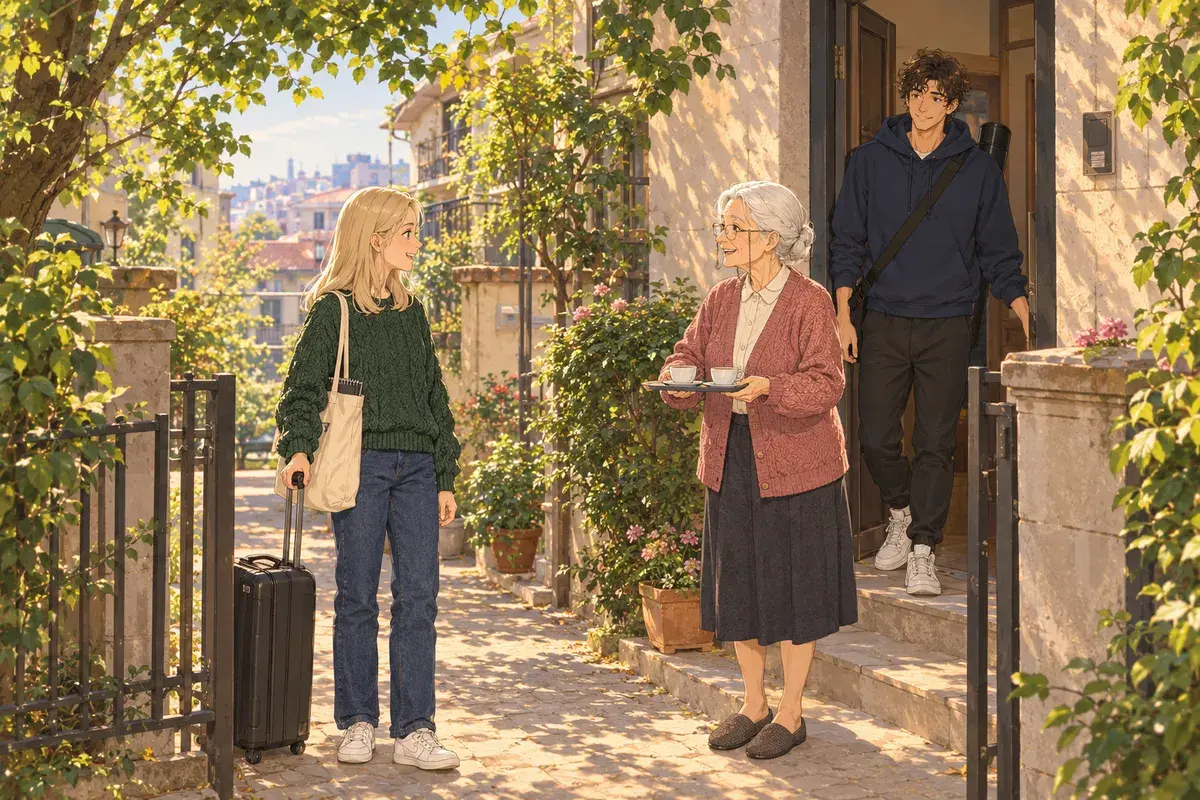
Авион је слетео у недељу по подне, а ја сам на излазу узела такси са ваучером.
The plane landed on Sunday afternoon, and at the exit I took a taxi with a voucher (woman speaking).
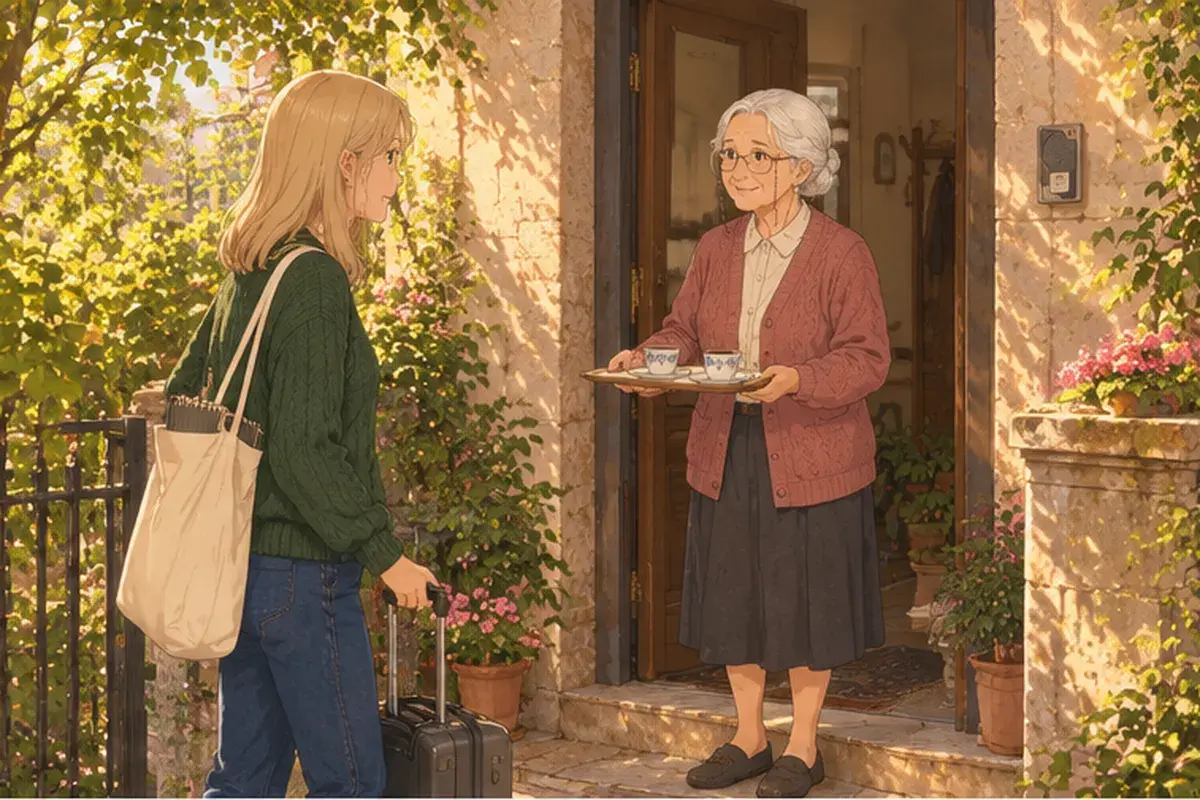
До Каленића сам стигла за пола сата. Радмила ме је већ чекала на вратима са кафом.
I got to Kalenić in half an hour (woman speaking). Radmila was already waiting for me at the door with coffee.

Њена добродошлица је увек иста: кафа и питање да ли сам гладна.
Her welcome is always the same: coffee and the question of whether I'm hungry (woman speaking).
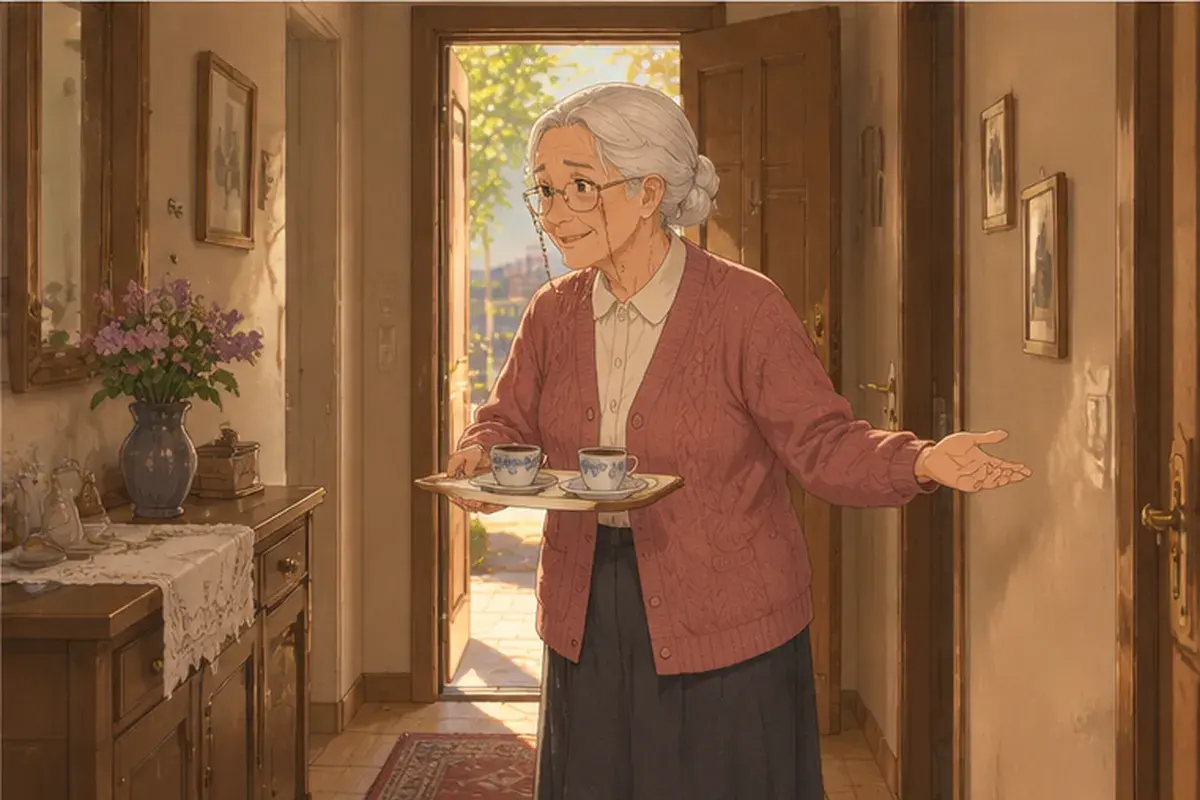
„Добро дошла кући, Ано! Драго ми је што си опет ту. Стан је твој до краја септембра, а онда ћемо видети“, рекла је Радмила.
"Welcome home, Ana! I'm glad you're here again. The apartment is yours until the end of September, and then we'll see," Radmila said.

„Хајде да уђемо, а кофер нека носи Стефан“, додала је.
"Let's go in, and let Stefan carry the suitcase," she added.

Стефан, који се у петак вратио са мора, одмах је узео мој кофер.
Stefan, who came back from the coast on Friday, took my suitcase right away.

Очекивала сам празан и затворен стан, али Радмила је отворила прозоре и спремила кревет.
I expected an empty, closed-up apartment, but Radmila opened the windows and made the bed (woman speaking).

У понедељак ће Радмила поново ићи у полицију са мојим пасошем. Газдарица мора да ме пријави у року од 24 сата.
On Monday Radmila will go to the police again with my passport. The landlady has to register me within 24 hours.

Увече сам била веома уморна, али нисам могла да седим у стану. Зато сам пешачила до канцеларијске зграде на Дорћолу да видим пут.
In the evening I was very tired, but I couldn't sit in the apartment. So I walked to the office building in Dorćol to see the way (woman speaking).

До канцеларије сам ишла 40 минута, јер сам два пута погрешила улицу. Сада знам пут, али ћу у среду за сваки случај кренути раније.
It took me 40 minutes to get to the office, because I took the wrong street twice (woman speaking). Now I know the way, but on Wednesday I'll set off earlier, just in case.

Кад сам се вратила на Врачар, Радмила је још седела у дворишту и чекала ме са чајем.
When I got back to Vračar, Radmila was still sitting in the yard, waiting for me with tea (woman speaking).

„Заиста си пешачила до Дорћола? Ако ти ишта треба за среду, само реци“, рекла је.
"Did you really walk to Dorćol? If you need anything for Wednesday, just say so," she said (to a woman).

Данас сам прво стигла авионом, затим сам распаковала кофер, после тога сам пешачила, а на крају ћу позвати маму.
Today I first arrived by plane, then I unpacked my suitcase, after that I walked, and in the end I'll call Mom (woman speaking).

Напокон сам опет код куће, а у среду почињем да радим у Битлабу.
At last I'm home again, and on Wednesday I start working at Bitlab.
Grammar for this text
Авион је слетео у недељу по подне—слетеоis the -o/-la form ofслетети(to land, about a plane). It is masculine because its subject,авион(plane), is masculine.такси са ваучером— a taxi with a voucher (са+ instrumental).Њена добродошлица је увек иста—добродошлицаis a warm welcome, a noun. InДобро дошла кући, Ано!you hear the greeting itself: to a womanДобро дошла, to a manДобро дошао, to several people or formallyДобро дошли.Аноis the vocative, the form for calling someone. InДраго ми је што си опет ту(I'm glad you're here again) there is no comma beforeшто.Хајде да уђемо, а кофер нека носи Стефан—Хајде да уђемо— let's go in (уђемоis theмиform ofући, to go in).нека носи— let him carry. Both patterns are explained in this unit's grammar. Hereнекаdoes not mean "some" likeнеки.Газдарица мора да ме пријави у року од 24 сата— afterмораcomesда+ a perfective verb:пријави(registers, one finished action). The cliticме(me) comes right afterда.у року од— within.Зато сам пешачила до канцеларијске зграде на Дорћолу да видим пут—канцеларијске зграде(of the office building) is the genitive afterдо;канцеларијски(office) comes fromканцеларија.пешачила(walked) is imperfective: the walking itself, the process.да видим— to see:да+ present shows the purpose.Ако ти ишта треба за среду, само реци—ишта(anything) is used in if-sentences and questions.Данас сам прво стигла авионом, затим сам распаковала кофер, после тога сам пешачила, а на крају ћу позвати маму— the steps in order, with the past and the future in one sentence (see the grammar block on telling a story in order).првоhere means "first".
Words and grammar of the unit: Start work at a new company.
Learn the words from the texts with flashcards
In the app, you can tap any word in a text to see its translation, forms and examples, and new words stick with flashcards. 15 minutes a day.
Start for freeEverything is open for free. No card needed to sign up.