

Serbian dialogue with translation · B1 · 13 lines
Звала сам вас и јуче I called you yesterday too
Comic · 13 panels

- Ана
Добро вече, господине Бранко. Извините што вас опет зовем, али радијатор у мојој соби уопште не греје.
Good evening, Mr. Branko. Sorry to call you again, but the radiator in my room isn't heating at all (formal).
- Бранко
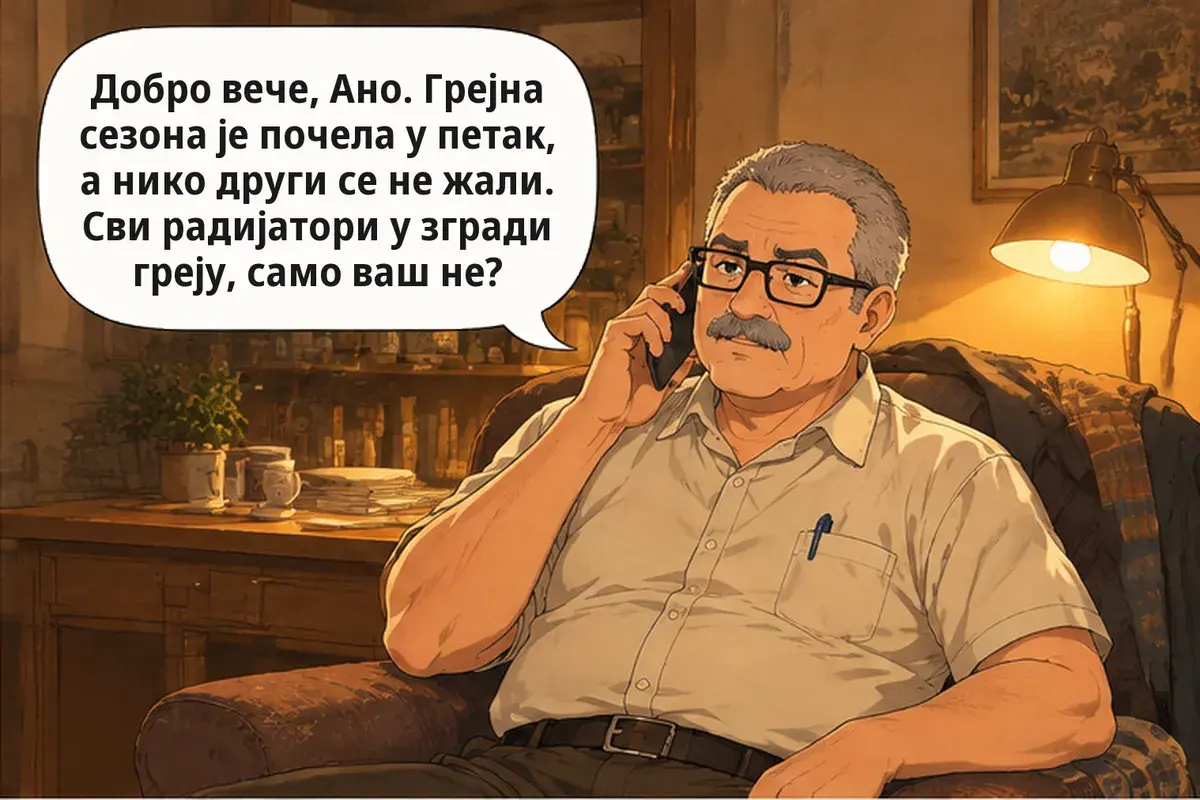
Добро вече, Ано. Грејна сезона је почела у петак, а нико други се не жали. Сви радијатори у згради греју, само ваш не?
Good evening, Ana. The heating season started on Friday, and nobody else is complaining. All the radiators in the building are heating, only yours isn't? (formal)

- Ана
Звала сам вас и јуче, а радијатор и даље не греје. Написала сам вам и поруку на Виберу. Термостат сам окренула до краја, али је цев хладна.
I called you yesterday too, but the radiator still isn't heating. I also wrote you a message on Viber. I turned the thermostat all the way up, but the pipe is cold (woman speaking, formal).
- Бранко
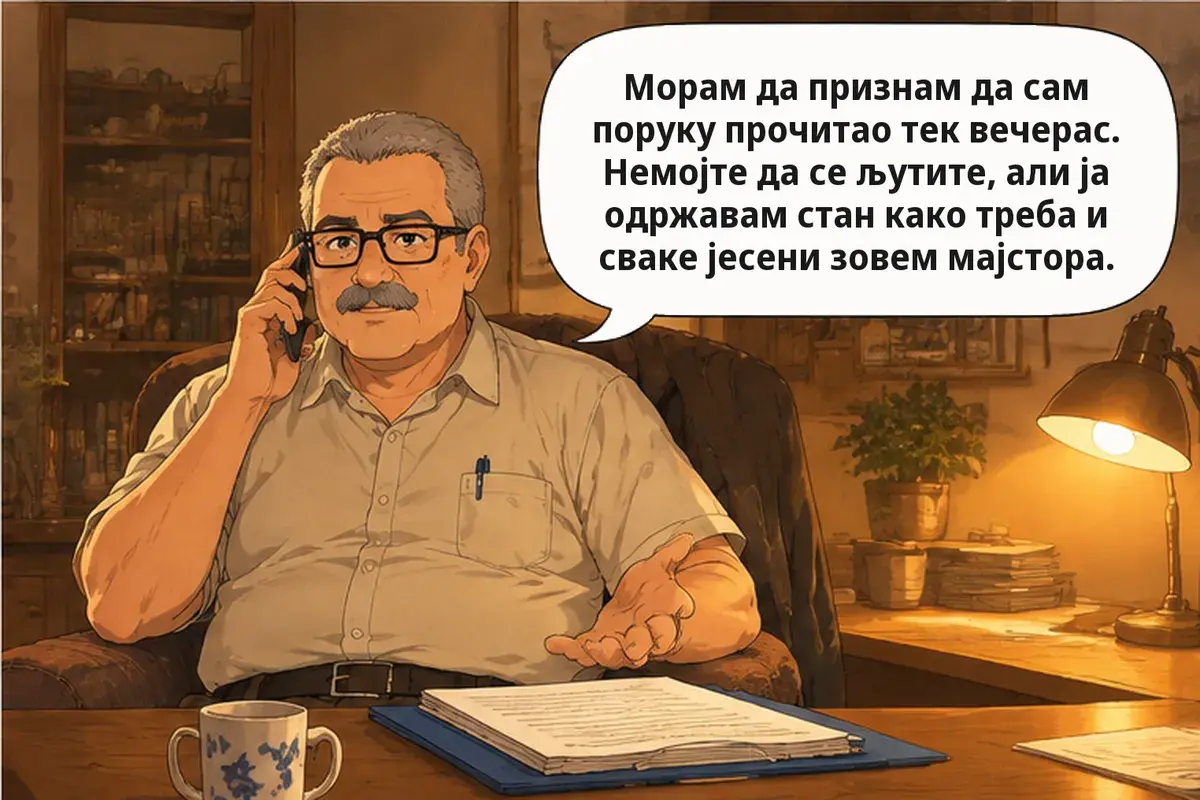
Морам да признам да сам поруку прочитао тек вечерас. Немојте да се љутите, али ја одржавам стан како треба и сваке јесени зовем мајстора.
I have to admit that I only read the message this evening (man speaking). Don't be angry, but I maintain the apartment properly and call the repairman every fall (formal).

- Ана
Да ли сте звали мајстора или да потражим неког у комшилуку? Ово није жалба, само желим да мајстор дође хитно. Јуче увече сам покушавала да спавам у џемперу.
Did you call the repairman, or should I look for someone in the neighborhood? (formal) This isn't a complaint, I just want the repairman to come urgently. Last night I was trying to sleep in a sweater (woman speaking).
- Бранко
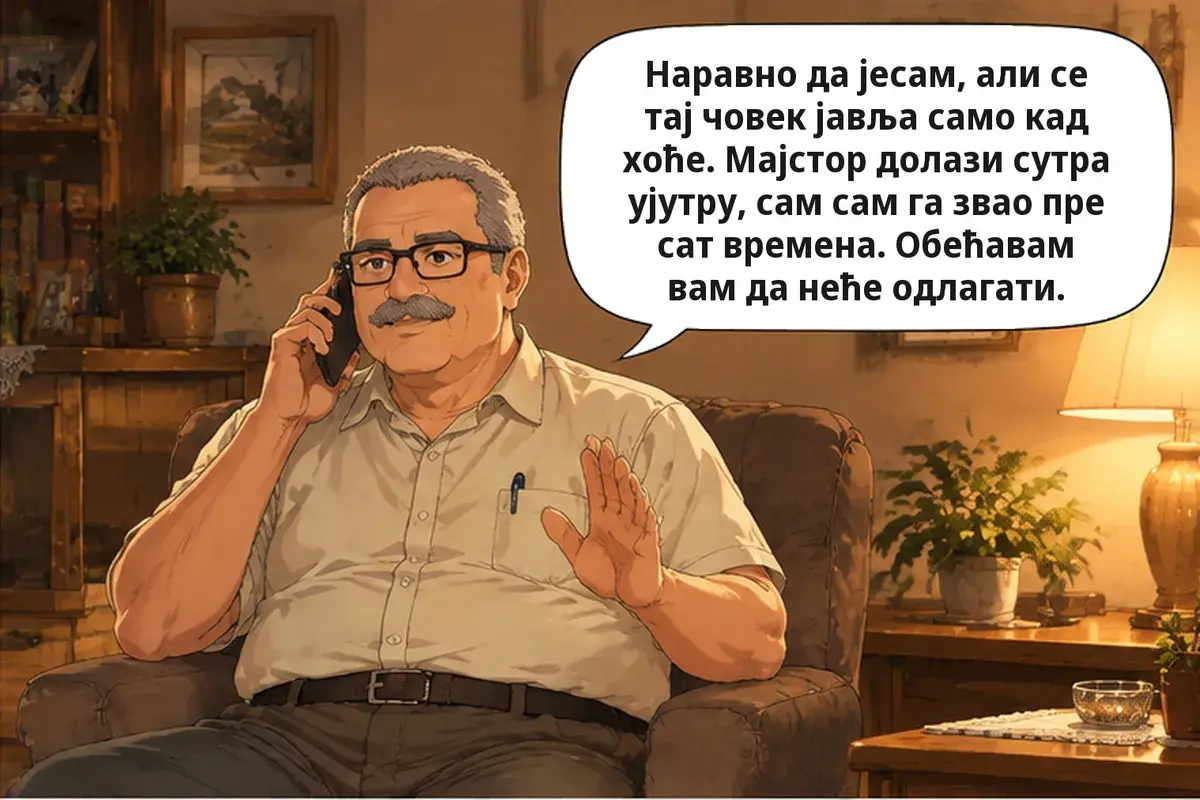
Наравно да јесам, али се тај човек јавља само кад хоће. Мајстор долази сутра ујутру, сам сам га звао пре сат времена. Обећавам вам да неће одлагати.
Of course I did, but that man only answers when he feels like it. The repairman is coming tomorrow morning, I called him myself an hour ago (man speaking). I promise you he won't put it off (formal).

- Ана
Хвала вам, то ми много значи. Милица ми је дозволила да ових дана радим од куће, па ћу га чекати.
Thank you, that means a lot to me (formal). Milica has let me work from home these days, so I'll wait for him.
- Бранко
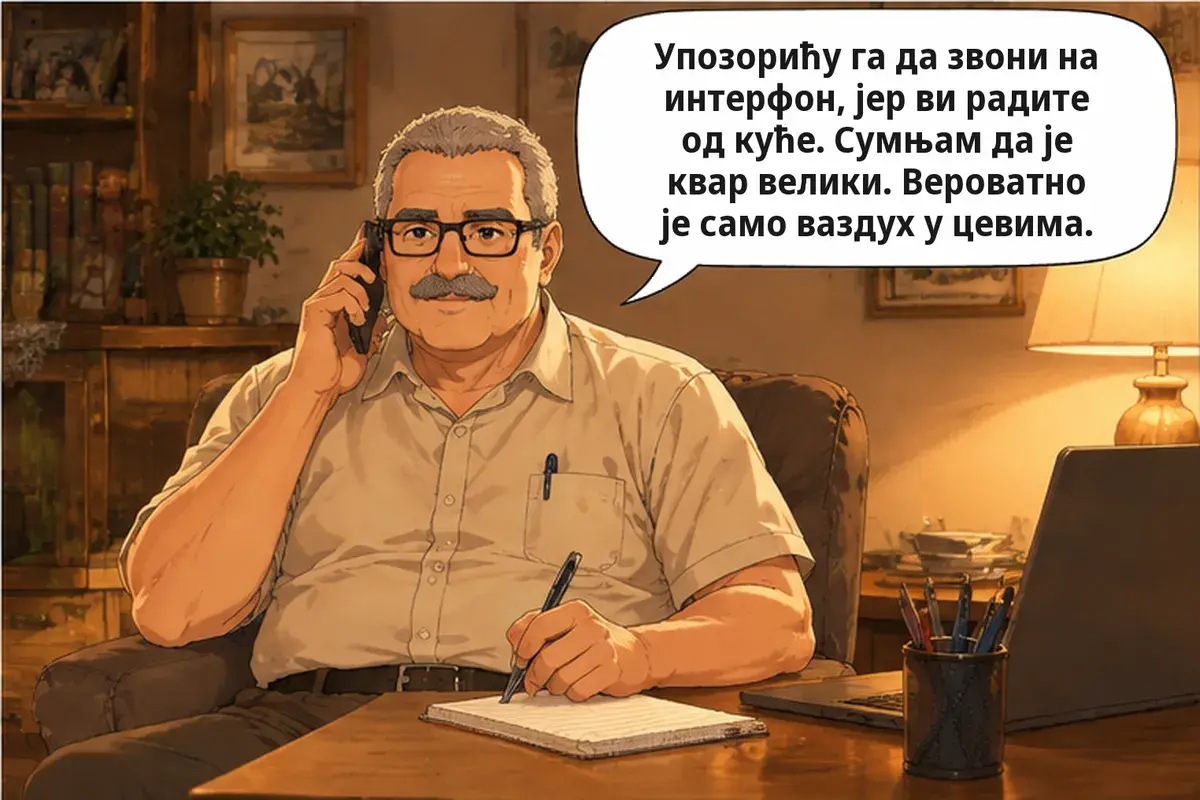
Упозорићу га да звони на интерфон, јер ви радите од куће. Сумњам да је квар велики. Вероватно је само ваздух у цевима.
I'll warn him to ring the intercom, because you're working from home (formal). I doubt the fault is a big one. It's probably just air in the pipes.

- Ана
Извините што инсистирам, али у колико сати мајстор тачно долази? Ако знам време, не морам цео дан да седим уз телефон.
Sorry to insist, but what time exactly is the repairman coming? (formal) If I know the time, I don't have to sit by the phone all day.
- Бранко
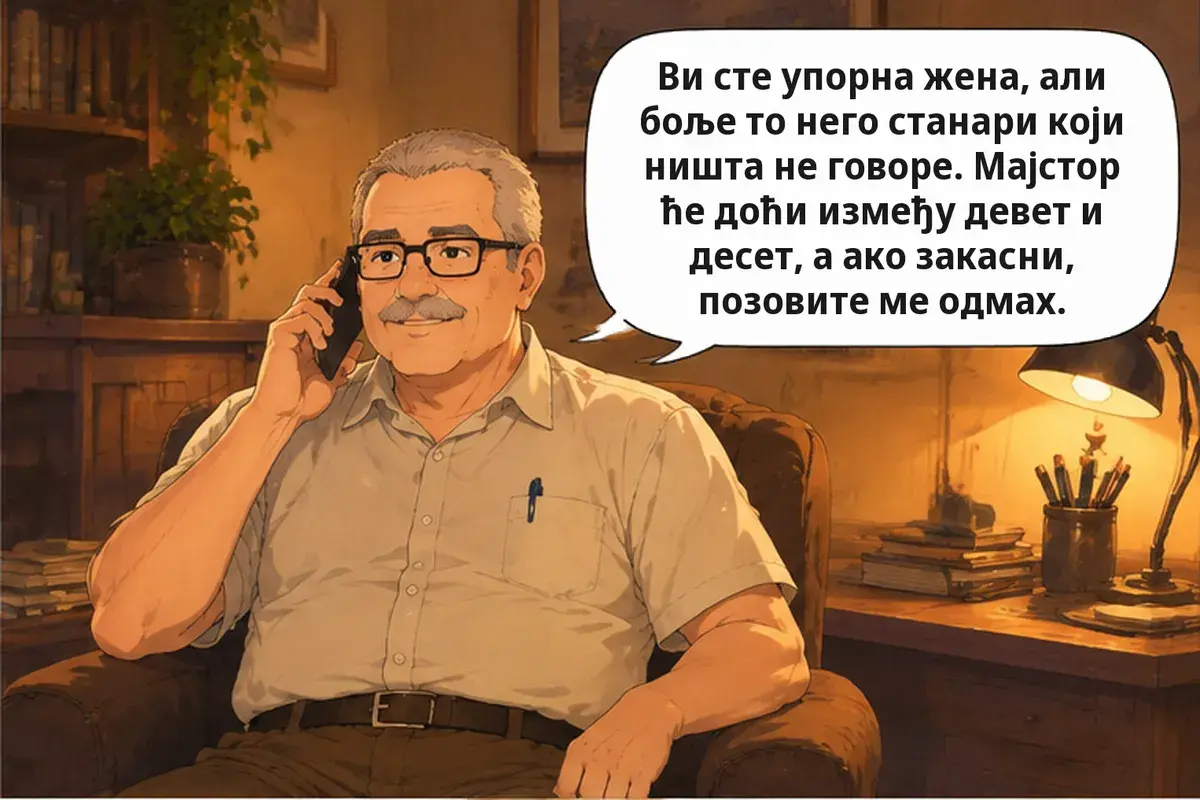
Ви сте упорна жена, али боље то него станари који ништа не говоре. Мајстор ће доћи између девет и десет, а ако закасни, позовите ме одмах.
You're a persistent woman, but that's better than tenants who don't say anything. The repairman will come between nine and ten, and if he's late, call me right away (formal).

- Ана
Одлично. Јавићу вам чим мајстор оде, да знате да је све у реду.
Great. I'll let you know as soon as the repairman leaves, so you know everything is all right (formal).
- Бранко
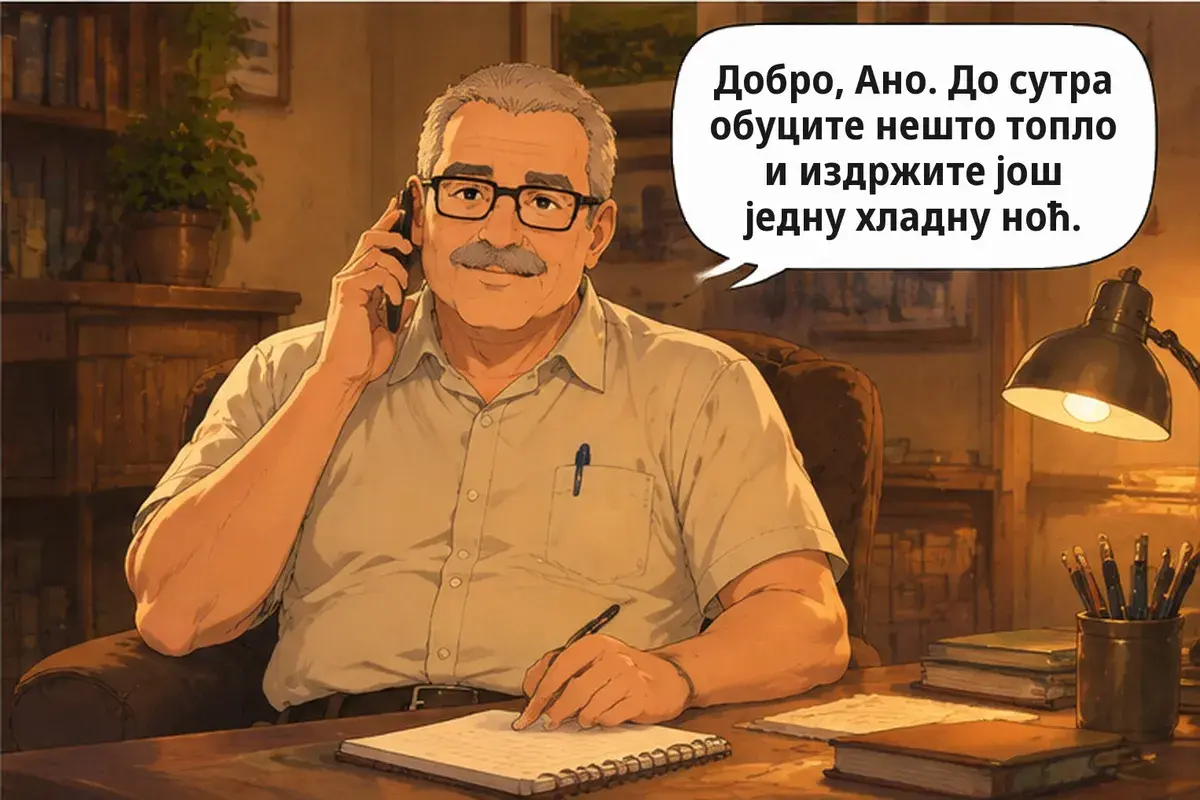
Добро, Ано. До сутра обуците нешто топло и издржите још једну хладну ноћ.
All right, Ana. Until tomorrow, put on something warm and get through one more cold night (formal).

- Ана
Лаку ноћ, господине Бранко.
Good night, Mr. Branko.
Grammar for this text
Звала сам вас и јуче—звалаis imperfective: she called and kept trying to reach him, with no result. The cliticsсам васstand right after the first word.васhere means 'you' (the object), not 'your' (that'sваш).Грејна сезона је почела у петак, а нико други се не жали—почелаis perfective: the season started and is now on.нико … неis the double negative (A2, unit 9);жалити се— to complain.Сви радијатори у згради греју, само ваш не?— a question by intonation only: Branko is grumbling.вашwith no noun: yours (your radiator).греју— they heat, fromгрејати.Да ли сте звали мајстора или да потражим неког у комшилуку?— the imperfective asks about a fact: did you call?или да потражим— or should I look for:да+ a perfective verb in the present offers to do something.неког— someone (as the object).Морам да признам да сам поруку прочитао тек вечерас— the firstдаcomes afterморам(I have to admit), the second one means 'that'.тек— only, not until: he read it only this evening.Немојте да се љутите— a polite "don't be angry" (A2, unit 24):немојте да+ present.сам сам га звао— the firstсамmeans 'myself' (on my own), the second one is the clitic ofбити: I called him myself.га— him (the repairman).Ако закасни, позовите ме одмах—закасниis perfective afterако; English uses the present here too: if he's late.
Words and grammar of the unit: Getting the repairman to come.
Learn the words from the texts with flashcards
In the app, you can tap any word in a text to see its translation, forms and examples, and new words stick with flashcards. 15 minutes a day.
Start for freeEverything is open for free. No card needed to sign up.