

Serbian story with translation · B1 · 17 lines
Круг се затворио The circle has closed
Comic · 17 panels

После посла сам отишла право на Врачар. Морала сам некоме да испричам све што се данас десило у Битлабу.
After work I went straight to Vračar. I had to tell someone everything that happened at Bitlab today. (woman speaking)

Радмила ме је дочекала на вратима са кафом, баш као кад сам се вратила прошлог августа. Стефан је још био у бироу, где је од овог месеца приправник.
Radmila met me at the door with coffee, just like when I came back last August. (woman speaking) Stefan was still at the office, where he's an intern as of this month.
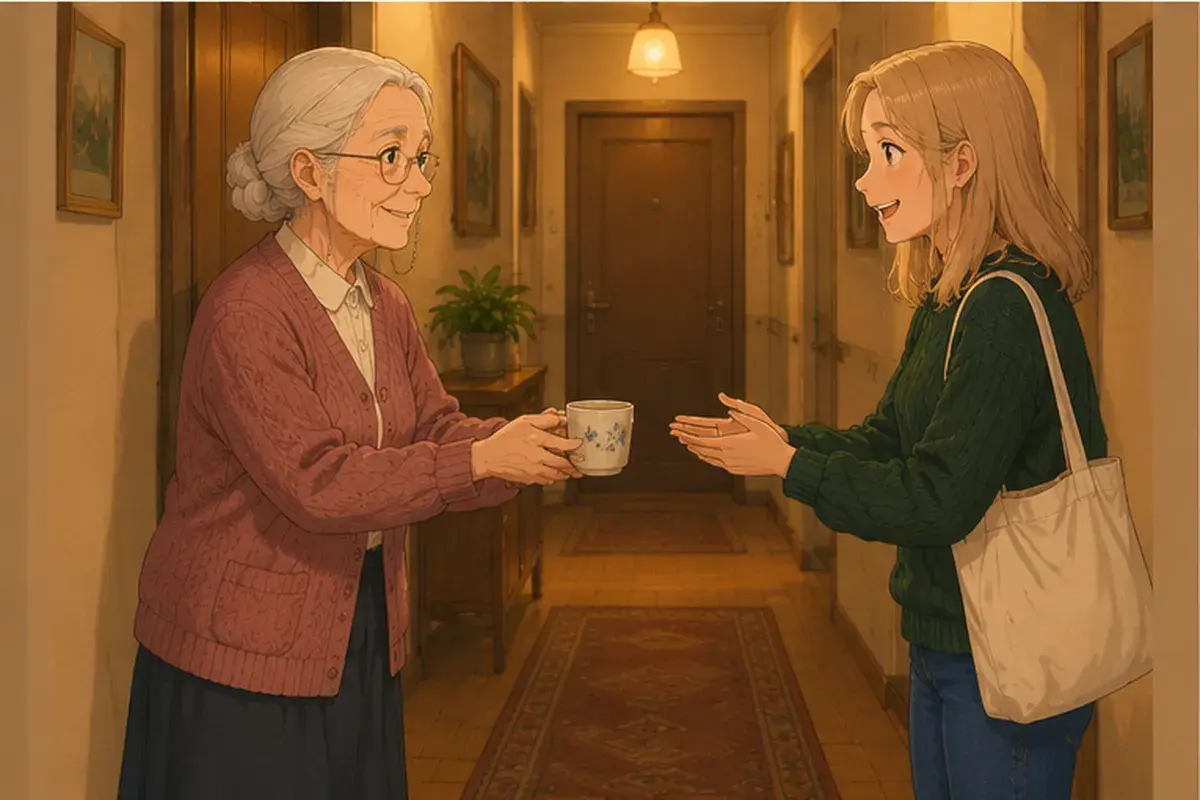
„Причај ми, Ано, шта је било данас“, рекла је и пружила ми шољу.
"Tell me, Ana, what happened today," she said, and handed me a cup.

Испричала сам јој да је у Битлаб данас стигао нови програмер из Бразила. Прво је дуго стајао на прагу, као да не сме да уђе.
I told her that a new programmer from Brazil arrived at Bitlab today. (woman speaking) At first he stood on the threshold for a long time, as if he didn't dare to come in.

Рафаел говори португалски и енглески, а српски учи тек шест месеци. Зато се у његовом говору чује јак бразилски акценат.
Rafael speaks Portuguese and English, and he's been learning Serbian for only six months. That's why you can hear a strong Brazilian accent in his speech.

За ручком ми је испричао да је у некадашњој фирми радио на великом пројекту. Овде му је све ново, али нико не жури.
At lunch he told me that he worked on a big project at his former company. Everything is new to him here, but nobody's in a hurry.

Кад сам га видела, сетила сам се себе. И ја сам се пре скоро две године бојала сваке грешке.
When I saw him, I thought of myself. Almost two years ago I, too, was afraid of every mistake. (woman speaking)

Рекла сам јој да сам га дочекала истим речима којима је она некад дочекала мене: „Добро дошли! Изволите, уђите. Хоћете кафу?“
I told her that I welcomed him with the same words she once welcomed me with: "Welcome! Come in. Would you like some coffee?" (woman speaking, formal)
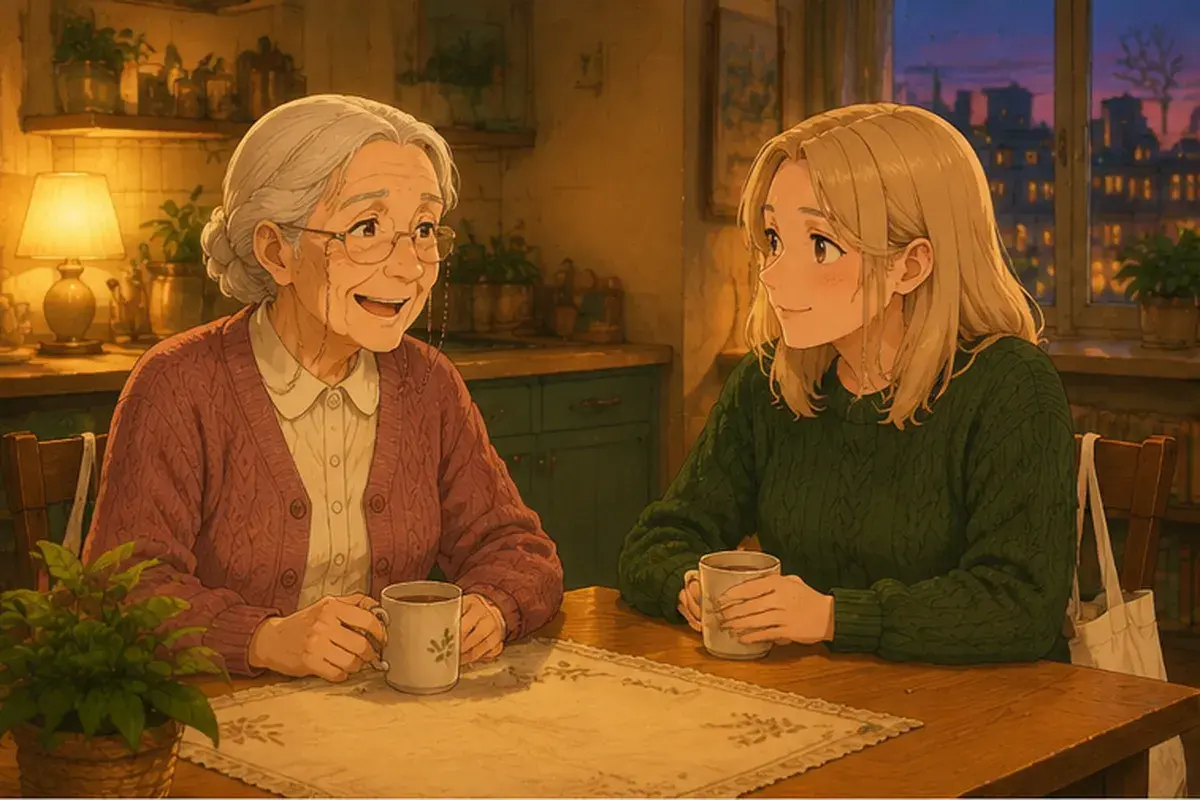
Радмила се насмејала и рекла: „Значи, сад си ти та која каже ‚Добро дошли‘.“
Radmila laughed and said: "So now you're the one who says 'Welcome.'"
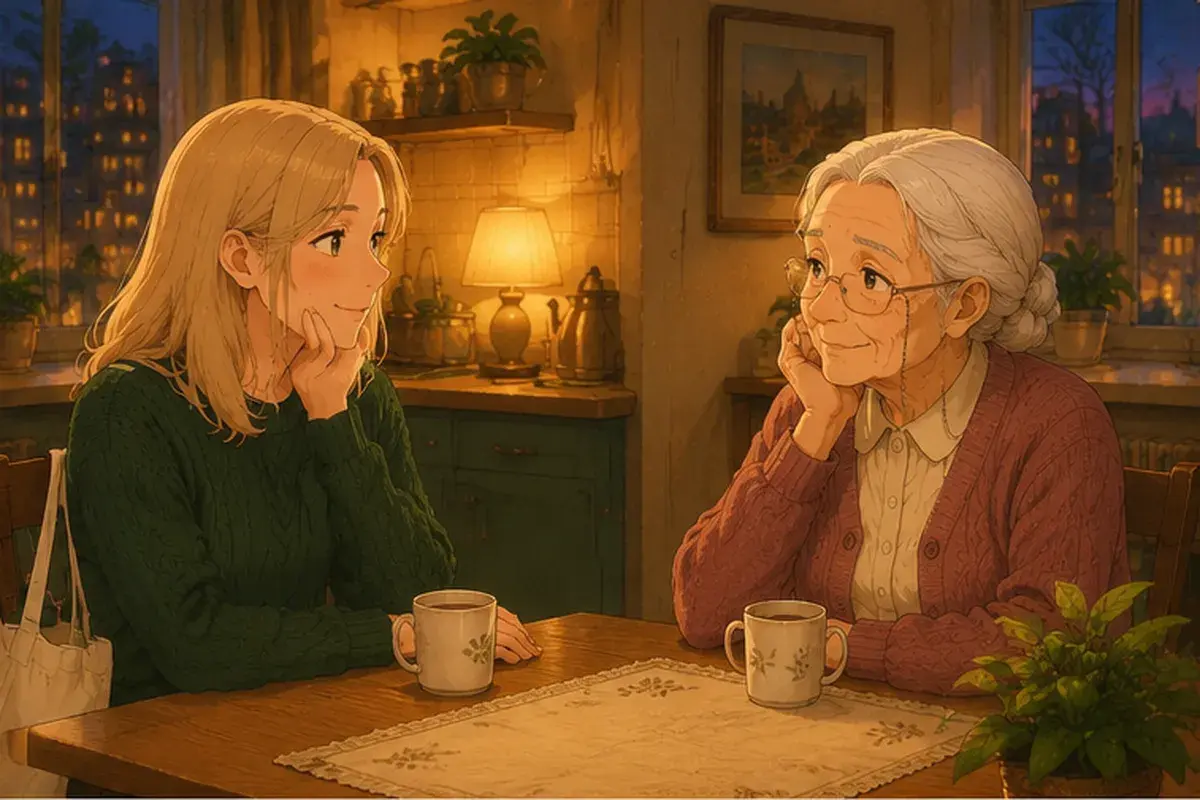
Круг се затворио: пре скоро две године мене је овде дочекала Радмила, а данас сам ја дочекала новајлију.
The circle has closed: almost two years ago Radmila welcomed me here, and today I welcomed a newcomer. (woman speaking)

Радмила је додала: „Ко је једном добио подршку, тај касније треба да је пружи другима.“
Radmila added: "Whoever has once received support should later give it to others."

Признала сам да сутра хоћу да га охрабрим, јер је првог дана био веома несигуран у себе.
I admitted that I want to encourage him tomorrow, because on his first day he was very unsure of himself. (woman speaking)

Радмила је рекла: „Само га храбри и не тражи од њега савршен српски, јер ће се брзо снаћи у новом граду.“
Radmila said: "Just keep encouraging him and don't ask him for perfect Serbian, because he'll find his way around the new city quickly."

Тада је стигао Стефан и одмах чуо целу причу о новајлији из Бразила.
Then Stefan arrived and immediately heard the whole story about the newcomer from Brazil.

„Кул, Ано! И ја сам данас био новајлија: буквално цео дан сам носио цртеже по бироу, али су ме ипак питали за мишљење“, рекао је.
"Cool, Ana! I was a newcomer today too: I literally carried drawings around the office all day, but they still asked for my opinion," he said.

Кад је постало касно, устала сам, јер ми треба 40 минута да стигнем до Дорћола. Сутра у девет почиње нови радни дан, а ја хоћу да будем спремна.
When it got late, I got up, because it takes me 40 minutes to get to Dorćol. Tomorrow at nine a new workday begins, and I want to be ready. (woman speaking)
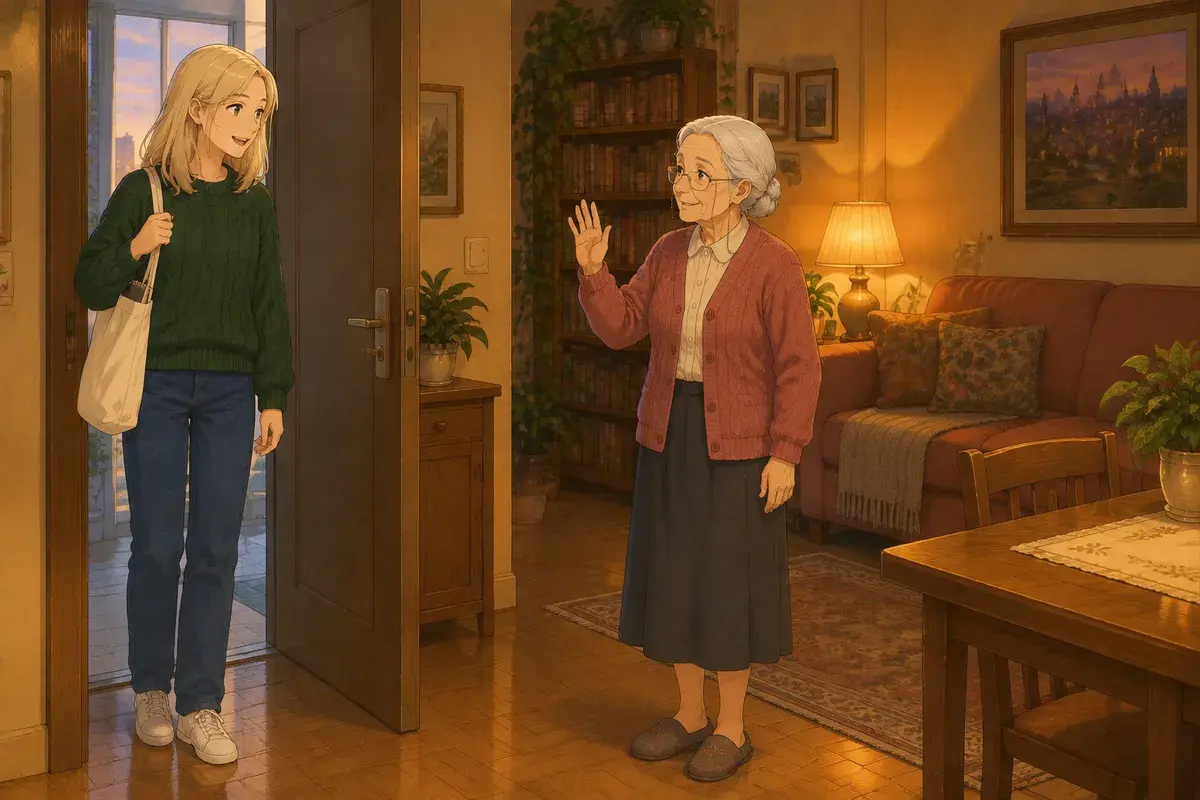
На вратима сам рекла: „Одох ја, тета Радмила!“ и кренула полако кући.
At the door I said, "I'm off, Aunt Radmila!" and slowly set off for home. (woman speaking)
Grammar for this text
Круг се затворио— "the circle has closed": people say it when everything has come back to where it started.сеis the second word.Кад сам га видела, сетила сам се себе—сетити се+ the genitive (the "of / from" form):себеmeans "myself". The part withкадcomes first, so a comma follows it.Значи, сад си ти та која каже—значиmeans "so" and is an introductory word, so a comma follows it.та која кажеmeans "the one who says", withкојаin the nominative (the dictionary form); there is no comma before it.садmeans "now".Ко је једном добио подршку, тај касније треба да је пружи другима—ко … тајmeans "whoever … that person". The firstјеmeans "has" (је добио), the second means "it" (подршка):да је пружиis "to give it".Само га храбри и не тражи од њега савршен српски—храбриis a request in theтиform, fromхрабрити("to encourage").хоћу да га охрабрим— the pairохрабрити: this perfective verb is used only afterда.јер ће се брзо снаћи—снаћи сеmeans "to find your way, to get the hang of it"; inће се, first comesће, thenсе.Одох ја— a ready-made phrase meaning "I'm off": an old past form (the aorist) ofотићи, the same for a man and a woman. You only need to recognize it; to say it yourself, useИдемorКренула сам.
Words and grammar of the unit: Welcome a new teammate.
Learn the words from the texts with flashcards
In the app, you can tap any word in a text to see its translation, forms and examples, and new words stick with flashcards. 15 minutes a day.
Start for freeEverything is open for free. No card needed to sign up.