
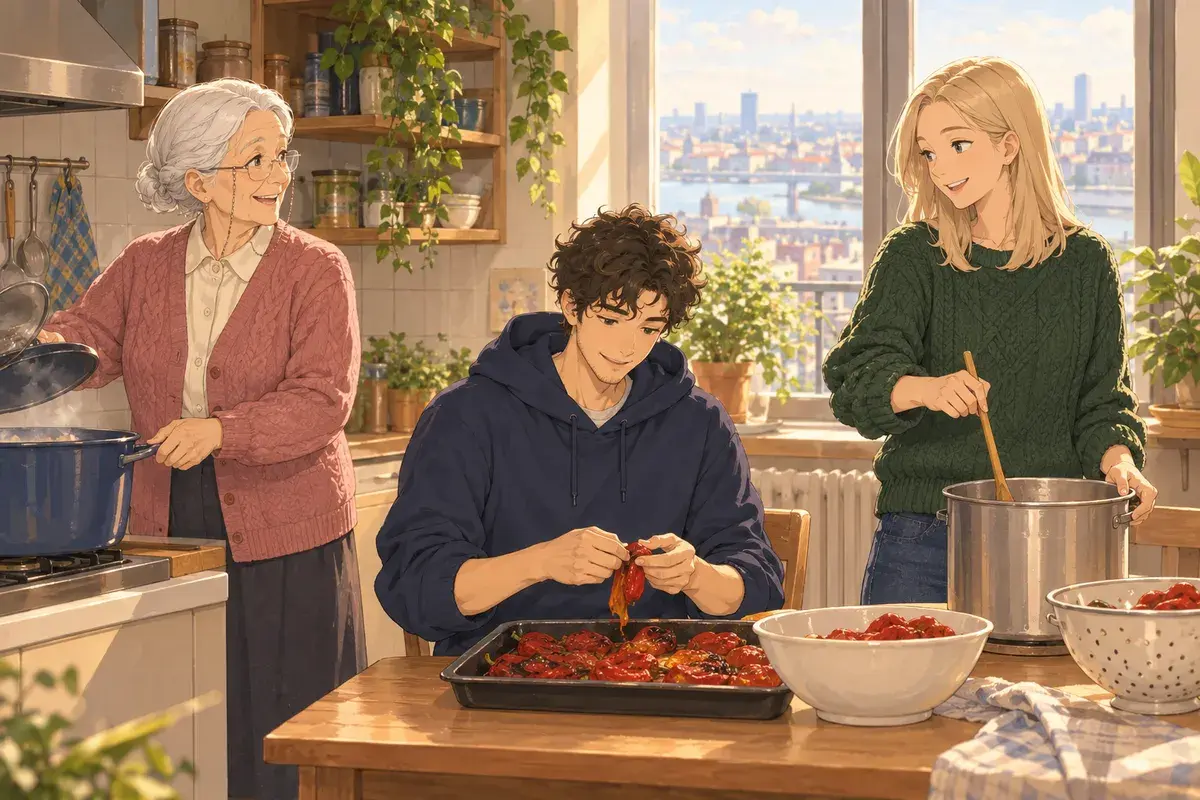
Serbian dialogue with translation · B1 · 13 lines
Ајвар се не прави на брзину Ajvar isn't made in a hurry
Comic · 13 panels
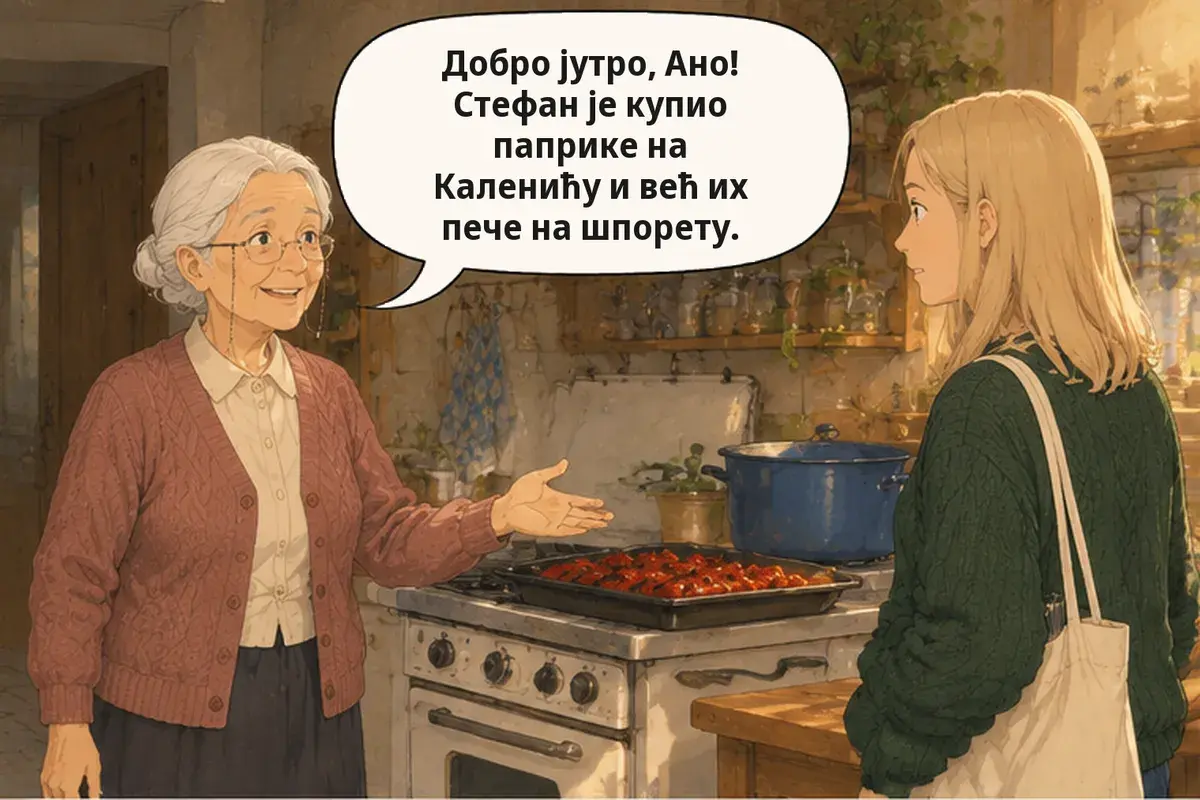
- Радмила
Добро јутро, Ано! Стефан је купио паприке на Каленићу и већ их пече на шпорету.
Good morning, Ana! Stefan bought peppers at the Kalenić market, and he's already roasting them on the stove.
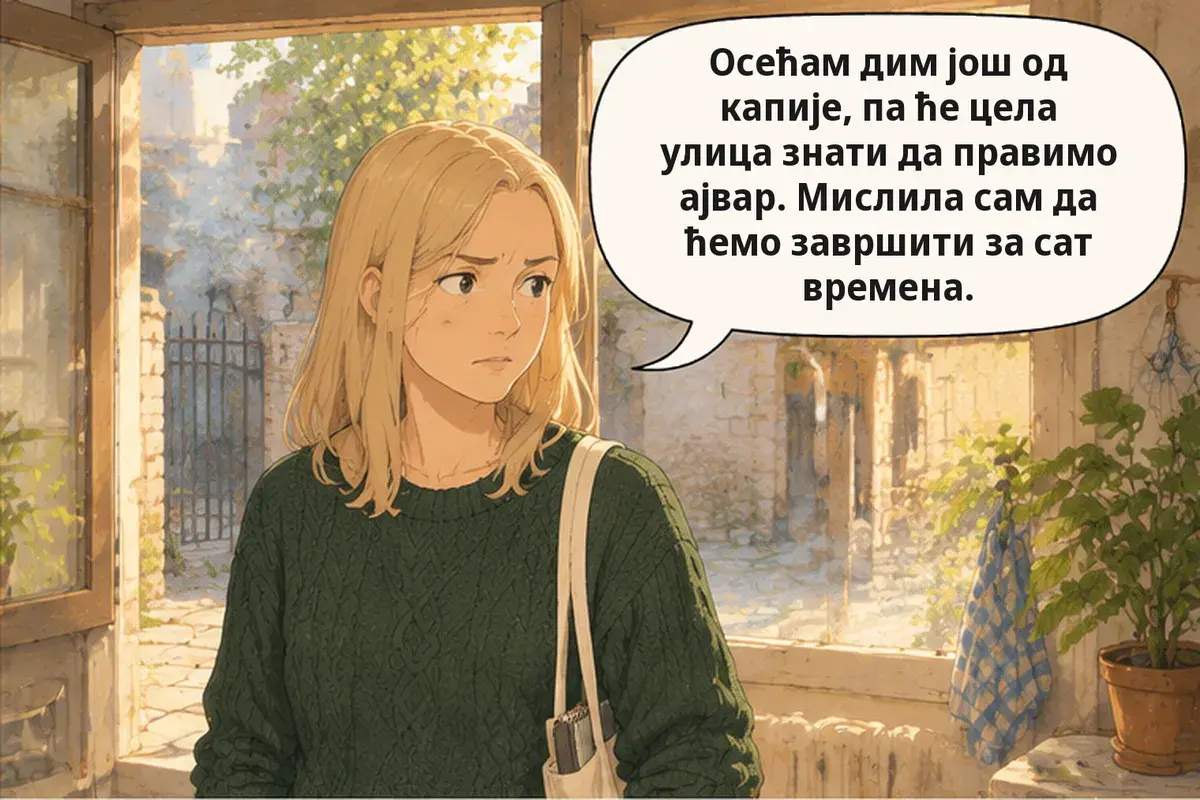
- Ана
Осећам дим још од капије, па ће цела улица знати да правимо ајвар. Мислила сам да ћемо завршити за сат времена.
I can smell the smoke all the way from the gate, so the whole street will know we're making ajvar. I thought we'd finish in an hour (woman speaking).
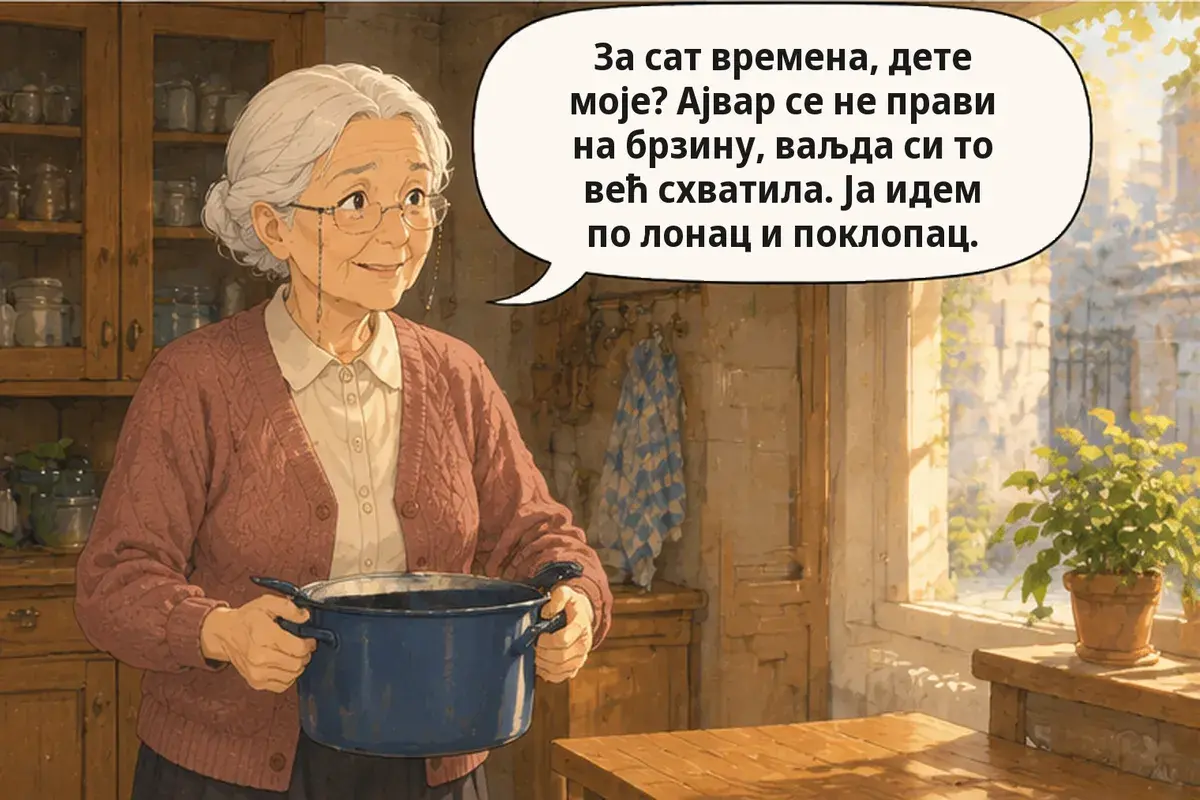
- Радмила
За сат времена, дете моје? Ајвар се не прави на брзину, ваљда си то већ схватила. Ја идем по лонац и поклопац.
In an hour, my child? Ajvar isn't made in a hurry, I'd hope you've figured that out by now (to a woman). I'm going to get the pot and the lid.
- Стефан
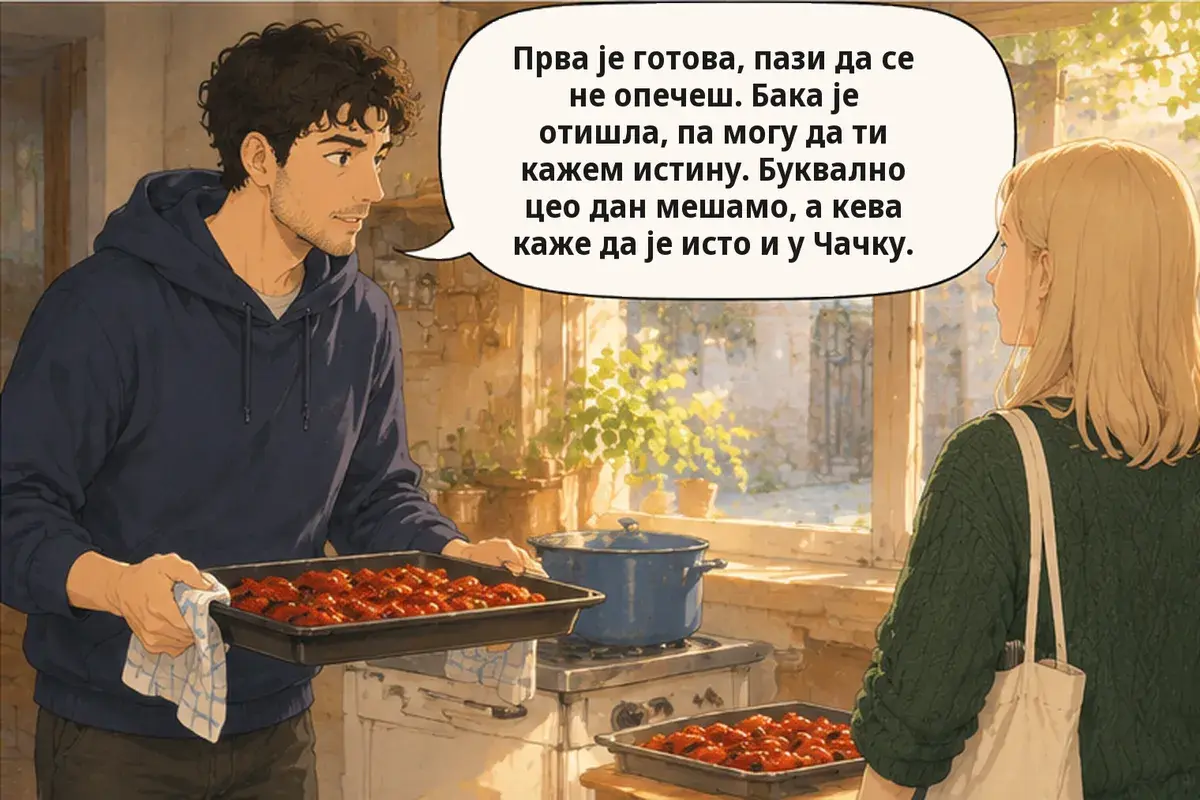
Прва је готова, пази да се не опечеш. Бака је отишла, па могу да ти кажем истину. Буквално цео дан мешамо, а кева каже да је исто и у Чачку.
The first one's done, careful not to burn yourself. Grandma's gone, so I can tell you the truth. We stir literally all day, and Mom says it's the same in Čačak too.
- Ана
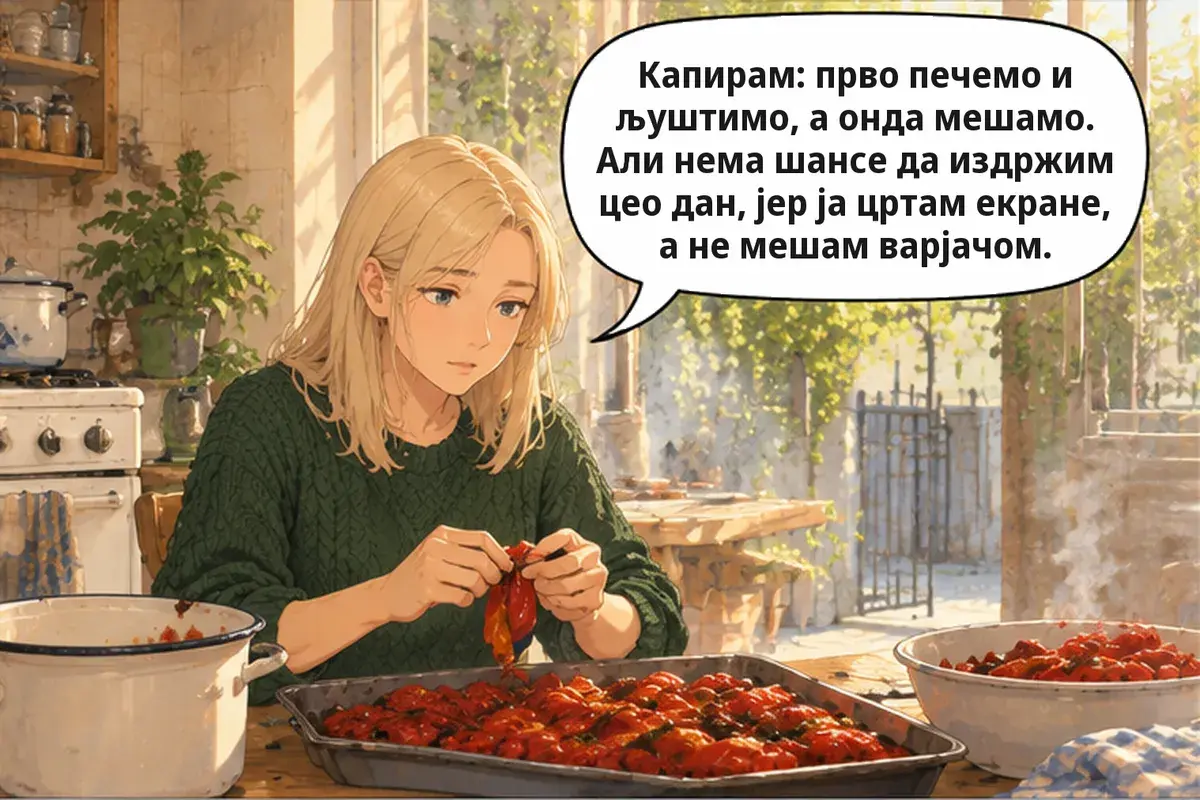
Капирам: прво печемо и љуштимо, а онда мешамо. Али нема шансе да издржим цео дан, јер ја цртам екране, а не мешам варјачом.
I get it: first we roast and peel, and then we stir. But there's no way I'll last the whole day, because I draw screens, I don't stir with a wooden spoon.
- Стефан
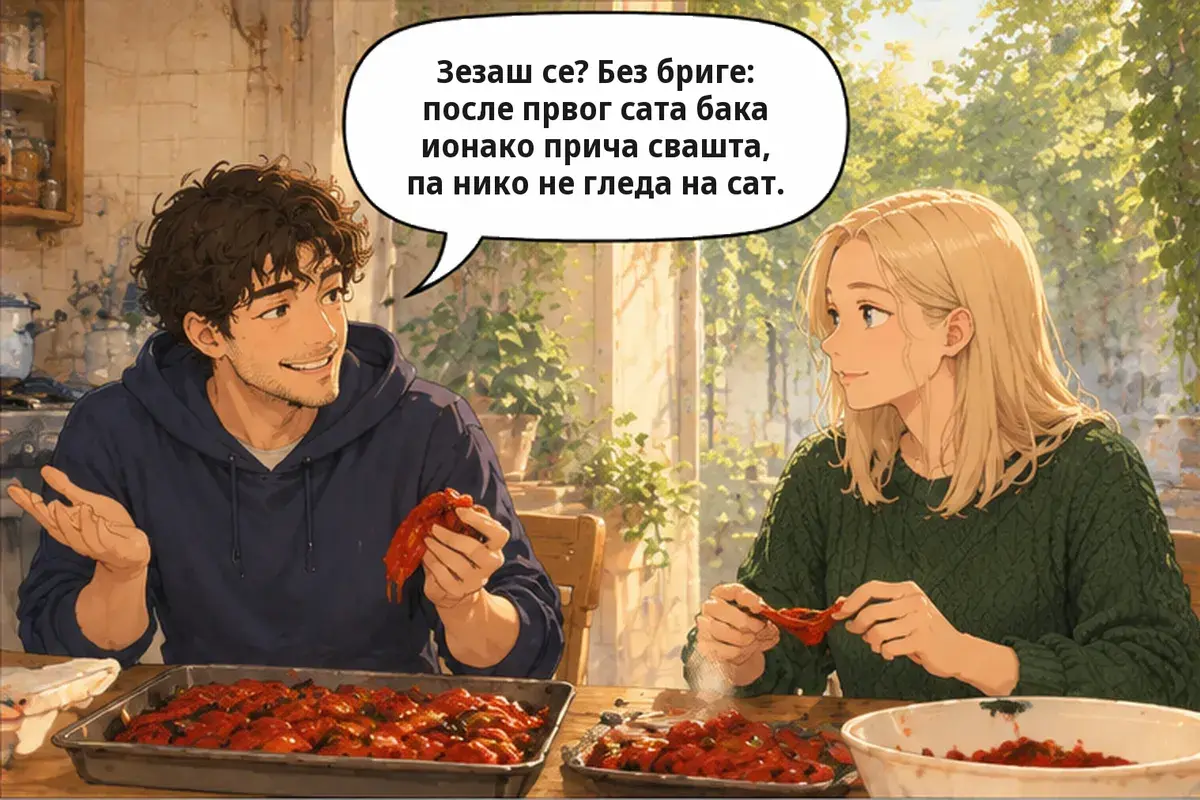
Зезаш се? Без бриге: после првог сата бака ионако прича свашта, па нико не гледа на сат.
Are you kidding? Don't worry: after the first hour Grandma talks about all sorts of things anyway, so nobody looks at the clock.
- Ана
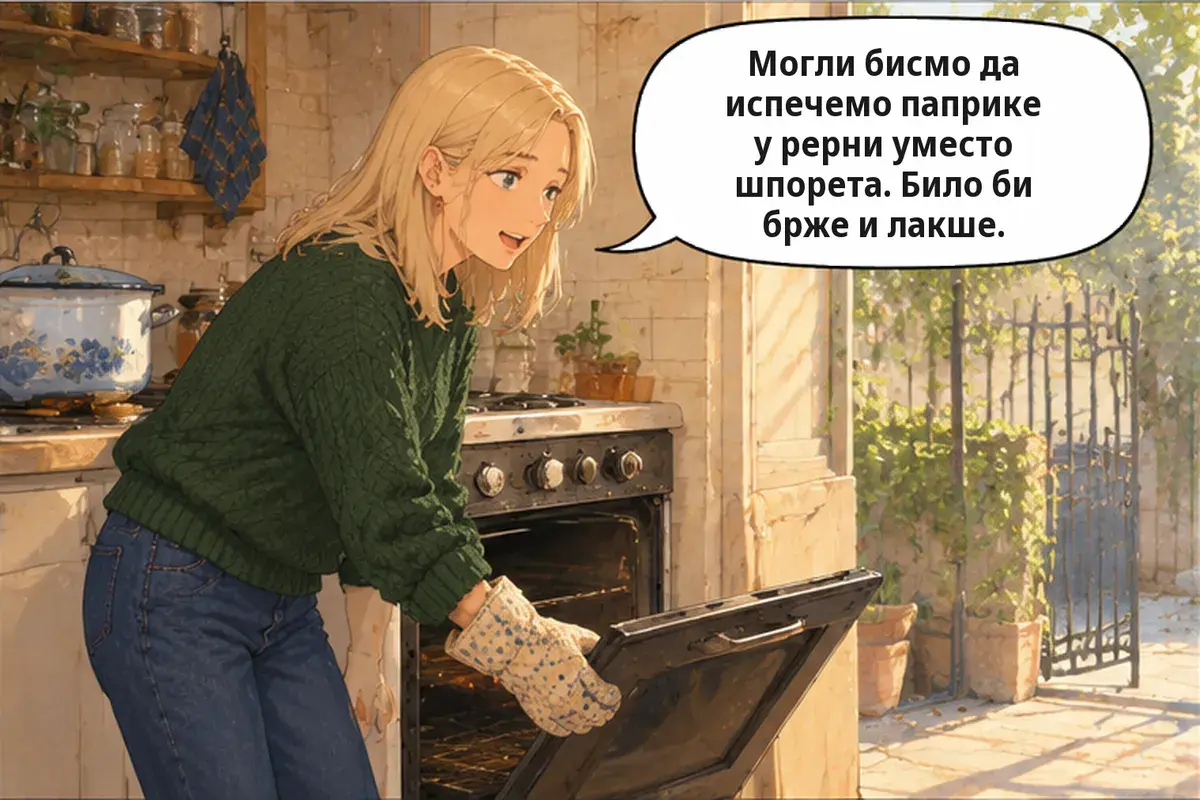
Могли бисмо да испечемо паприке у рерни уместо шпорета. Било би брже и лакше.
We could roast the peppers in the oven instead of on the stove. It would be faster and easier.
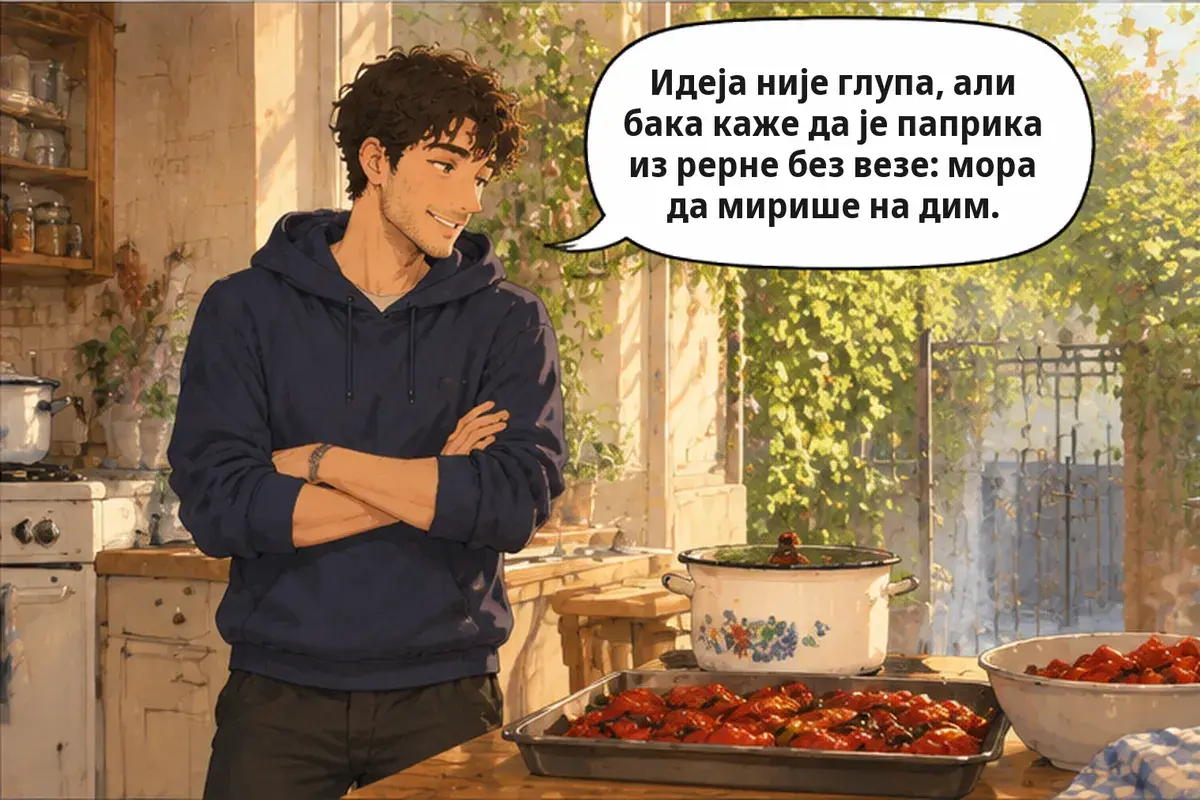
- Стефан
Идеја није глупа, али бака каже да је паприка из рерне без везе: мора да мирише на дим.
The idea isn't stupid, but Grandma says peppers from the oven are pointless: they have to smell of smoke.
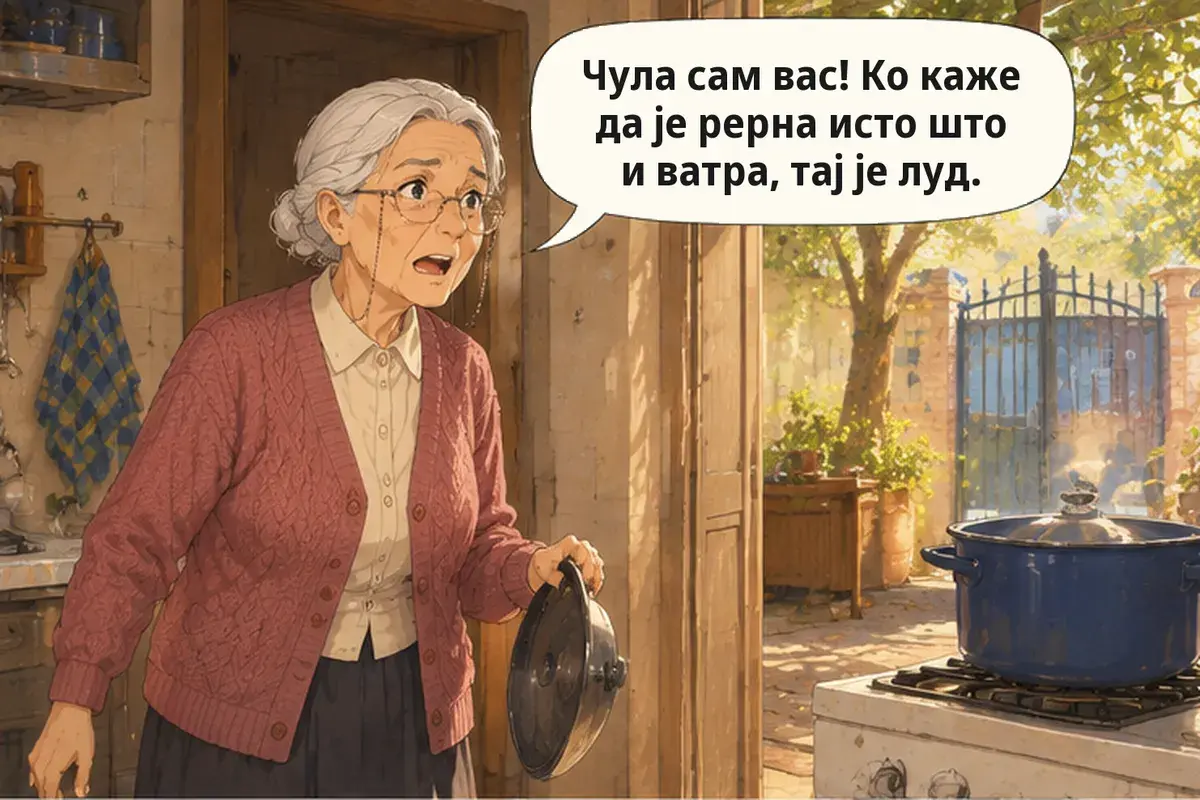
- Радмила
Чула сам вас! Ко каже да је рерна исто што и ватра, тај је луд.
I heard you two (woman speaking)! Whoever says an oven is the same as a fire is crazy.
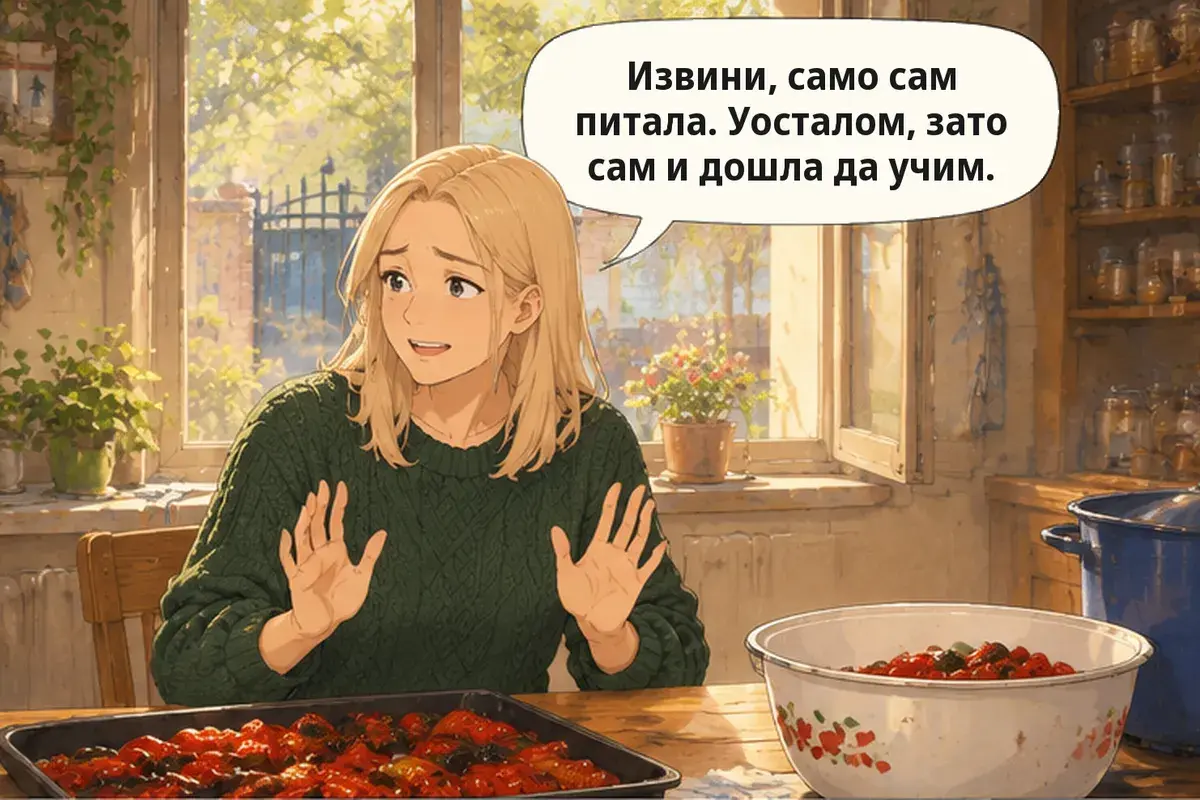
- Ана
Извини, само сам питала. Уосталом, зато сам и дошла да учим.
Sorry, I was just asking. Besides, that's exactly why I came — to learn (woman speaking).
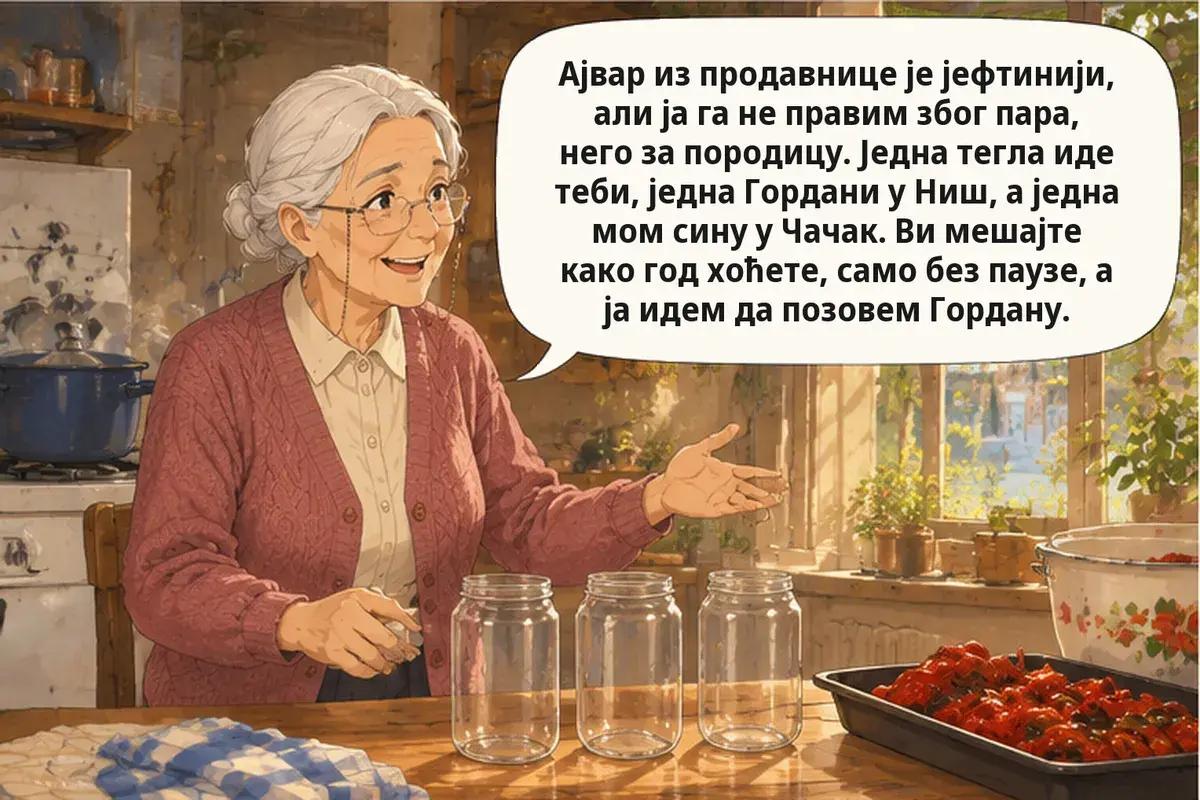
- Радмила
Ајвар из продавнице је јефтинији, али ја га не правим због пара, него за породицу. Једна тегла иде теби, једна Гордани у Ниш, а једна мом сину у Чачак. Ви мешајте како год хоћете, само без паузе, а ја идем да позовем Гордану.
Store-bought ajvar is cheaper, but I don't make it for the money, I make it for the family. One jar goes to you, one to Gordana in Niš, and one to my son in Čačak. You two stir however you like, just without a break, and I'm going to call Gordana.
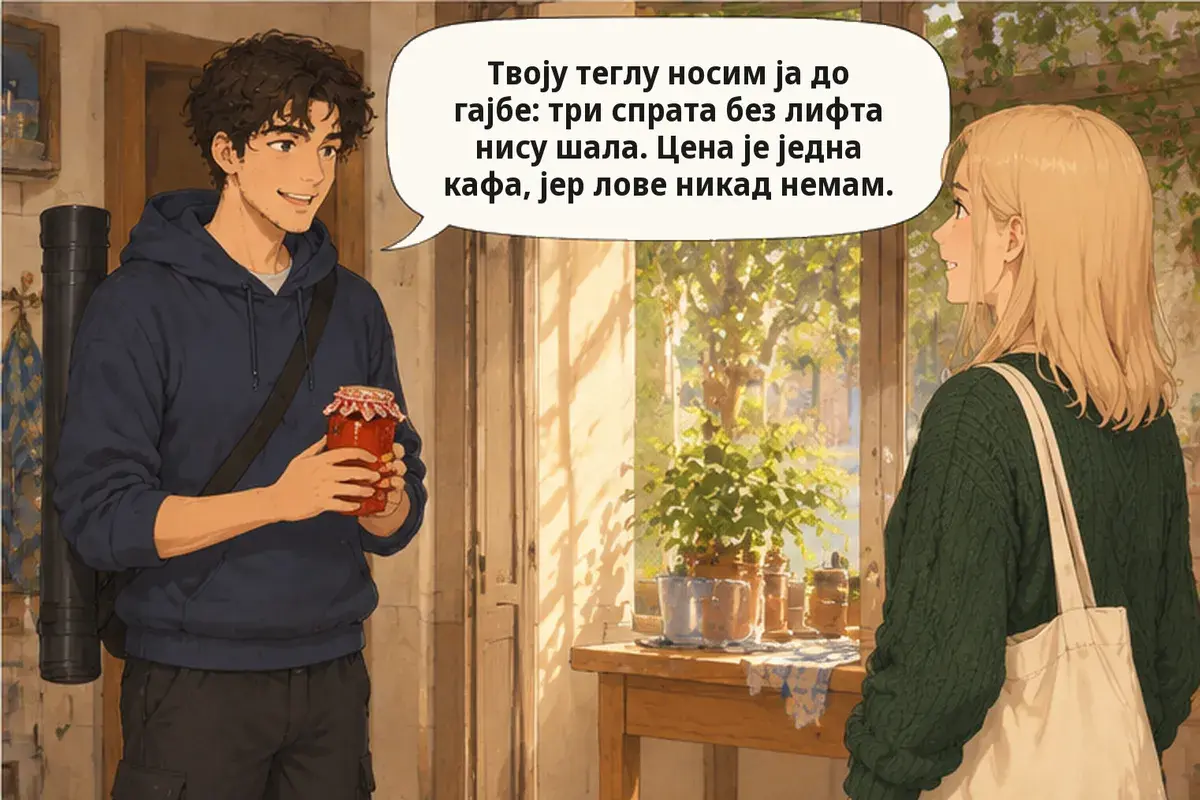
- Стефан
Твоју теглу носим ја до гајбе: три спрата без лифта нису шала. Цена је једна кафа, јер лове никад немам.
I'm carrying your jar to your place: three floors without an elevator are no joke. The price is one coffee, because I never have any money.
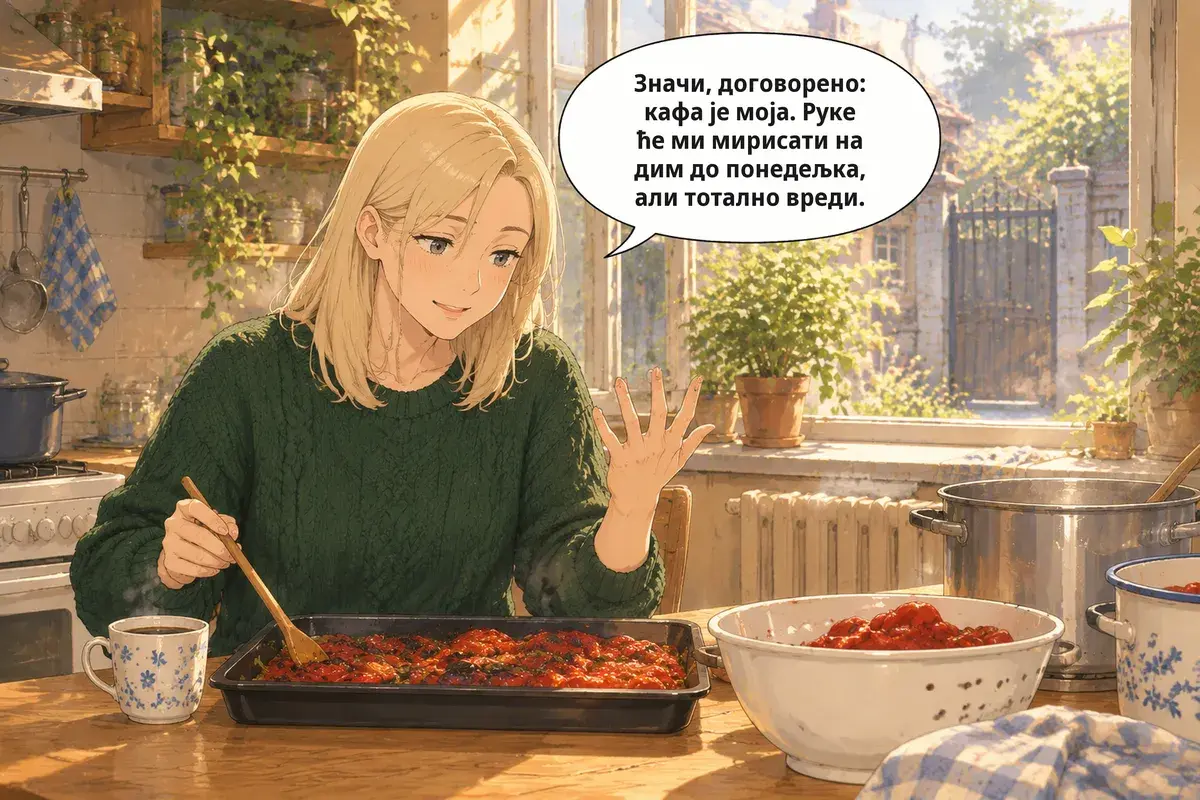
- Ана
Значи, договорено: кафа је моја. Руке ће ми мирисати на дим до понедељка, али тотално вреди.
So, it's a deal: the coffee's on me. My hands will smell of smoke until Monday, but it's totally worth it.
Grammar for this text
Ајвар се не прави на брзину— a set phrase: you don't make ajvar in a hurry. This use ofсе(what people in general do or don't do) comes in detail in unit 8; for now learn the phrase as a whole.ваљдаhere is a soft reproach: I'd hope you've figured that out by now.сиcomes right after it.Стефан је купио паприке на Каленићу и већ их пече на шпорету—печеmeans he's roasting, theонform ofпећи(ја печем, ти печеш, он пече).на Каленићу— at the Kalenić market, the locative.Прва је готова, пази да се не опечеш—опећи сеmeans to burn yourself. Afterдаcomes a perfective verb (опечеш), as in A2: be careful not to burn yourself.Буквално цео дан мешамо, а кева каже да је исто и у Чачку— Stefan saysкева(mom, slang) andбуквалноonly to friends; to his grandma he saysмама. There's a comma beforeа, but no comma beforeда(that).Могли бисмо да испечемо паприке у рерни уместо шпорета— we could roast:бисмо(the conditional, A2) andда+ a perfective verb.уместо+ genitive means instead of (A2, unit 17):уместо шпорета— instead of the stove.Идеја није глупа, али бака каже да је паприка из рерне без везе—без везеmeans pointless (slang). InКо каже да је рерна исто што и ватра, тај је лудthe pattern is whoever says…, that person is…: the part withкоcomes first, then a comma.исто што иmeans the same as.ја га не правим због пара—параis a form ofпаре(money), not ofпар(pair).Ви мешајте како год хоћете— stir however you like; it's theвиform because two people are stirring.Три спрата без лифта нису шала—шалаmeans joke. InЦена је једна кафа, јер лове никад немам,ловеis the genitive ofлова(money, slang) after a negative verb.
Words and grammar of the unit: Speaking casually with friends.
Learn the words from the texts with flashcards
In the app, you can tap any word in a text to see its translation, forms and examples, and new words stick with flashcards. 15 minutes a day.
Start for freeEverything is open for free. No card needed to sign up.