
Serbian story with translation · A2 · 14 lines
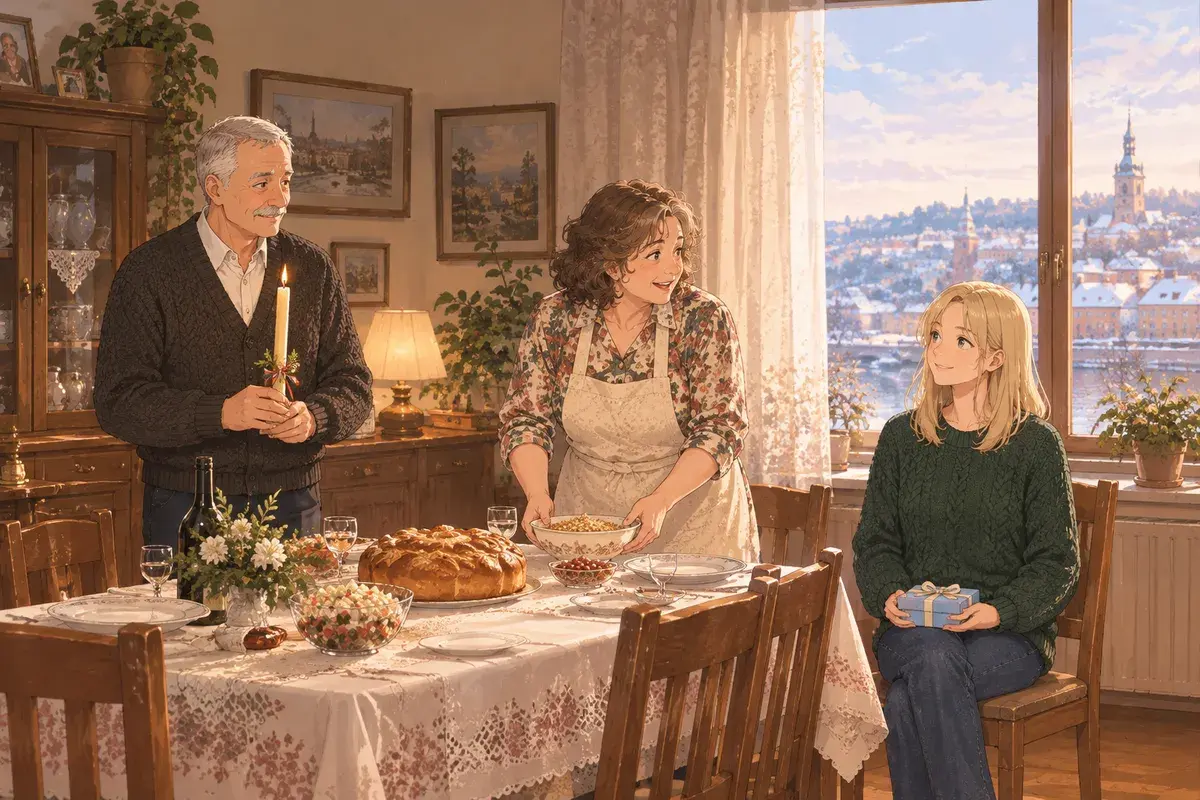
Слава је породични празник Slava is a family holiday
Comic · 14 panels
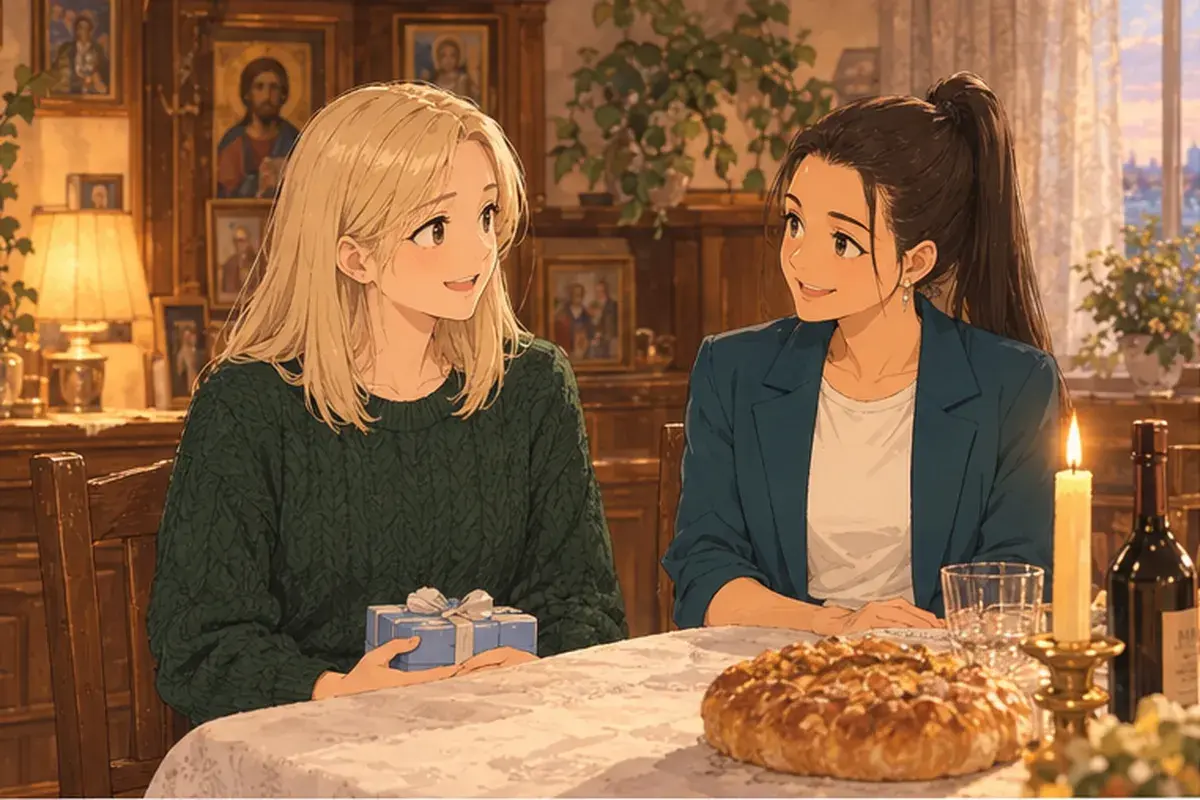
Вечерас сам први пут била на слави код породице моје пријатељице Милице у Земуну.
Tonight I was at a slava for the first time, with my friend Milica's family in Zemun (woman speaking).
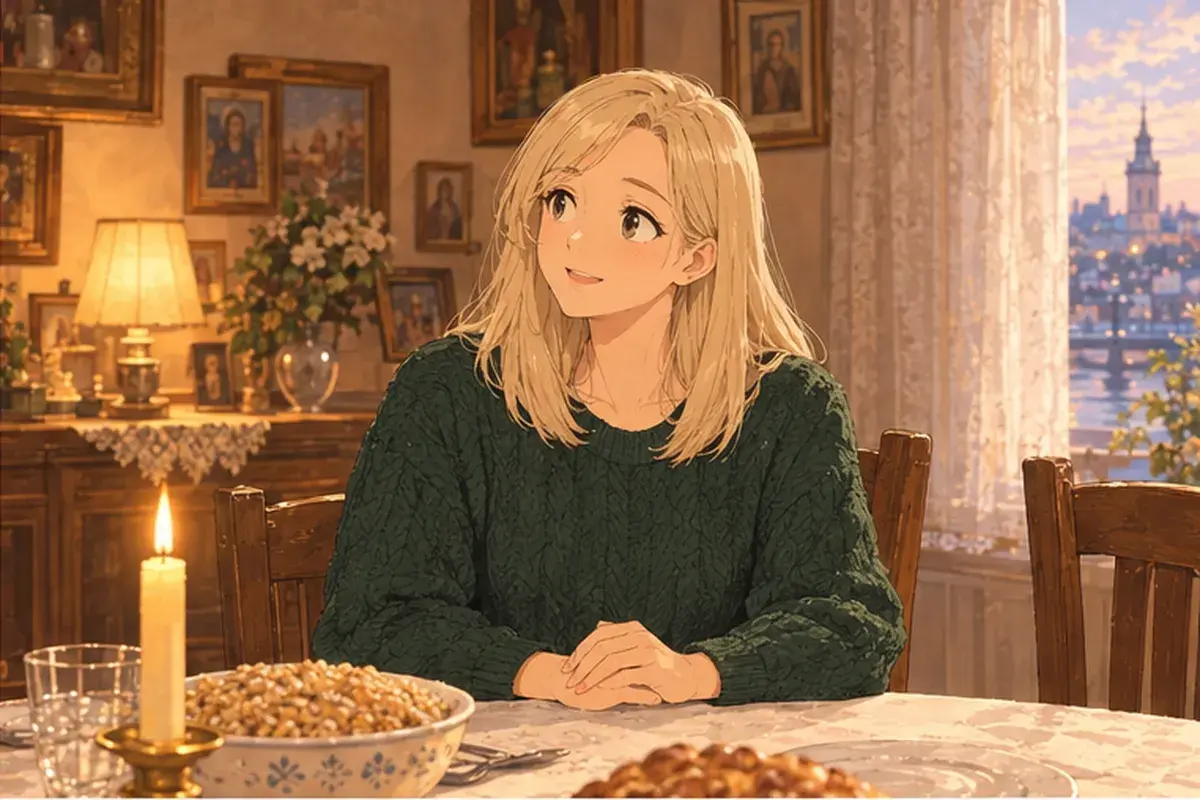
Слава је породични празник, а свака породица слави свог свеца.
A slava is a family holiday, and every family celebrates its own saint.
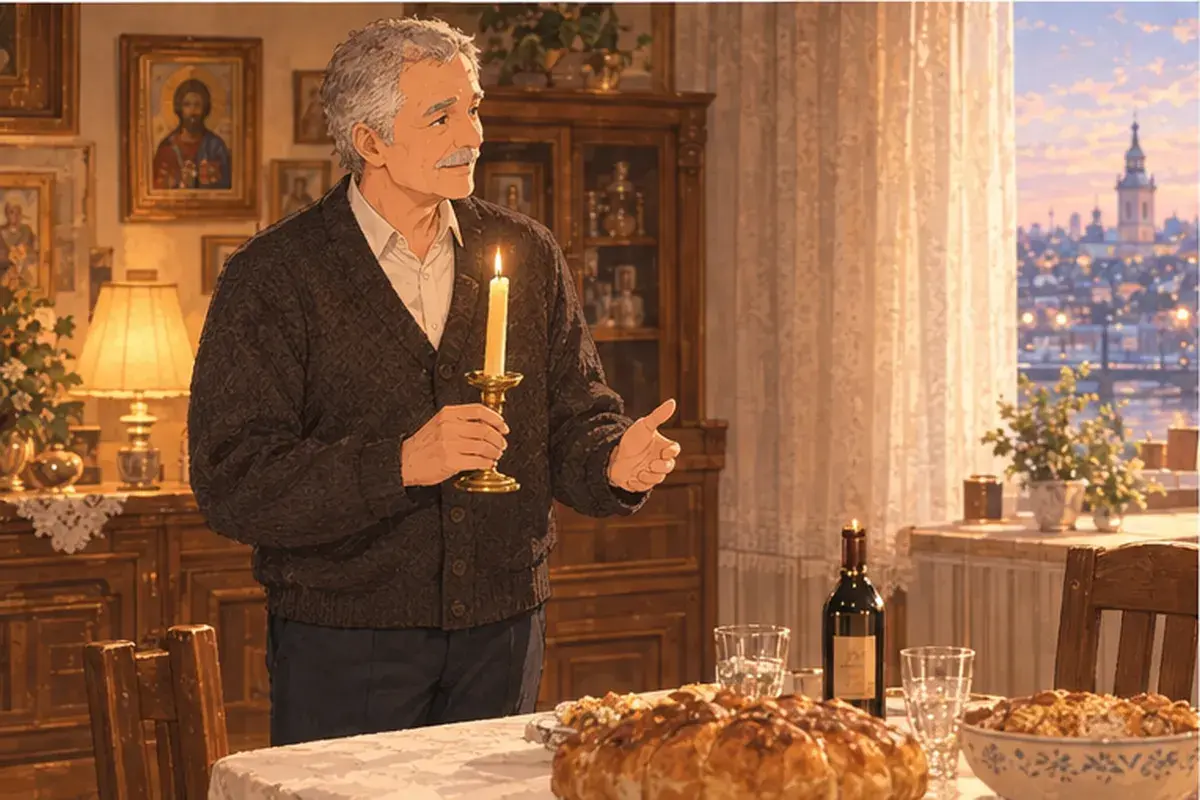
Слава иде од оца на сина. Зато је домаћин обично отац.
The slava passes from father to son. That's why the host is usually the father.
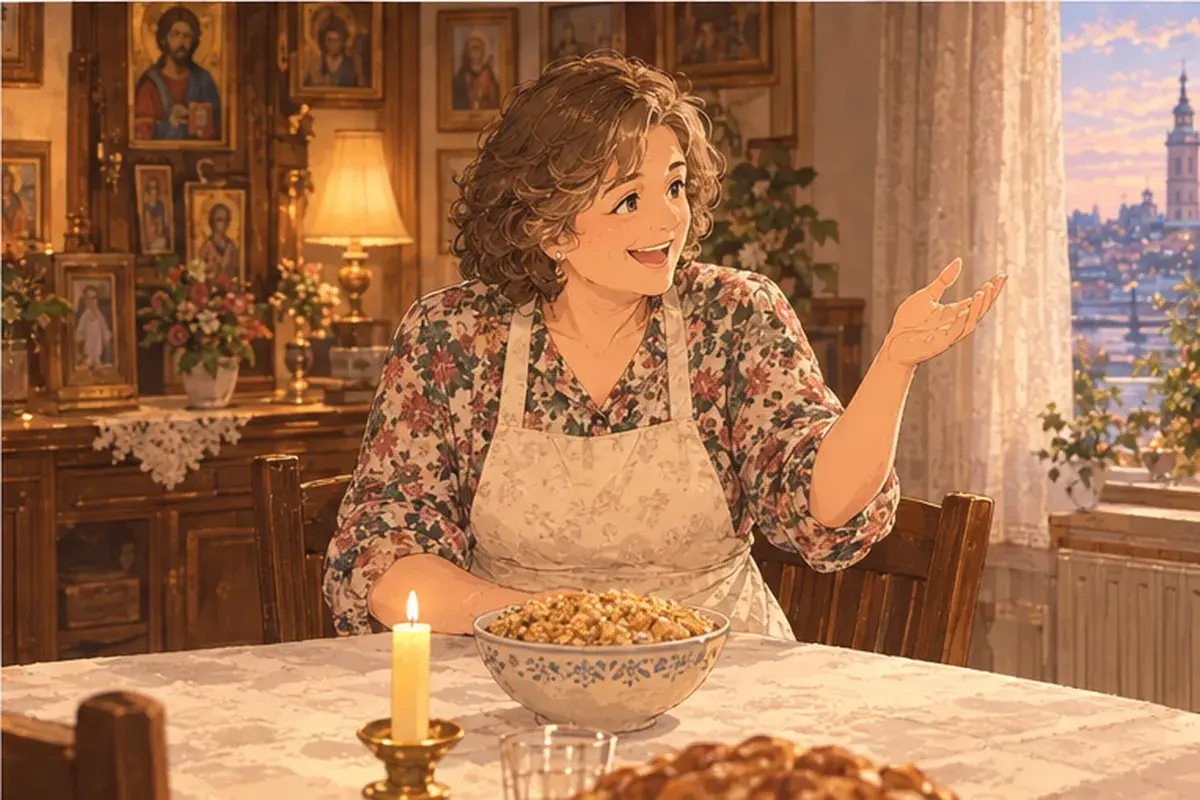
Домаћица је Миличина мајка, јако причљива жена.
The hostess is Milica's mother, a very talkative woman.
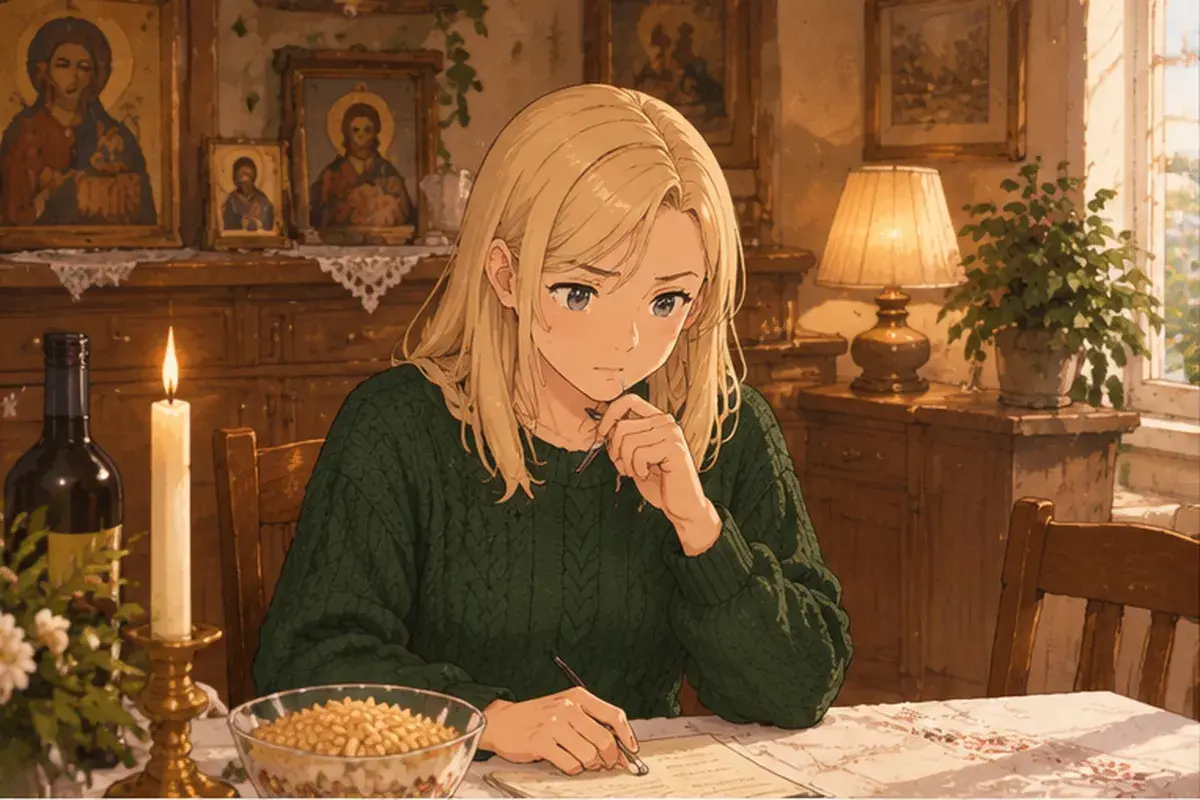
Истина, нисам разумела све, али сам се трудила да слушам.
True, I didn't understand everything, but I tried to listen (woman speaking).
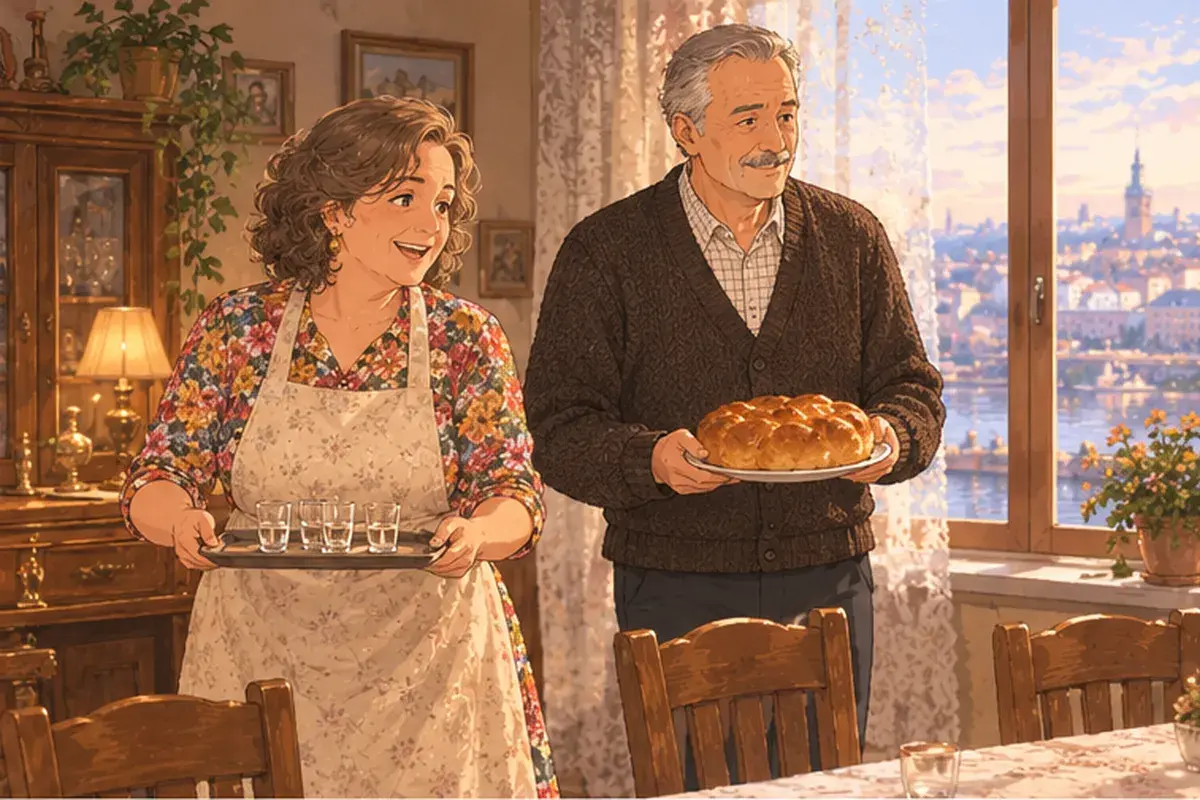
Цела породица се спремила за госте још ујутру.
The whole family got ready for the guests as early as this morning.
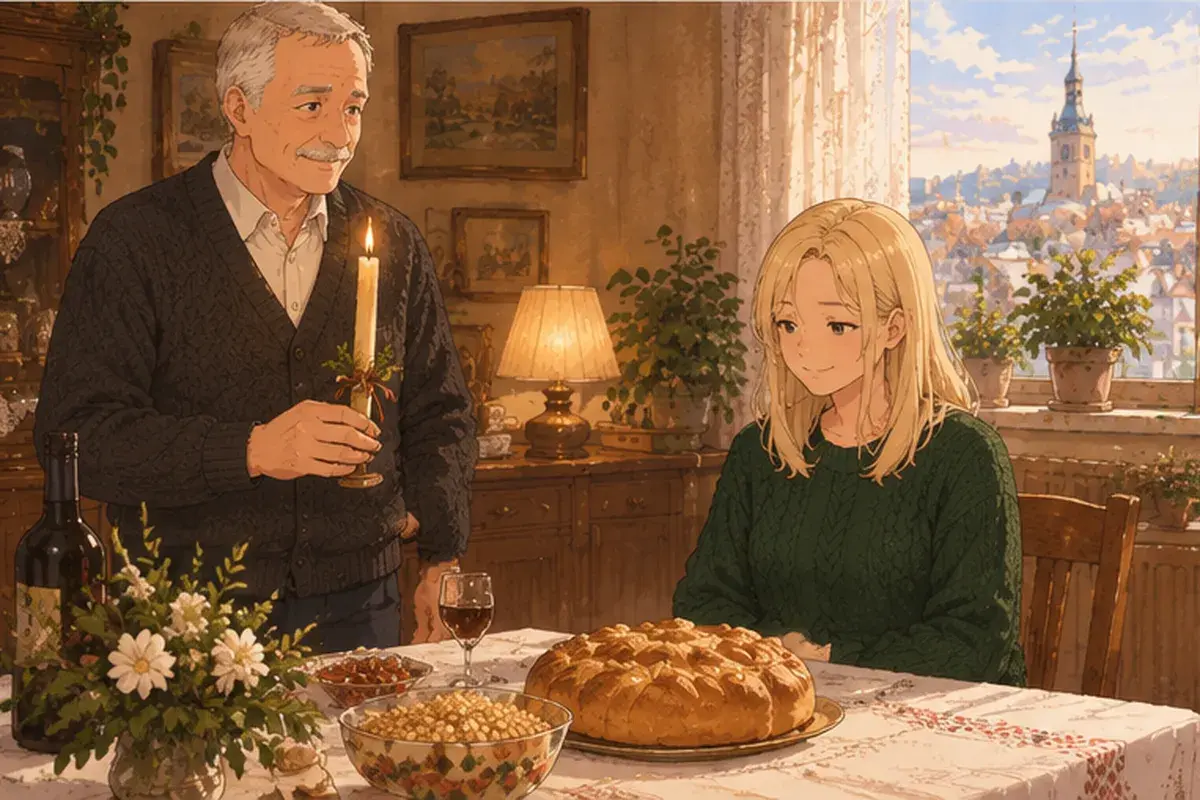
Домаћин је запалио свећу. На столу су били жито, славски колач и вино.
The host lit the candle. On the table there were žito, the slava bread and wine.
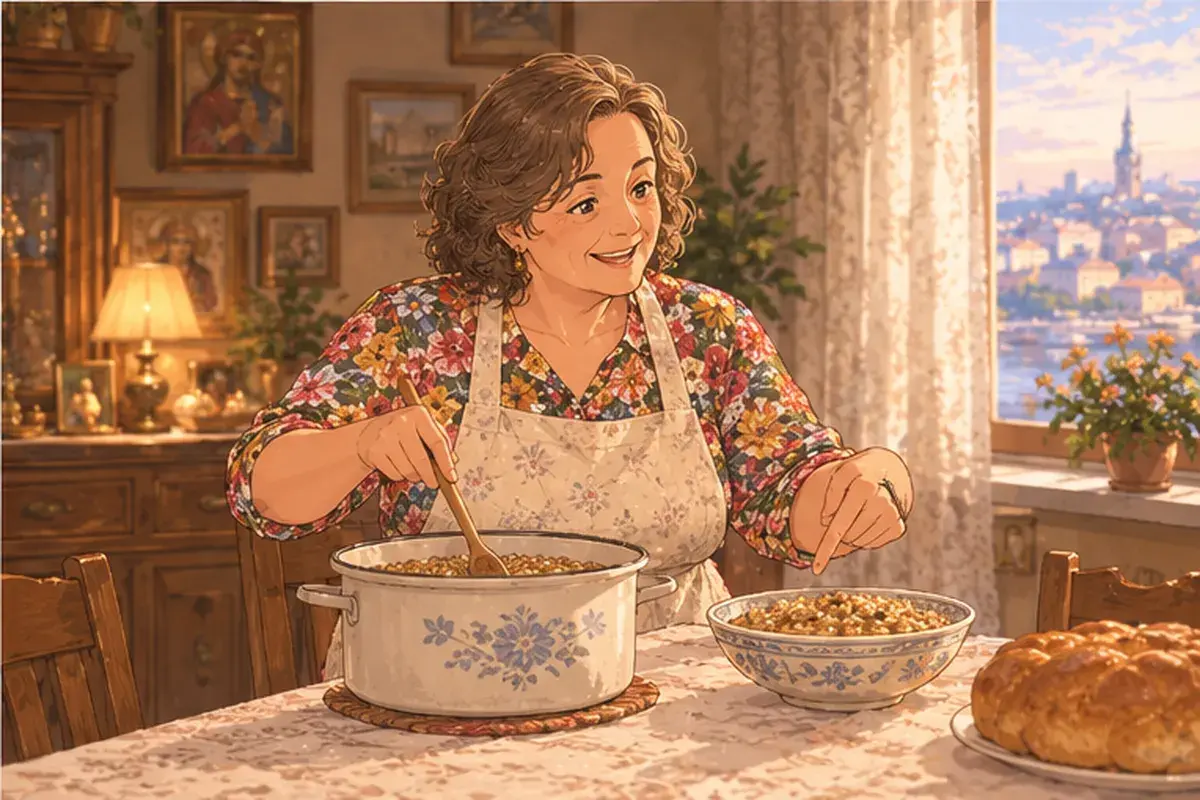
За жито домаћица кува пшеницу, а у житу има ораха и шећера.
For the žito, the hostess boils wheat, and there are walnuts and sugar in the žito.
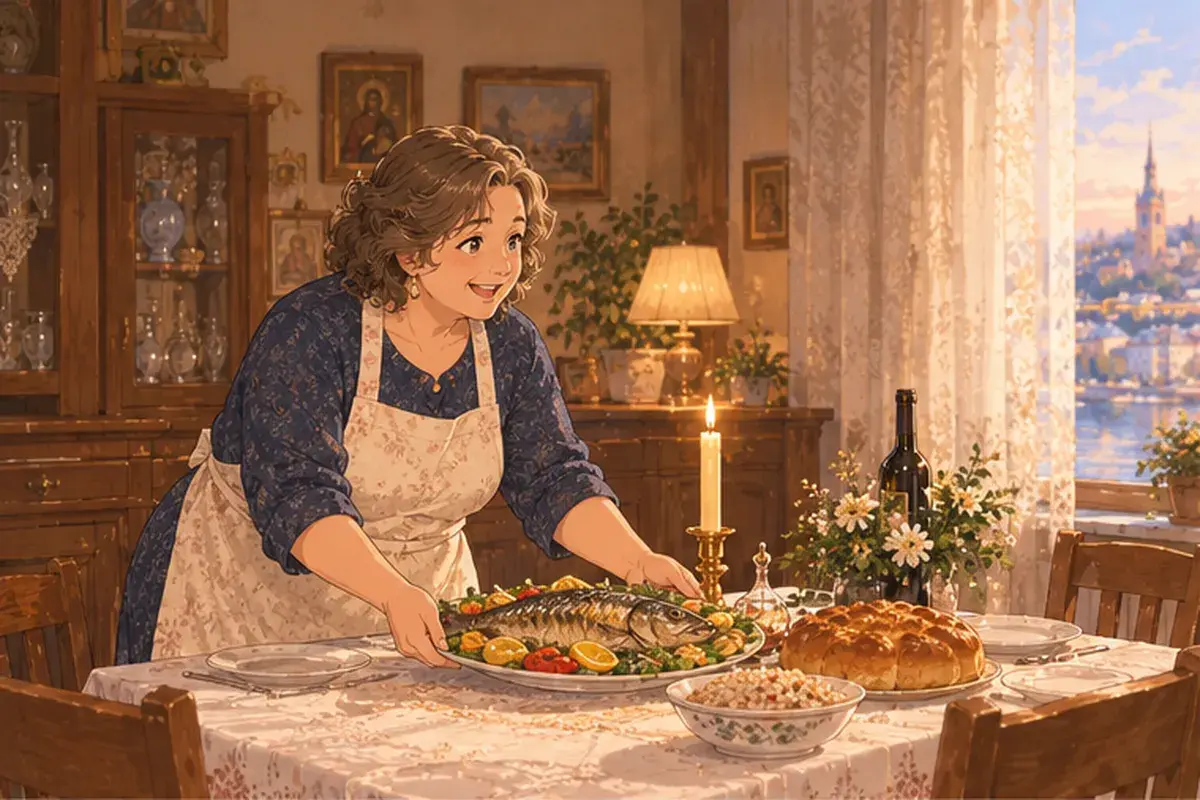
У среду и петак се не једе месо, па је домаћица послужила рибу и поврће.
On Wednesdays and Fridays people don't eat meat, so the hostess served fish and vegetables.
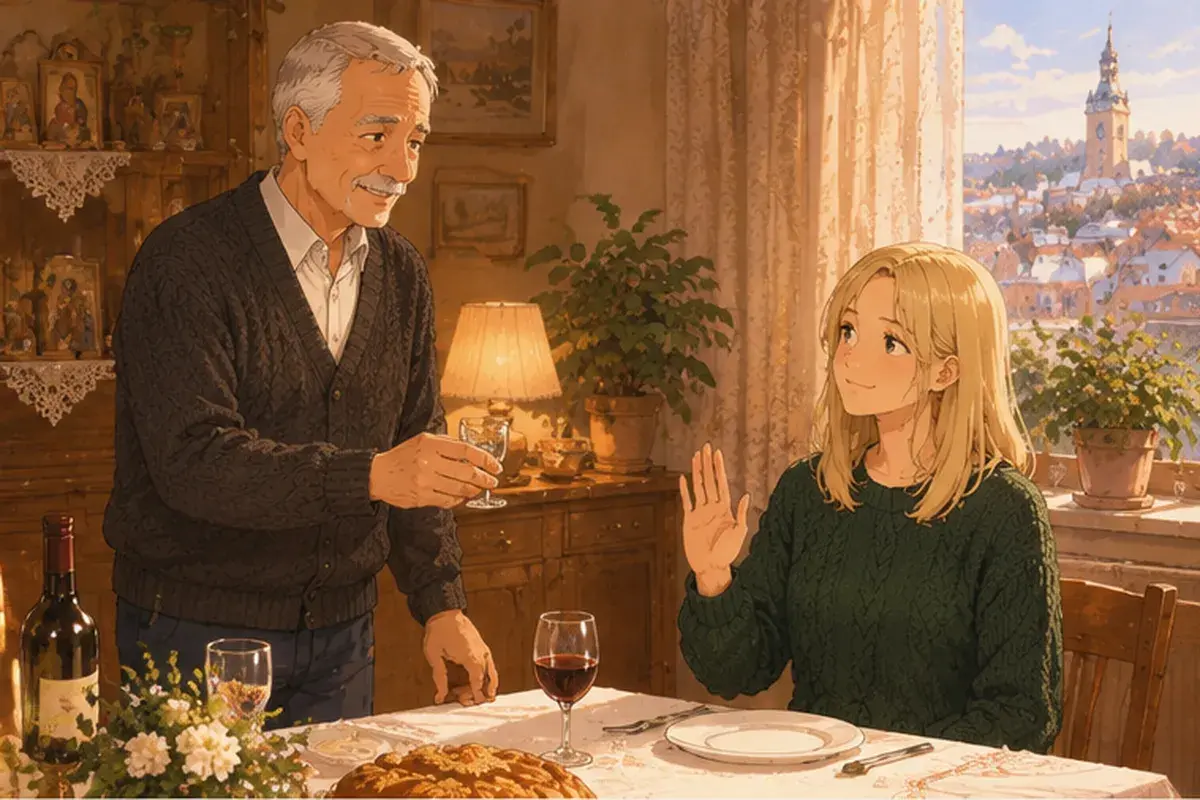
Домаћин ми је понудио ракију. Ја сам попила само мало вина.
The host offered me rakija. I only drank a little wine (woman speaking).
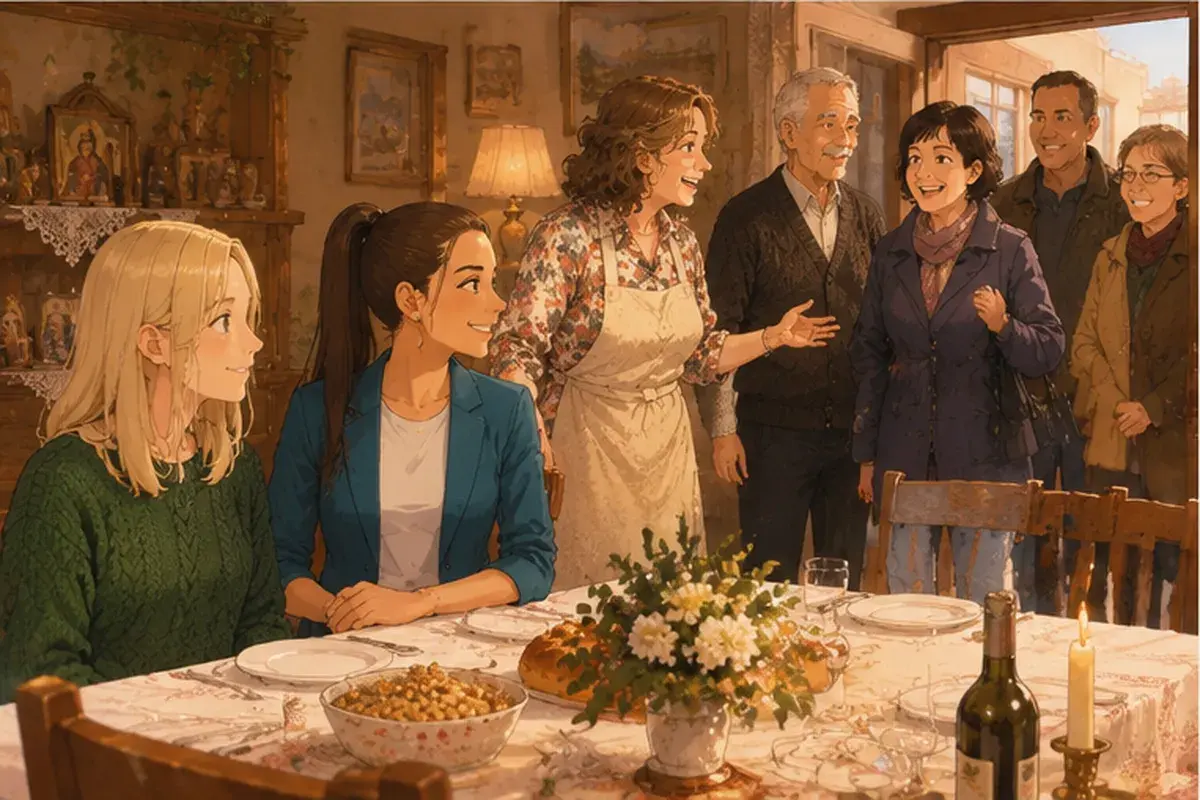
До осам сати су се окупили сви пријатељи и комшије.
By eight o'clock all the friends and neighbors had gathered.
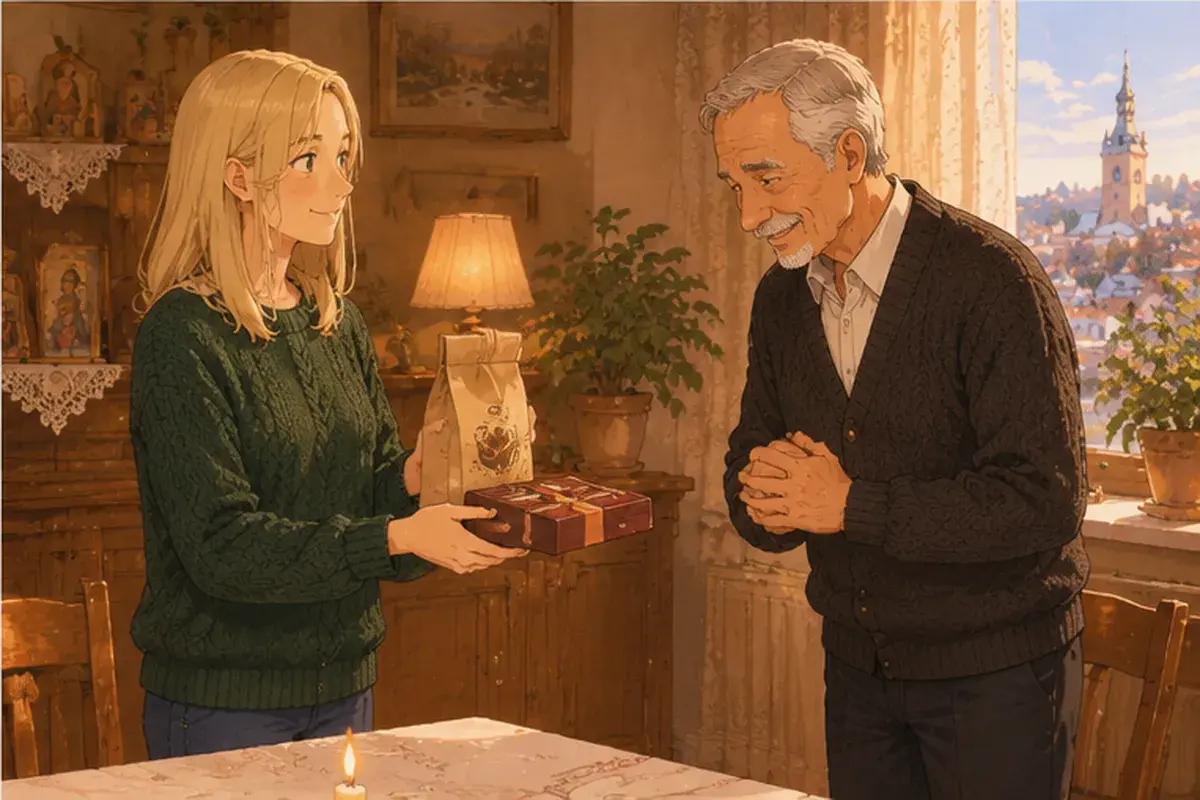
Гости поштују обичаје: носе поклон и честитају домаћину. Ја сам донела кафу и бомбоњеру.
Guests respect the customs: they bring a present and congratulate the host. I brought coffee and a box of chocolates (woman speaking).
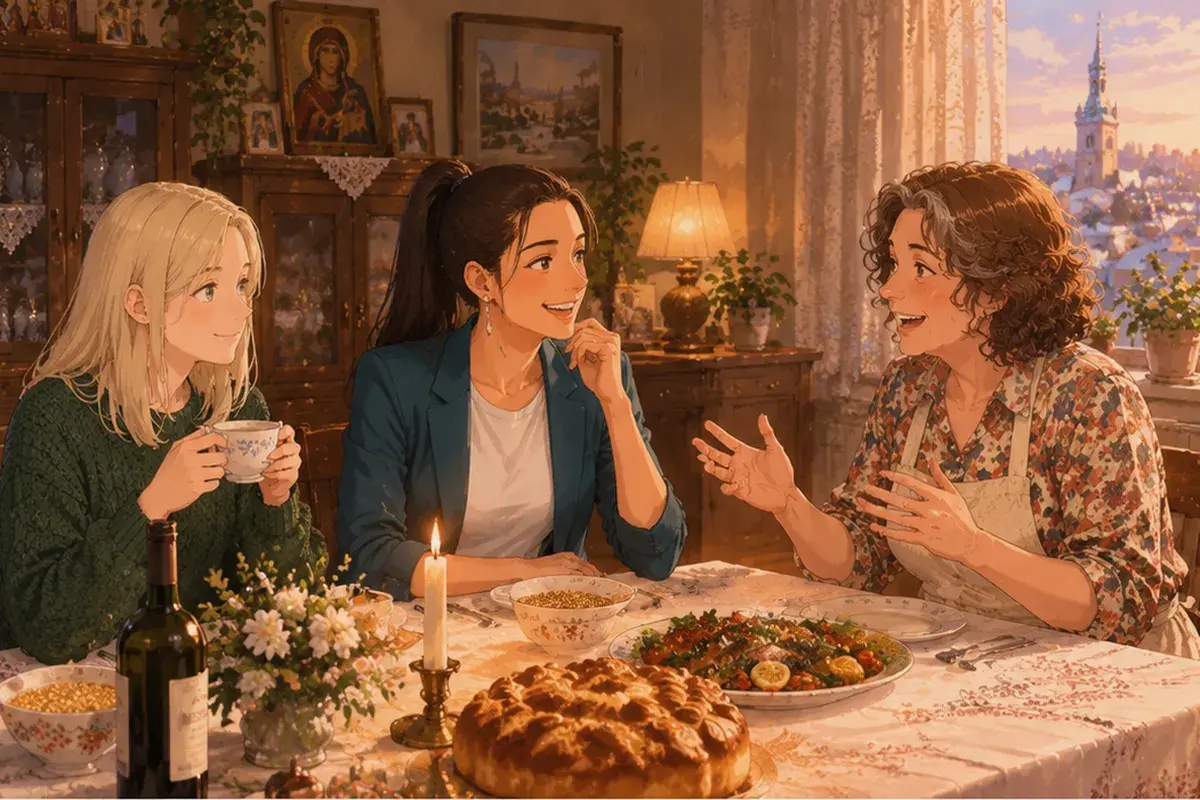
На слави се људи друже и дуго седе, па смо се задржали до једанаест сати.
At a slava people hang out and sit for a long time, so we stayed until eleven o'clock.

Кући сам се вратила аутобусом, уморна и срећна.
I came back home by bus, tired and happy (woman speaking).
Grammar for this text
Вечерас сам први пут била на слави код породице моје пријатељице Милице у Земуну—била— was: the feminine form, because Ana is speaking.на слави— at a slava (where? — the locative).код породице моје пријатељице Милице— at the home of my friend Milica's family: afterкодcomes the genitive (породице,пријатељице,Милице).Слава је породични празник, а свака породица слави свог свеца— hereславиis a verb, celebrates (славити), not the noun.свог свеца— its own saint:својshows that the saint belongs to that same family (see the block aboutсвој).Слава иде од оца на сина—оцаcomes fromотац, with the disappearing a;синаcomes fromсин. The slava passes down from father to son, so the host is usually the father.али сам се трудила да слушам—сам се трудила— I tried:самcomes beforeсе. InЦела породица се спремила за гостеthere is noје: with he / she / it it drops out (never ✗спремила се је).За жито домаћица кува пшеницу, а у житу има ораха и шећера—жито— boiled wheat with walnuts and sugar;ораха,шећера— the genitive: there is some of what?У среду и петак се не једе месоhas no person: 'people don't eat meat':се+једе(the he / she form).Гости поштују обичаје: носе поклон и честитају домаћину—поштују— they respect (поштовати, likeпутовати → путујем);домаћину— to the host (the dative, unit 5).Кући сам се вратила аутобусом, уморна и срећна—аутобусом— by bus (the instrumental, a set phrase; the rule comes in unit 10).
Words and grammar of the unit: Be a guest at a slava.
Learn the words from the texts with flashcards
In the app, you can tap any word in a text to see its translation, forms and examples, and new words stick with flashcards. 15 minutes a day.
Start for freeEverything is open for free. No card needed to sign up.