

Serbian dialogue with translation · A2 · 8 lines
Да ли би дошла на разговор? Would you come to an interview? (to a woman)
Comic · 8 panels
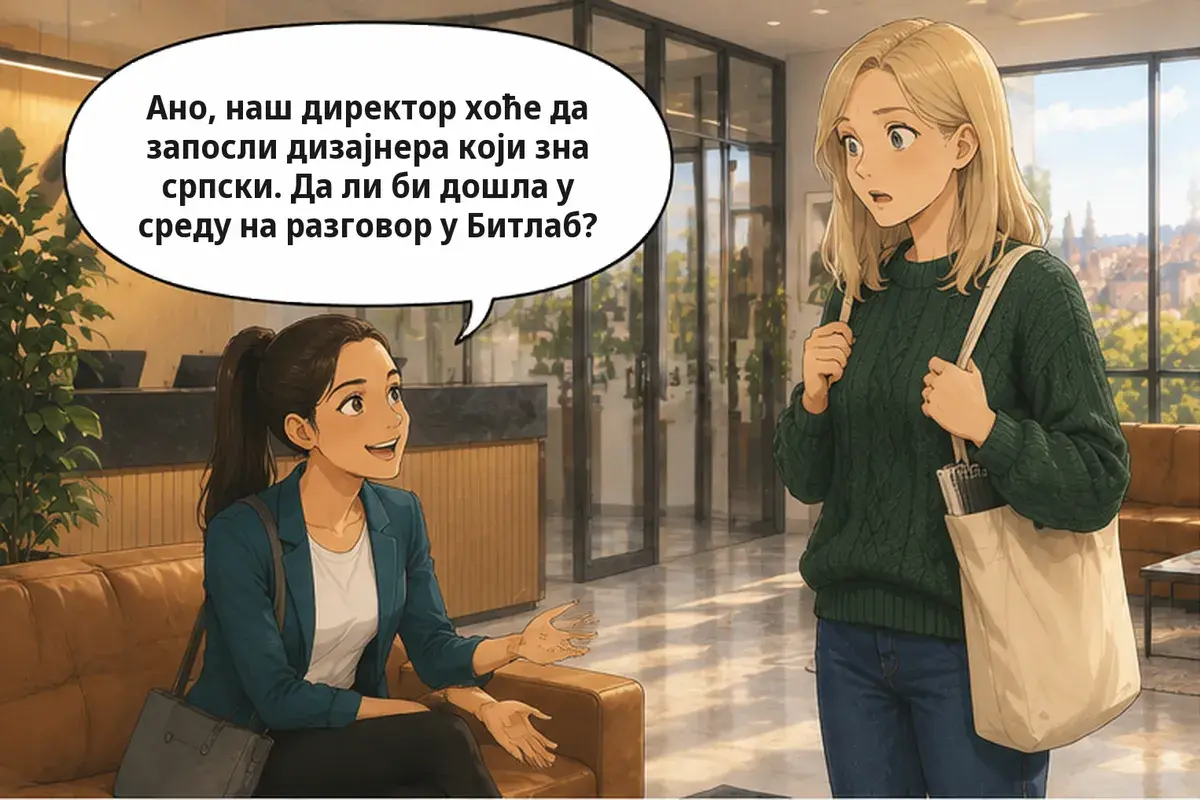
- Милица
Ано, наш директор хоће да запосли дизајнера који зна српски. Да ли би дошла у среду на разговор у Битлаб?
Ana, our director wants to hire a designer who knows Serbian. Would you come to an interview at Bitlab on Wednesday? (to a woman)

- Ана
Хвала ти на прилици, али сам мало узбуђена. Заправо никад нисам имала разговор за посао на српском.
Thanks for the opportunity, but I'm a little nervous. Actually, I've never had a job interview in Serbian (woman speaking).
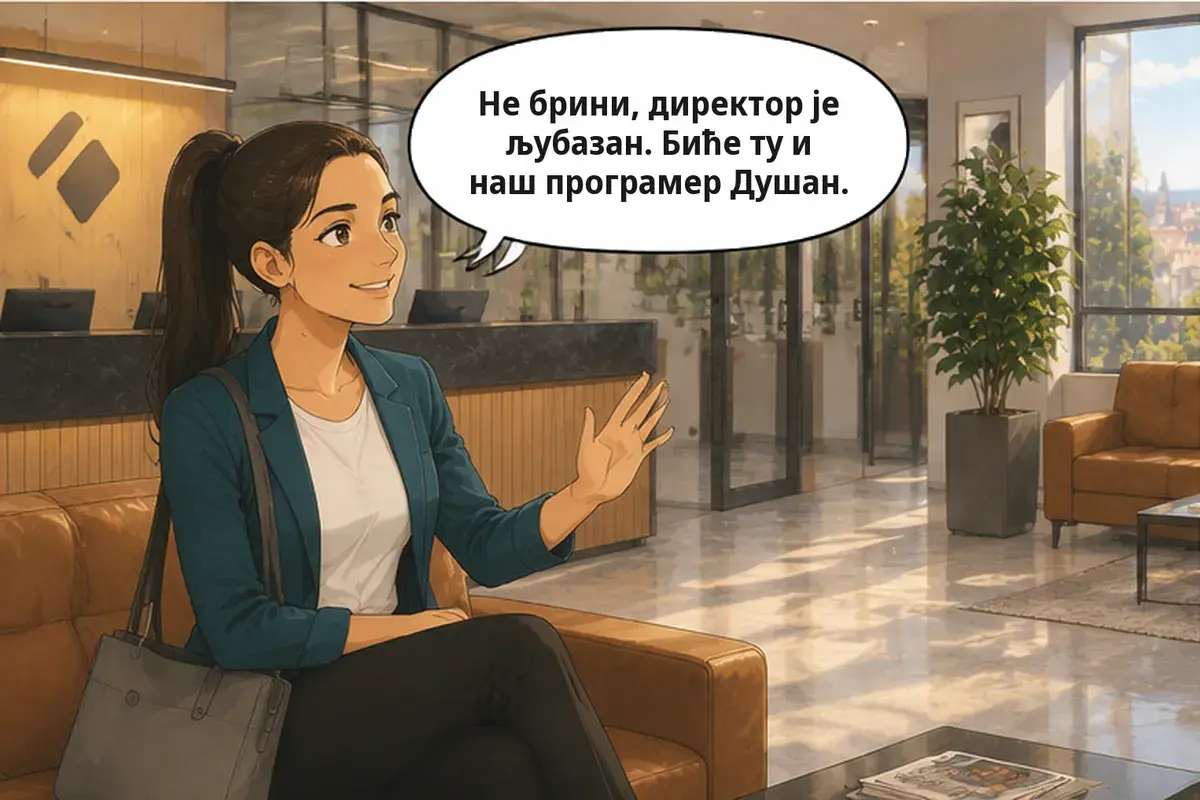
- Милица
Не брини, директор је љубазан. Биће ту и наш програмер Душан.
Don't worry, the director is nice. Our programmer Dušan will be there too.

- Ана
Добро, долазим. Само размишљам како да се представим, а једноставно не знам шта да обучем.
OK, I'm coming. I'm just thinking about how to introduce myself, and I simply don't know what to wear.

- Милица
Нема везе шта ћеш обући, само дођи 15 минута раније.
It doesn't matter what you'll wear, just come 15 minutes early.

- Ана
А шта ако ме одбију? Онда ћу бар научити нове речи.
And what if they turn me down? Then at least I'll learn some new words.

- Милица
Неће те одбити. Видимо се у среду у 11:00 испред канцеларије, и срећно!
They won't turn you down. See you on Wednesday at 11:00 in front of the office, and good luck!

- Ана
Договорено, хвала ти! Јавићу ти одмах после разговора.
It's a deal, thanks! I'll let you know right after the interview.
Grammar for this text
Да ли би дошла у среду на разговор у Битлаб?—би дошлаis the conditional, English 'would': 'would you come'.биis a clitic (a form ofбити) and stands right afterда ли.дошлаis the feminine -o/-la form of the irregular verbдоћи(дошао,дошла): Milica is talking to a woman. The rule is in the grammar of this unit.разговорhere is a job interview, not just a conversation.наш директор хоће да запосли дизајнера који зна српски—да запосли— to hire: afterдаthe perfective verb is in the present tense (запослити→запосли, the he form).који зна— who knows:којиis in its basic form here; its other forms come at B1, for now just recognize them.дизајнераis the accusative, the object: hire whom? a designer.Хвала ти на прилици— thanks for the opportunity:прилициis the locative ofприликаafterна.Не брини— don't worry.Нема везе шта ћеш обући—Нема везе— it doesn't matter;ћеш обућиis the future tense: 'what you'll wear'.како да се представим—представити се— to introduce yourself; afterдаcomesпредставим: 'how to introduce myself'.А шта ако ме одбију?—одбити— to turn down; afterакоthe perfective verb is in the present tense:одбију— (if) they turn down.ме— me.Неће те одбити—неће— won't (unit 3),те— you: 'they won't turn you down'.
Words and grammar of the unit: Get through a job interview.
Learn the words from the texts with flashcards
In the app, you can tap any word in a text to see its translation, forms and examples, and new words stick with flashcards. 15 minutes a day.
Start for freeEverything is open for free. No card needed to sign up.