
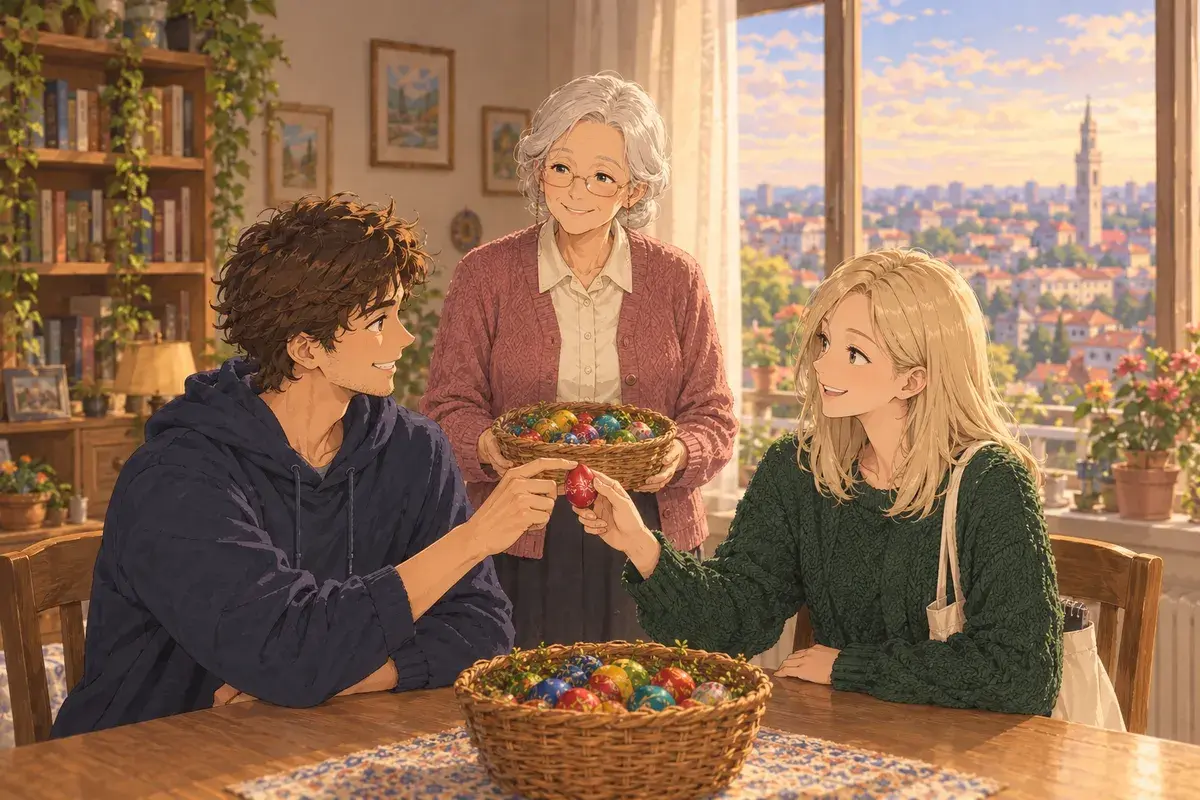
Serbian dialogue with translation · A2 · 13 lines
Чије је ово јаје? Whose egg is this?
Comic · 13 panels
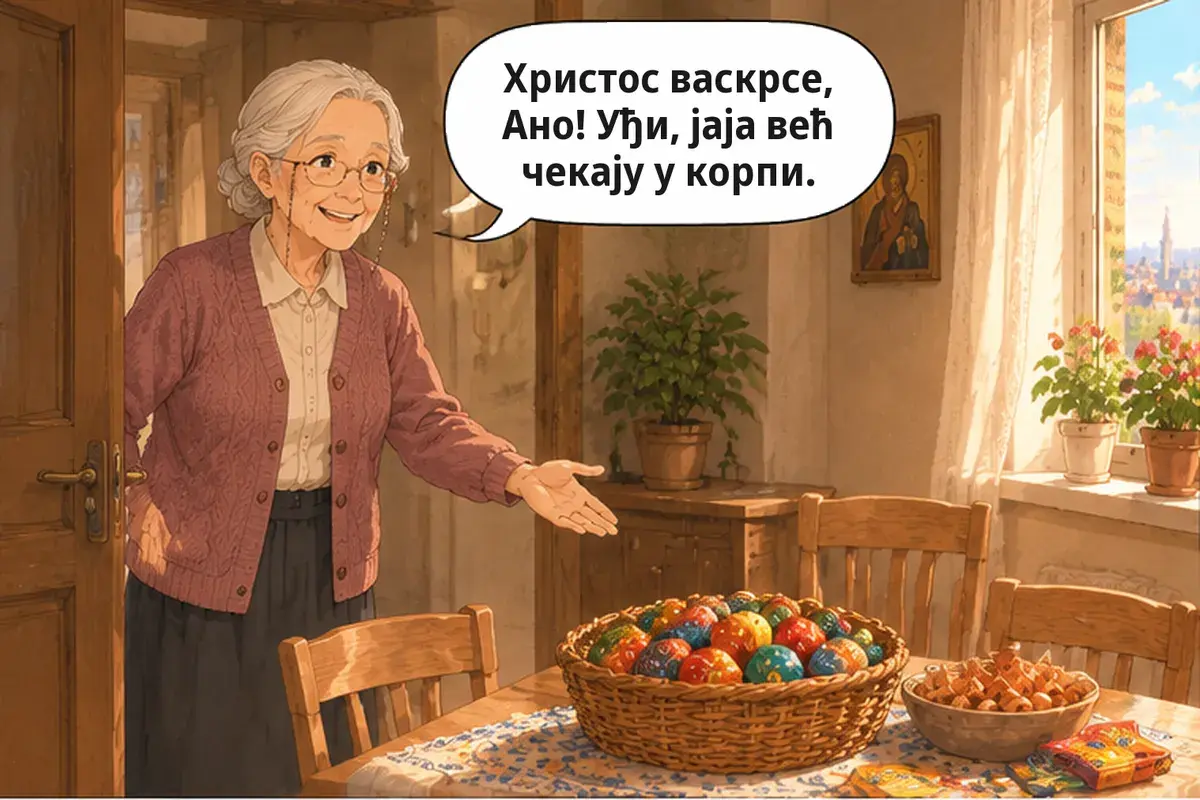
- Радмила
Христос васкрсе, Ано! Уђи, јаја већ чекају у корпи.
Christ is risen, Ana! Come in, the eggs are already waiting in the basket.
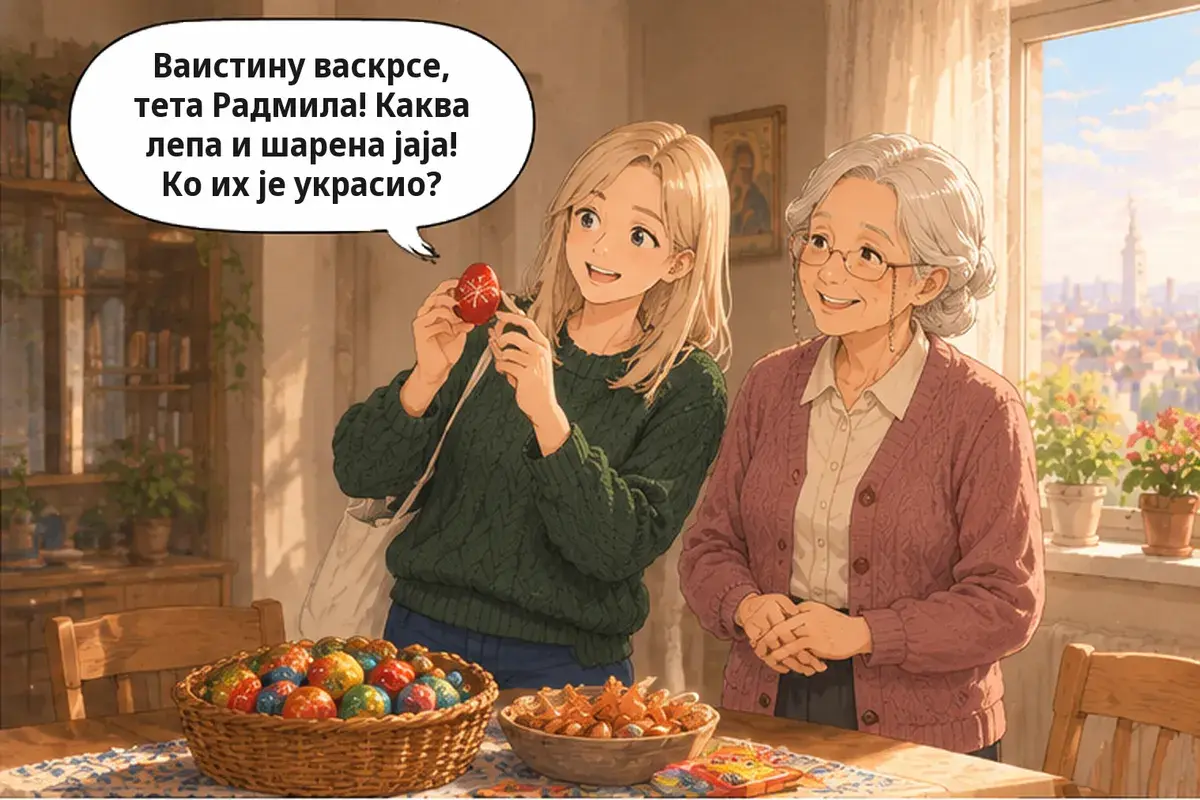
- Ана
Ваистину васкрсе, тета Радмила! Каква лепа и шарена јаја! Ко их је украсио?
Truly He is risen, Aunt Radmila! What beautiful, colorful eggs! Who decorated them?
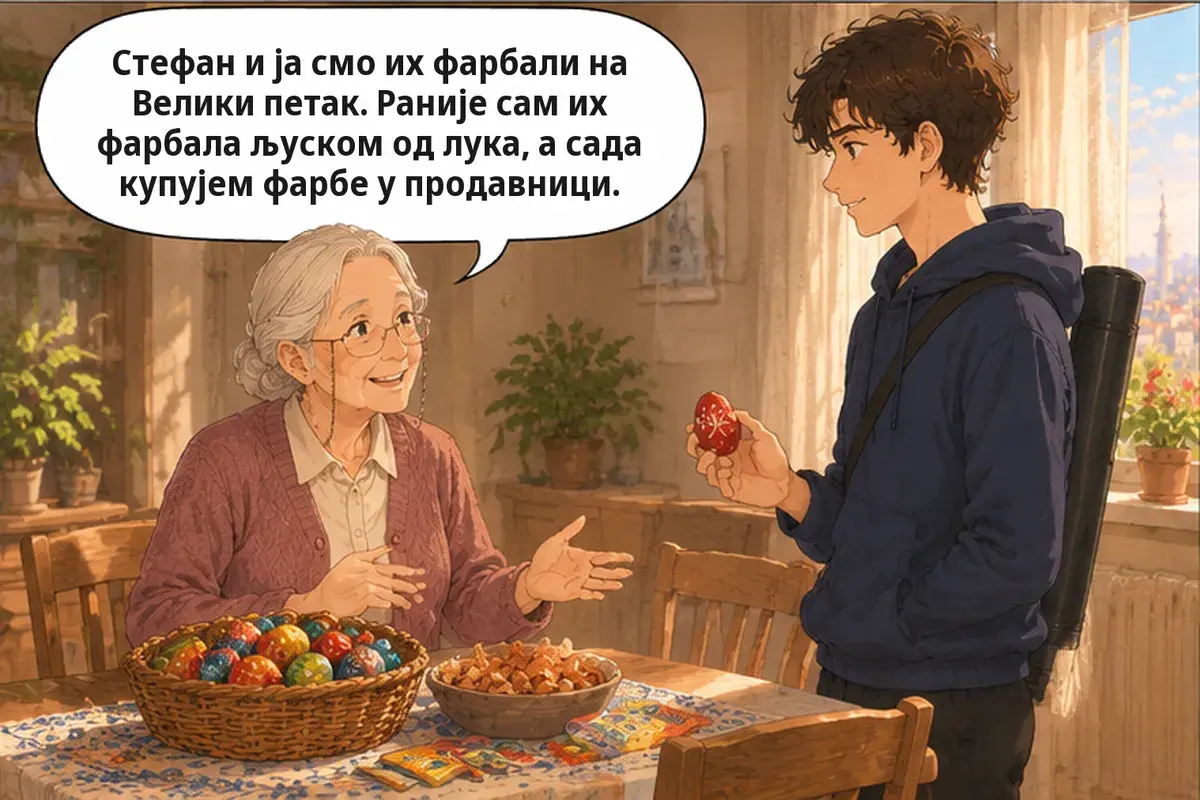
- Радмила
Стефан и ја смо их фарбали на Велики петак. Раније сам их фарбала љуском од лука, а сада купујем фарбе у продавници.
Stefan and I dyed them on Good Friday. I used to dye them with onion skins, but now I buy dyes at the store (woman speaking).
- Стефан
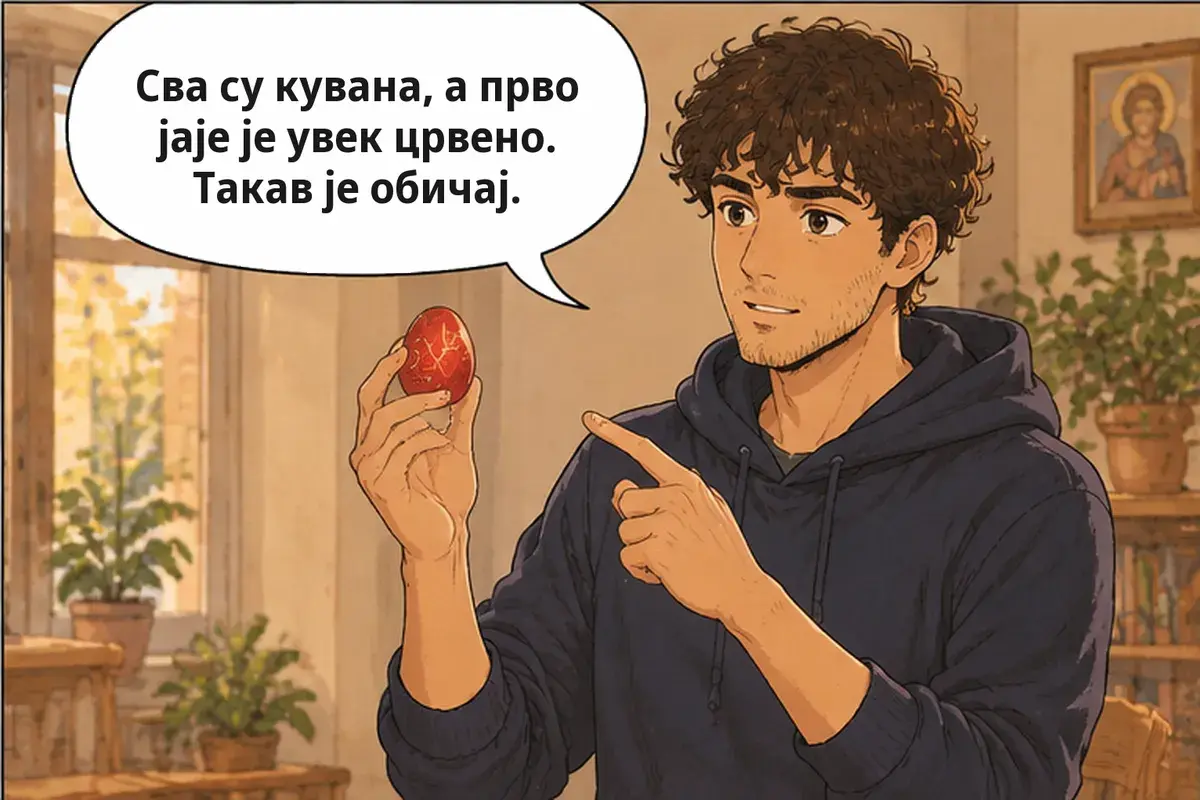
Сва су кувана, а прво јаје је увек црвено. Такав је обичај.
They're all boiled, and the first egg is always red. That's the custom.
- Ана
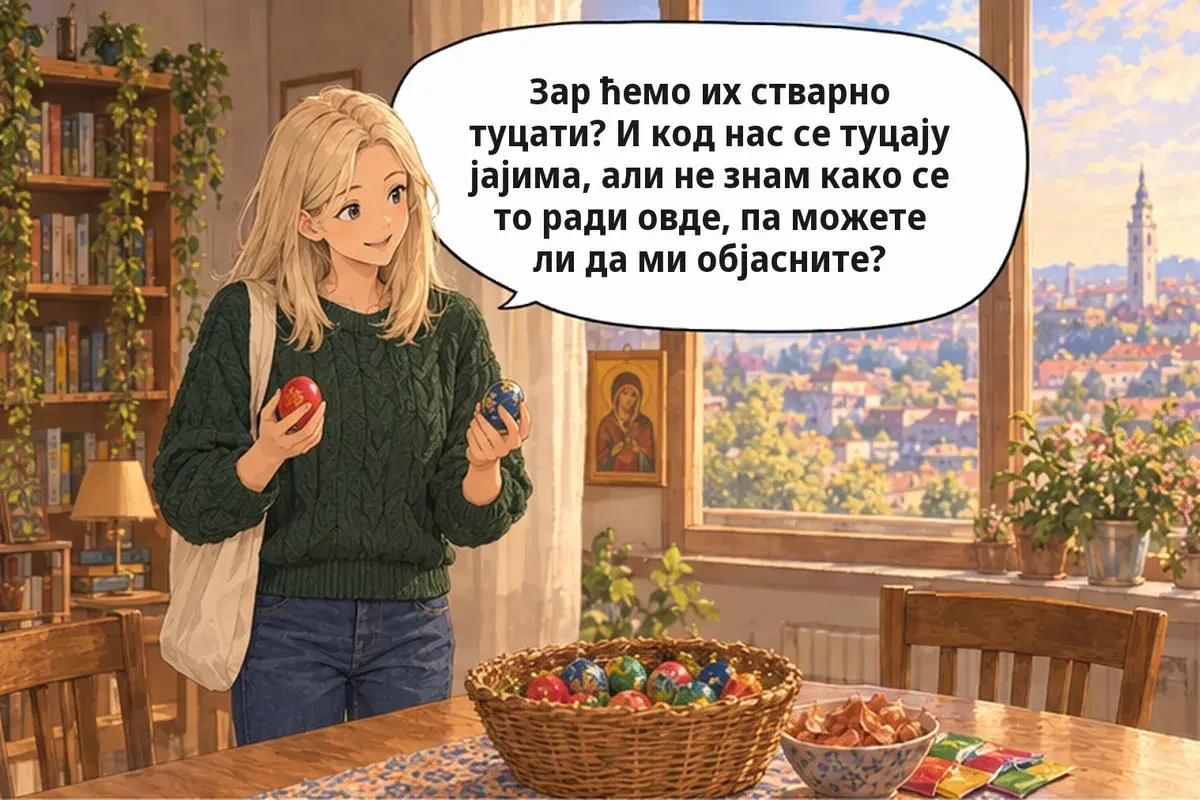
Зар ћемо их стварно туцати? И код нас се туцају јајима, али не знам како се то ради овде, па можете ли да ми објасните?
Are we really going to tap them? Back home people tap eggs too, but I don't know how it's done here, so can you explain it to me? (to several people)
- Стефан
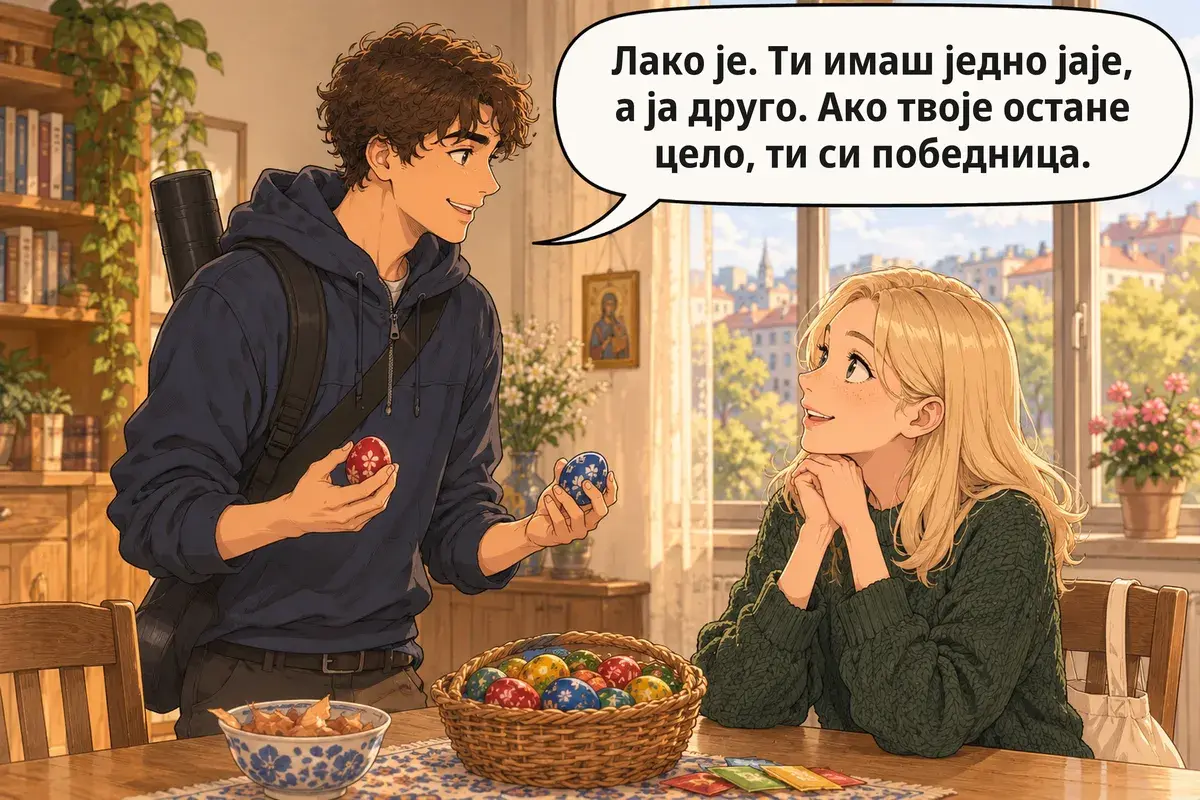
Лако је. Ти имаш једно јаје, а ја друго. Ако твоје остане цело, ти си победница.
It's easy. You have one egg, and I have another one. If yours stays whole, you're the winner (to a woman).
- Ана
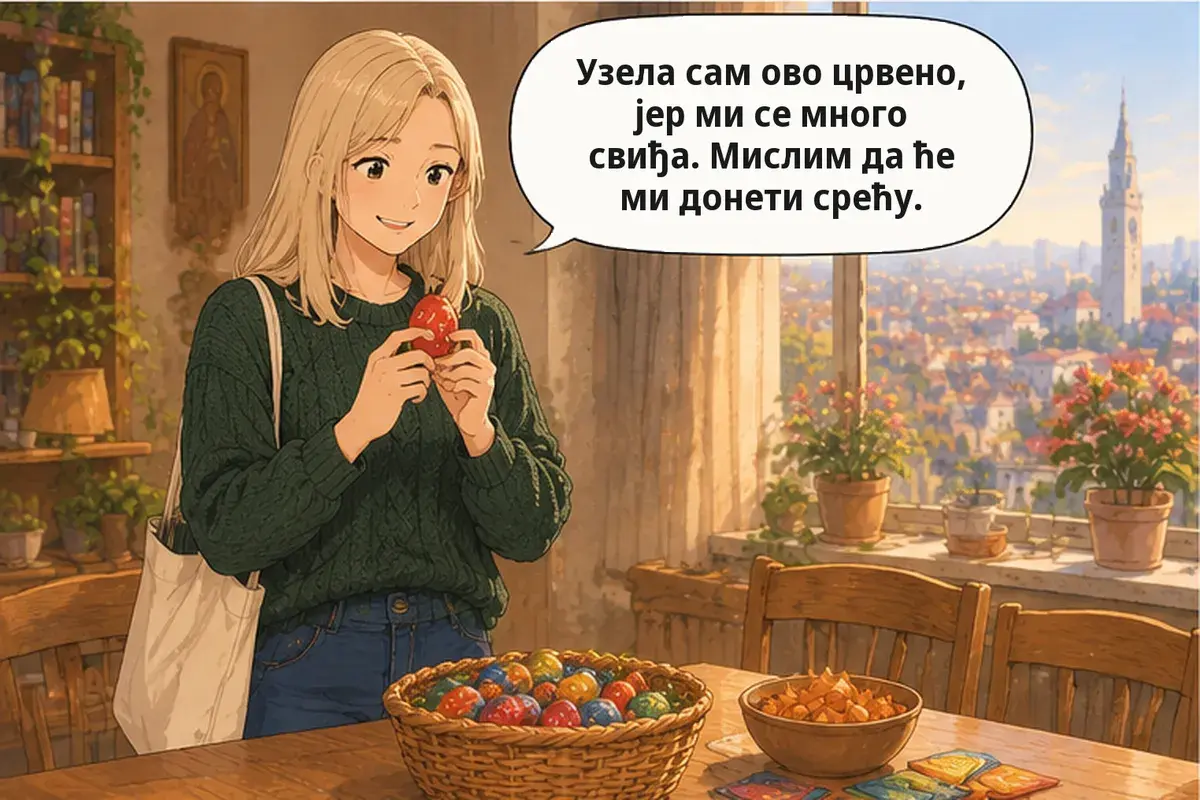
Узела сам ово црвено, јер ми се много свиђа. Мислим да ће ми донети срећу.
I took this red one because I really like it (woman speaking). I think it'll bring me luck.
- Стефан
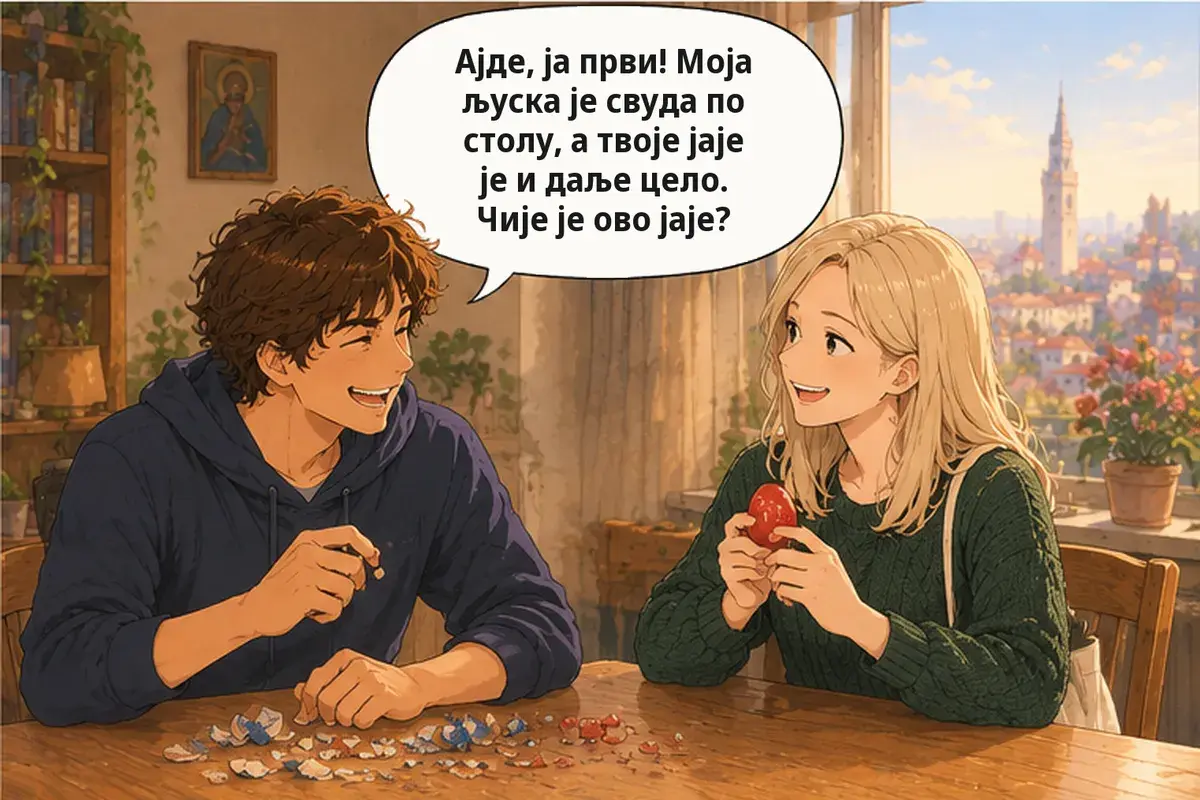
Ајде, ја први! Моја љуска је свуда по столу, а твоје јаје је и даље цело. Чије је ово јаје?
Come on, me first (man speaking)! My shell is all over the table, and your egg is still whole. Whose egg is this?
- Ана
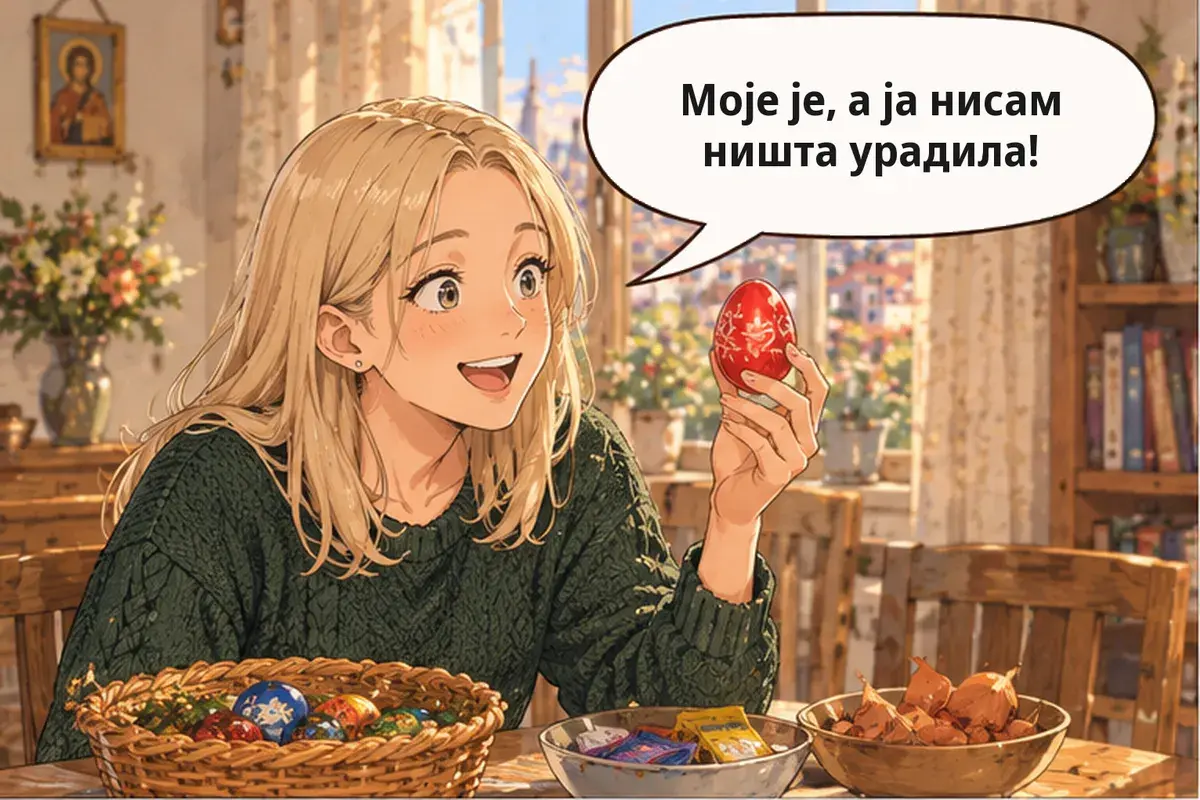
Моје је, а ја нисам ништа урадила!
It's mine, and I didn't do anything (woman speaking)!
- Радмила
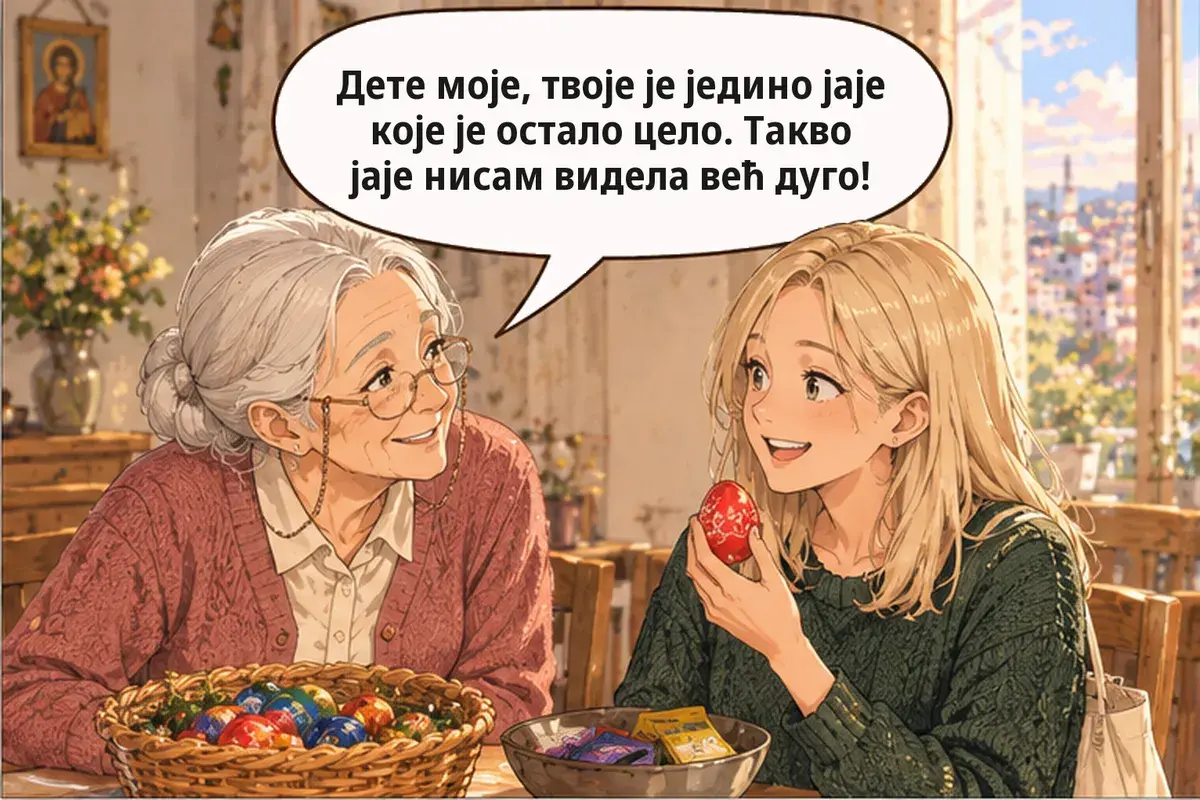
Дете моје, твоје је једино јаје које је остало цело. Такво јаје нисам видела већ дуго!
My child, yours is the only egg that stayed whole. I haven't seen an egg like that in a long time (woman speaking)!
- Стефан
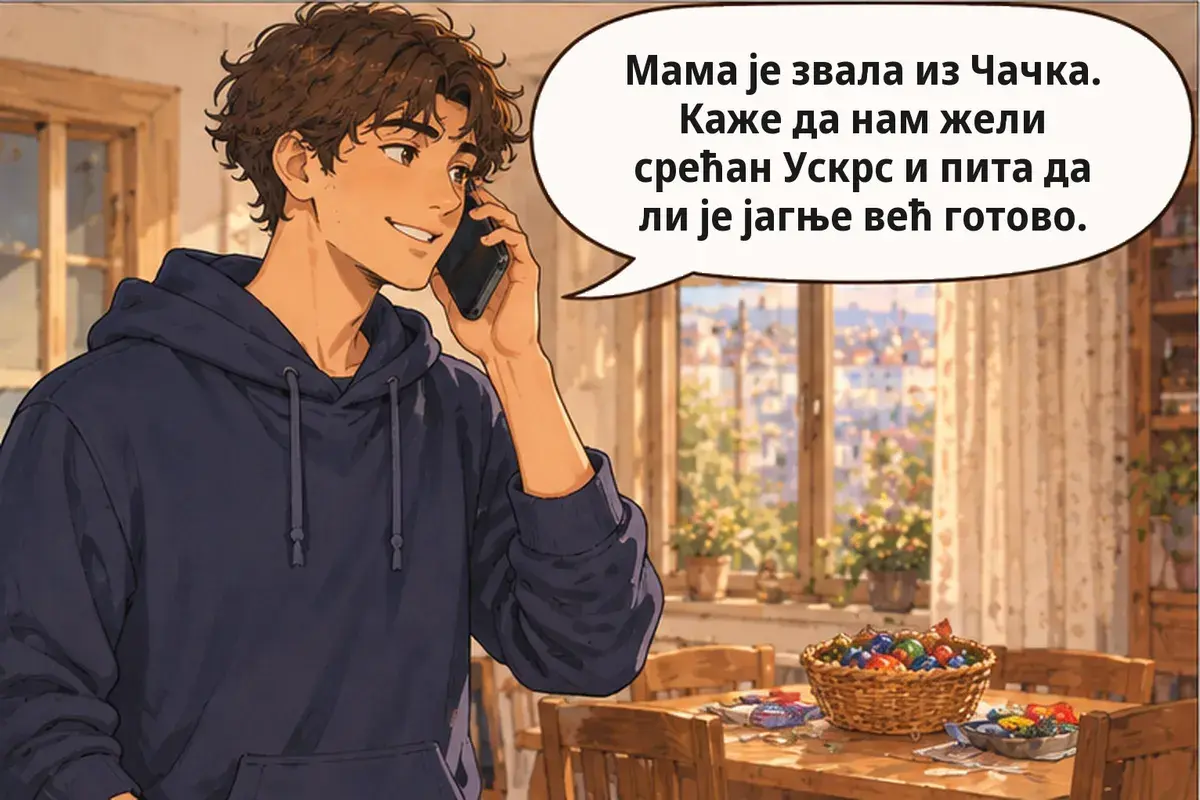
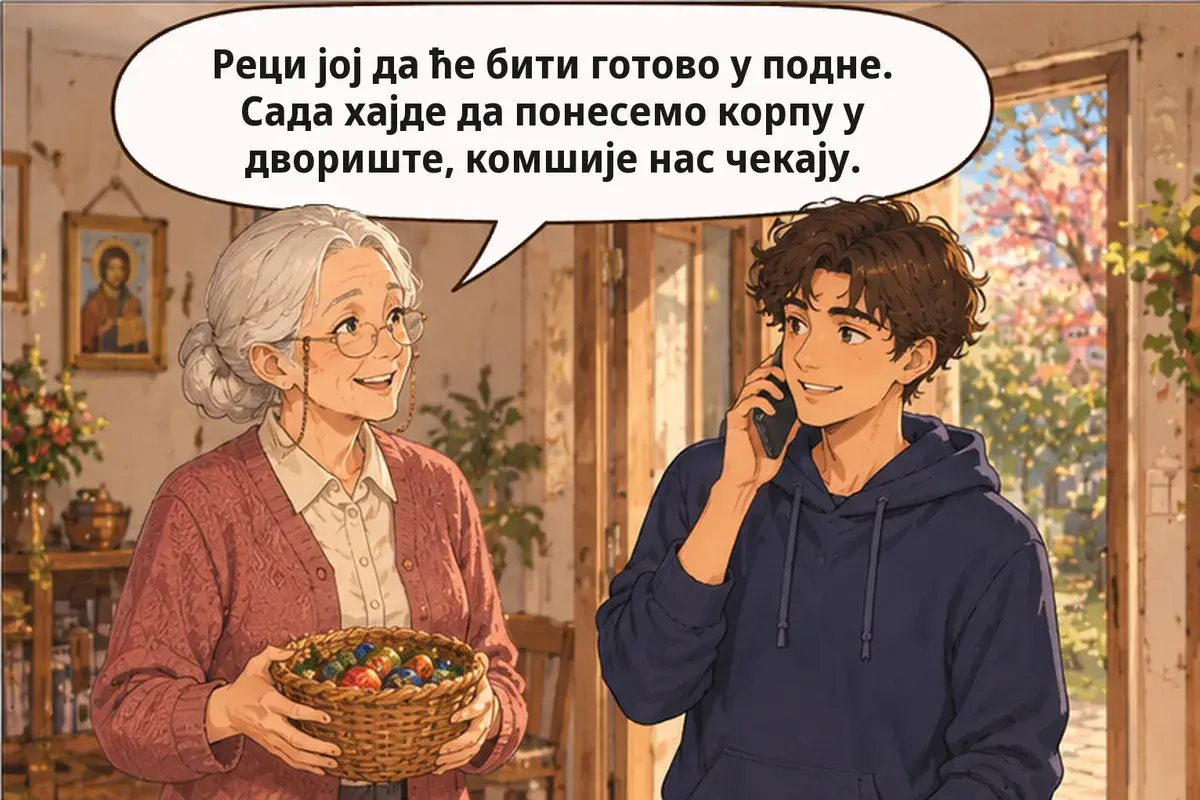
Мама је звала из Чачка. Каже да нам жели срећан Ускрс и пита да ли је јагње већ готово.
Mom called from Čačak. She says she wishes us a happy Easter and asks if the lamb is ready yet.
- Радмила
Реци јој да ће бити готово у подне. Сада хајде да понесемо корпу у двориште, комшије нас чекају.
Tell her it'll be ready at noon. Now let's take the basket out to the yard, the neighbors are waiting for us.
- Ана
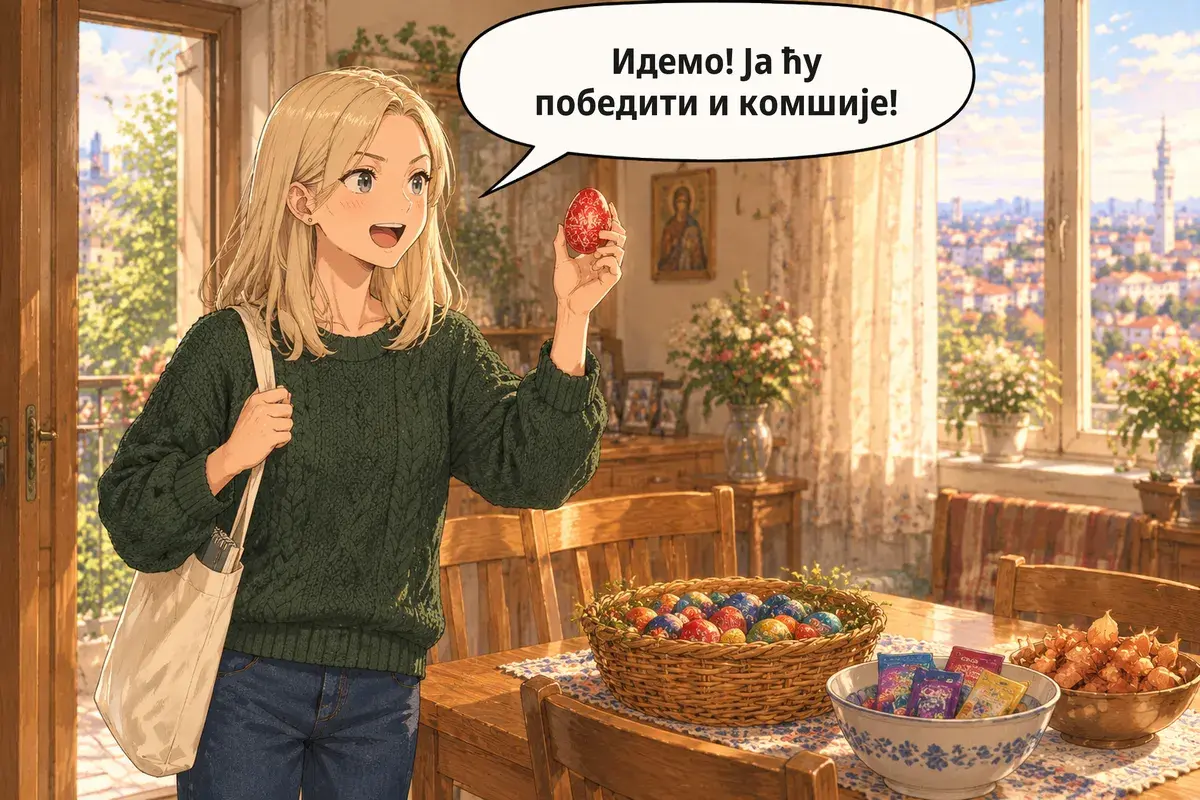
Идемо! Ја ћу победити и комшије!
Let's go! I'll beat the neighbors too!
Grammar for this text
Христос васкрсе, Ано!— the Easter greeting, Christ is risen! The answer isВаистину васкрсе(Truly He is risen). Say both as set phrases.Аноis the calling form ofАна.Каква лепа и шарена јаја!—какваmakes an exclamation: what beautiful… ! It agrees withјаја(neuter plural). The rule is in the block "Questionsчији,какавand the answerтакав".Раније сам их фарбала љуском од лука—љускомis the instrumental (with, by; unit 10): she dyed them with onion skins.од лука— of onion (лук→лука);их— them (unit 8). Watch out:љускаis both an onion skin and an eggshell. InМоја љуска је свуда по столуit's Stefan's eggshell.Такав је обичај—такавanswersкакав: such is the custom.Ако твоје остане цело, ти си победница— afterако(if) comes a perfective verb (остане— stays, unit 12);победница— the winner, a woman.Зар ћемо их стварно туцати?—зарstarts a surprised question: really? The future isћемо+ infinitive (unit 3).туцати се— to tap eggs. InИ код нас се туцају јајима,се туцајуmeans people tap, andјајима(with eggs) is the instrumental plural (unit 18).Чије је ово јаје?—чије(whose) follows the thing (јајеis neuter), not the owner. Stefan is joking: whose egg can it be, if it didn't break?Каже да нам жели срећан Ускрс и пита да ли је јагње већ готово— reported speech:каже да…— she says (that)…,пита да ли…— she asks if….Реци јој да ће бити готово у подне—Реци јојmeans tell her (a set form; the imperative comes in unit 24);јој— to her (unit 5).
Words and grammar of the unit: Celebrate Easter and May Day.
Learn the words from the texts with flashcards
In the app, you can tap any word in a text to see its translation, forms and examples, and new words stick with flashcards. 15 minutes a day.
Start for freeEverything is open for free. No card needed to sign up.