
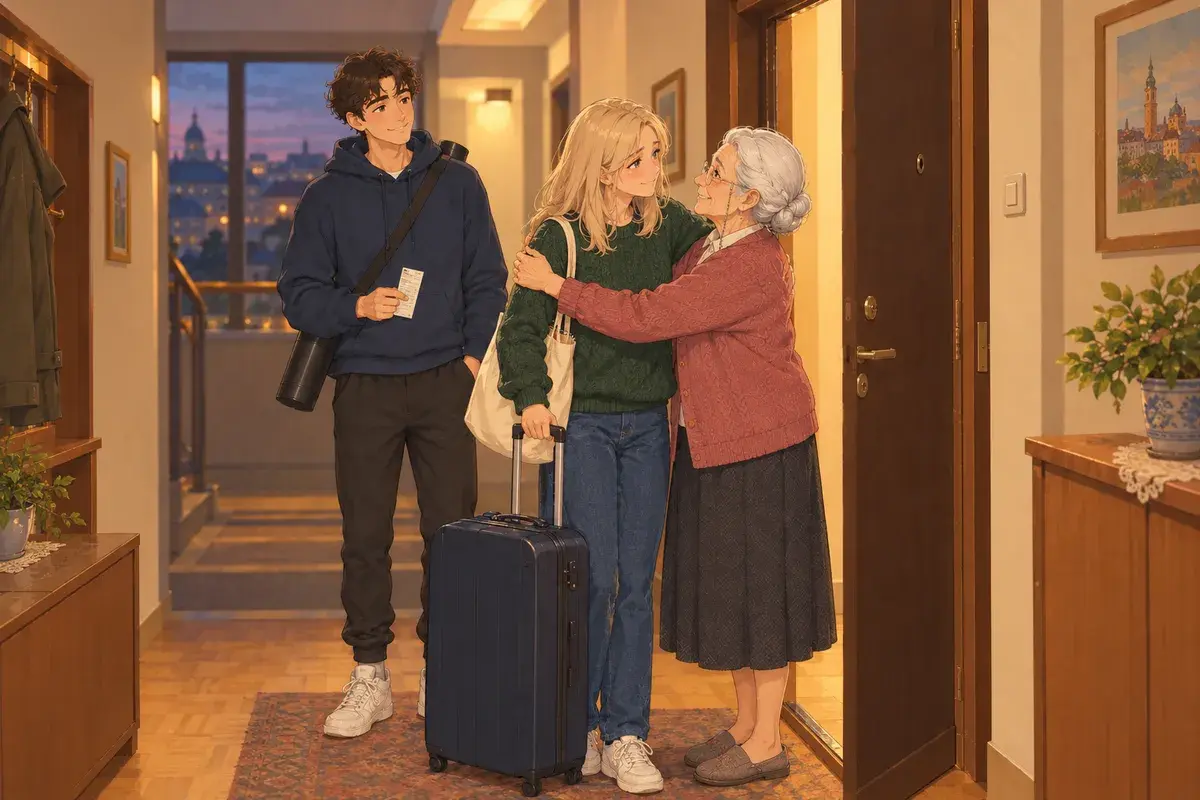
Serbian dialogue with translation · A2 · 14 lines
Хајде да пређемо на ти Let's switch to informal you
Comic · 14 panels
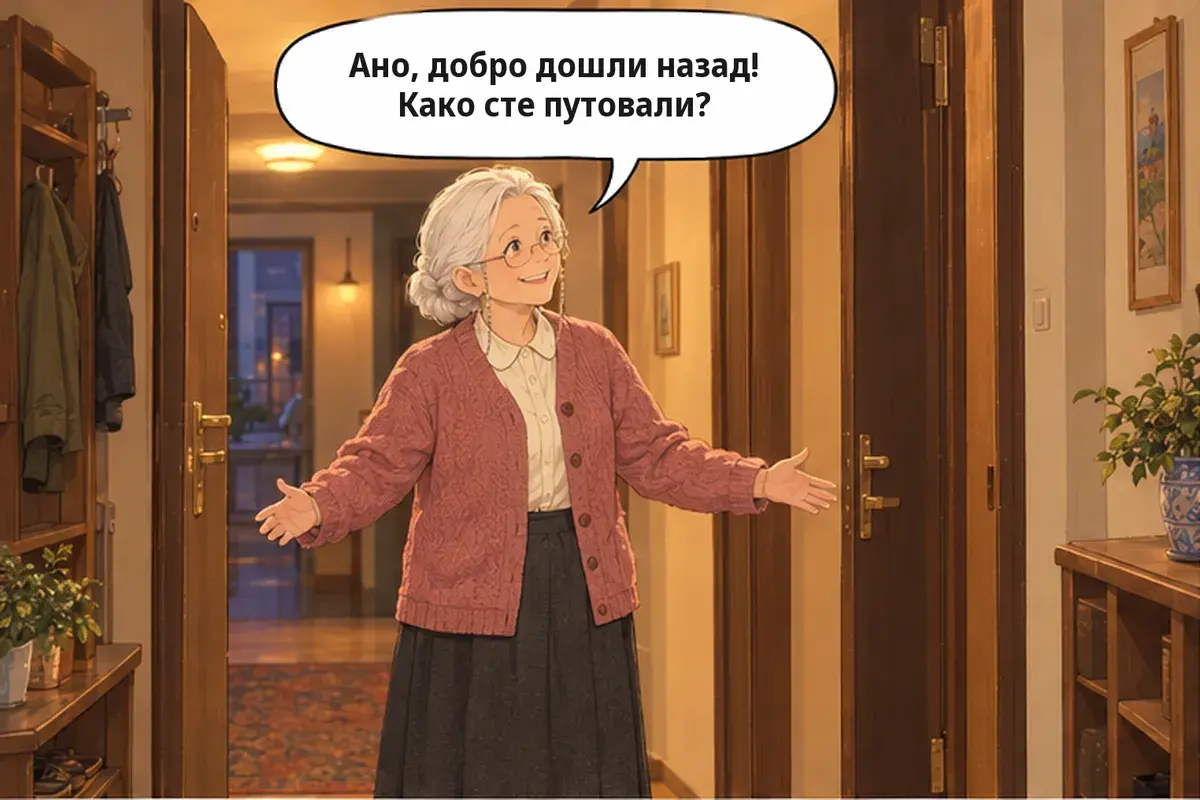
- Радмила
Ано, добро дошли назад! Како сте путовали?
Ana, welcome back! How did you travel? (formal)
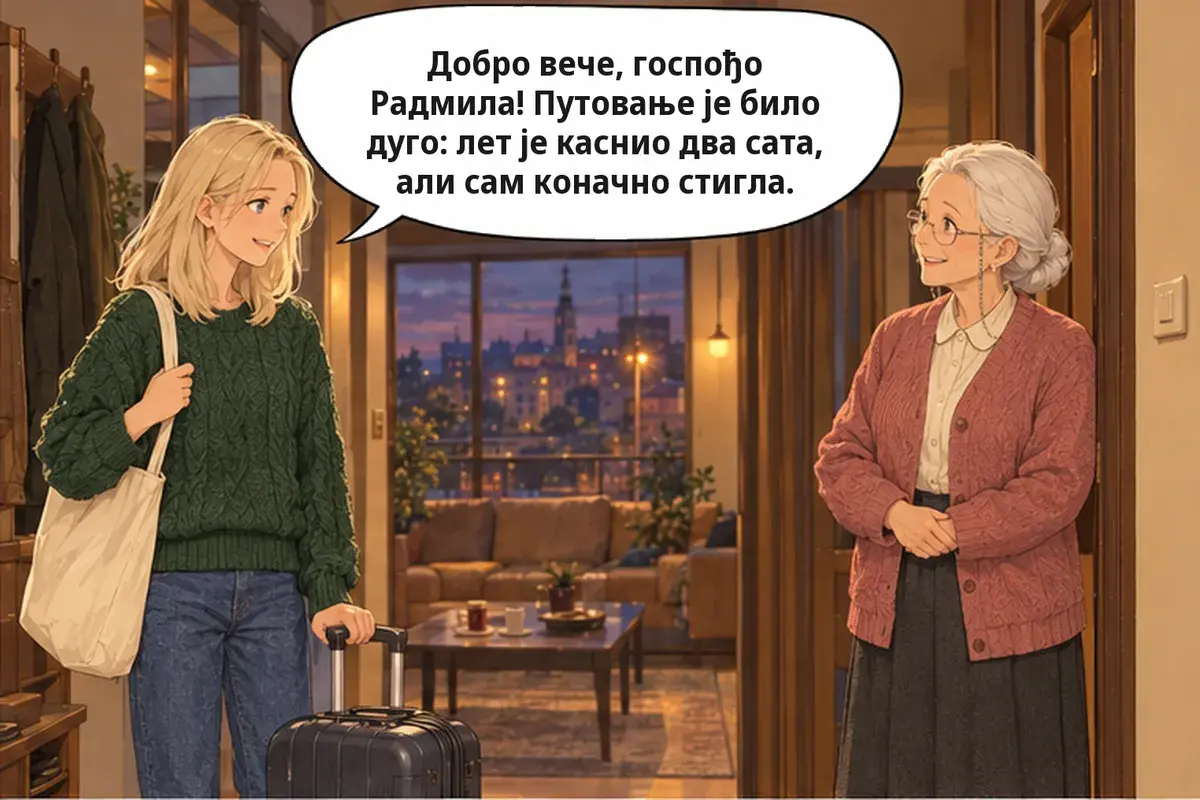
- Ана
Добро вече, госпођо Радмила! Путовање је било дуго: лет је каснио два сата, али сам коначно стигла.
Good evening, Mrs. Radmila! The trip was long: the flight was two hours late, but I finally got here (woman speaking).
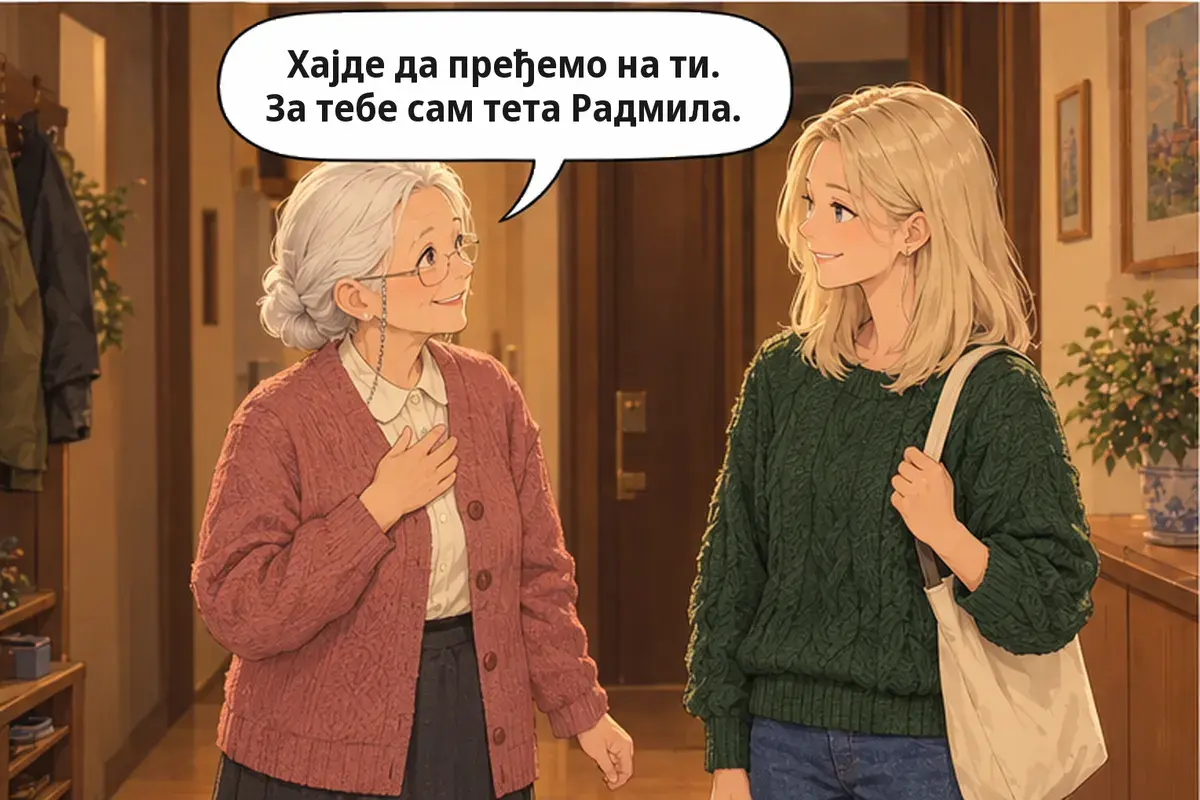
- Радмила
Хајде да пређемо на ти. За тебе сам тета Радмила.
Let's switch to informal you. For you, I'm Aunt Radmila.
- Ана
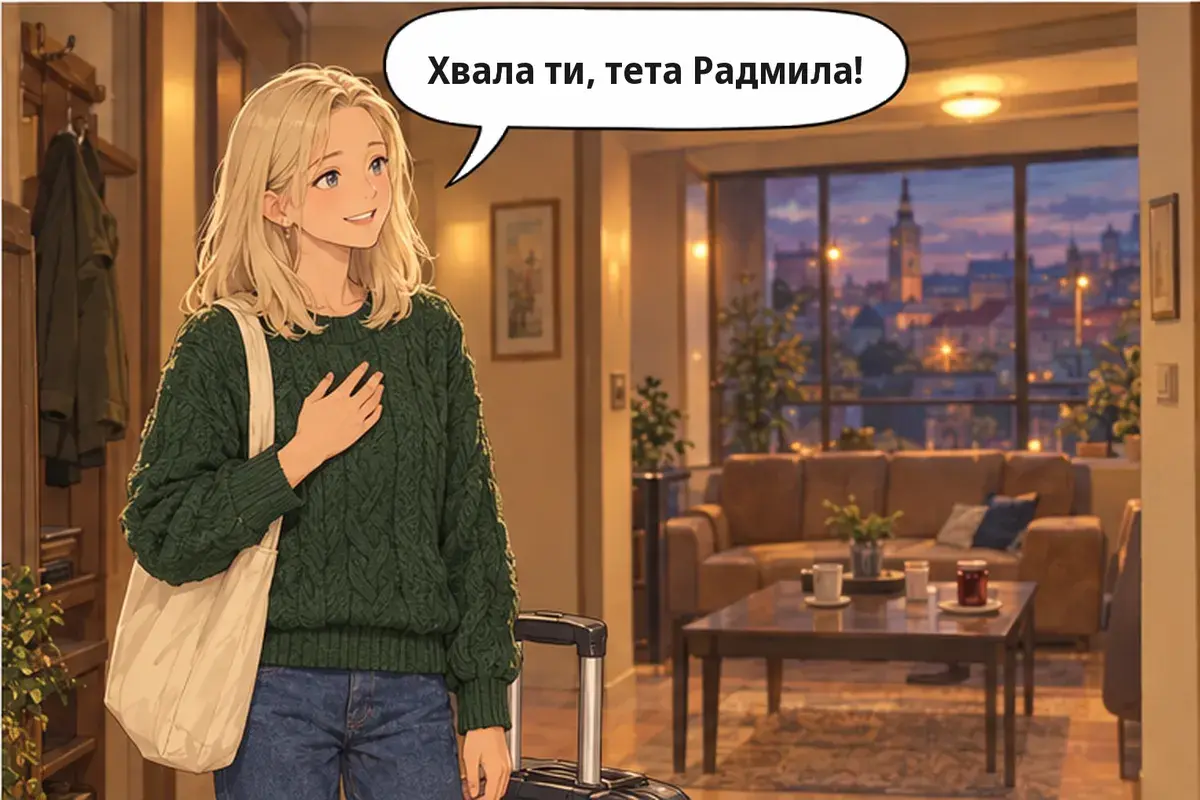
Хвала ти, тета Радмила!
Thank you, Aunt Radmila!
- Радмила
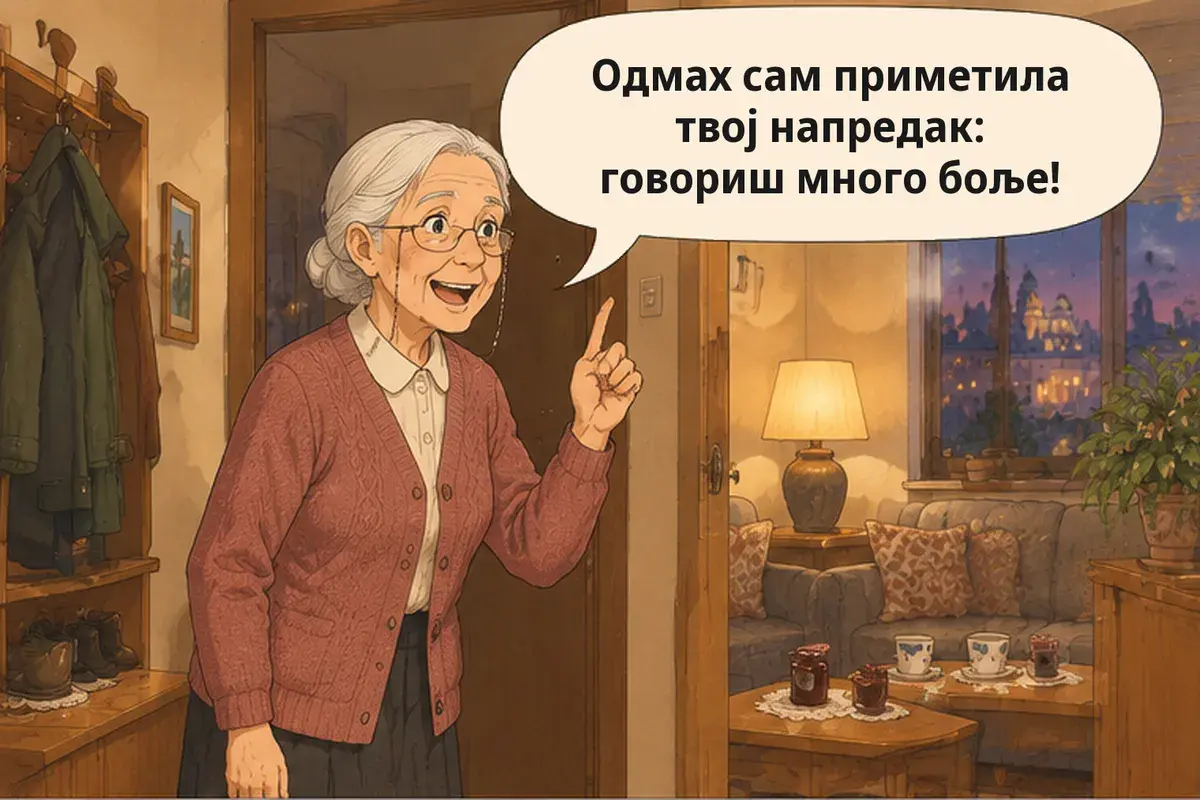
Одмах сам приметила твој напредак: говориш много боље!
I noticed your progress right away: you speak much better! (woman speaking)
- Ана
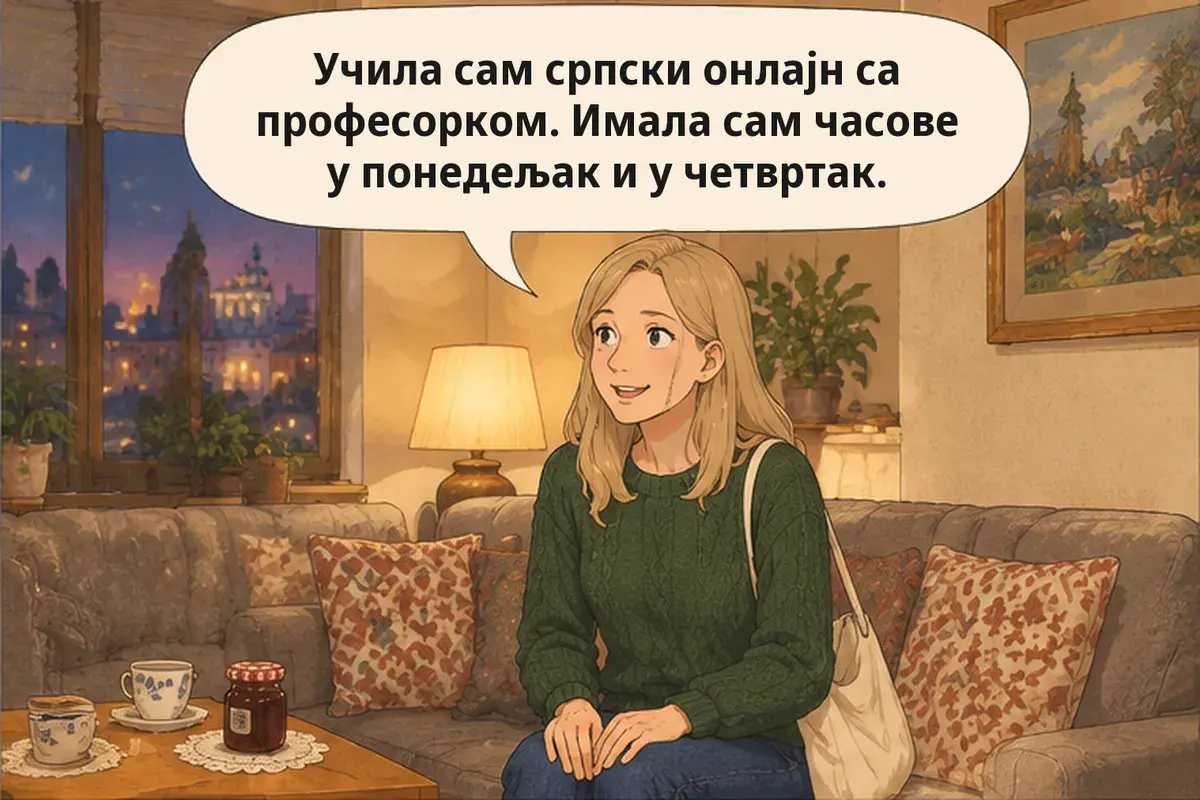
Учила сам српски онлајн са професорком. Имала сам часове у понедељак и у четвртак.
I studied Serbian online with a teacher. I had classes on Monday and on Thursday (woman speaking).
- Радмила
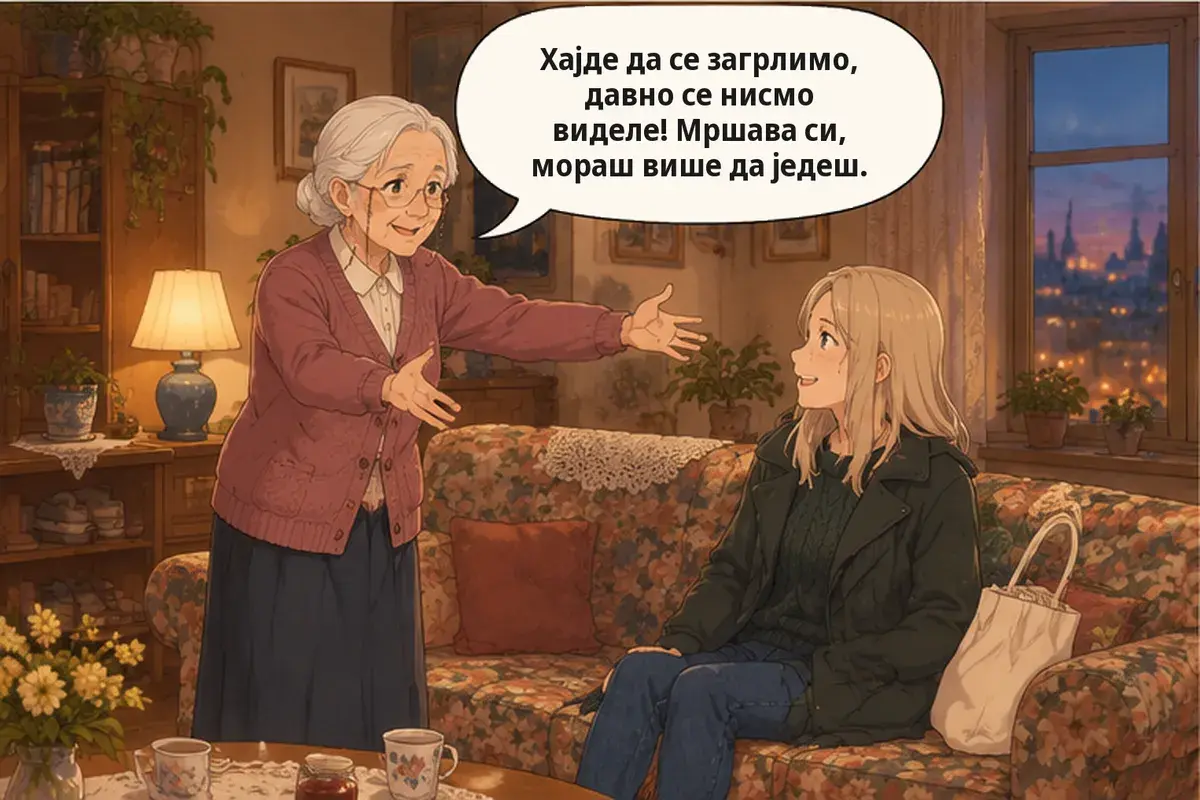
Хајде да се загрлимо, давно се нисмо виделе! Мршава си, мораш више да једеш.
Let's hug, we haven't seen each other in a long time! (women speaking) You're thin, you have to eat more (to a woman).
- Ана
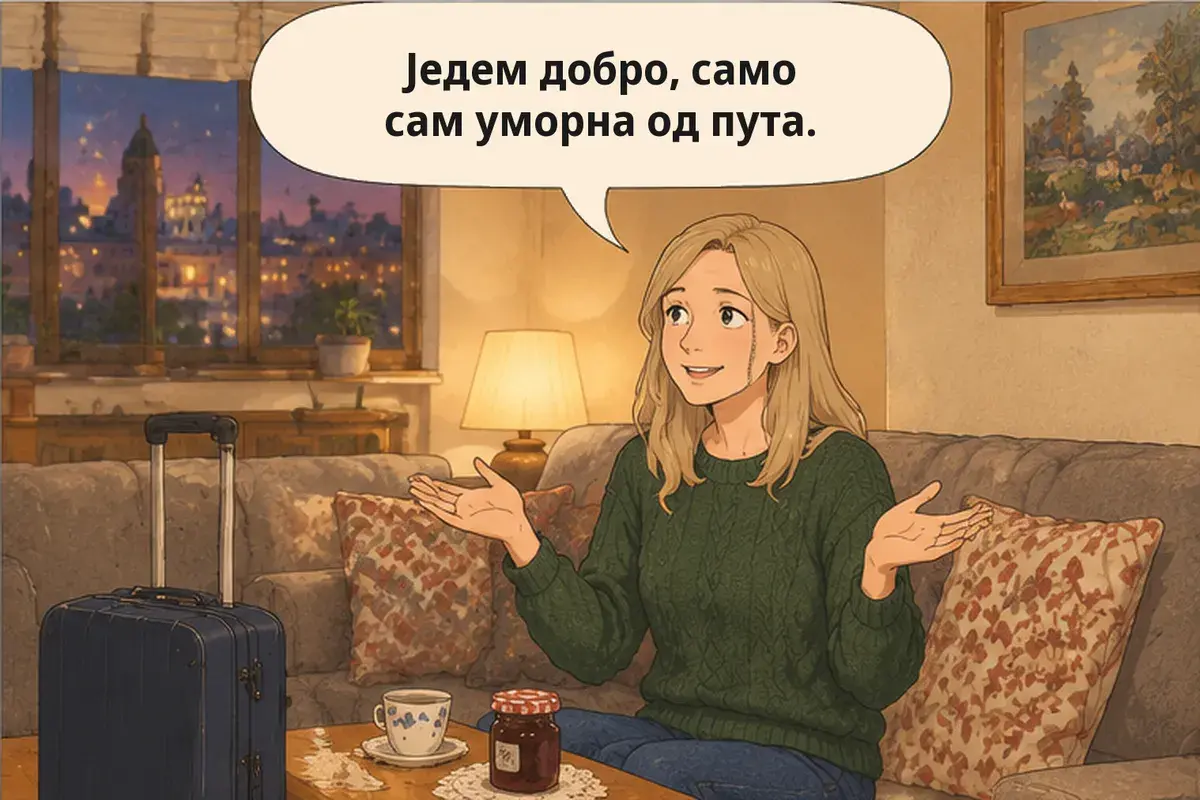
Једем добро, само сам уморна од пута.
I eat well, I'm just tired from the trip (woman speaking).
- Стефан
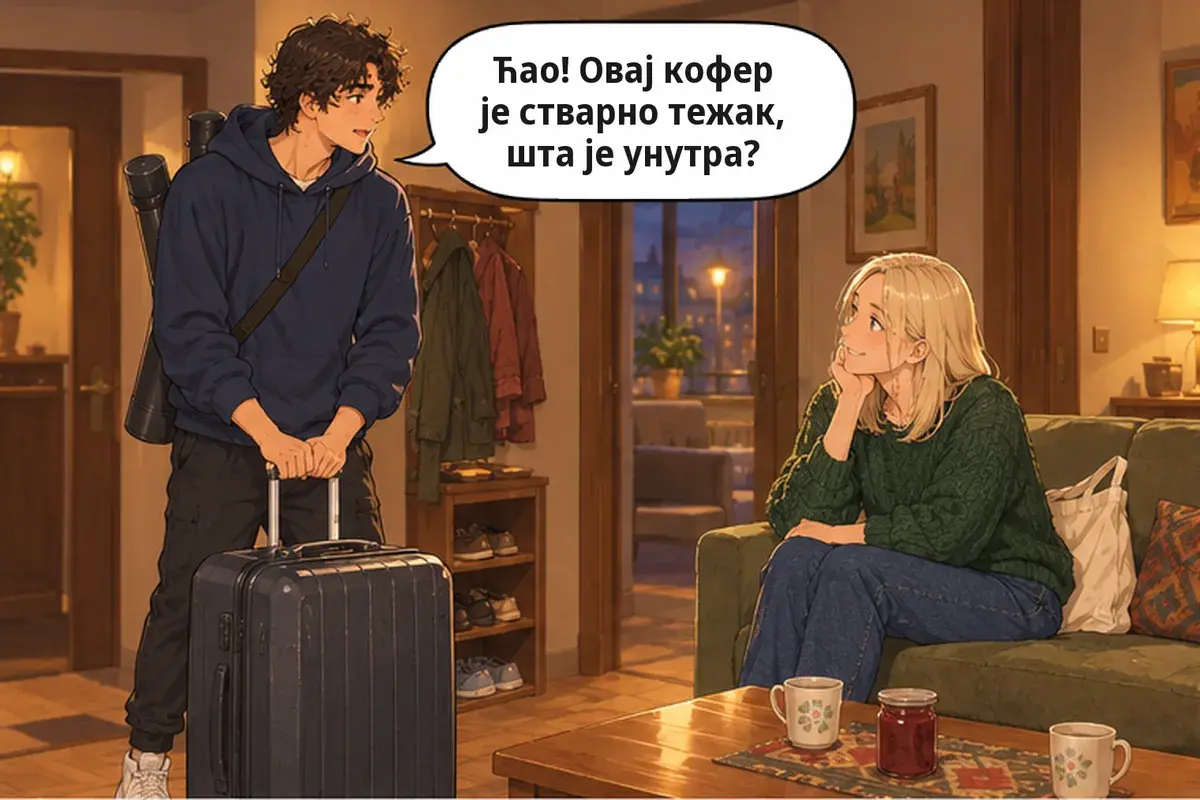
Ћао! Овај кофер је стварно тежак, шта је унутра?
Hi! This suitcase is really heavy, what's inside?
- Ана
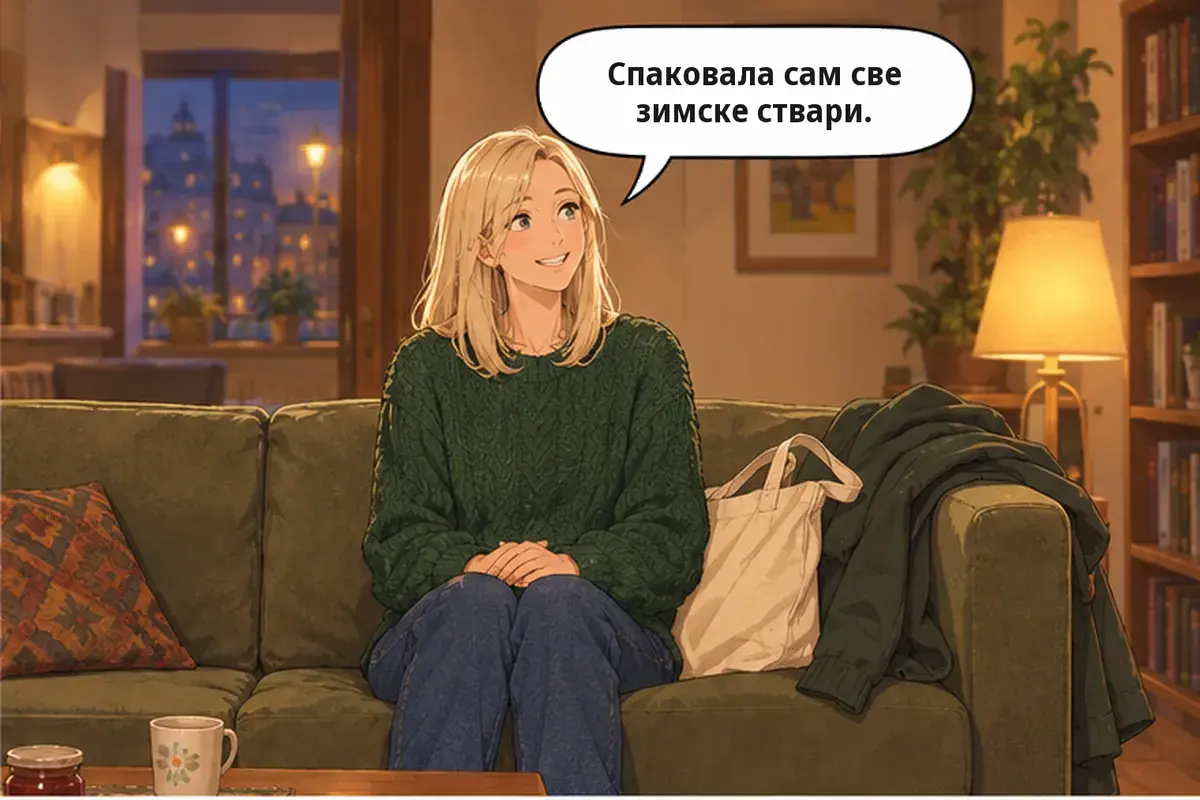
Спаковала сам све зимске ствари.
I packed all the winter things (woman speaking).
- Стефан
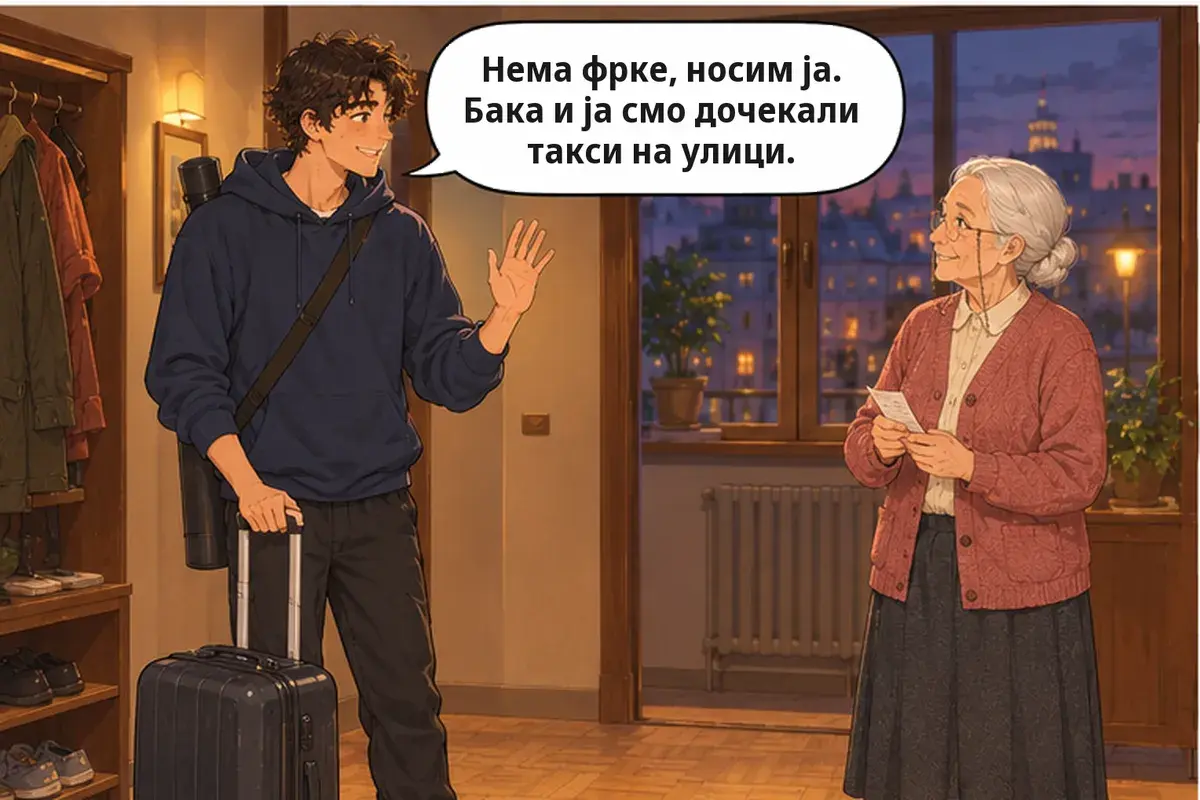
Нема фрке, носим ја. Бака и ја смо дочекали такси на улици.
No worries, I'll carry it. Grandma and I met the taxi out on the street.
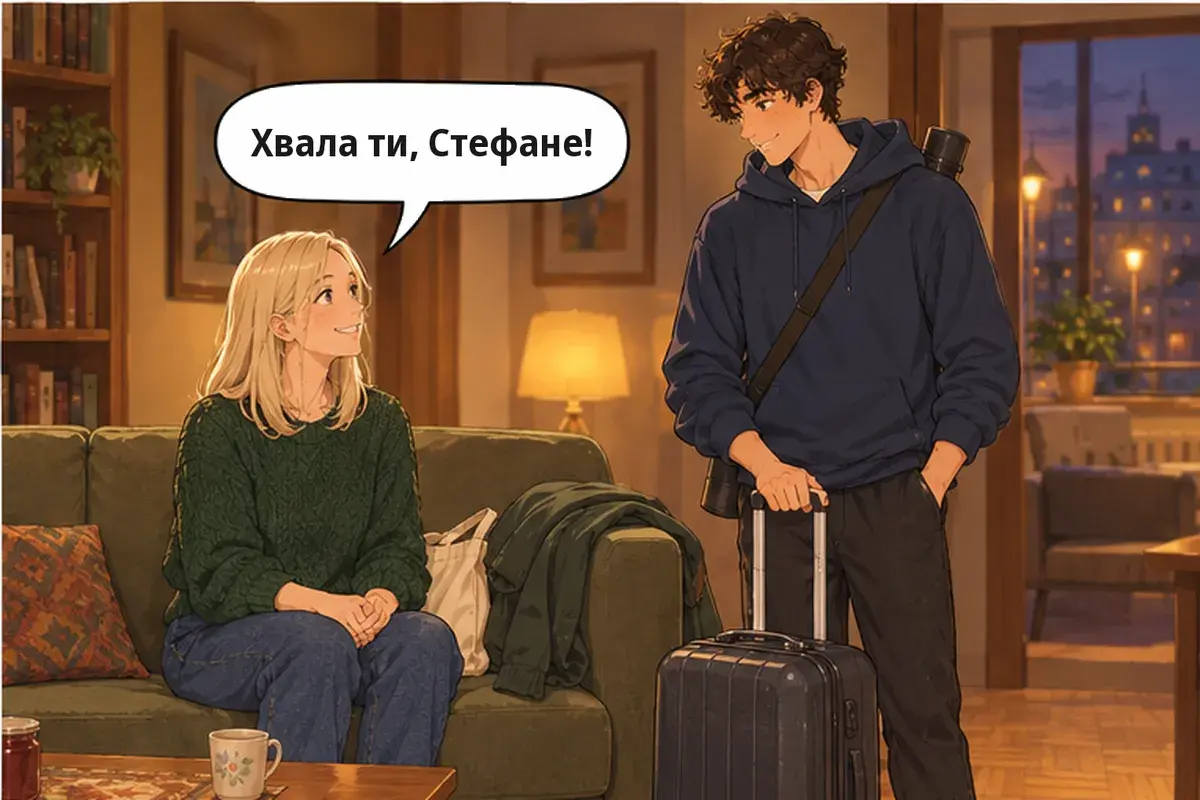
- Ана
Хвала ти, Стефане!
Thank you, Stefan!
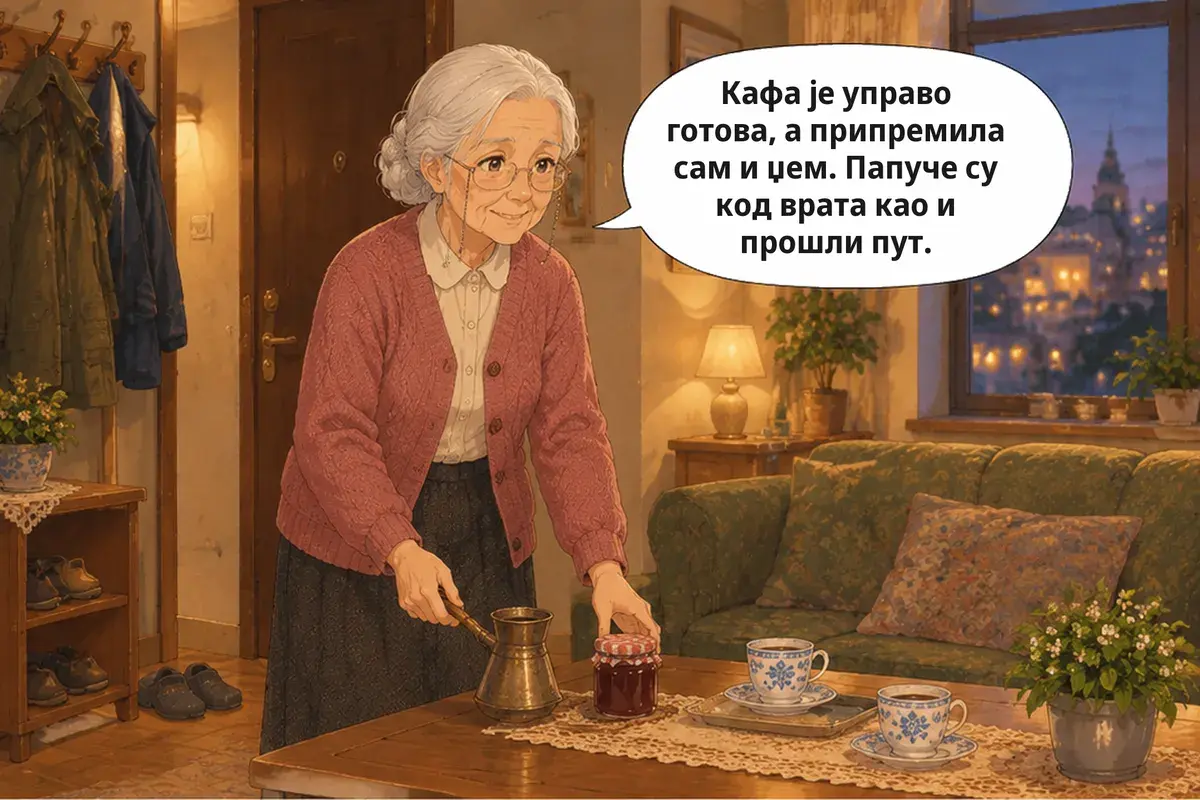
- Радмила
Кафа је управо готова, а припремила сам и џем. Папуче су код врата као и прошли пут.
The coffee is just ready, and I also prepared jam (woman speaking). The slippers are by the door, like last time.
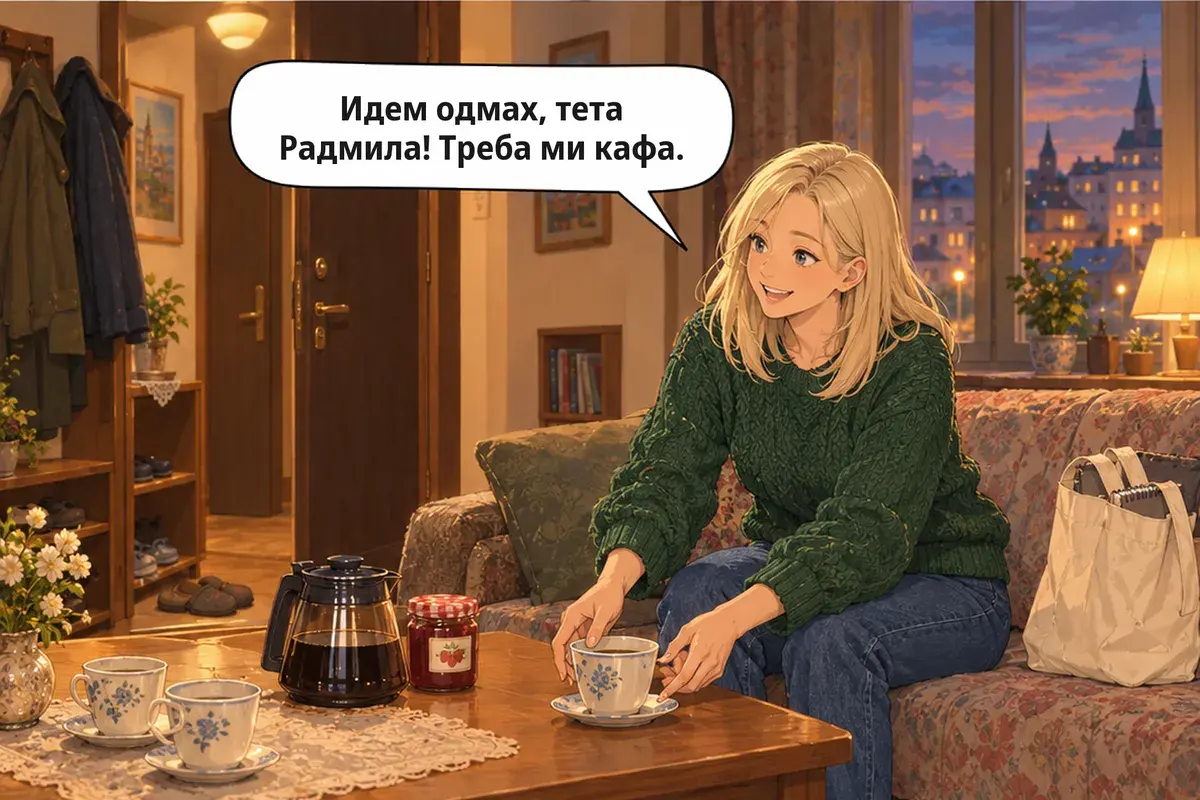
- Ана
Идем одмах, тета Радмила! Треба ми кафа.
I'm coming right away, Aunt Radmila! I need a coffee.
Grammar for this text
Хајде да пређемо на ти—хајде да…means let's… (a set phrase);пређемо— we switch, fromпрећи(да+ the present).на ти— toти, the informal you. The older person offers it: Radmila decides. From now on both sayти(Како си?,Хвала ти), and the formalвиdoesn't come back.За тебе сам тета Радмила—за тебеmeans for you (a set phrase; pronouns come in unit 8).тетаmeans aunt: people also call an older woman they know this way, not only a relative.Путовање је било дуго: лет је каснио два сата, али сам коначно стигла— three past forms:је било(was; neuter, becauseпутовањеis neuter),је каснио(was late; masculine, becauseлетis masculine:каснити→каснио, with the ending-о),сам стигла(I arrived; feminine,стићи→стигла).јеandсамstand second. More in the grammar block on the past tense.Одмах сам приметила твој напредак: говориш много боље!—приметила самmeans I noticed (a woman speaking),напредакmeans progress.Хајде да се загрлимо, давно се нисмо виделе!—да се загрлимоmeans let's hug.давно се нисмо виделеmeans we haven't seen each other in a long time:нисмо=не+смо, andвиделеis feminine plural (two women).сеcomes beforeнисмо.Бака и ја смо дочекали такси на улици—дочекали смоmeans we met: masculine plural, because one man in the group (Stefan) is enough.Треба ми кафаmeans I need a coffee: a set phrase,ми(to me) comes in unit 5.
Words and grammar of the unit: Talking about the past.
Learn the words from the texts with flashcards
In the app, you can tap any word in a text to see its translation, forms and examples, and new words stick with flashcards. 15 minutes a day.
Start for freeEverything is open for free. No card needed to sign up.