

Serbian dialogue with translation · A2 · 12 lines
Не умем да нађем пошту на мапи I don't know how to find the post office on the map
Comic · 12 panels
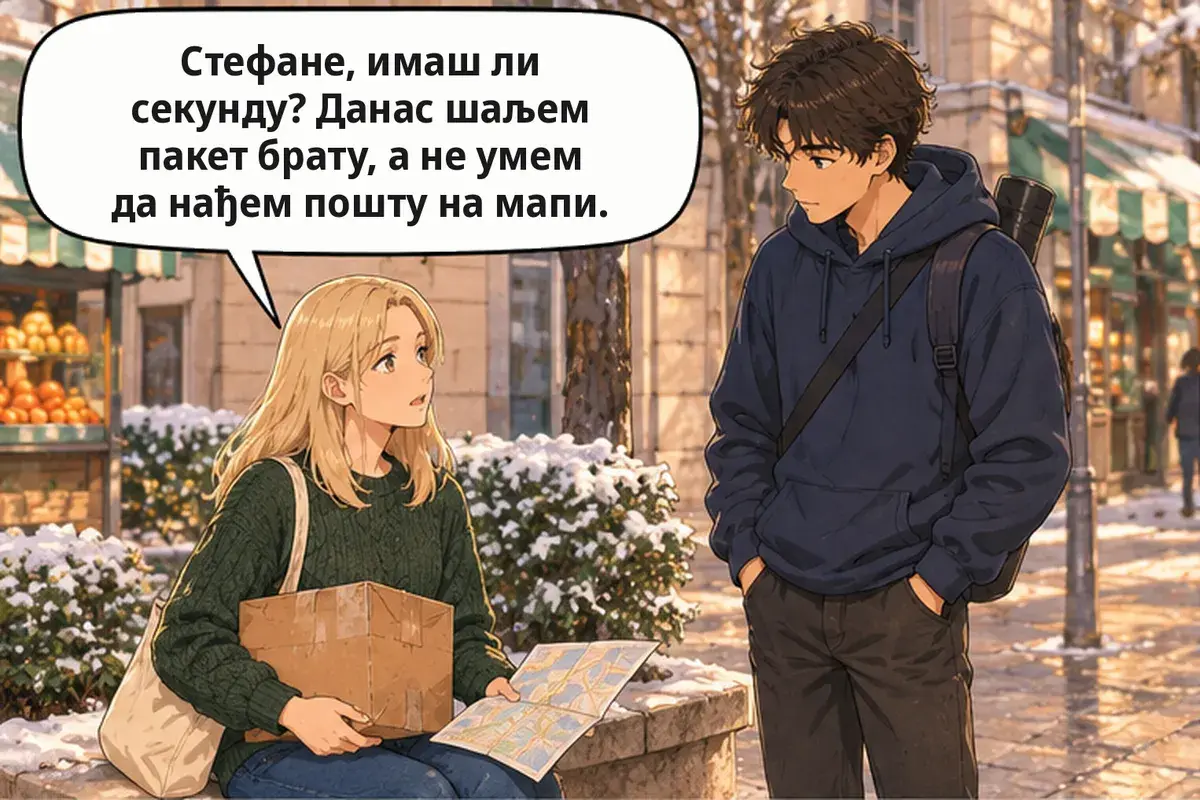
- Ана
Стефане, имаш ли секунду? Данас шаљем пакет брату, а не умем да нађем пошту на мапи.
Stefan, do you have a second? Today I'm sending a package to my brother, and I don't know how to find the post office on the map.

- Стефан
Имам! Пошта је близу пијаце код пролаза до мале радње и није далеко.
I do! The post office is near the market, by the passage to the small shop, and it isn't far.
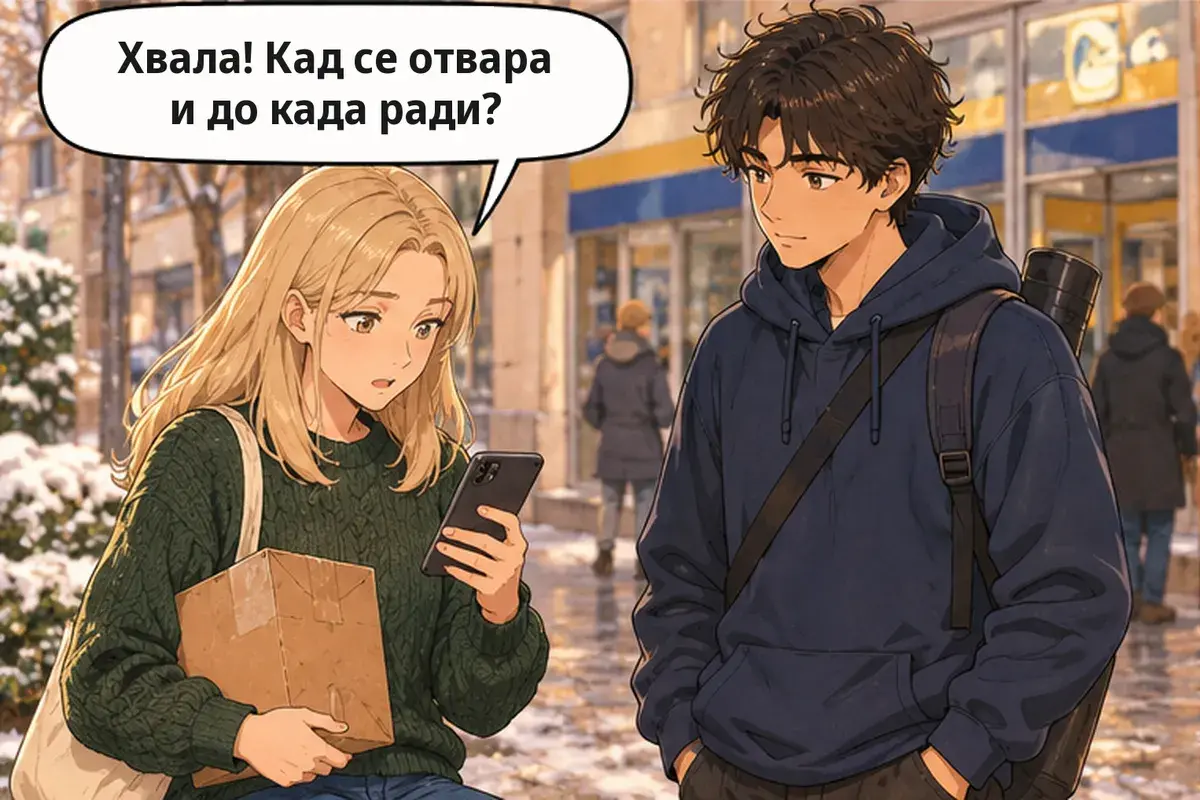
- Ана
Хвала! Кад се отвара и до када ради?
Thanks! When does it open, and until when is it open?
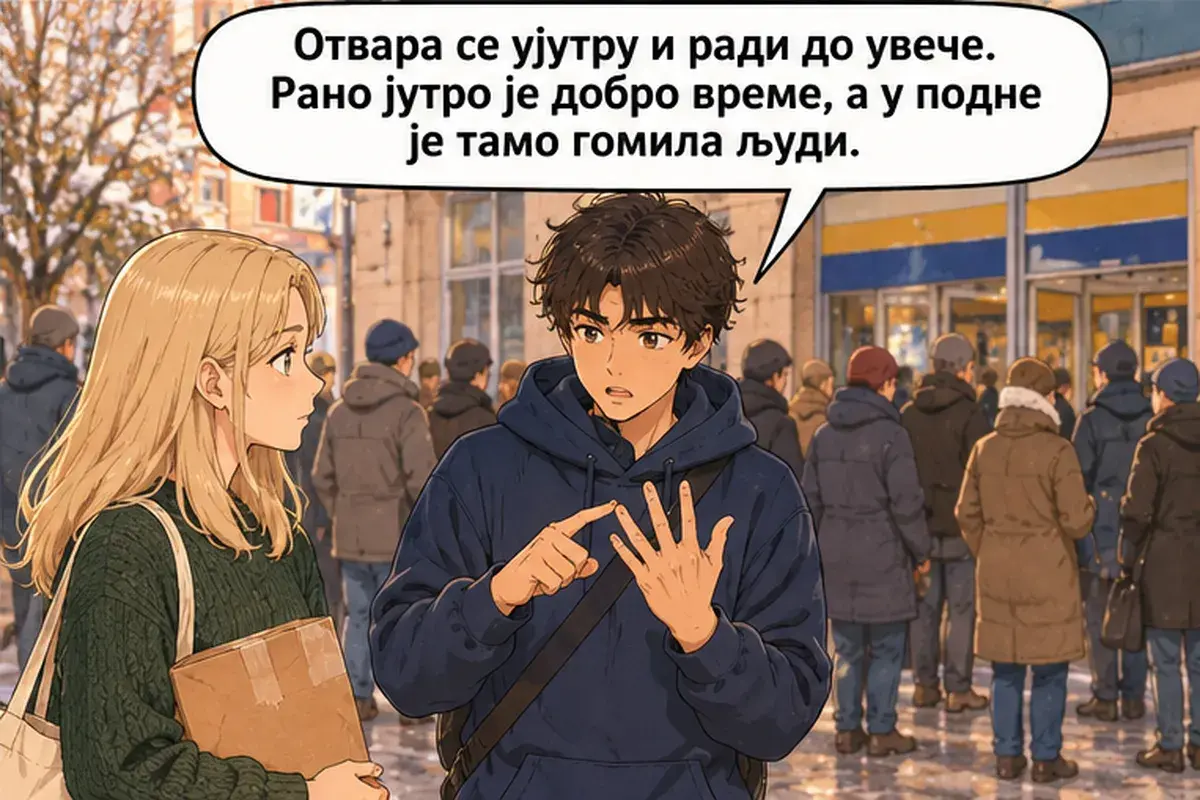
- Стефан
Отвара се ујутру и ради до увече. Рано јутро је добро време, а у подне је тамо гомила људи.
It opens in the morning and is open until the evening. Early morning is a good time, and at noon there's a crowd of people there.
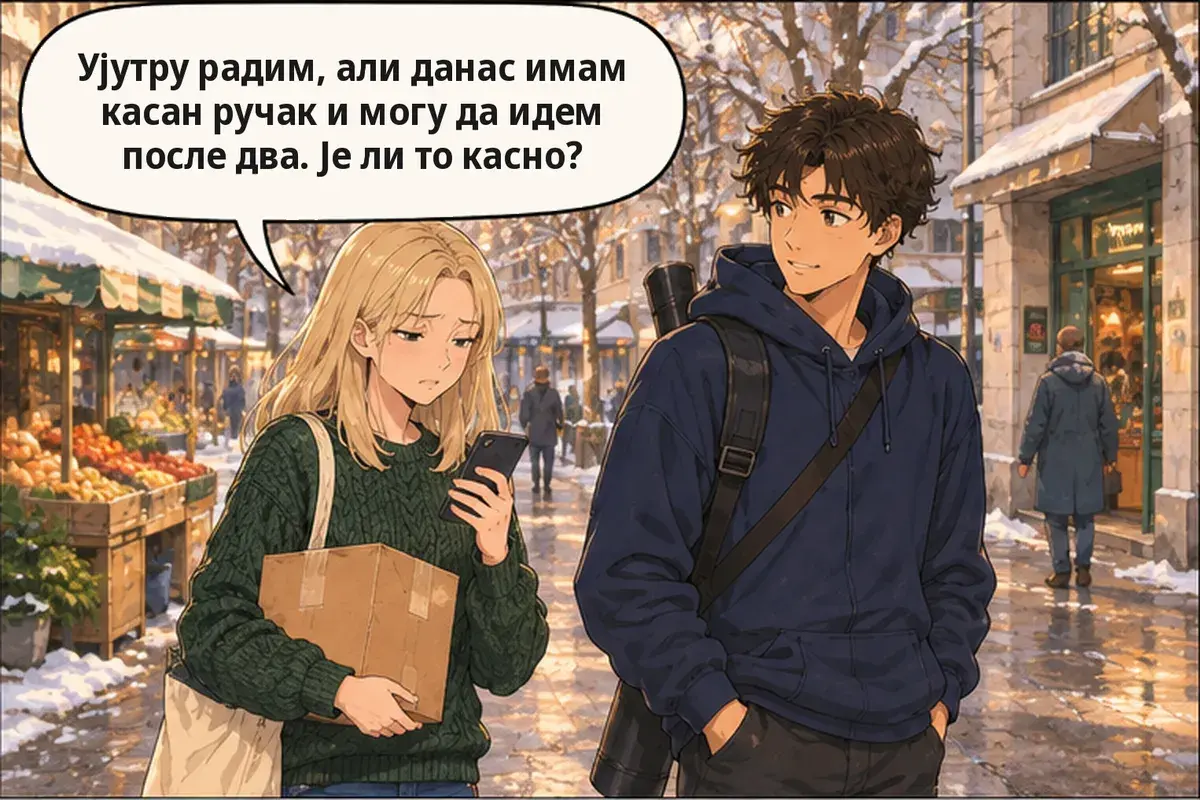
- Ана
Ујутру радим, али данас имам касан ручак и могу да идем после два. Је ли то касно?
I work in the morning, but today I have a late lunch and I can go after two. Is that late?
- Стефан
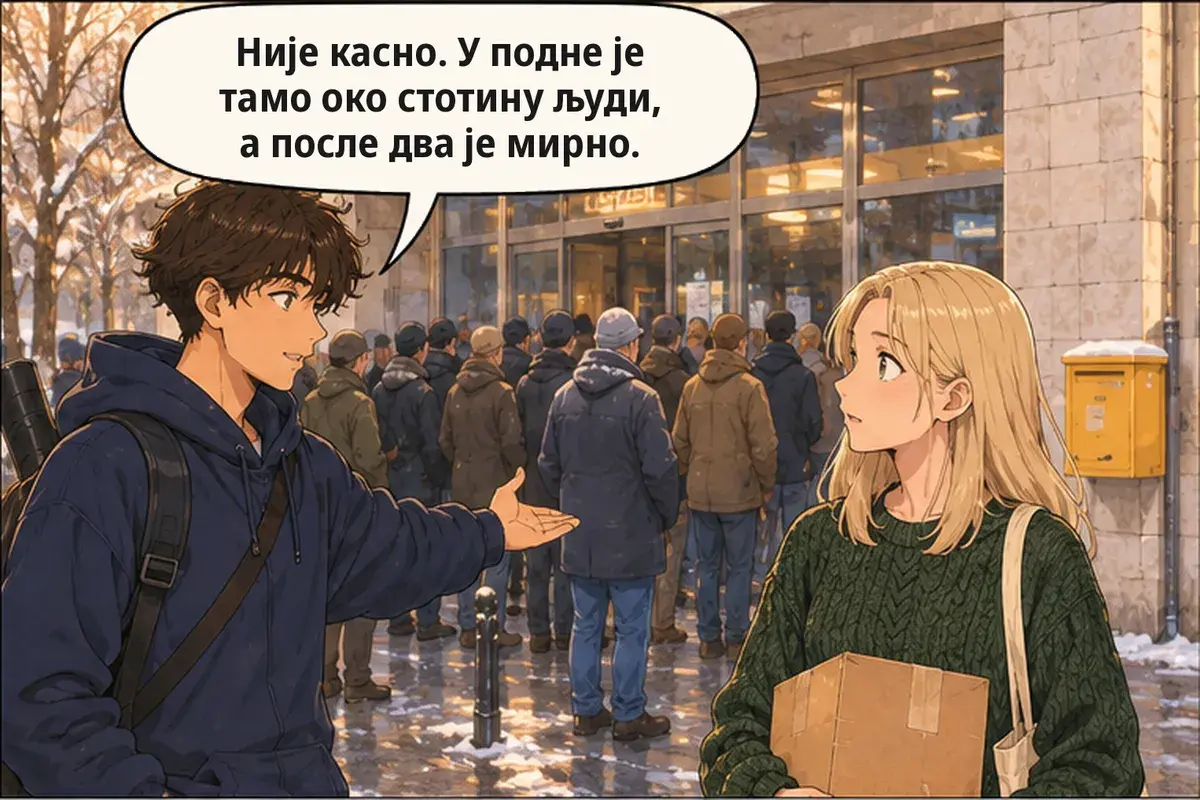
Није касно. У подне је тамо око стотину људи, а после два је мирно.
It's not late. At noon there are about a hundred people there, and after two it's quiet.
- Ана
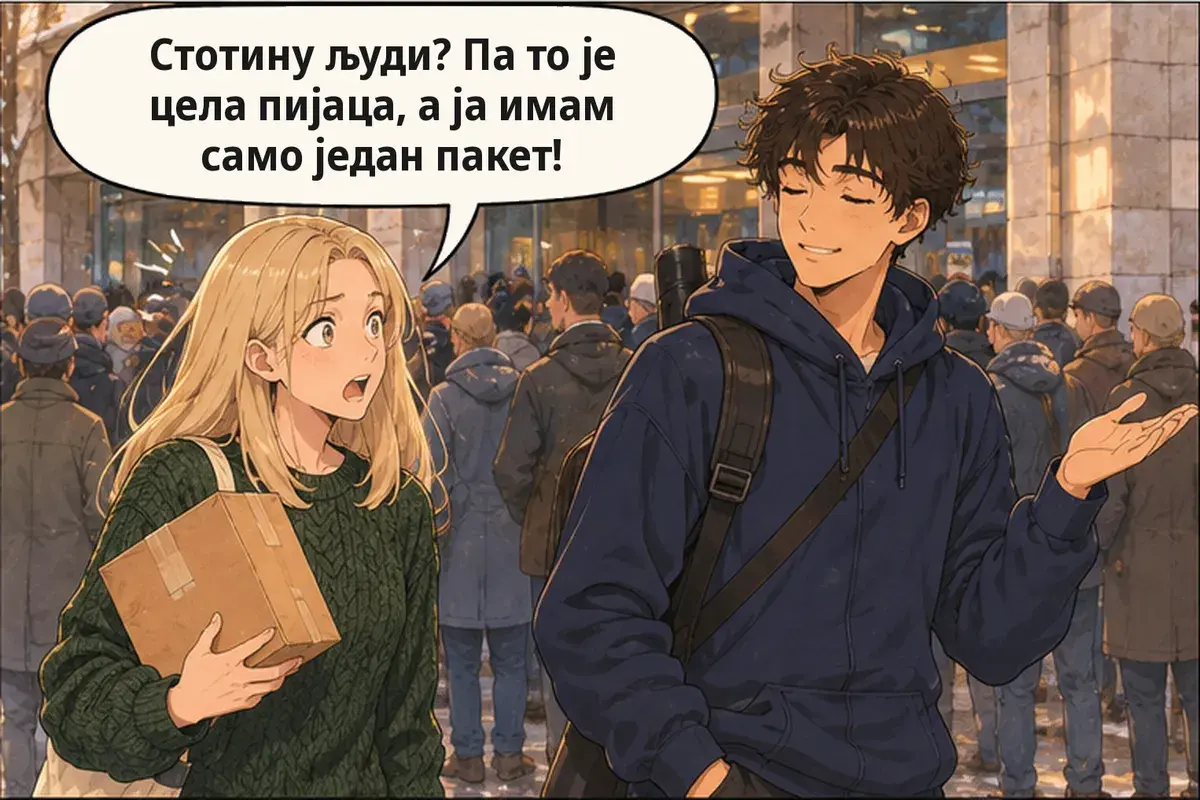
Стотину људи? Па то је цела пијаца, а ја имам само један пакет!
A hundred people? Well, that's the whole market, and I only have one package!
- Стефан
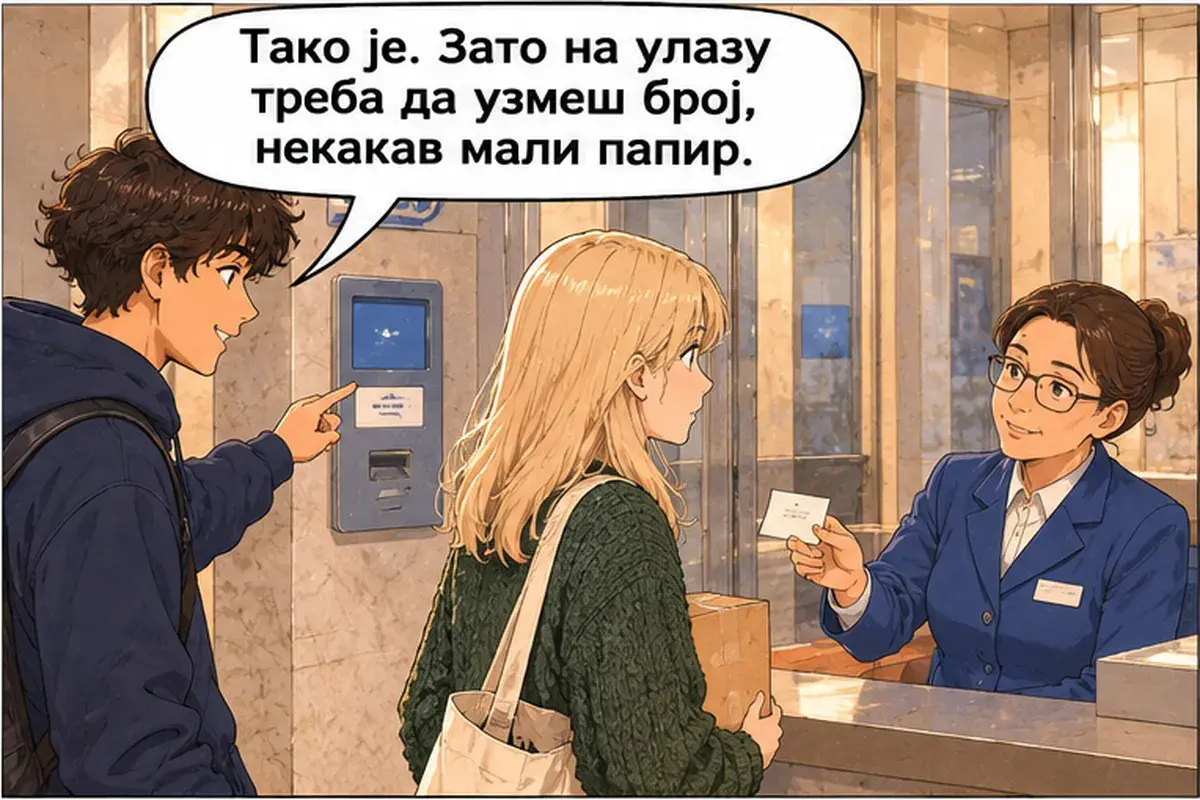
Тако је. Зато на улазу треба да узмеш број, некакав мали папир.
That's right. That's why you need to take a number at the entrance, some kind of small piece of paper.
- Ана
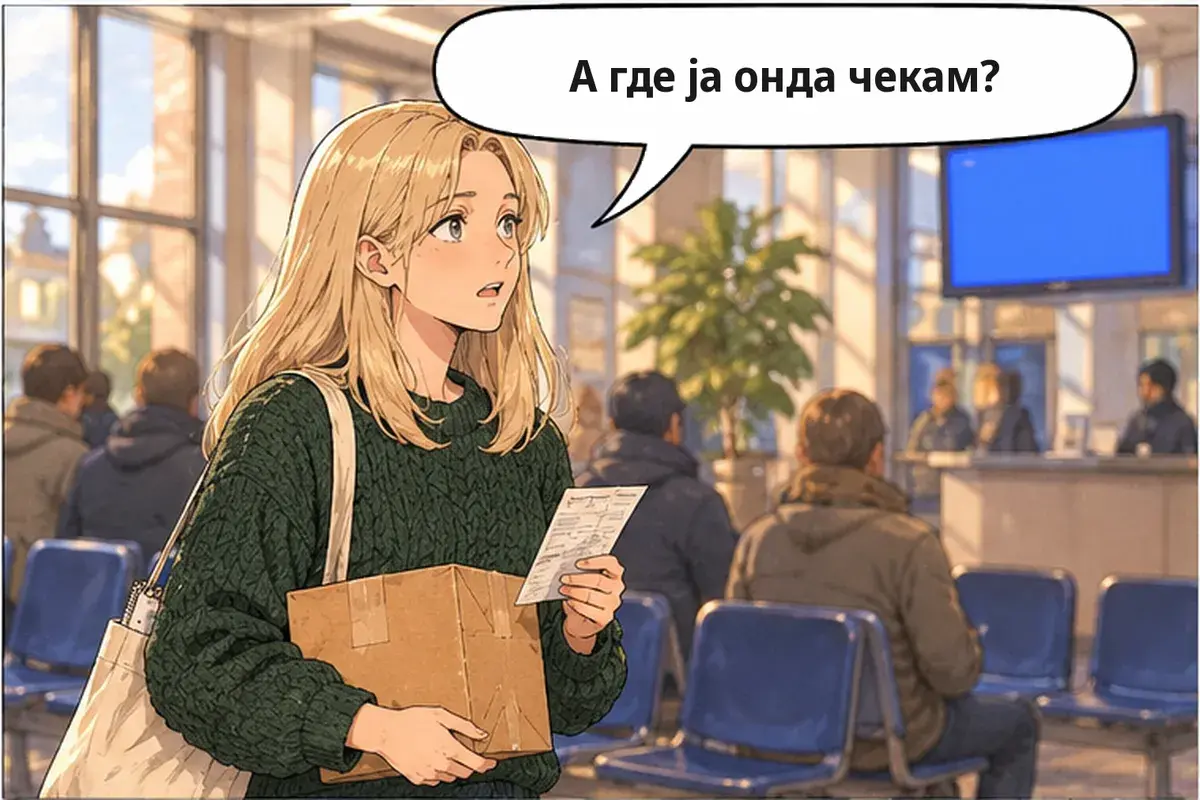
А где ја онда чекам?
And where do I wait then?
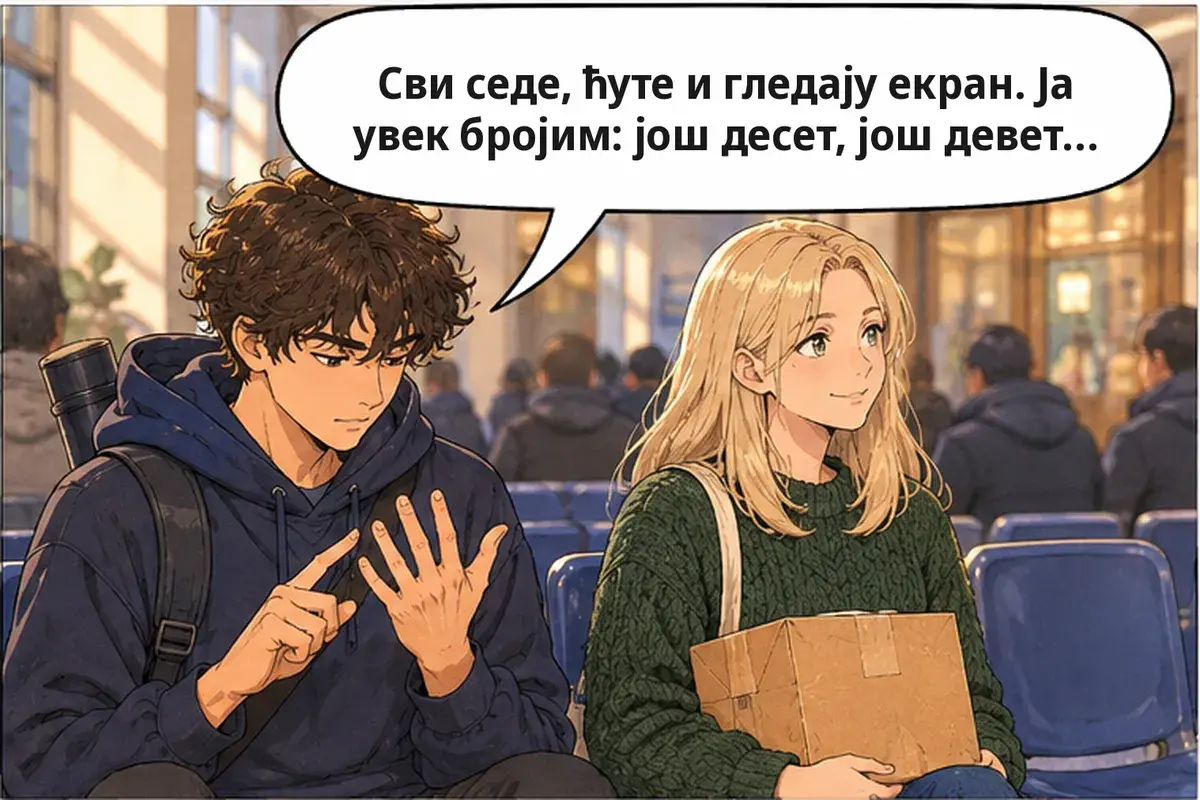
- Стефан
Сви седе, ћуте и гледају екран. Ја увек бројим: још десет, још девет…
Everyone sits, stays silent and watches the screen. I always count: ten more, nine more…

- Ана
Хвала ти, Стефане! Ти увек све знаш. Јавићу ти после поште.
Thank you, Stefan! You always know everything. I'll let you know after the post office.
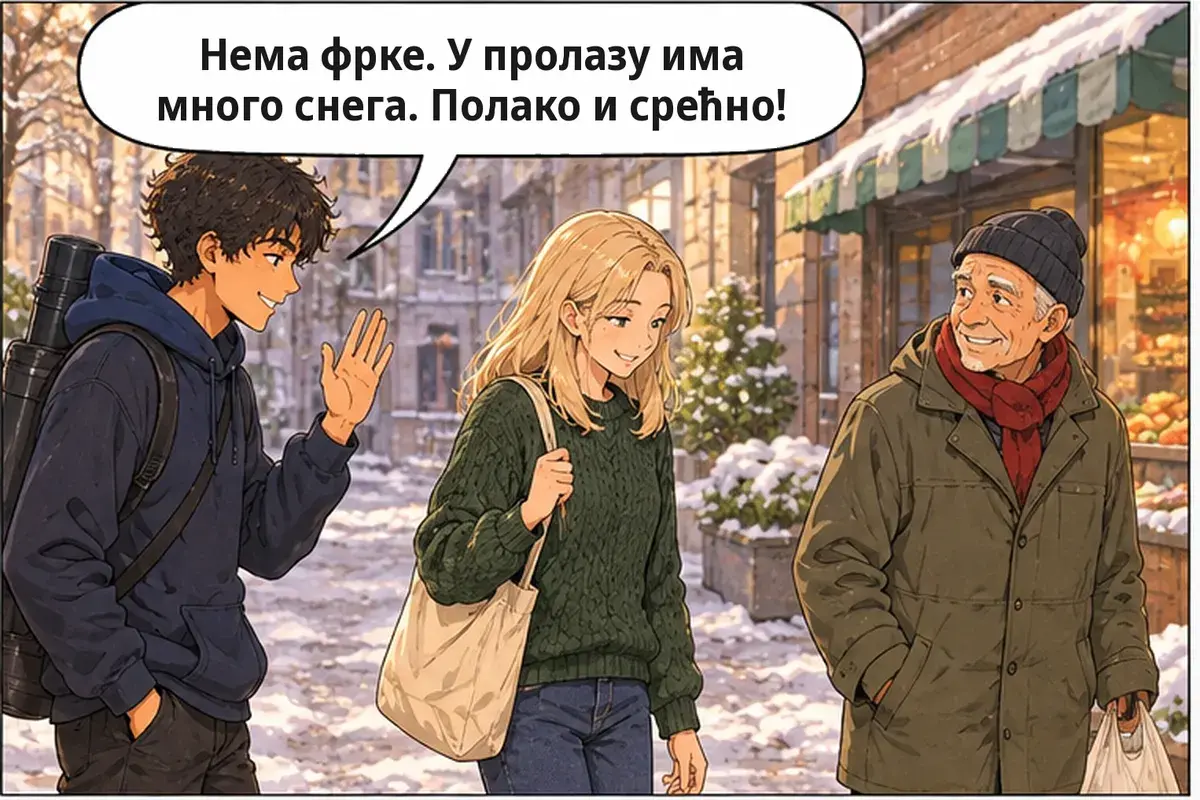
- Стефан
Нема фрке. У пролазу има много снега. Полако и срећно!
No worries. There's a lot of snow in the passage. Take it easy, and good luck!
Grammar for this text
не умем да нађем пошту на мапи—умети— to know how to, to manage;не умем да— I can't, I don't manage to. Thenда+ present:нађемis the perfective ofнаћи(to find), so it stands only afterда.на мапи— on the map: 'where?' takes the locative.Пошта је близу пијаце код пролаза до мале радње— afterблизу(near) andдо(to, up to) comes the genitive:пијаце,мале радње.пролаз— passage;радња— a small shop (not work: work isпосао).Отвара се ујутру и ради до увече—отварати се— to open, imperfective: it happens every day. Its pair isотворити.сеstands second.Рано јутро је добро време— hereраноis the adjectiveран(early) in the neuter form, to matchјутро: early morning. It looks the same as the adverbрано(early in the day).данас имам касан ручак—касан— late, an adjective: a late lunch. In the questionЈе ли то касно?— is that late? — it's the adverbкасно.У подне је тамо око стотину људи—стотина— a hundred. When you count, the form isстотину, and after it comes the genitiveљуди.Сви седе, ћуте и гледају екран—ћуте— they're silent, fromћутати. In the present it has endings with-и-, likeвидети.Ја увек бројим— I always count:бројати→бројим, the same pattern.У пролазу има много снега— afterмного(a lot of) comes the genitive:снег→снега.Полако— take it easy, be careful.
Words and grammar of the unit: Send a package home.
Learn the words from the texts with flashcards
In the app, you can tap any word in a text to see its translation, forms and examples, and new words stick with flashcards. 15 minutes a day.
Start for freeEverything is open for free. No card needed to sign up.