
Serbian story with translation · A2 · 16 lines
У невољи се познају комшије In times of trouble, you get to know your neighbors
Comic · 16 panels
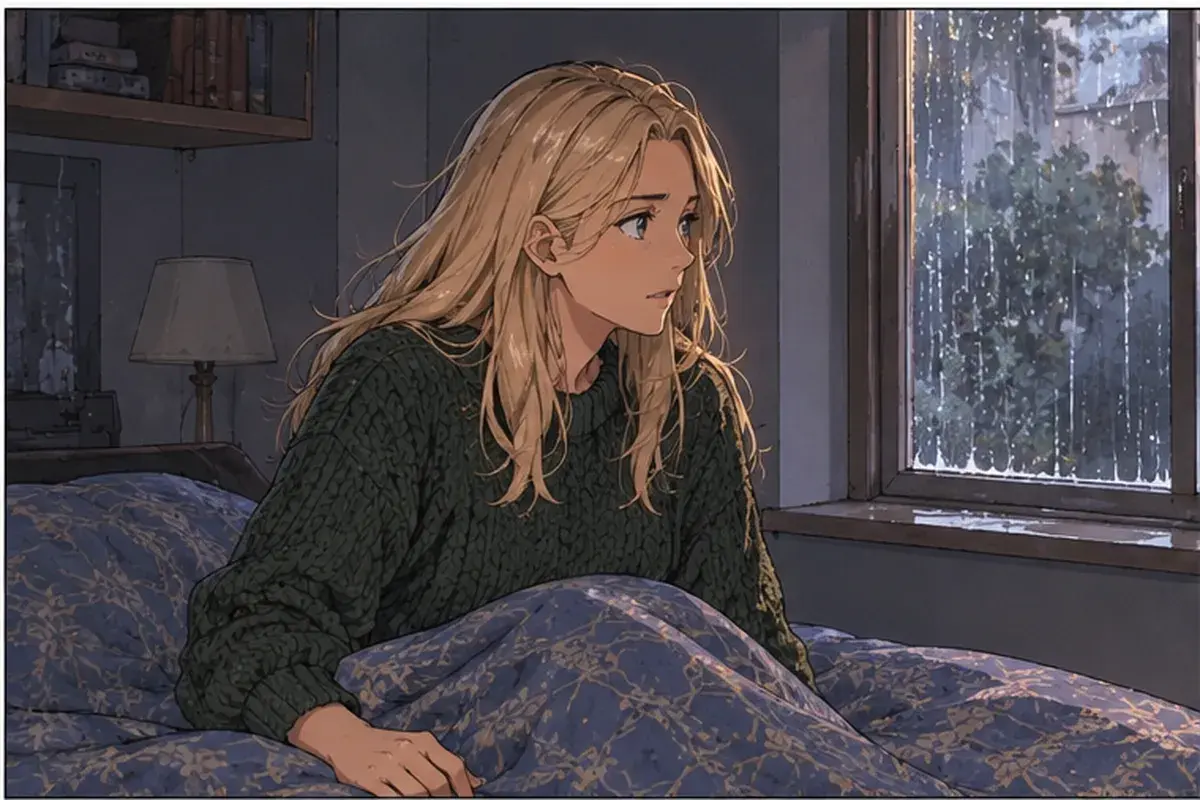
Пробудила сам се у шест, а струје још није било.
I woke up at six, and there was still no power (woman speaking).
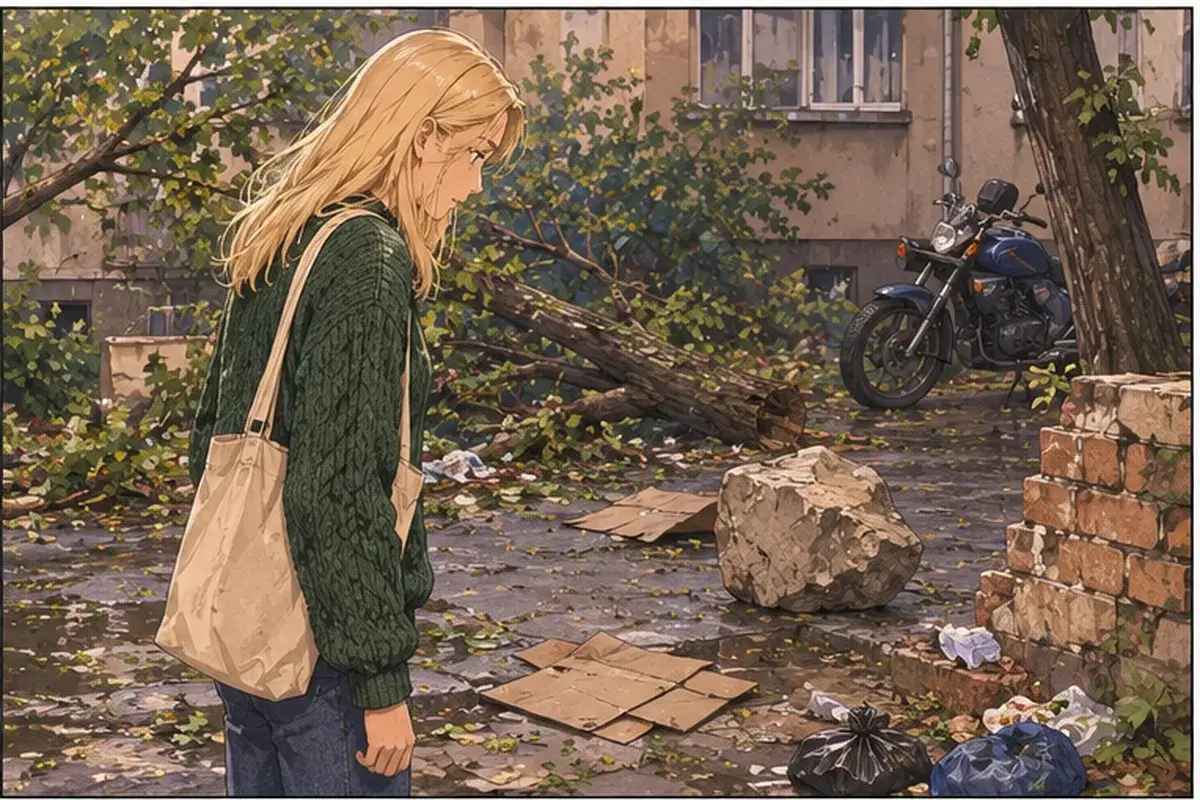
У дворишту сам видела смеће, мокре картоне и камен са старог зида.
In the yard I saw trash, wet cardboard and a stone from the old wall (woman speaking).
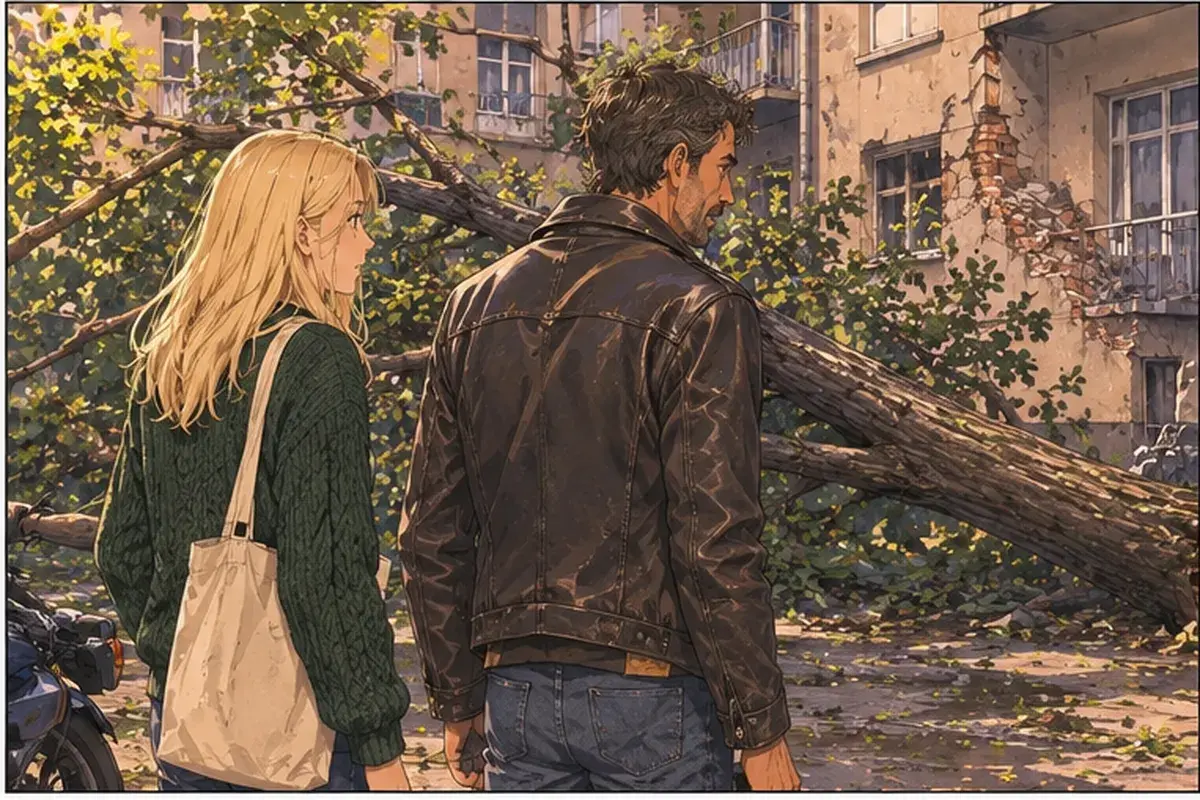
Испред улаза је лежало дрво и пола зграде је већ било напољу.
A tree was lying in front of the entrance, and half the building was already outside.
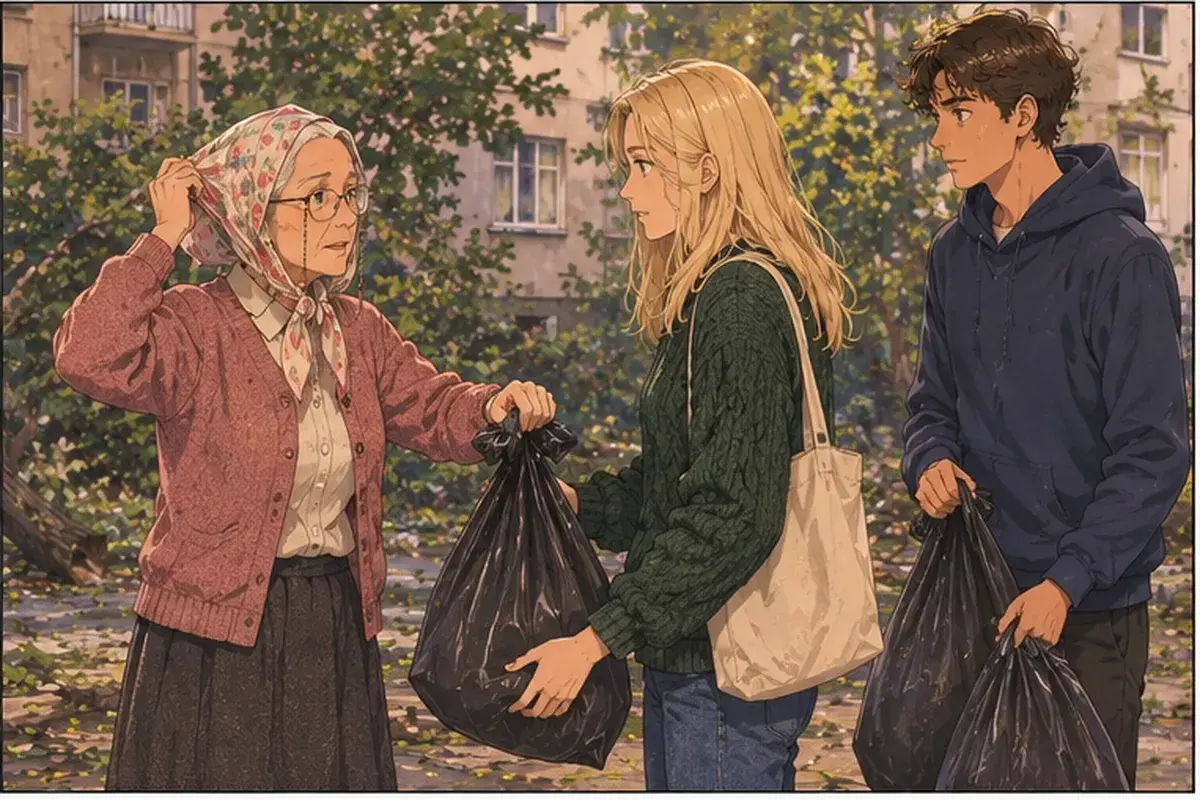
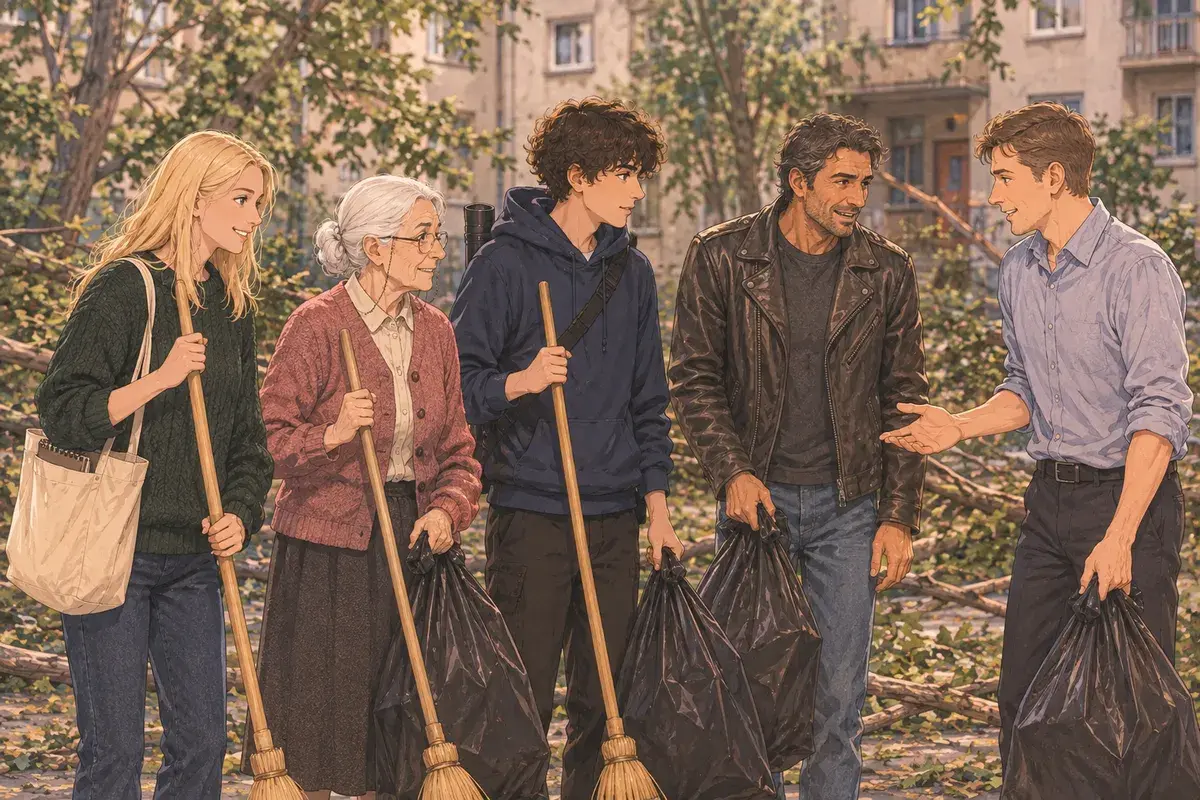
Радмила је везала шал око главе и дала нам кесе за смеће.
Radmila tied a scarf around her head and gave us trash bags.
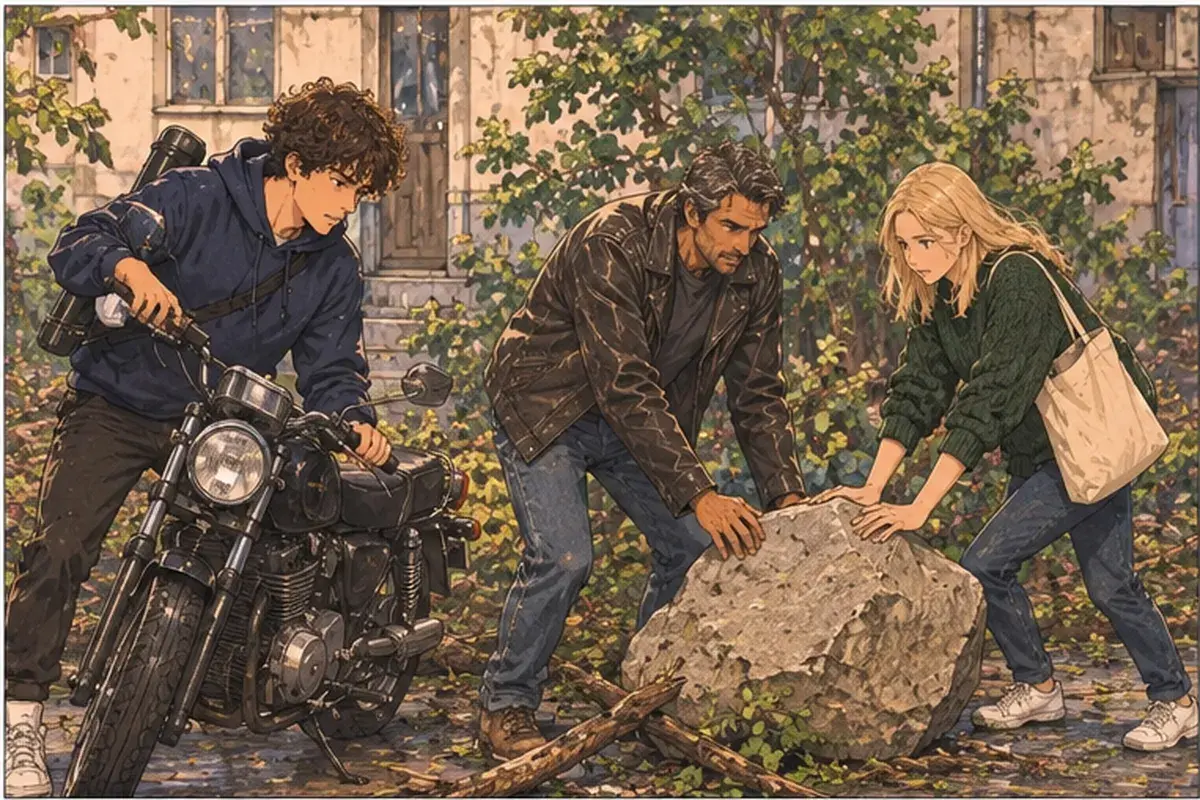
Стефан је прво подигао мотор једног комшије и заједно смо померили камен.
First Stefan lifted a neighbor's motorcycle, and together we moved the stone.
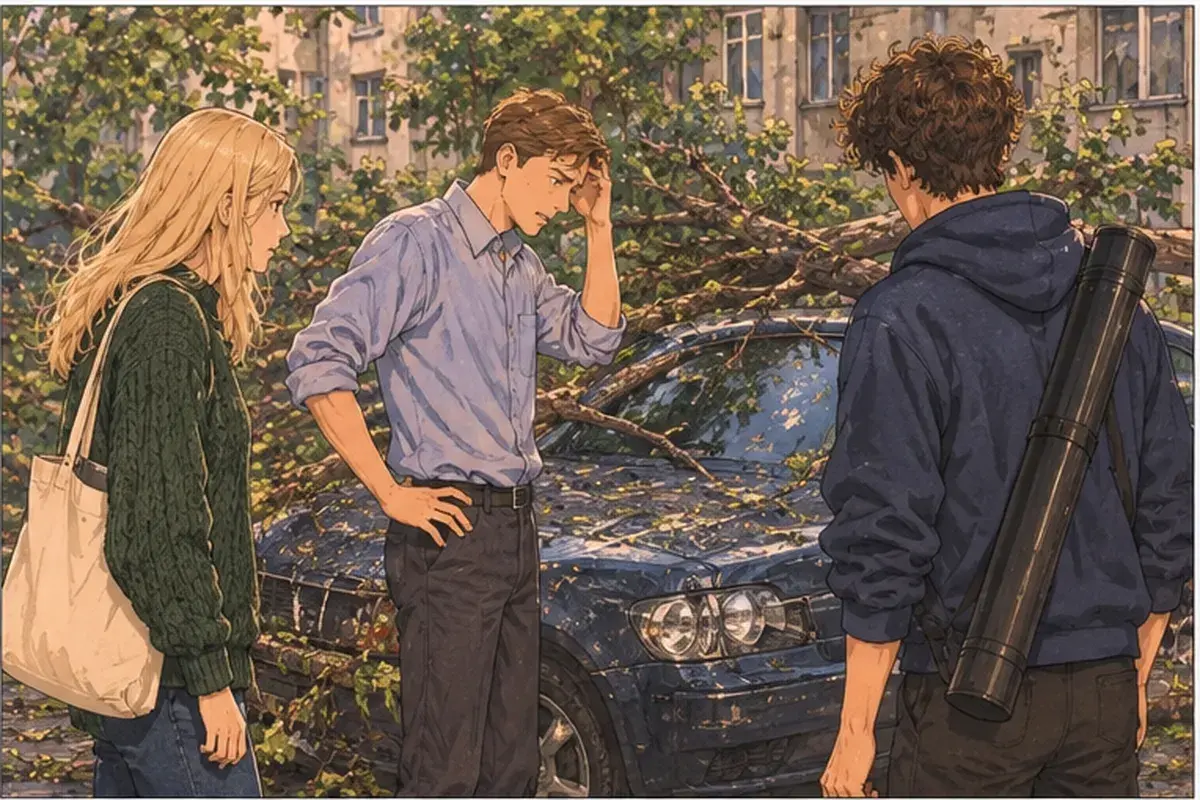
Најтеже је било са аутомобилом иза дрвета. Други комшија се синоћ вратио тек у поноћ, после тешке вожње кроз олују.
The hardest part was the car behind the tree. Another neighbor got back only at midnight last night, after a hard drive through the storm.

Кола нису могла да изађу, а он је морао рано на посао.
The car couldn't get out, and he had to go to work early.
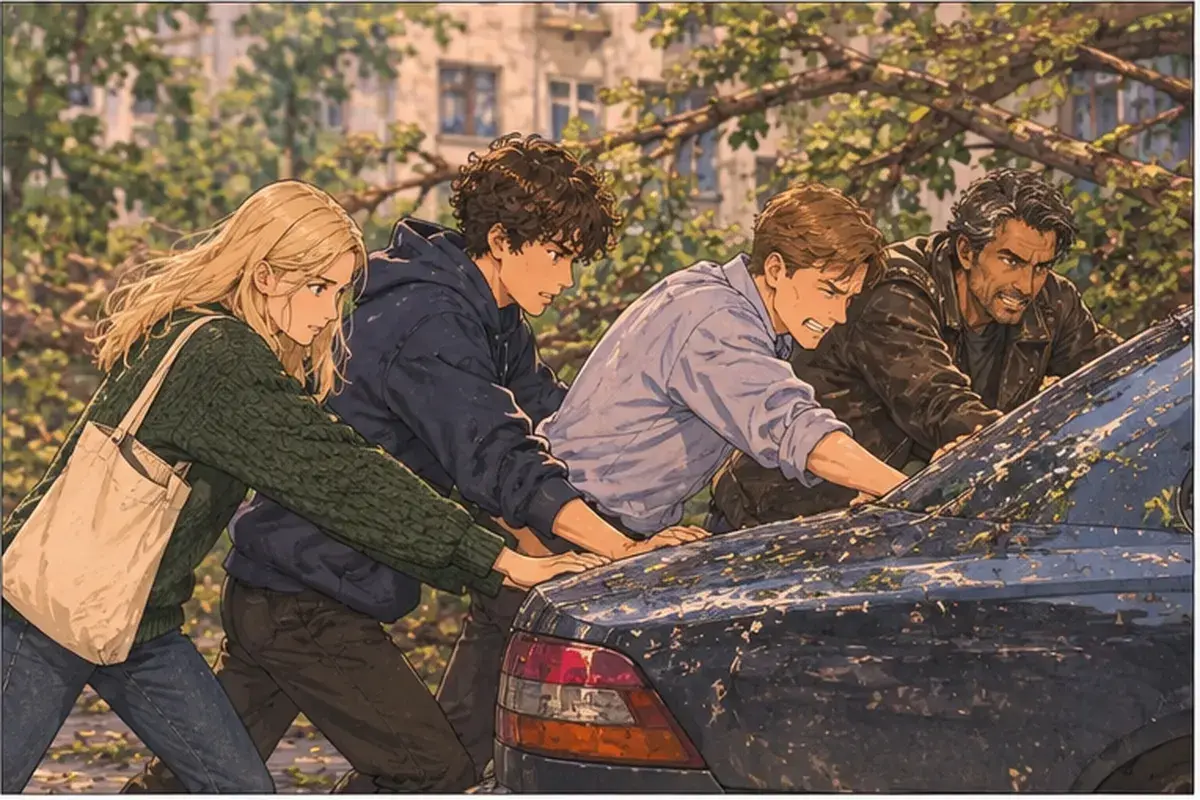
Заједно смо их извукли на улицу.
Together we pulled it out into the street.
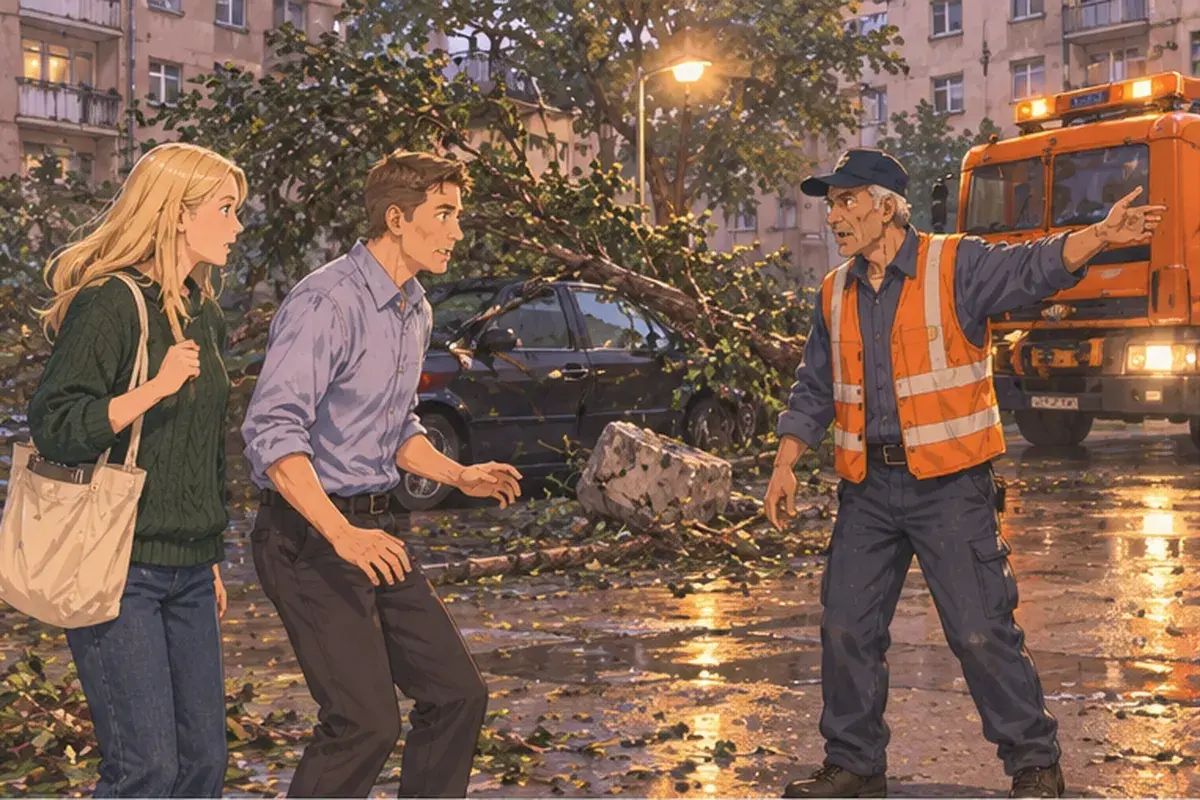
Око осам је дошла струја, а онда и градски камион. Возач је журио, јер га је чекао цео град.
Around eight the power came back, and then the city truck came too. The driver was in a hurry because the whole city was waiting for him.
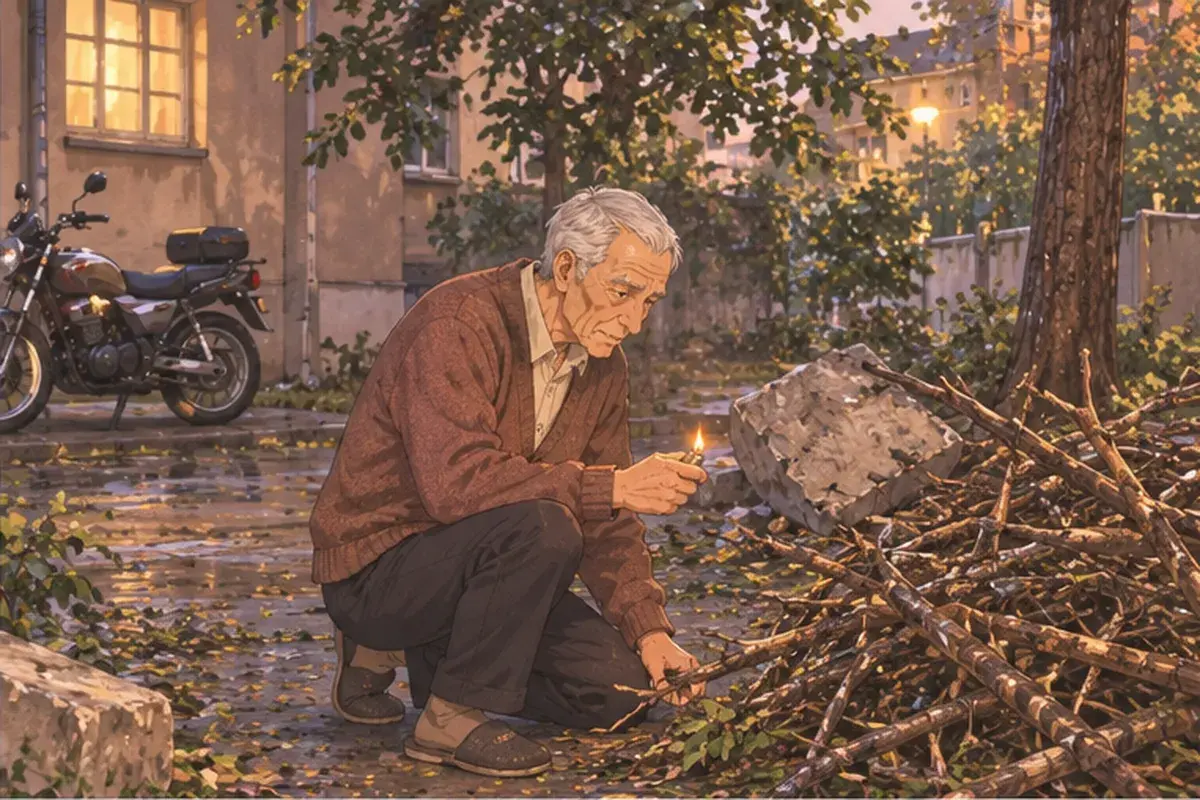
Трећи комшија је хтео да запали ватру у дворишту.
A third neighbor wanted to make a fire in the yard.
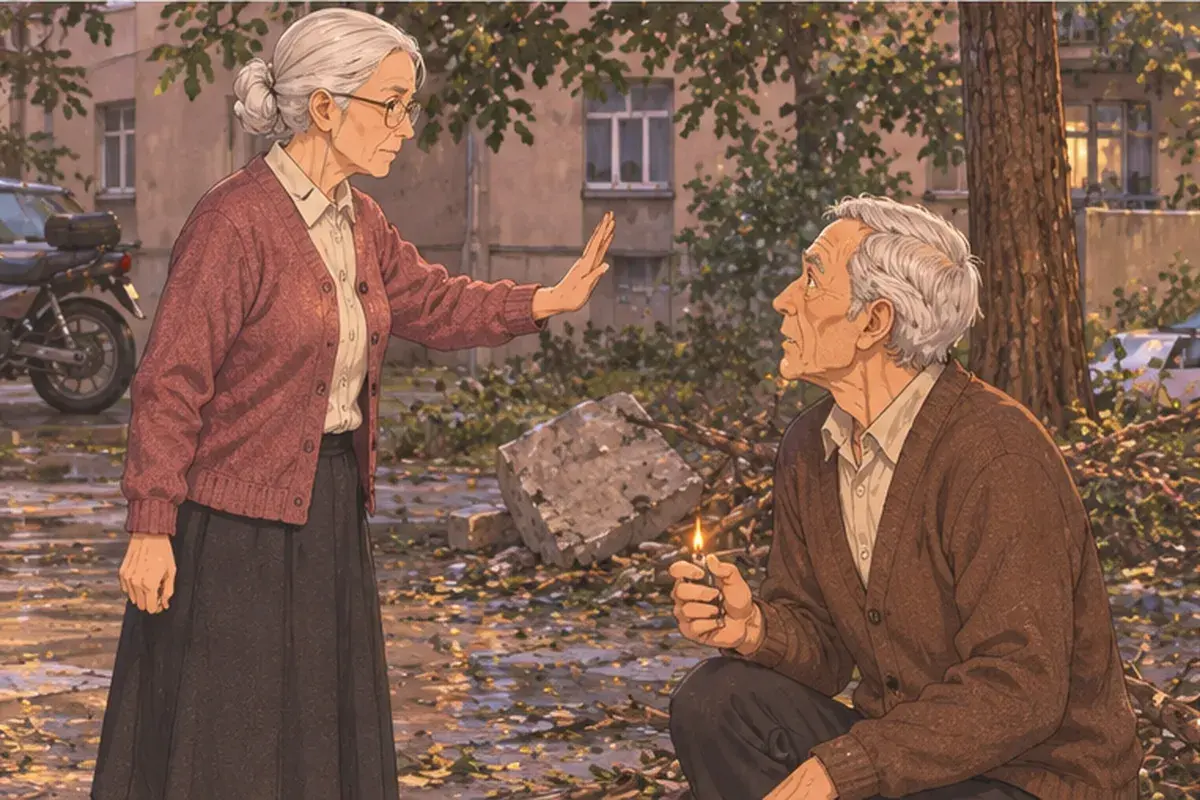
Радмила је рекла да не може. За ватру се у граду плаћа казна.
Radmila said it's not allowed. In the city you pay a fine for a fire.
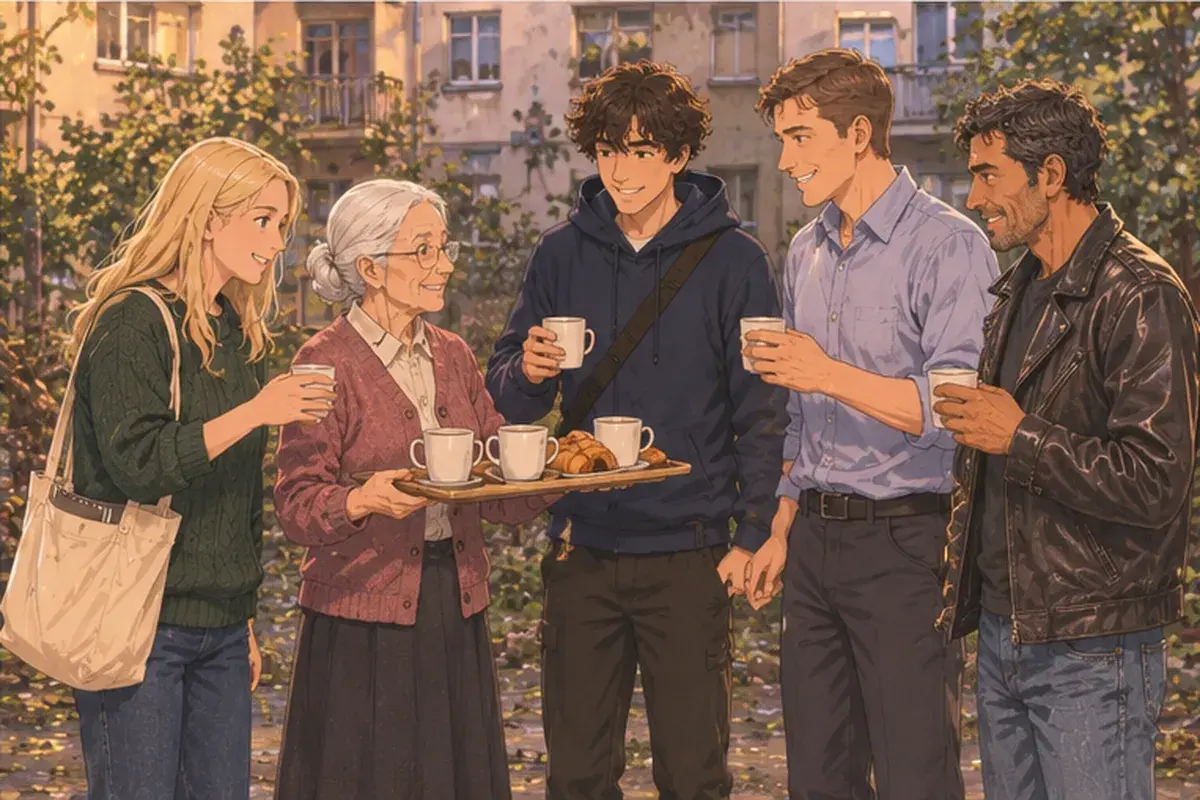
Онда је доносила кафу и колаче, а ми смо их делили.
Then she kept bringing coffee and cakes, and we shared them.

За Радмилу је то природно: „У невољи се познају комшије.“
For Radmila, that's natural: "In times of trouble, you get to know your neighbors."
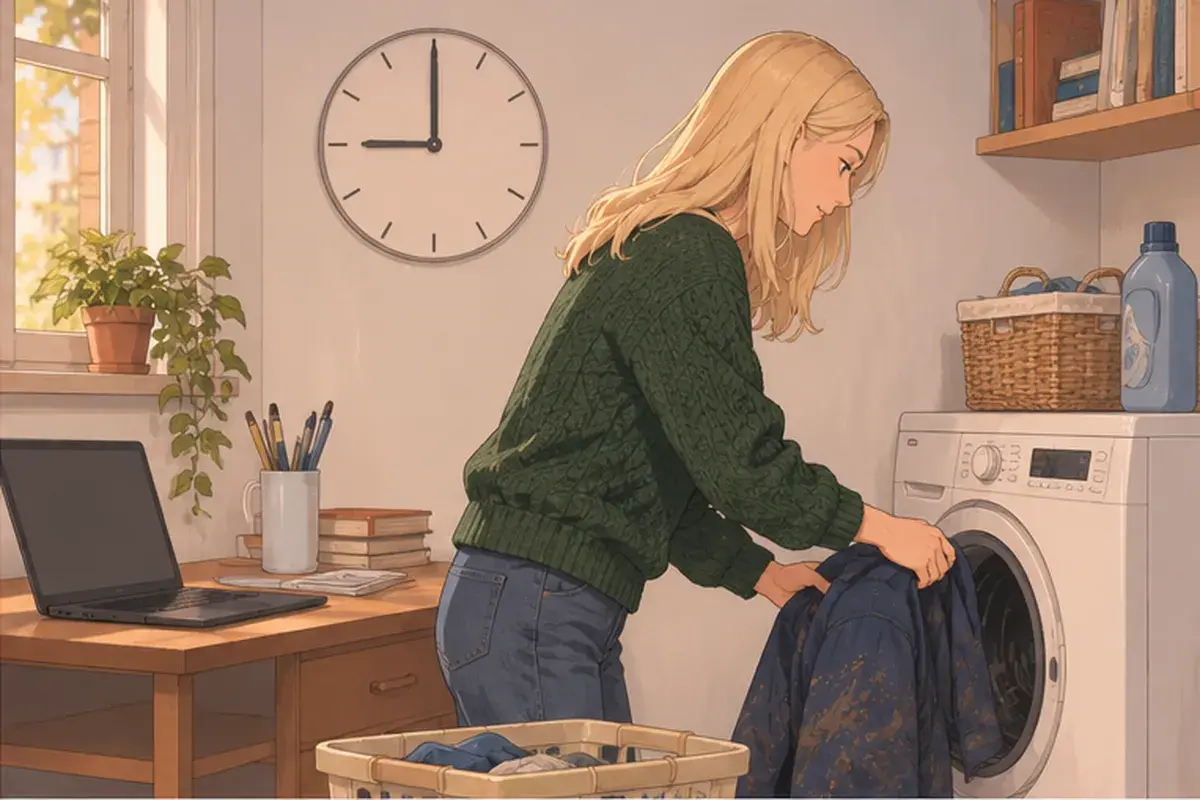
Јакну сам ставила у машину. У девет сам села за компјутер.
I put my jacket in the washing machine. At nine I sat down at the computer (woman speaking).

Дан је био топао и светао, као да прошле ноћи није било никакве олује.
The day was warm and bright, as if there had been no storm at all last night.

Код куће једва знам комшије, а овде су ми скоро као породица.
Back home I barely know my neighbors, but here they're almost like family to me.
Grammar for this text
Радмила је везала шал око главе—везалаis fromвезати(to tie; in the present z changes to ž:вежем);око+ genitive — around the head.Стефан је прво подигао мотор једног комшије— in everyday Serbianмоторmeans a motorcycle, not an engine.Најтеже је било са аутомобилом иза дрвета—најтеже— the hardest, the superlative ofтешко(unit 21);иза+ genitive (unit 16).после тешке вожње кроз олују—вожња— a drive, a ride (fromвозити);кроз+ accusative (unit 17): through the storm.Кола нису могла да изађу—колаis plural only, so it'sнису моглаandих, even though it's one car (in English: 'the car couldn't', 'we pulled it out').извуклиis fromизвући(to pull out).јер га је чекао цео град— the clitics in order: firstга, thenје(unit 14).Радмила је рекла да не може— reported speech (unit 19); 'it's not allowed' in Serbian isне може.За ватру се у граду плаћа казна—казна— a fine, a punishment.Онда је доносила кафу и колаче—доносилаis imperfective: she brought them again and again; one time would beдонела(the pairдонети).У невољи се познају комшије— Radmila changed a saying, 'friends are known in trouble' (like English 'a friend in need is a friend indeed'): instead of friends, she says neighbors.познају се— are known, show who they are.као да прошле ноћи није било никакве олује—као да— as if; afterније билоcomes the genitive:никакве олује.
Words and grammar of the unit: Get through a spring storm.
Learn the words from the texts with flashcards
In the app, you can tap any word in a text to see its translation, forms and examples, and new words stick with flashcards. 15 minutes a day.
Start for freeEverything is open for free. No card needed to sign up.