
Serbian story with translation · A2 · 12 lines
Видимо се у септембру See you in September
Comic · 10 panels
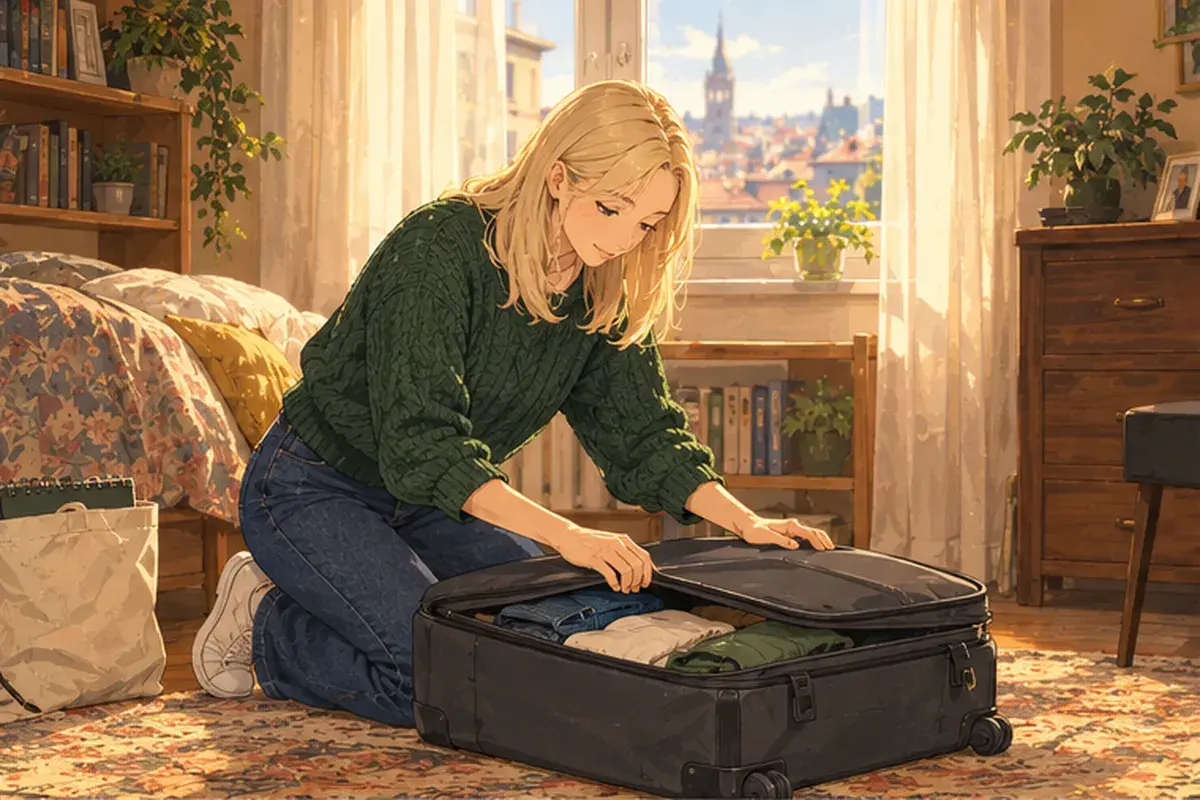
У суботу ујутру сам спаковала последње ствари и затворила кофер.
On Saturday morning I packed the last things and closed the suitcase (woman speaking).
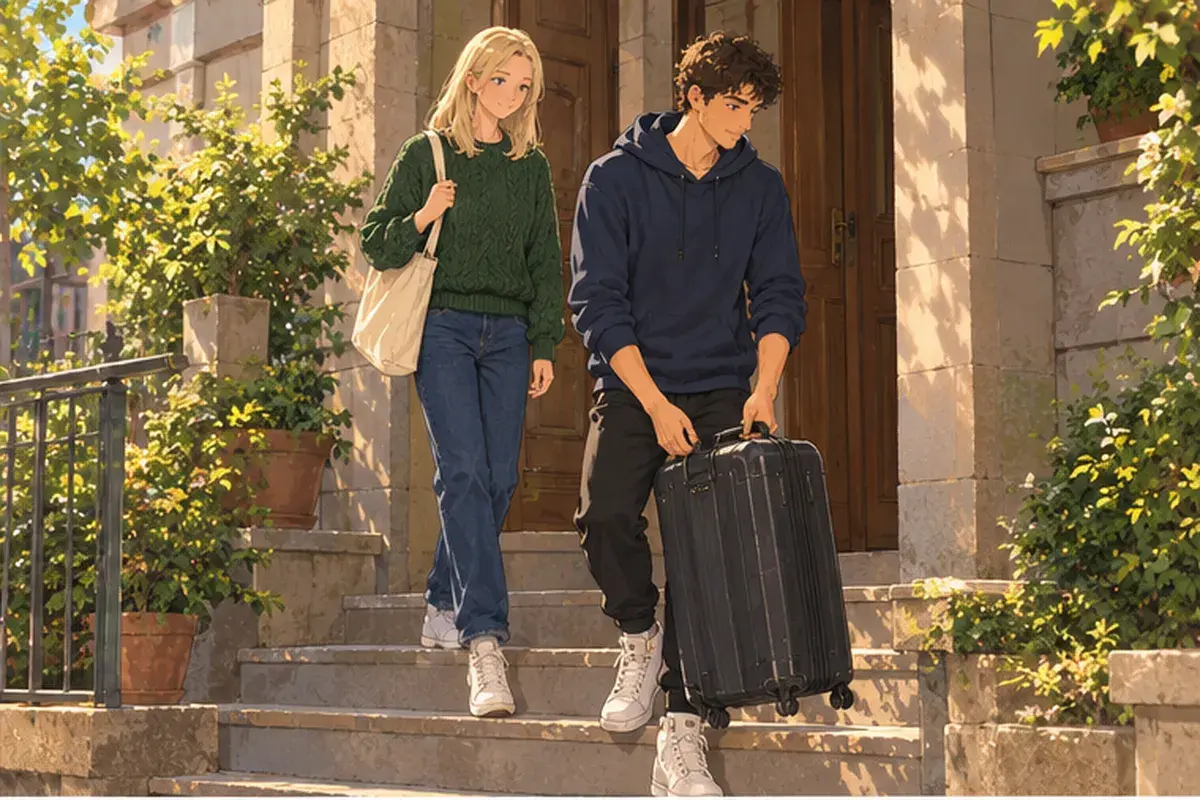
Стефан је понео кофер доле, а ја сам носила само торбу.
Stefan took the suitcase downstairs, and I carried only a bag (woman speaking).

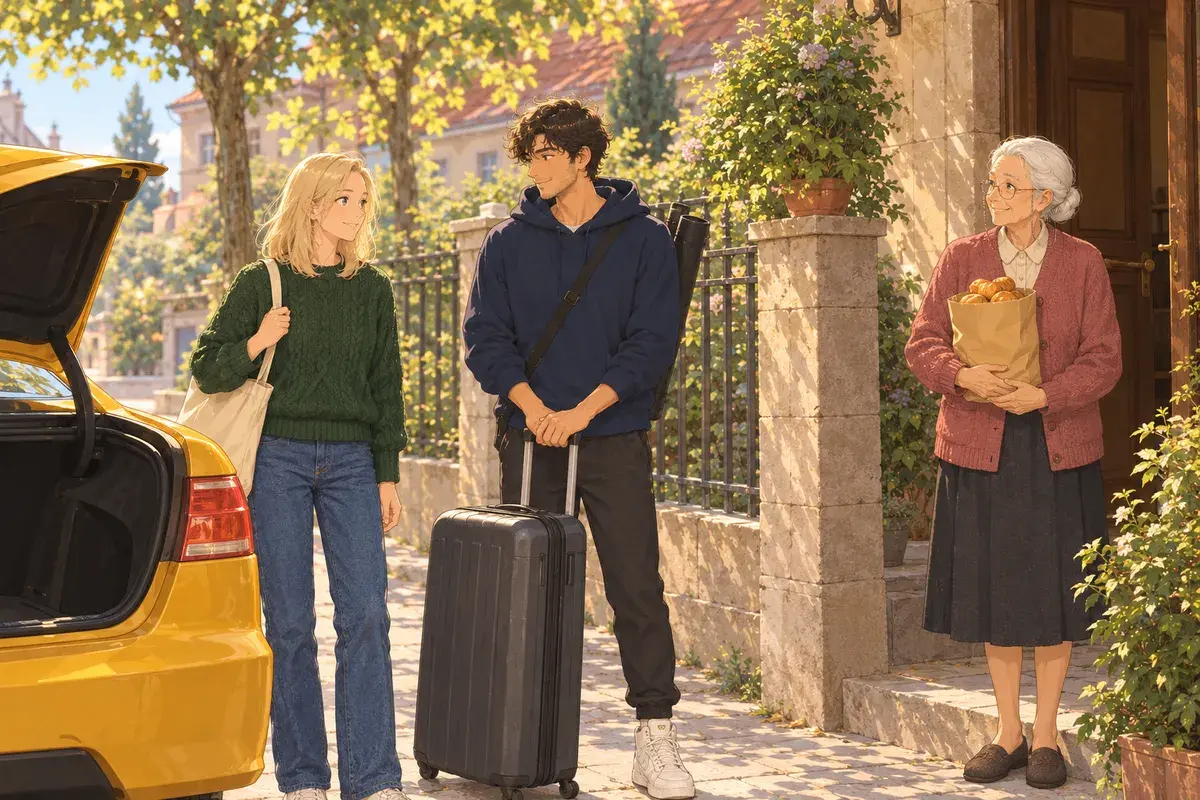
Радмила нас је чекала испред куће и дала ми кесу колача за пут.
Radmila was waiting for us in front of the house and gave me a bag of cookies for the trip.

Поздравила сам се са Радмилом. Њен загрљај је био топао.
I said goodbye to Radmila (woman speaking). Her hug was warm.
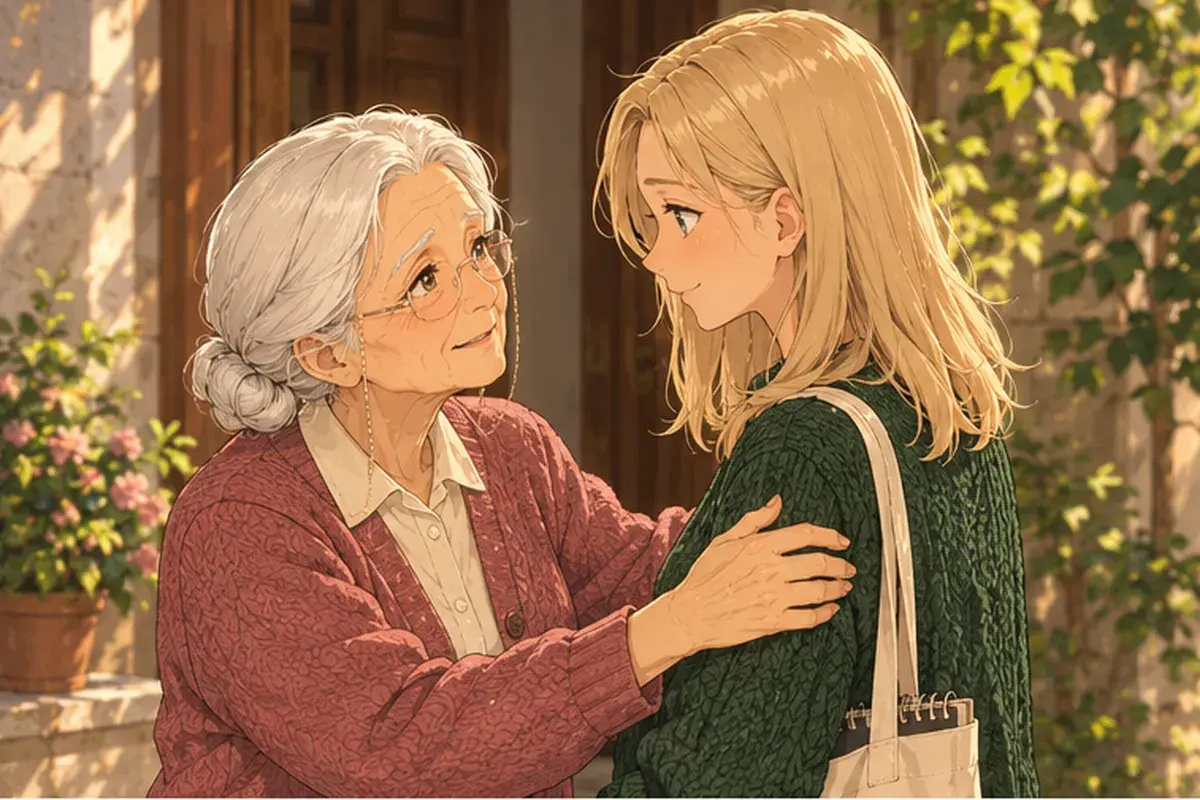
Радмила ми је рекла: „Поздрави маму и тату, и јави ми се кад стигнеш.“
Radmila said to me: "Say hi to Mom and Dad, and let me know when you get there."

На вратима сам рекла као Стефан: „Одох ја!“
At the door I said, like Stefan: "I'm off!" (woman speaking)

Радмила се насмејала: „То си научила од Стефана, зар не?“
Radmila laughed: "You learned that from Stefan, didn't you?" (to a woman)

Стефан ми је рекао: „Видимо се у септембру, Ано!“
Stefan said to me: "See you in September, Ana!"
Таксиста је ставио кофер у пртљажник.
The taxi driver put the suitcase in the trunk.
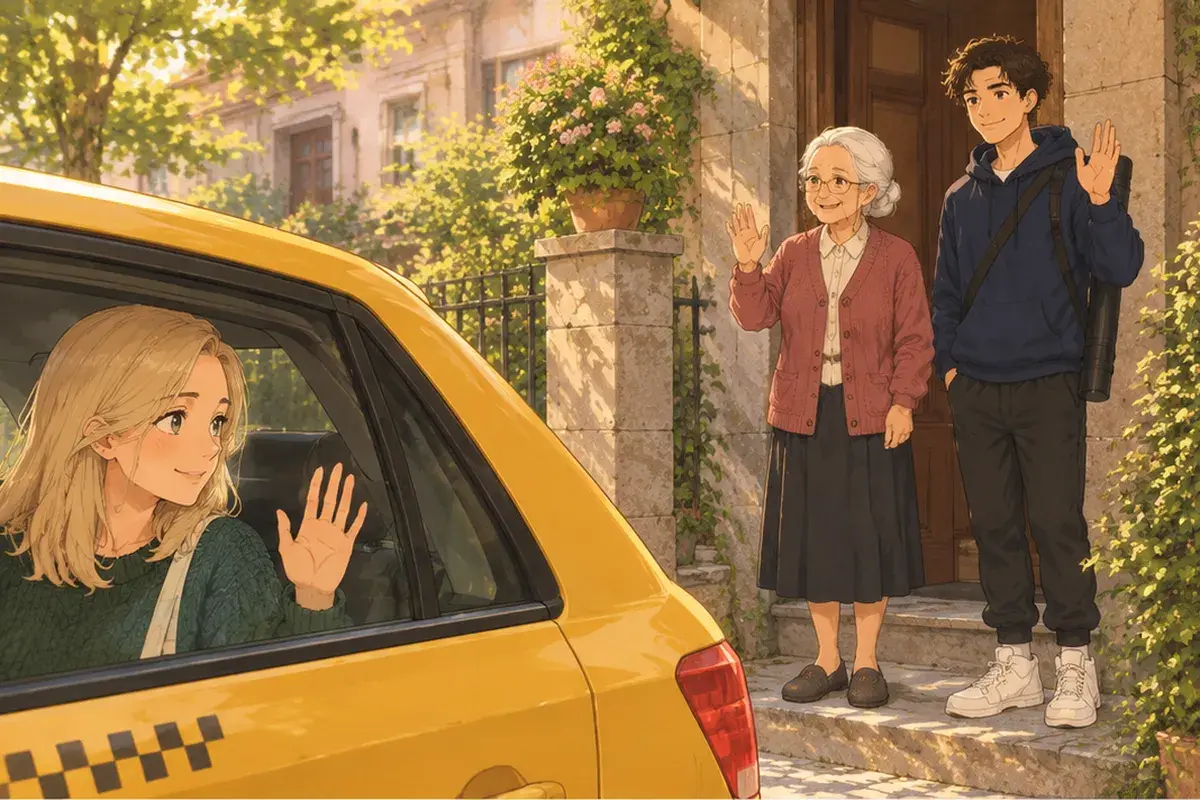
Такси је кренуо, а ја сам се окренула и видела Радмилу и Стефана на вратима.
The taxi set off, and I turned around and saw Radmila and Stefan at the door (woman speaking).
Код куће ме чекају мама и тата. Узели су годишњи, па ћемо лето провести заједно.
Mom and Dad are waiting for me at home. They took their vacation, so we'll spend the summer together.

Знам да ово није крај. То је само пауза пре новог почетка.
I know this isn't the end. It's just a break before a new beginning.
Grammar for this text
Поздравила сам се са Радмилом—поздравити се— to say goodbye; withoutсе,поздравитиmeans 'to greet, to say hi to'.са Радмилом— with Radmila, the instrumental (unit 10).Радмила нас је чекала испред куће и дала ми кесу колача за пут—нас је чекала— was waiting for us (нас— us).дала ми— gave me:јеisn't repeated, because the subject is the same.испред куће— in front of the house (unit 16);кесуis the accusative.Поздрави маму и тату, и јави ми се кад стигнеш— commands (unit 24):поздрави— say hi to,јави се— get in touch, let me know.ми се— two clitics in a row (unit 14).кад стигнеш— when you get there.Одох ја!— a joking 'I'm off!': Stefan said it in the first text of the unit. It's an old past form (the aorist) ofотићи; its rule comes at B1, here learn it whole, as a way to say goodbye. Men and women say it the same way.То си научила од Стефана, зар не?—си научила— you learned, the past tense (-ла: said to a woman).од Стефана— from Stefan (genitive).зар не— didn't you?, right?Видимо се у септембру, Ано!— the present tense instead of the future: word for word 'we see each other', in meaning 'see you'.Аноis the calling form (vocative) of Ana.То је само пауза пре новог почетка—пре(before) + genitive:новог почетка— a new beginning.Таксиста је ставио кофер у пртљажник— where to? — the accusative:у пртљажник(into the trunk).коферis a suitcase, not a coffer.Узели су годишњи, па ћемо лето провести заједно— in speech people often say justгодишњиinstead ofгодишњи одмор(vacation).провести— to spend (time); the futureћемо провести:ћемоis the second word.
Words and grammar of the unit: Share good news and say goodbye.
Learn the words from the texts with flashcards
In the app, you can tap any word in a text to see its translation, forms and examples, and new words stick with flashcards. 15 minutes a day.
Start for freeEverything is open for free. No card needed to sign up.