

Serbian dialogue with translation · A2 · 15 lines
Добила сам посао! I got the job!
Comic · 15 panels
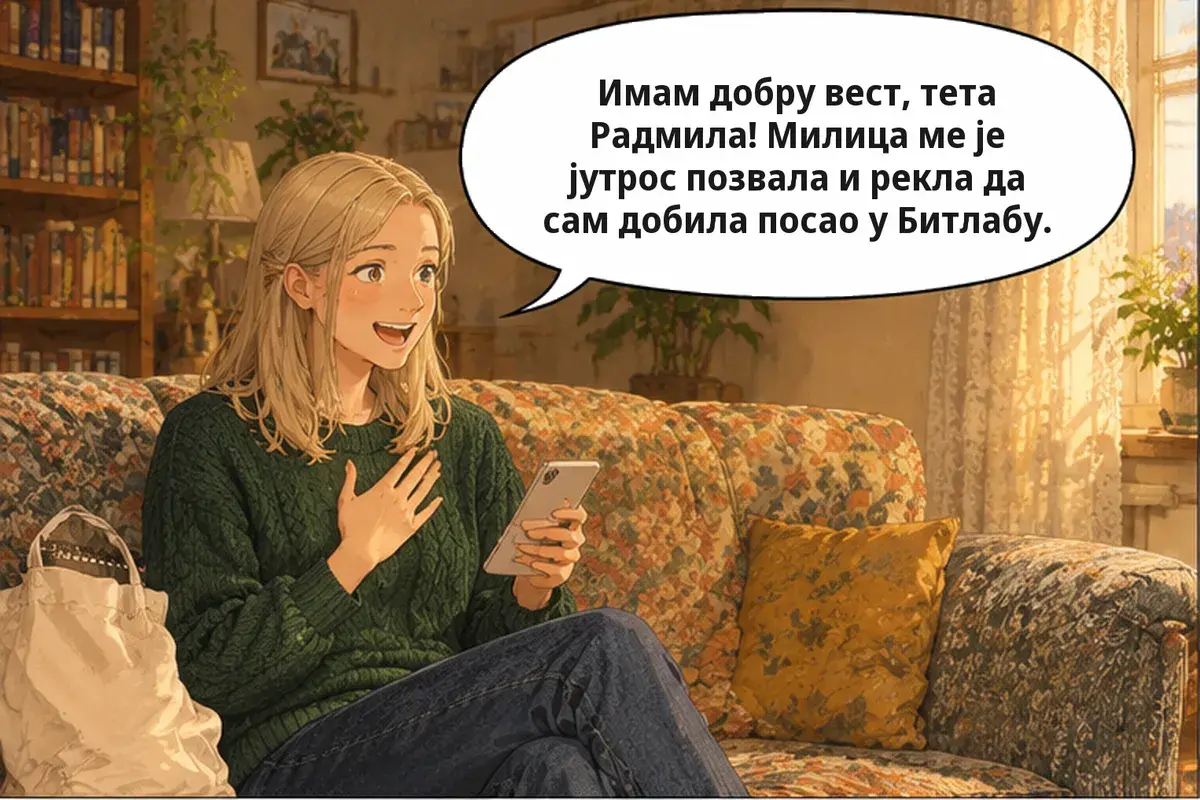
- Ана
Имам добру вест, тета Радмила! Милица ме је јутрос позвала и рекла да сам добила посао у Битлабу.
I have good news, Aunt Radmila! Milica called me this morning and said I got the job at Bitlab (woman speaking).
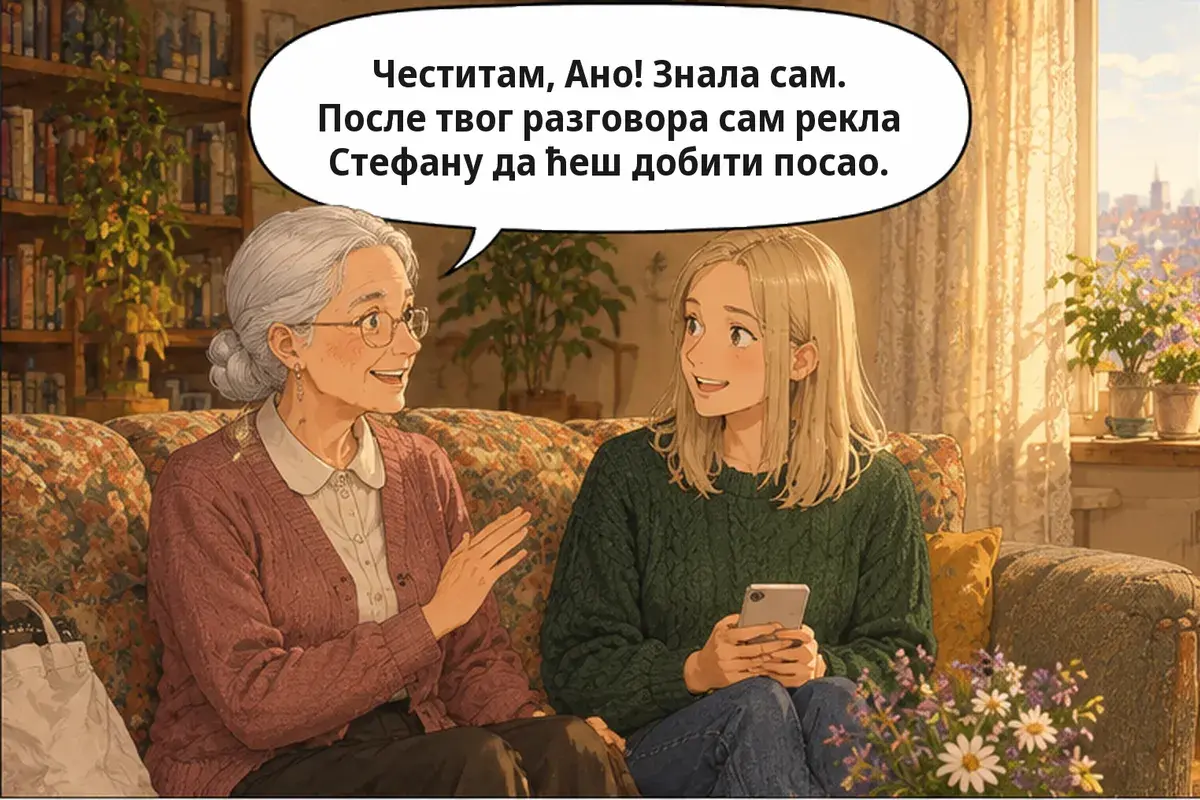
- Радмила
Честитам, Ано! Знала сам. После твог разговора сам рекла Стефану да ћеш добити посао.
Congratulations, Ana! I knew it. After your interview I told Stefan you'd get the job (woman speaking).

- Стефан
Браво! А шта кажу твоји родитељи?
Well done! And what do your parents say?

- Ана
Мама је плакала од среће, а тата је рекао само: „Одлично!“
Mom cried with joy, and Dad just said: "Excellent!"
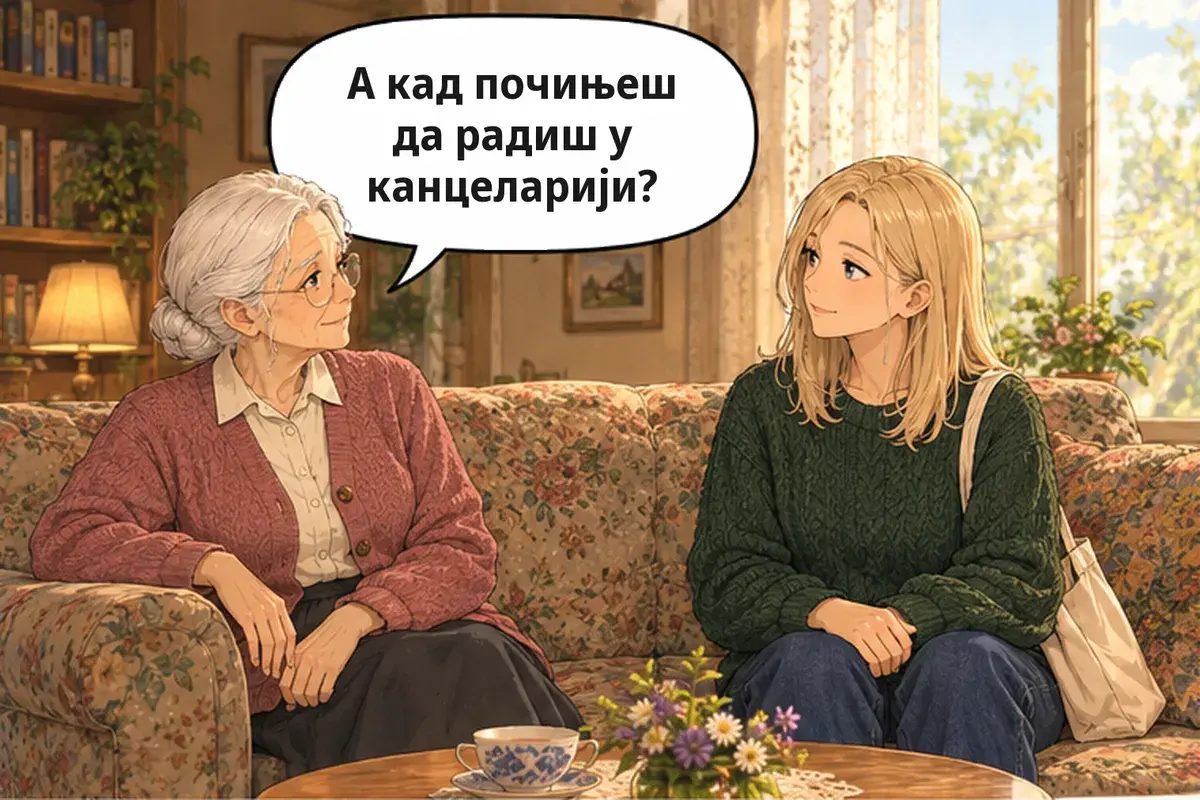
- Радмила
А кад почињеш да радиш у канцеларији?
And when do you start working at the office?

- Ана
Почињем првог септембра, а за недељу дана путујем кући на два месеца.
I start on September 1, and in a week I'm traveling home for two months.
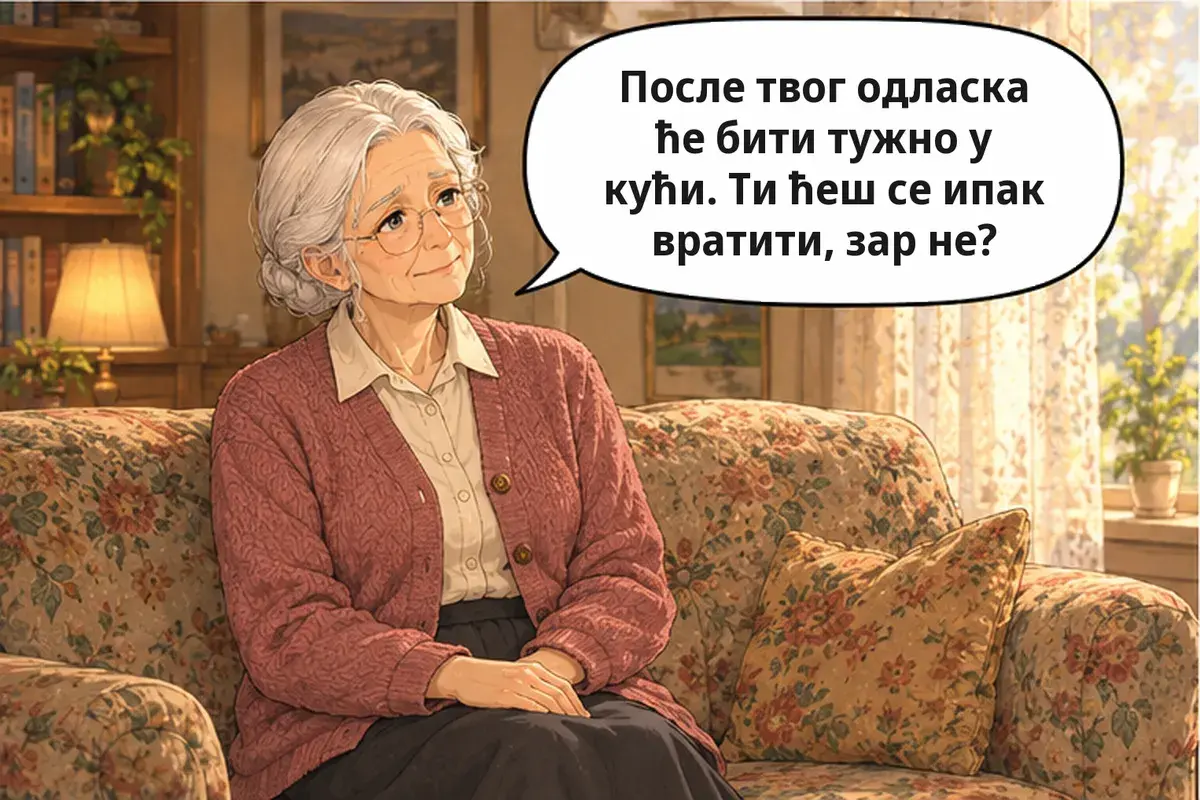
- Радмила
После твог одласка ће бити тужно у кући. Ти ћеш се ипак вратити, зар не?
After your departure it'll be sad in the house. You will come back, though, won't you?
- Ана
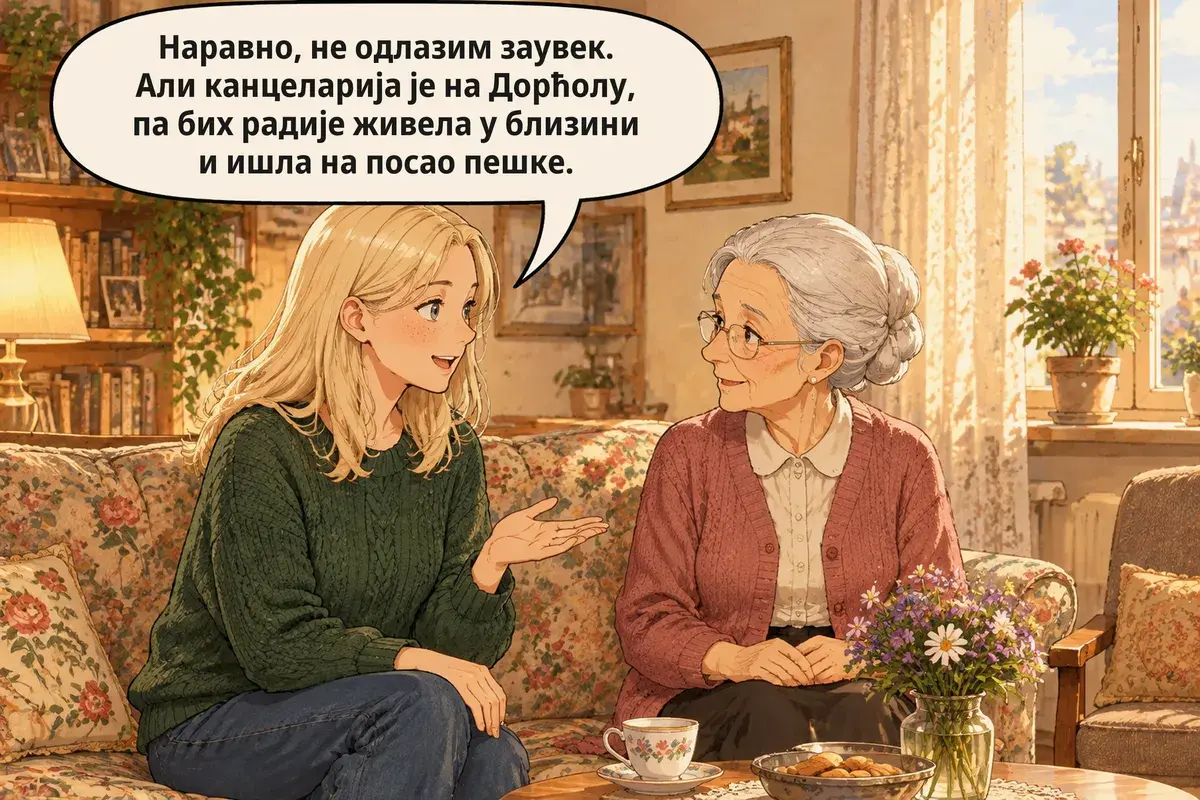
Наравно, не одлазим заувек. Али канцеларија је на Дорћолу, па бих радије живела у близини и ишла на посао пешке.
Of course, I'm not leaving forever. But the office is in Dorćol, so I'd rather live nearby and walk to work (woman speaking).

- Стефан
Нема фрке, наћи ћемо нешто близу Дунава!
No worries, we'll find something near the Danube!
- Радмила
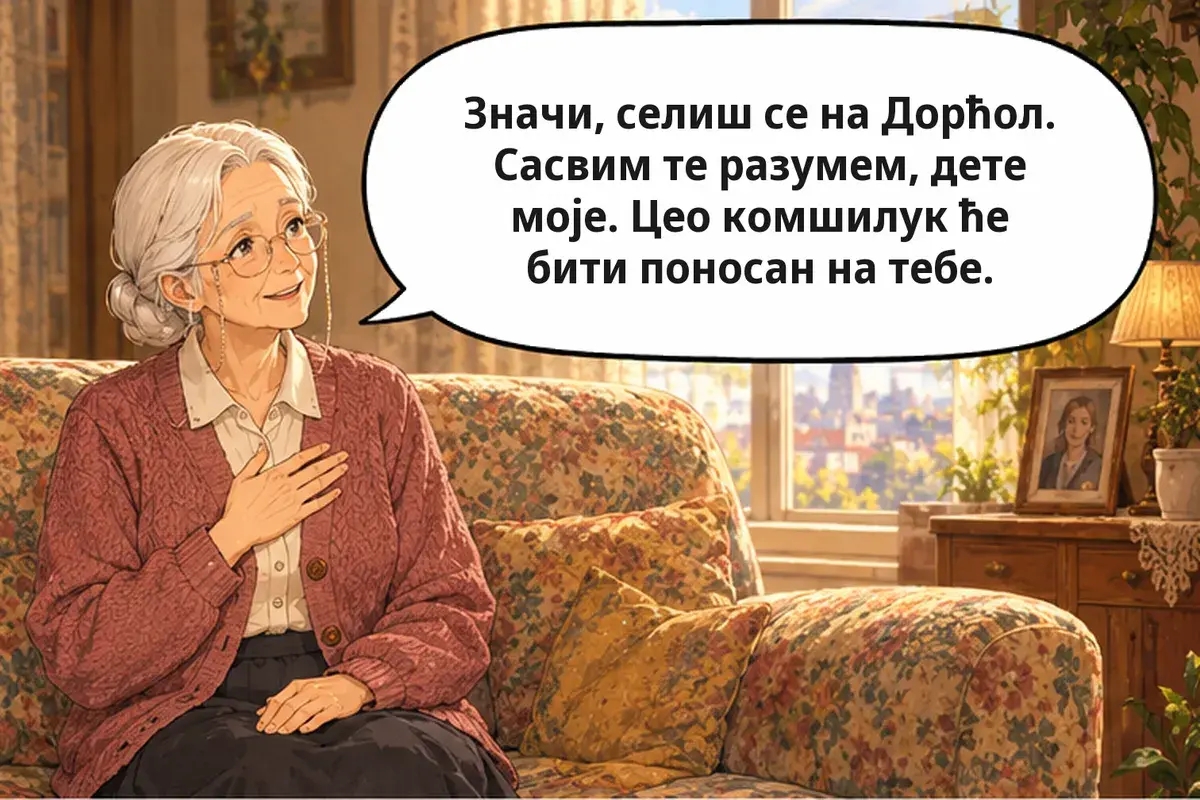
Значи, селиш се на Дорћол. Сасвим те разумем, дете моје. Цео комшилук ће бити поносан на тебе.
So you're moving to Dorćol. I completely understand you, my child. The whole neighborhood will be proud of you.
- Ана
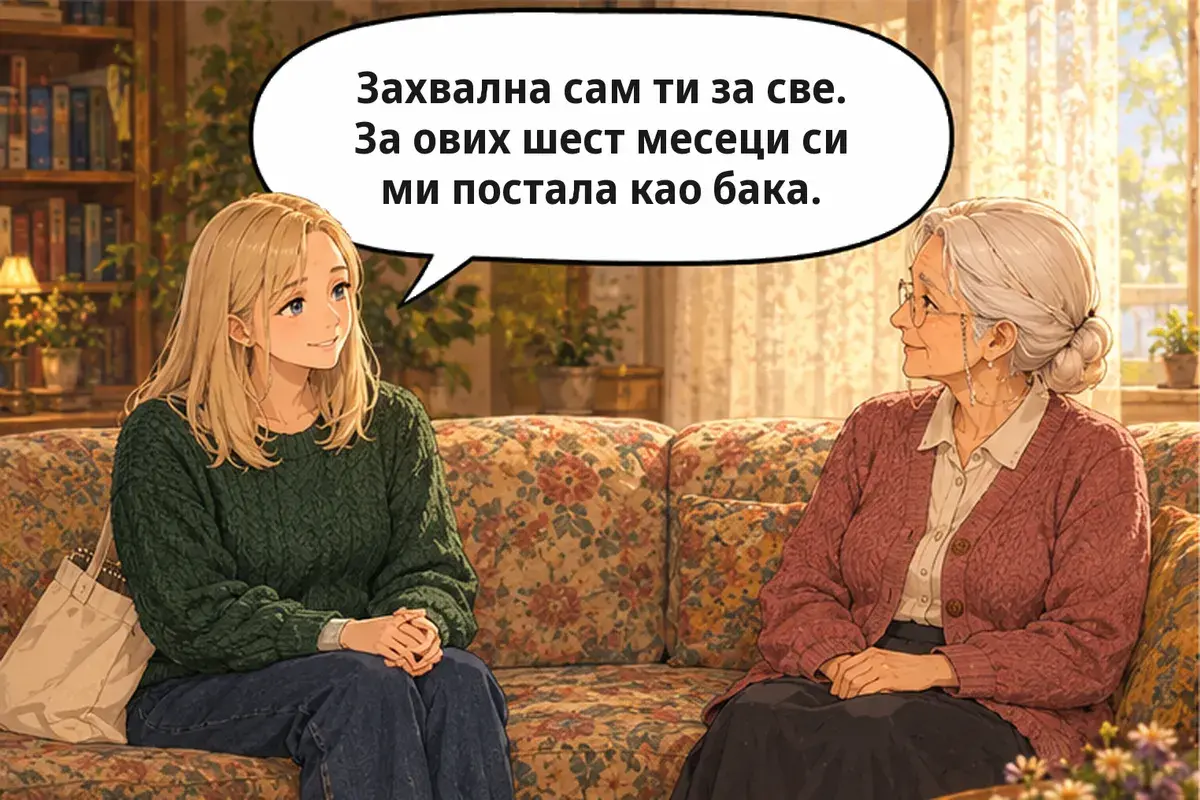
Захвална сам ти за све. За ових шест месеци си ми постала као бака.
I'm grateful to you for everything (woman speaking). In these six months you've become like a grandma to me.
- Радмила
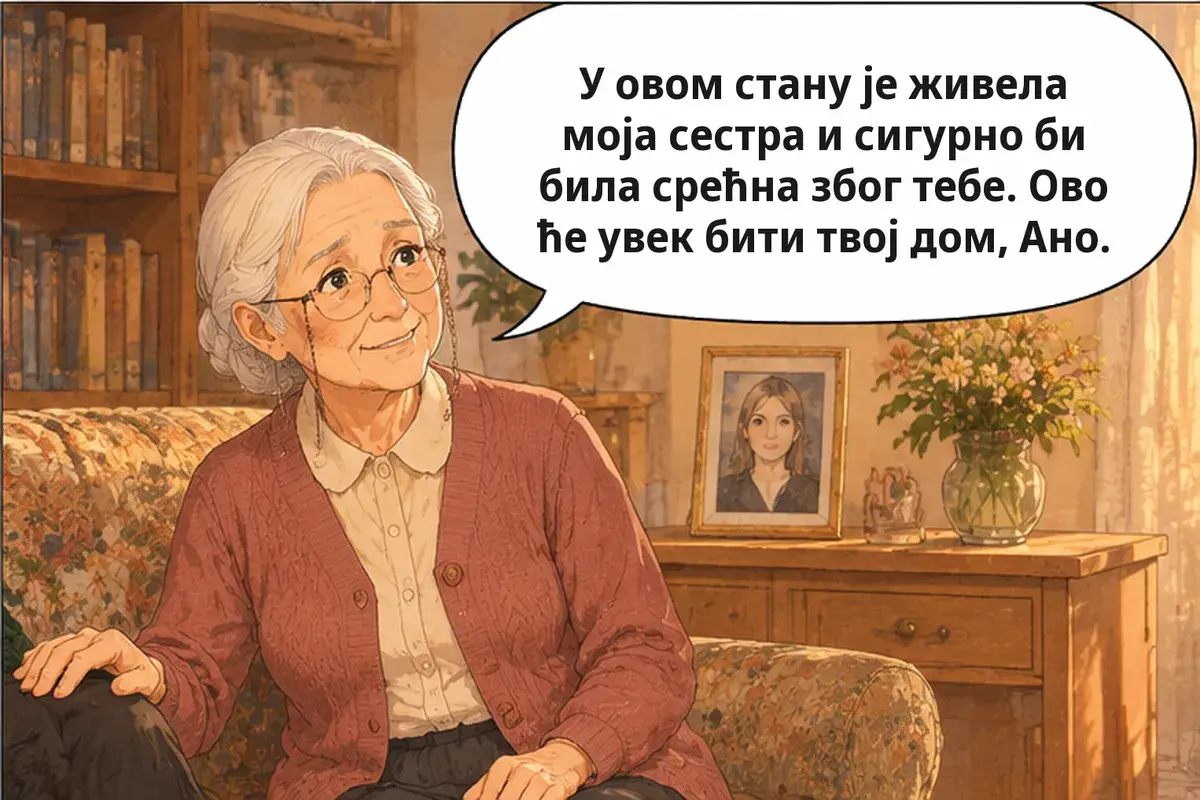
У овом стану је живела моја сестра и сигурно би била срећна због тебе. Ово ће увек бити твој дом, Ано.
My sister lived in this apartment, and she'd surely be happy for you. This will always be your home, Ana.

- Ана
Кад се преселим, сваке недеље ћу долазити код вас на кафу.
When I move, I'll come to your place for coffee every week (to several people).
- Радмила
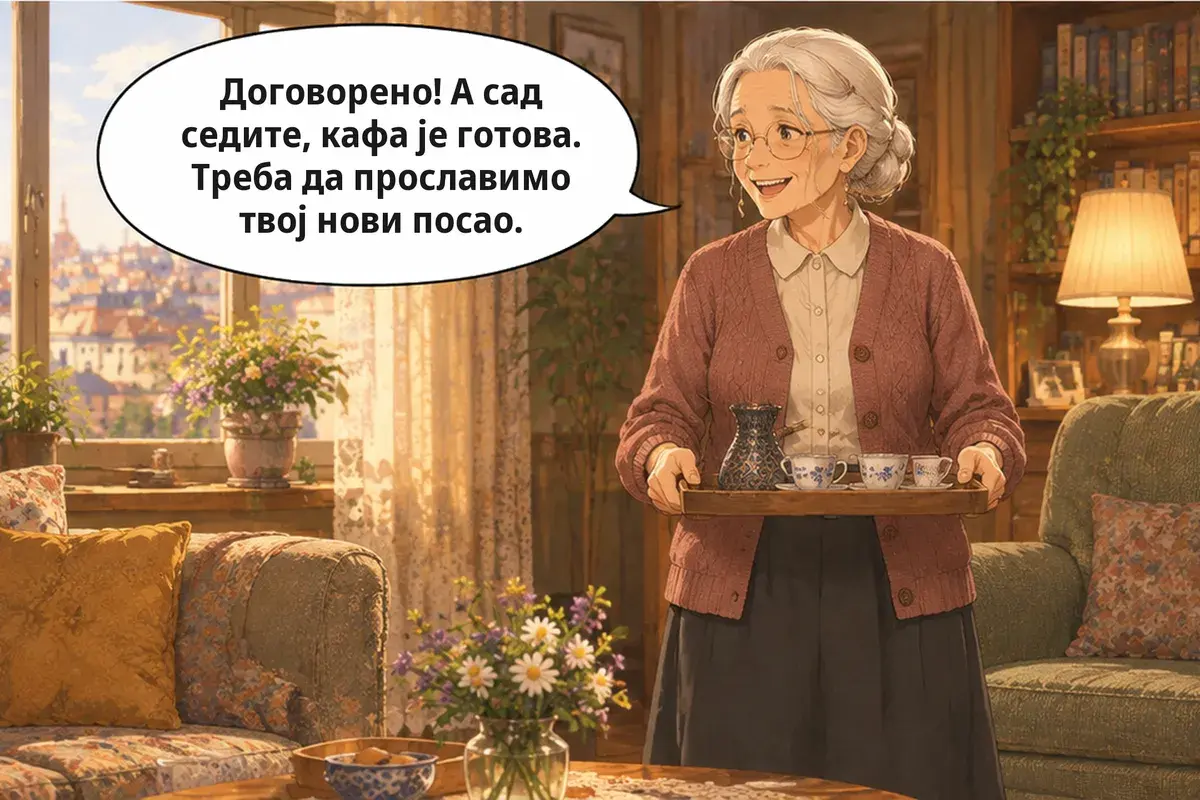
Договорено! А сад седите, кафа је готова. Треба да прославимо твој нови посао.
It's a deal! Now sit down, the coffee's ready (to several people). We need to celebrate your new job.

- Стефан
За селидбу ме зови, имам јака леђа. Одох ја по колаче, али прво кафа!
Call me for the move, I have a strong back. I'm off to get cakes, but coffee first!
Grammar for this text
Милица ме је јутрос позвала и рекла да сам добила посао у Битлабу—ме— me (unit 8);ме је: among the cliticsјеalways comes last.позвала— called (the-лаending: a woman called).да— that (unit 12): 'said that I got the job'.После твог разговора сам рекла Стефану да ћеш добити посао—после(after) + genitive:твог разговора— your interview.Стефану— to Stefan, the dative (unit 5).да ћеш добити— that you'll get, the future tense (unit 3): Serbian keeps the future here, where English often says 'you'd get'.Ти ћеш се ипак вратити, зар не?— the future of a se-verb: firstћеш, thenсе, thenвратити.зар не— won't you?, right? (unit 19).После твог одласка ће бити тужно у кући—после+ genitive:твог одласка— your departure (одлазакloses itsа).ће бити тужно— it will be sad.Кад се преселим, сваке недеље ћу долазити код вас на кафу— afterкадcomesпреселим, a perfective verb (one finished action) in the present tense; the main part is in the future:ћу долазити.сваке недеље— every week.код вас— at your place: Ana speaks to both Radmila and Stefan.и сигурно би била срећна због тебе—би била срећна— would be happy, the conditional (unit 27).срећна због тебе— happy for you (word for word 'because of you', unit 16).Нема фрке— no worries: Stefan's slang, fine with friends, not at work or with older people you don't know.За селидбу ме зови, имам јака леђа. Одох ја по колаче, али прво кафа!—зови— call, a command (unit 24).леђа(back) is a plural neuter noun, that's why it'sјака.Одох ја— a joking 'I'm off': an old past form (the aorist) ofотићи, a set phrase; its rule comes at B1.по колаче— to get cakes (по+ accusative: go and fetch something).
Words and grammar of the unit: Share good news and say goodbye.
Learn the words from the texts with flashcards
In the app, you can tap any word in a text to see its translation, forms and examples, and new words stick with flashcards. 15 minutes a day.
Start for freeEverything is open for free. No card needed to sign up.