
Serbian dialogue with translation · A2 · 15 lines
Кад стигнем, где да те чекам? When I arrive, where should I wait for you?
Comic · 15 panels
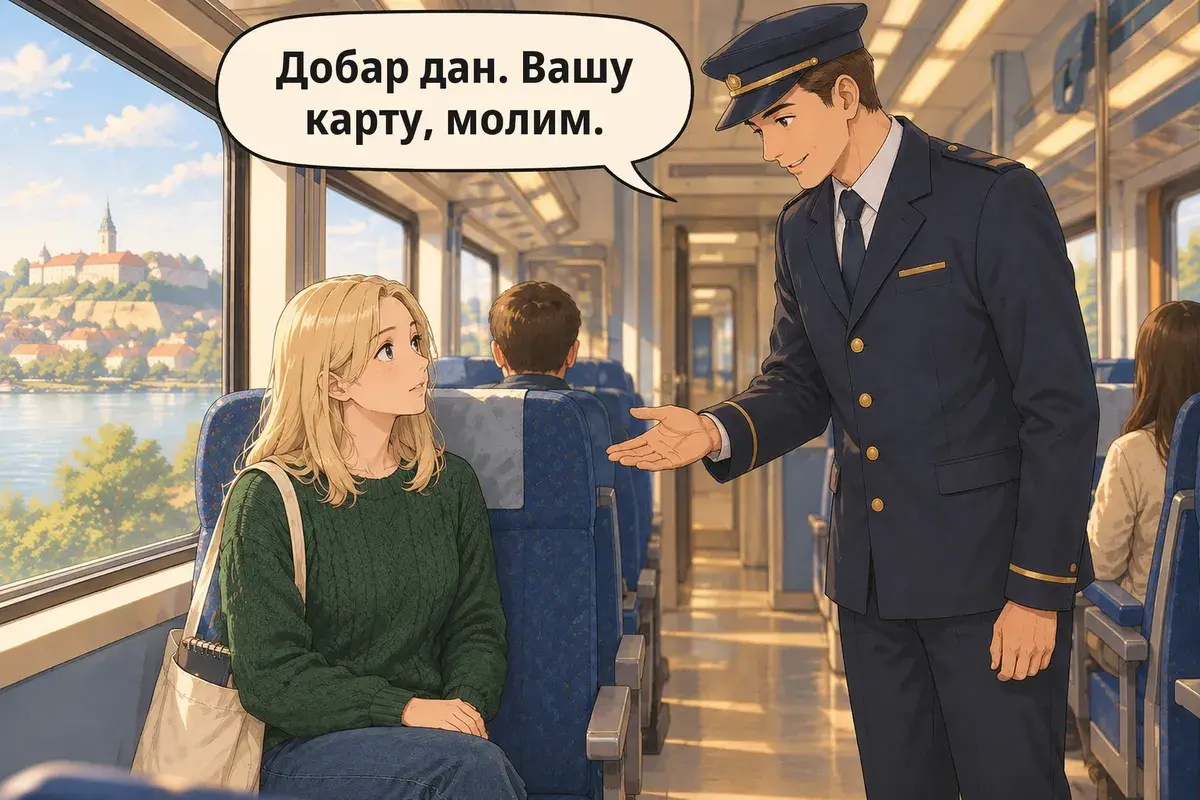
- Кондуктер
Добар дан. Вашу карту, молим.
Good afternoon. Your ticket, please (formal).

- Ана
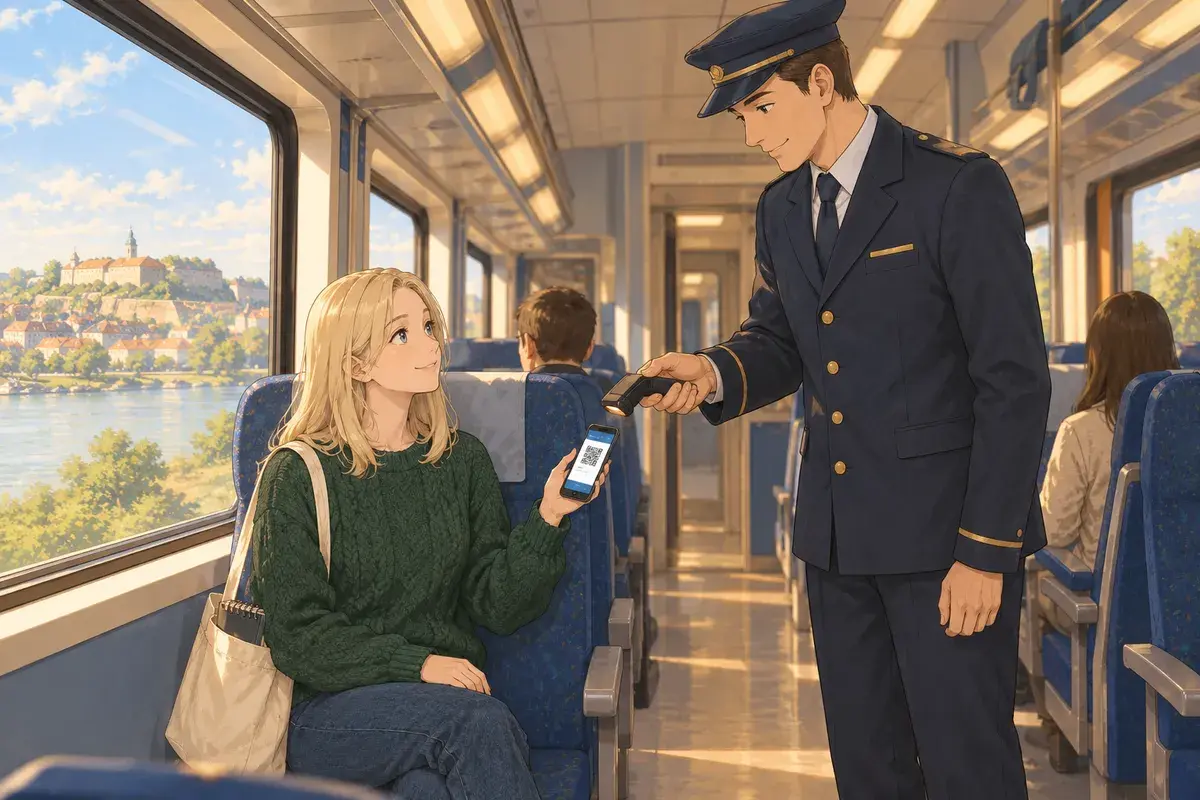
Ево карте на телефону. Купила сам повратну, јер вечерас идем назад у Београд.
Here's my ticket on my phone. I bought a round-trip one because I'm going back to Belgrade tonight (woman speaking).
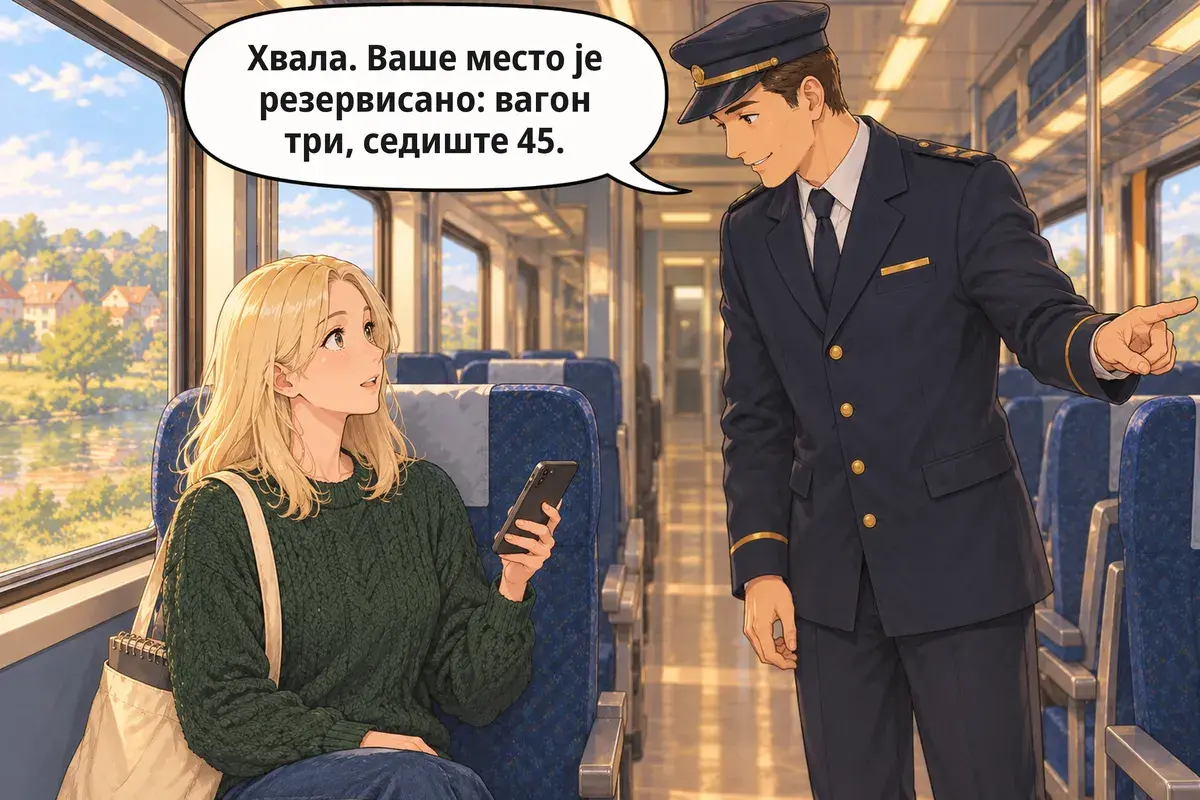
- Кондуктер
Хвала. Ваше место је резервисано: вагон три, седиште 45.
Thanks. Your seat is reserved: car three, seat 45 (formal).

- Ана
Извините. Мислила сам да је ово вагон три.
Sorry (formal). I thought this was car three (woman speaking).
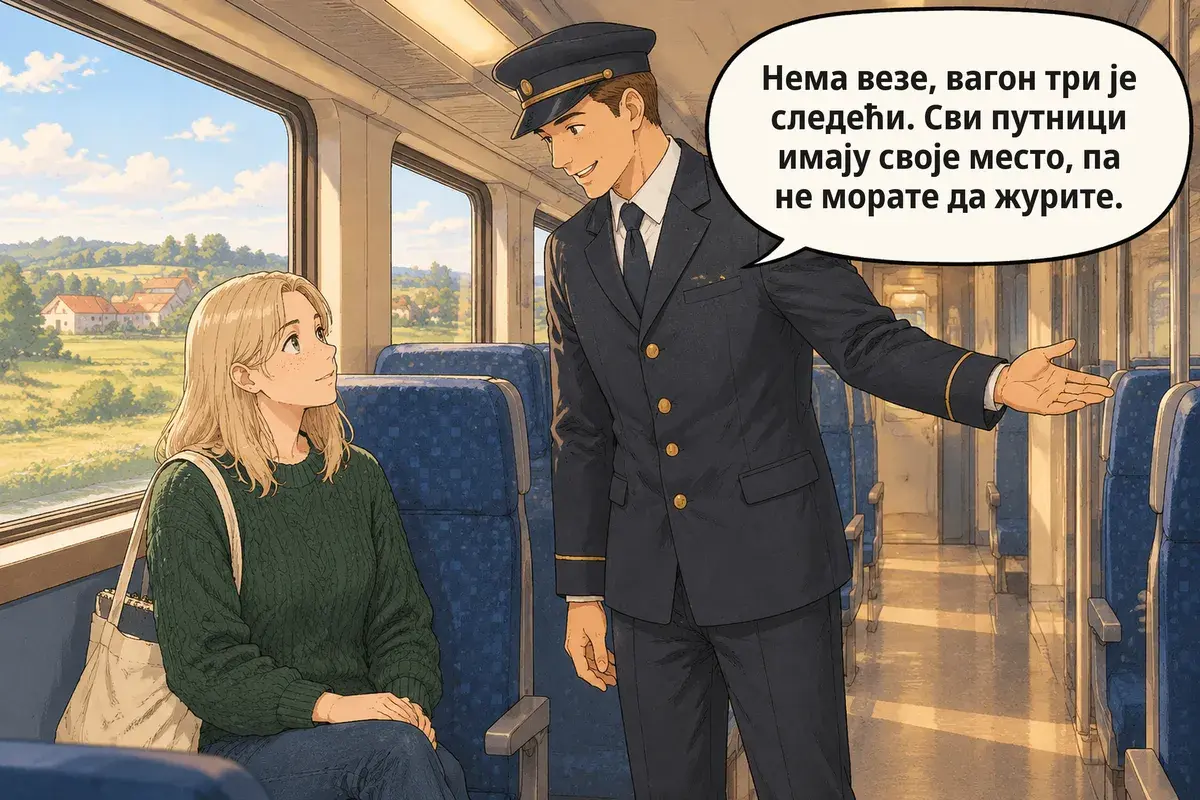
- Кондуктер
Нема везе, вагон три је следећи. Сви путници имају своје место, па не морате да журите.
Never mind, car three is the next one. All the passengers have their own seats, so you don't have to hurry (formal).

- Ђорђе
Ћао, Ано! Јеси ли већ нашла своје место у возу?
Hi, Ana! Have you already found your seat on the train? (to a woman)

- Ана
Јесам. Кондуктер ми је показао вагон, јер сам прво села у други. Кад стигнем, где да те чекам?
Yes, I have. The conductor showed me the car, because at first I sat down in a different one (woman speaking). When I arrive, where should I wait for you?

- Ђорђе
Чекам те на перону. Ако ме не видиш, одмах ме позови.
I'm waiting for you on the platform. If you don't see me, call me right away.
- Ана
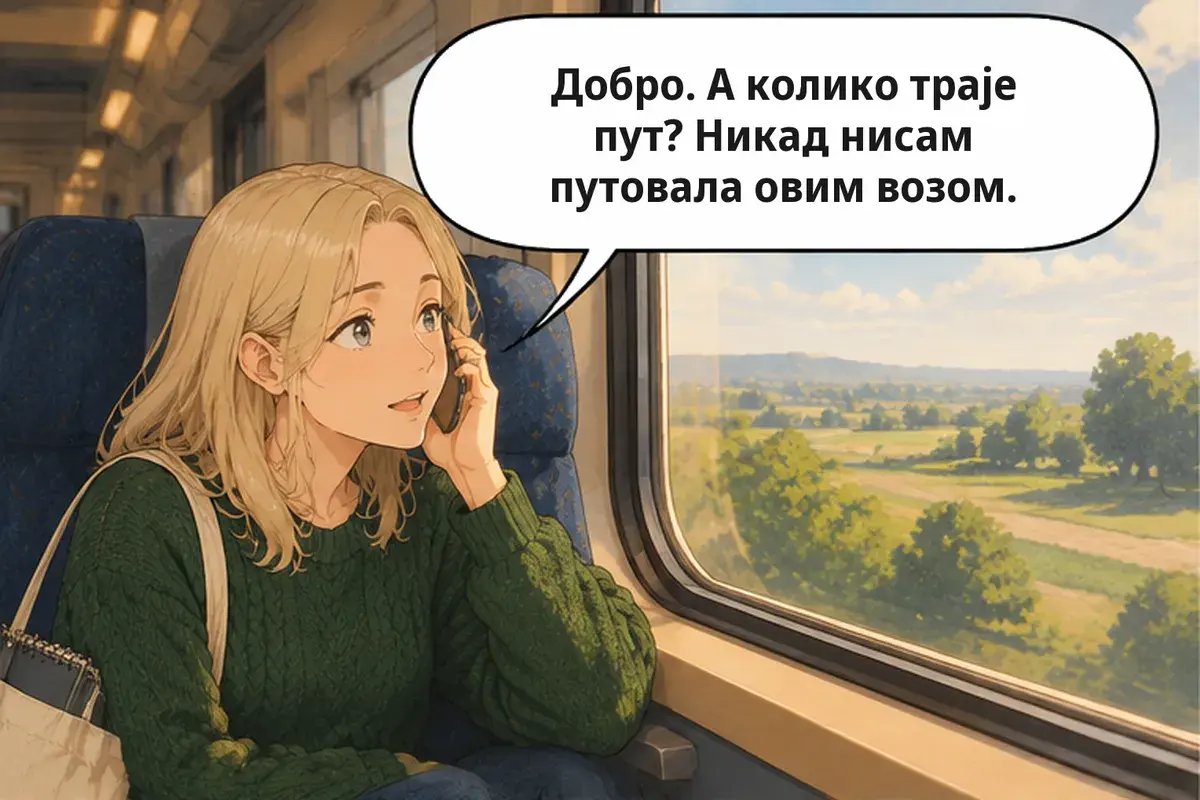
Добро. А колико траје пут? Никад нисам путовала овим возом.
OK. And how long does the trip take? I've never traveled on this train (woman speaking).

- Ђорђе
Соко је брз воз, па си за 40 минута у Новом Саду!
Soko is a fast train, so you're in Novi Sad in 40 minutes!
- Ана
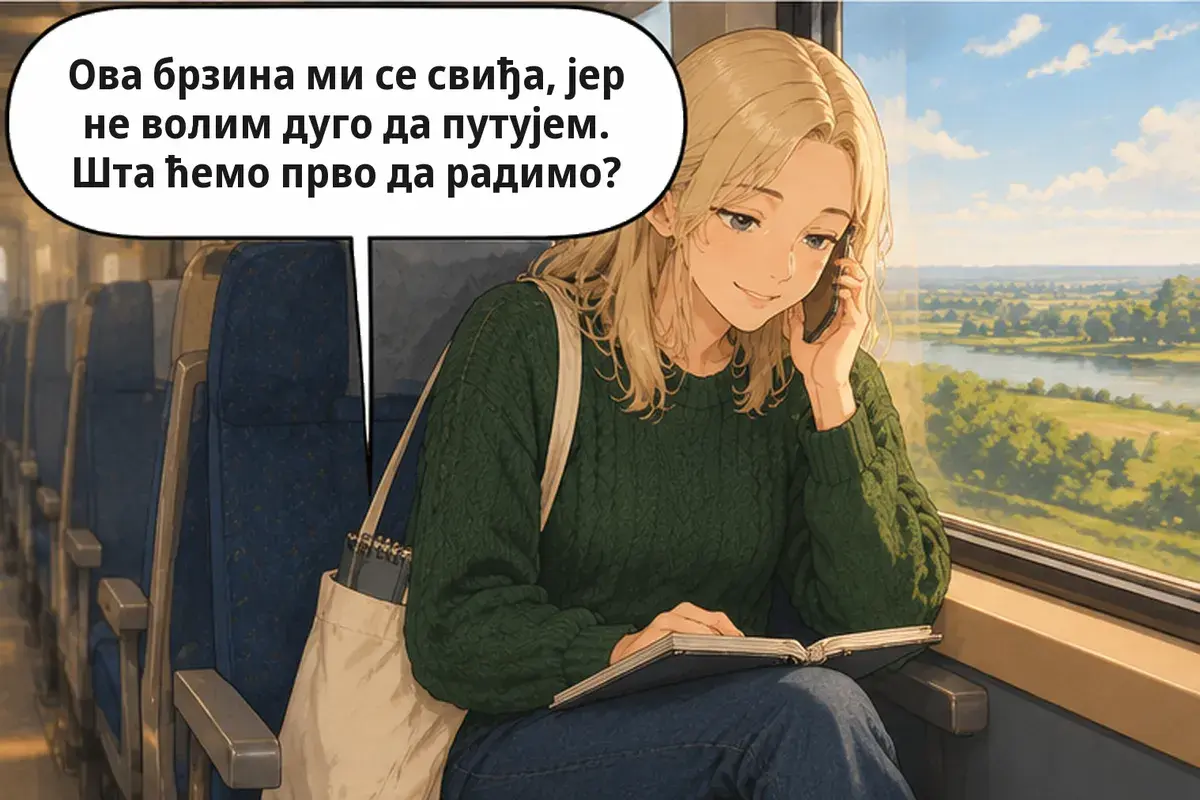
Ова брзина ми се свиђа, јер не волим дуго да путујем. Шта ћемо прво да радимо?
I like this speed, because I don't like to travel for a long time. What are we going to do first?
- Ђорђе
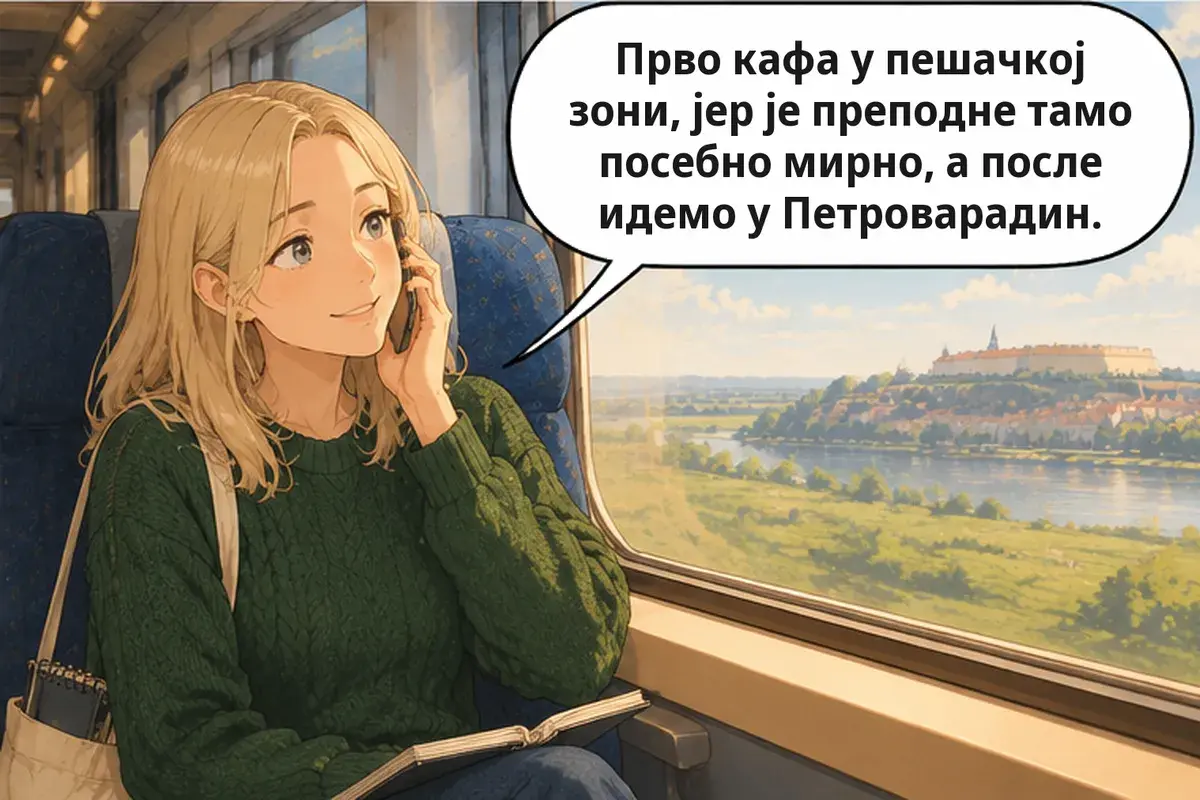
Прво кафа у пешачкој зони, јер је преподне тамо посебно мирно, а после идемо у Петроварадин.
First, coffee in the pedestrian zone, because it's especially quiet there before noon, and then we're going to Petrovaradin.

- Ана
То звучи одлично. Мени кафа баш треба, јер сам јутрос рано отишла и још нисам ништа пила.
That sounds great. I really need a coffee, because I left early this morning and haven't had anything to drink yet (woman speaking).

- Ђорђе
Онда ћеш добити добру кафу у граду. Видимо се ускоро!
Then you'll get a good coffee in town. See you soon!

- Ана
Једва чекам да видим Петроварадин!
I can't wait to see Petrovaradin!
Grammar for this text
Ваше место је резервисано— your seat is reserved. You seeрезервисаноon seats and tables, just likeотворено(open) andзатворено(closed) on doors. Learn it as a sign for now; how the word is built comes at B1.Кад стигнем, где да те чекам?—кадmeans "when", andстигнемis the present of the perfective verbстићи(to arrive), even though the arrival is still ahead. English does the same: "when I arrive".стигнемis not used alone, withoutкад,акоorда(this unit).где да те чекам— where should I wait for you:да+ present, as in A1;те(you) is a clitic, a short unstressed word, and it comes right afterда.Ако ме не видиш, одмах ме позови—акоmeans "if"; the verb after it is in the plain present, and theакоpart ends with a comma.ме(me) is a clitic: it stands second in its part of the sentence, so here it appears twice.позови— call (me): the imperative, learn it as a set form for now (the rule is in unit 24).Соко је брз воз, па си за 40 минута у Новом Саду—паmeans "so";за 40 минута— in 40 minutes (a set phrase, the rule is in unit 16);си(you are) is a clitic, the second word afterпа.Мислила сам да је ово вагон три—даmeans "that" (this unit):мислила сам да…— I thought (that)…. Serbian keepsје(is) where English says "was".мислилаis Ana's feminine form; a man would sayмислио.Сви путници имају своје место, па не морате да журите—своје(their own, unit 7);не морате да журите— you don't have to hurry:не моратиmeans "not have to", not "must not".Једва чекам да видим Петроварадин—једваalone means "barely, hardly", butједва чекамis a set phrase: I can't wait. Ana wrote it down in her notebook of tricky phrases.
Words and grammar of the unit: Take a trip to Novi Sad: say why, if and when.
Learn the words from the texts with flashcards
In the app, you can tap any word in a text to see its translation, forms and examples, and new words stick with flashcards. 15 minutes a day.
Start for freeEverything is open for free. No card needed to sign up.