
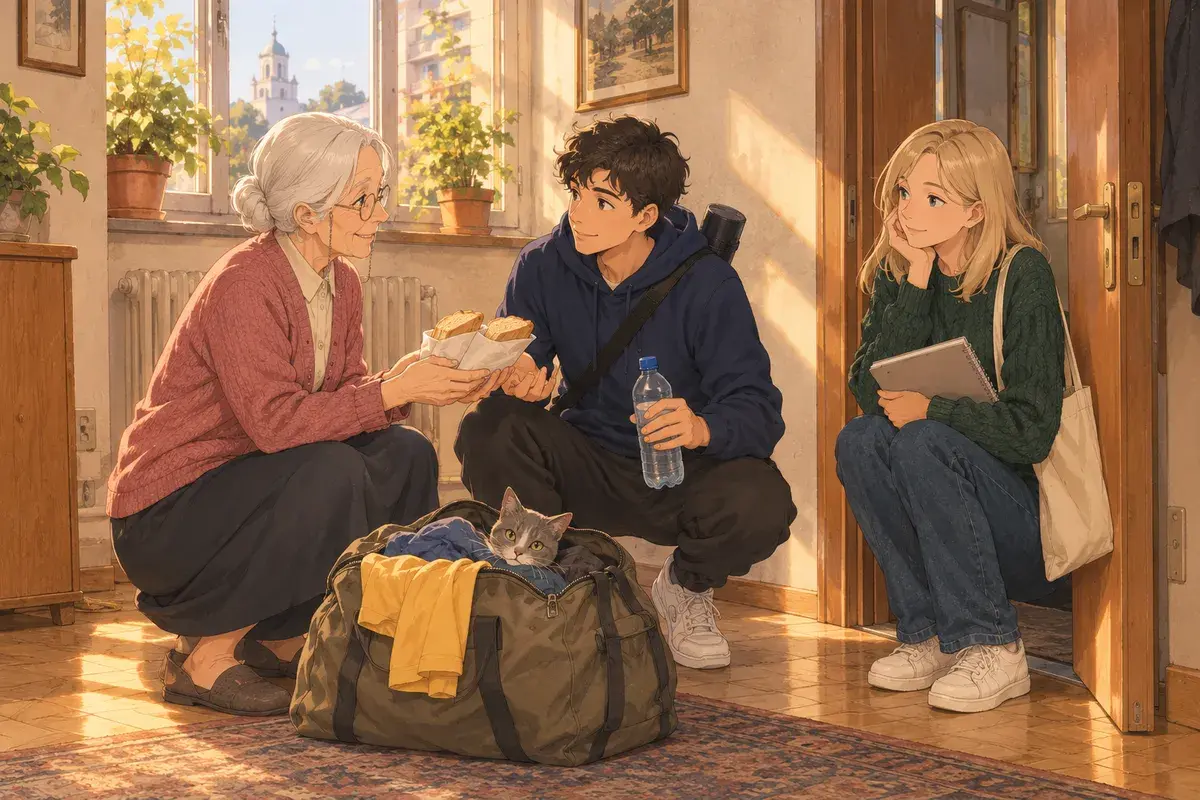
Serbian dialogue with translation · A2 · 15 lines
На мору не можеш свуда да платиш картицом At the sea you can't pay by card everywhere
Comic · 15 panels

- Радмила
Стефане, ставила сам ти у торбу две кошуље и чарапе за целу недељу.
Stefan, I put two shirts and socks for the whole week in your bag (woman speaking).
- Стефан
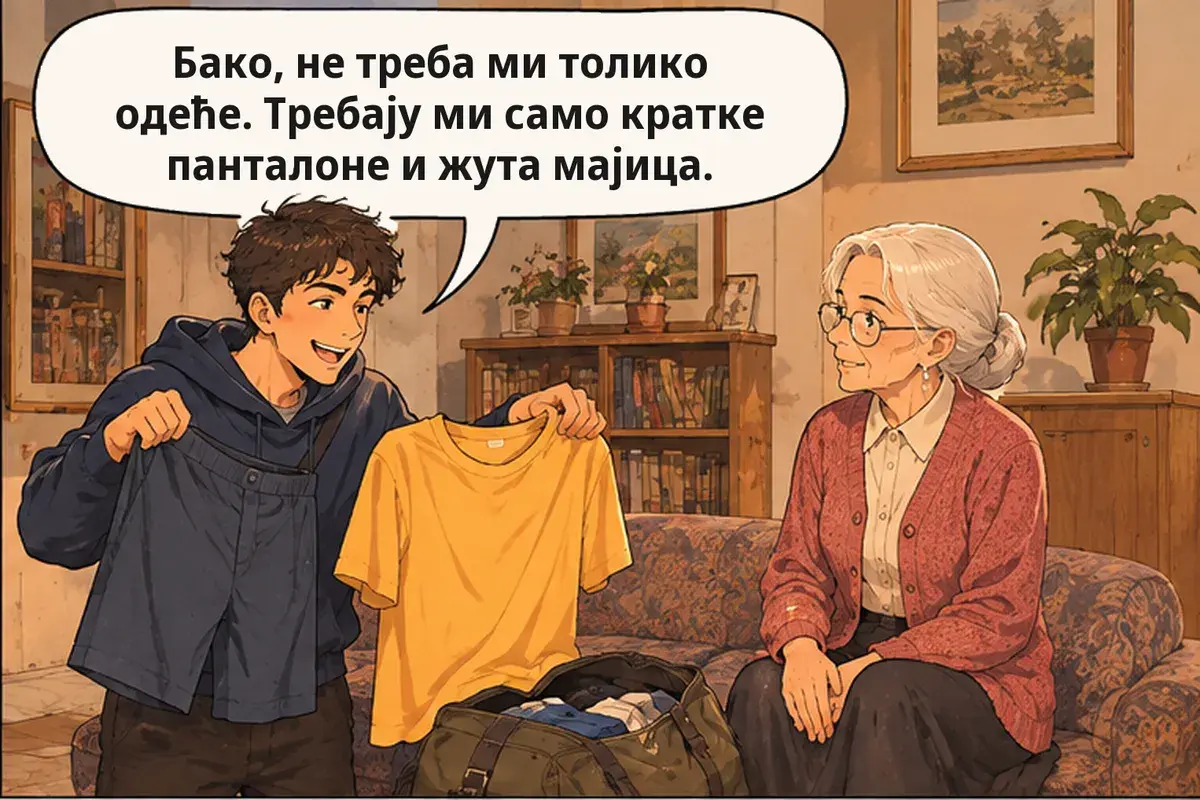
Бако, не треба ми толико одеће. Требају ми само кратке панталоне и жута мајица.
Grandma, I don't need that many clothes. I only need shorts and a yellow T-shirt.
- Радмила
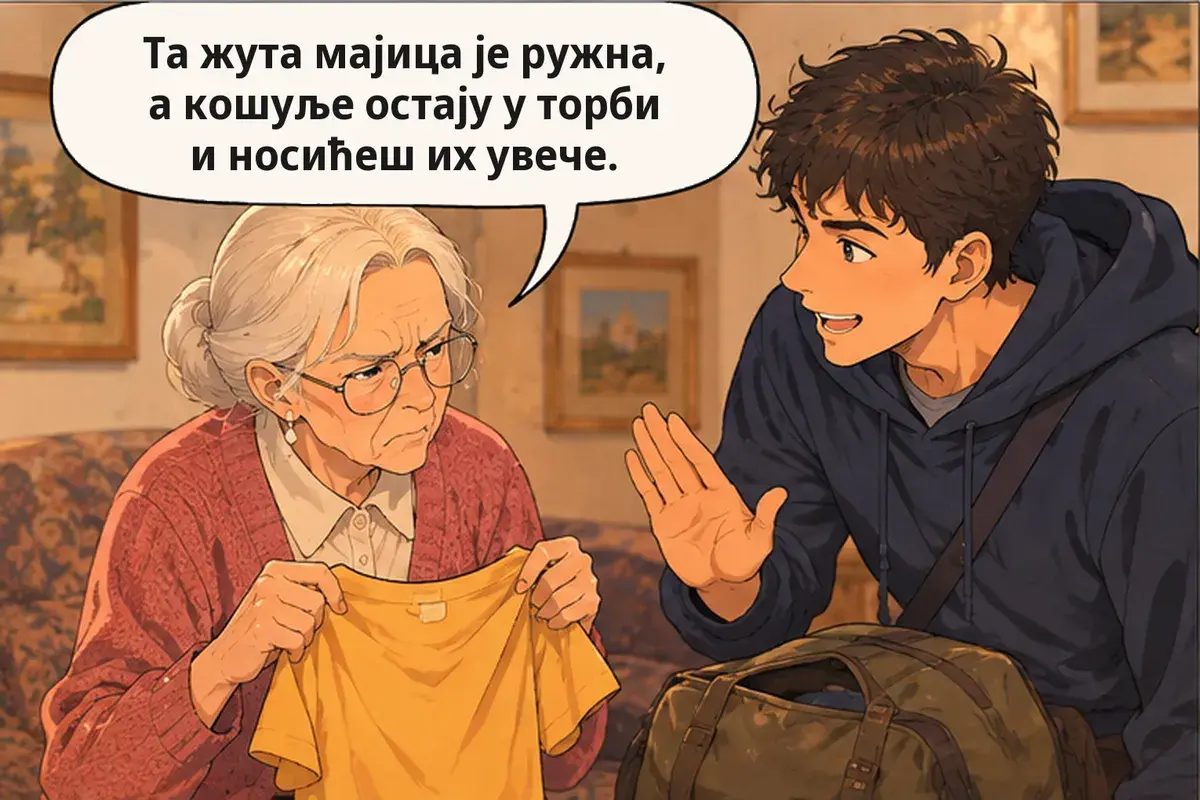
Та жута мајица је ружна, а кошуље остају у торби и носићеш их увече.
That yellow T-shirt is ugly, and the shirts are staying in the bag, and you'll wear them in the evening.
- Стефан
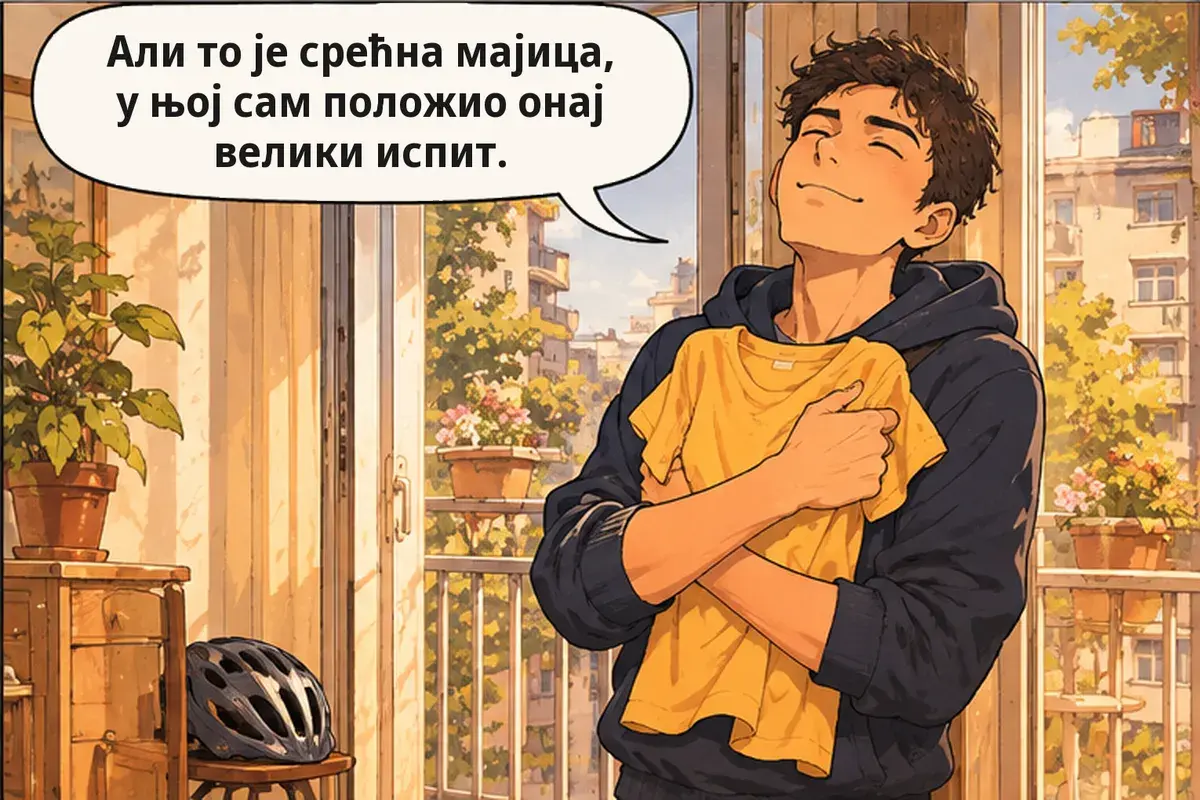
Али то је срећна мајица, у њој сам положио онај велики испит.
But it's a lucky T-shirt, I passed that big exam in it (man speaking).
- Ана
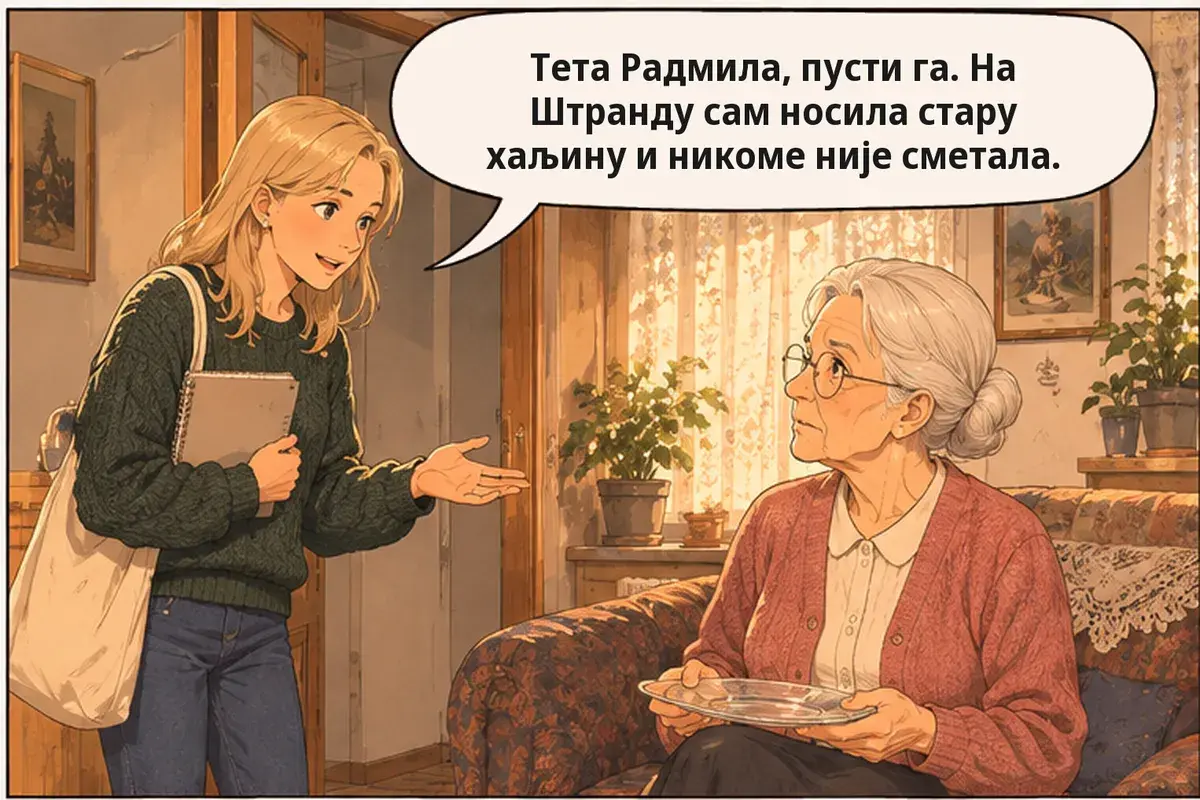
Тета Радмила, пусти га. На Штранду сам носила стару хаљину и никоме није сметала.
Aunt Radmila, let him be. At Štrand I wore an old dress, and it didn't bother anyone (woman speaking).
- Радмила
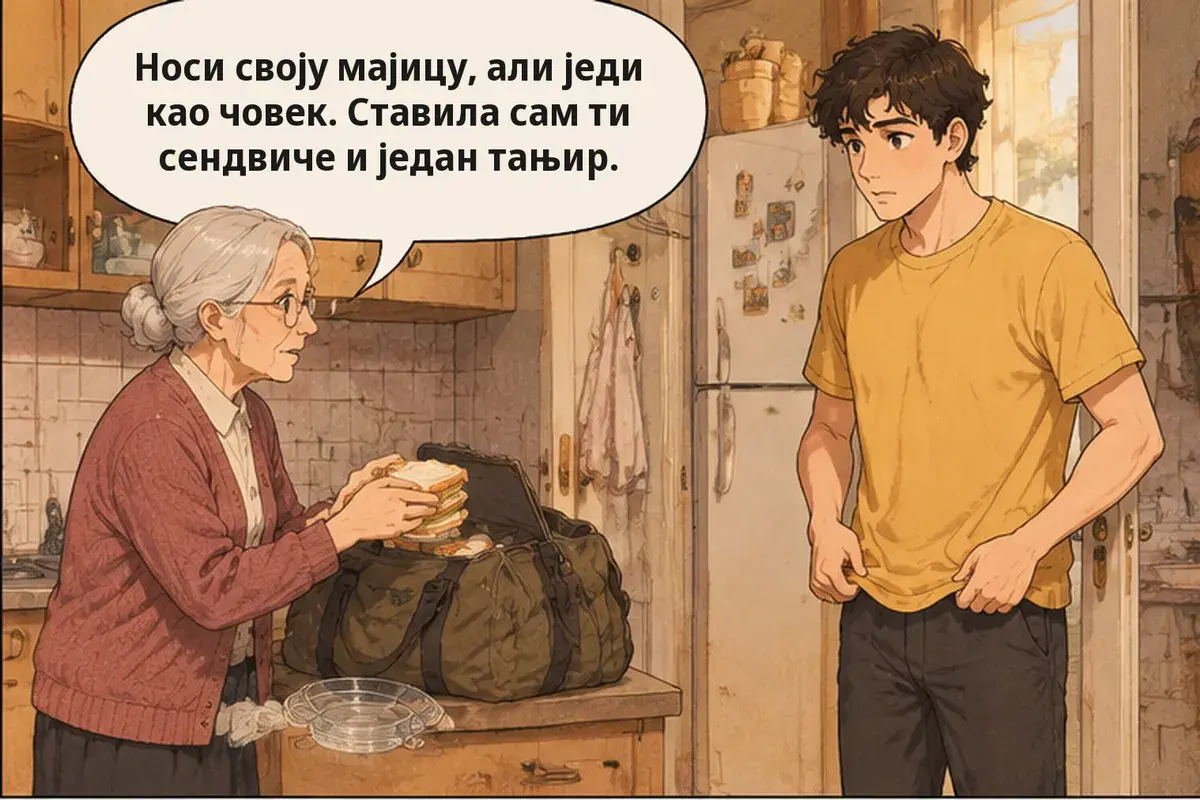
Носи своју мајицу, али једи као човек. Ставила сам ти сендвиче и један тањир.
Wear your T-shirt, but eat like a normal person. I put in sandwiches and a plate for you (woman speaking).
- Стефан
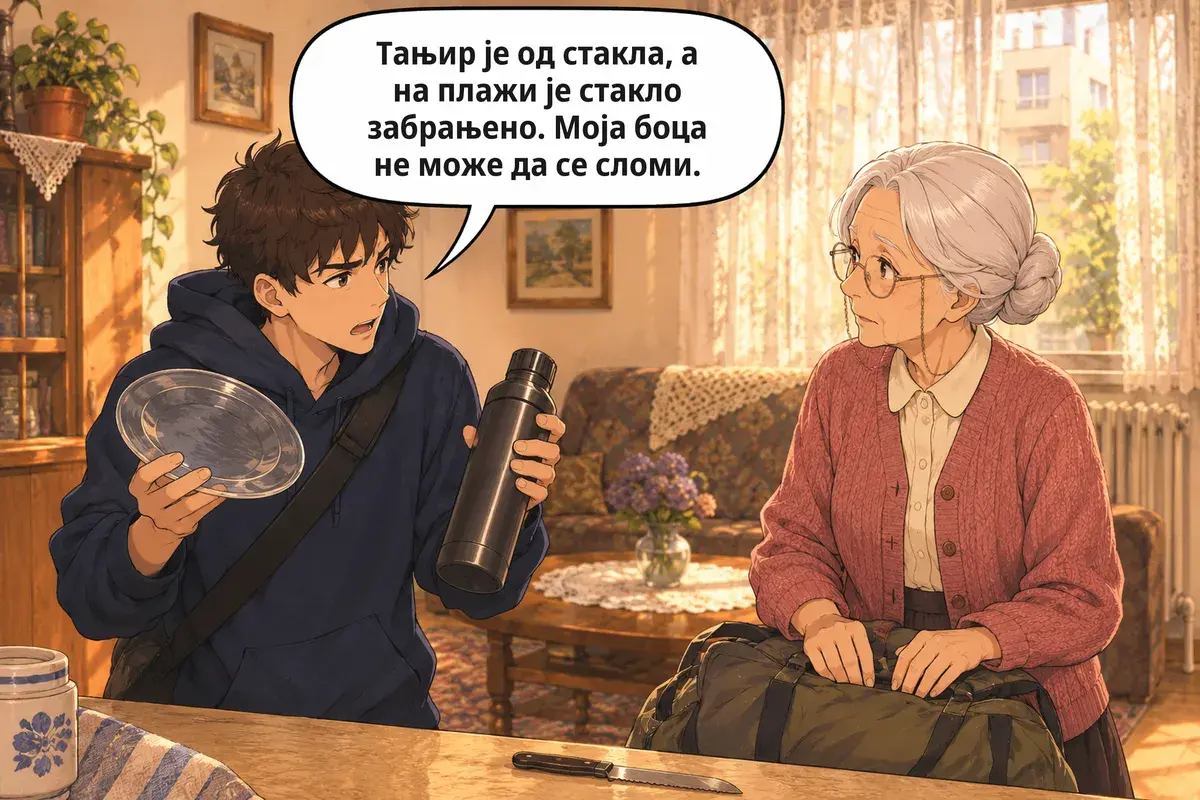
Тањир је од стакла, а на плажи је стакло забрањено. Моја боца не може да се сломи.
The plate is made of glass, and glass is forbidden at the beach. My bottle can't break.
- Радмила
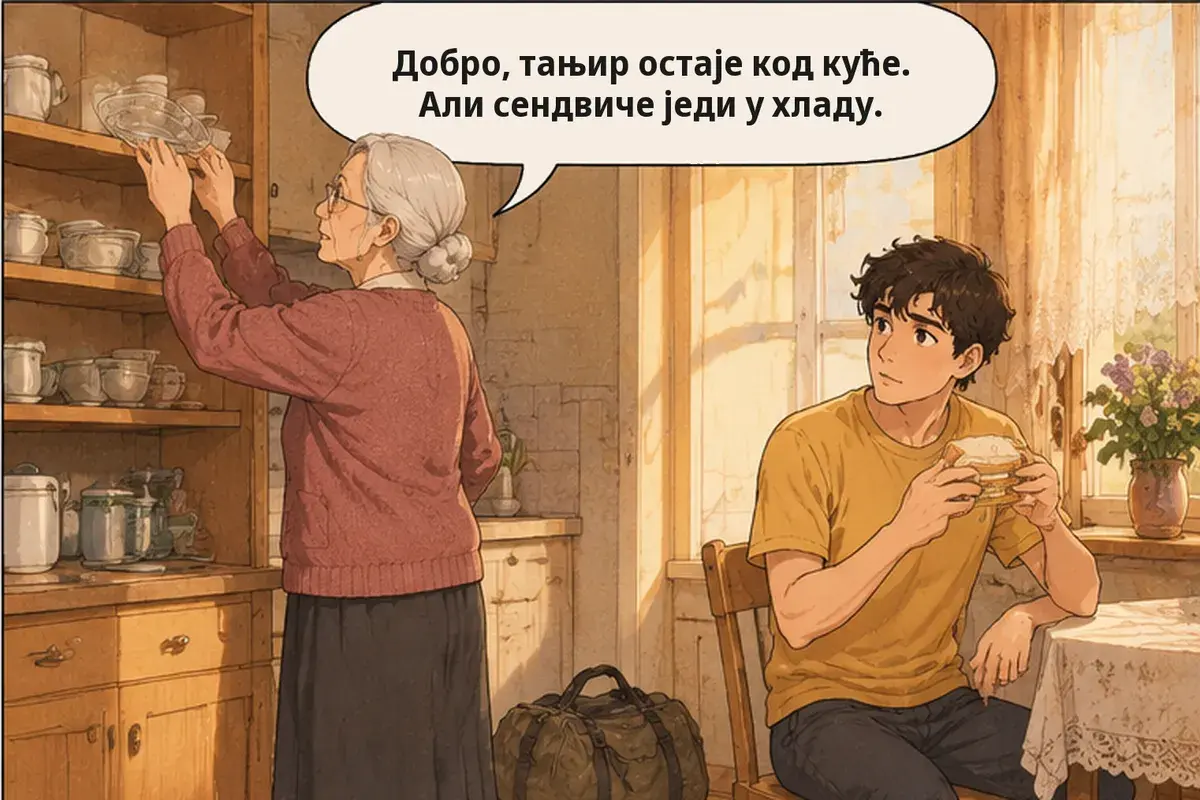
Добро, тањир остаје код куће. Али сендвиче једи у хладу.
Fine, the plate stays at home. But eat the sandwiches in the shade.
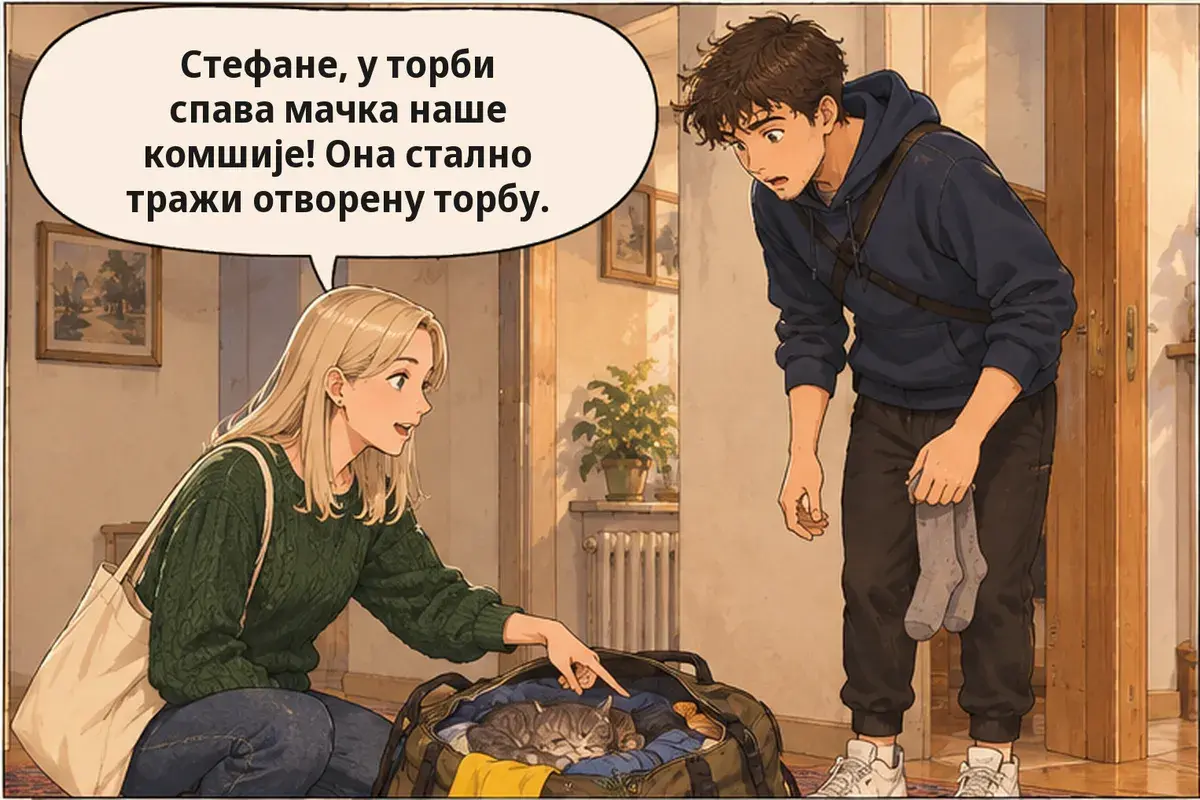
- Ана
Стефане, у торби спава мачка наше комшије! Она стално тражи отворену торбу.
Stefan, our neighbor's cat is sleeping in the bag! She's always looking for an open bag.
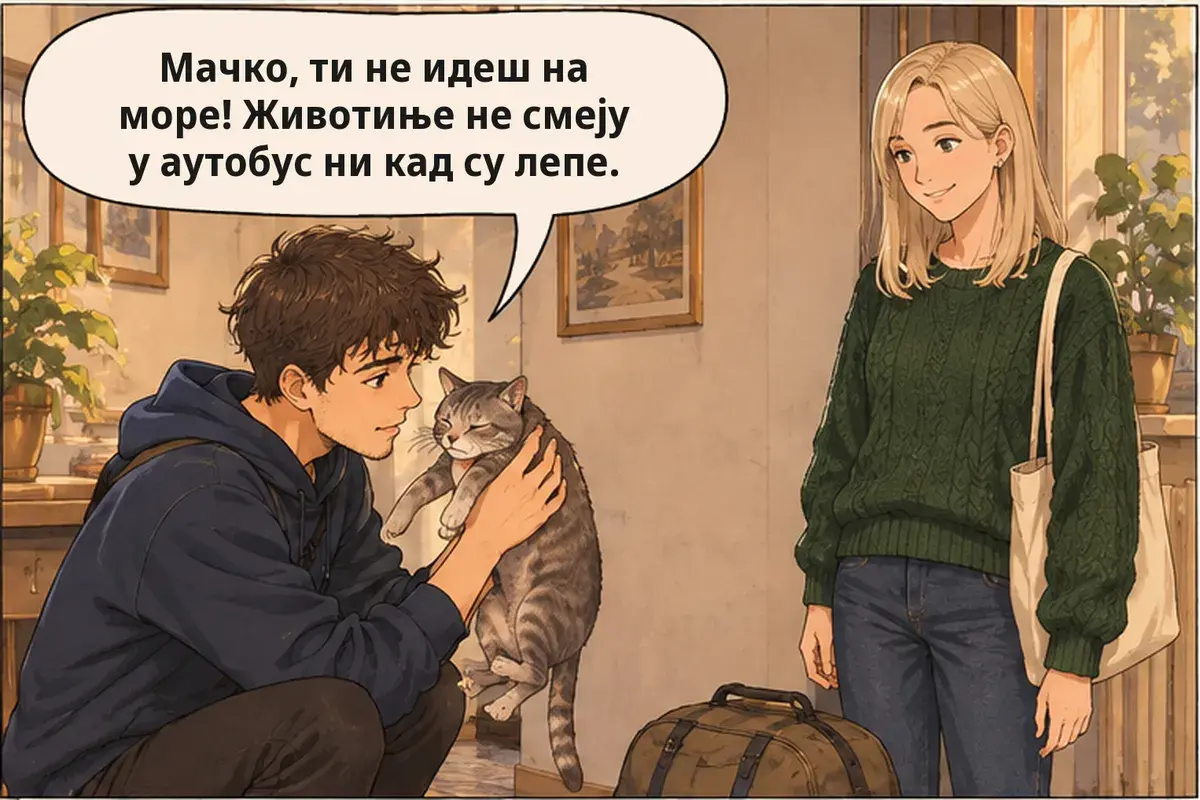
- Стефан
Мачко, ти не идеш на море! Животиње не смеју у аутобус ни кад су лепе.
Cat, you're not going to the sea! Animals aren't allowed on the bus, not even when they're pretty.
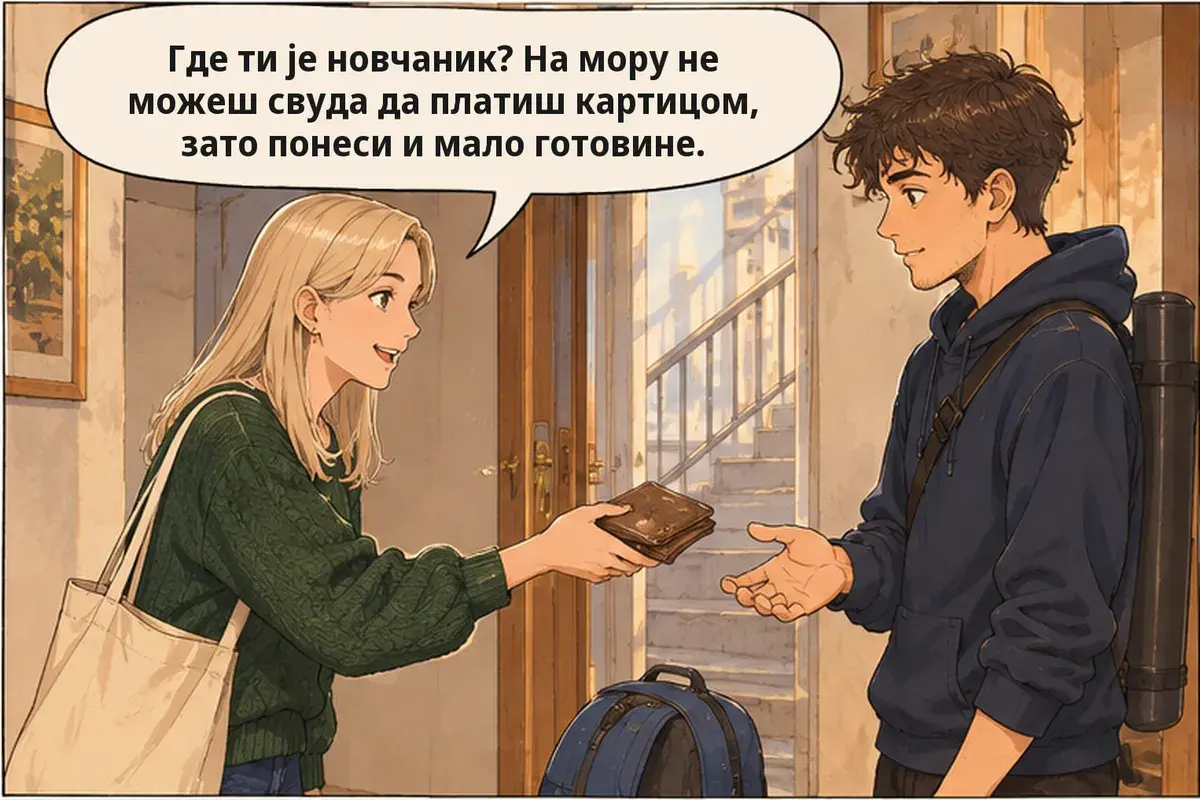
- Ана
Где ти је новчаник? На мору не можеш свуда да платиш картицом, зато понеси и мало готовине.
Where's your wallet? At the sea you can't pay by card everywhere, so bring a little cash too.

- Стефан
Ево га. Имам нешто готовине и биће доста за сладолед.
Here it is. I have some cash, and it'll be enough for ice cream.
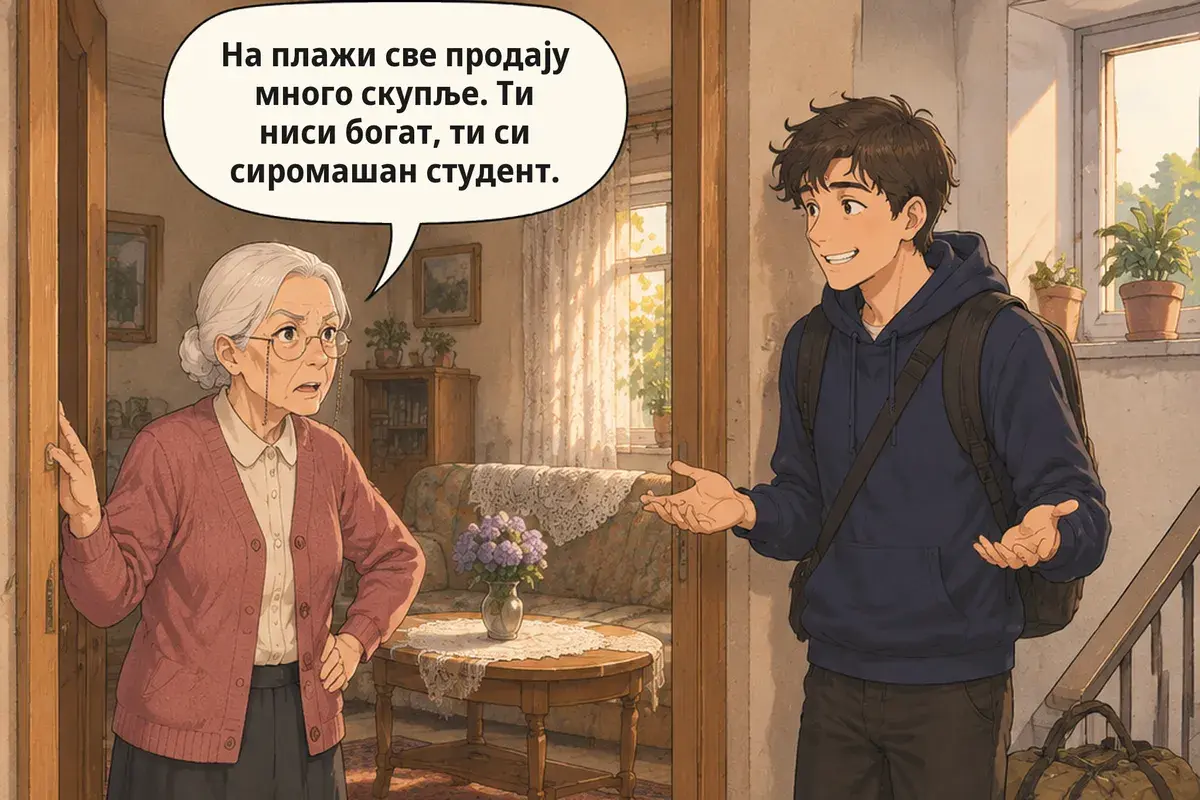
- Радмила
На плажи све продају много скупље. Ти ниси богат, ти си сиромашан студент.
At the beach they sell everything for a lot more. You're not rich, you're a poor student (to a man).
- Стефан
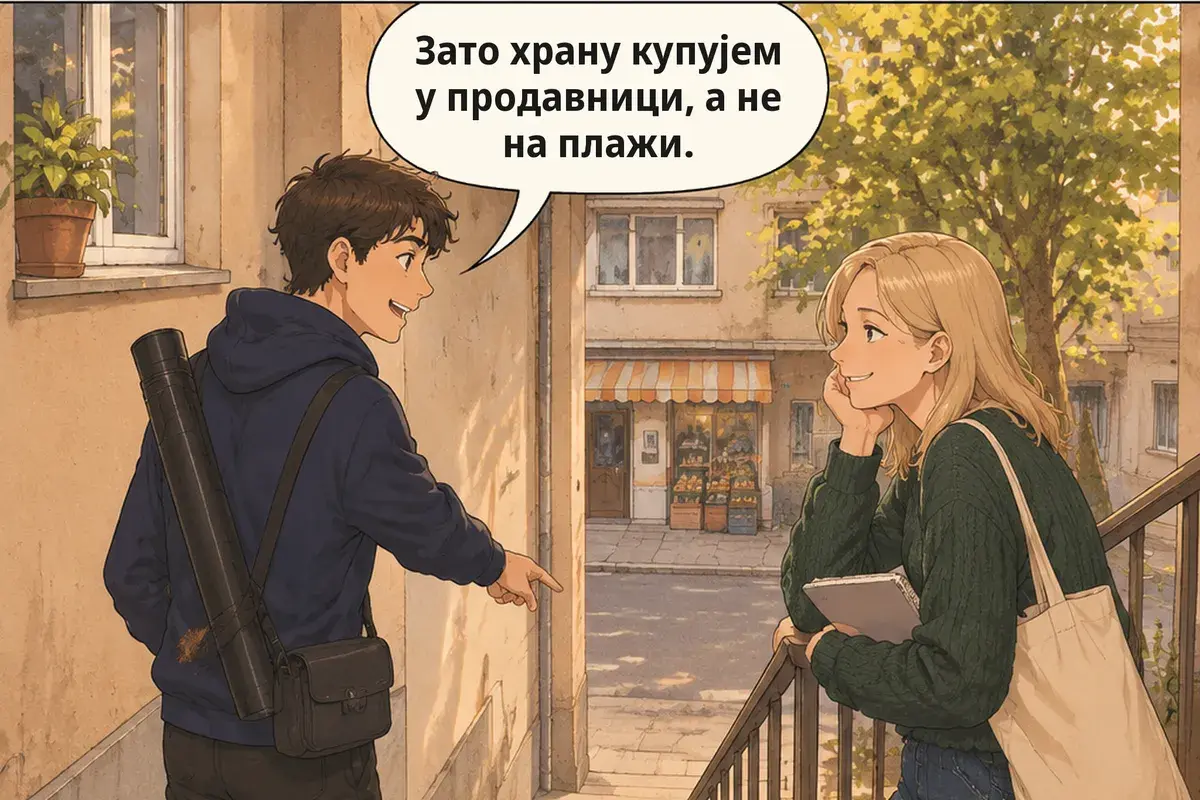
Зато храну купујем у продавници, а не на плажи.
That's why I buy food at the store, not at the beach.
- Радмила
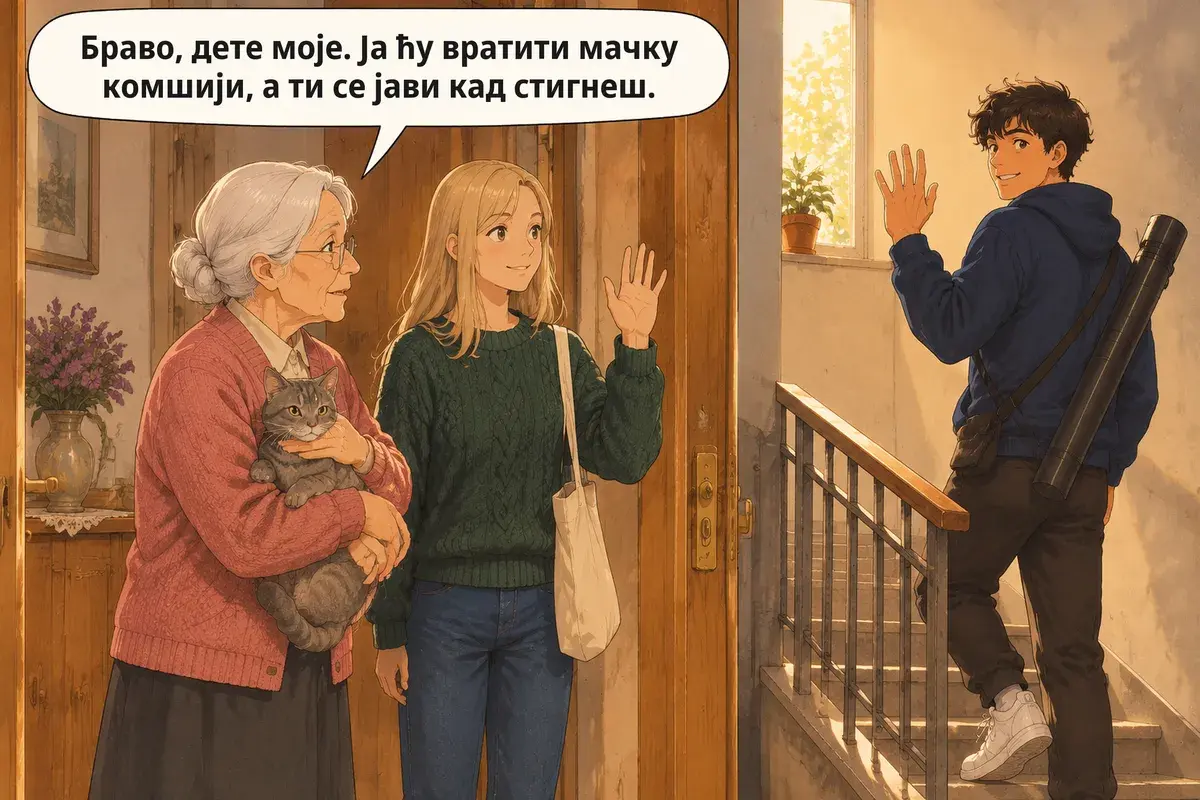
Браво, дете моје. Ја ћу вратити мачку комшији, а ти се јави кад стигнеш.
Well done, my child. I'll take the cat back to the neighbor, and you let me know when you get there.
Grammar for this text
Требају ми само кратке панталоне и жута мајица— I only need shorts and a yellow T-shirt: withтреба / требајуthe things you need are the subject, so it'sтребају(several things), and "I" isми(to me).панталоне(pants) is always plural;кратке панталонеare shorts. Inне треба ми толико одеће, afterтолико(so much) comes the genitiveодеће(одећа— clothes, has no plural).Кошуље остају у торби и носићеш их увече—носићешis the future ofносити(unit 3): you'll wear;их— them (unit 8).На Штранду сам носила стару хаљину и никоме није сметала—носилаis the feminine form (Ana is speaking);никомеis the dative ofнико: it didn't bother anyone (сметати— to bother someone, unit 9).Тањир је од стакла, а на плажи је стакло забрањено—од стакла— made of glass (the genitive);стаклоandзабрањеноare neuter. Watch out: a drinking glass isчаша, notстакло.Моја боца не може да се сломи— my bottle can't break:да се сломиis a perfective verb afterда(unit 12);сломиalone, withoutда, isn't used here.Мачко, ти не идеш на море!—Мачкоis the vocative ofмачка(unit 23): Stefan talks to the cat as if it were a person.на море— to the sea (where to?),на мору— at the sea (where?).Животиње не смеју у аутобус ни кад су лепе—не смеју— they aren't allowed (theониform ofсмети).На мору не можеш свуда да платиш картицом—картицом— by card (the instrumental, unit 10).Ја ћу вратити мачку комшији—комшији— to the neighbor (the dative, unit 5);ћу вратитиis the future.Јави се— let me know.
Words and grammar of the unit: Spend a hot day by the water.
Learn the words from the texts with flashcards
In the app, you can tap any word in a text to see its translation, forms and examples, and new words stick with flashcards. 15 minutes a day.
Start for freeEverything is open for free. No card needed to sign up.