
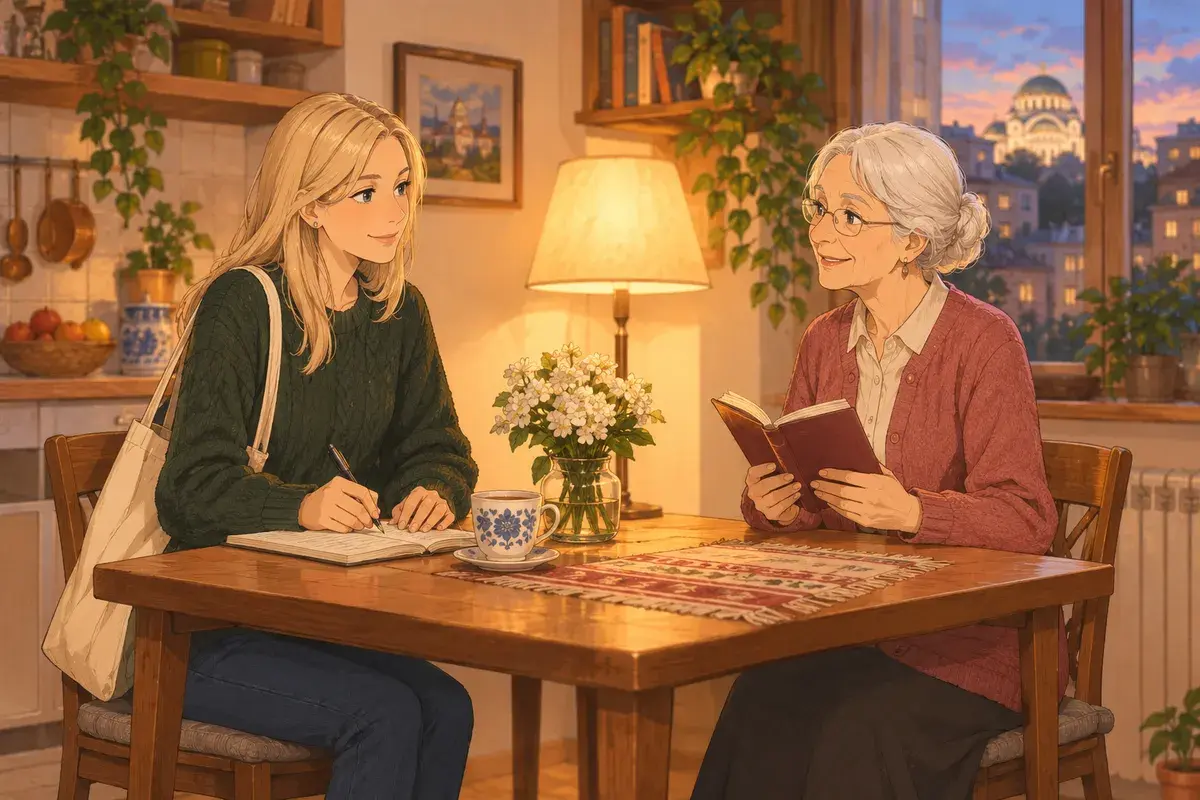
Serbian dialogue with translation · A2 · 16 lines
Ја читам, а ти пишеш I read, and you write
Comic · 16 panels
- Радмила
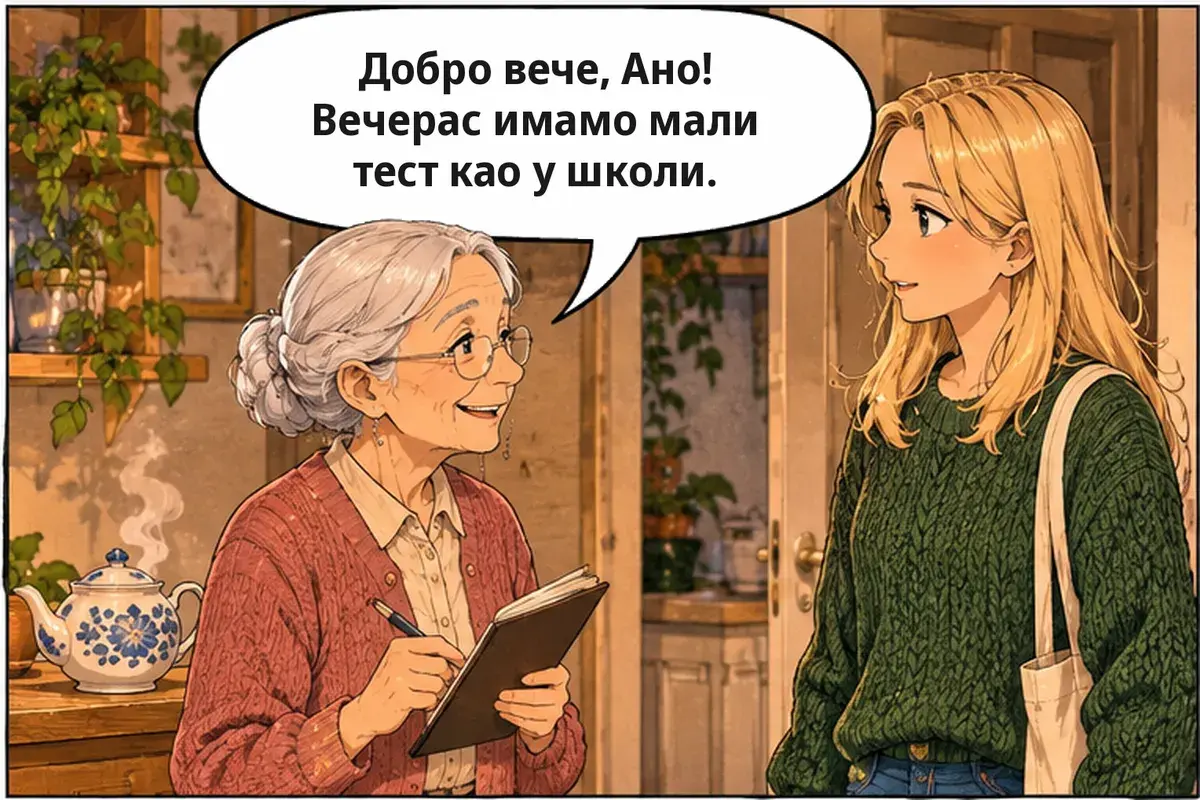
Добро вече, Ано! Вечерас имамо мали тест као у школи.
Good evening, Ana! Tonight we have a little test, like at school.
- Ана
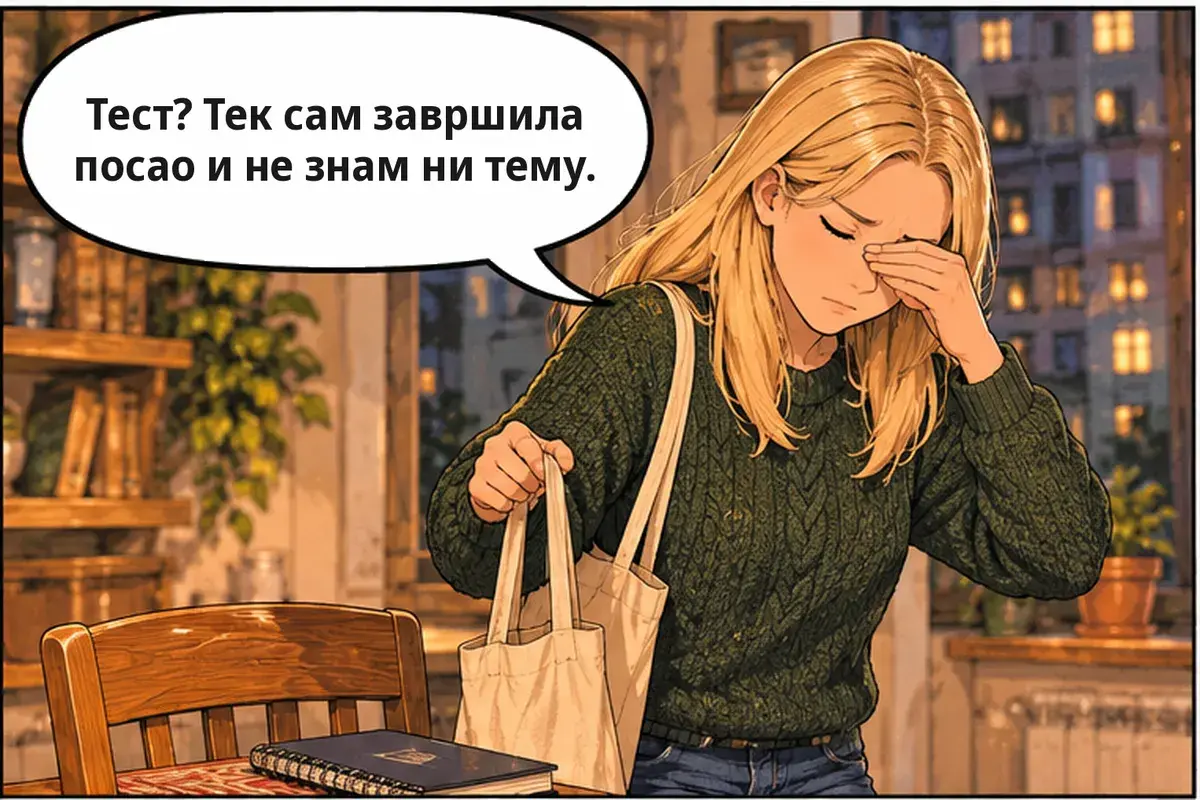
Тест? Тек сам завршила посао и не знам ни тему.
A test? I've just finished work and I don't even know the topic (woman speaking).
- Радмила
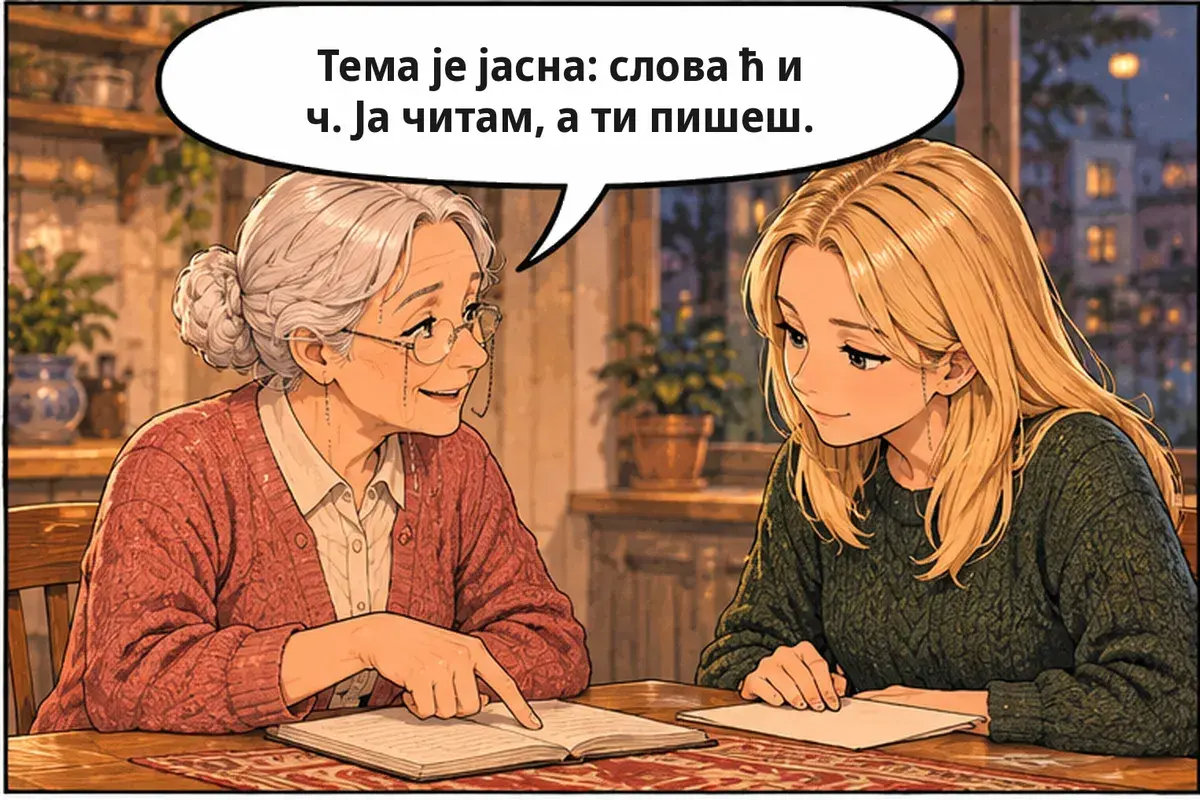
Тема је јасна: слова ћ и ч. Ја читам, а ти пишеш.
The topic is clear: the letters ć and č. I read, and you write.
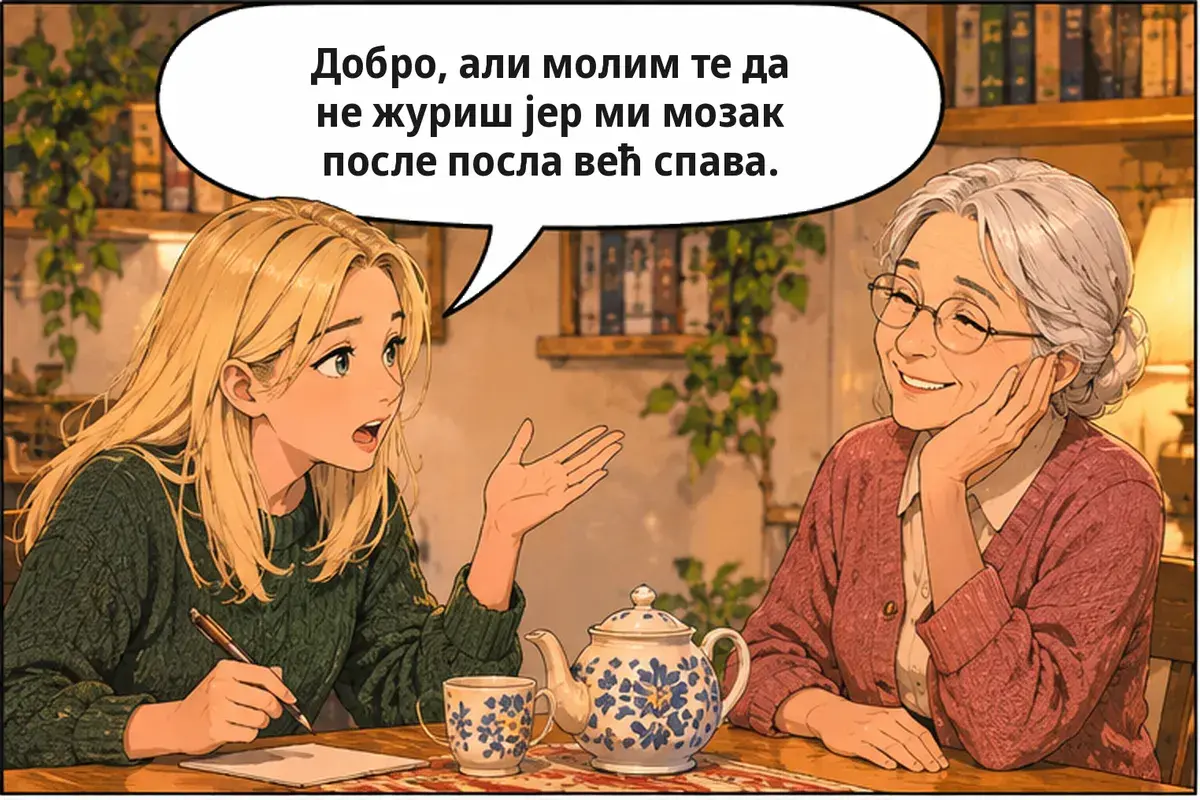
- Ана
Добро, али молим те да не журиш јер ми мозак после посла већ спава.
OK, but please don't rush, because after work my brain is already asleep.
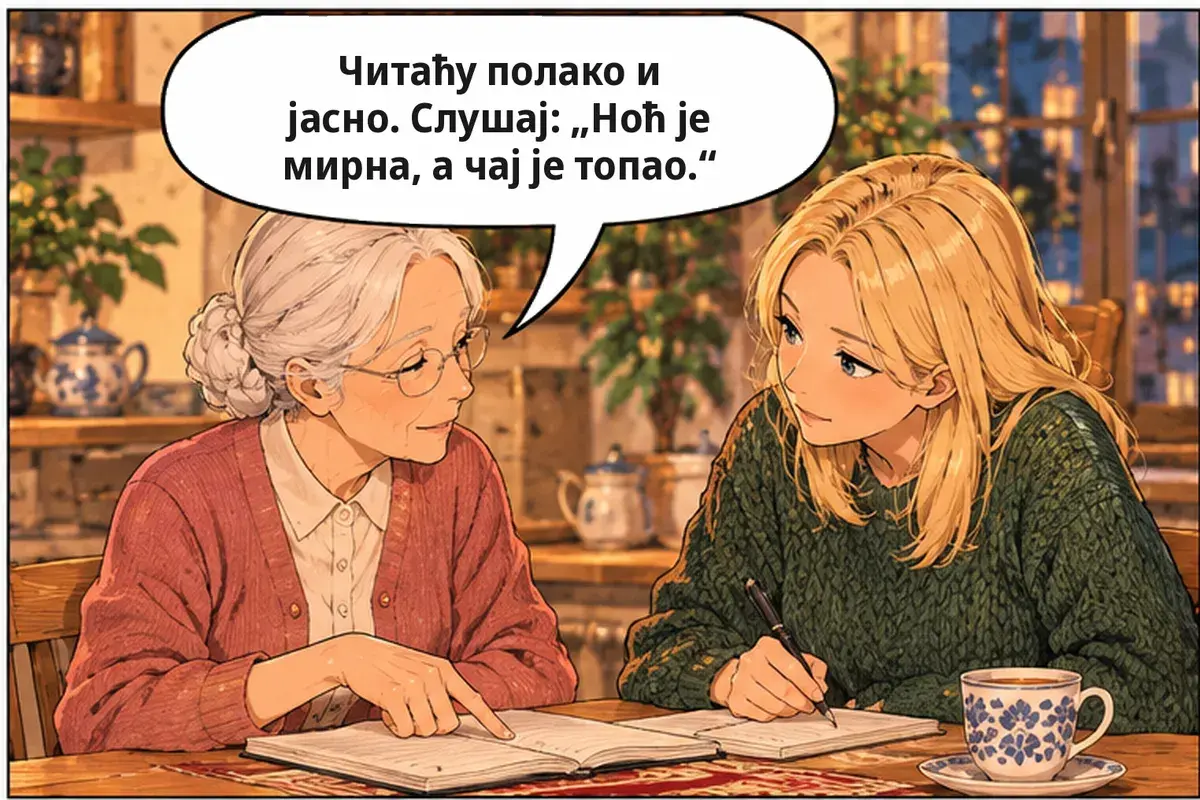
- Радмила
Читаћу полако и јасно. Слушај: „Ноћ је мирна, а чај је топао.“
I'll read slowly and clearly. Listen: "The night is calm, and the tea is warm."

- Ана
Извини, можеш ли да поновиш последњу реч?
Sorry, can you repeat the last word?
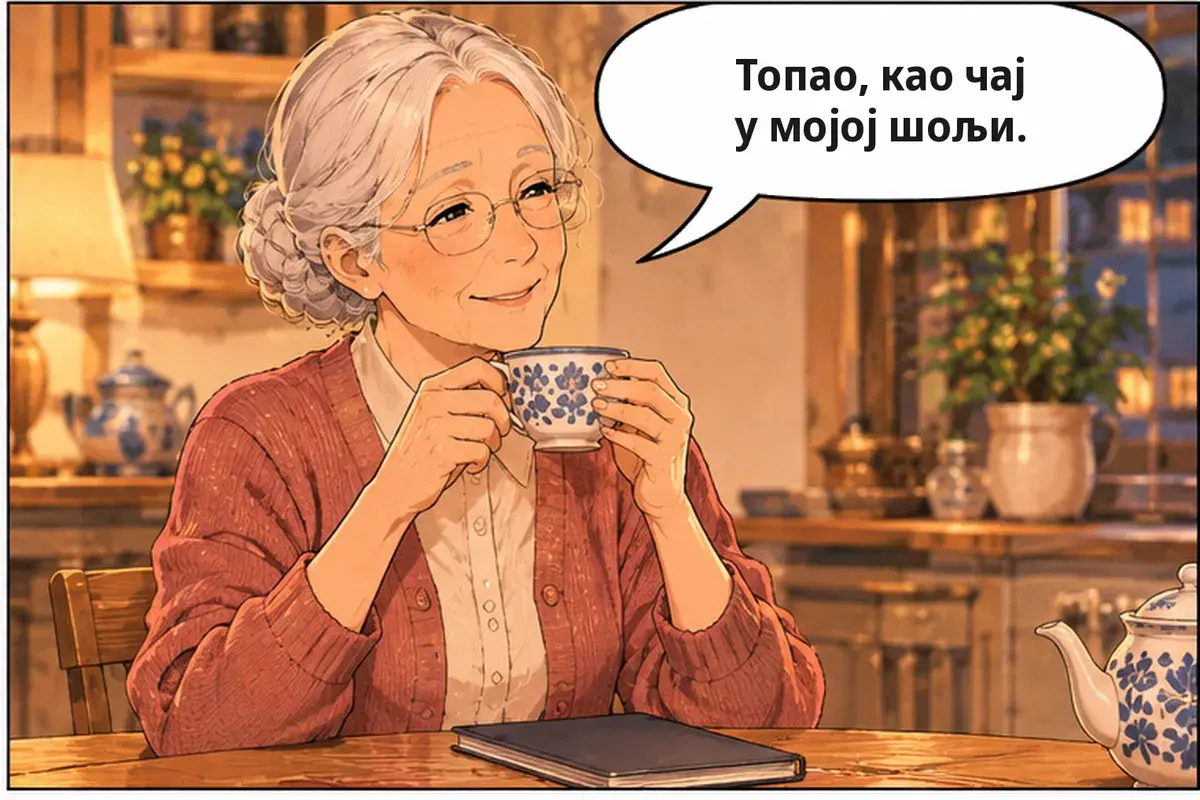
- Радмила
Топао, као чај у мојој шољи.
Warm, like the tea in my cup.
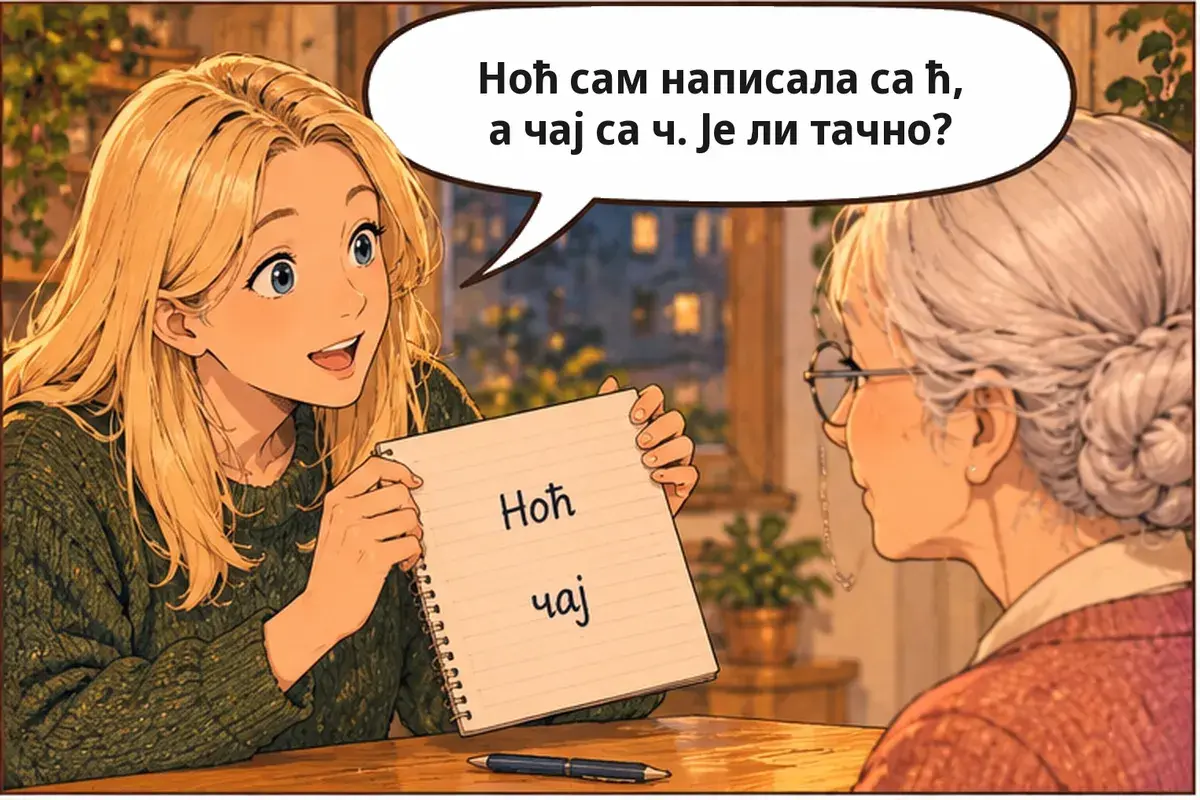
- Ана
Ноћ сам написала са ћ, а чај са ч. Је ли тачно?
I wrote "noć" with ć and "čaj" with č. Is that right? (woman speaking)
- Радмила
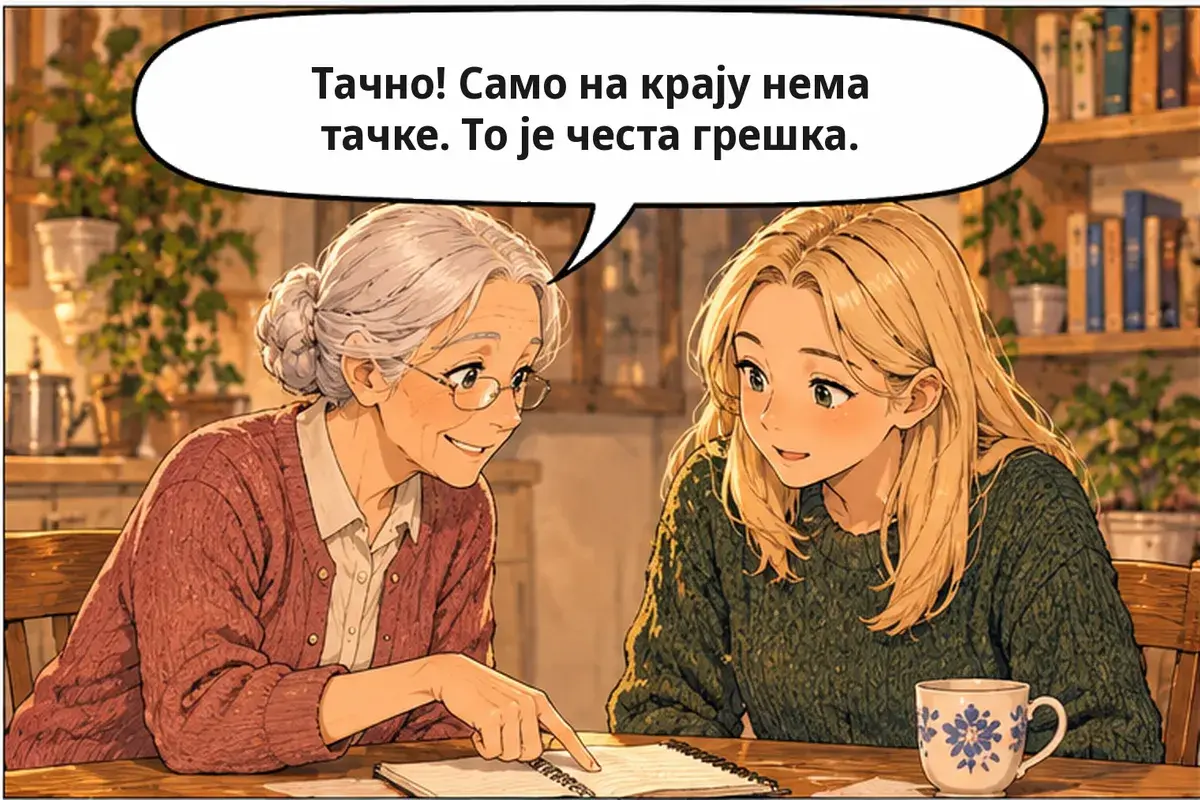
Тачно! Само на крају нема тачке. То је честа грешка.
Right! Only there's no period at the end. That's a common mistake.

- Ана
Опет сам заборавила тачку! Опростићеш ми и ову грешку, ваљда?
I forgot the period again! You'll forgive me for this mistake too, I hope? (woman speaking)
- Радмила
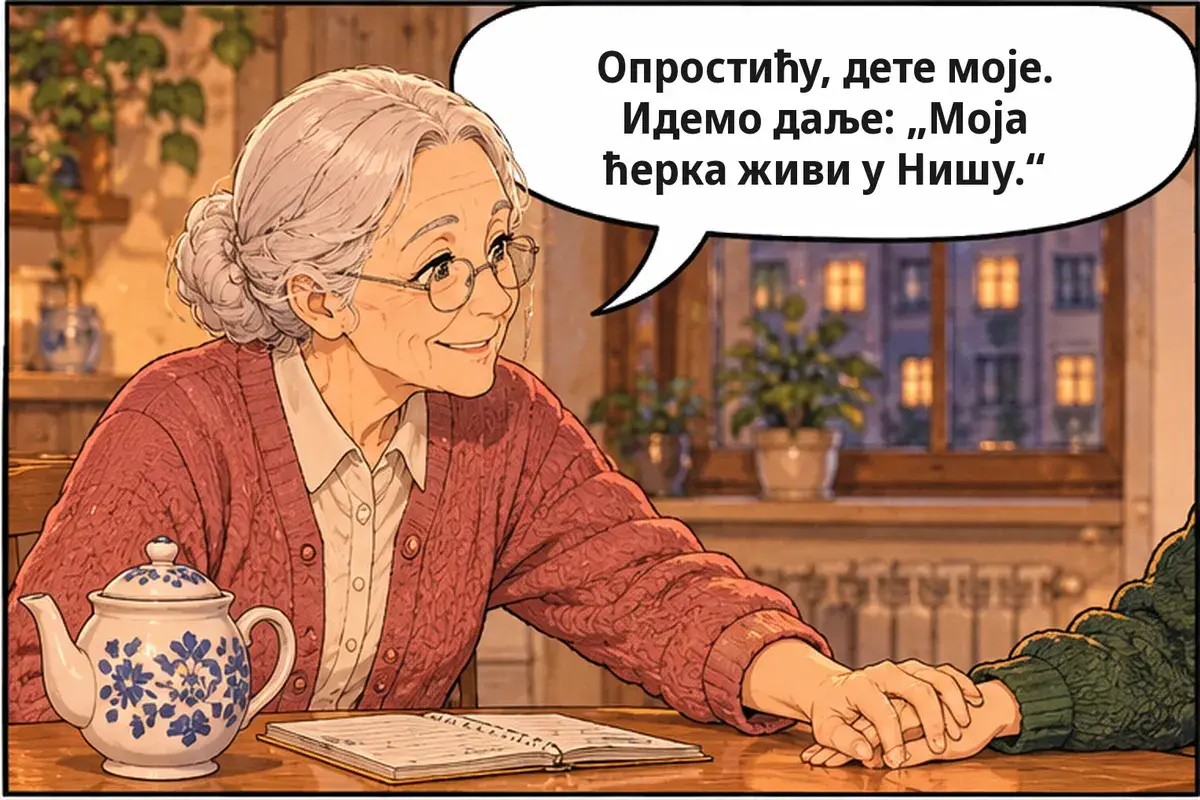
Опростићу, дете моје. Идемо даље: „Моја ћерка живи у Нишу.“
I'll forgive you, my child. Let's move on: "My daughter lives in Niš."
- Ана
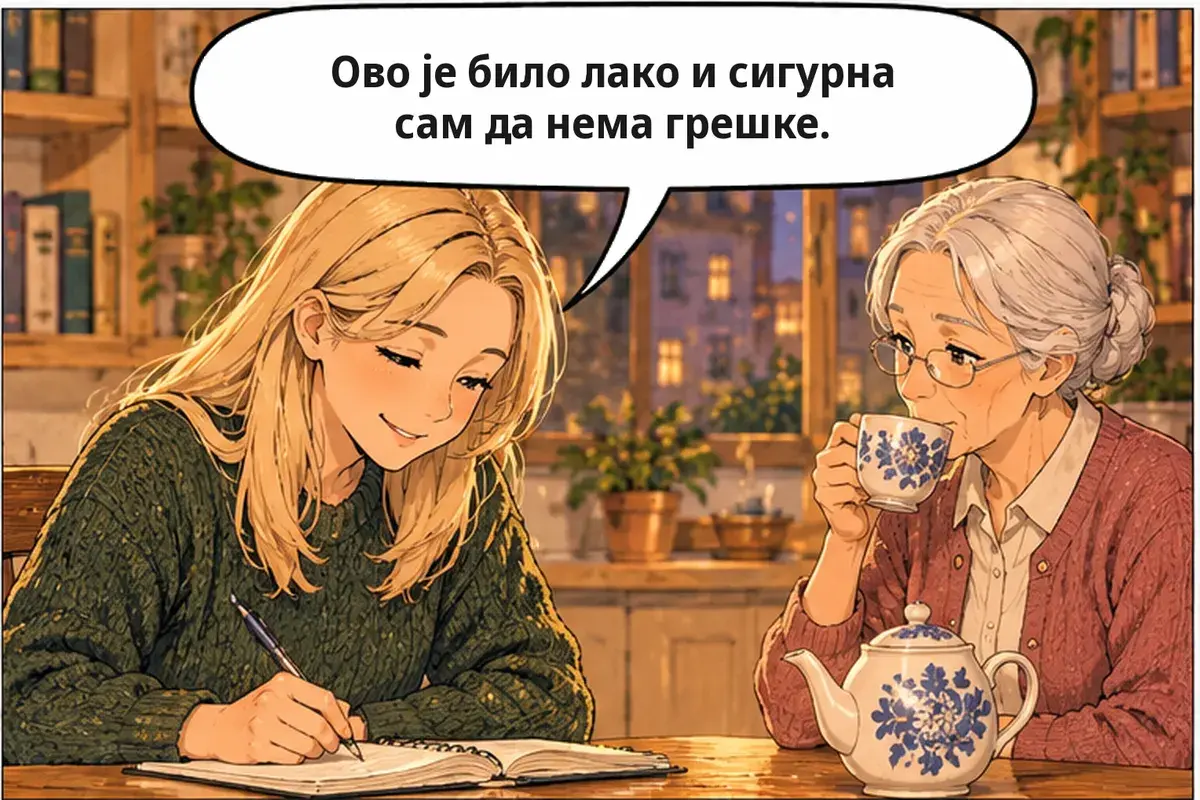
Ово је било лако и сигурна сам да нема грешке.
This was easy, and I'm sure there's no mistake (woman speaking).
- Радмила
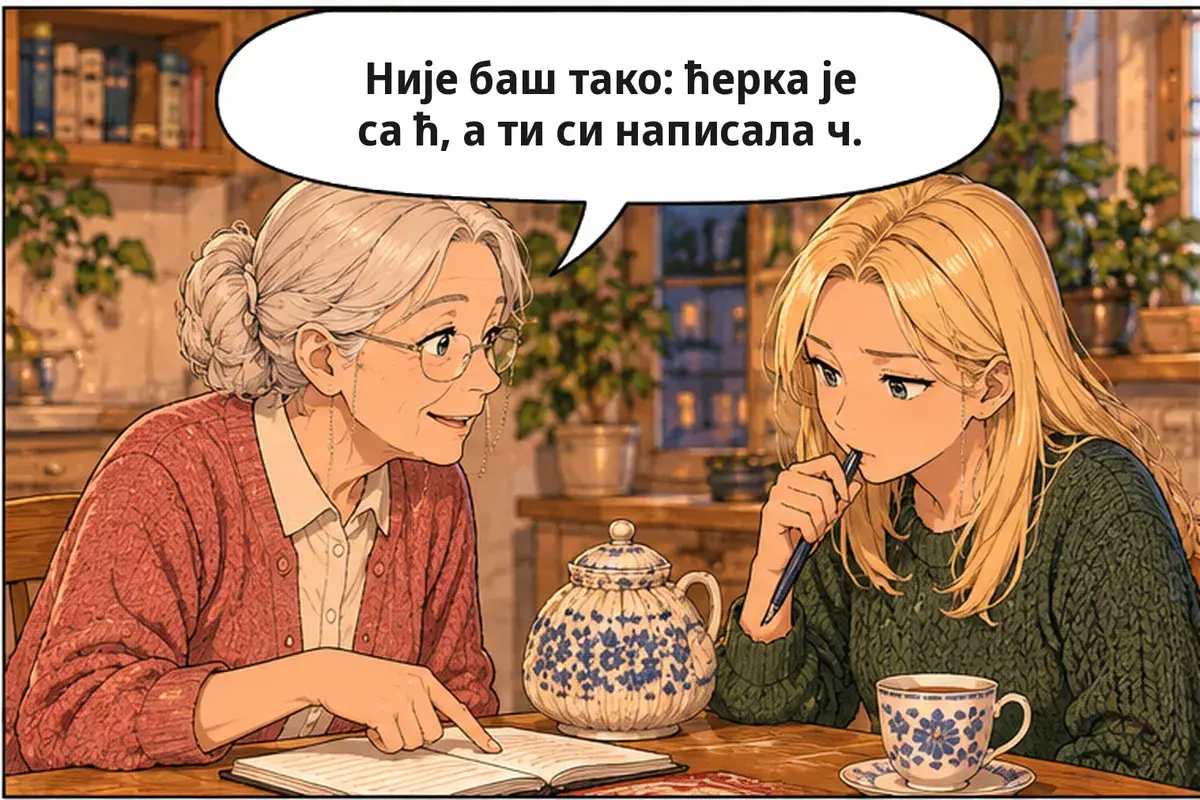
Није баш тако: ћерка је са ћ, а ти си написала ч.
Not quite: "ćerka" is with ć, and you wrote č (to a woman).
- Ана
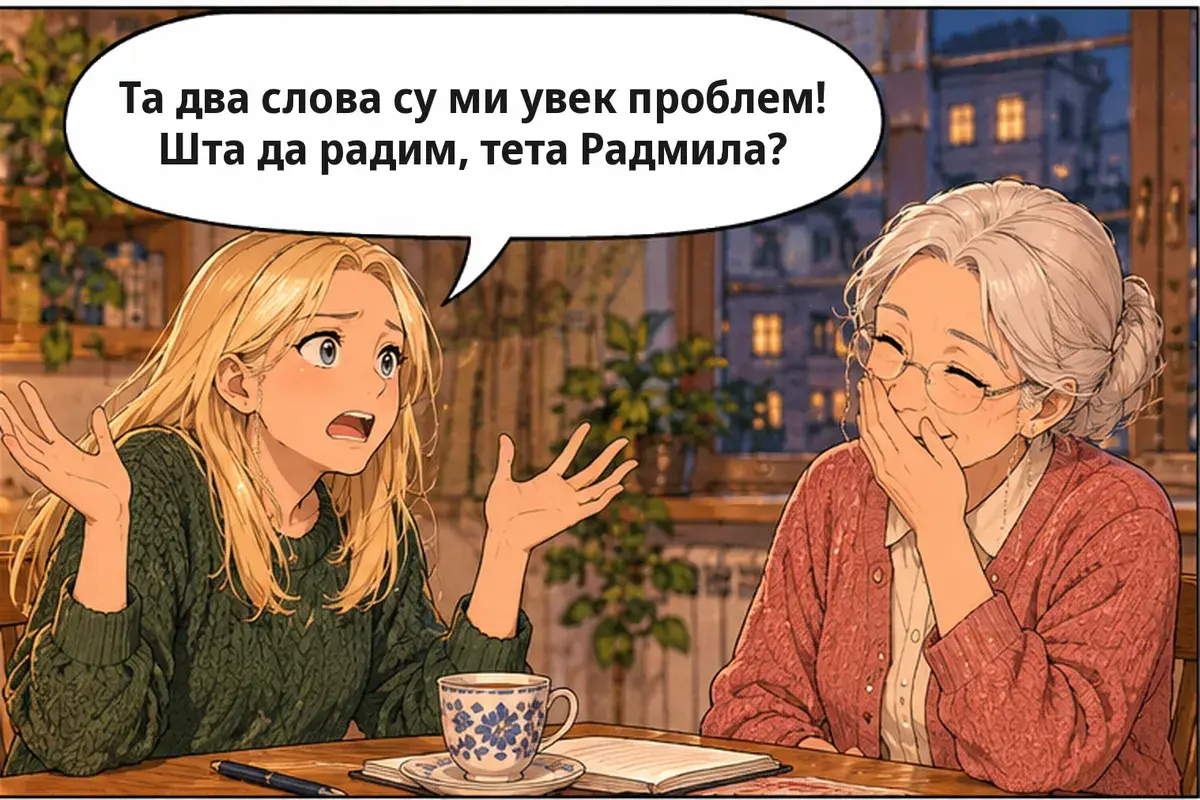
Та два слова су ми увек проблем! Шта да радим, тета Радмила?
Those two letters are always a problem for me! What should I do, Aunt Radmila?
- Радмила
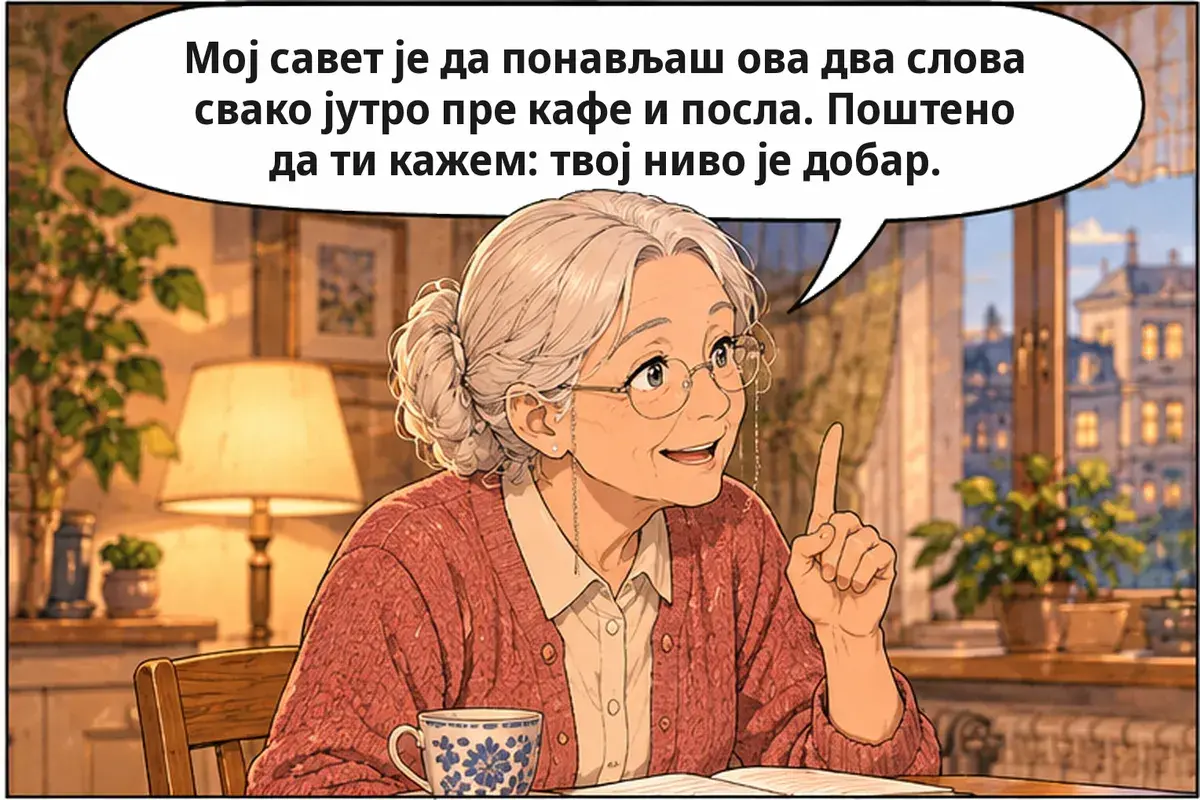
Мој савет је да понављаш ова два слова свако јутро пре кафе и посла. Поштено да ти кажем: твој ниво је добар.
My advice is for you to review these two letters every morning, before coffee and work. To be honest with you, your level is good.
- Ана
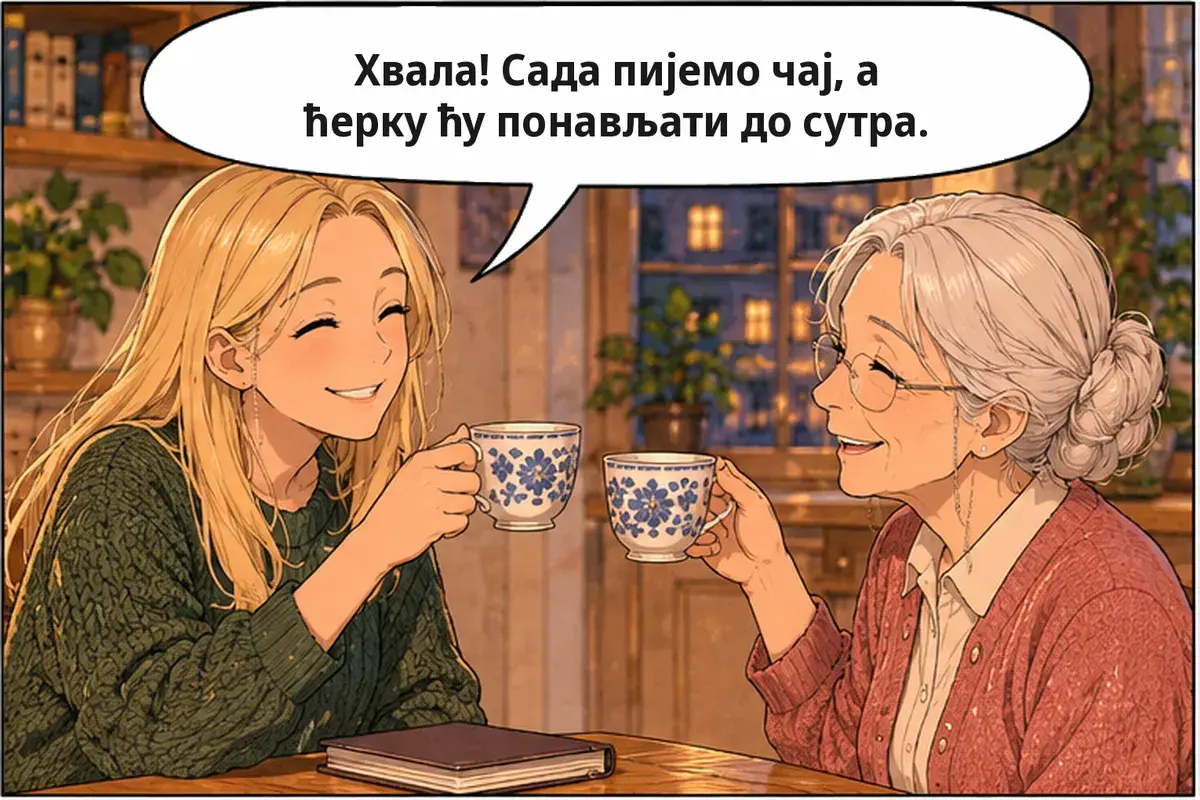
Хвала! Сада пијемо чај, а ћерку ћу понављати до сутра.
Thanks! Now we're having tea, and I'll keep reviewing "ćerka" until tomorrow.
Grammar for this text
Тек сам завршила посао и не знам ни тему—сам(a clitic) stands second;завршила(finished) ends in-лаbecause a woman is speaking.не знам ни тему— I don't even know the topic: Serbian uses a double negative here (unit 9).молим те да не журиш јер ми мозак после посла већ спава—молити+да+ present: please don't rush.ми(to me) stands where English says "my": when Serbs talk about themselves and their body, they often use the dative. Word for word: "to me the brain is already asleep".Читаћу полако и јасно—полакоandјасноanswer the question "how?";јасноis the adverb fromјасан, the topic of this unit.Можеш ли да поновиш последњу реч?— a polite request instead of a command.поновишis perfective (one finished action) afterда; its pair isпонављати.Само на крају нема тачке— afterнема(there is no) comes the genitive:тачка→тачке.честа грешка— a common mistake.Опростићеш ми и ову грешку, ваљда?— the future ofопростити; you forgive someone in the dative:ми.ваљдаin a question — I hope, right?Није баш тако— not quite: Radmila corrects Ana gently. By earћis softer andчis harder, so they're easy to mix up.Мој савет је да понављаш ова два слова—понављашis imperfective: every day, again and again.Поштено да ти кажем— to be honest with you, a set phrase.а ћерку ћу понављати до сутра— a joke: here the wordћеркаis the thing Ana will study, so it's the object, in the accusative:ћерку.
Words and grammar of the unit: Take a lesson with Radmila.
Learn the words from the texts with flashcards
In the app, you can tap any word in a text to see its translation, forms and examples, and new words stick with flashcards. 15 minutes a day.
Start for freeEverything is open for free. No card needed to sign up.