
Serbian dialogue with translation · A2 · 15 lines
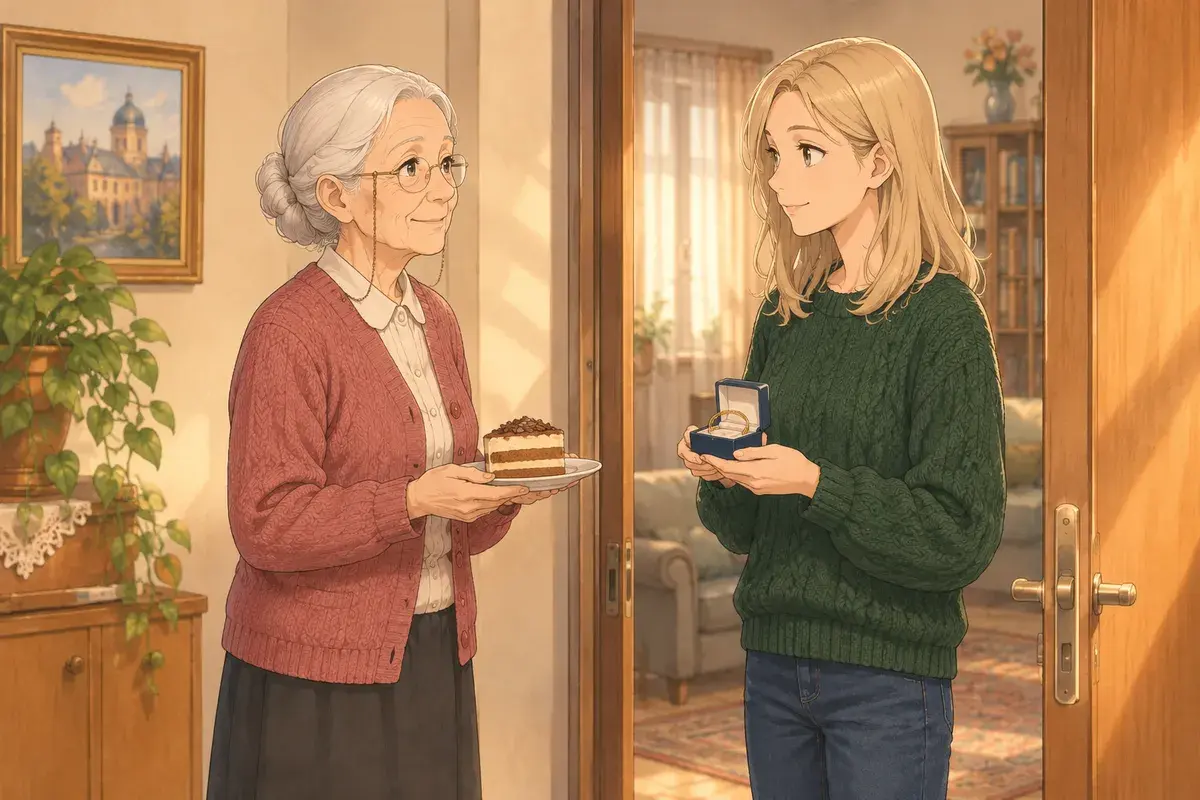
Шта могу да поклоним беби? What can I give the baby?
Comic · 15 panels
- Радмила
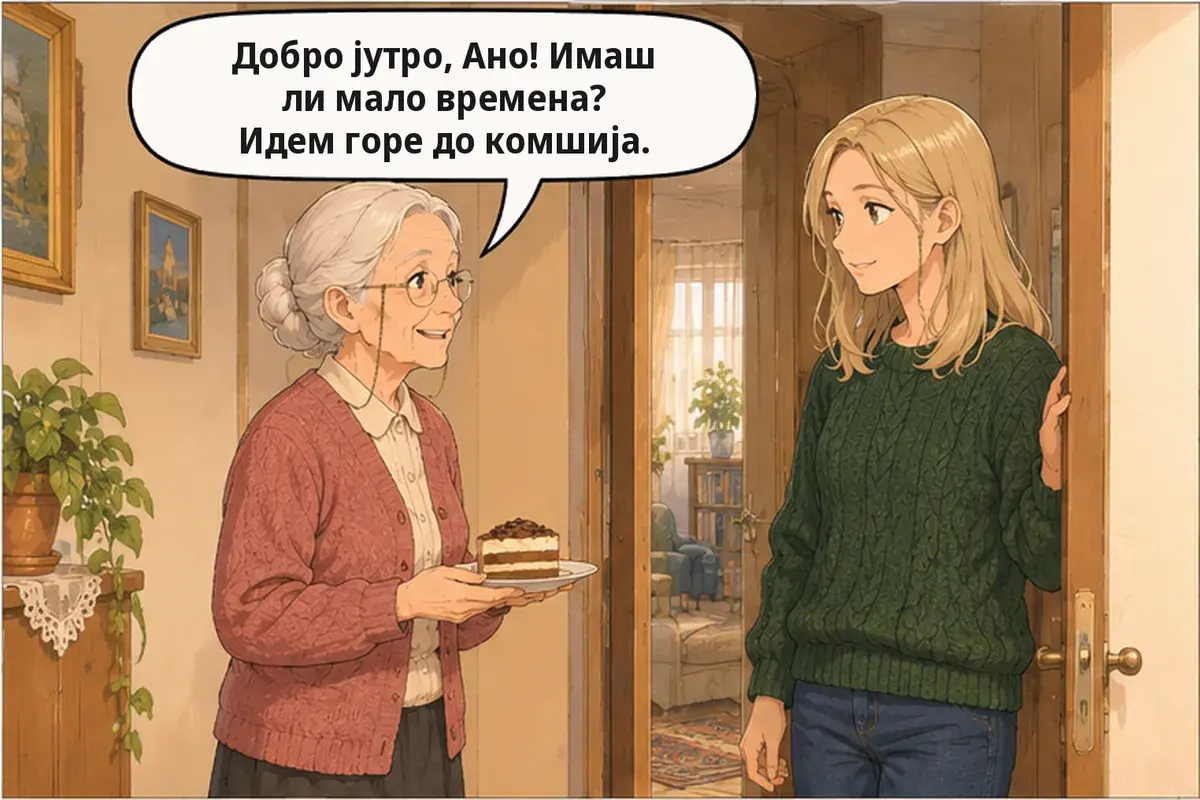
Добро јутро, Ано! Имаш ли мало времена? Идем горе до комшија.
Good morning, Ana! Do you have a little time? I'm going upstairs to the neighbors'.
- Ана
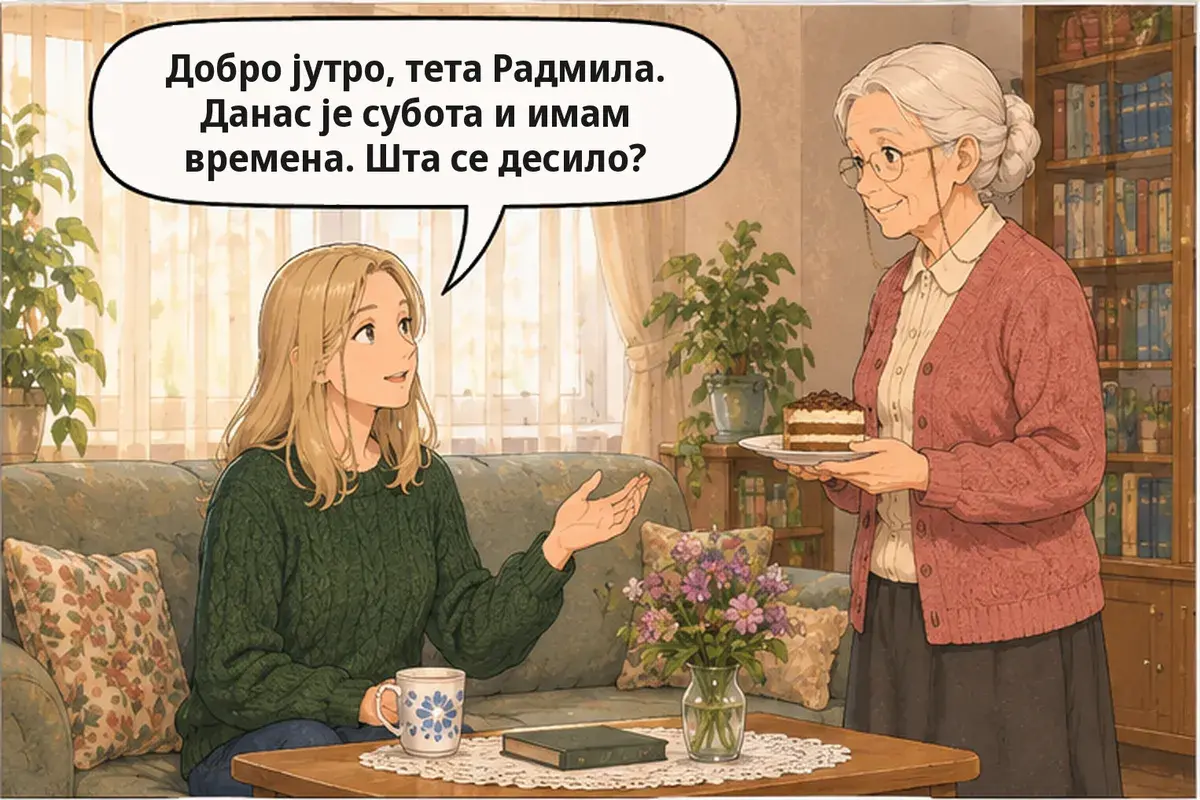
Добро јутро, тета Радмила. Данас је субота и имам времена. Шта се десило?
Good morning, Aunt Radmila. Today is Saturday, and I have time. What happened?
- Радмила
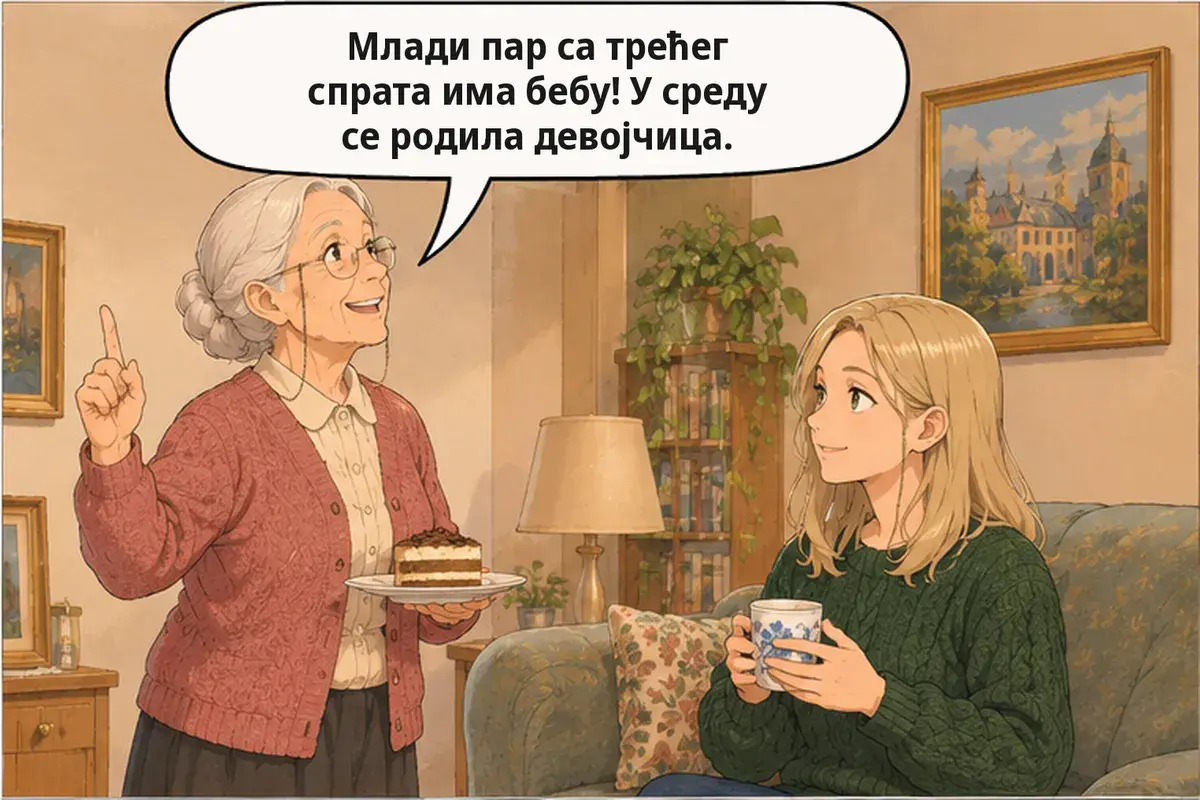
Млади пар са трећег спрата има бебу! У среду се родила девојчица.
The young couple from the fourth floor has a baby! A little girl was born on Wednesday.
- Ана
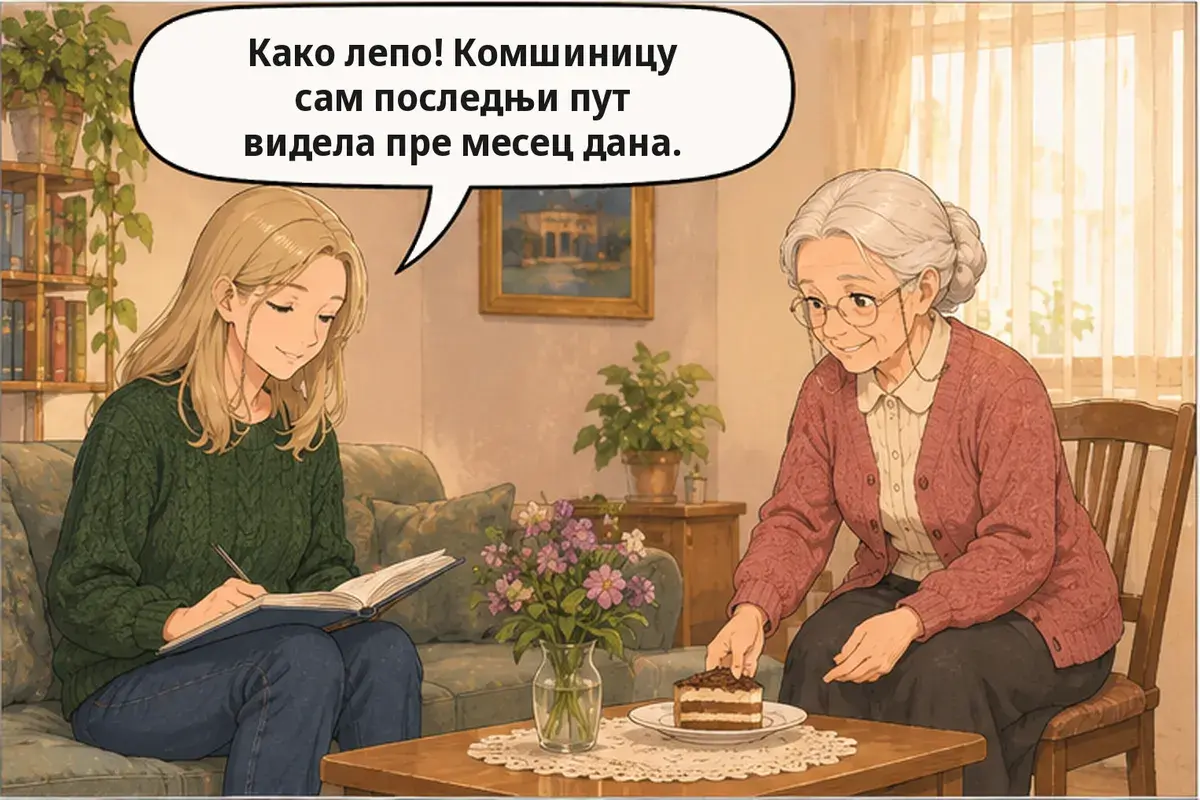
Како лепо! Комшиницу сам последњи пут видела пре месец дана.
How nice! I last saw the neighbor a month ago (woman speaking).
- Радмила
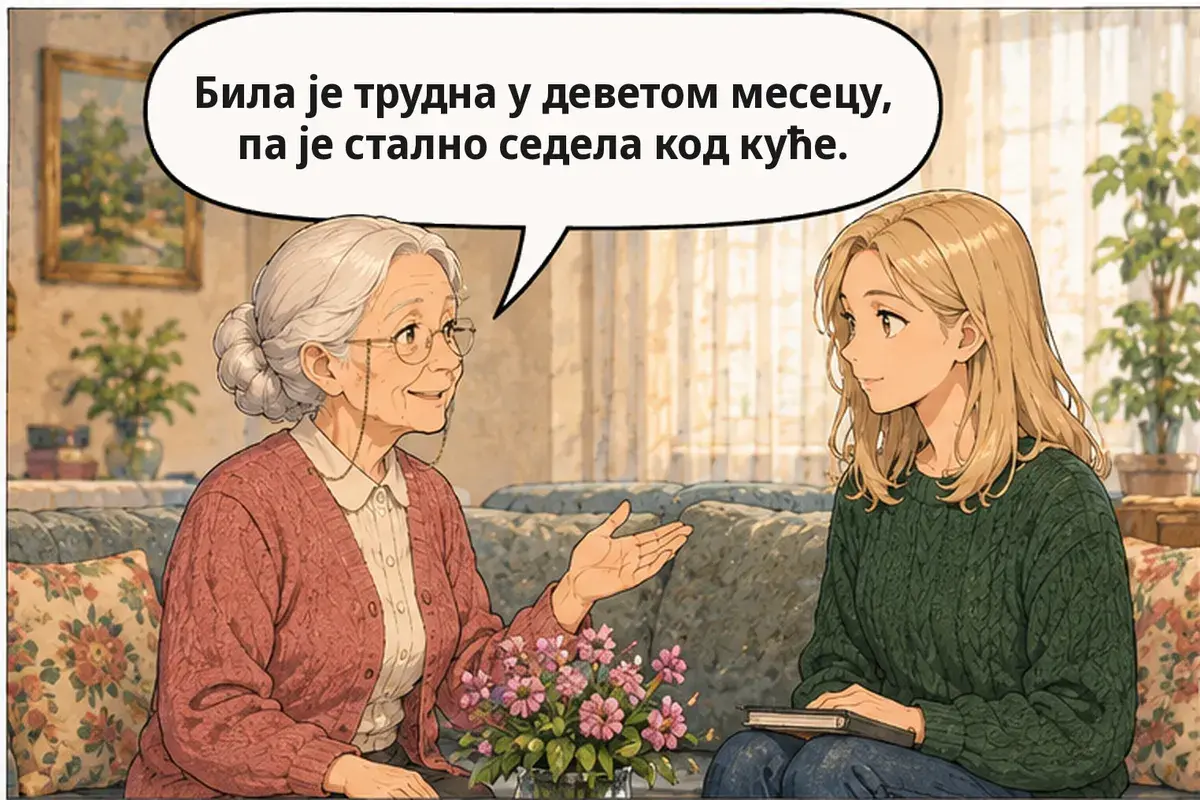
Била је трудна у деветом месецу, па је стално седела код куће.
She was nine months pregnant, so she stayed at home all the time.
- Ана
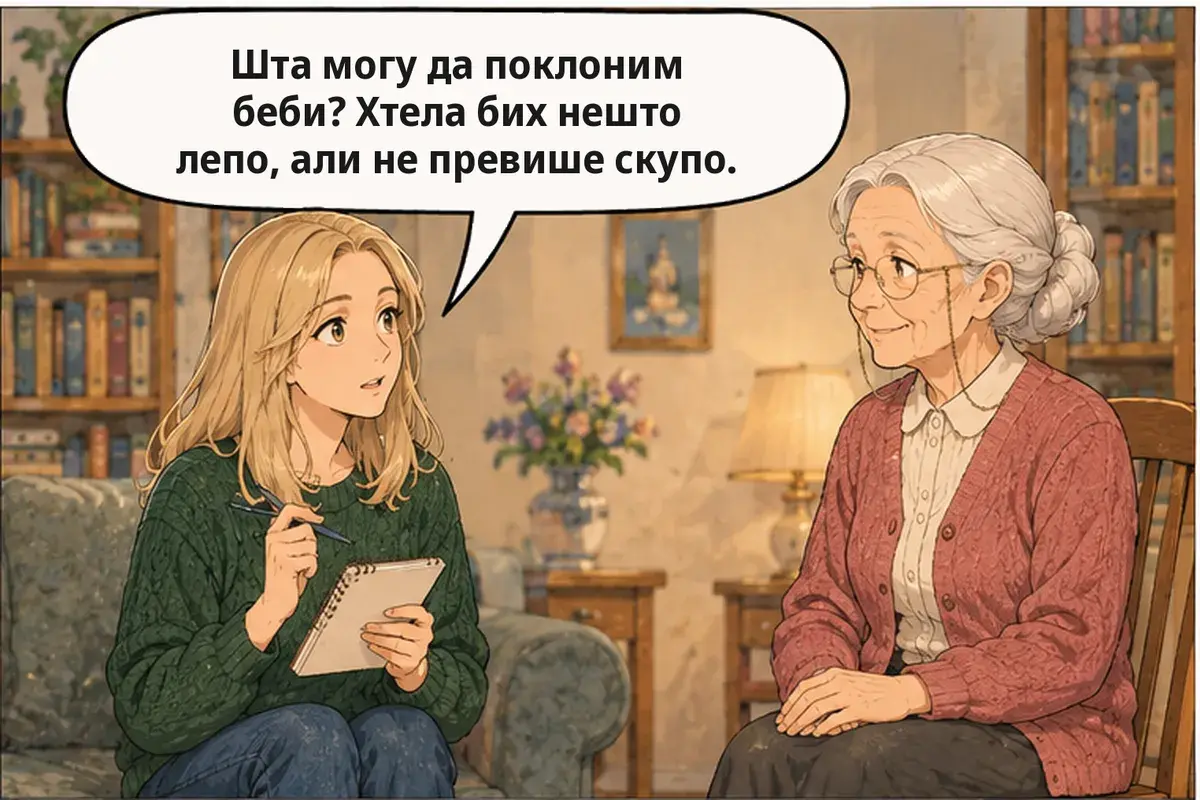
Шта могу да поклоним беби? Хтела бих нешто лепо, али не превише скупо.
What can I give the baby? I'd like something nice, but not too expensive (woman speaking).
- Радмила
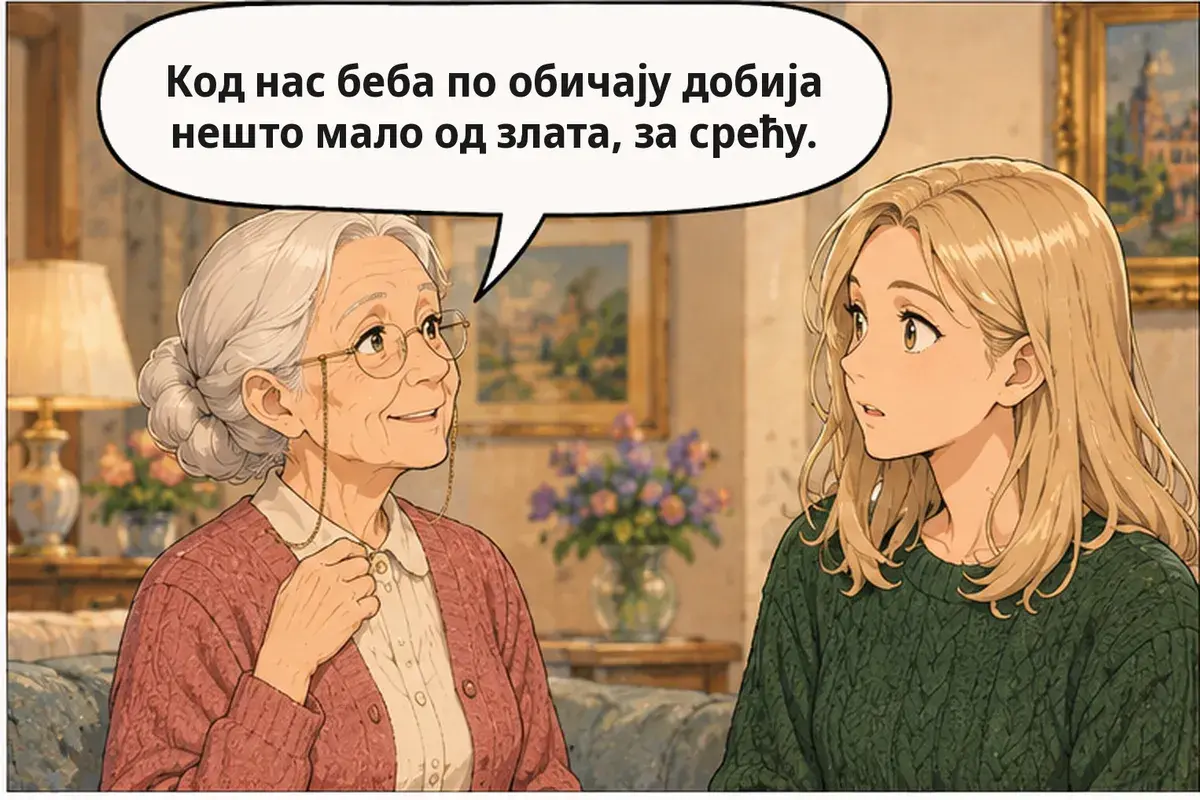
Код нас беба по обичају добија нешто мало од злата, за срећу.
Here, by custom, a baby gets something small made of gold, for luck.
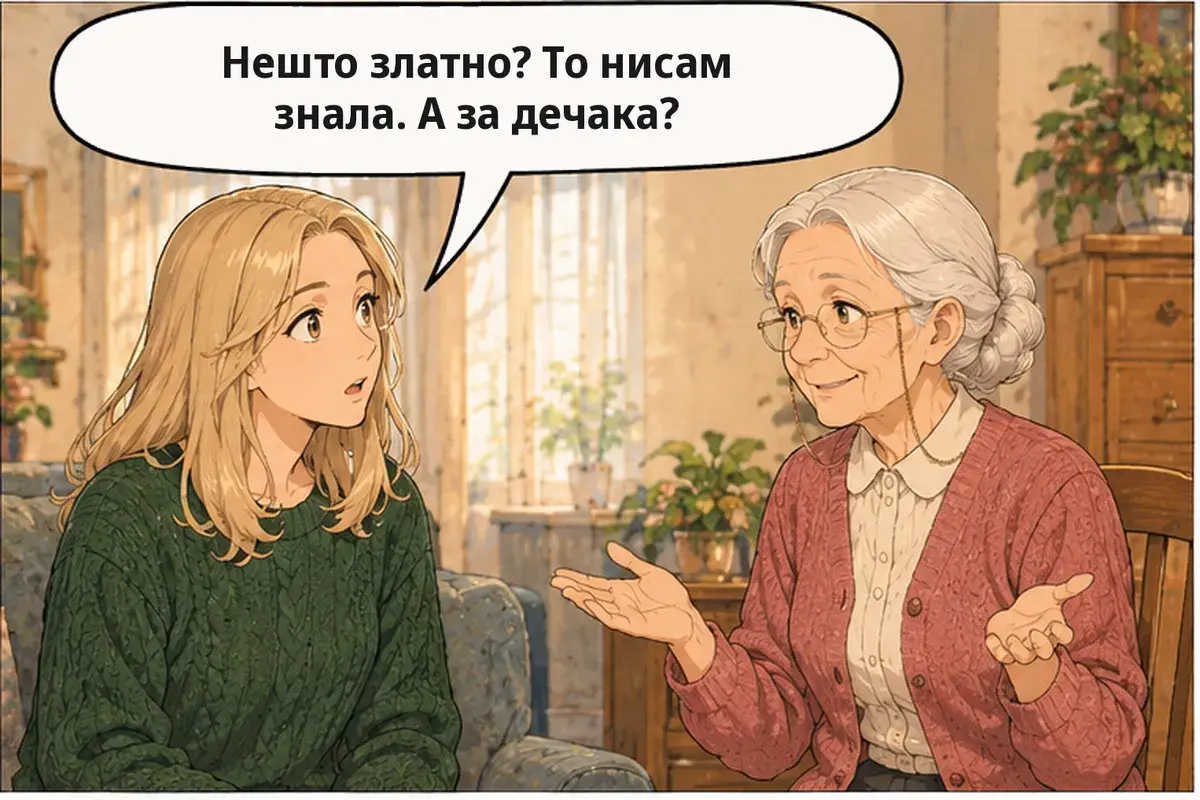
- Ана
Нешто златно? То нисам знала. А за дечака?
Something gold? I didn't know that (woman speaking). And for a boy?
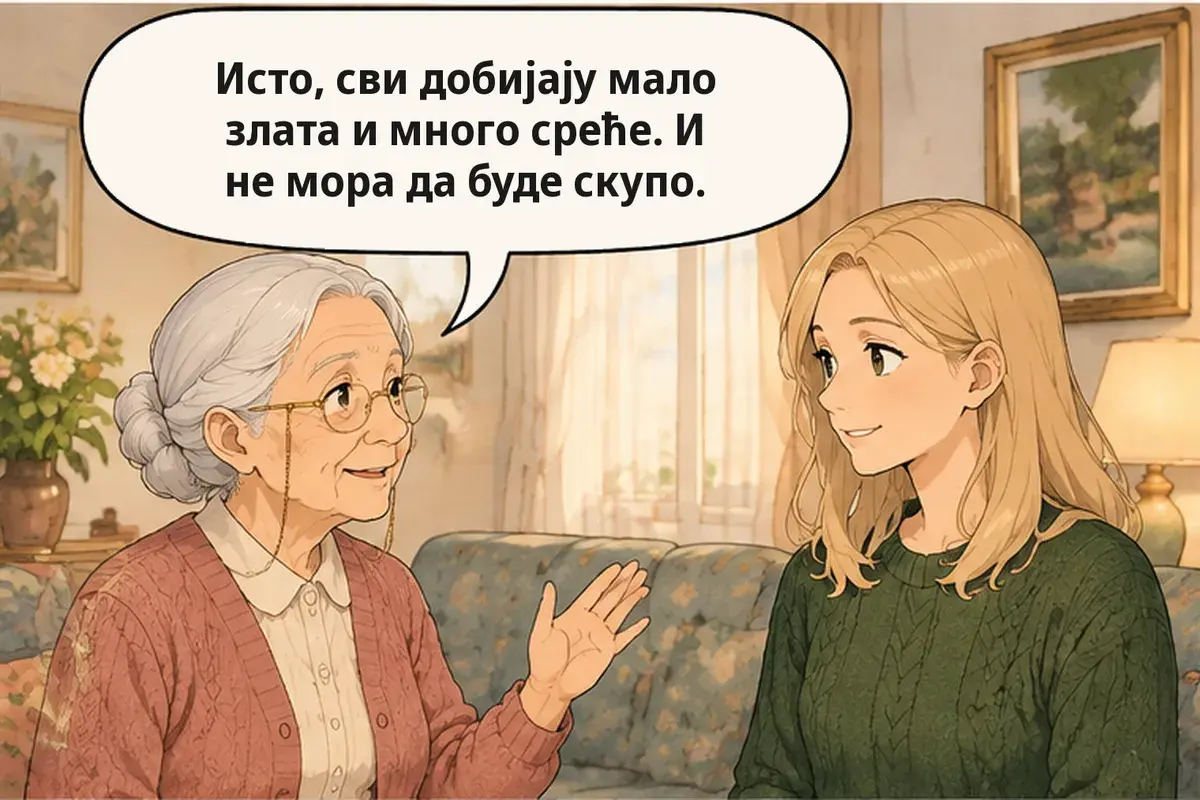
- Радмила
Исто, сви добијају мало злата и много среће. И не мора да буде скупо.
The same: everyone gets a little gold and lots of luck. And it doesn't have to be expensive.
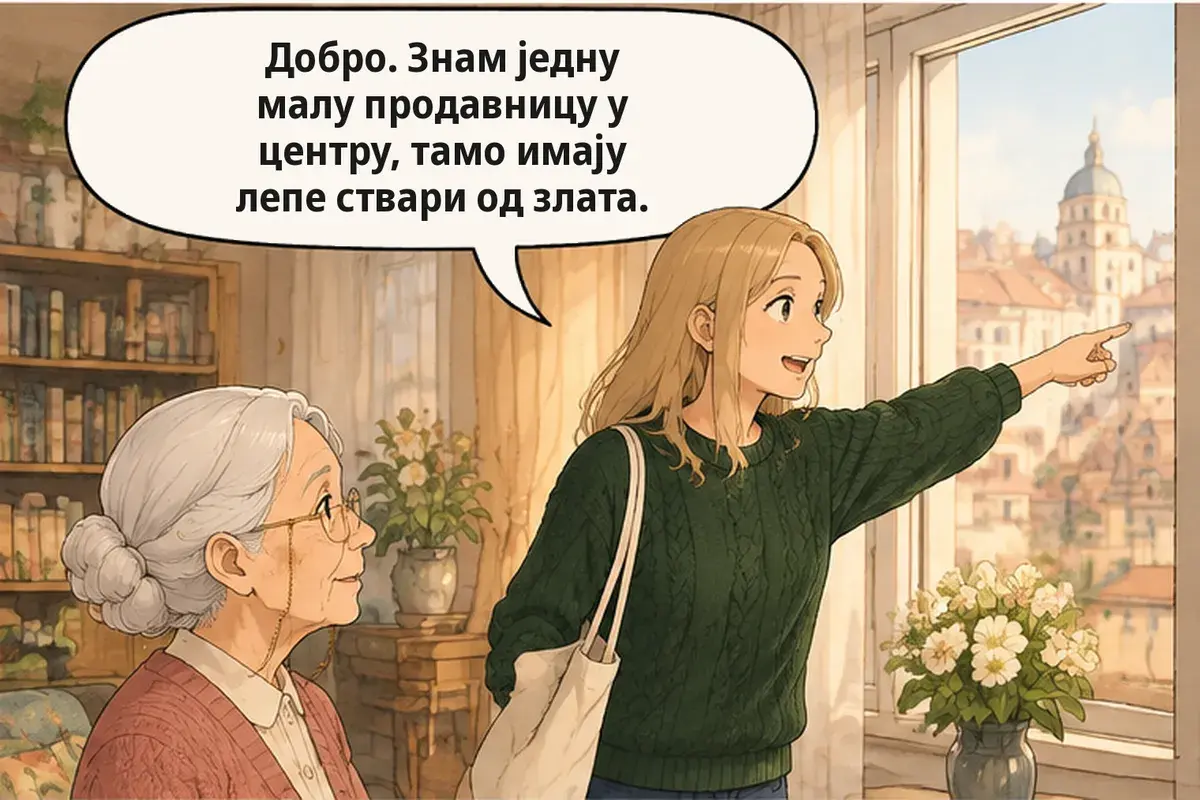
- Ана
Добро. Знам једну малу продавницу у центру, тамо имају лепе ствари од злата.
OK. I know a small shop downtown; they have nice things made of gold there.
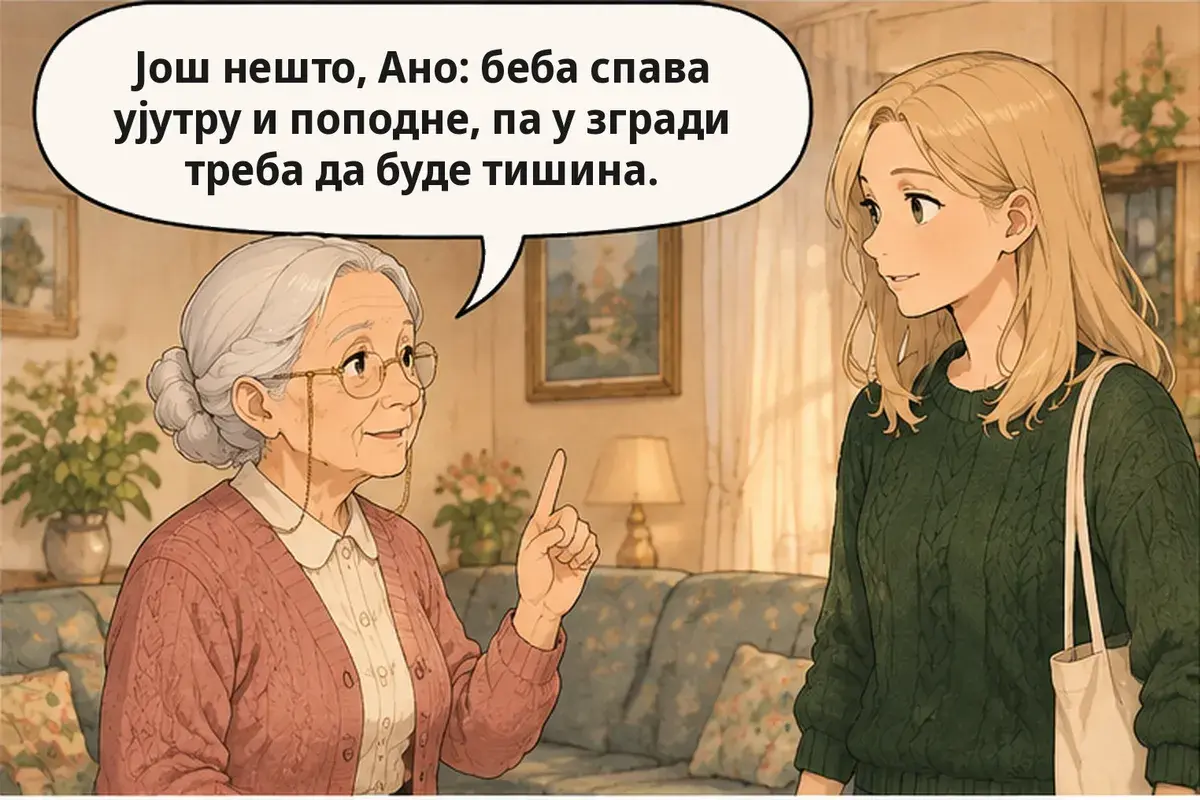
- Радмила
Још нешто, Ано: беба спава ујутру и поподне, па у згради треба да буде тишина.
One more thing, Ana: the baby sleeps in the morning and in the afternoon, so there should be silence in the building.
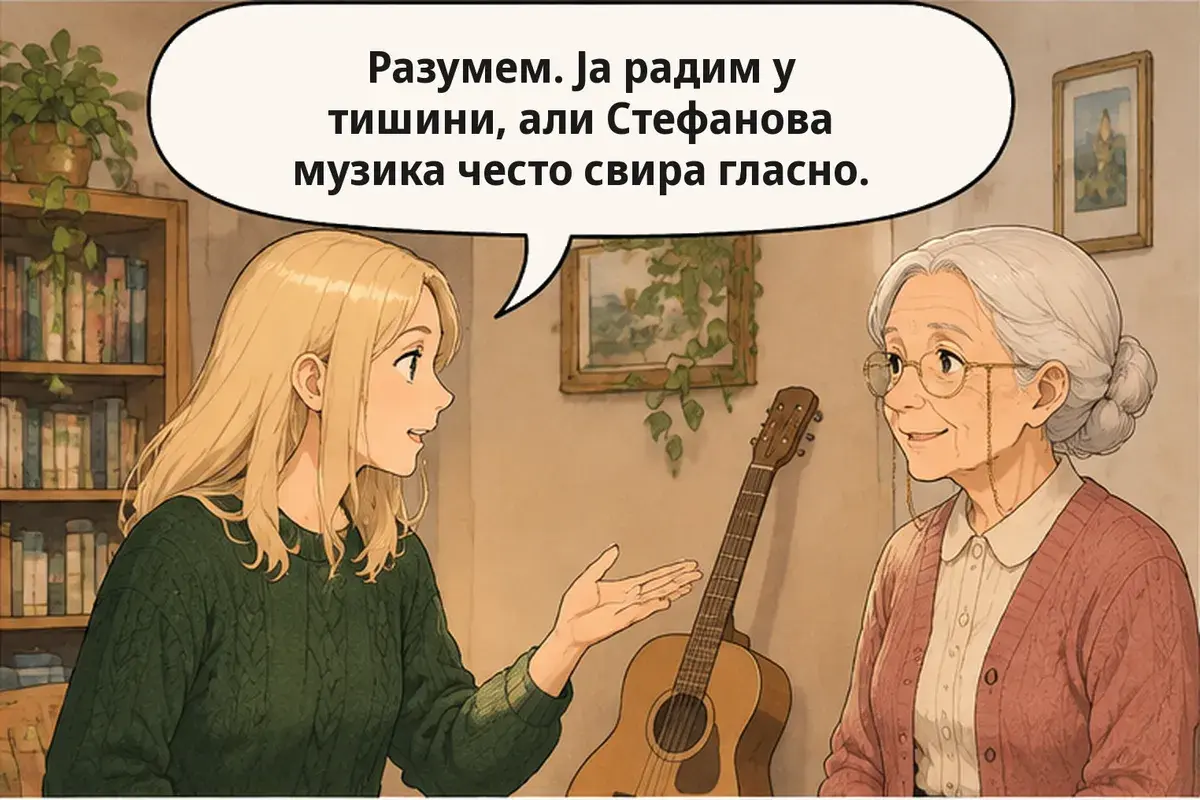
- Ана
Разумем. Ја радим у тишини, али Стефанова музика често свира гласно.
I understand. I work in silence, but Stefan's music often plays loudly.
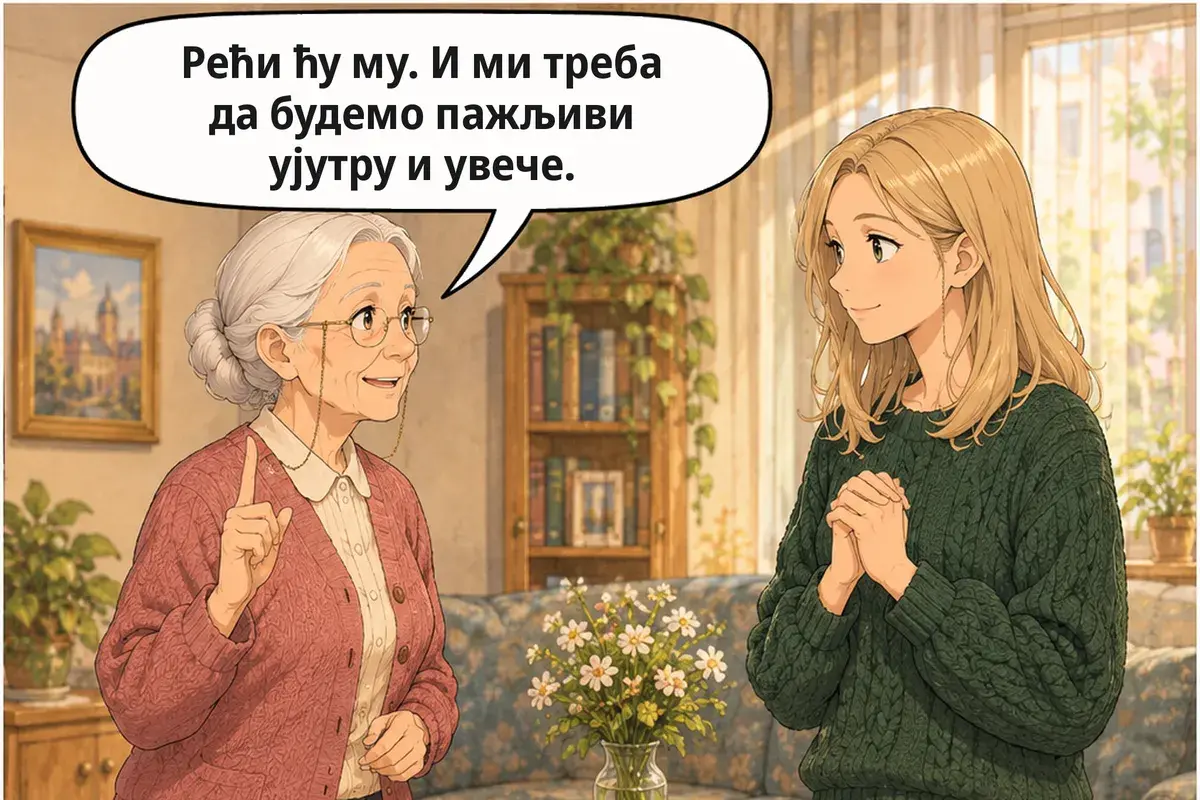
- Радмила
Рећи ћу му. И ми треба да будемо пажљиви ујутру и увече.
I'll tell him. We should be careful in the morning and in the evening too.
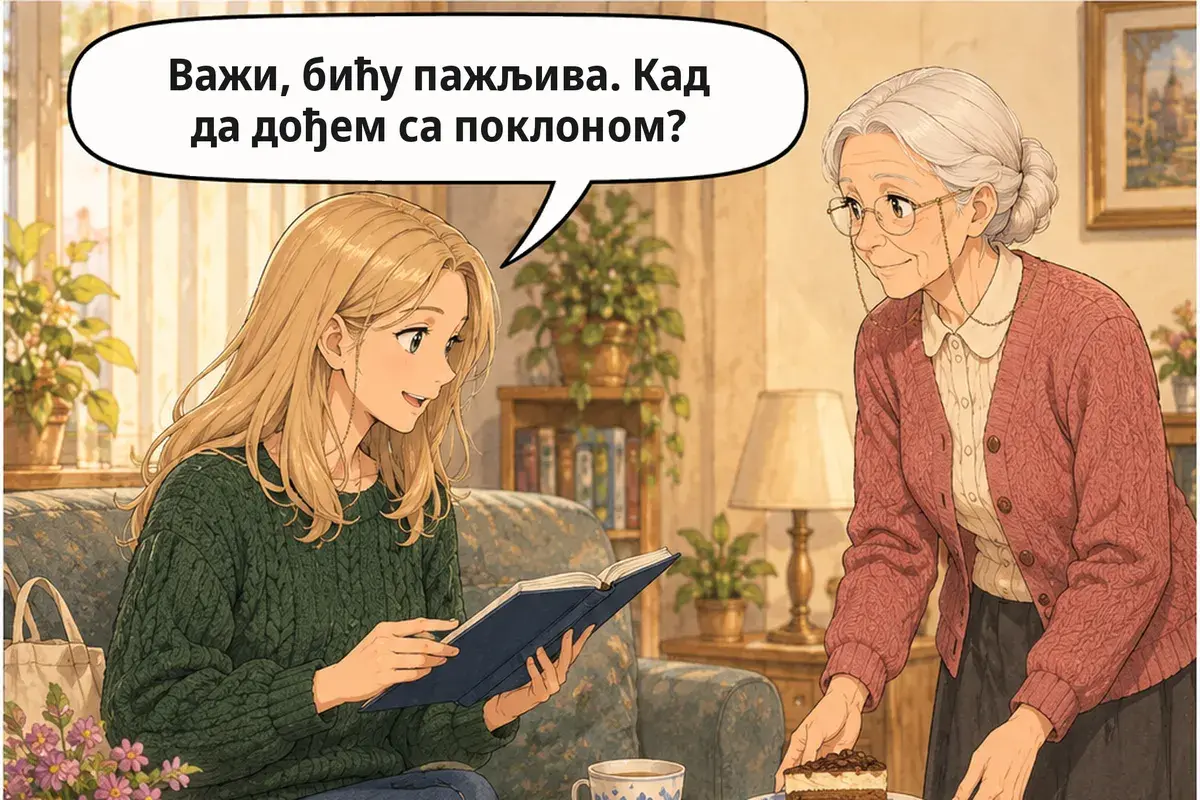
- Ана
Важи, бићу пажљива. Кад да дођем са поклоном?
OK, I'll be careful (woman speaking). When should I come with the present?
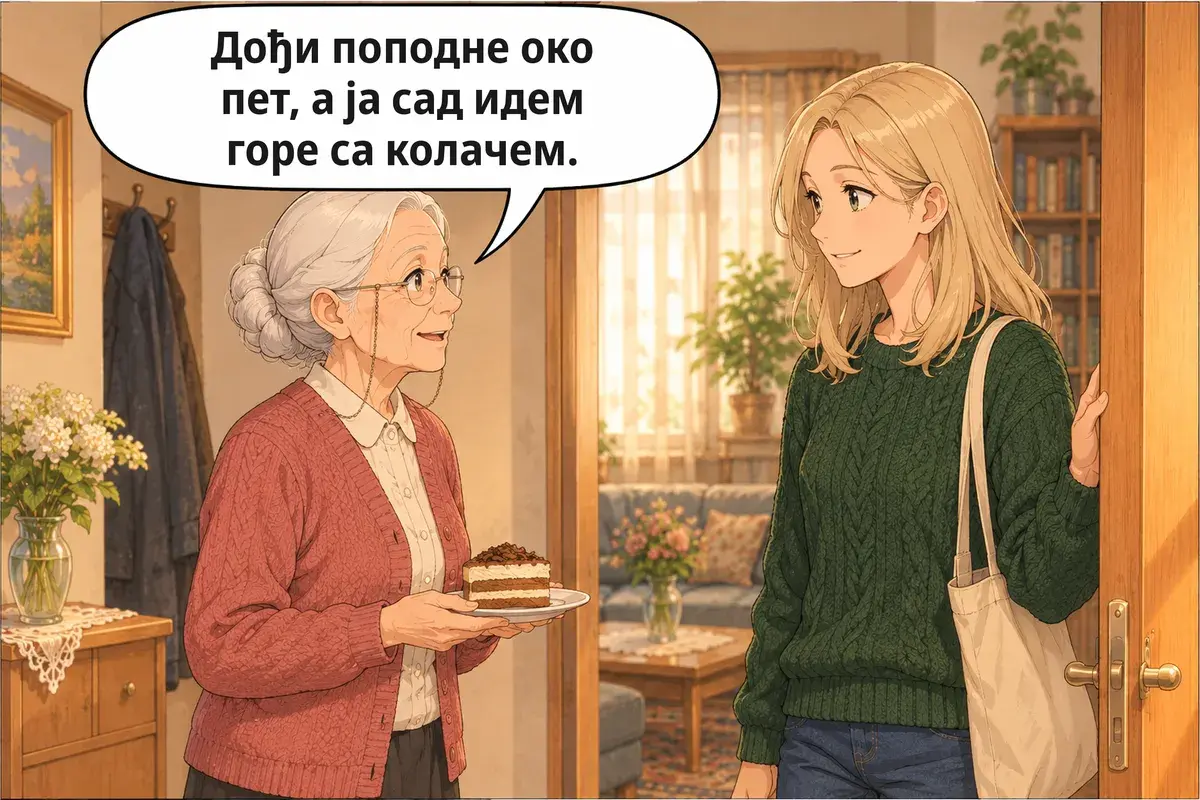
- Радмила
Дођи поподне око пет, а ја сад идем горе са колачем.
Come in the afternoon around five, and I'm going upstairs with a cake now.
Grammar for this text
Млади пар са трећег спрата има бебу!—са трећег спрата— from the third floor in Serbian counting:са+ genitive answers 'from where?'. Watch the floors: in Serbia the floor at street level isприземљеand is not counted, soпрви спратis the floor above it.трећи спратis the fourth floor in American counting.У среду се родила девојчица.—родити се— to be born. English says 'was born'; Serbian uses a se-verb.сеis the second word, andродилаis feminine because a girl was born.Била је трудна у деветом месецу—трудна— pregnant.у деветом месецу— in the ninth month (unit 4); English says 'nine months pregnant'.Шта могу да поклоним беби?—беби— to the baby: the dative, the 'to / for someone' case (unit 5).да поклоним— a perfective verb afterда;поклонимalone, withoutда, isn't used.Код нас беба по обичају добија нешто мало од злата, за срећу.—код нас— here, where we live (in Serbia);по обичају— by custom;од злата— made of gold (златоin the genitive).Нешто златно?— Something gold?: afterнештоthe adjectiveзлатанtakes the neuter form.Ја радим у тишини, али Стефанова музика често свира гласно.—Стефанова музика— Stefan's music: the -ov word is feminine to matchмузика(see the grammar block).свира— plays (about music or an instrument).Рећи ћу му.— I'll tell him:ћуis the second word, andму(to him, unit 5) comes right after it.И ми— we too.Кад да дођем са поклоном?— When should I come with the present?: a question word +да+ present is how you ask what to do or when to do it.
Words and grammar of the unit: Congratulating neighbors on a new baby.
Learn the words from the texts with flashcards
In the app, you can tap any word in a text to see its translation, forms and examples, and new words stick with flashcards. 15 minutes a day.
Start for freeEverything is open for free. No card needed to sign up.