

Serbian dialogue with translation · A1 · 11 lines
Јесте ли први пут у Београду? Are you in Belgrade for the first time?
Comic · 11 panels
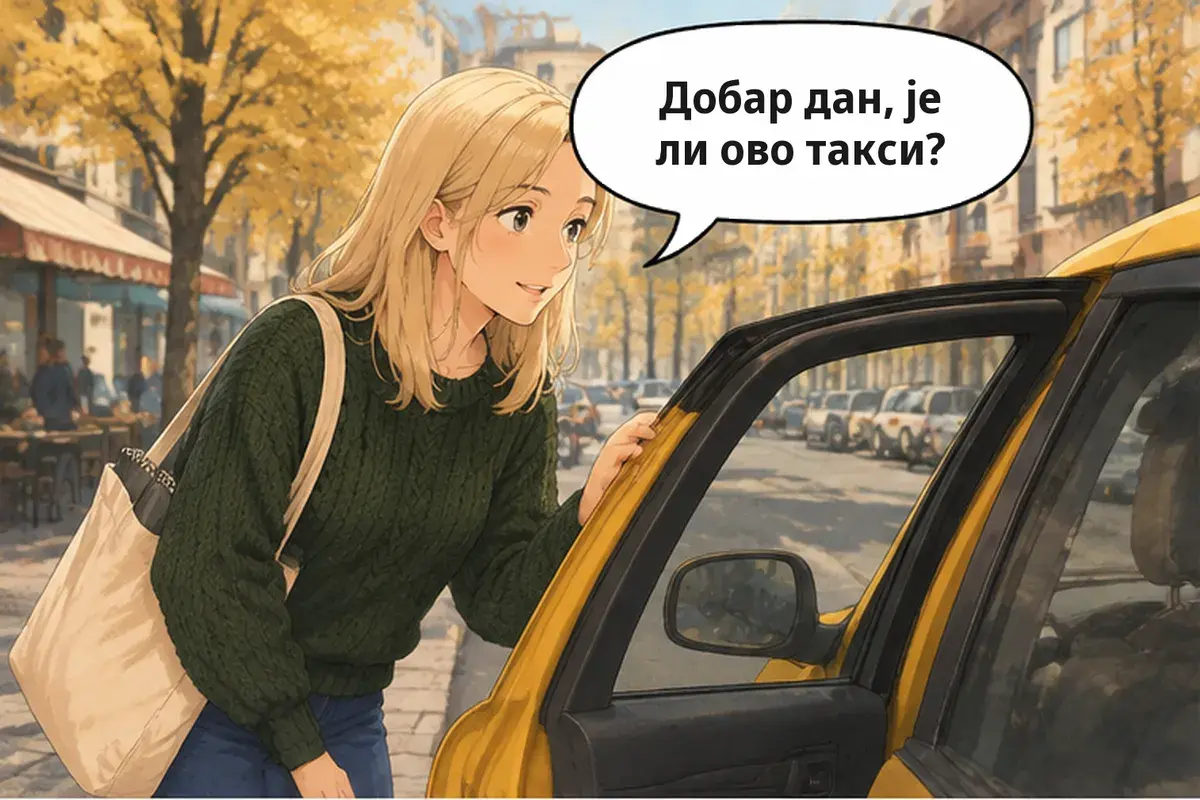
- Ана
Добар дан, је ли ово такси?
Good afternoon, is this a taxi?
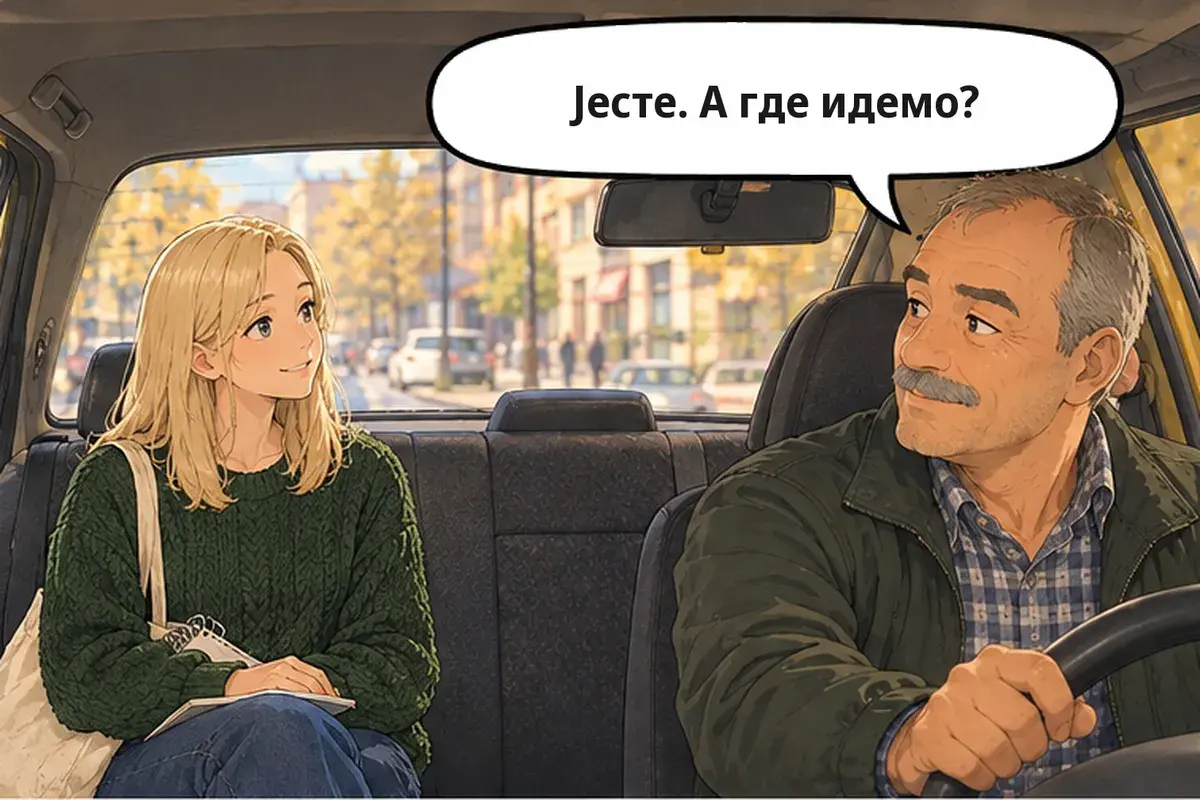
- Таксиста
Јесте. А где идемо?
Yes, it is. So where are we going?
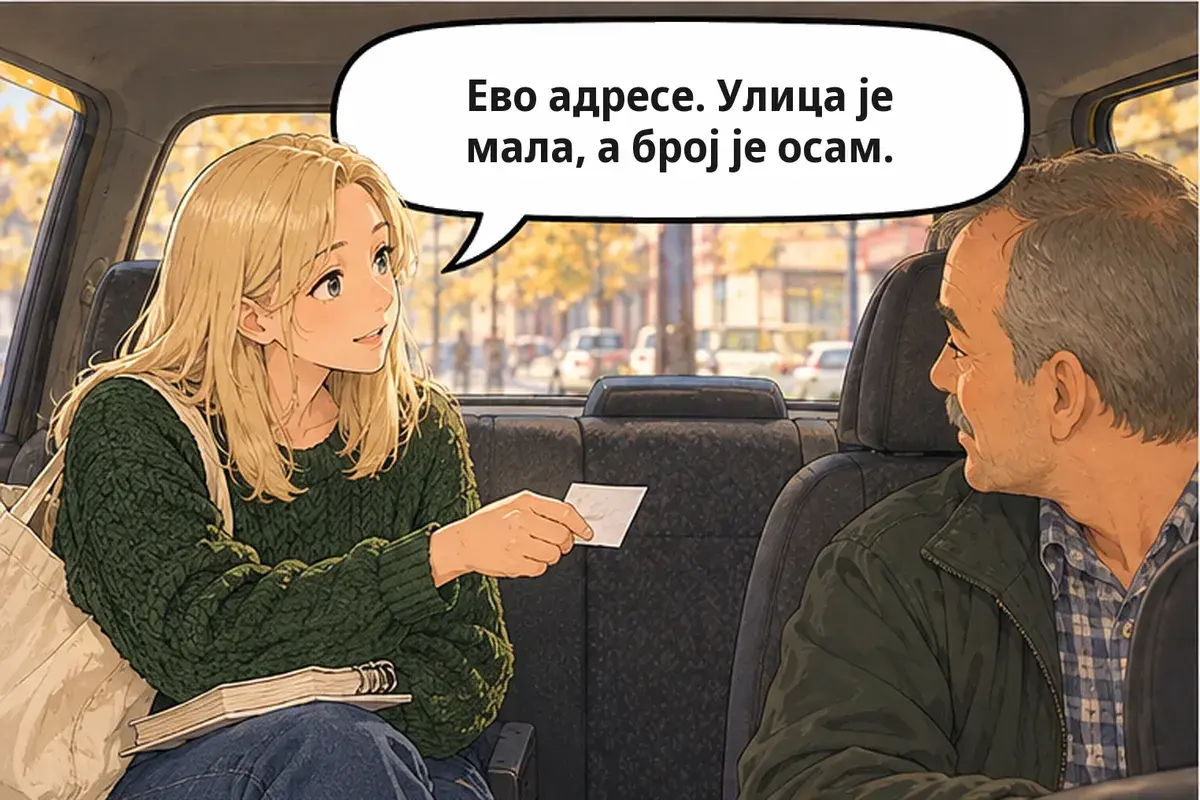
- Ана
Ево адресе. Улица је мала, а број је осам.
Here's the address. The street is small, and the number is eight.
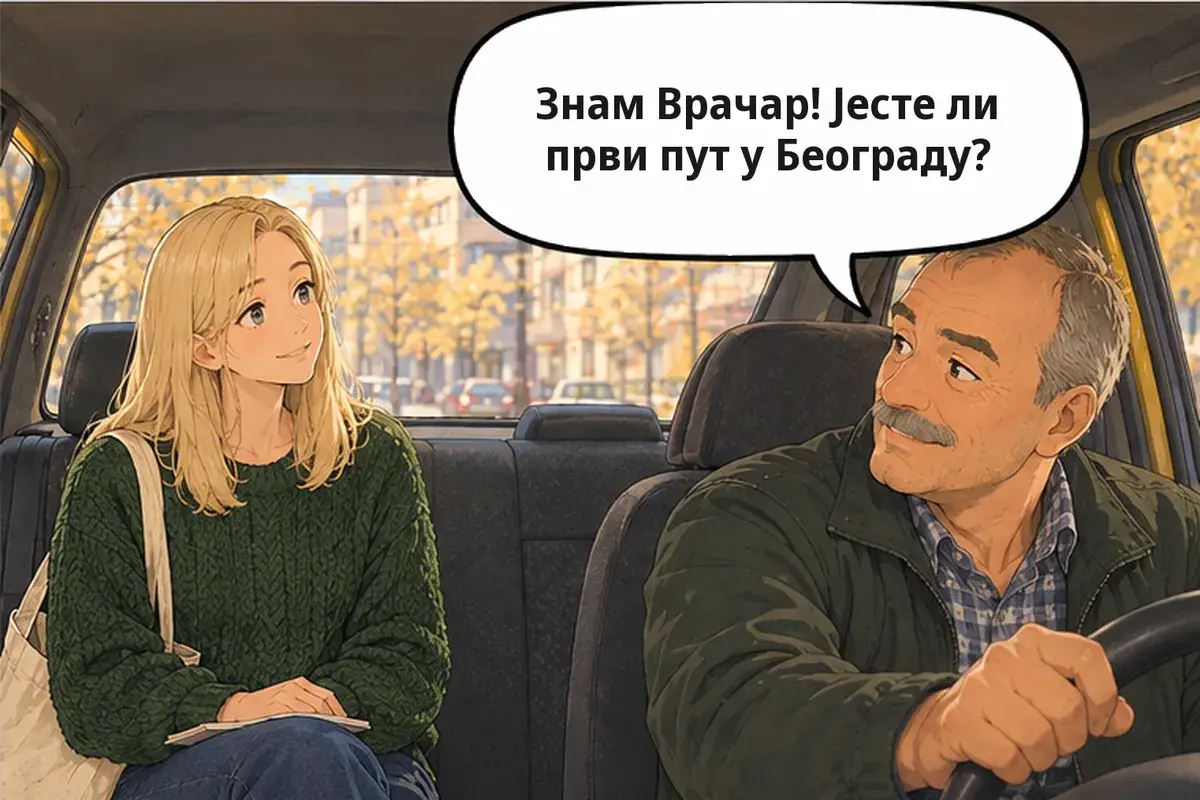
- Таксиста
Знам Врачар! Јесте ли први пут у Београду?
I know Vračar! Are you in Belgrade for the first time? (formal)
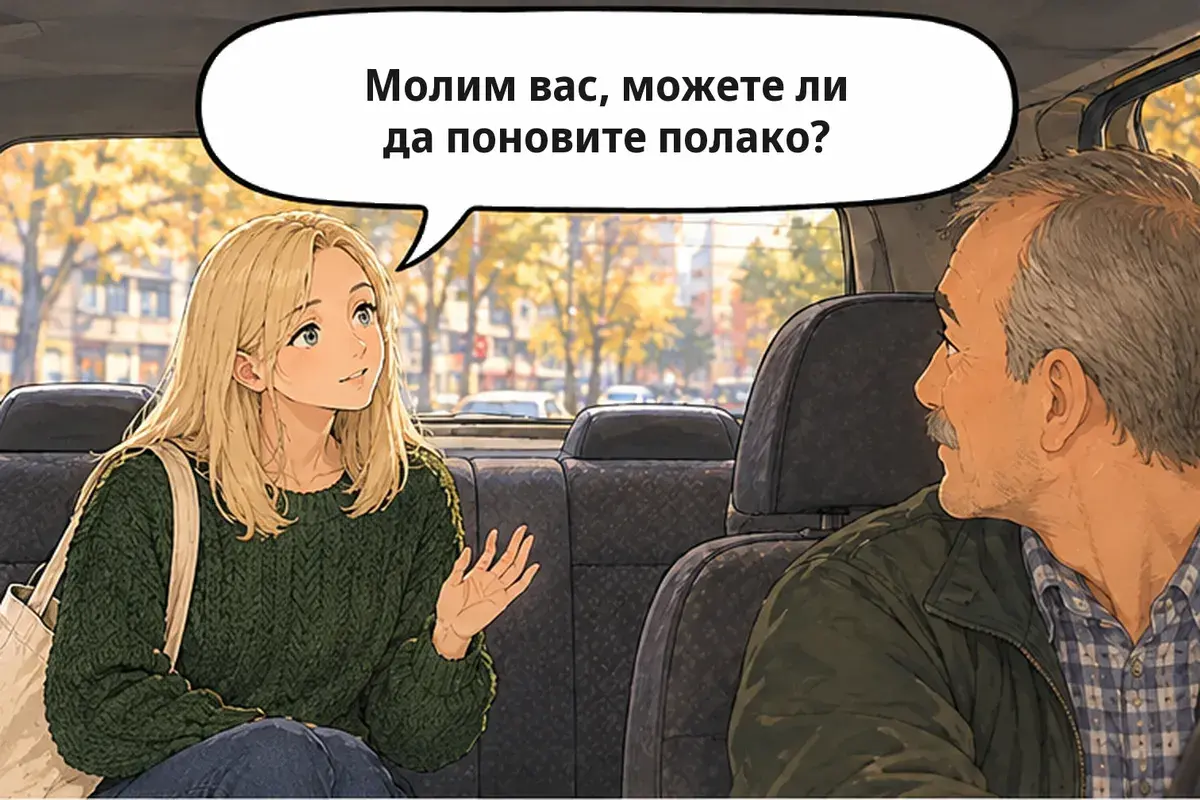
- Ана
Молим вас, можете ли да поновите полако?
Please, could you repeat that slowly? (formal)
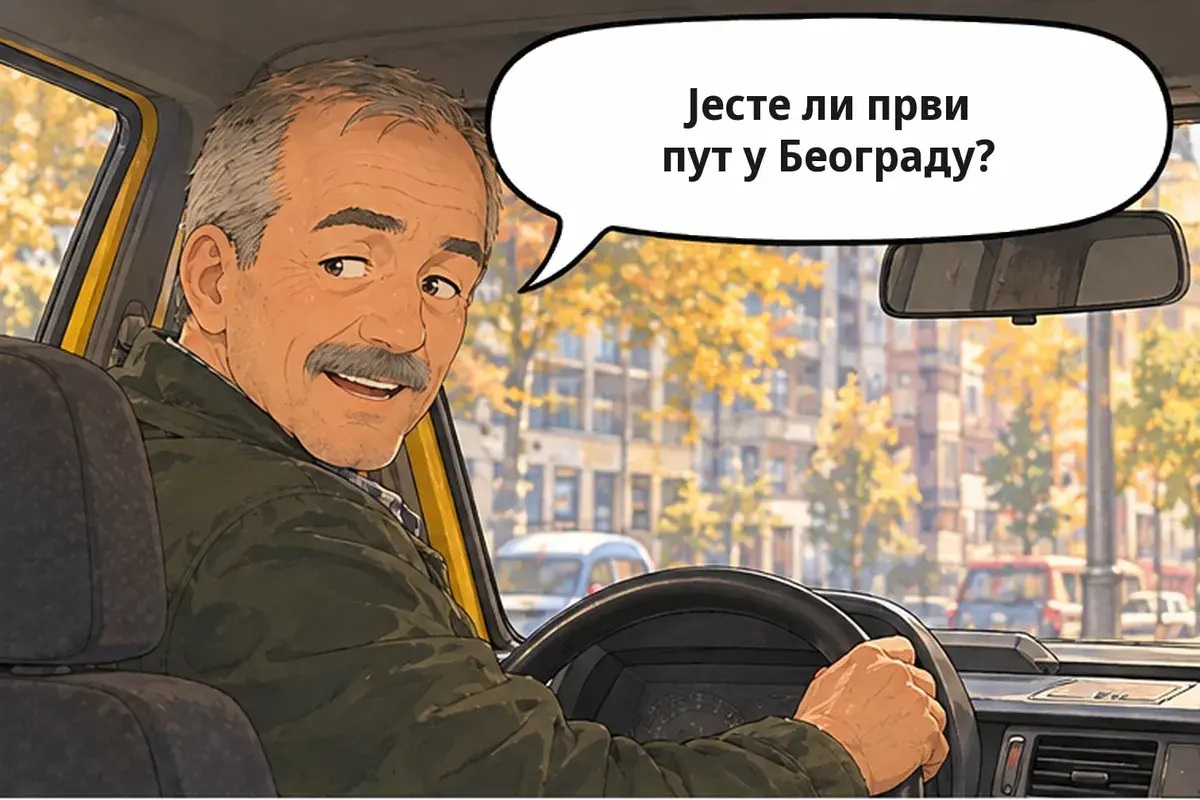
- Таксиста
Јесте ли први пут у Београду?
Are you in Belgrade for the first time? (formal)
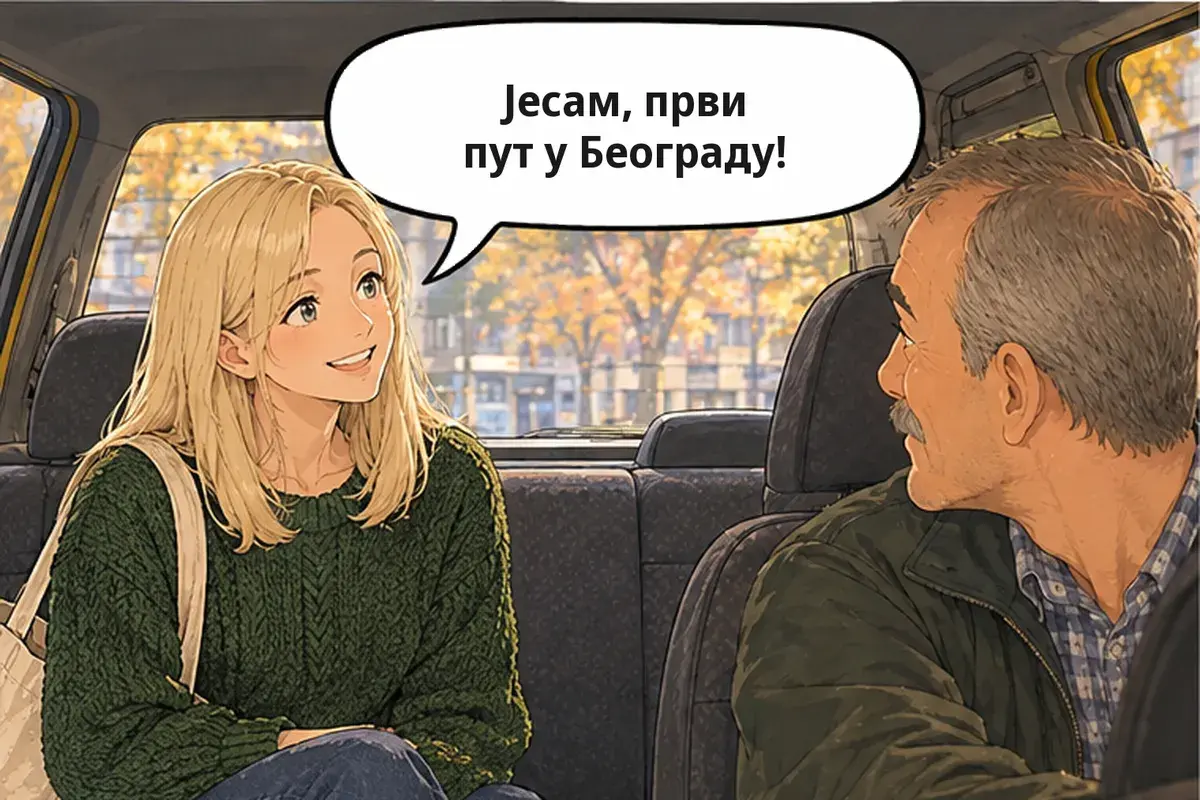
- Ана
Јесам, први пут у Београду!
Yes, I am! First time in Belgrade!
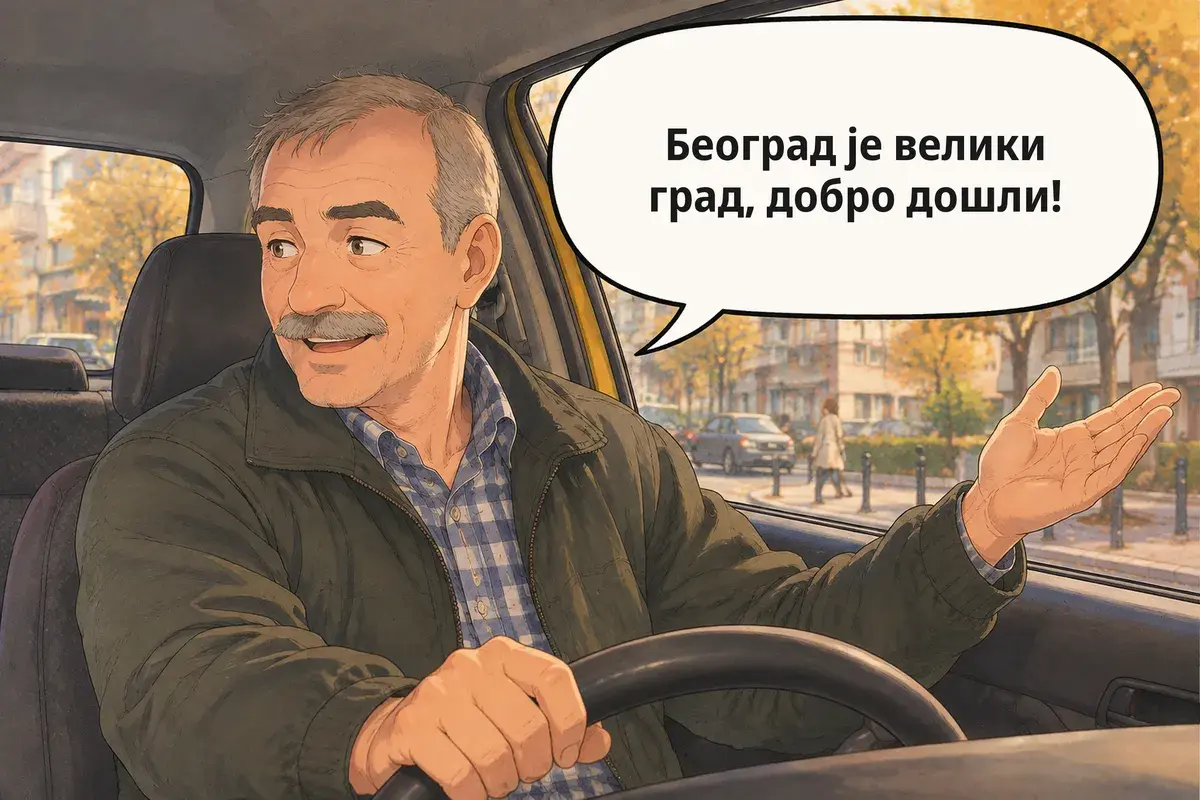
- Таксиста
Београд је велики град, добро дошли!
Belgrade is a big city, welcome! (formal)
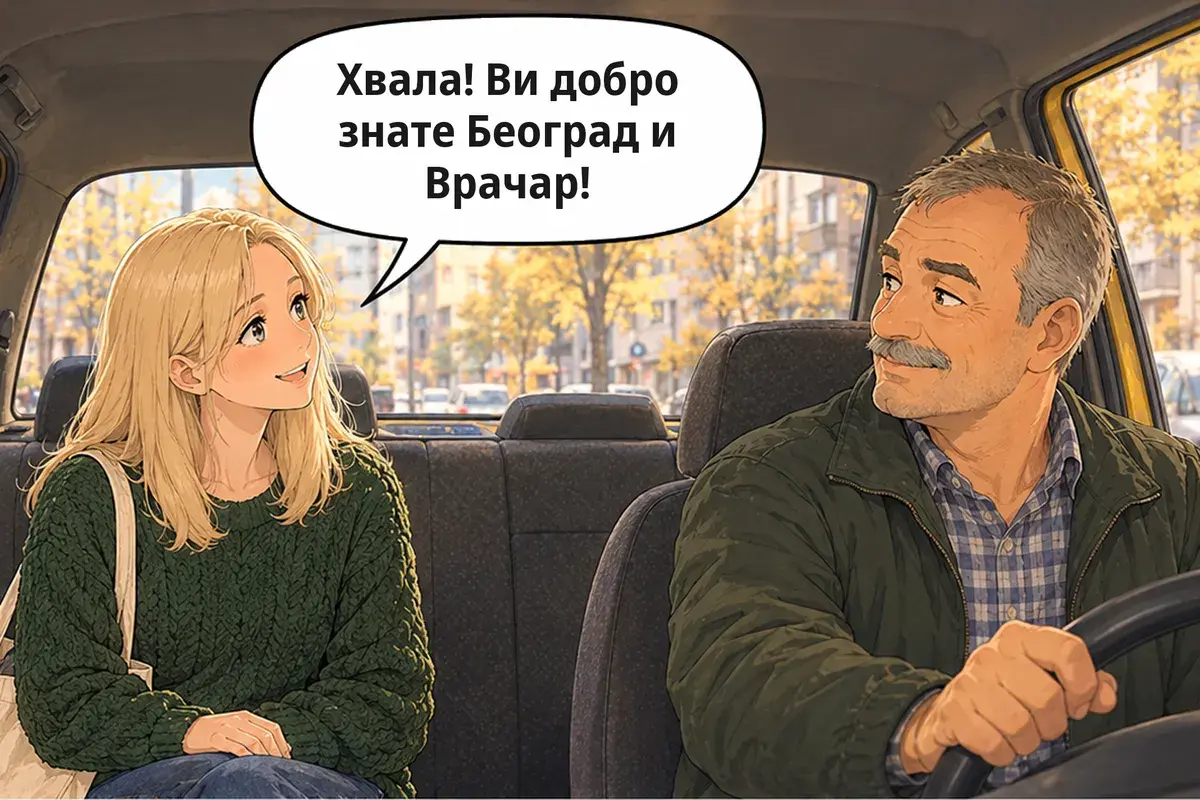
- Ана
Хвала! Ви добро знате Београд и Врачар!
Thanks! You know Belgrade and Vračar well! (formal)
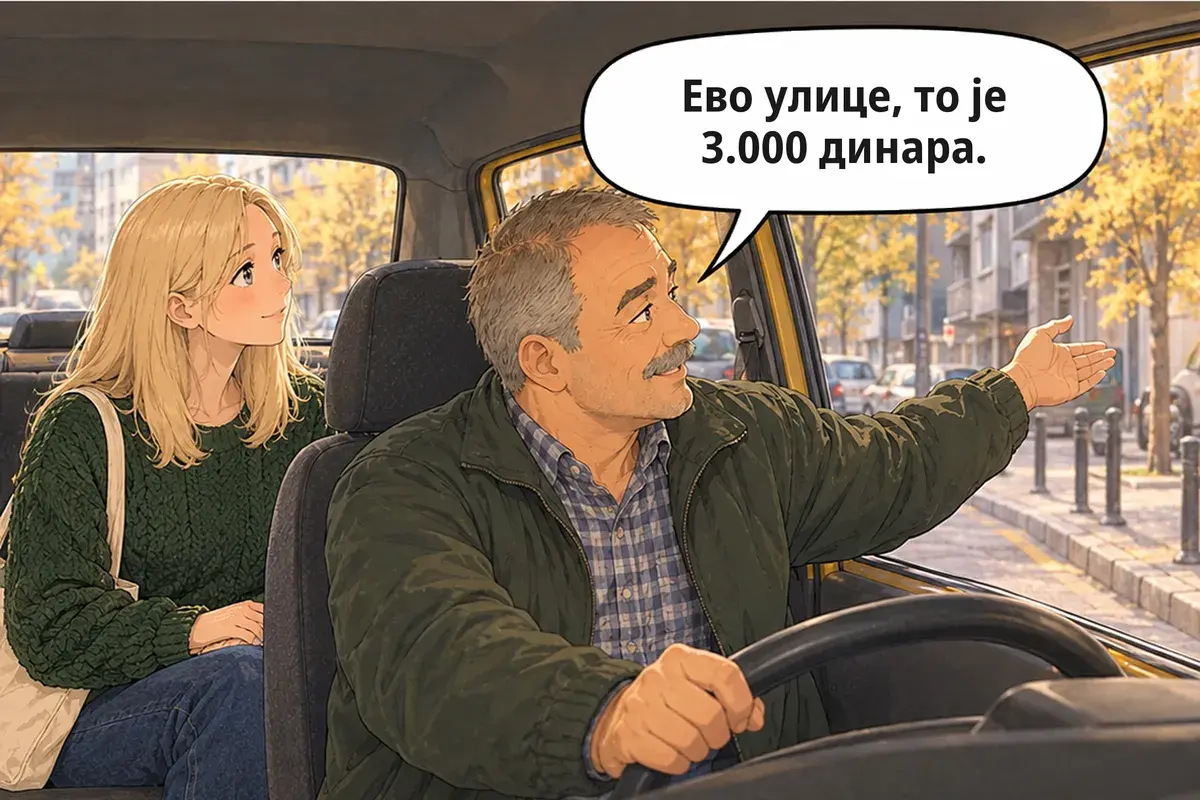
- Таксиста
Ево улице, то је 3.000 динара.
Here's the street, that's 3,000 dinars.

- Ана
Изволите, хвала вам и довиђења!
Here you go, thank you, and goodbye! (formal)
Grammar for this text
Добар дан, је ли ово такси?: in a question withбити(to be), the full form comes first andлиright after it:Је ли…?,Јеси ли…?,Јесте ли…?. A short "yes" is a full form ofбитиon its own: toЈе ли ово такси?the answer isЈесте(yes, it is).Јесте ли први пут у Београду?is a question toви(сте). Ana answers about herself withЈесам(yes, I am):Јесам, први пут у Београду!први путmeans "for the first time".у Београдуmeans "in Belgrade" (where?); the rule comes in unit 8.Ево адресе. Улица је мала, а број је осам:Ево адресеis a set phrase, "here's the address": afterевоthe word takes a special form (the genitive, unit 12).малаis the feminine form:улицаends in-а, so it'sмала, notмали.број је осамmeans "the (house) number is eight".Молим вас, можете ли да поновите полако?: set phrases from unit 1.можетеmeans "you can" (моћи),да поновитеmeans "to repeat",васis a form ofви. Drivers talk fast, and this is how you ask them to say it again slowly.Знам Врачар!:знамmeans "I know" (знати:ја знам, ти знаш, он зна, ми знамо, ви знате, они знају).А где идемо?means "So where are we going?": in everyday speechгдеis often used for direction too; the wordкуда(where to) comes in unit 8.Ви добро знате Београд и Врачар!:знатеmeans "you know" (toви);доброmeans "well".Ево улице, то је 3.000 динара:Ево улицеmeans "here's the street" (the genitive, likeЕво адресе). After numbers from five up,динарtakes the 5+ formдинара.Изволитеmeans "here you go" when you hand over money or a document.
Words and grammar of the unit: Get from the airport to your place.
Learn the words from the texts with flashcards
In the app, you can tap any word in a text to see its translation, forms and examples, and new words stick with flashcards. 15 minutes a day.
Start for freeEverything is open for free. No card needed to sign up.