
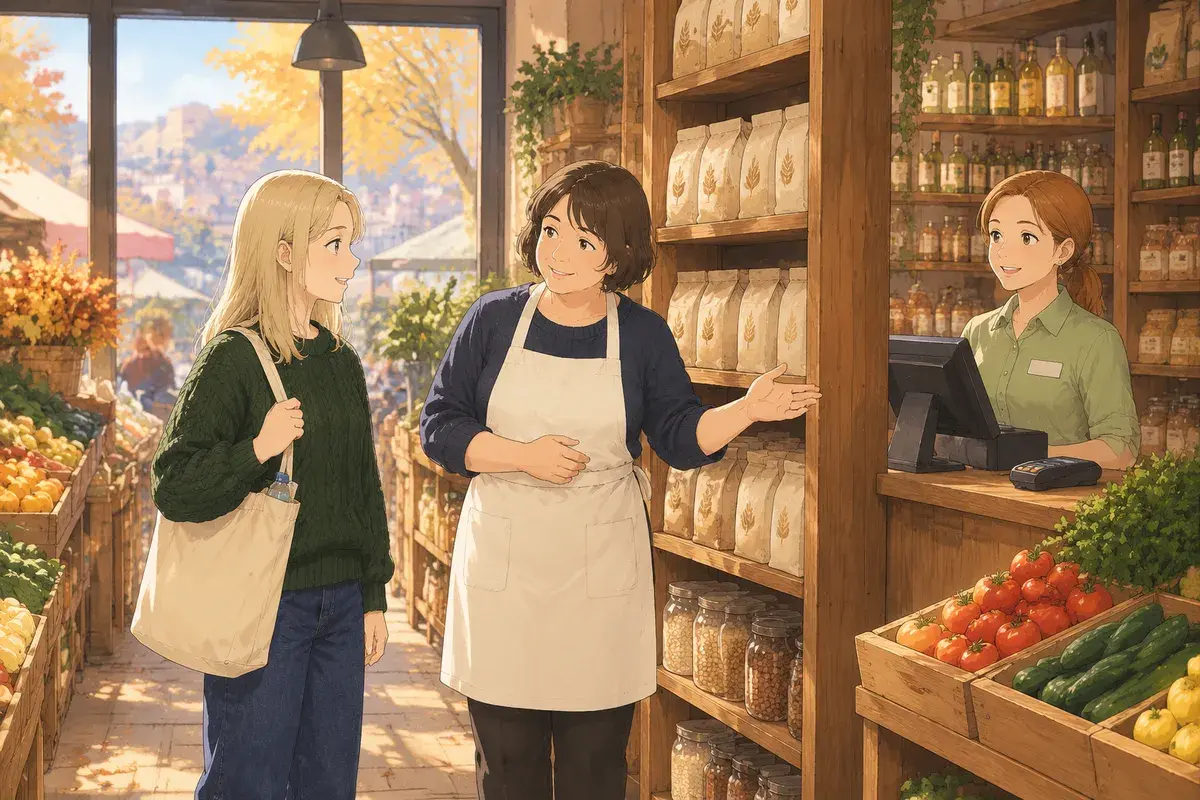
Serbian dialogue with translation · A1 · 14 lines
Молим вас, где је каса? Where's the checkout, please?
Comic · 14 panels
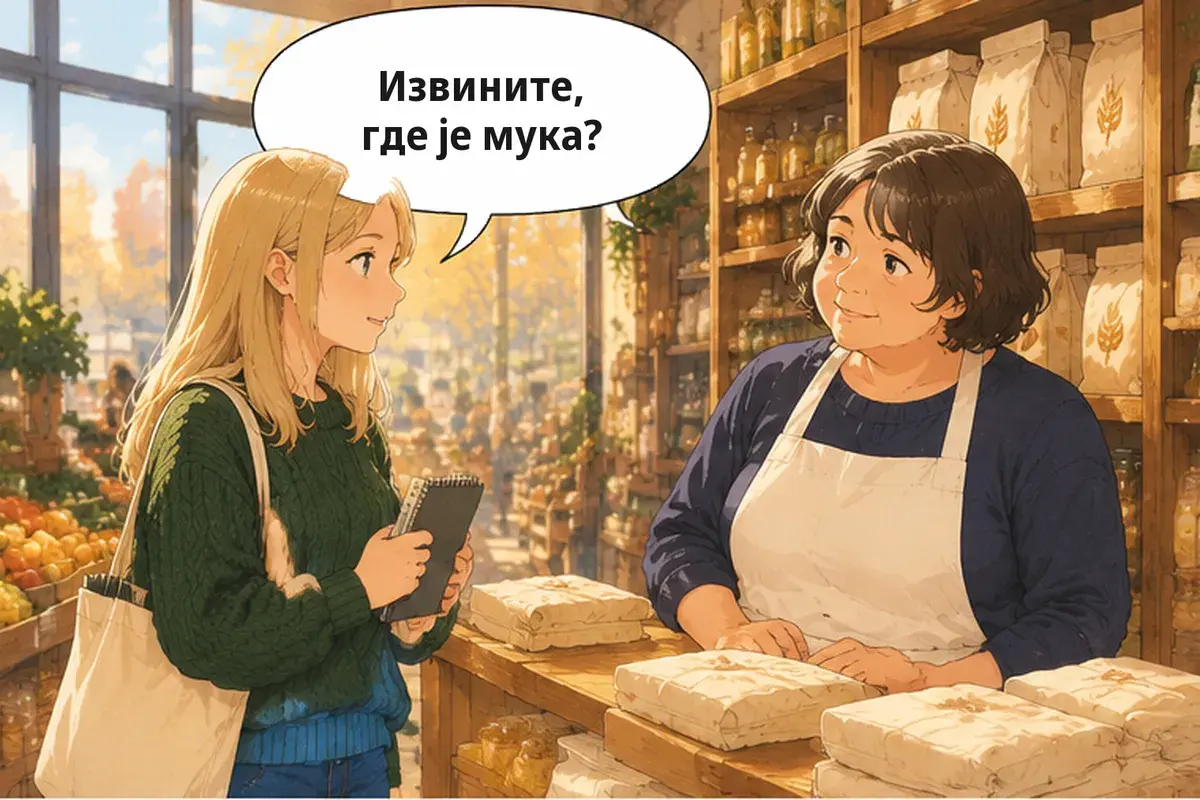
- Ана
Извините, где је мука?
Excuse me, where's the muka? (formal)
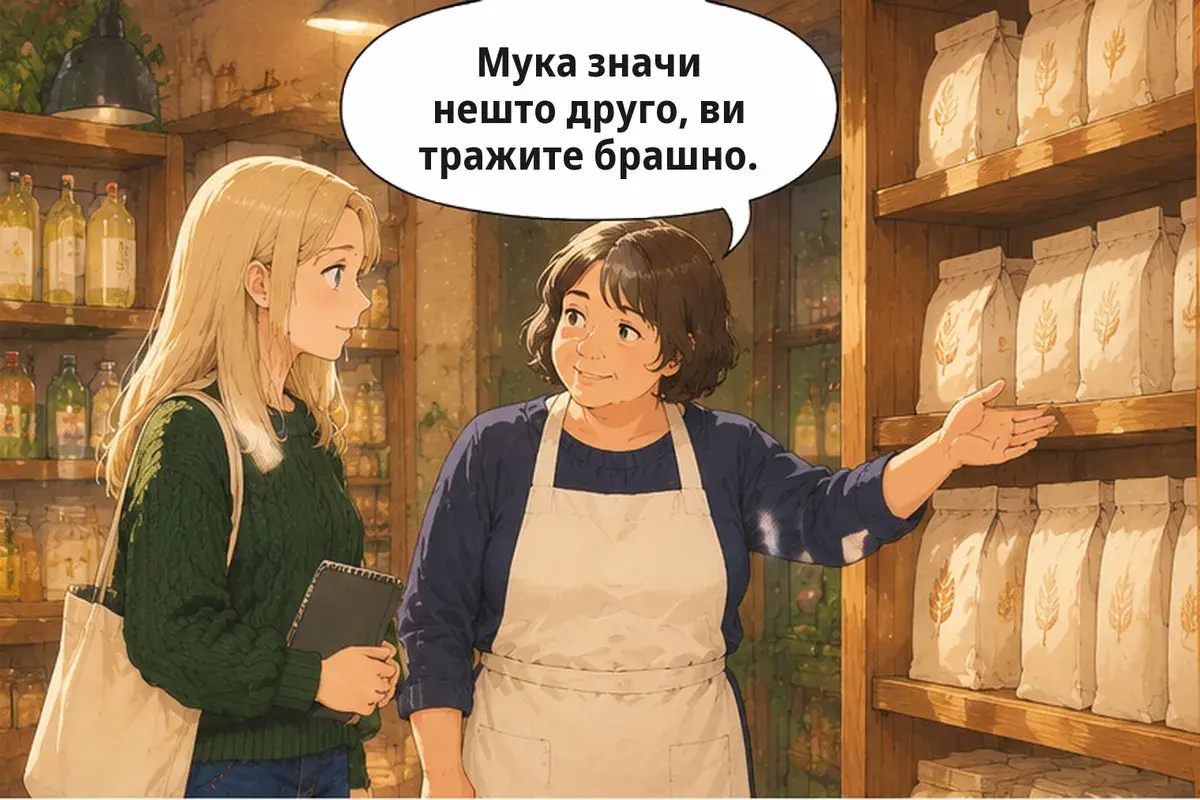
- Продавачица
Мука значи нешто друго, ви тражите брашно.
"Muka" means something else; you're looking for flour (formal).
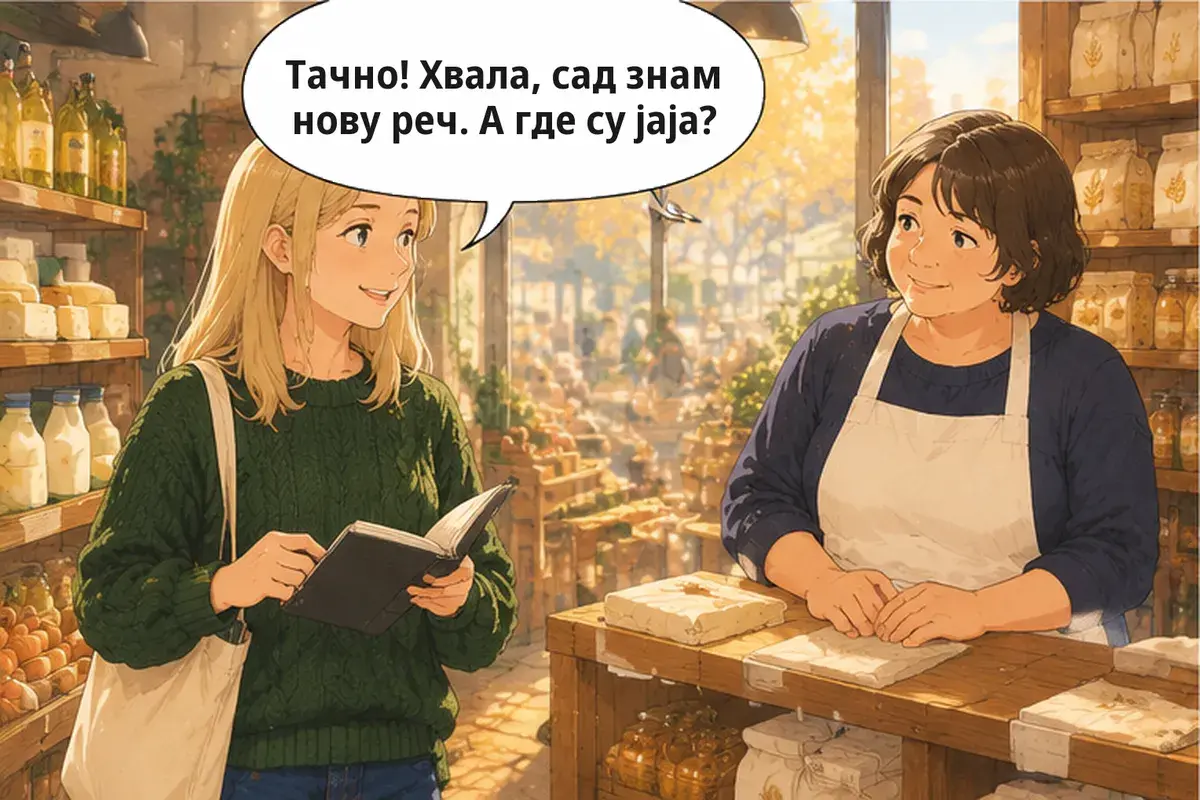
- Ана
Тачно! Хвала, сад знам нову реч. А где су јаја?
Right! Thanks, now I know a new word. And where are the eggs?
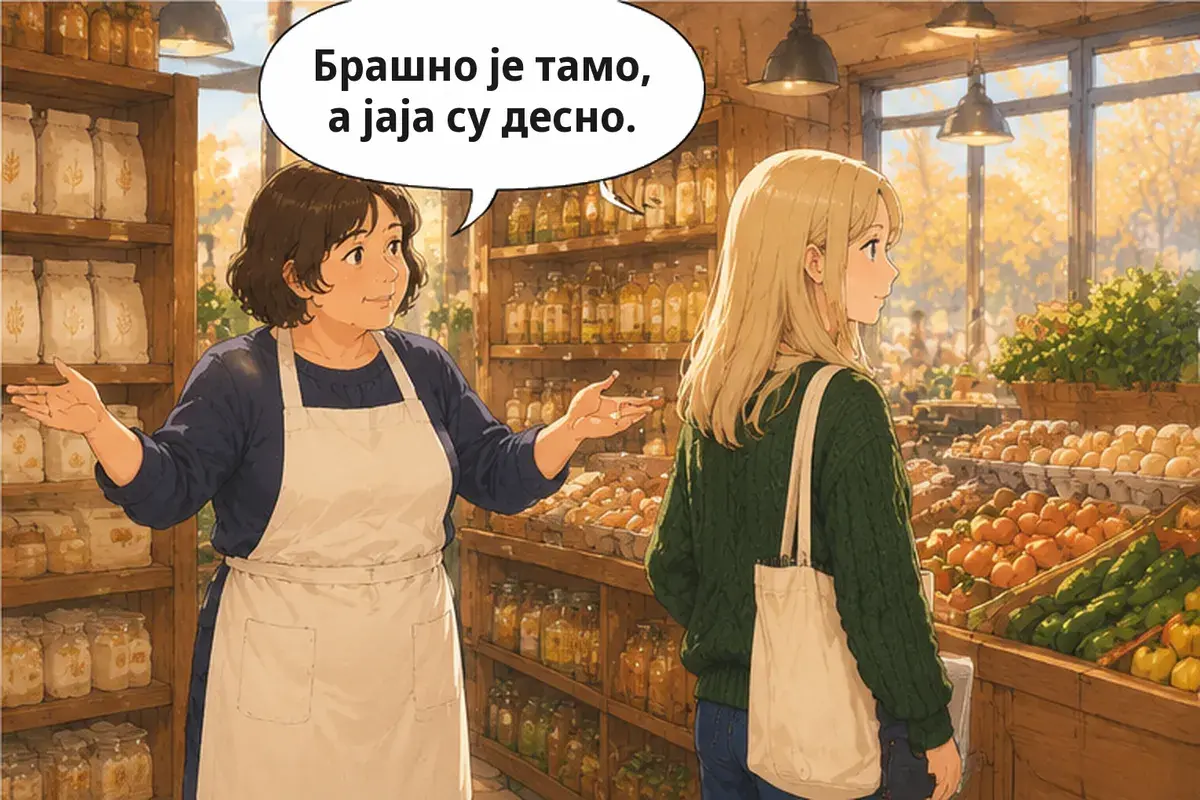
- Продавачица
Брашно је тамо, а јаја су десно.
The flour is over there, and the eggs are on the right.
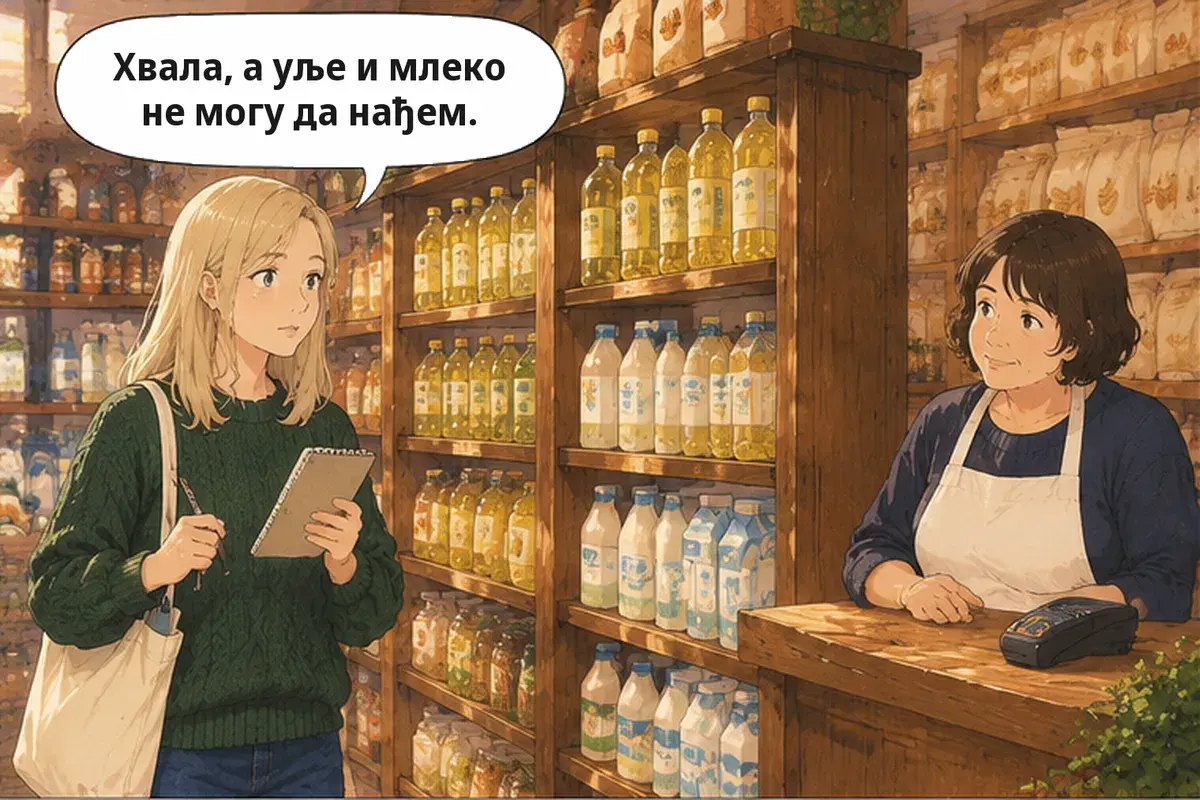
- Ана
Хвала, а уље и млеко не могу да нађем.
Thanks, but I can't find the oil and the milk.
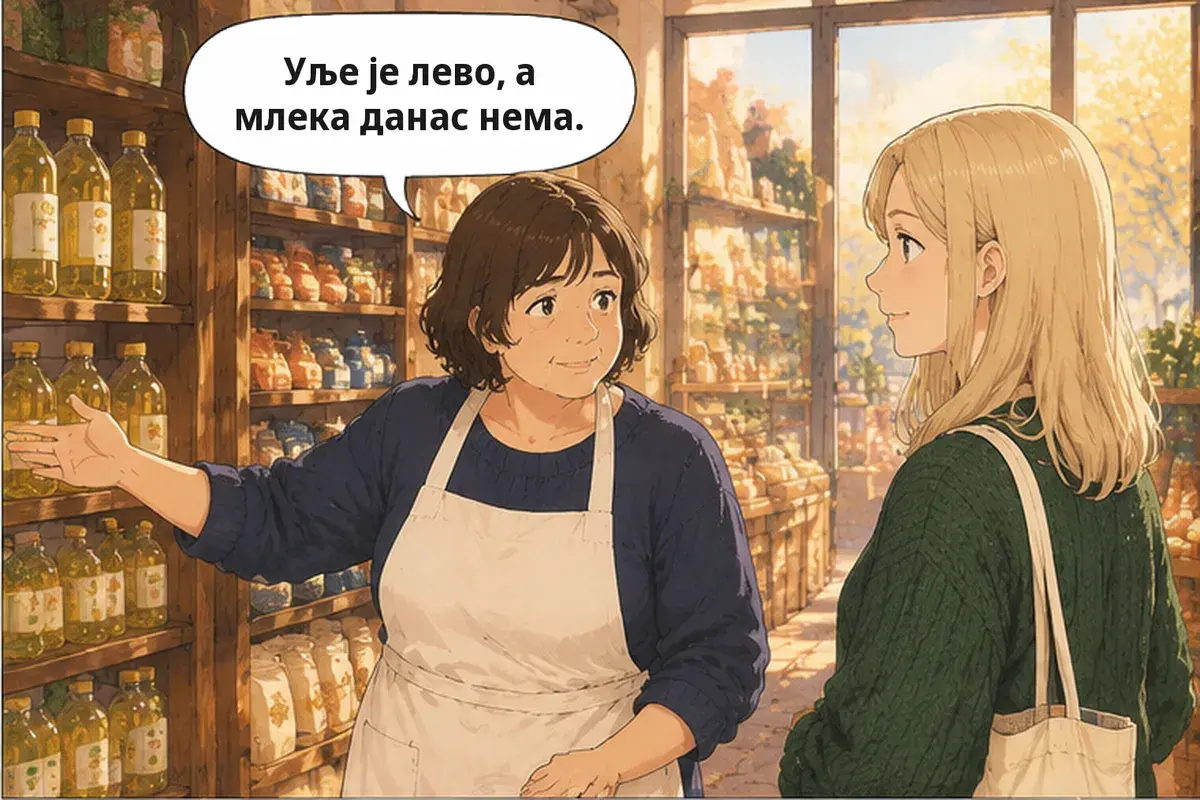
- Продавачица
Уље је лево, а млека данас нема.
The oil is on the left, but there's no milk today.
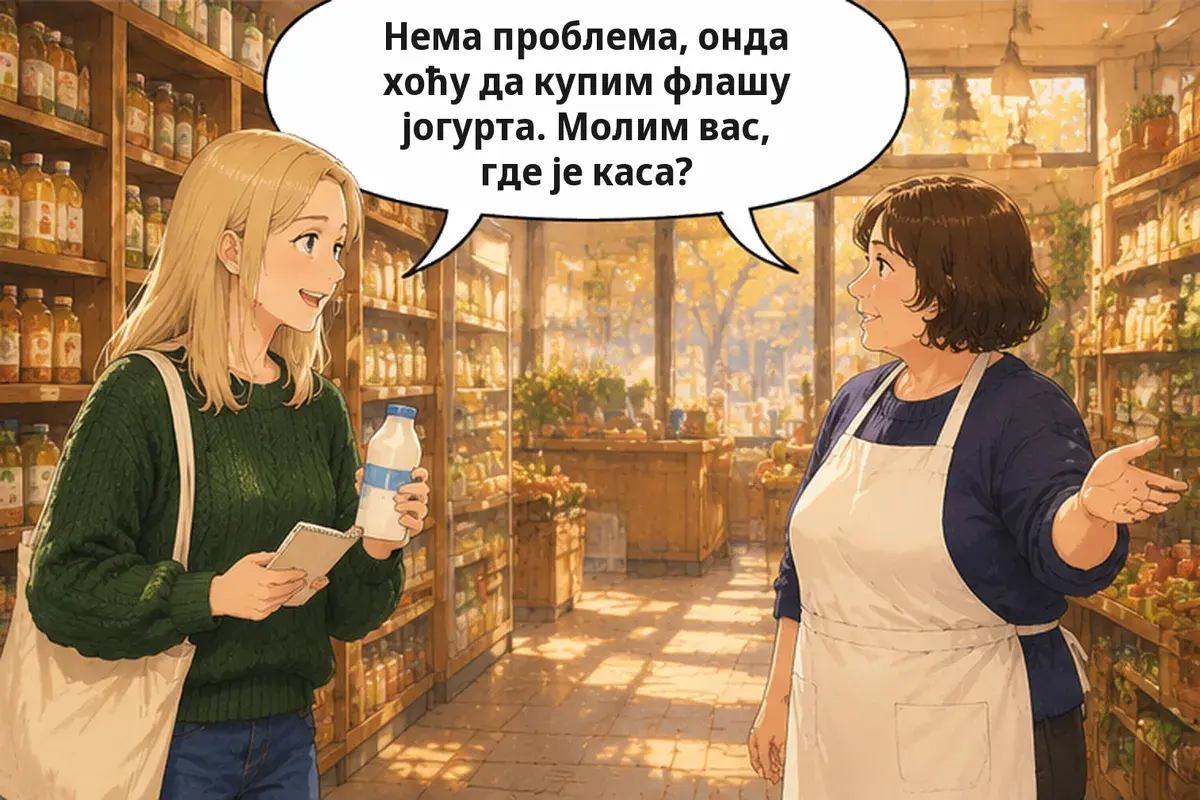
- Ана
Нема проблема, онда хоћу да купим флашу јогурта. Молим вас, где је каса?
No problem, then I want to buy a bottle of yogurt. Where's the checkout, please? (formal)
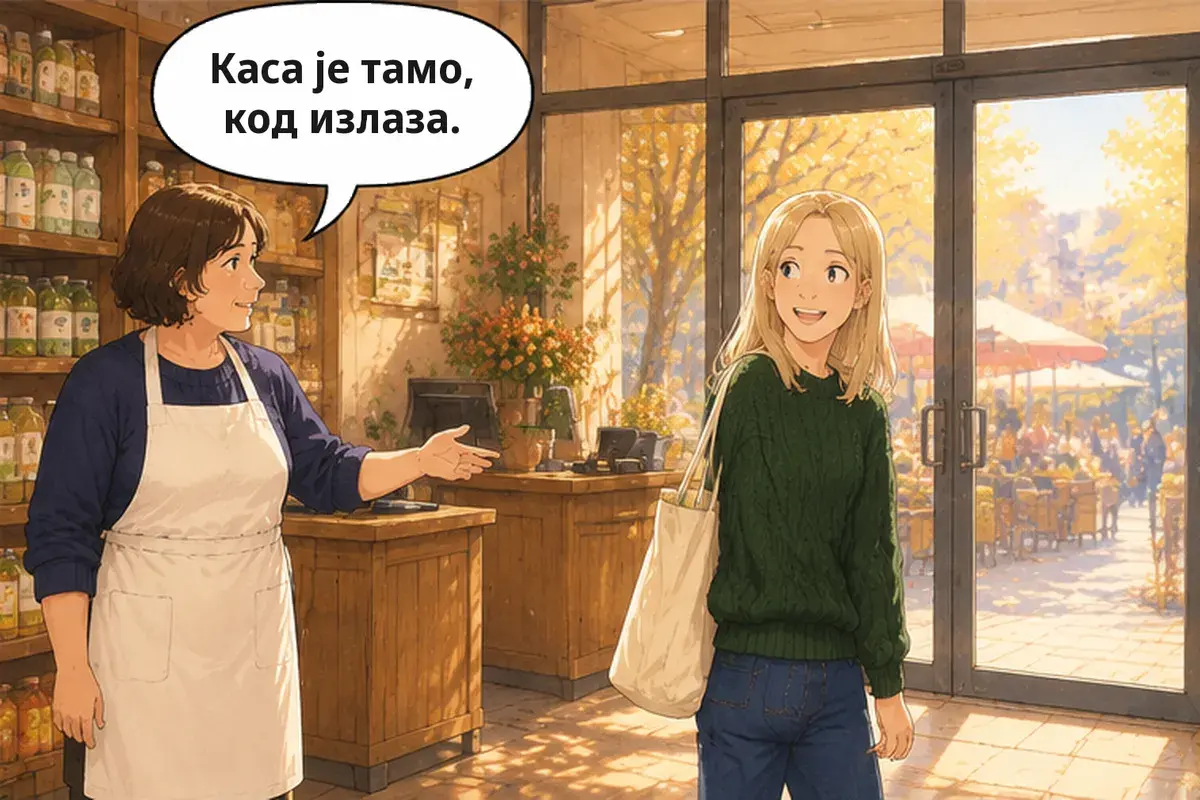
- Продавачица
Каса је тамо, код излаза.
The checkout is over there, by the exit.
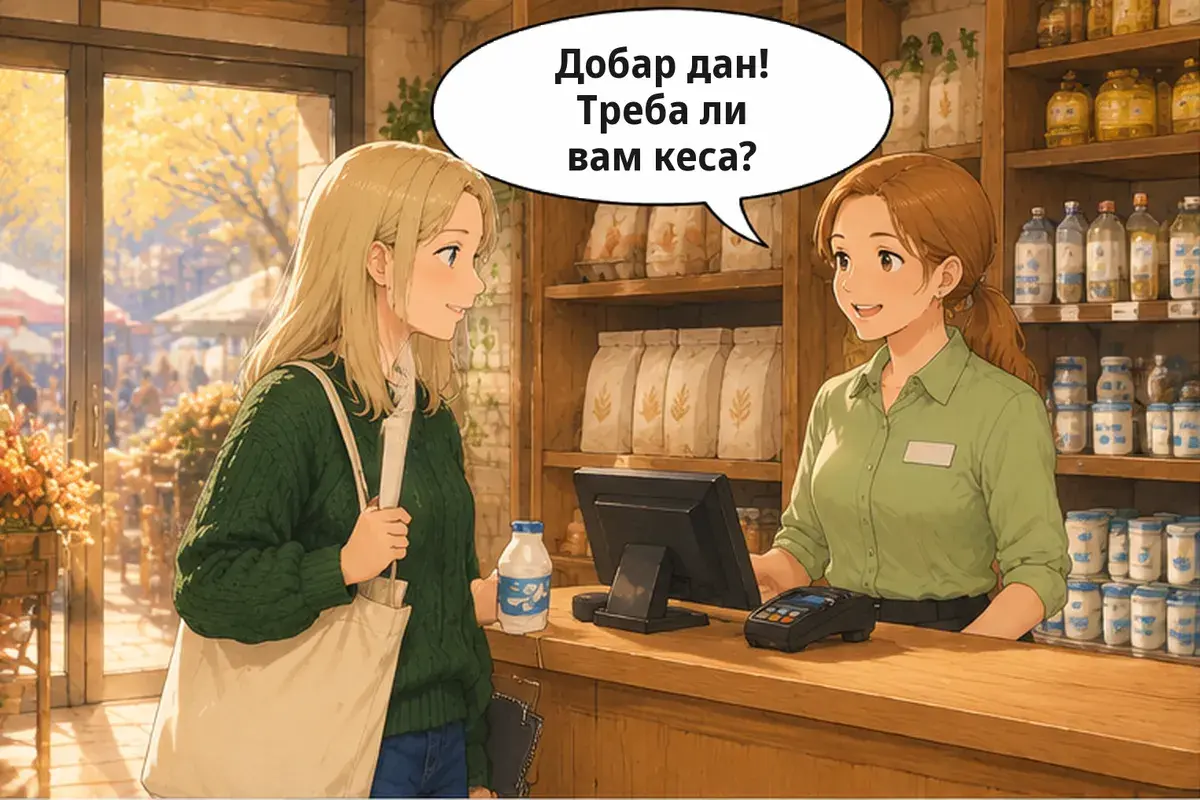
- Касирка
Добар дан! Треба ли вам кеса?
Good afternoon! Do you need a bag? (formal)
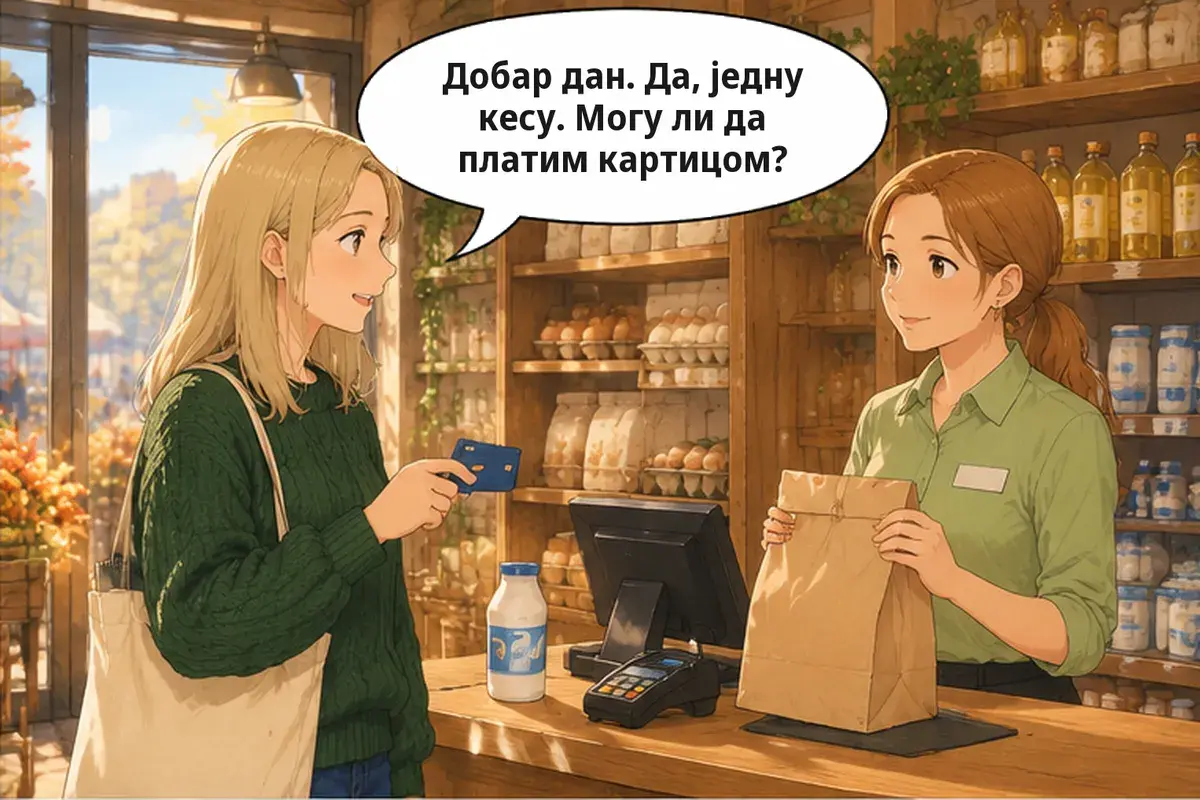
- Ана
Добар дан. Да, једну кесу. Могу ли да платим картицом?
Good afternoon. Yes, one bag. Can I pay by card?
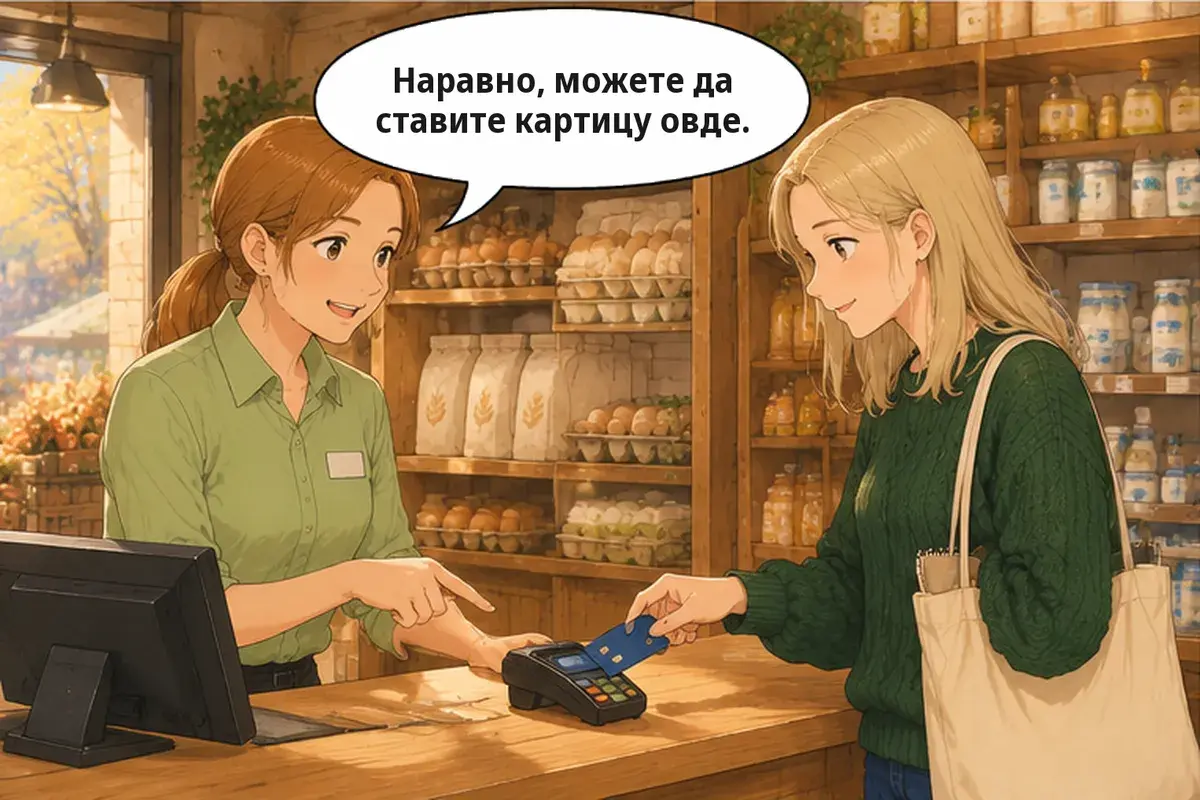
- Касирка
Наравно, можете да ставите картицу овде.
Of course, you can put the card here (formal).
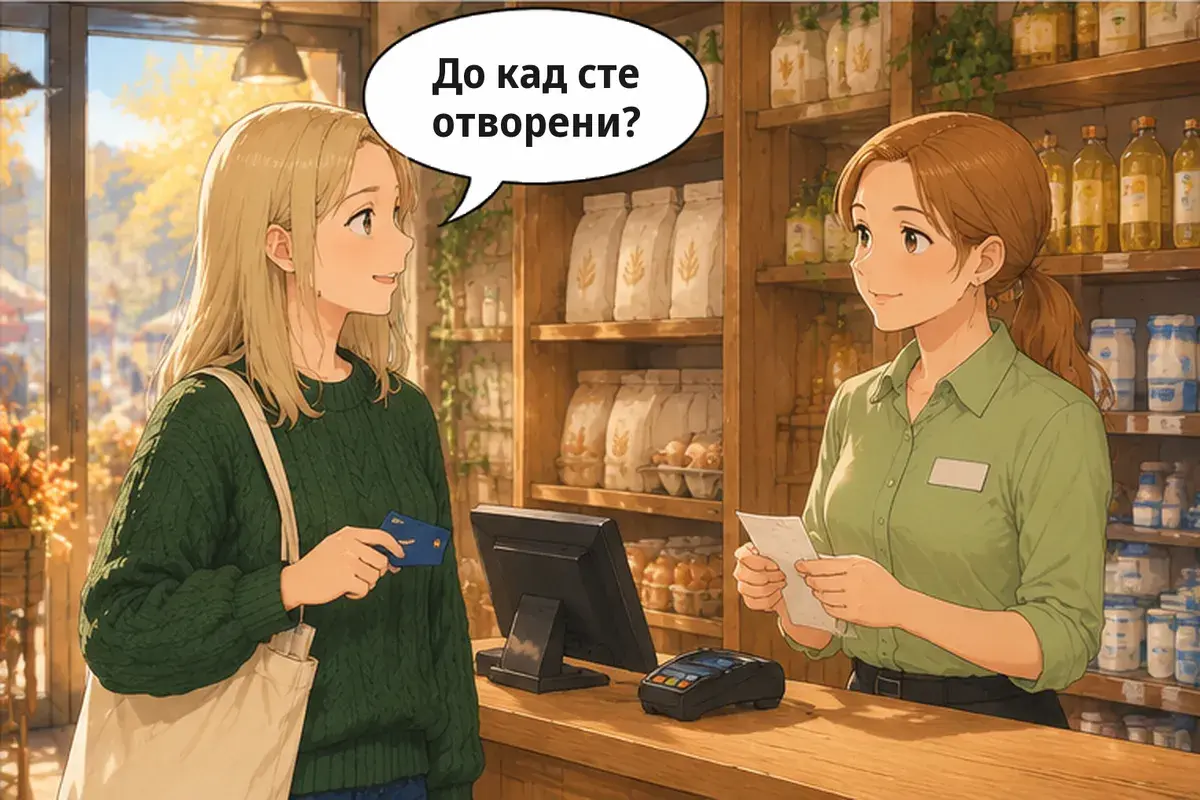
- Ана
До кад сте отворени?
Until what time are you open? (formal)
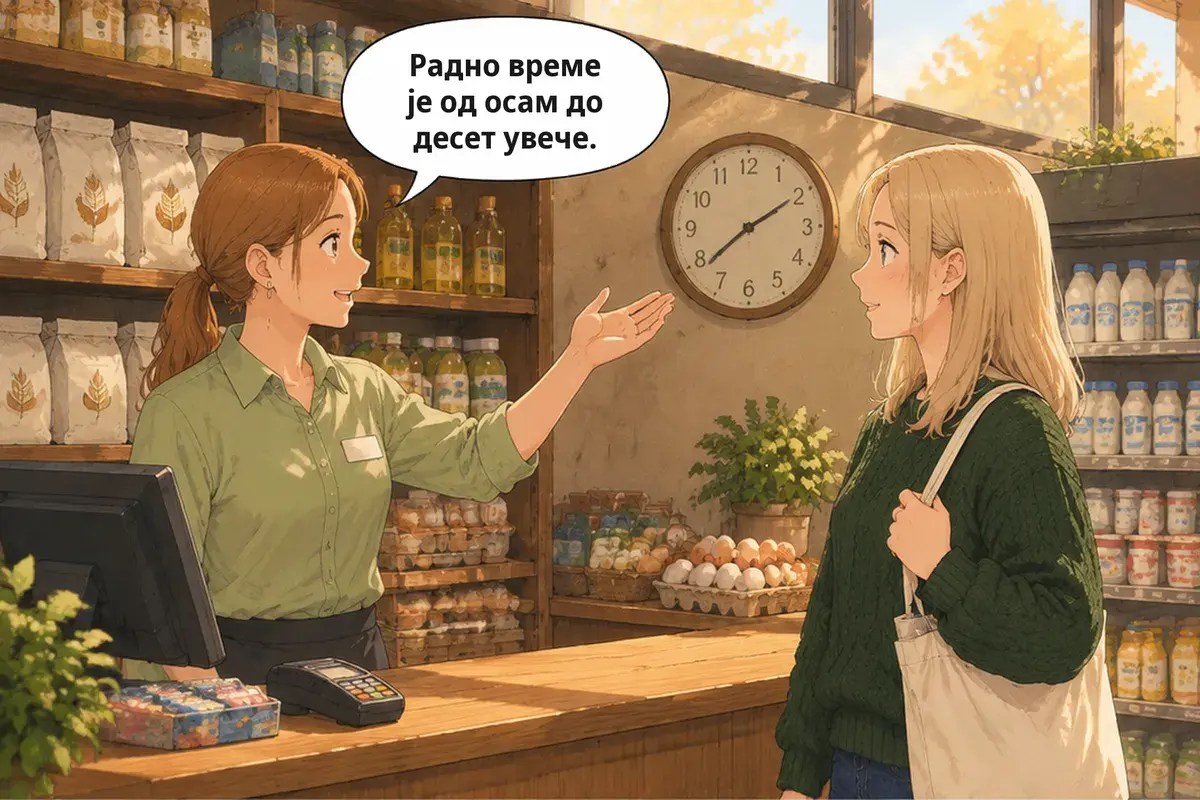
- Касирка
Радно време је од осам до десет увече.
Business hours are from eight to ten in the evening.
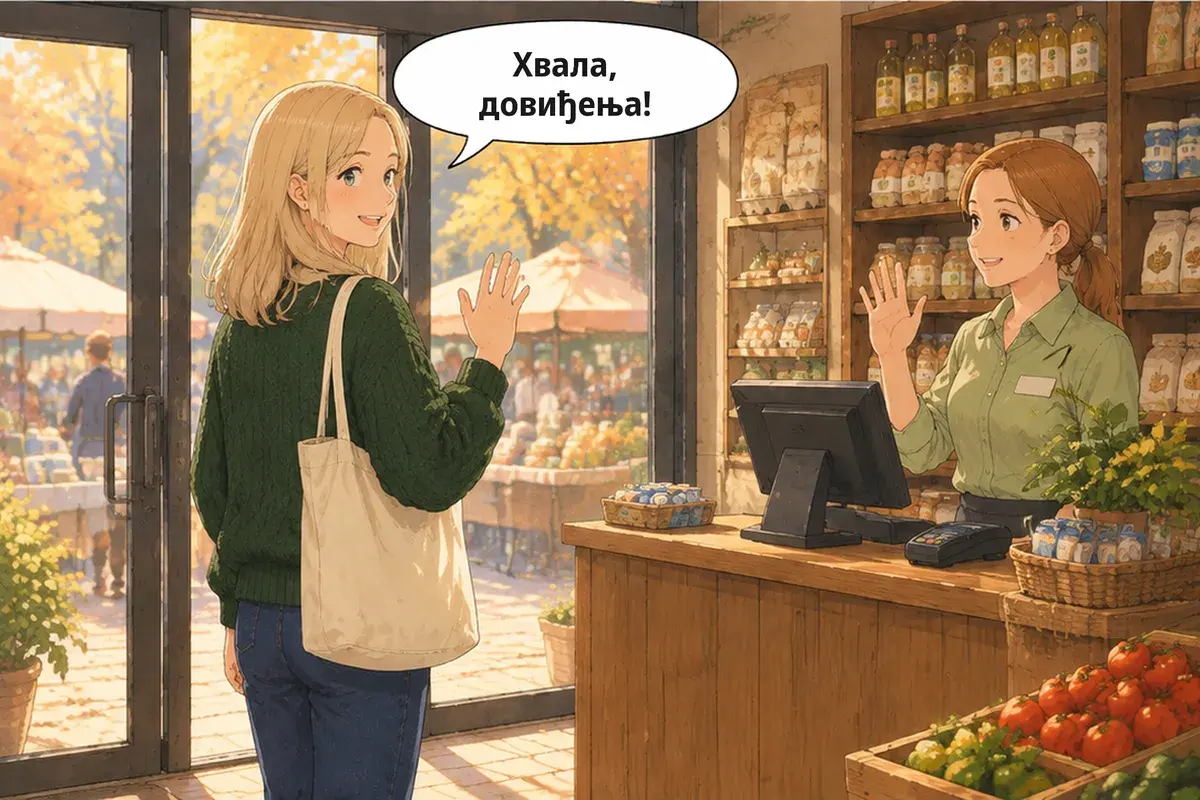
- Ана
Хвала, довиђења!
Thanks, goodbye!
Grammar for this text
Мука значи нешто друго— Ana used the wrong word. Flour isбрашно;мукаmeans torment or nausea.значи— means (fromзначити, theон / она / оноform).Млека данас нема— afterнема(there is no) the missing thing takes the genitive:млеко→млека.Брашно је тамо, а јаја су десно—брашноis singular, soје(is);јајаis plural, soсу(are), just like is and are in English.а— and, with a contrast.Каса је тамо, код излаза—код излаза— by the exit: afterкодcomes the genitive (излаз→излаза).Онда хоћу да купим флашу јогурта—хоћу да купим— I want to buy (да+ present, unit 10).флашуis the accusative, the object (what do I buy?), andјогуртаis the genitive (a bottle of what?).Треба ли вам кеса?— a set phrase: Do you need a bag? The wordвам(to you) and its place in the sentence come at A2; for now learn the whole phrase.Могу ли да платим картицом?— a set phrase: Can I pay by card?картицом(by card) is the instrumental case, which comes at A2.Радно време је од осам до десет увече—радно време— business hours (word for word 'working time');од осам до десет увече— from eight to ten in the evening: withoutувечеyou could understand ten in the morning.
Words and grammar of the unit: Buy groceries for dinner.
Learn the words from the texts with flashcards
In the app, you can tap any word in a text to see its translation, forms and examples, and new words stick with flashcards. 15 minutes a day.
Start for freeEverything is open for free. No card needed to sign up.