
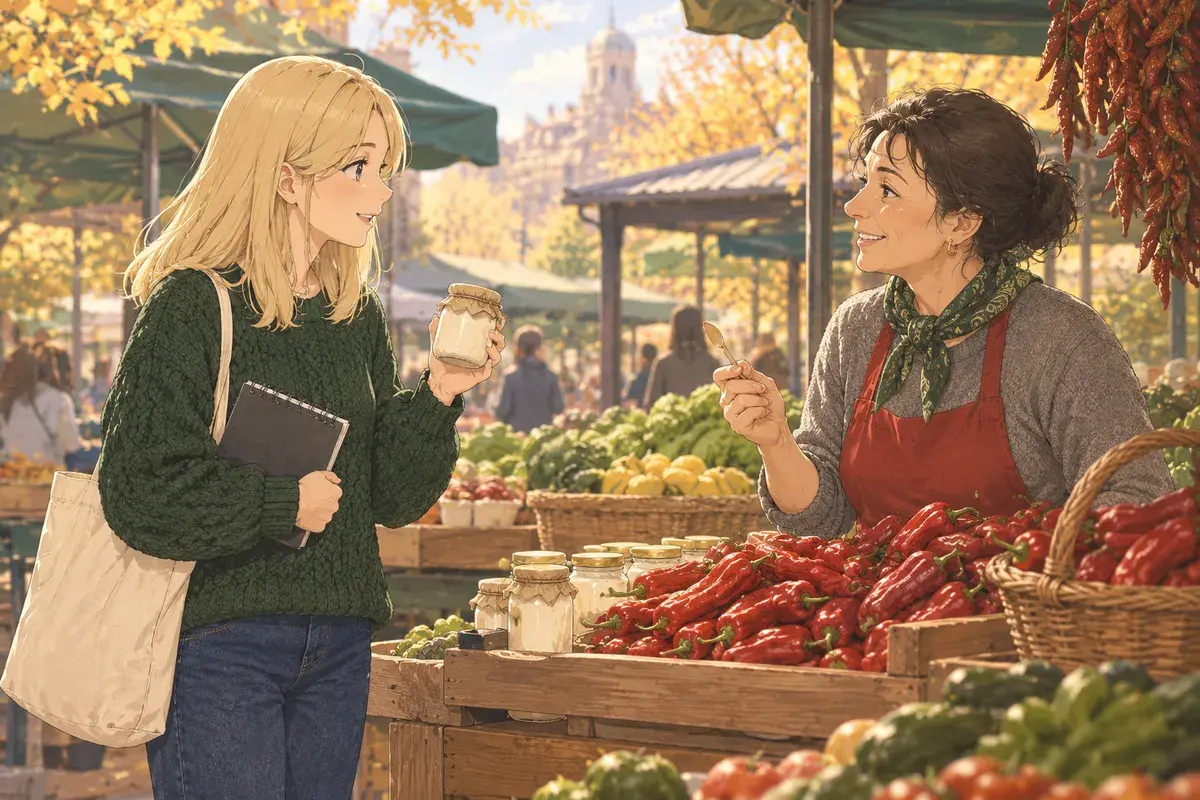
Serbian dialogue with translation · A1 · 14 lines
Имате ли кајмак? Do you have kajmak?
Comic · 14 panels
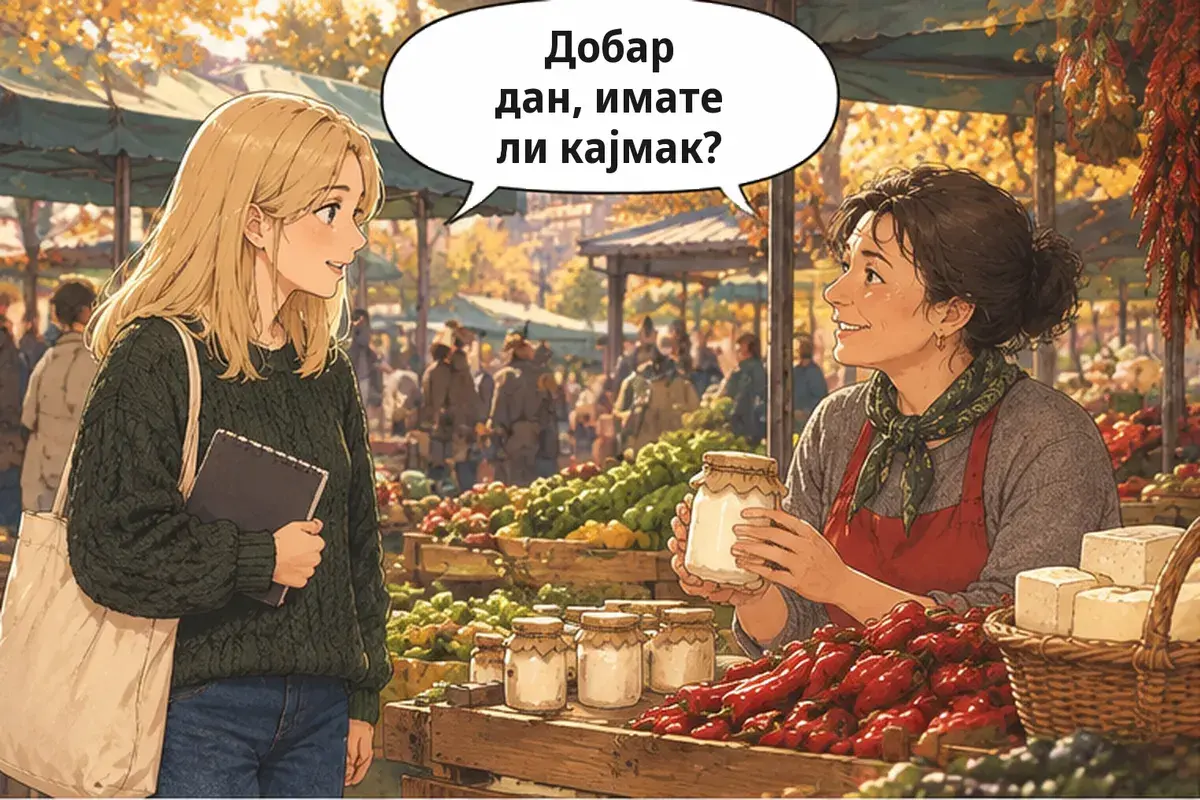
- Ана
Добар дан, имате ли кајмак?
Good afternoon, do you have kajmak? (formal)
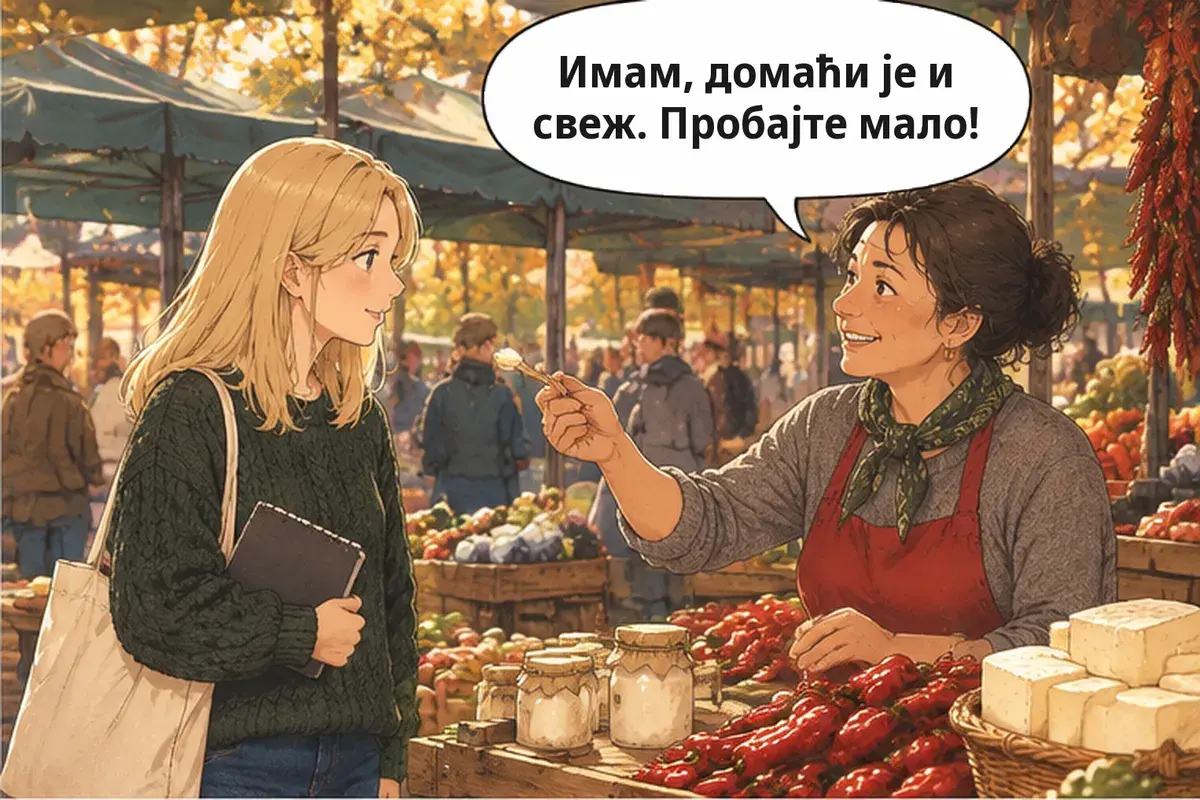
- Продавачица
Имам, домаћи је и свеж. Пробајте мало!
I do, it's homemade and fresh. Try a little! (formal)
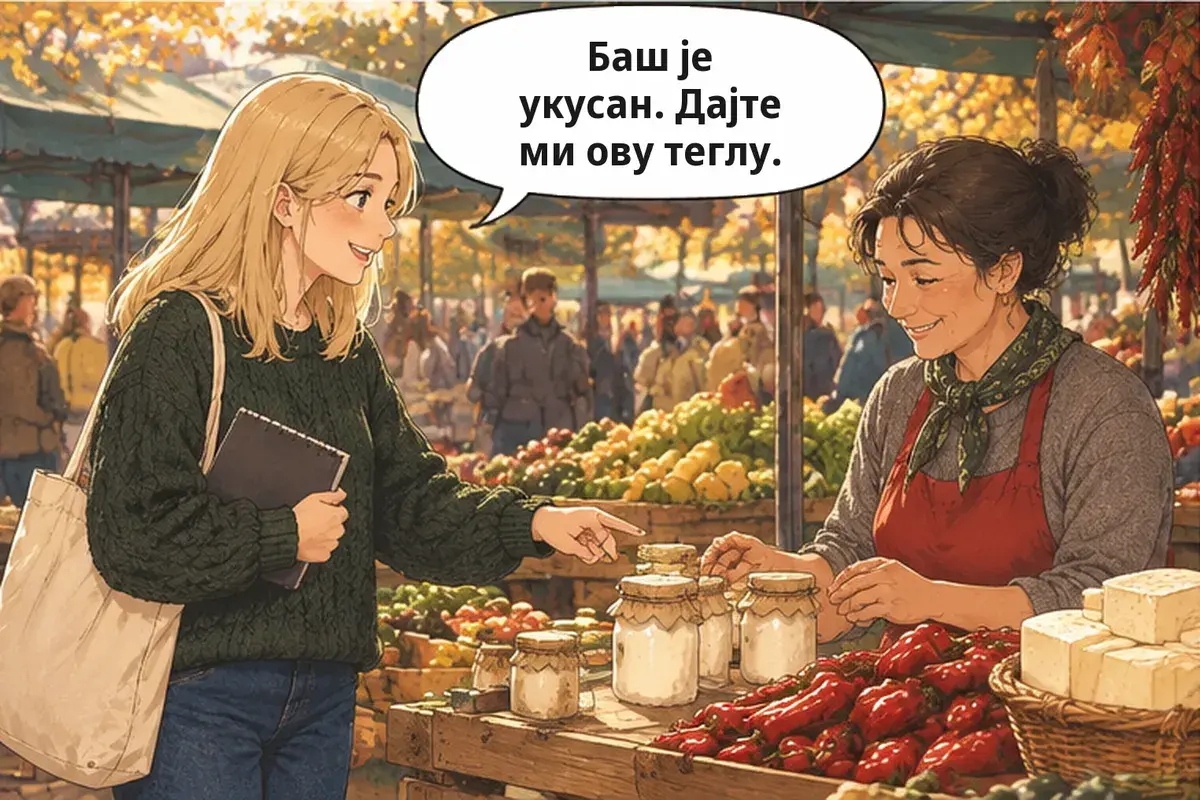
- Ана
Баш је укусан. Дајте ми ову теглу.
It's really tasty. Give me this jar (formal).
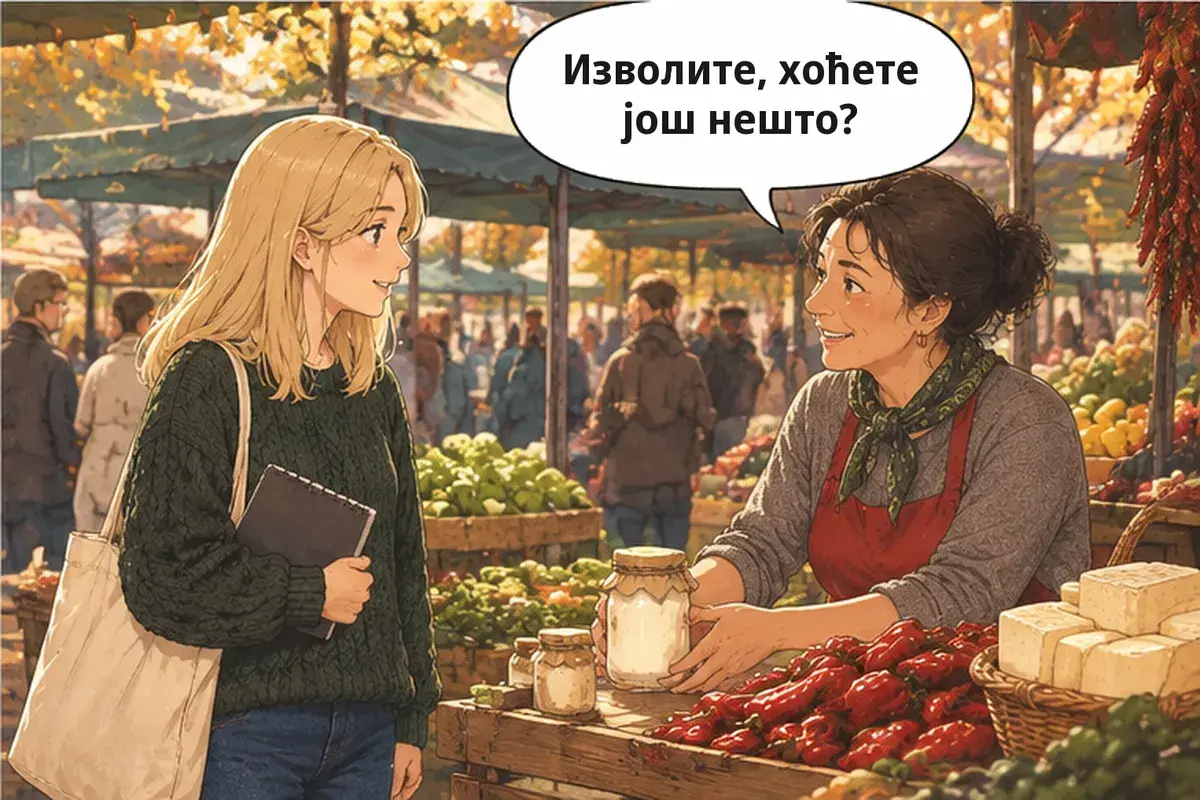
- Продавачица
Изволите, хоћете још нешто?
Here you go, do you want anything else? (formal)
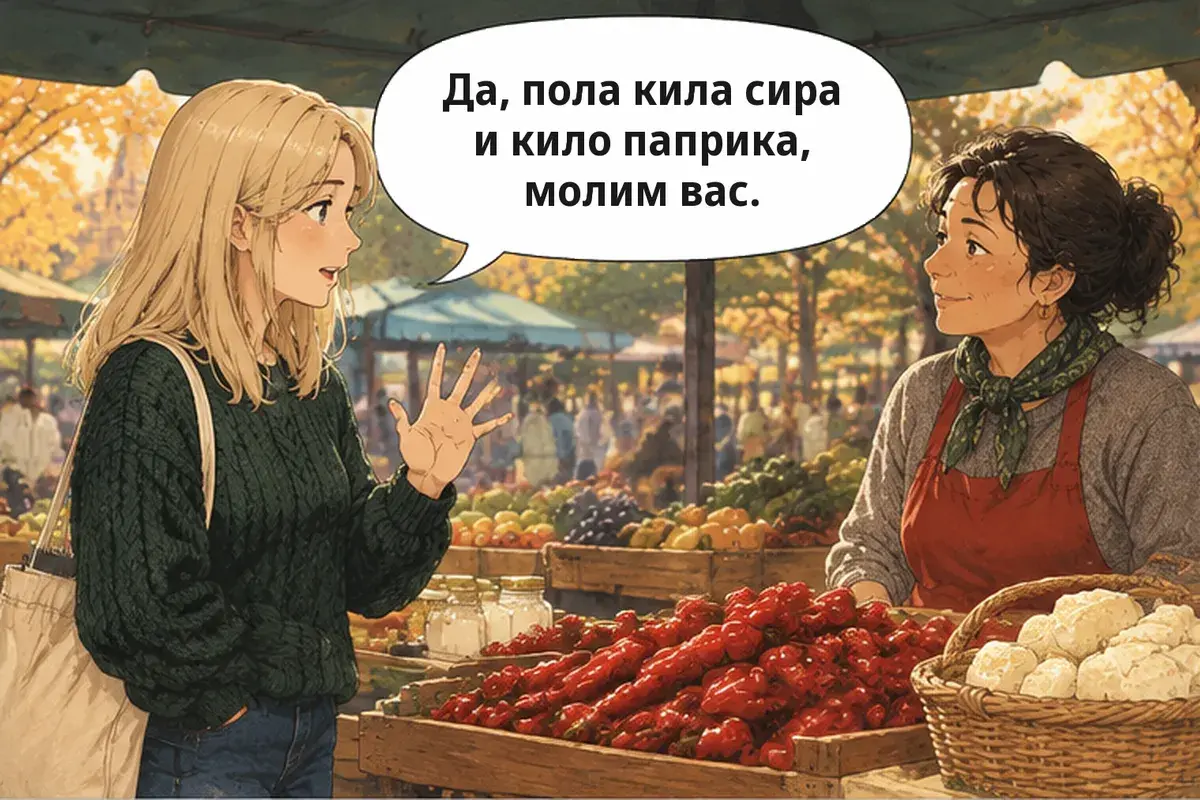
- Ана
Да, пола кила сира и кило паприка, молим вас.
Yes, half a kilo of cheese and a kilo of peppers, please (formal).
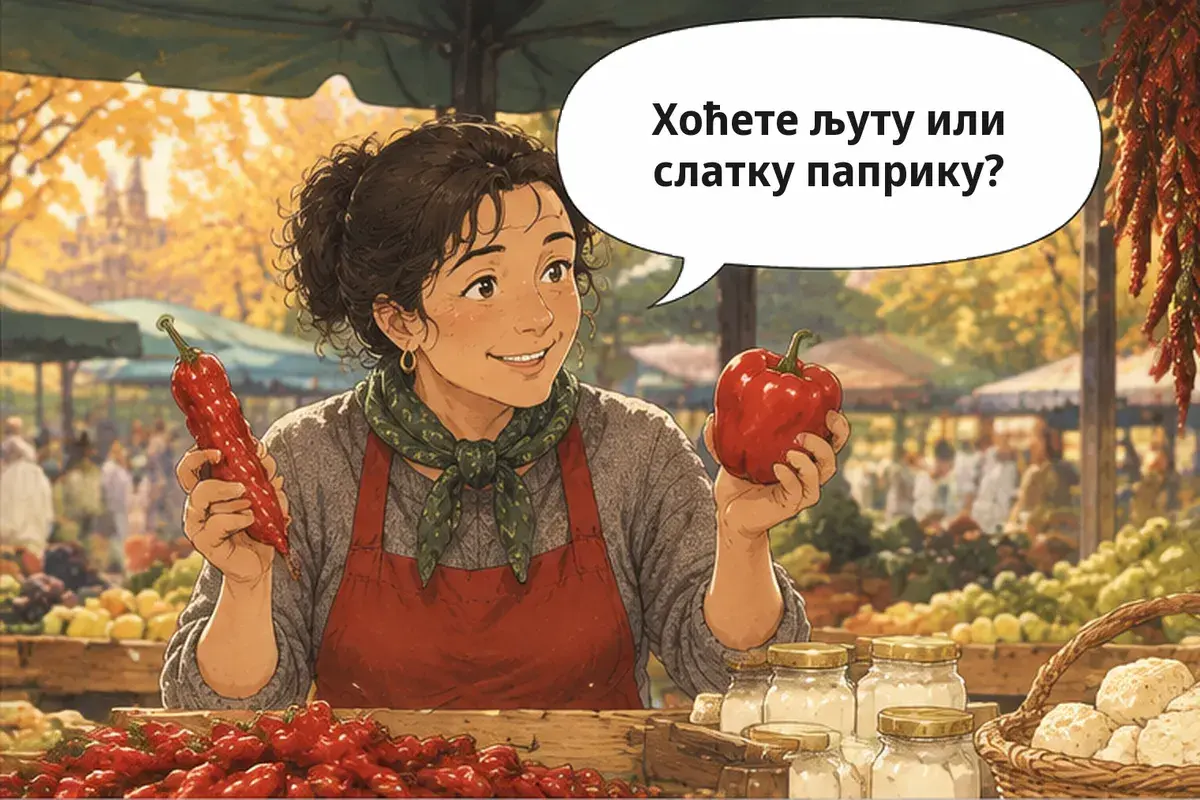
- Продавачица
Хоћете љуту или слатку паприку?
Do you want a hot pepper or a sweet one? (formal)
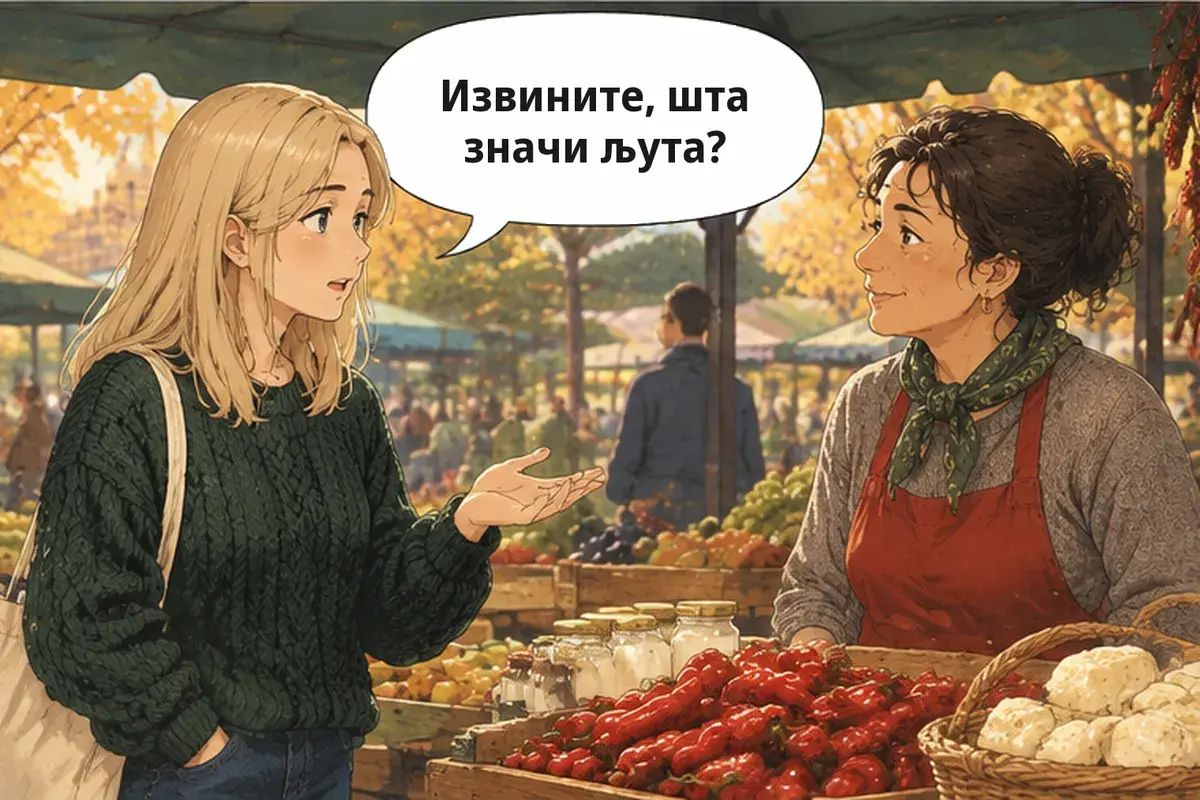
- Ана
Извините, шта значи љута?
Excuse me, what does "ljuta" mean? (formal)
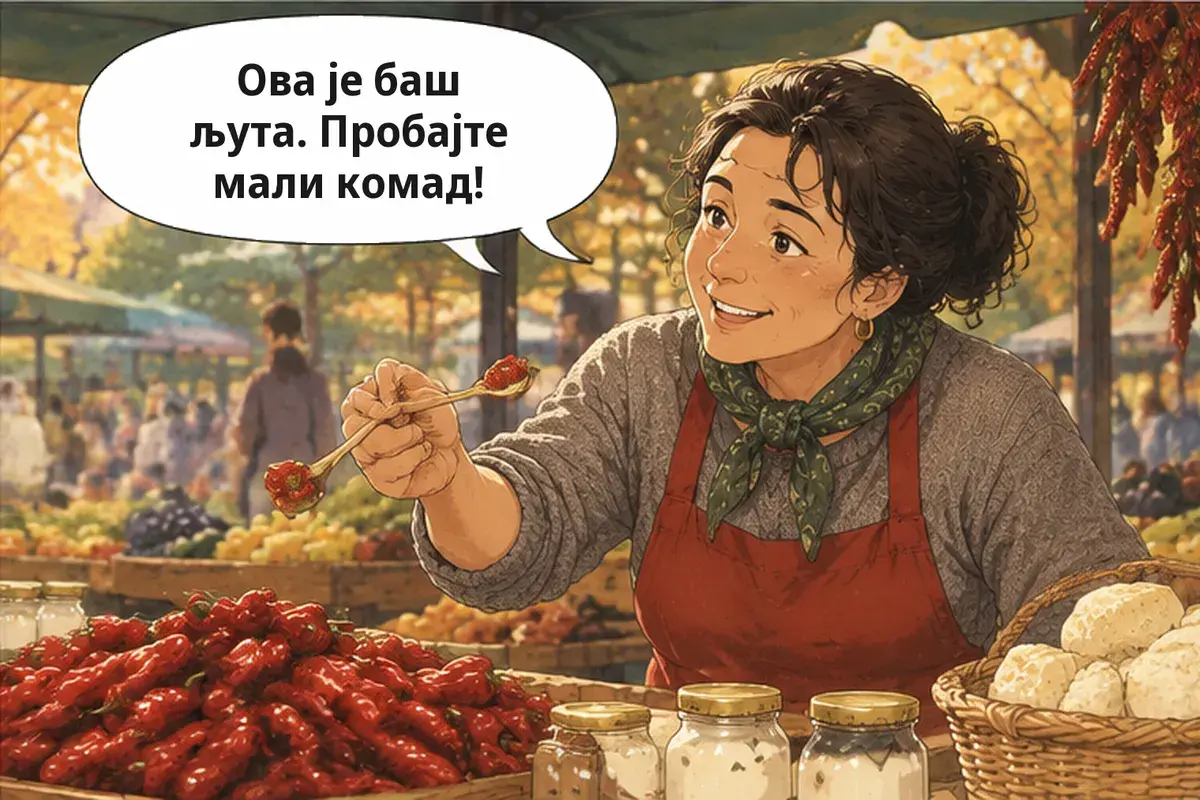
- Продавачица
Ова је баш љута. Пробајте мали комад!
This one is really hot. Try a small piece! (formal)
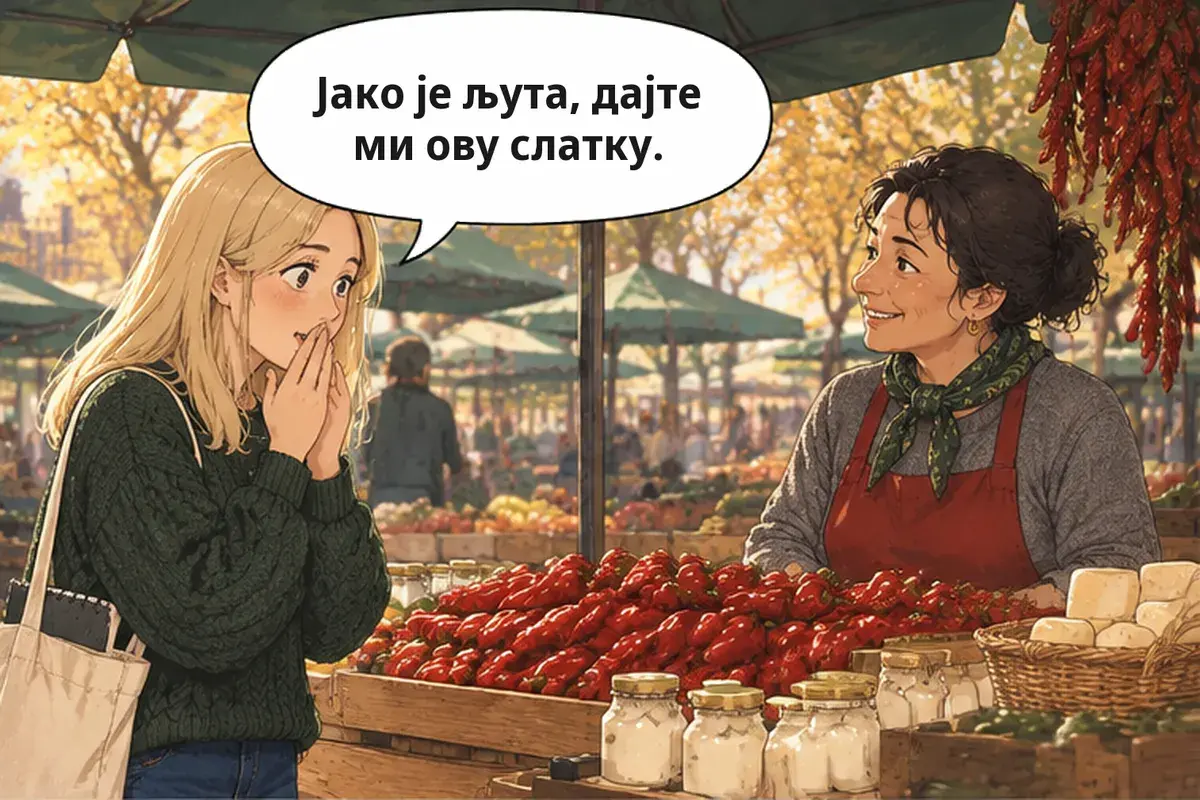
- Ана
Јако је љута, дајте ми ову слатку.
It's very hot, give me this sweet one (formal).
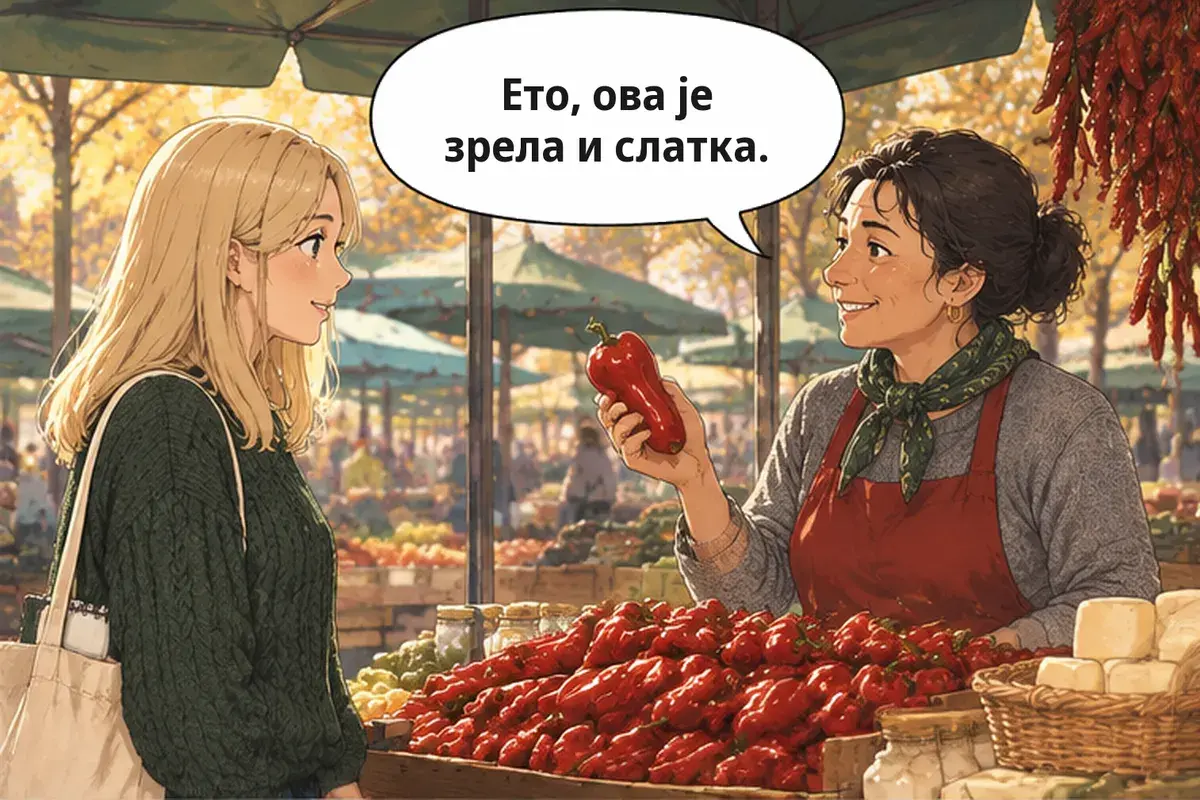
- Продавачица
Ето, ова је зрела и слатка.
There you go, this one is ripe and sweet.
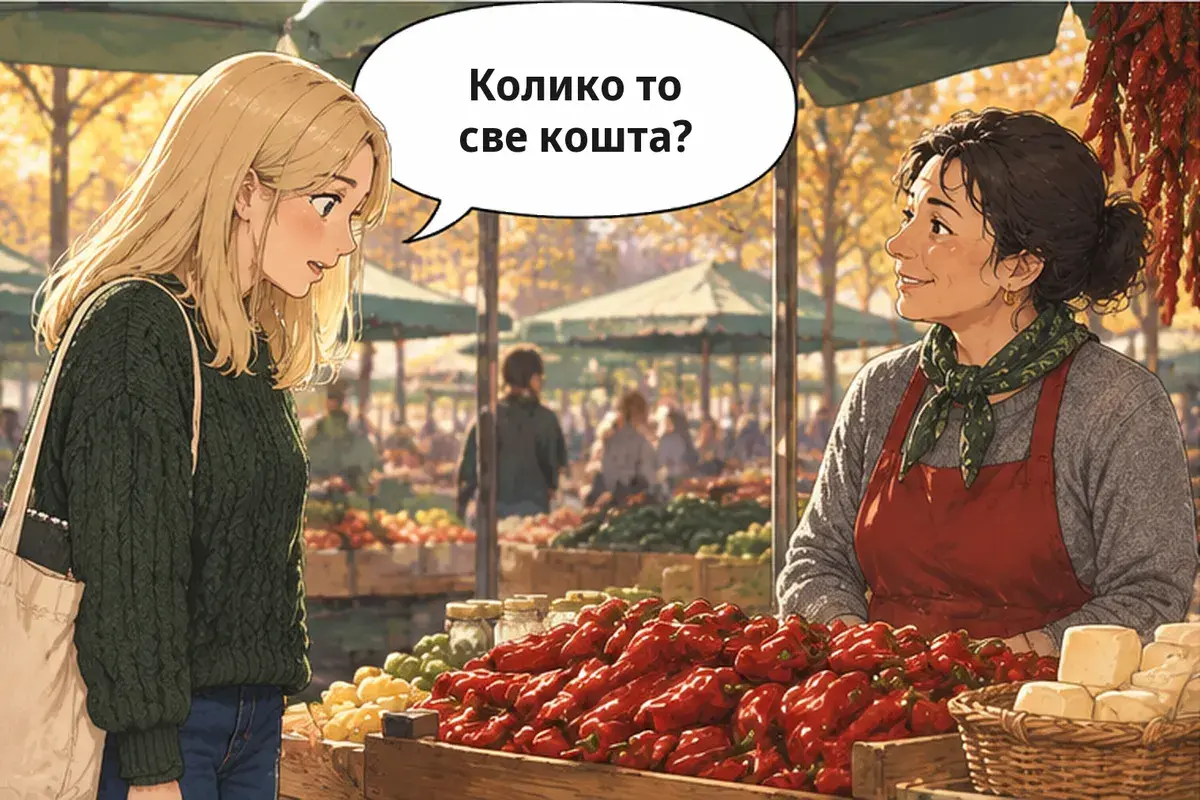
- Ана
Колико то све кошта?
How much does all that cost?
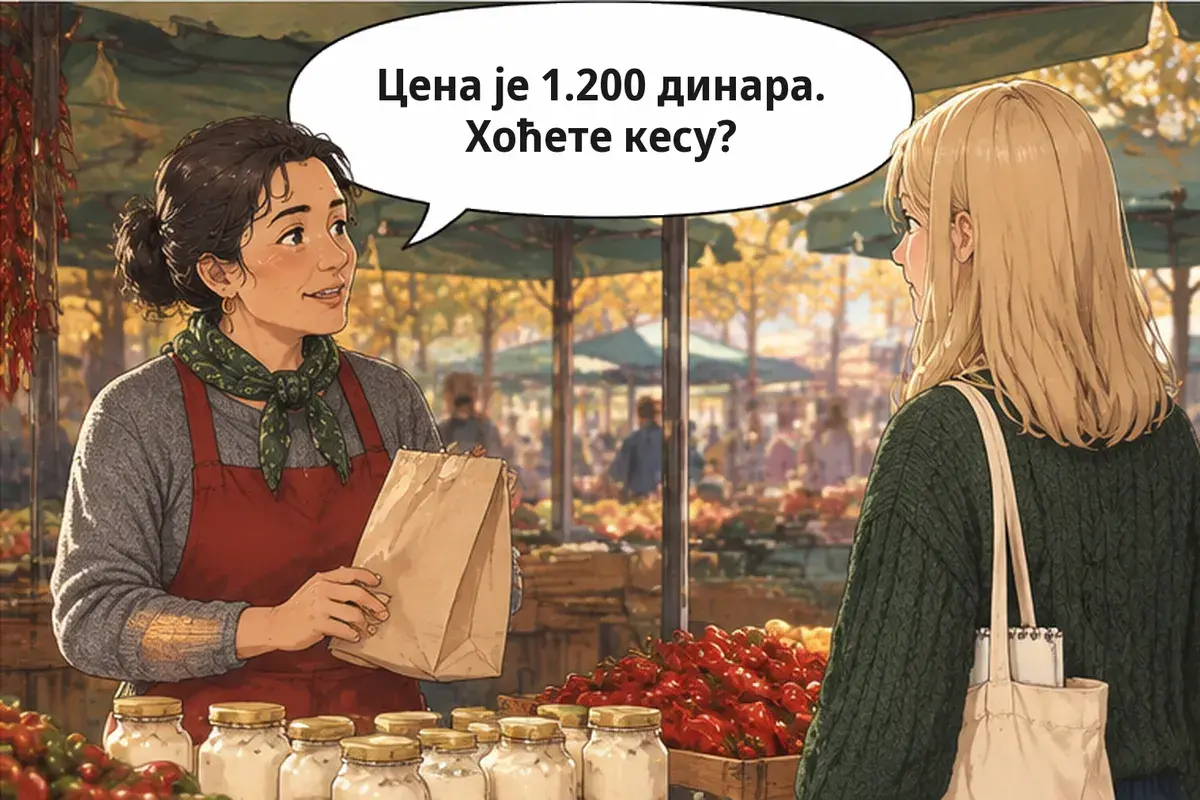
- Продавачица
Цена је 1.200 динара. Хоћете кесу?
The price is 1,200 dinars. Do you want a bag? (formal)
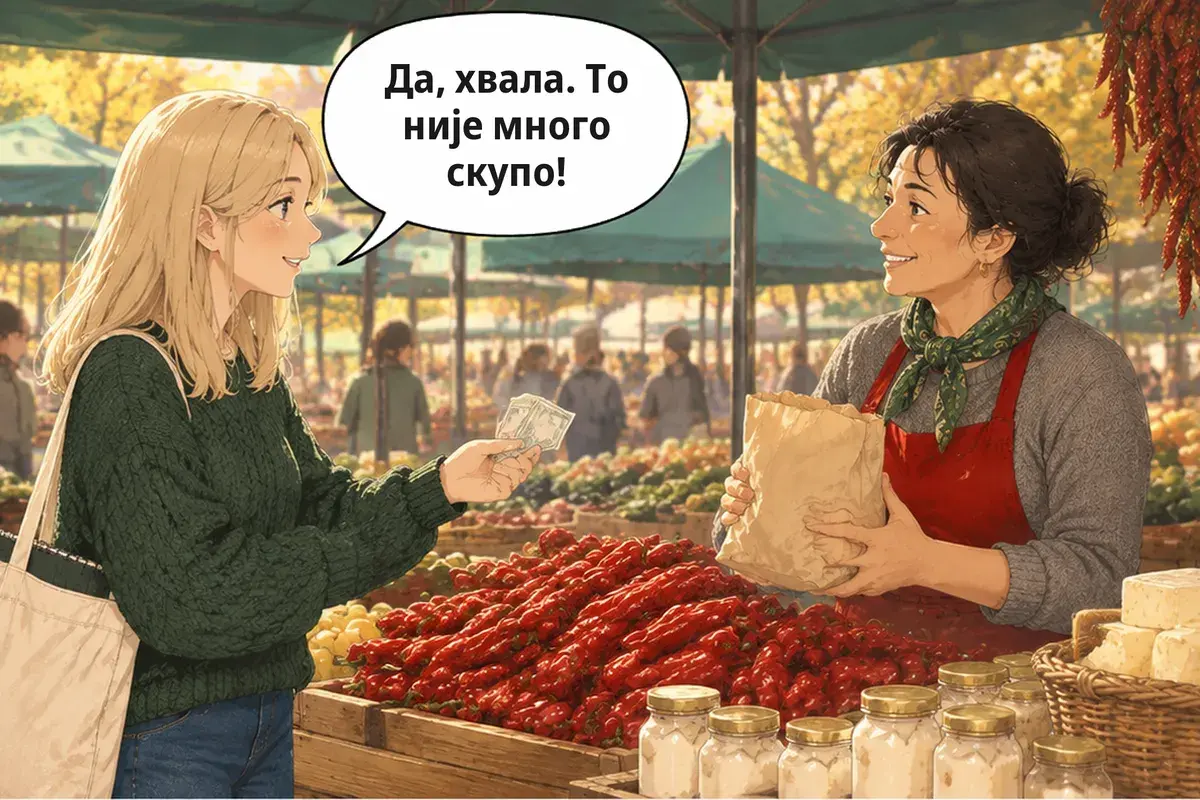
- Ана
Да, хвала. То није много скупо!
Yes, thanks. That's not very expensive!
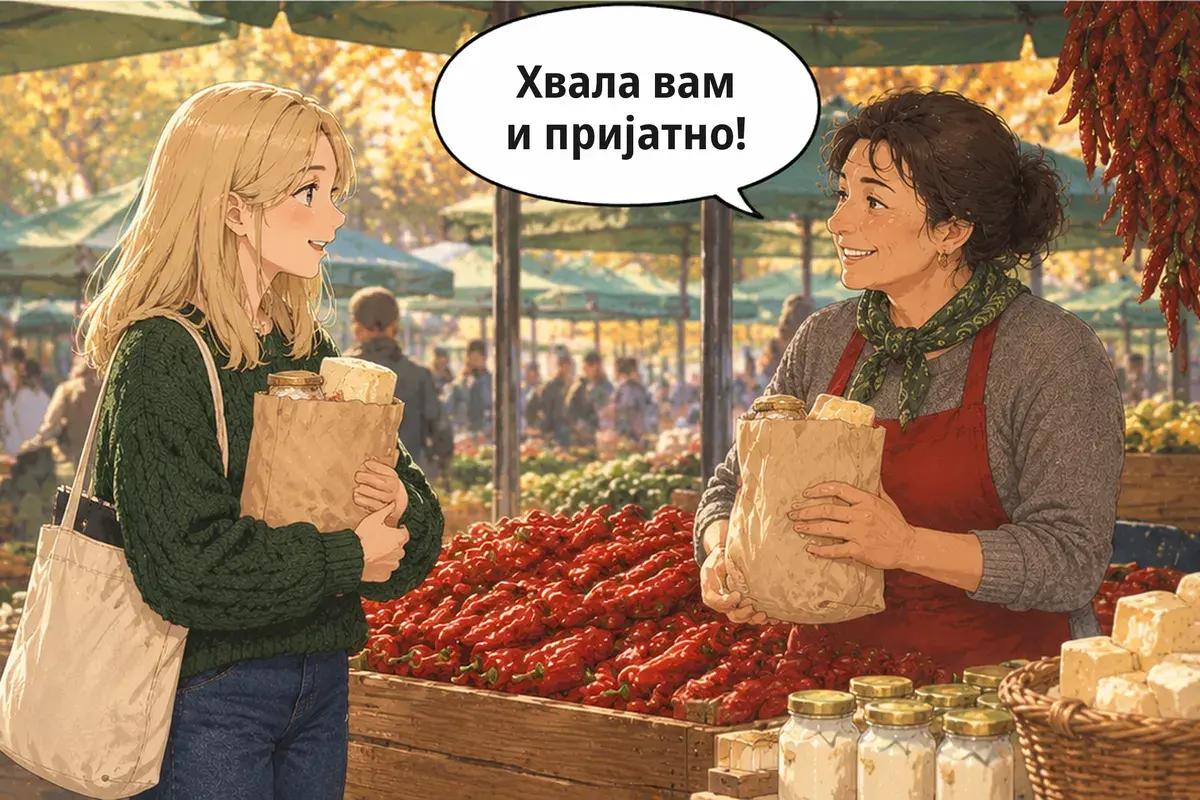
- Продавачица
Хвала вам и пријатно!
Thank you, and have a nice day! (formal)
Grammar for this text
Дајте ми ову теглу.— give me this jar.Дајте миis a set phrase for asking:дајтеis theвиform ofдати(to give),миmeans "to me". How it's built comes at A2; for now, learn it whole. It'sтеглу, notтегла: the jar is the object (what you ask for), so the feminine-аbecomes-у(the accusative).Изволите, хоћете још нешто?—изволитеis "here you go" (unit 2).хоћете— you want (хтети, unit 3): this is what the vendor asks after handing over what you bought.Пола кила сира и кило паприка, молим вас—пола кила сираis half a kilo of cheese, a ready-made amount; the formсираis explained in unit 12. Afterкилоthe wordпаприкаalso has a special form (unit 12 too), so say onlyкило паприка, not ✗кило паприке.Хоћете љуту или слатку паприку?—хоћетеis "you want", as above.паприку,љуту,слатку: the noun and both adjectives next to it take-у(the accusative, likeтеглу).Извините, шта значи љута?— Ana doesn't know the word: about food,љутmeans hot, spicy. The vendor answers with a taste:Пробајте мали комад!(комадis a masculine thing, so it doesn't change in the accusative).Цена је 1.200 динара. Хоћете кесу?—ценаis the price;1.200is one thousand two hundred: Serbian separates thousands with a period, English with a comma (unit 4).Хоћете кесу?— do you want a bag?:кесаbecomesкесу(the accusative).Хвала вам и пријатно!—Хвала вамis "thank you" to someone you callви(вамmeans "to you"; the rule comes at A2).Пријатно!wishes you a good meal; when you leave a shop, it means "have a nice day".
Words and grammar of the unit: Buy vegetables and cheese at the market.
Learn the words from the texts with flashcards
In the app, you can tap any word in a text to see its translation, forms and examples, and new words stick with flashcards. 15 minutes a day.
Start for freeEverything is open for free. No card needed to sign up.