

Serbian dialogue with translation · A1 · 14 lines
Срећан пут! Дођите опет! Have a good trip! Come again!
Comic · 14 panels
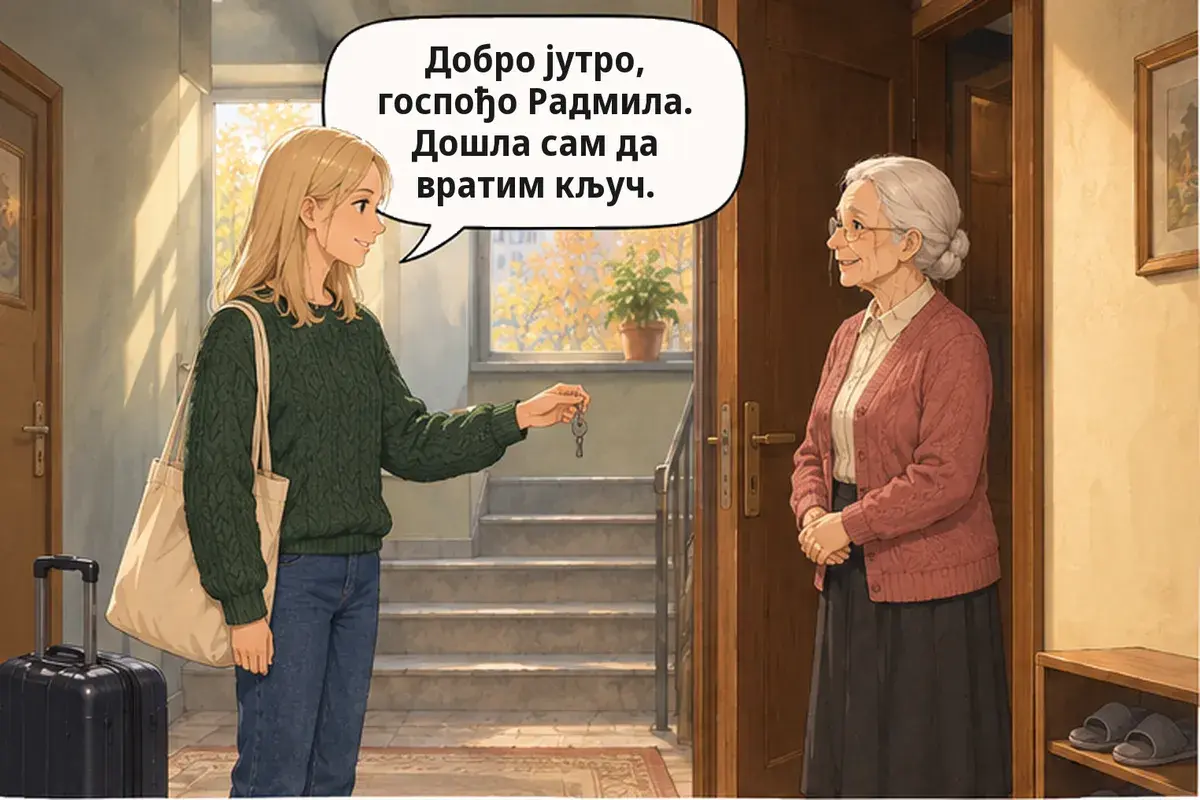
- Ана
Добро јутро, госпођо Радмила. Дошла сам да вратим кључ.
Good morning, Mrs. Radmila. I've come to return the key (woman speaking).
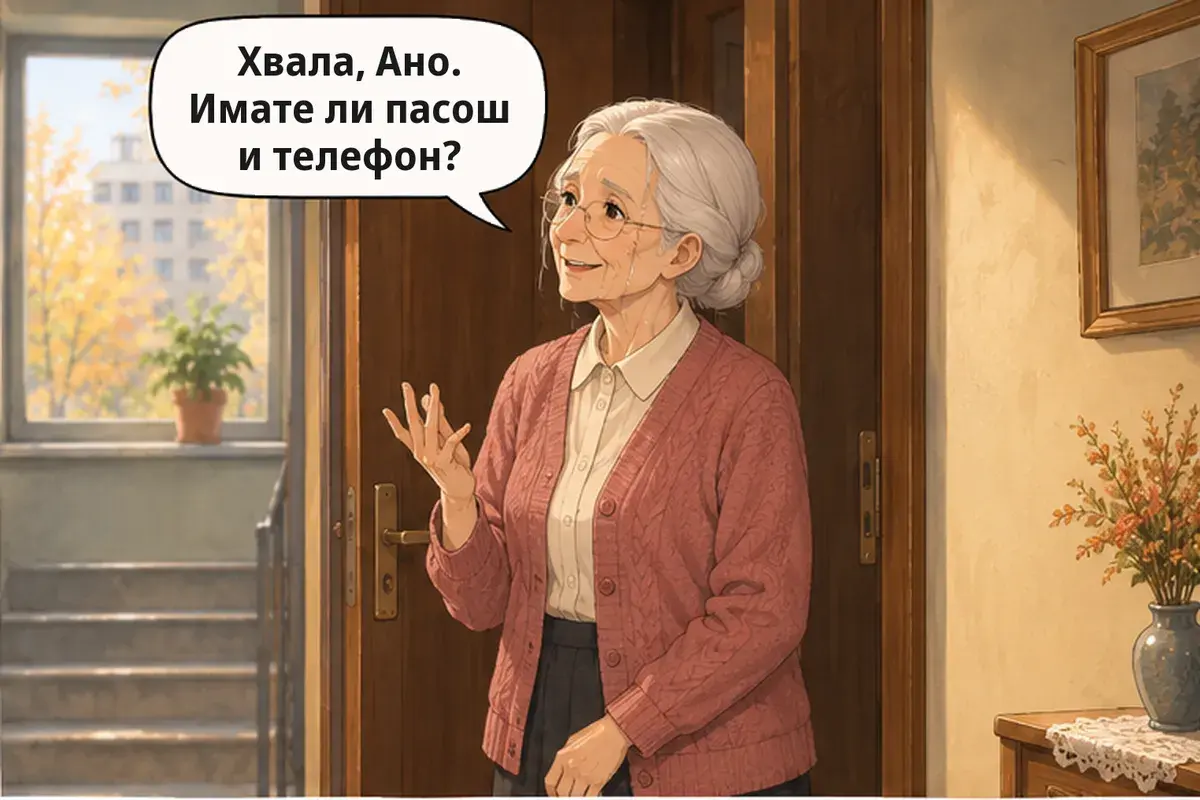
- Радмила
Хвала, Ано. Имате ли пасош и телефон?
Thanks, Ana. Do you have your passport and phone? (formal)
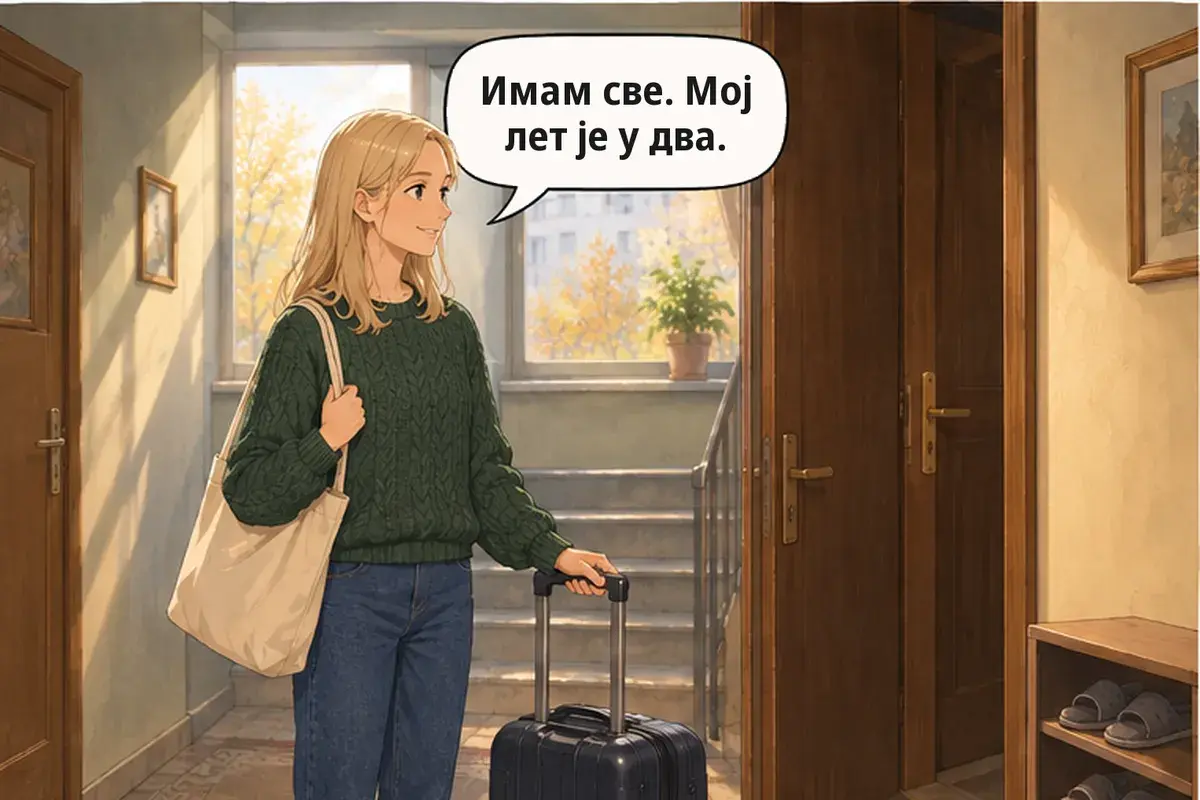
- Ана
Имам све. Мој лет је у два.
I have everything. My flight is at two.
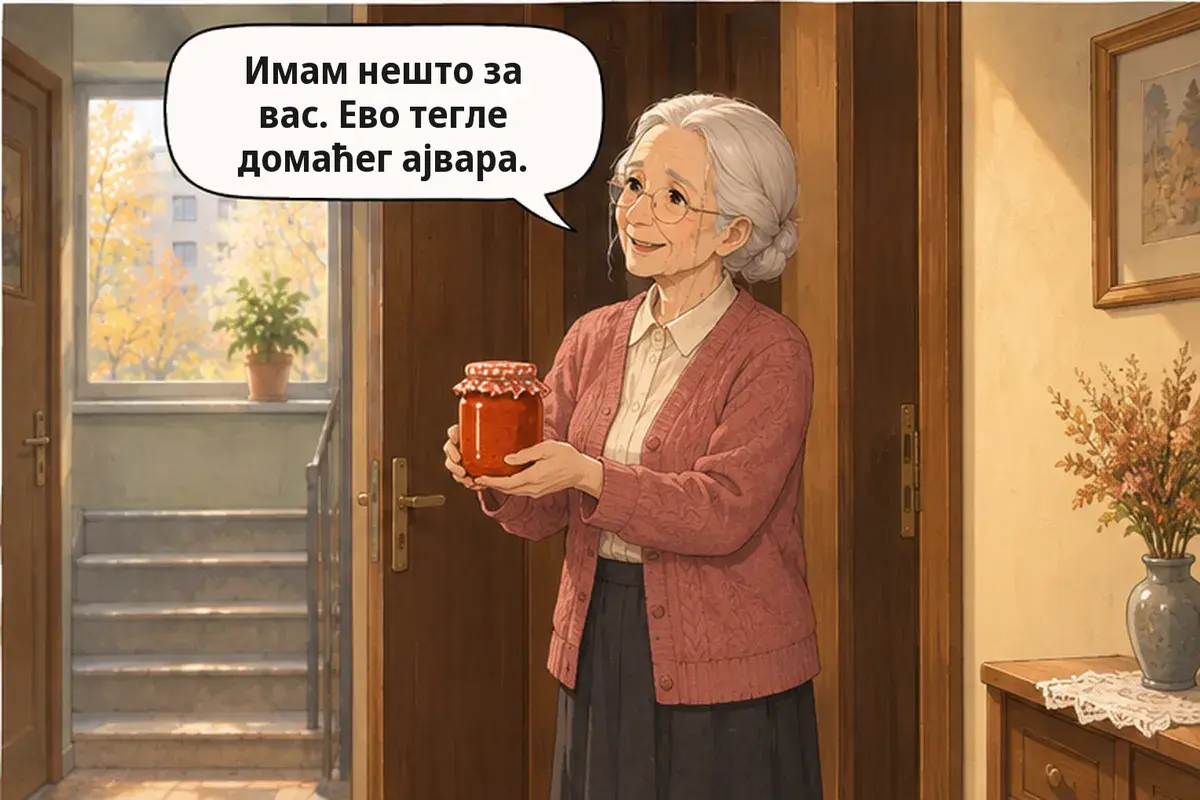
- Радмила
Имам нешто за вас. Ево тегле домаћег ајвара.
I have something for you (formal). Here's a jar of homemade ajvar.
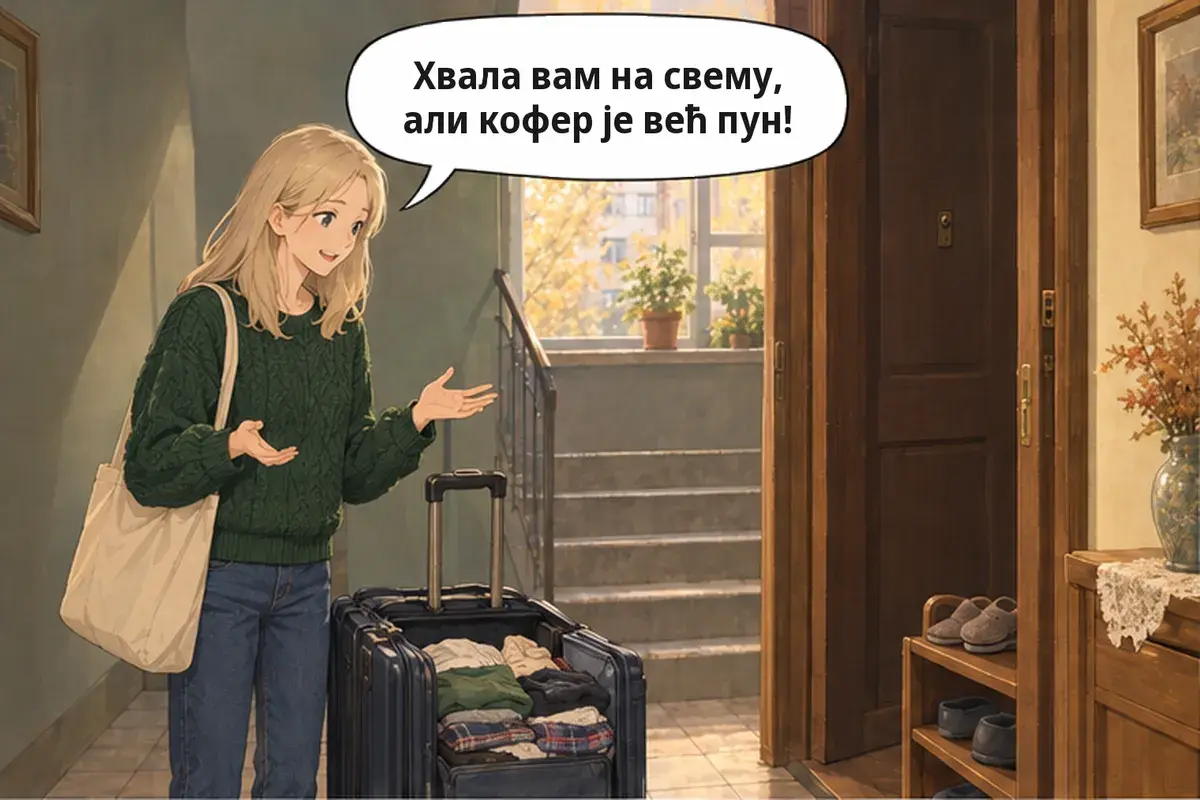
- Ана
Хвала вам на свему, али кофер је већ пун!
Thank you for everything, but the suitcase is already full! (formal)
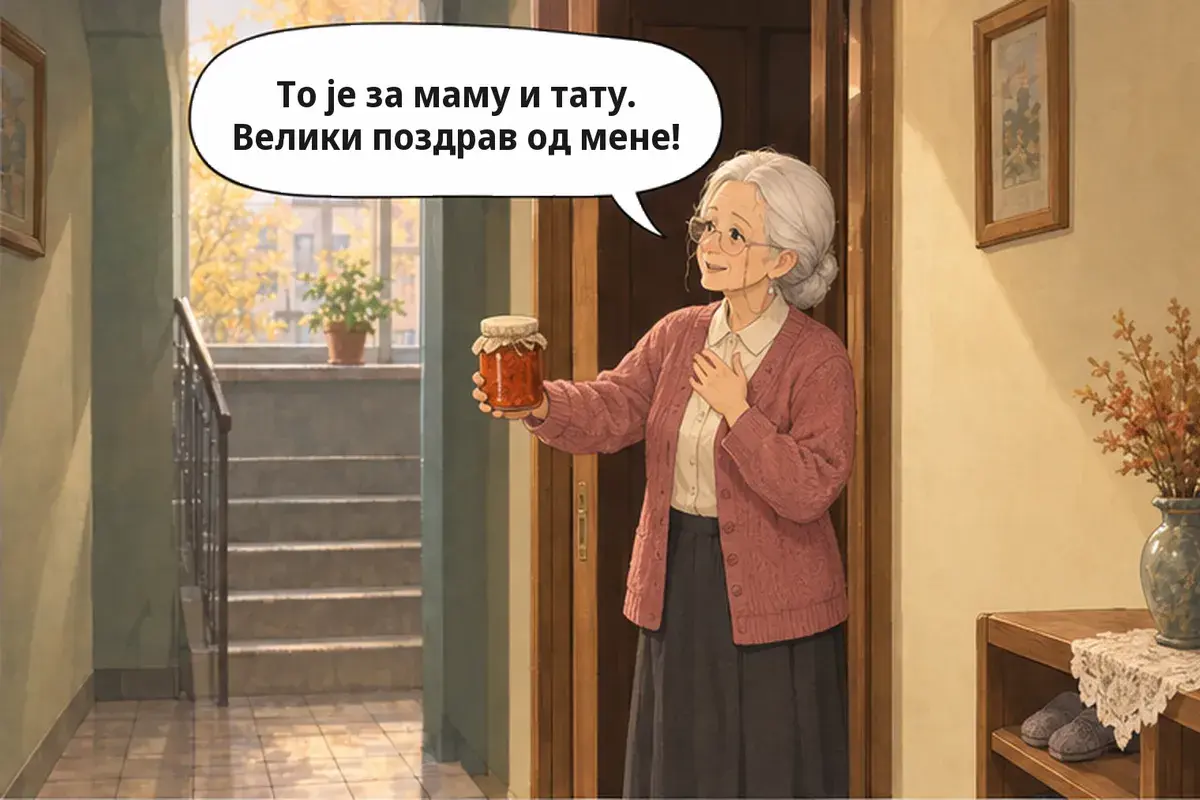
- Радмила
То је за маму и тату. Велики поздрав од мене!
That's for Mom and Dad. A big hello from me!
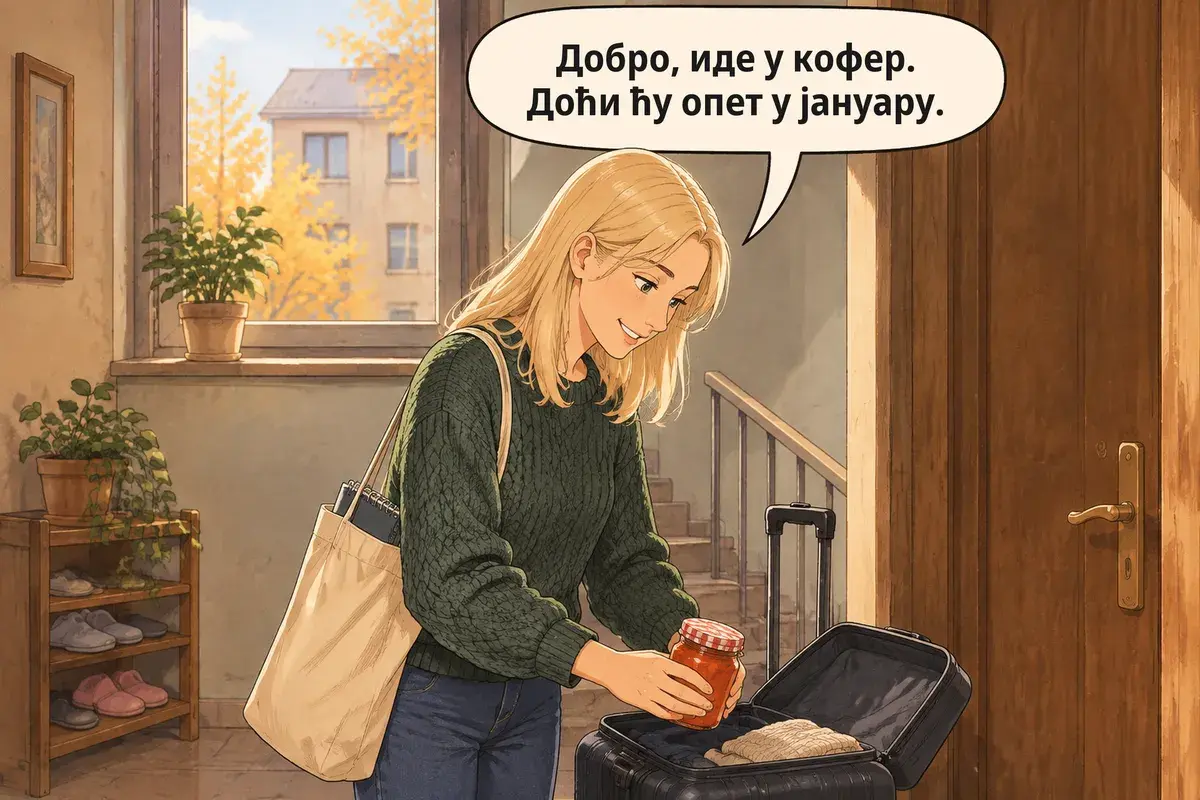
- Ана
Добро, иде у кофер. Доћи ћу опет у јануару.
OK, it goes in the suitcase. I'll come again in January.
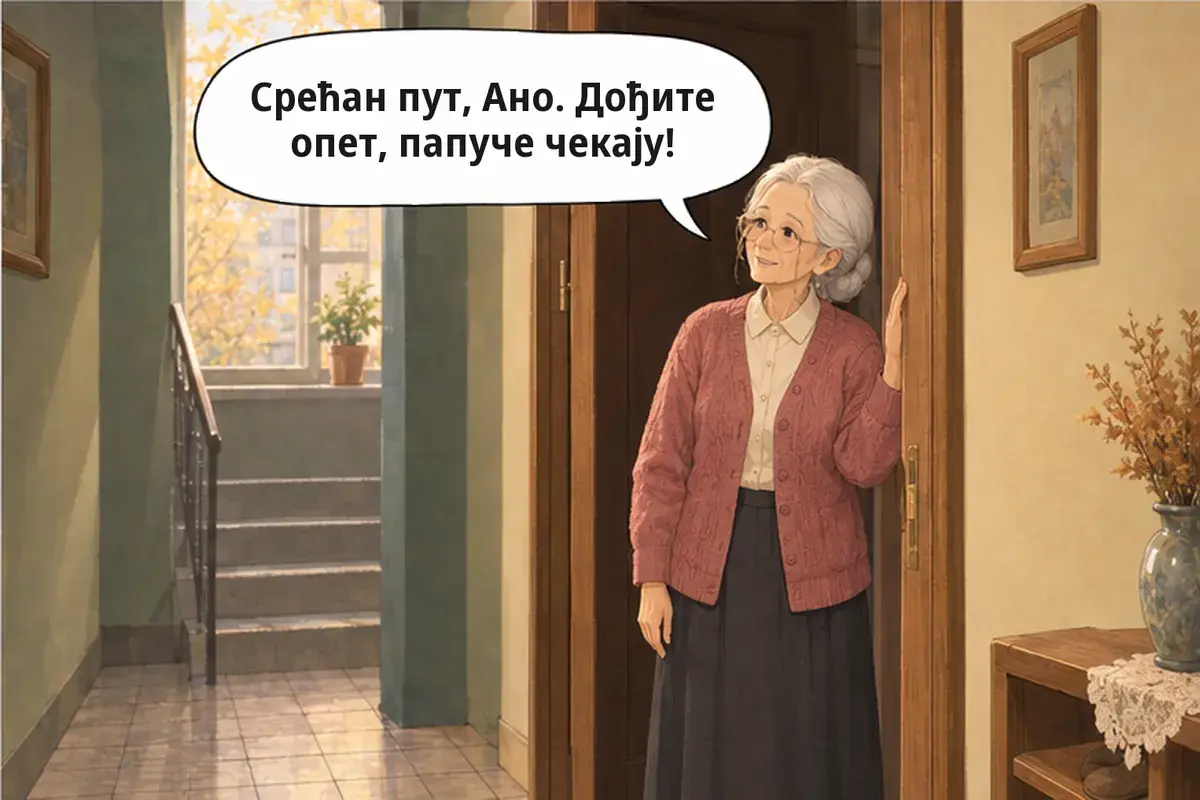
- Радмила
Срећан пут, Ано. Дођите опет, папуче чекају!
Have a good trip, Ana. Come again, the slippers are waiting! (formal)

- Стефан
Ајде, носим кофер до аутобуса. Ајвар је јако тежак!
Come on, I'm carrying the suitcase to the bus. The ajvar is really heavy!

- Ана
Кад је следећи аутобус 72, Стефане?
When is the next 72 bus, Stefan?

- Стефан
За пет минута. Хоћеш ли да се јавиш кад стигнеш кући?
In five minutes. Will you let me know when you get home?
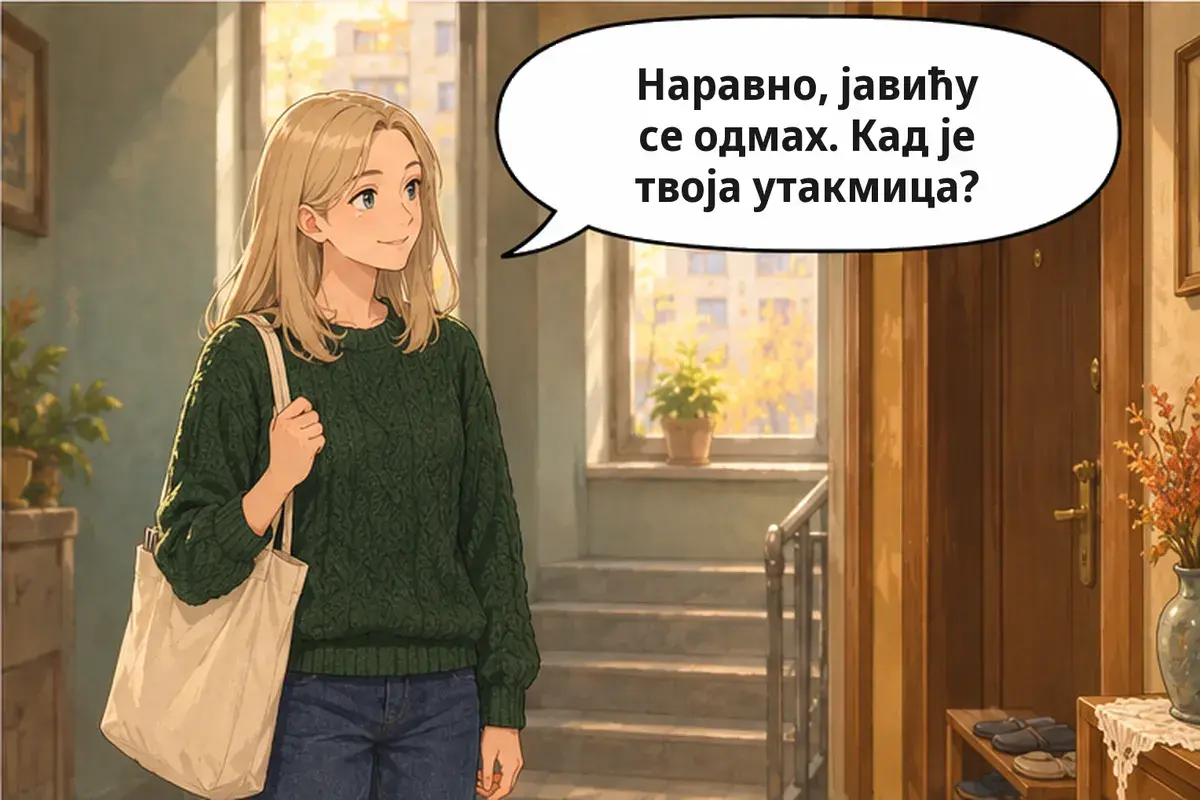
- Ана
Наравно, јавићу се одмах. Кад је твоја утакмица?
Of course, I'll let you know right away. When is your game?
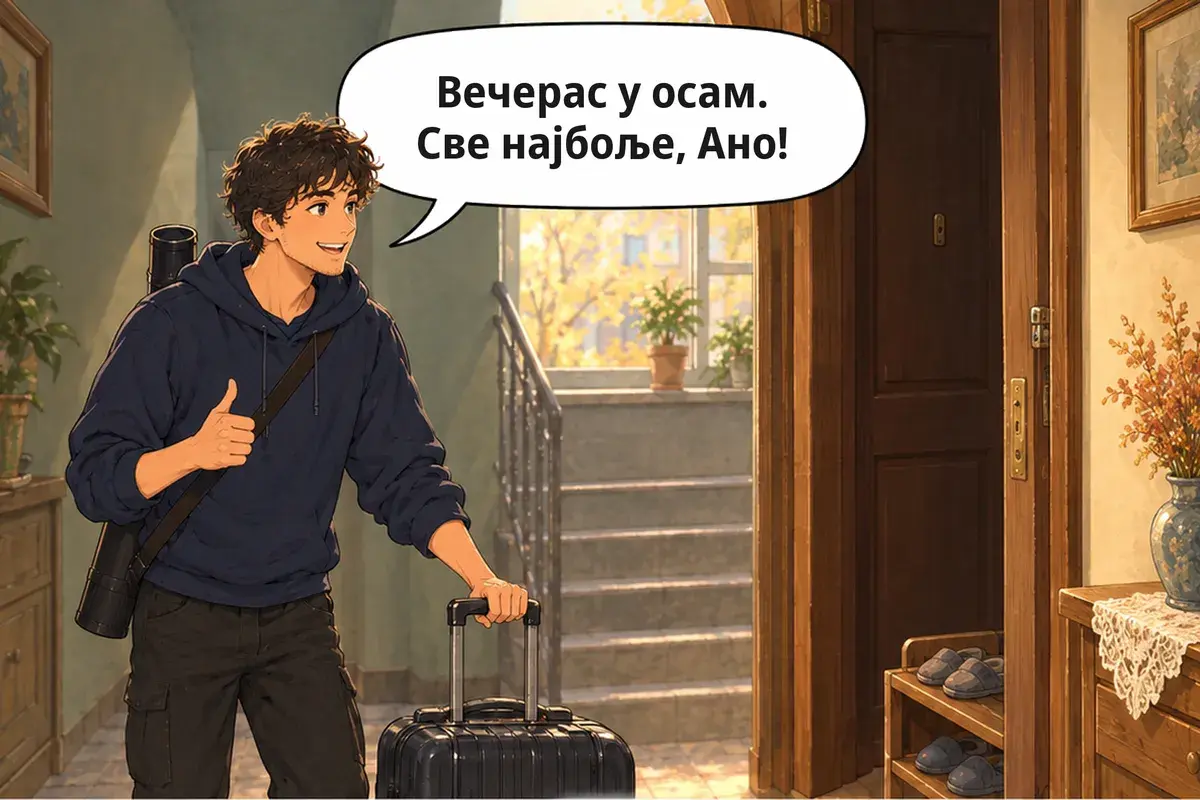
- Стефан
Вечерас у осам. Све најбоље, Ано!
Tonight at eight. All the best, Ana!
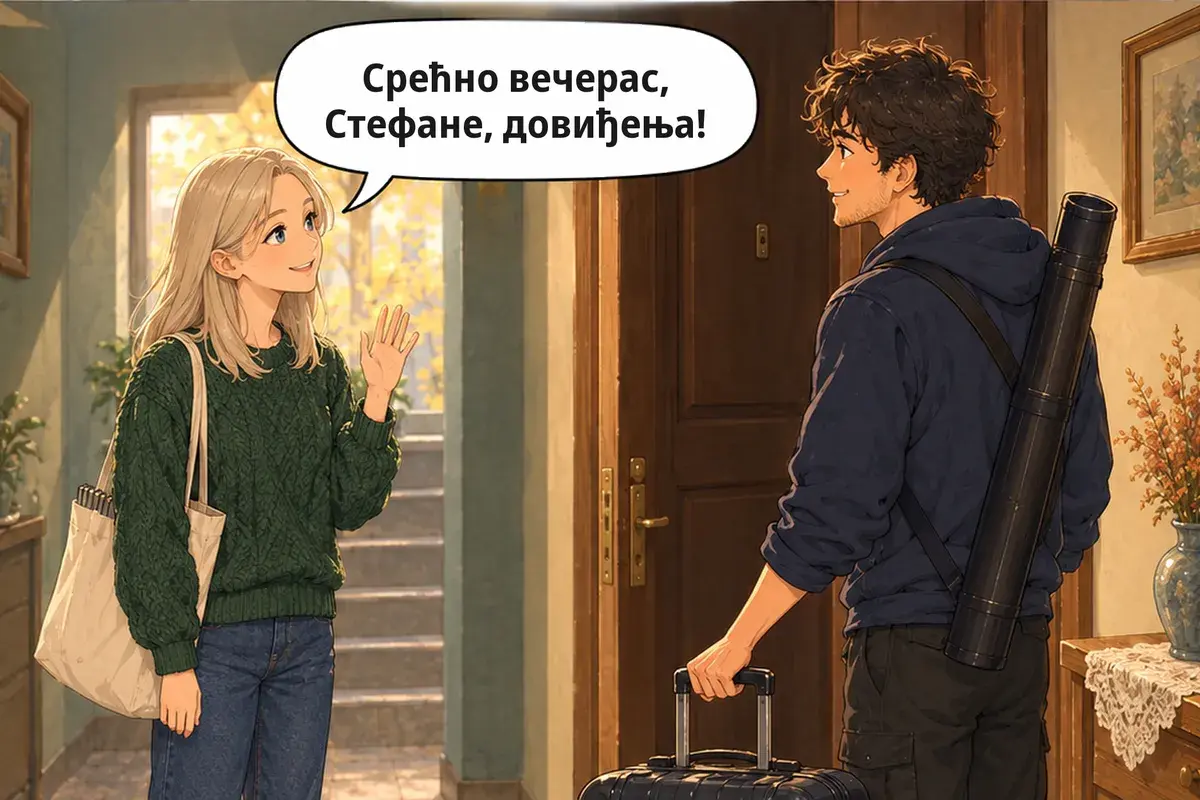
- Ана
Срећно вечерас, Стефане, довиђења!
Good luck tonight, Stefan, goodbye!
Grammar for this text
Дошла сам да вратим кључ—дошла сам— I've come (доћи; the -la form because Ana is a woman;самstands second);да вратим— to return (afterдаcomes the present, unit 10).вратити— to give something back,вратити се— to come back yourself.Имате ли пасош и телефон?— a question withви:имате— you have (formal),лиstands second. Radmila saysвиto Ana, and Stefan saysти.Ево тегле домаћег ајвара— here's a jar of homemade ajvar. Afterевоthe genitive is used here (тегле, likeЕво кључа, unit 2; the plain form is fine too, likeЕво чаша вина), andдомаћег ајвараis the genitive too, 'of homemade ajvar' (unit 12), likeчаша вина. Ajvar is a spread made from roasted red peppers.Хвала вам на свему, али кофер је већ пун—Хвала вам— thank you (formal);вамmeans 'to you' (A2). Ana's joke: the suitcase is already full, and now there's a jar too.Срећан пут, Ано. Дођите опет, папуче чекају—Срећан пут!— have a good trip; it doesn't change.Дођите опет!— come again (formal); it's the imperative (A2), learn the phrase whole.Аноis the calling form (vocative).папуче чекају— the slippers are waiting (the same slippers as in unit 3).Хоћеш ли да се јавиш кад стигнеш кући?—јавишis theтиform ofјавити се, 'to let someone know' (afterда);кад стигнеш кући— when you get home (стићи, unit 8). 'I'll let you know' isЈавићу се(the future, A2).Срећно вечерас, Стефане, довиђења—Срећно!— good luck, before something you're about to do (here, before the game). For a trip people sayСрећан пут.
Words and grammar of the unit: Say goodbye and promise to come back.
Learn the words from the texts with flashcards
In the app, you can tap any word in a text to see its translation, forms and examples, and new words stick with flashcards. 15 minutes a day.
Start for freeEverything is open for free. No card needed to sign up.