

Japanese story with translation · A2 · 14 lines
また忘れました I forgot again
Comic · 10 panels
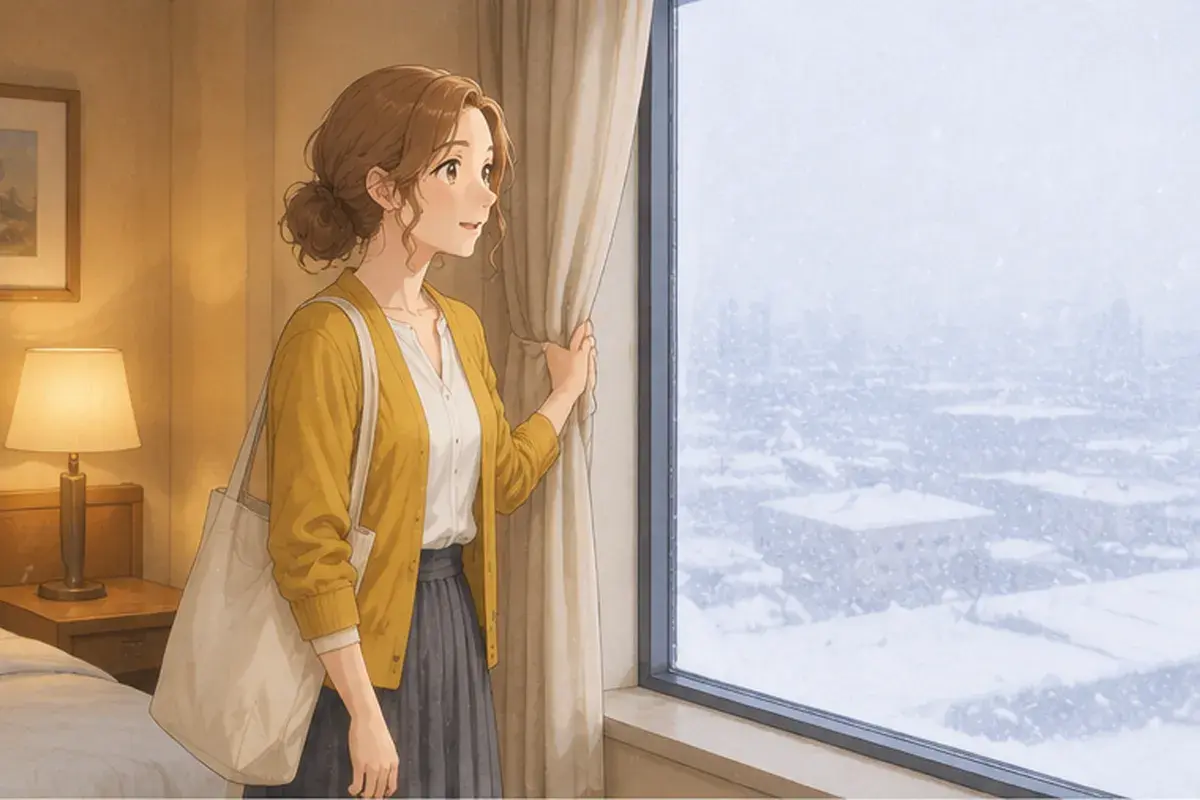
札幌に着いた次の朝、カーテンを開けると、外は真っ白でした。
The morning after we arrived in Sapporo, when I opened the curtains, everything outside was white.
私たちが寝ている間に、雪がたくさん積もりました。
While we were sleeping, a lot of snow piled up.
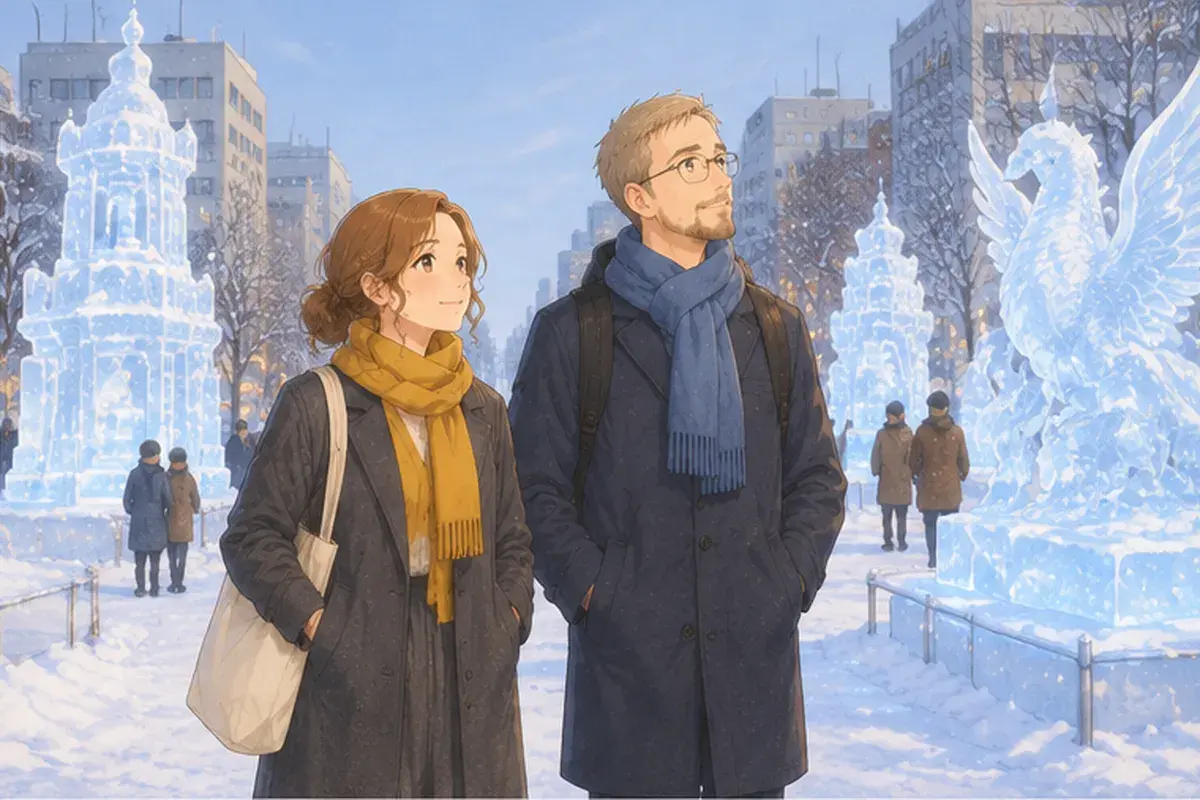
午後、駅の南にある広場で雪の祭りを見ました。
In the afternoon, we saw the snow festival in the square south of the station.
広場に大きい氷の像がたくさんありました。
There were a lot of big ice statues in the square.
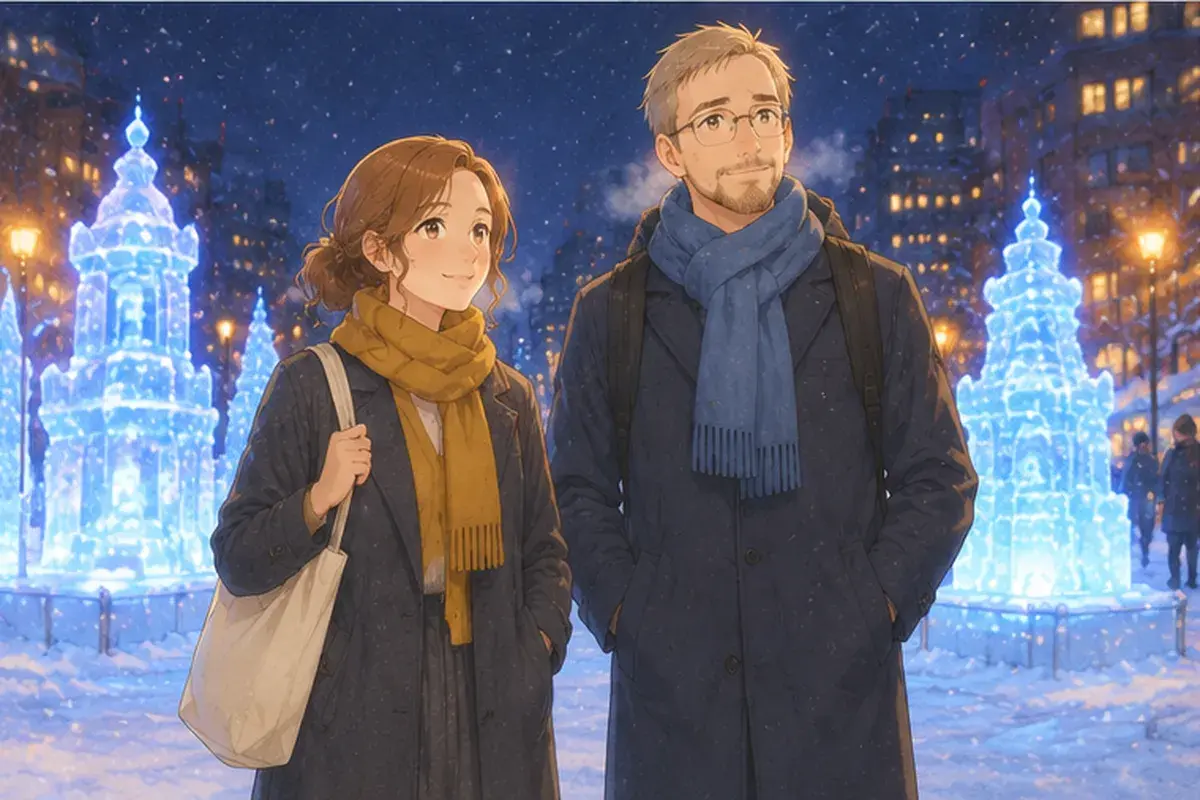
夜になると、町の明かりがつきました。氷の像は光で青く見えました。
When night fell, the lights in the town came on. The ice statues looked blue in the light.
北の町の夜はよく冷えるので、みんなコートとマフラーをしていました。
Nights in a northern town get very cold, so everyone was wearing coats and scarves.

でもマルクだけ手袋をしていませんでした。また忘れました。
But only Mark wasn't wearing gloves. He forgot them again.
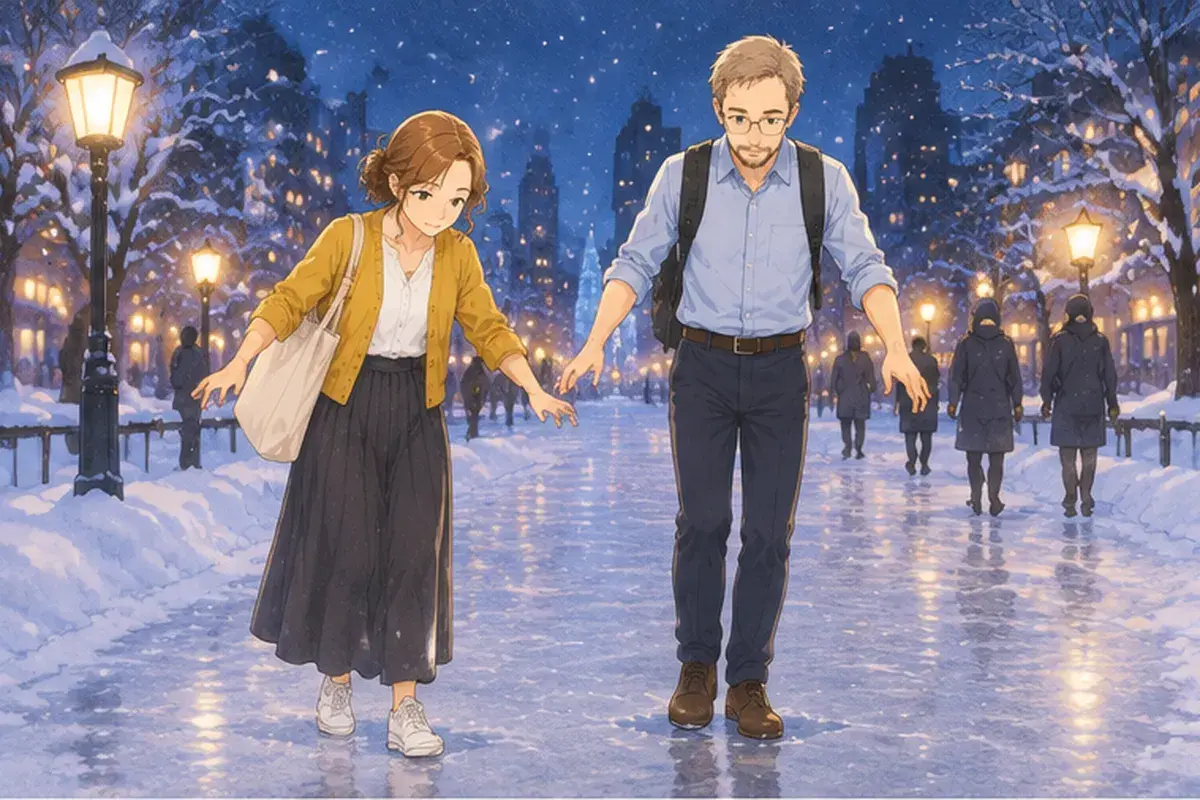
道は凍っていて滑りやすいので、みんなゆっくり歩きました。
The road was frozen and slippery, so everyone walked slowly.
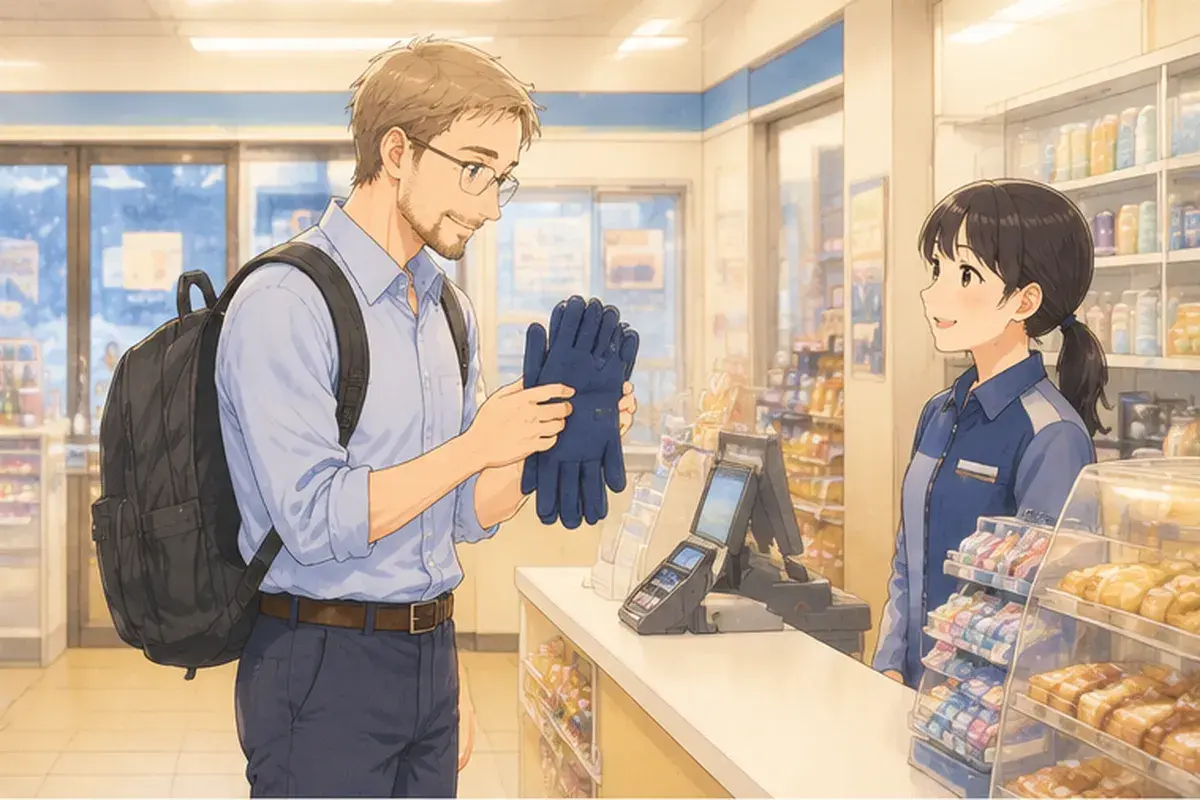
手が冷たかったから、マルクは近くのコンビニで手袋を買いました。
His hands were cold, so Mark bought gloves at a convenience store nearby.
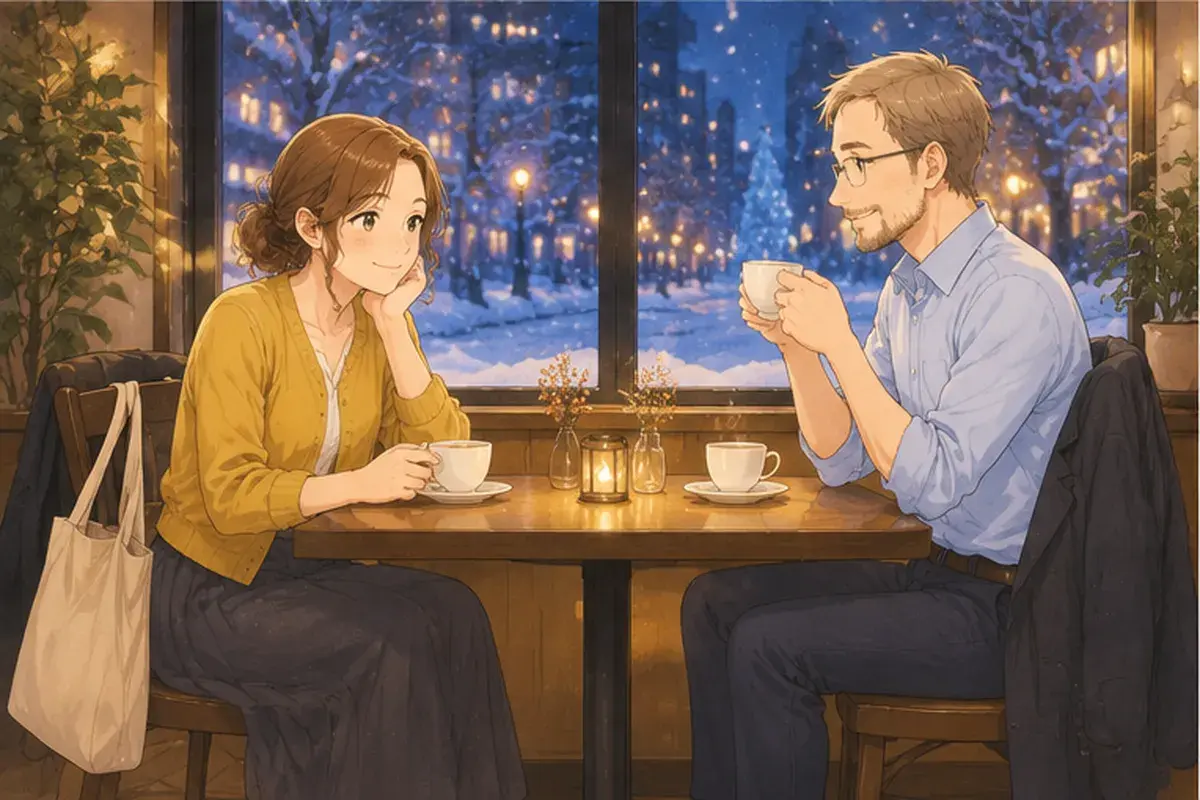
その後、カフェに入りました。店は夜も開いていて、暖房がつけてありました。
After that, we went into a cafe. The cafe was open in the evening too, and the heating had been turned on.
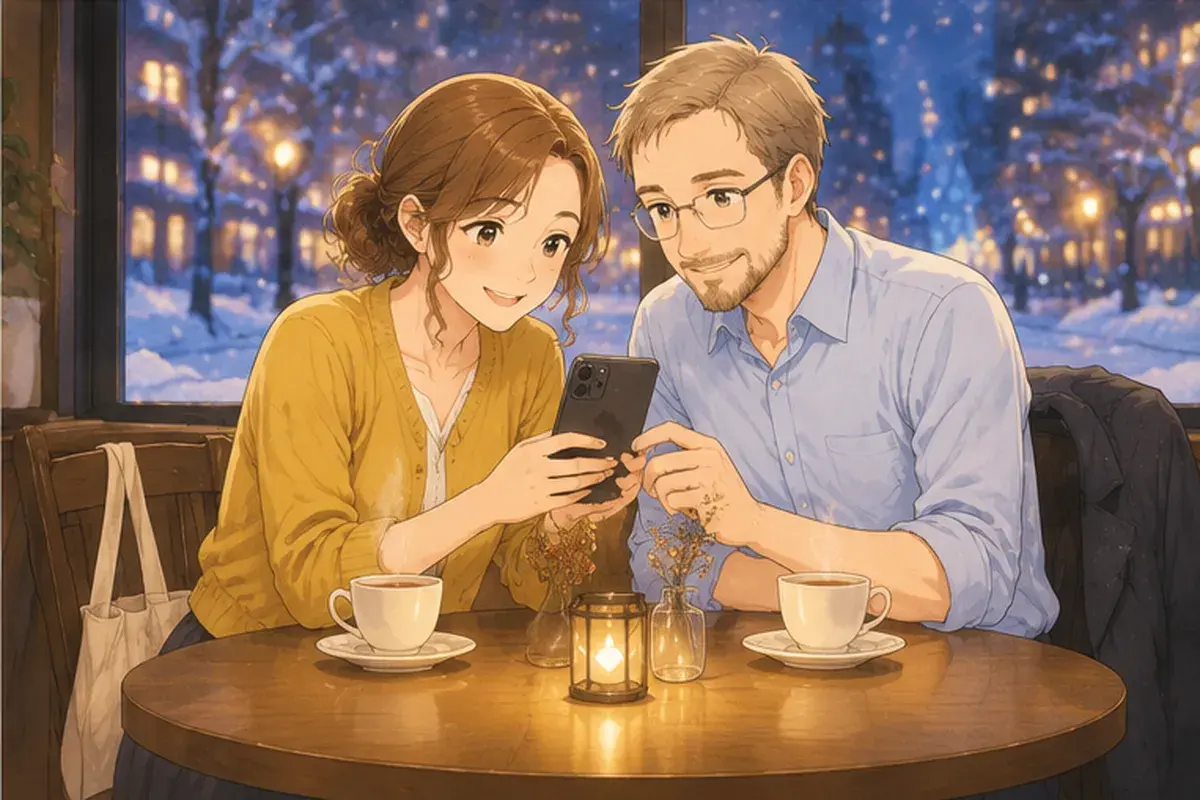
熱いお茶を飲んでいる間、私たちはずっと祭りの写真を見ていました。
While we were drinking hot tea, we looked at photos of the festival the whole time.
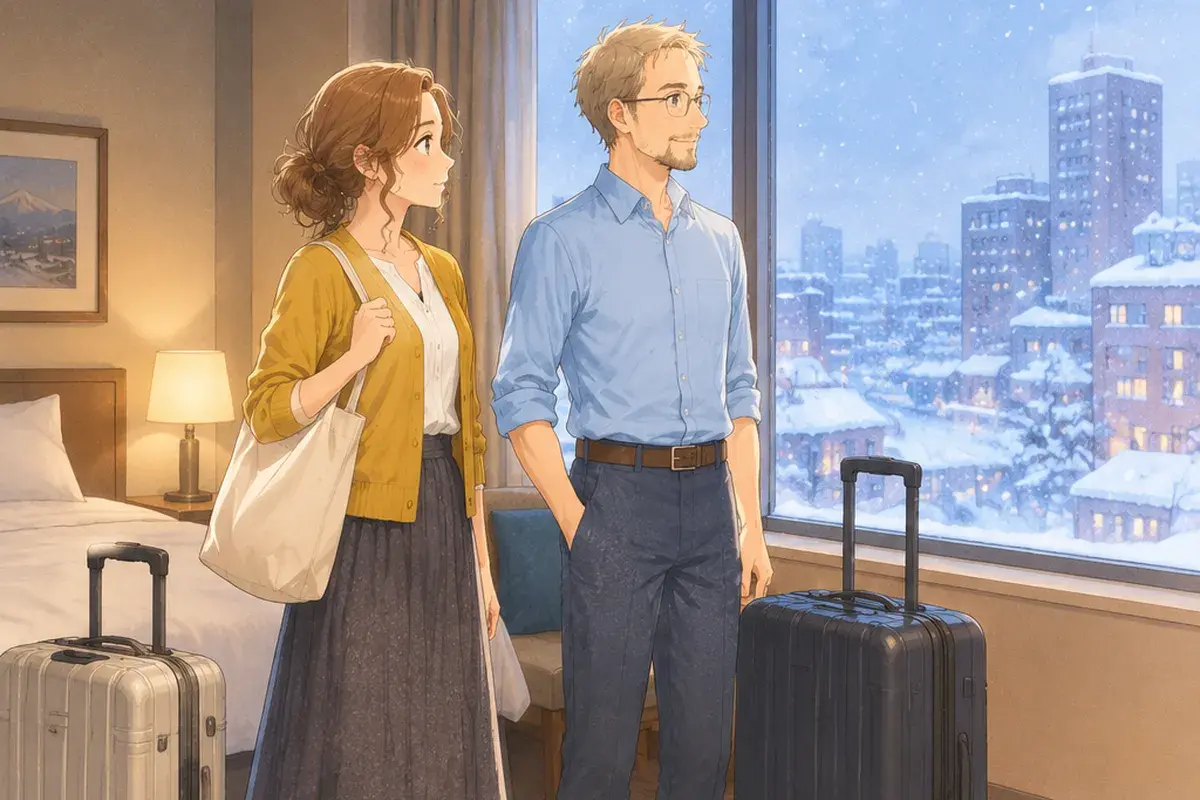
明日は空港から飛行機で東京へ帰ります。
Tomorrow we're flying back to Tokyo from the airport.
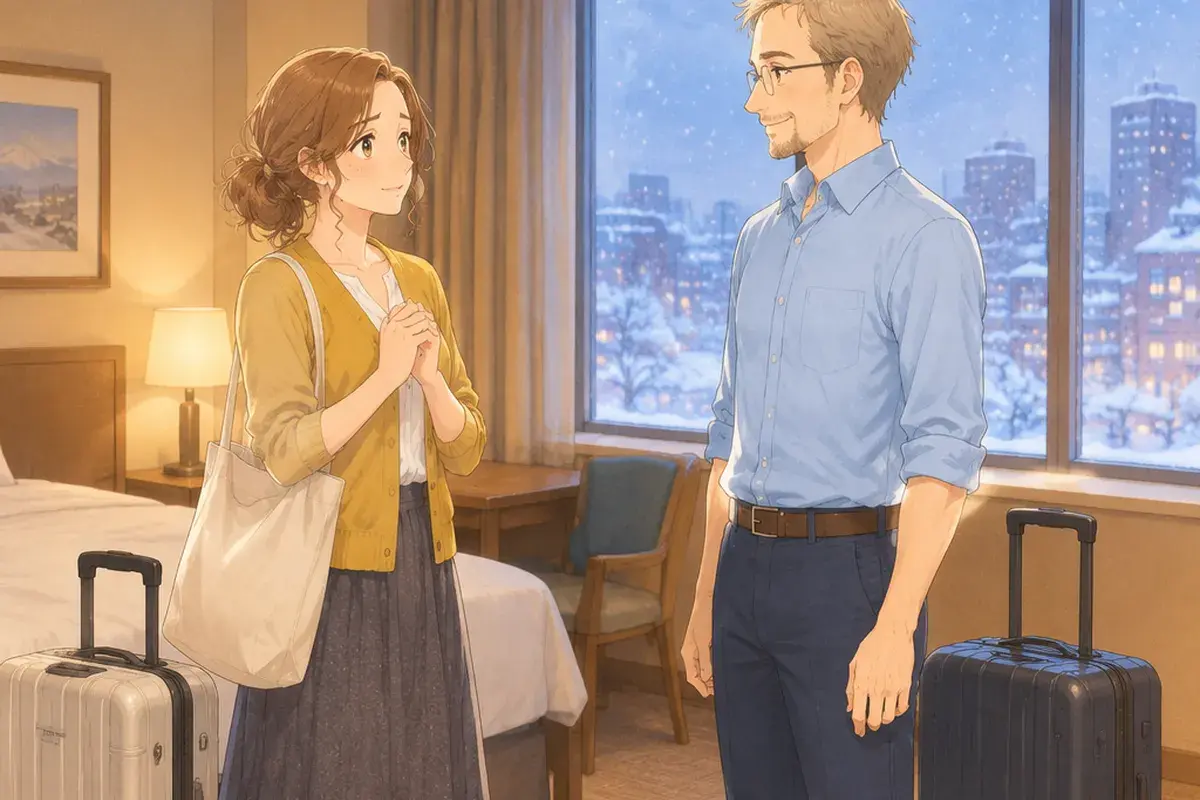
「何も忘れないでくださいよ」と私はマルクに言いました。
"Please don't forget anything," I said to Mark.
「もちろんです」とマルクは言いました。でも私は少し心配しています。
"Of course," Mark said. But I'm a little worried.
Grammar for this text
開ける と、外 は 真っ白 でした— When I opened the curtains, it was all white outside.〜と: "I opened it, and then I saw...".真っ白means "pure white". It is a na-adjective, but it needs noなbeforeでした.寝て いる 間 に— While we were sleeping.間 にmeans "at some point during that time": while we slept, one thing happened, the snow piled up.雪 が たくさん 積もりました— A lot of snow piled up.降るmeans "snow falls", but積もるmeans "it fell and now lies in a layer".暖房 が つけて ありました— The heating had been turned on.つけて ある: someone turned it on in advance, and it's running. That's why it'sつける(a person does it), notつく.店 は 夜 も 開いて いて— The store was open in the evening too.開いて いるabout a store or cafe means "open for business".滑りやすい ので— Because it was slippery.滑りやすい: the masu stem滑り+やすい, "easy to slip". The road is slippery, so everyone walks slowly.「何も 忘れないで ください よ」 と 私 は マルク に 言いました— "Please don't forget anything," I said to Mark. Anna's words are in 「」, thenと 言いました.何もwith a negative means "nothing".コンビニ で 手袋 を 買いました— I bought gloves at a convenience store. A Japanese convenience store sells gloves, umbrellas and socks too, so you can buy what you forgot on the way.また 忘れました— He forgot again.またmeans "again": Mark forgets things all the time.
Words and grammar of the unit: Explain what's not working.
Learn the words from the texts with flashcards
In the app, you can tap any word in a text to see its translation, forms and examples, and new words stick with flashcards. 15 minutes a day.
Start for freeEverything is open for free. No card needed to sign up.