
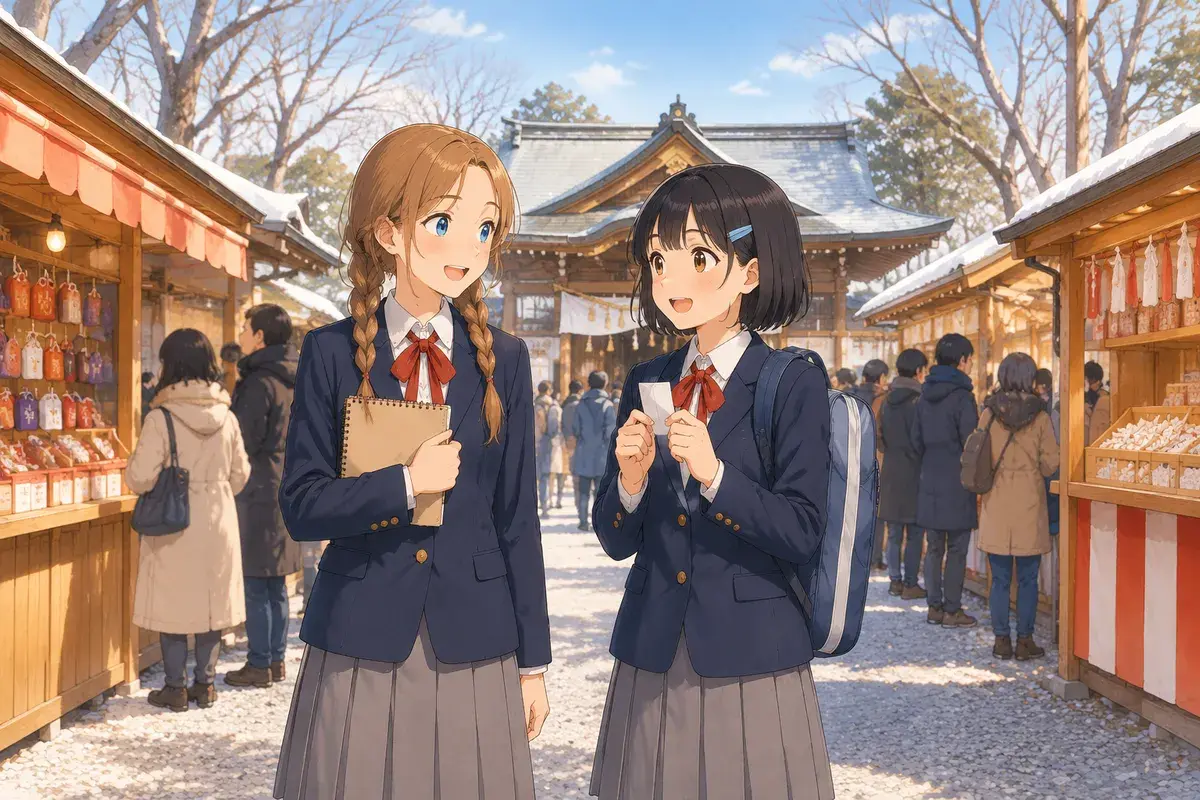
Japanese dialogue with translation · A2 · 11 lines
初詣で何を祈るの What do you pray for on your first shrine visit?
Comic · 9 panels
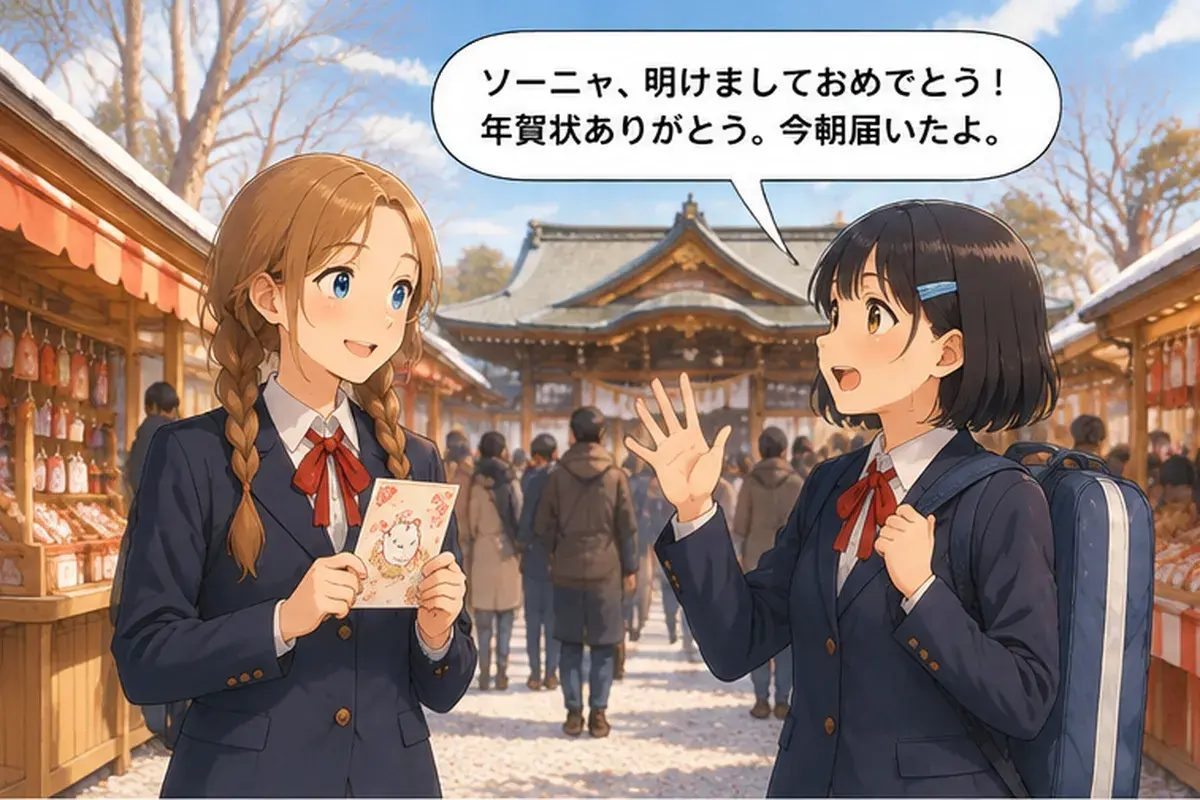
- ゆい
ソーニャ、明けましておめでとう!年賀状ありがとう。今朝届いたよ。
Sonya, Happy New Year! Thanks for the New Year's card. It came this morning. (casual)
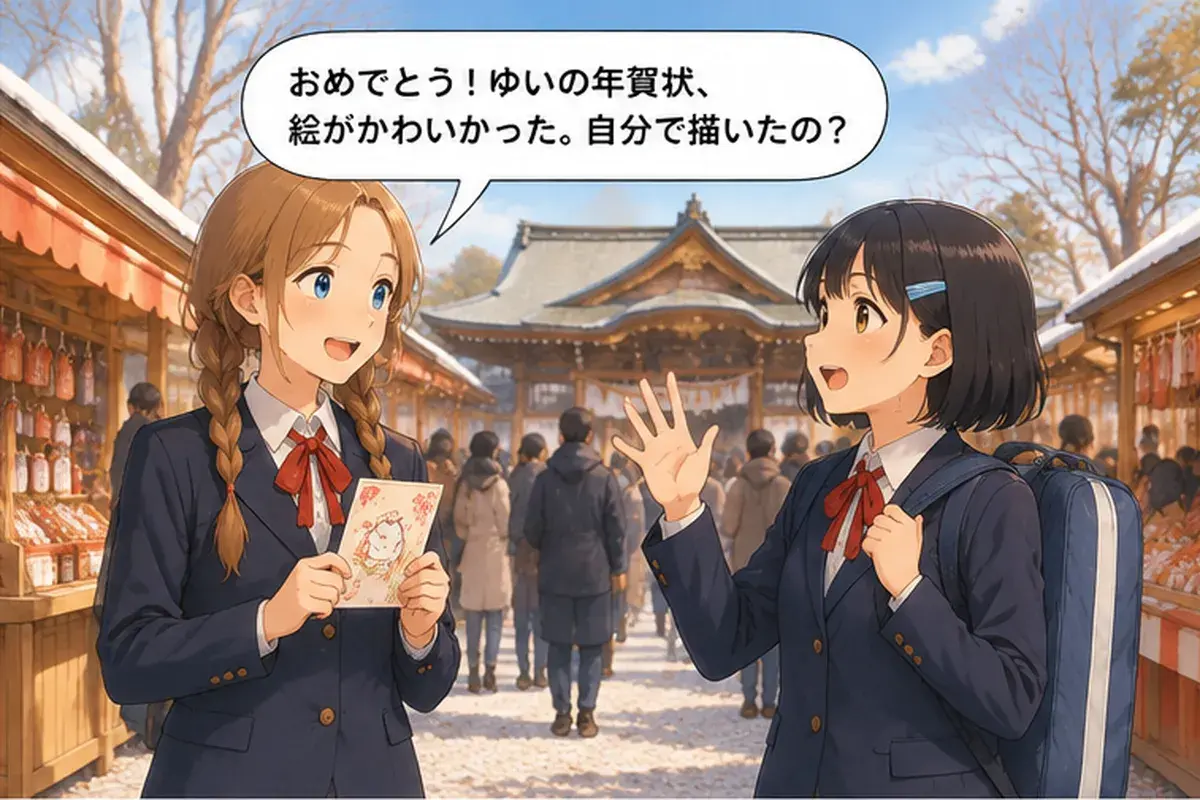
- ソーニャ
おめでとう!ゆいの年賀状、絵がかわいかった。自分で描いたの?
Happy New Year! The picture on your card was so cute. Did you draw it yourself? (casual)
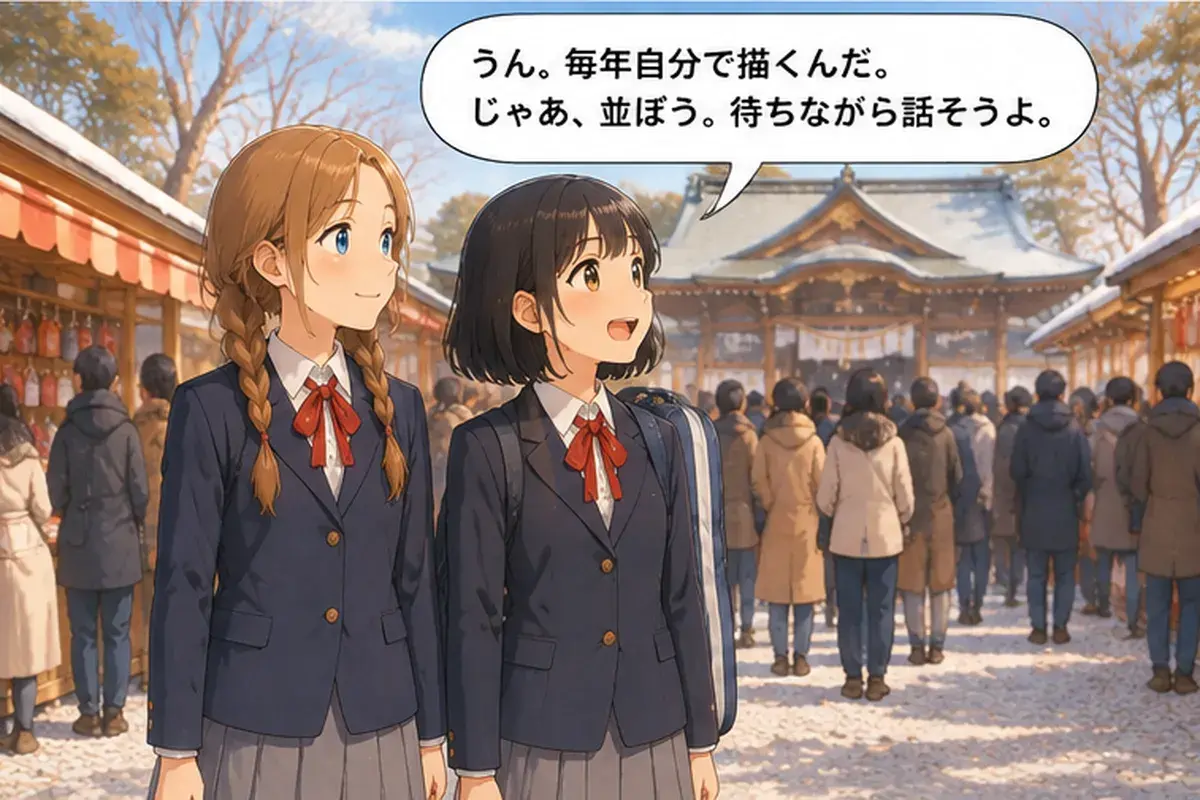
- ゆい
うん。毎年自分で描くんだ。じゃあ、並ぼう。待ちながら話そうよ。
Yeah. I draw it myself every year. OK, let's get in line. Let's talk while we wait. (casual)
- ソーニャ
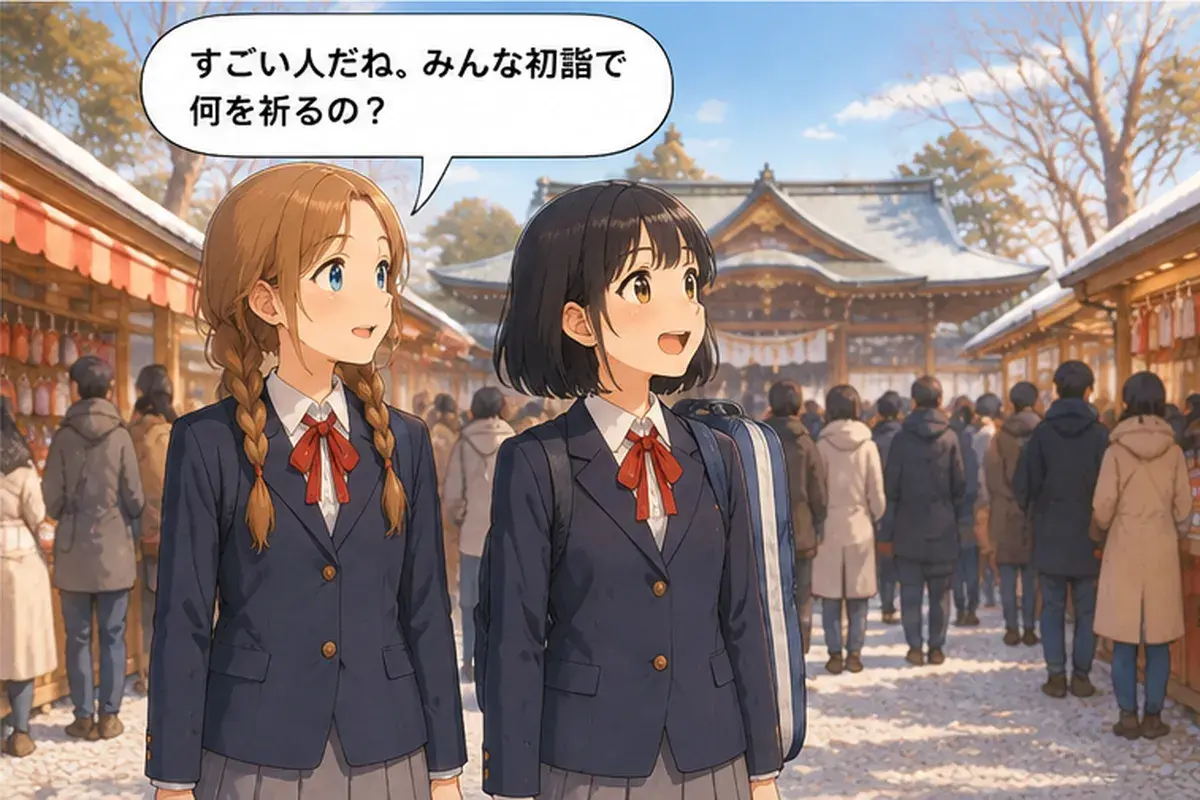
すごい人だね。みんな初詣で何を祈るの?
Look at all the people. What does everyone pray for on the first shrine visit? (casual)
- ゆい
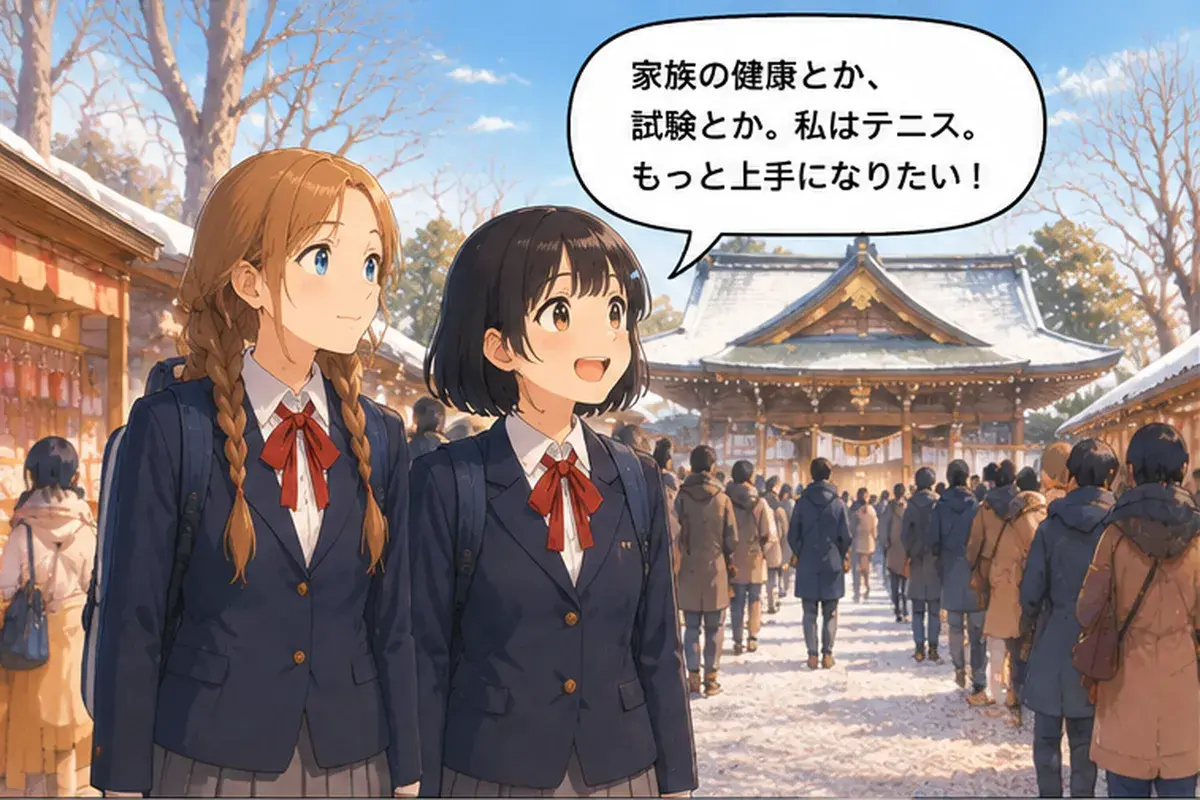
家族の健康とか、試験とか。私はテニス。もっと上手になりたい!
My family's health, or exams, things like that. Me, I pray about tennis. I want to get better at it! (casual)
- ソーニャ
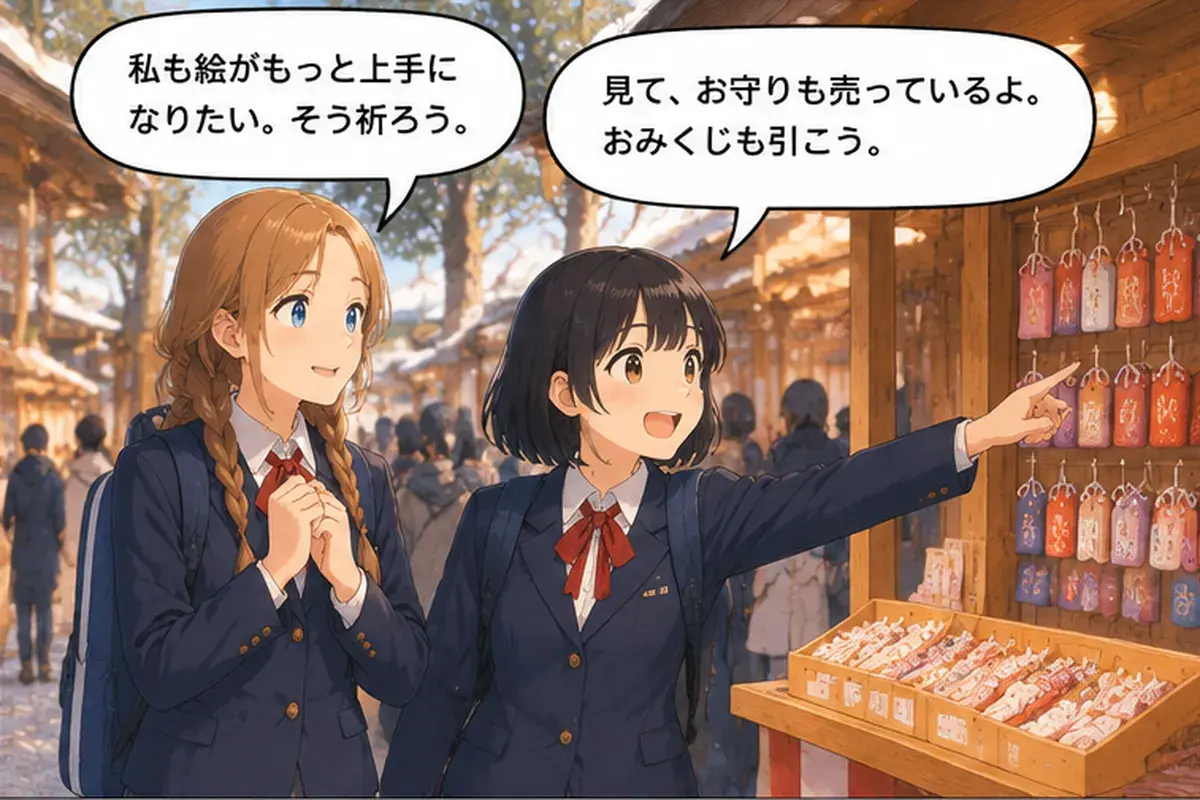
私も絵がもっと上手になりたい。そう祈ろう。
I want to get better at drawing, too. I'll pray for that. (casual)
- ゆい
見て、お守りも売っているよ。おみくじも引こう。
Look, they sell good luck charms, too. Let's draw fortune slips, too. (casual)
- ソーニャ
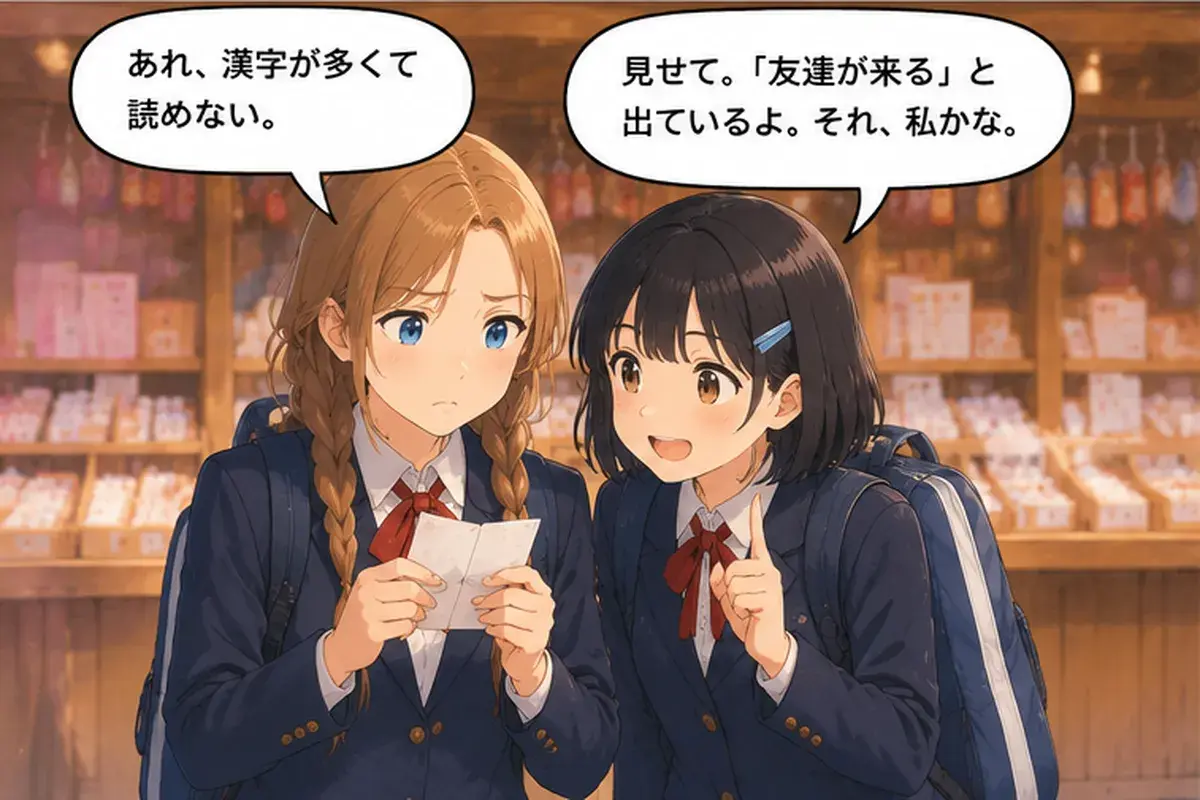
あれ、漢字が多くて読めない。
Huh, there's so much kanji that I can't read it. (casual)
- ゆい
見せて。「友達が来る」と出ているよ。それ、私かな。
Show me. It says "A friend will come." I wonder if that's me. (casual)
- ソーニャ
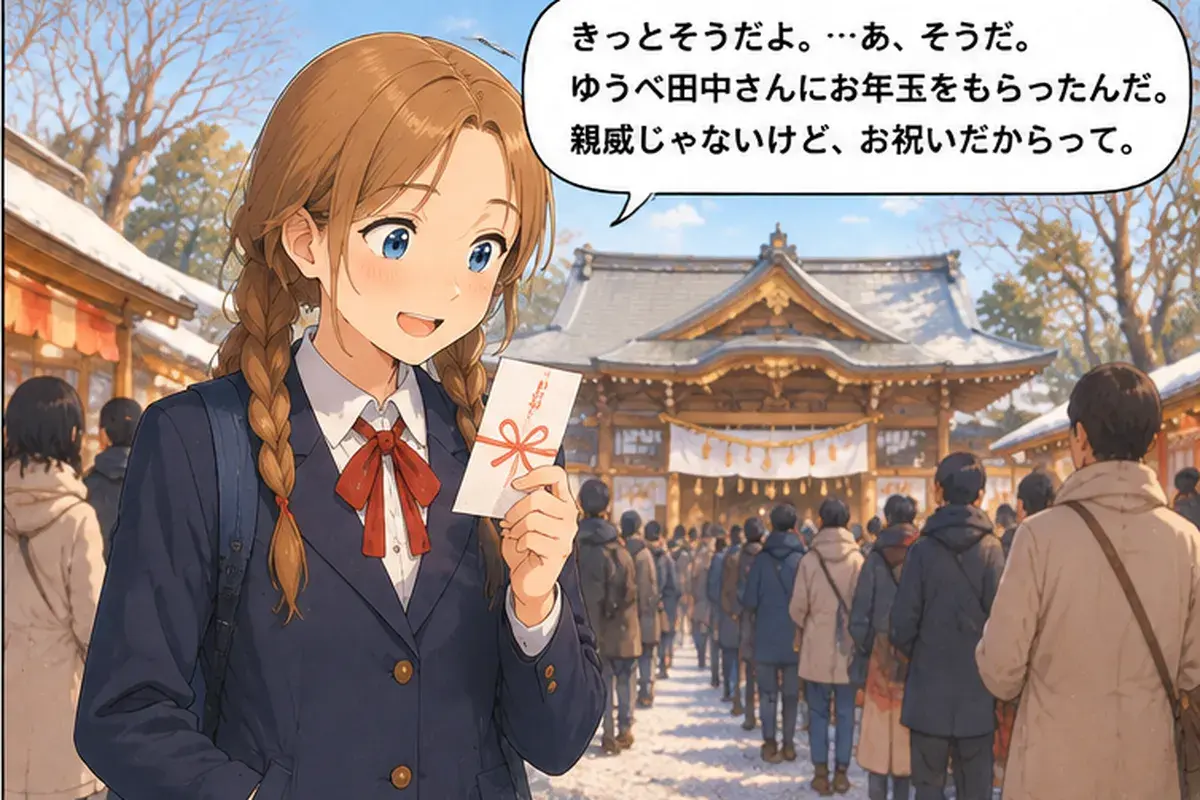
きっとそうだよ。…あ、そうだ。ゆうべ田中さんにお年玉をもらったんだ。親戚じゃないけど、お祝いだからって。
It must be. ...Oh, right. Last night I got New Year's money from Tanaka-san. We're not relatives, but she said it's because it's a celebration. (casual)
- ゆい
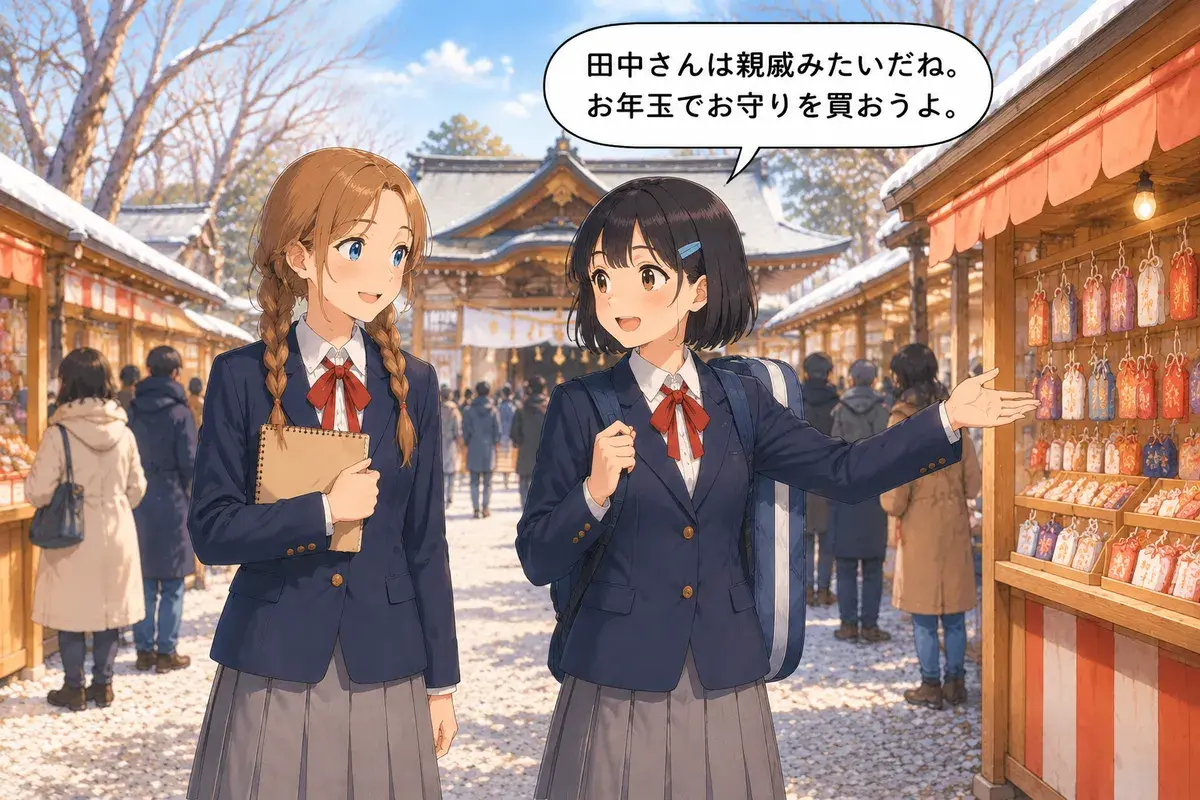
田中さんは親戚みたいだね。お年玉でお守りを買おうよ。
Tanaka-san is like a relative, isn't she? Let's buy a good luck charm with the New Year's money. (casual)
Grammar for this text
明けまして おめでとう!— this is how you greet a friend: withoutございます. To adults and people you don't know, use the full phrase, as in text 1. In reply,おめでとう!is enough.並ぼう,話そう— "let's get in line", "let's talk" (Unit 14).待ちながら—ながら: we chat while we wait in line.初詣 で 何 を 祈る の?—初詣is the first shrine or temple visit of the year, usually on January 1–3. People ask for what they want in the new year.私 は テニス。— a short casual answer: "as for me, tennis"; the verb is clear from the question.そう 祈ろう—そうmeans "like that, for that" (what was just said).祈ろうis the volitional form of祈る(Unit 14): Sonya decides "I'll pray for that".おみくじ も 引こう—おみくじis a paper fortune slip. You don't buy it, you "draw" it (引く).読めない—読めるmeans "can read" (Unit 10), here withない: "can't read".「友達 が 来る」 と 出て いる—出るhere means "it came up, it says" (on the paper).お祝い だ から って—ってrepeats Tanaka-san's words (Unit 7): "she said it's a gift for the celebration".親戚 みたい(Unit 15) means "like a relative".お年玉 で—でmeans "with this money".
Words and grammar of the unit: Celebrate New Year in Japanese.
Learn the words from the texts with flashcards
In the app, you can tap any word in a text to see its translation, forms and examples, and new words stick with flashcards. 15 minutes a day.
Start for freeEverything is open for free. No card needed to sign up.