

Japanese dialogue with translation · A2 · 16 lines
幸せそうですね You look happy, don't you?
Comic · 13 panels
- 木村
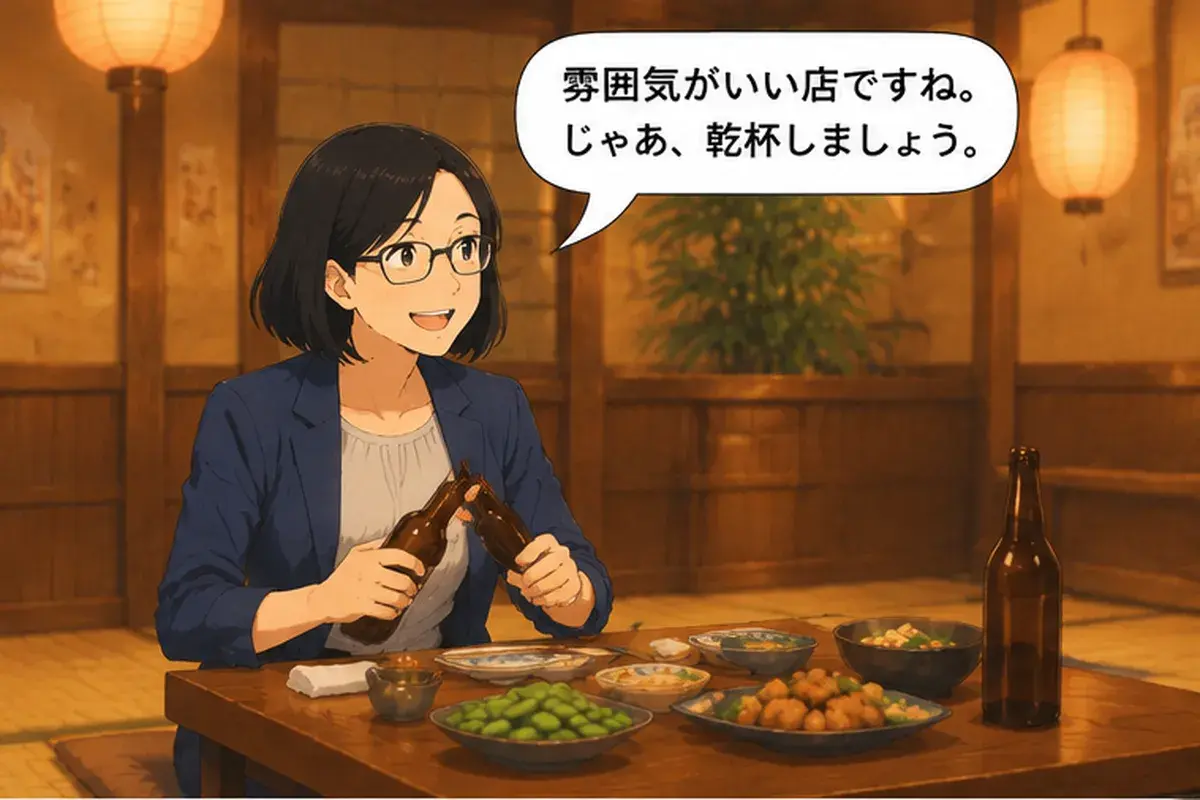
雰囲気がいい店ですね。じゃあ、乾杯しましょう。
This place has a nice atmosphere. Well then, let's make a toast.

- マルク
乾杯!…けんさん、今日はとても幸せそうですね。
Cheers! ...Ken-san, you look very happy today.

- けん
そうですか。飲み会が好きなだけですよ。
Do I? I just like drinks parties.
- マルク
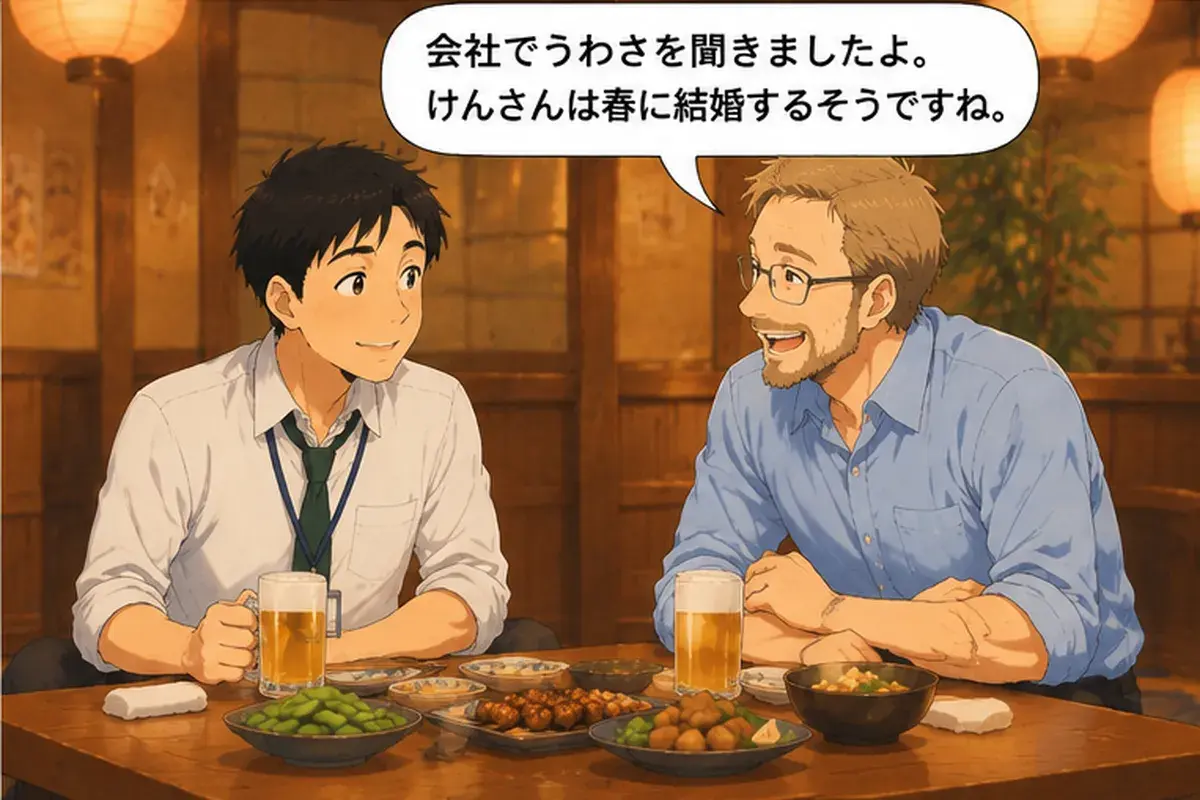
会社でうわさを聞きましたよ。けんさんは春に結婚するそうですね。
I heard a rumor at work. I hear you're getting married in the spring, Ken-san.

- けん
えっ、もう知っているんですか。…実は本当です。先月彼女と婚約しました。
What, you already know? ...Actually, it's true. I got engaged to my girlfriend last month.

- 木村
おめでとうございます!最近よく笑っていたのは、幸せだったからですね。
Congratulations! So the reason you've been smiling so much lately is that you were happy.

- けん
ありがとうございます。でも、来週までみんなには言わないでください。
Thank you. But please don't tell everyone until next week.

- マルク
あ、すみません。言わないほうがよかったですね。
Oh, I'm sorry. I shouldn't have said anything.
- けん
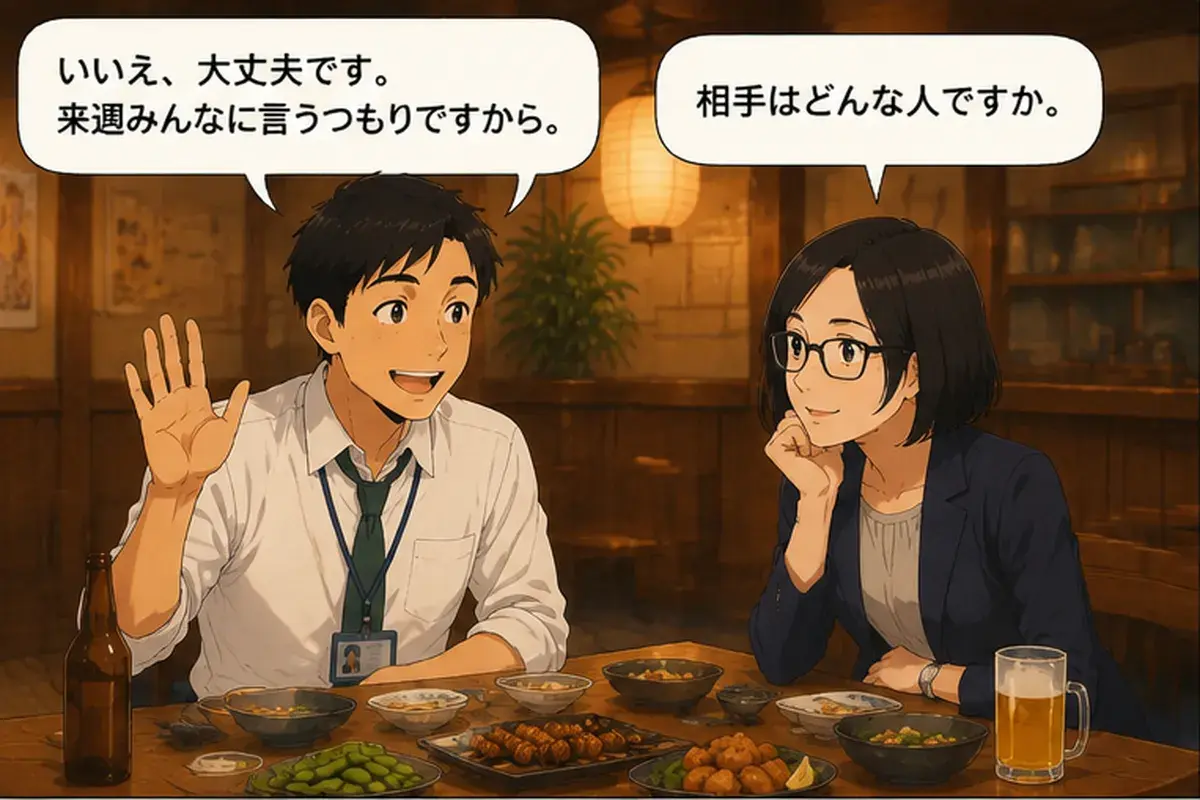
いいえ、大丈夫です。来週みんなに言うつもりですから。
No, it's OK. I'm planning to tell everyone next week anyway.
- 木村
相手はどんな人ですか。
What kind of person is your partner?

- けん
学生のときからの友達です。僕はおとなしい人間ですが、彼女は明るくてにぎやかです。
We've been friends since we were students. I'm a quiet person, but she's cheerful and lively.

- マルク
真面目な人ですか。
Is she a serious person?
- けん
真面目です。でも、木村さんみたいに厳しくありません!
She's serious. But she's not as strict as Kimura-san!

- 木村
森さん、それはどんな意味ですか。
Mori-san, what do you mean by that?
- けん
あ、冗談です!木村さんは厳しいけど、本当は優しい人です。
Oh, it's a joke! Kimura-san is strict, but she's really a kind person.
- 木村
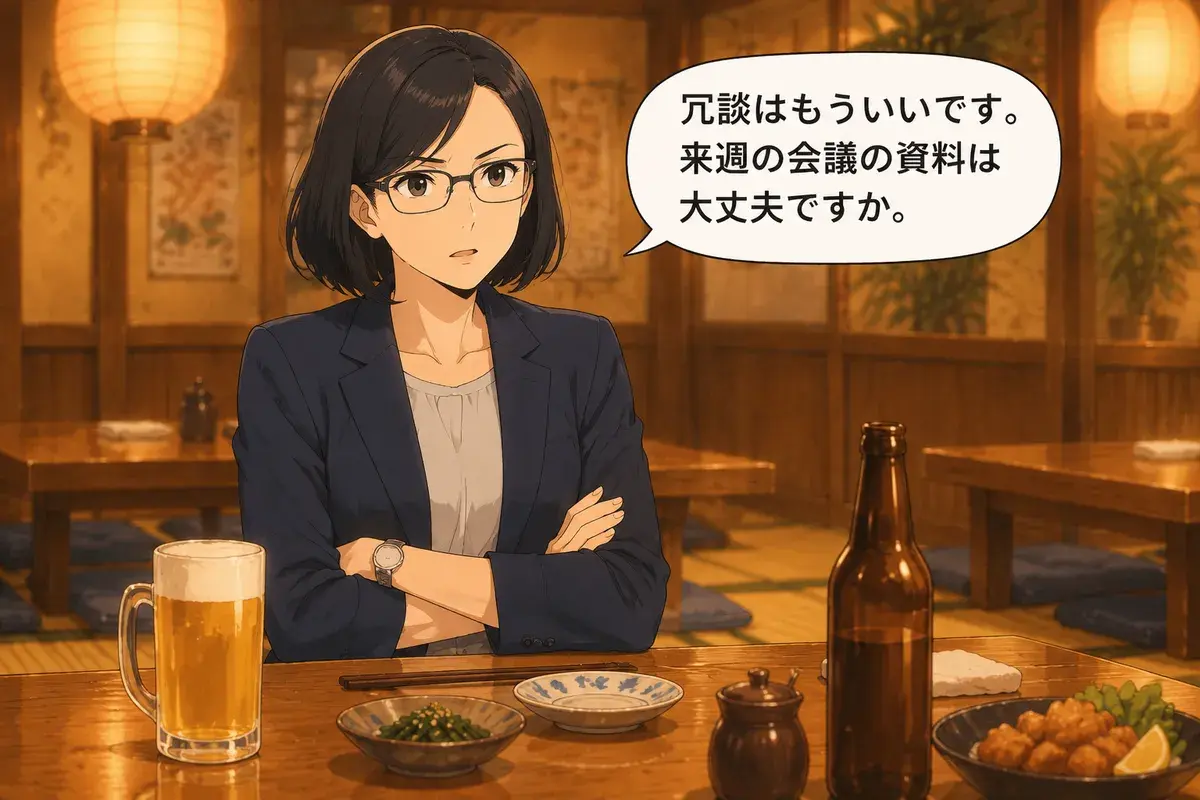
冗談はもういいです。来週の会議の資料は大丈夫ですか。
Enough joking. Are the materials for next week's meeting OK?
Grammar for this text
幸せ そう です ね— You look happy, don't you? Mark judges by what he sees. After a na-adjective,そうis added to the word withoutな:幸せ+そう→幸せそう. Compare結婚する そう です ね— I hear you're getting married, right? Thatそうcomes after the plain form結婚する, and the source is the rumor (うわさ) Mark just mentioned. How to tell them apart is in the unit grammar.雰囲気 が いい 店— a place with a nice atmosphere.雰囲気 が いいdescribes店(Unit 8).飲み会 が 好き な だけ です よ— I just like drinks parties.だけmeans "only, just": Ken plays it down. After a na-adjective,なgoes beforeだけ.最近 よく 笑って いた の は、 幸せ だった から です ね— The reason you've been smiling so often lately is that you were happy. The pattern〜の は 〜から ですgives a reason.おめでとう ございます!— Congratulations! The polite way to say it to a coworker about an engagement, a wedding or a baby. The answer isありがとう ございます, as Ken says in the next line. To a friend, the shorterおめでとうworks (Unit 19).言わない ほう が よかった です ね— I shouldn't have said anything. Mark admits his slip.よかったis the past ofいい: advice that comes too late (ほう が いい, Unit 13).来週 みんな に 言う つもり です から— I'm planning to tell everyone next week anyway.つもりmeans "plan" (Unit 14): Ken reassures Mark that he's about to tell everyone himself.木村 さん みたい に 厳しく ありません— She's not as strict as Kimura-san.みたい にmeans "the same way as": Ken's joke about his strict boss. Kimura calls him森(his family name), Mark calls himけん さん.冗談 は もう いい です— Enough joking. Kimura brings everyone back to business. Literally it means "I've had enough jokes".
Words and grammar of the unit: Describe how things look.
Learn the words from the texts with flashcards
In the app, you can tap any word in a text to see its translation, forms and examples, and new words stick with flashcards. 15 minutes a day.
Start for freeEverything is open for free. No card needed to sign up.