
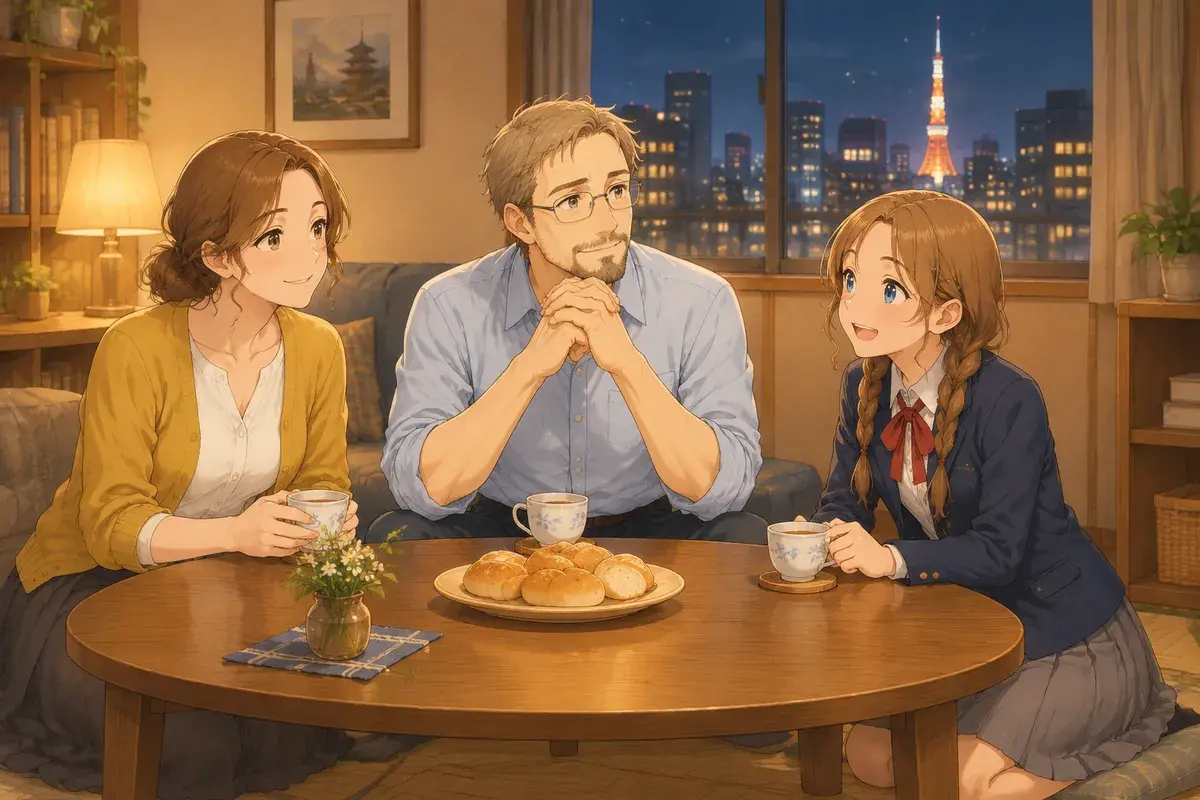
Japanese dialogue with translation · A2 · 15 lines
日本に残ることにします That's my decision: we'll stay in Japan
Comic · 14 panels
- マルク
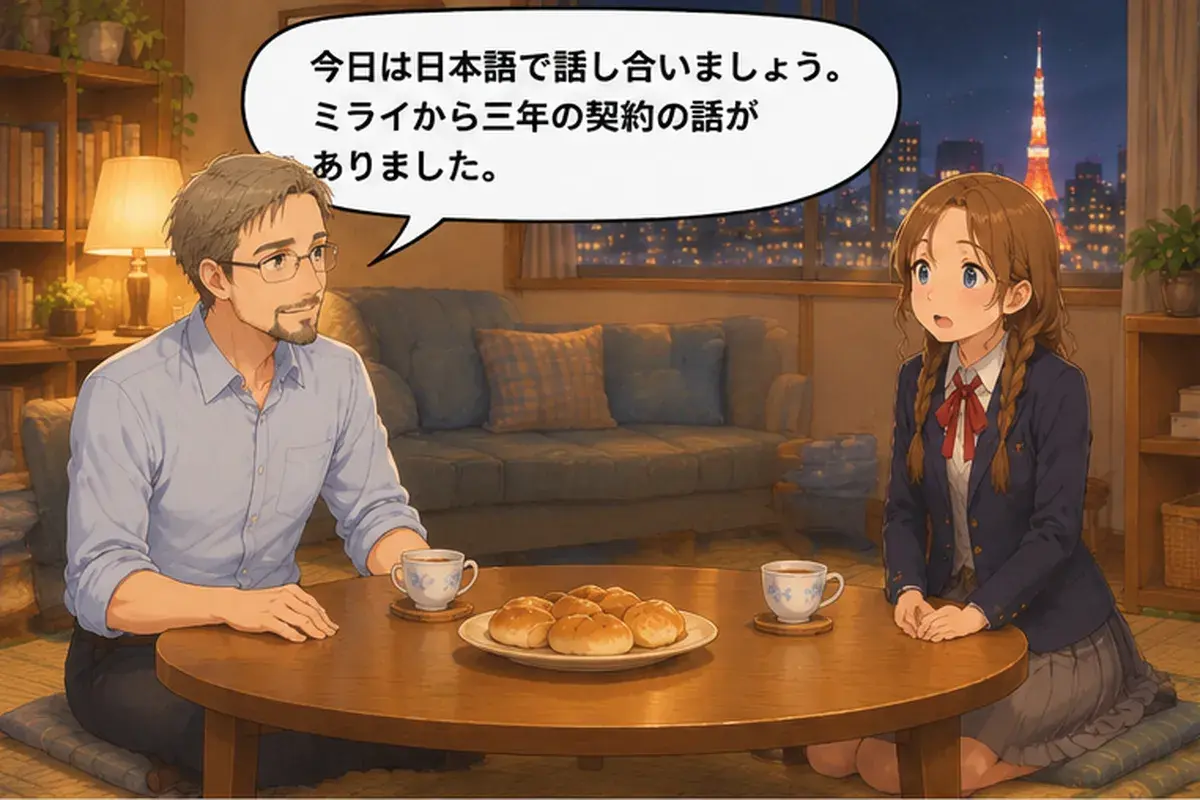
今日は日本語で話し合いましょう。ミライから三年の契約の話がありました。
Let's talk things over in Japanese today. Mirai made me an offer about a three-year contract.
- ソーニャ
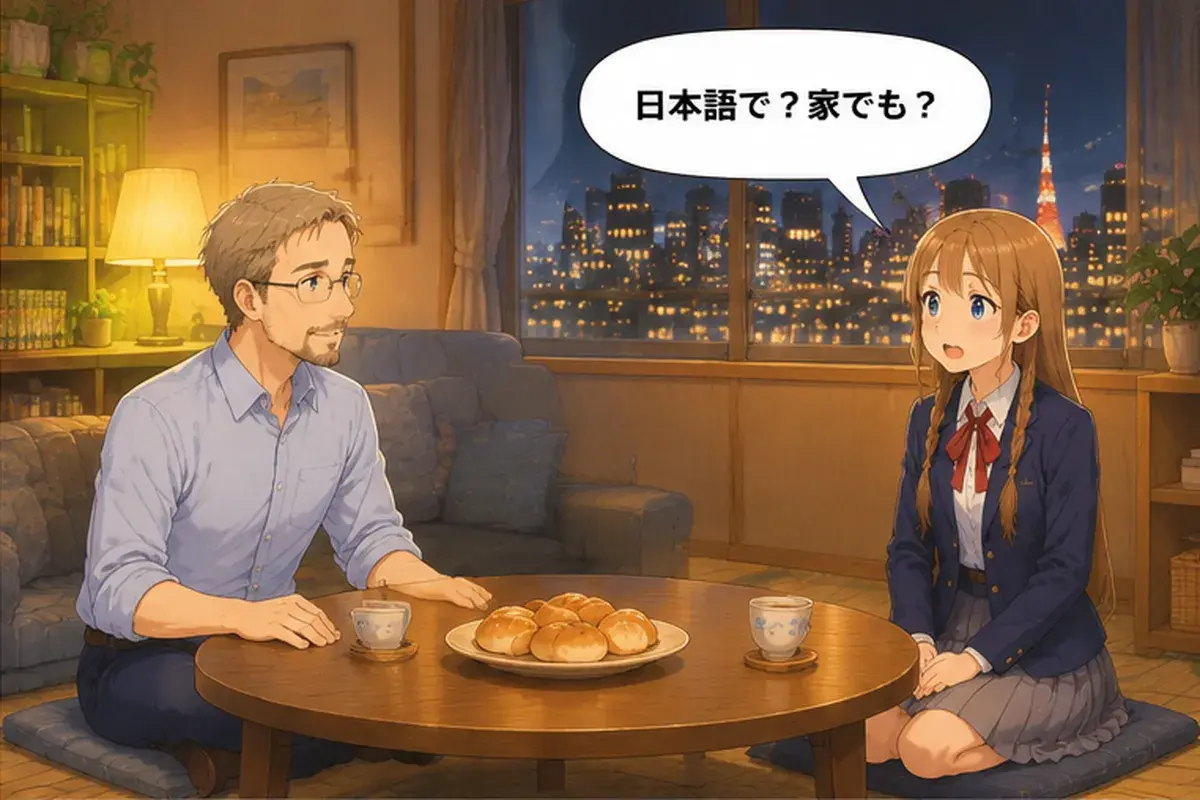
日本語で?家でも?
In Japanese? Even at home? (casual)
- アンナ
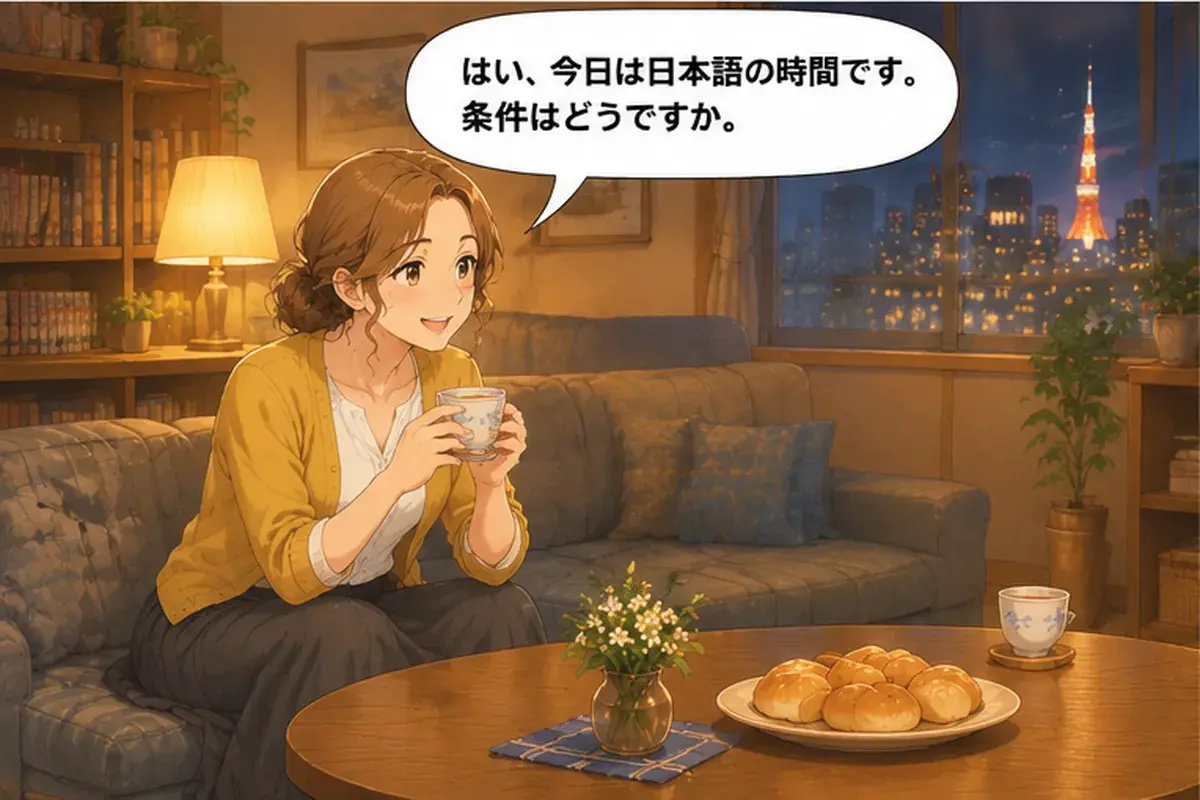
はい、今日は日本語の時間です。条件はどうですか。
Yes, today is our Japanese time. What are the conditions like?
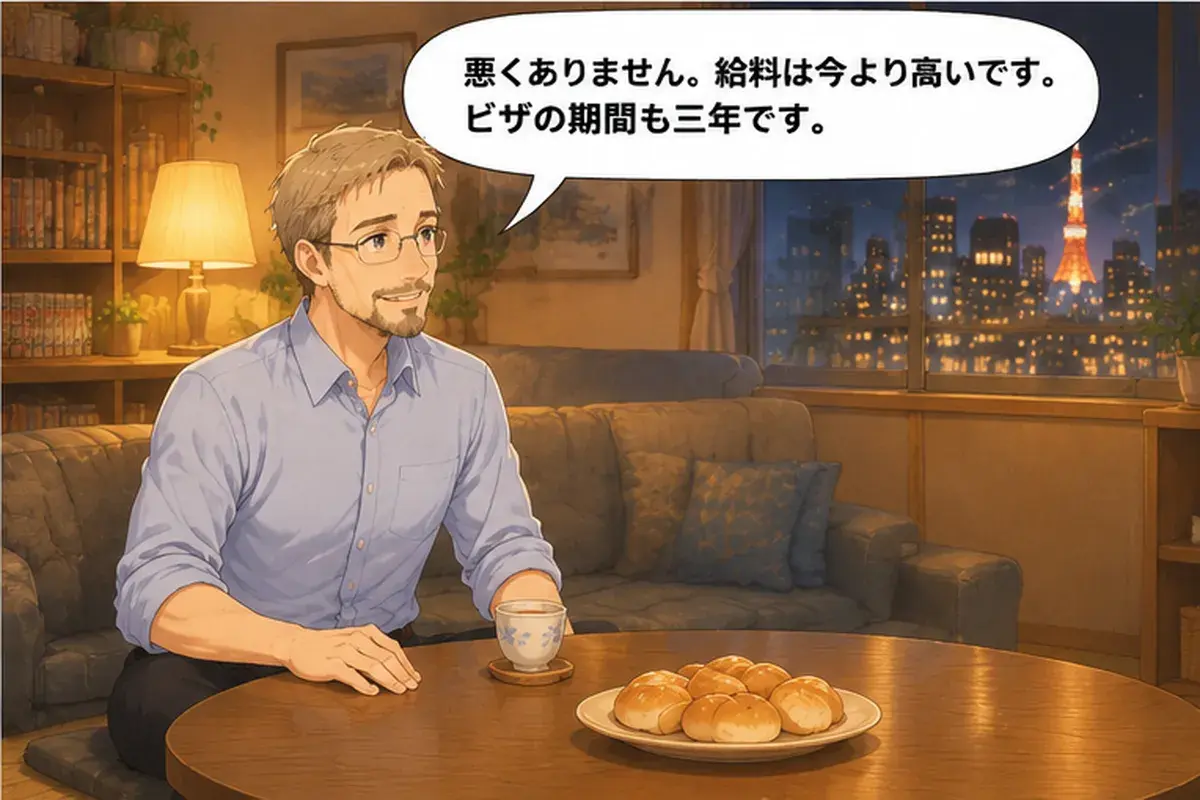
- マルク
悪くありません。給料は今より高いです。ビザの期間も三年です。
Not bad. The salary is higher than now. The visa period is three years, too.
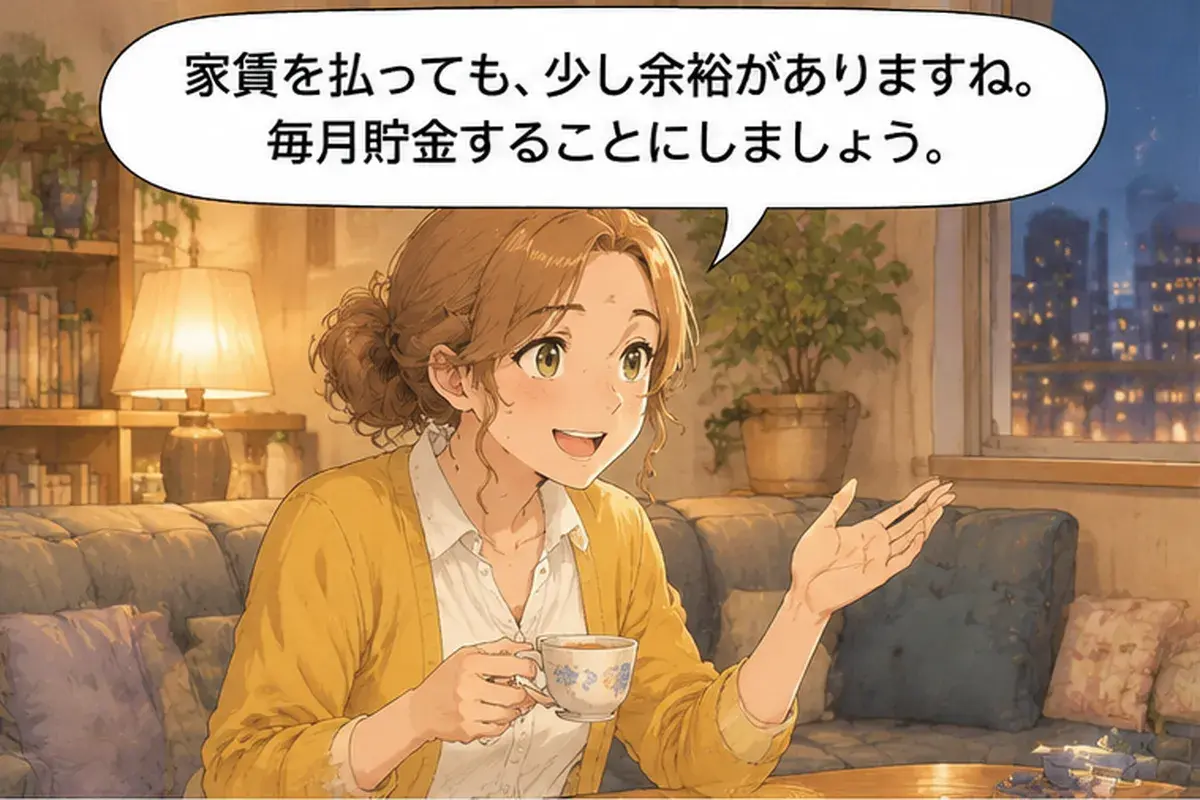
- アンナ
家賃を払っても、少し余裕がありますね。毎月貯金することにしましょう。
Even if we pay the rent, we'll have a little room left over. Let's decide to save money every month.
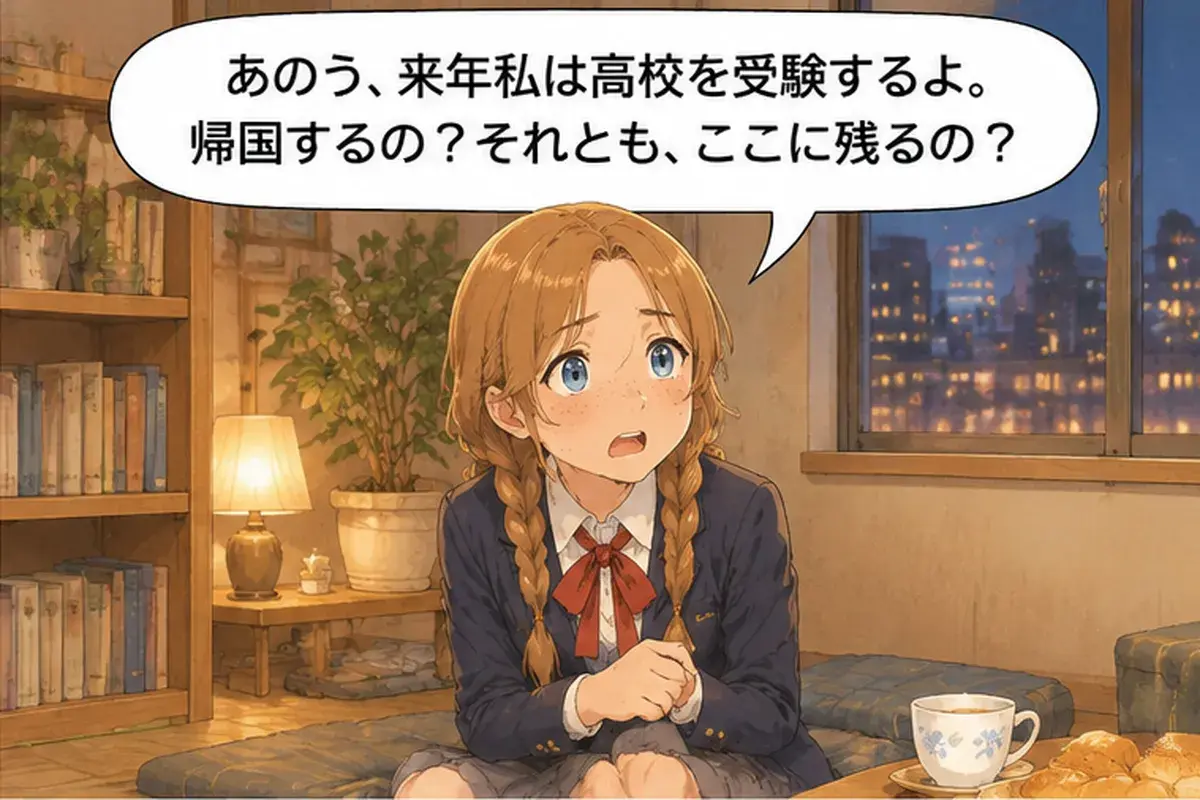
- ソーニャ
あのう、来年私は高校を受験するよ。帰国するの?それとも、ここに残るの?
Um, next year I'm taking the entrance exam for high school. Are we going back to our home country? Or are we staying here? (casual)
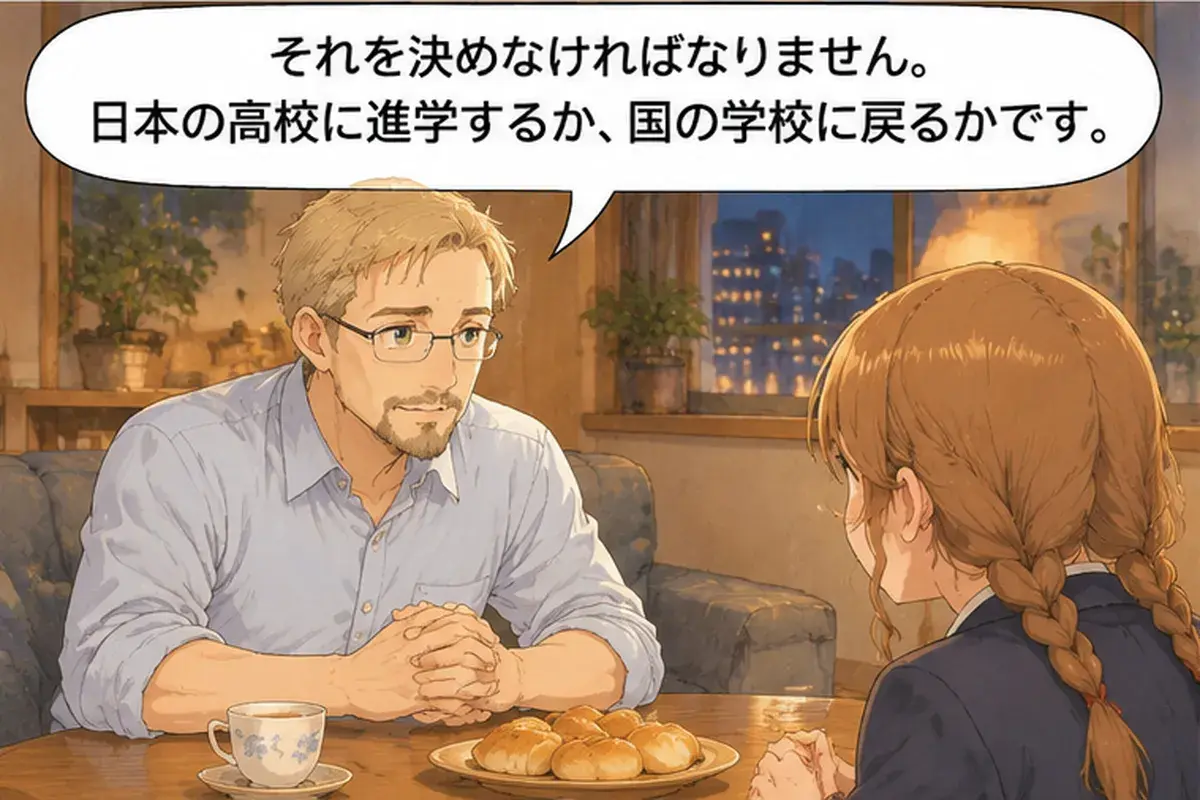
- マルク
それを決めなければなりません。日本の高校に進学するか、国の学校に戻るかです。
We have to decide that. Either you go on to a high school in Japan, or you go back to a school in our home country.
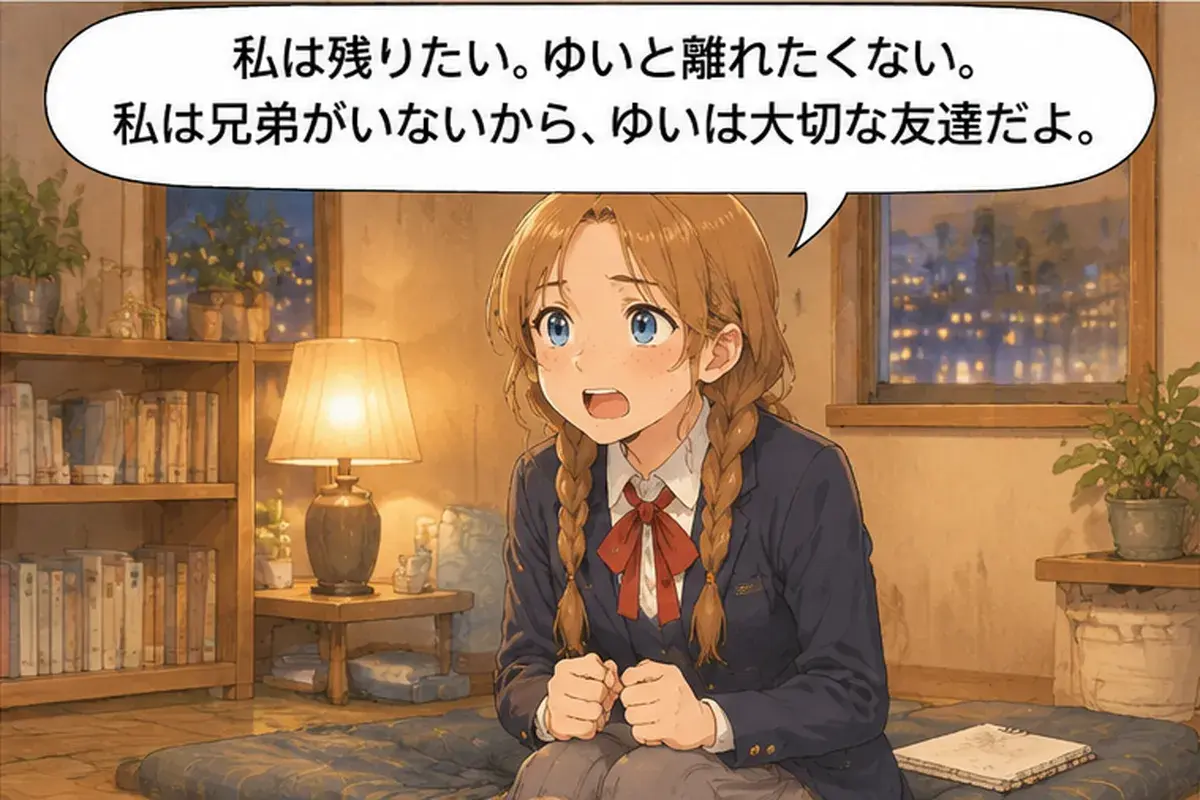
- ソーニャ
私は残りたい。ゆいと離れたくない。私は兄弟がいないから、ゆいは大切な友達だよ。
I want to stay. I don't want to be apart from Yui. I don't have any brothers or sisters, so Yui is an important friend. (casual)
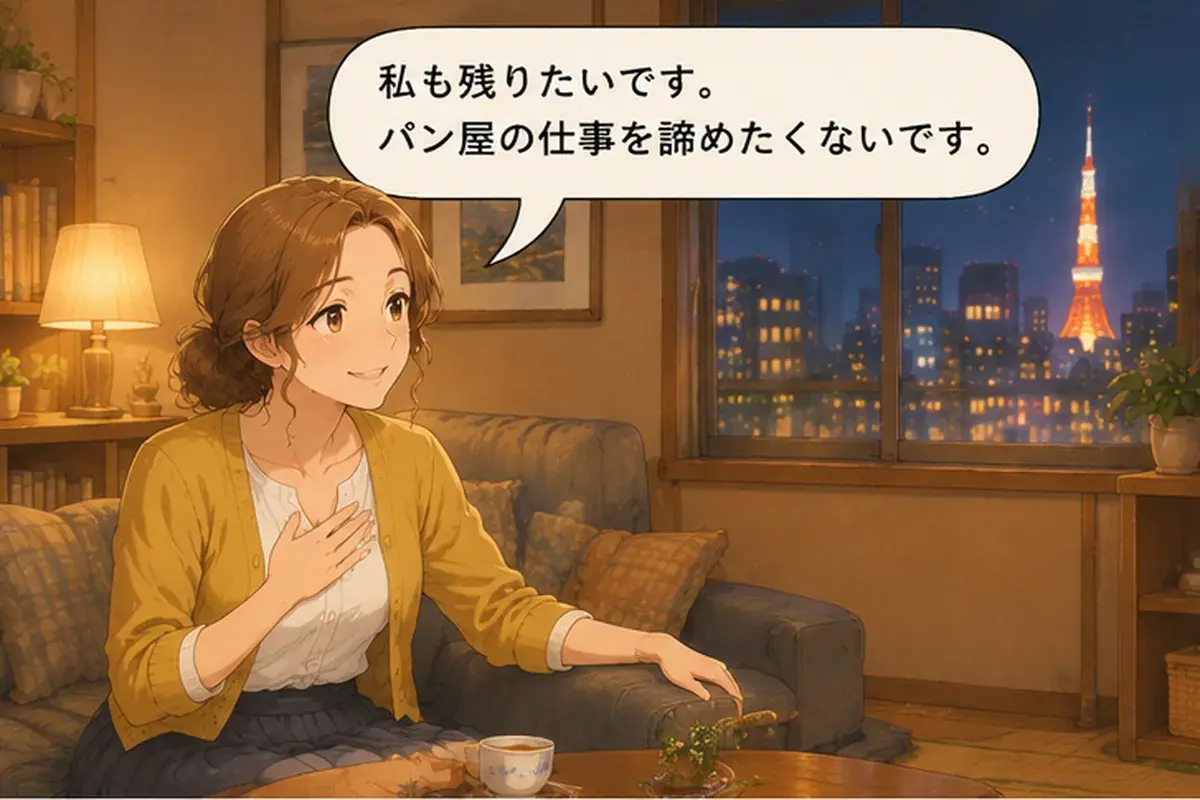
- アンナ
私も残りたいです。パン屋の仕事を諦めたくないです。
I want to stay, too. I don't want to give up my job at the bakery.
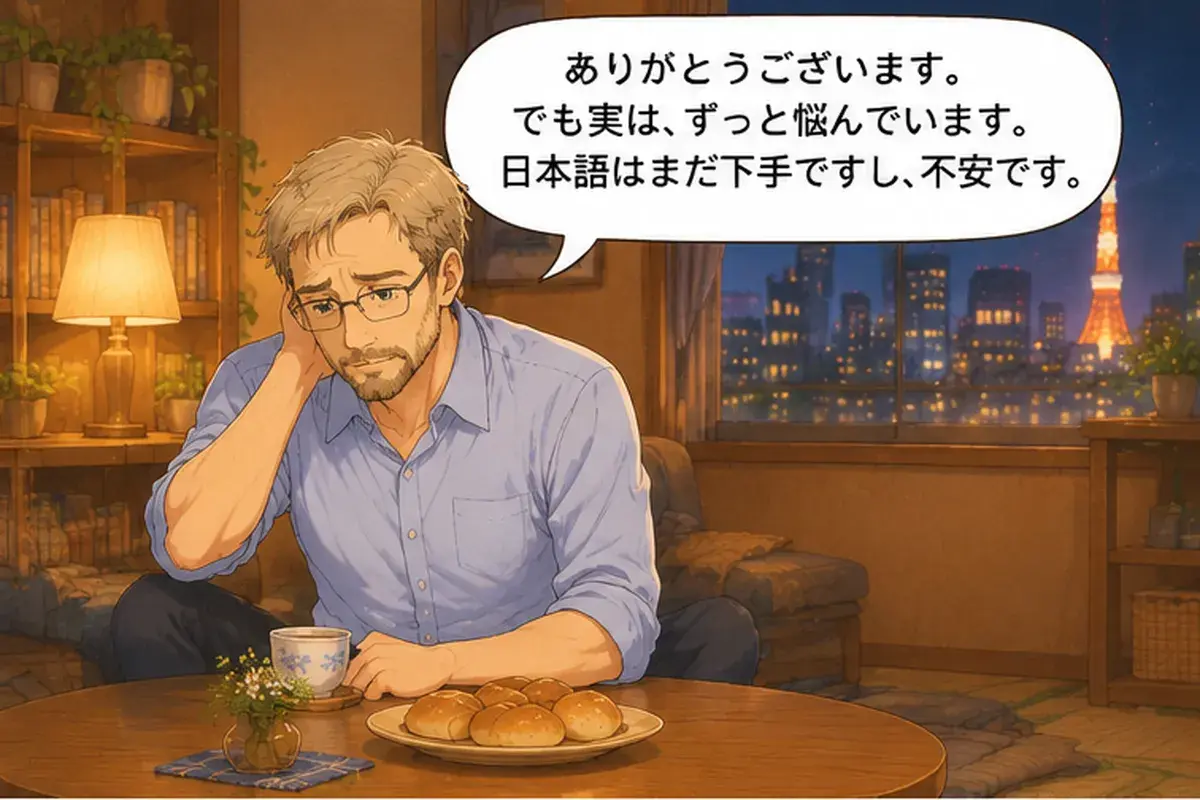
- マルク
ありがとうございます。でも実は、ずっと悩んでいます。日本語はまだ下手ですし、不安です。
Thank you. But actually, I've been worrying the whole time. My Japanese is still poor, and I'm anxious.
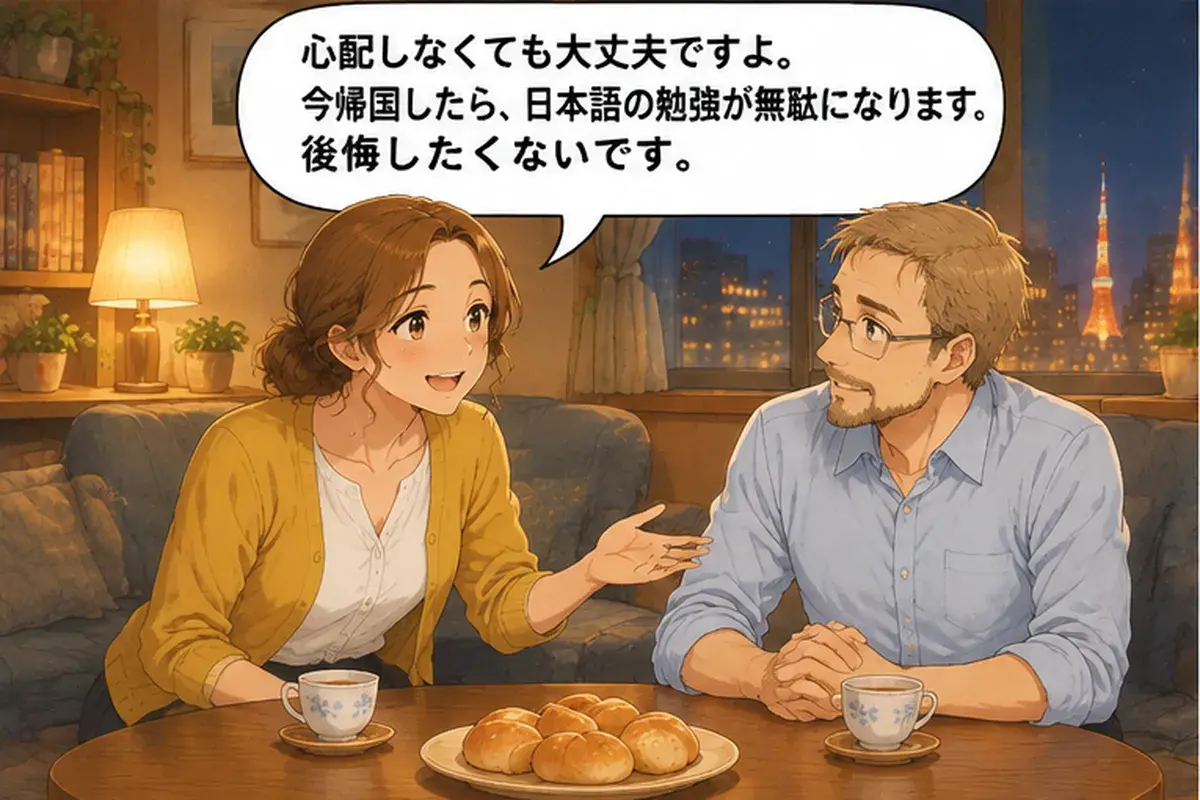
- アンナ
心配しなくても大丈夫ですよ。今帰国したら、日本語の勉強が無駄になります。後悔したくないです。
You don't have to worry; it'll be fine. If we go back now, all the Japanese studying will be a waste. I don't want to regret it.
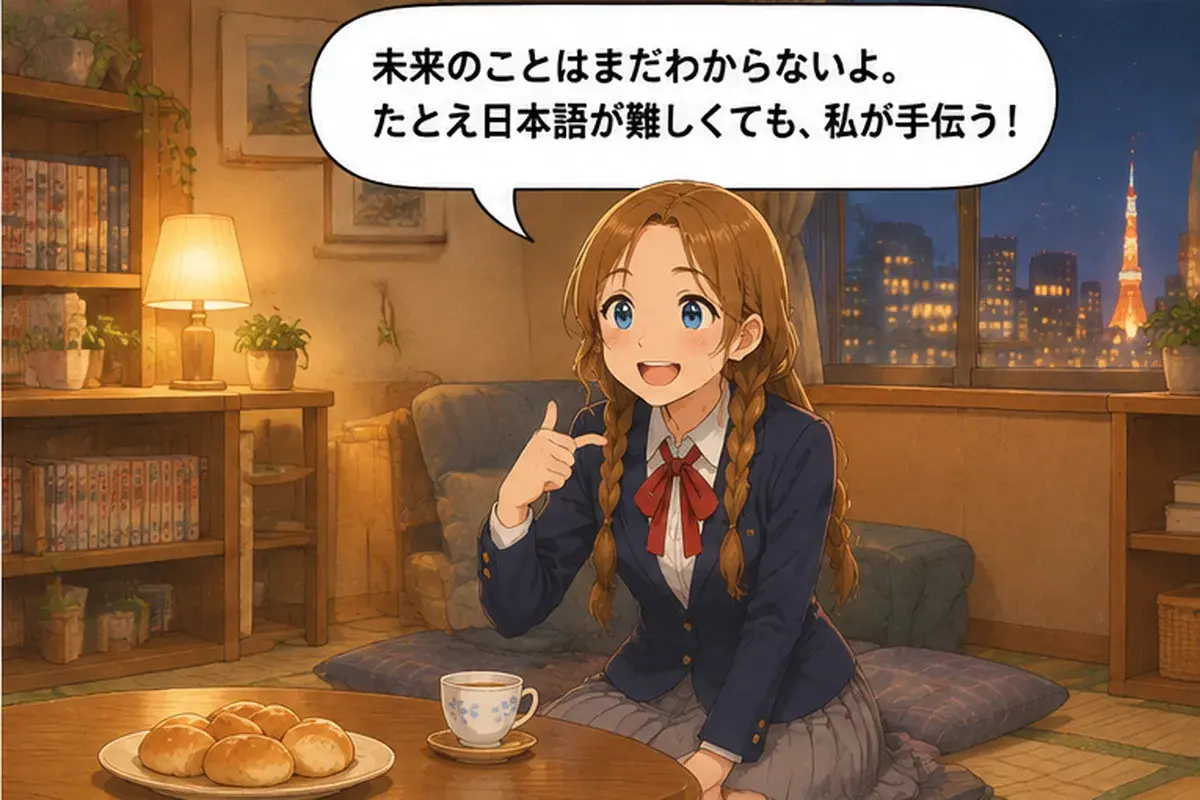
- ソーニャ
未来のことはまだわからないよ。たとえ日本語が難しくても、私が手伝う!
We don't know what the future holds yet. Even if Japanese is hard, I'll help you! (casual)
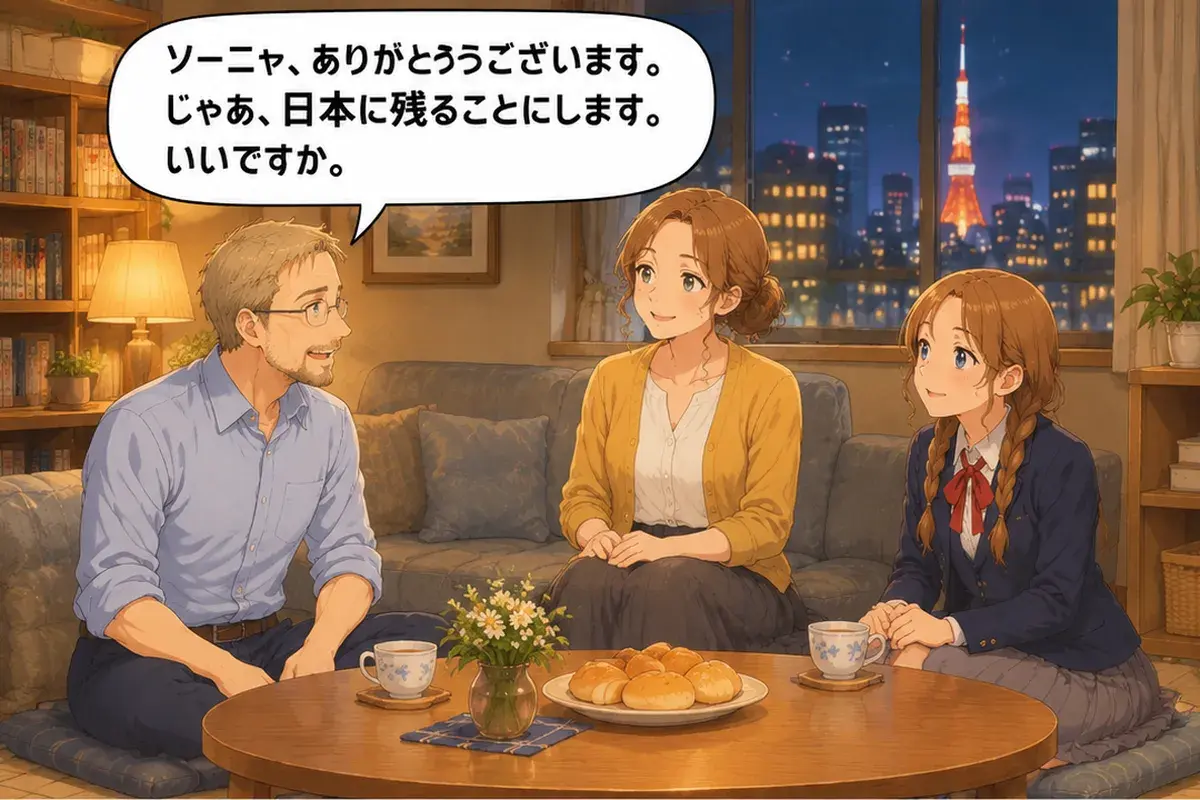
- マルク
ソーニャ、ありがとうございます。じゃあ、日本に残ることにします。いいですか。
Thank you, Sonya. Then that's my decision: we'll stay in Japan. Is that OK?
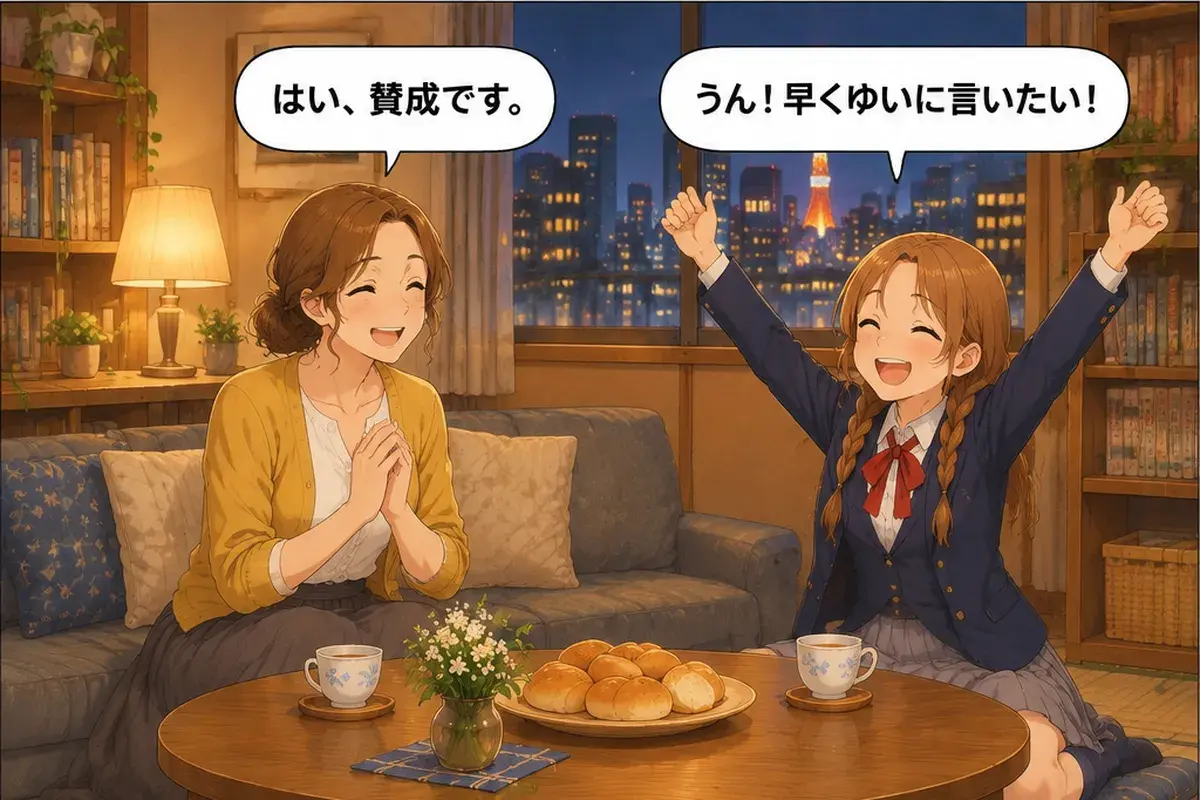
- アンナ
はい、賛成です。
Yes, I agree.
- ソーニャ
うん!早くゆいに言いたい!
Yeah! I want to tell Yui right away!
Grammar for this text
日本 に 残る こと に します— the main pattern of the unit. Dictionary form +こと に しますmeans "I decide to do it this way." Mark decides right now, out loud. When the decision is already made, you sayこと に しました(Kimura will use it in text 2).毎月 貯金する こと に しましょう—こと に しましょうmeans "let's decide to do it this way." Anna suggests a rule for the whole family.家賃 を 払って も、少し 余裕 が あります ね—て もwithoutいいmeans "even if": "even if we pay the rent." It isn't permission here, but a concession.たとえ 日本語 が 難しくて も、私 が 手伝う!—たとえmakes "even if" stronger. The i-adjective難しいbecomes難しくて, andもfollows.心配しなくて も 大丈夫 です よ—心配しないbecomes心配しなくて+も. Word for word it's "even if you don't worry, it's fine," so it means "you don't need to worry."無駄 に なります— "it will be for nothing" or "it will go to waste."日本 の 高校 に 進学する か、国 の 学校 に 戻る か です— two questions withか: "whether to go on to... or whether to go back to..." In English: "either... or...".決めなければ なりません— "we have to decide" (unit 17).私 は 残りたい。 ゆい と 離れたくない。— Sonya talks to her family in plain, casual speech (unit 5):離れたくないmeans "I don't want to be apart." Her parents answer politely, because the family is having its "Japanese time."
Words and grammar of the unit: Talk about a decision.
Learn the words from the texts with flashcards
In the app, you can tap any word in a text to see its translation, forms and examples, and new words stick with flashcards. 15 minutes a day.
Start for freeEverything is open for free. No card needed to sign up.