

Japanese dialogue with translation · A2 · 15 lines
門の前で会おう Let's meet in front of the gate
Comic · 13 panels
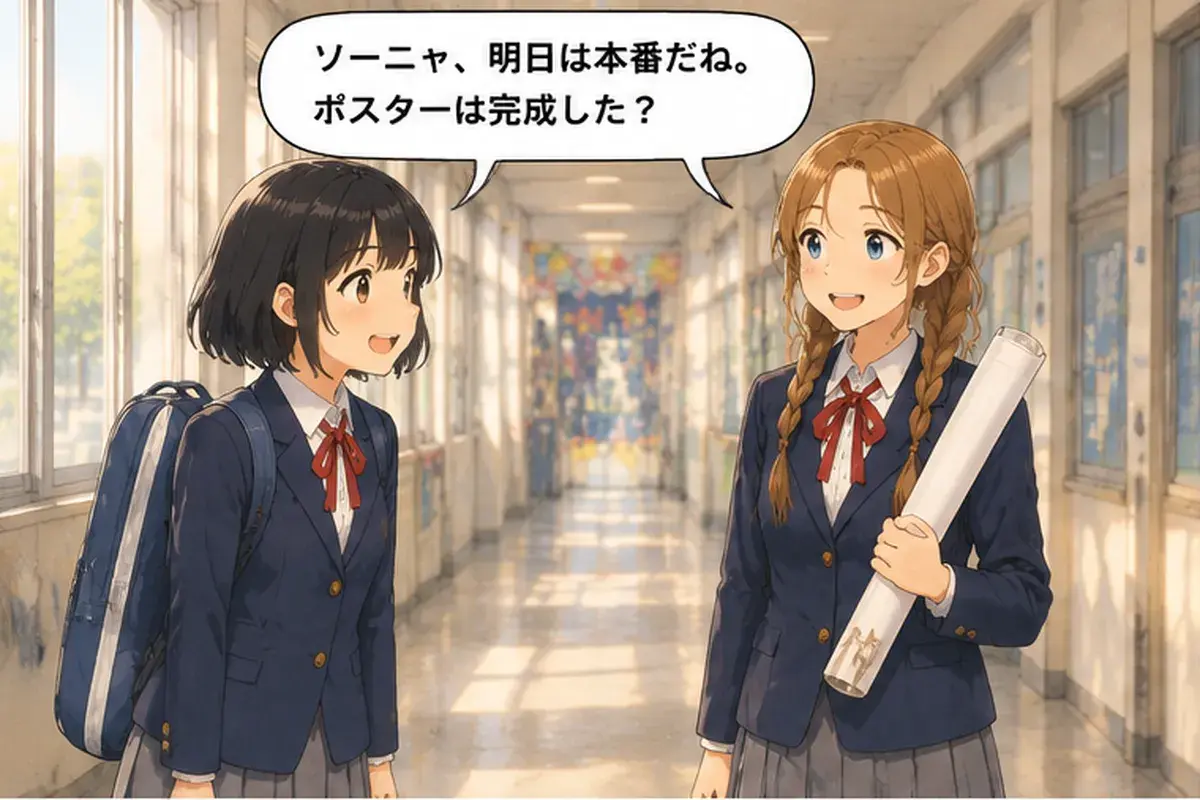
- ゆい
ソーニャ、明日は本番だね。ポスターは完成した?
Sonya, tomorrow's the big day, isn't it? Is the poster finished? (casual)
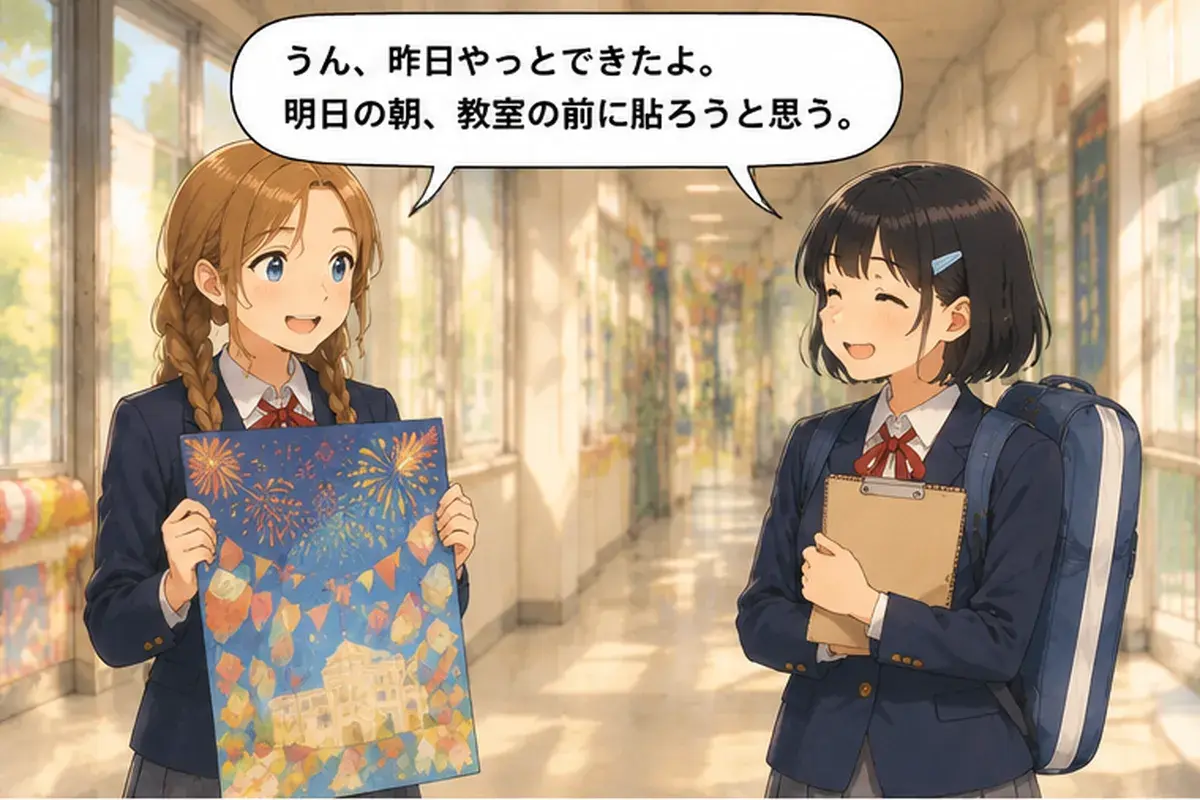
- ソーニャ
うん、昨日やっとできたよ。明日の朝、教室の前に貼ろうと思う。
Yeah, I finally finished it yesterday. I'm thinking of putting it up in front of the classroom tomorrow morning (casual).
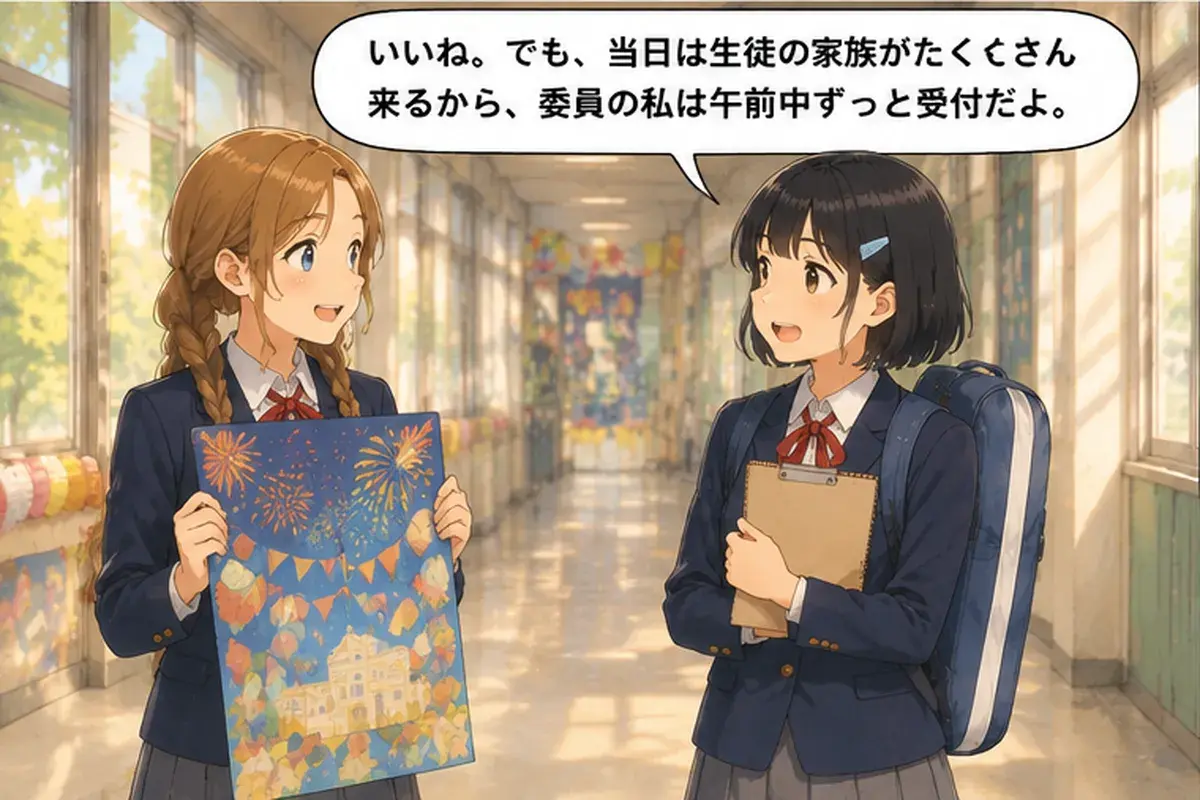
- ゆい
いいね。でも、当日は生徒の家族がたくさん来るから、委員の私は午前中ずっと受付だよ。
Nice. But on the day itself a lot of students' families will come, so as a committee member I'll be at the reception desk all morning (casual).
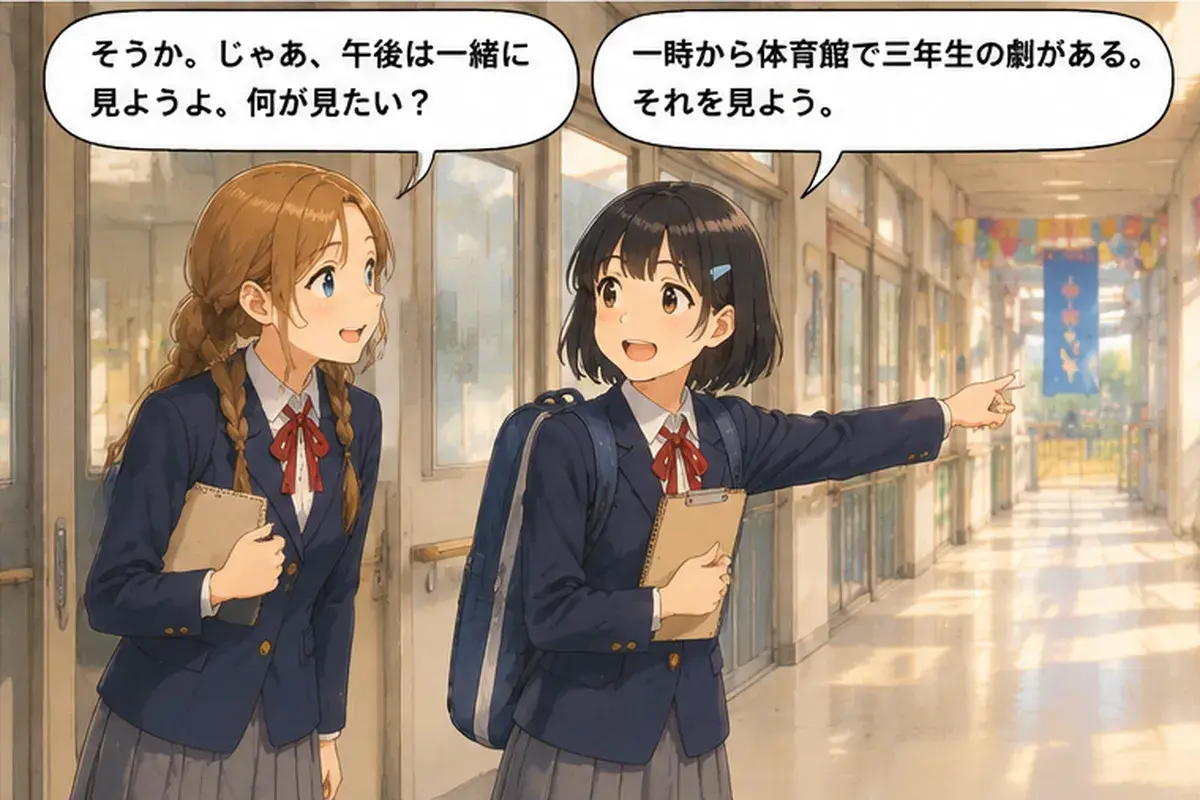
- ソーニャ
そうか。じゃあ、午後は一緒に見ようよ。何が見たい?
I see. Then let's look around together in the afternoon. What do you want to see? (casual)
- ゆい
一時から体育館で三年生の劇がある。それを見よう。
There's a play by the third-years in the gym at one. Let's watch that (casual).
- ソーニャ
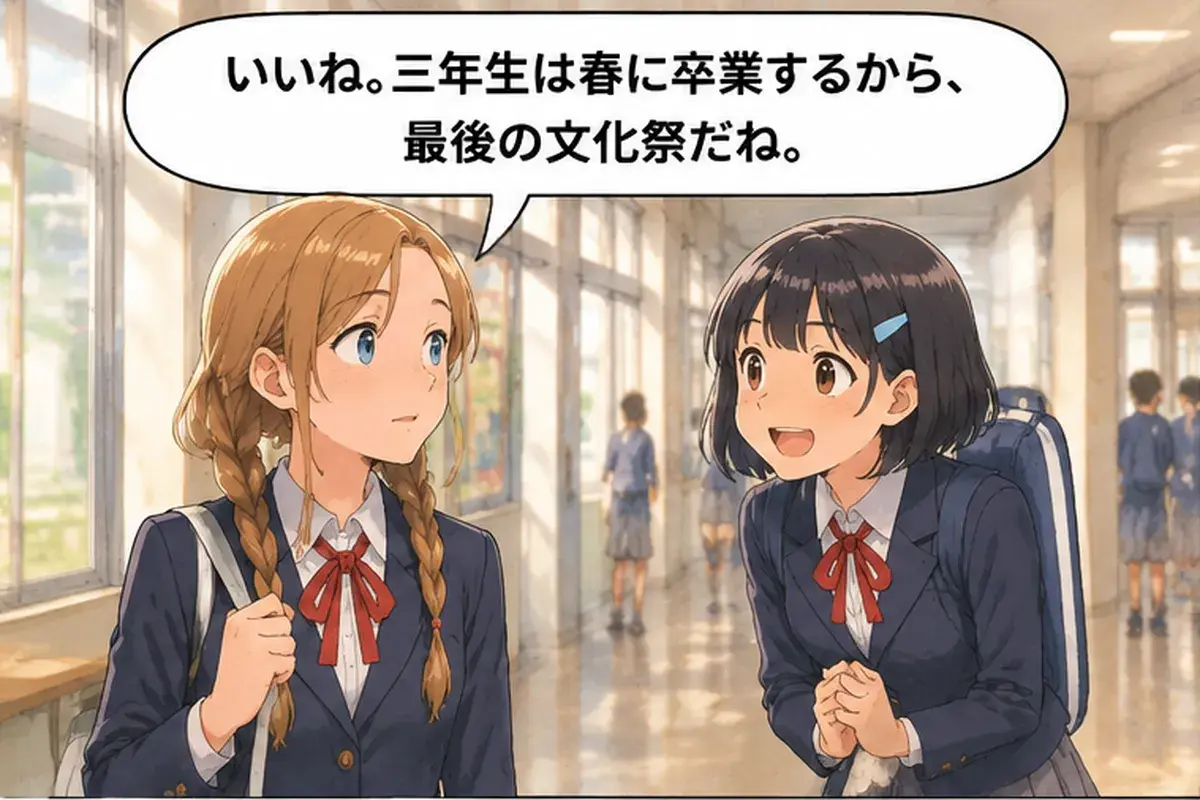
いいね。三年生は春に卒業するから、最後の文化祭だね。
Sounds good. The third-years graduate in the spring, so it's their last school festival (casual).
- ゆい
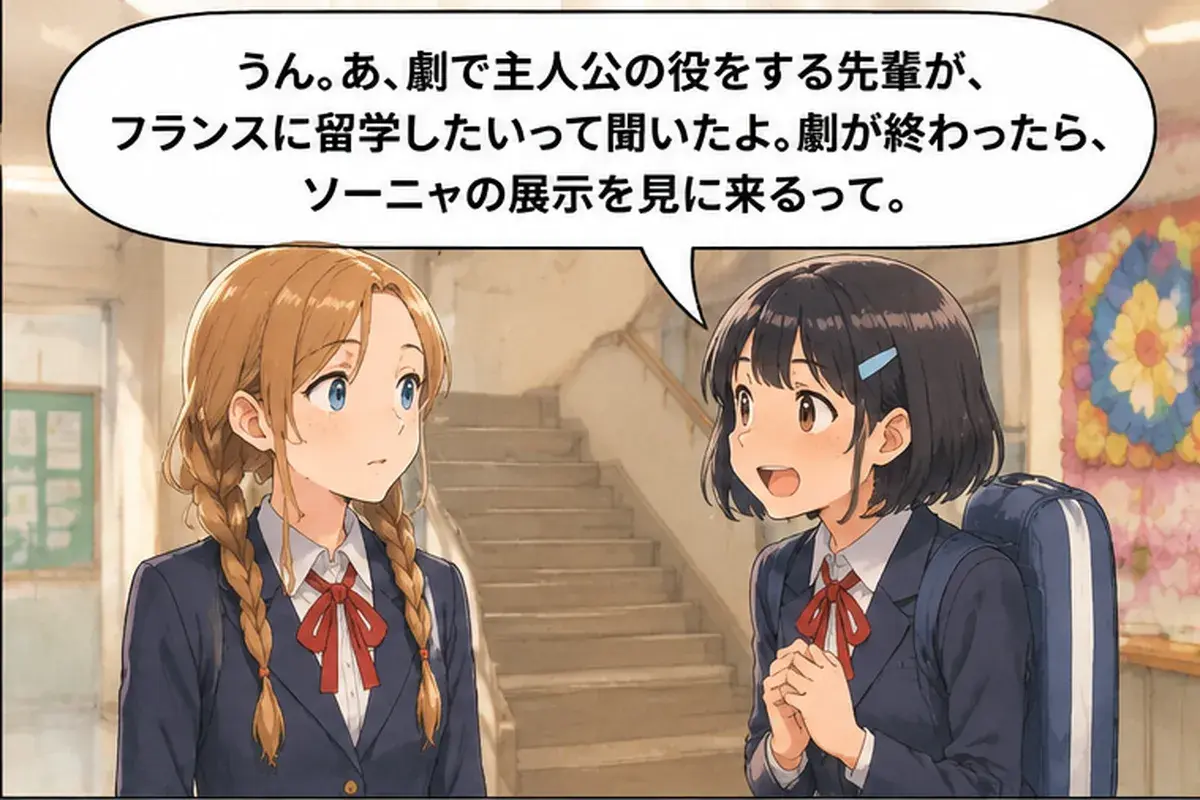
うん。あ、劇で主人公の役をする先輩が、フランスに留学したいって聞いたよ。劇が終わったら、ソーニャの展示を見に来るって。
Yeah. Oh, I heard the senpai who plays the lead in the play wants to study abroad in France. They said they'll come see your exhibit once the play is over (casual).
- ソーニャ
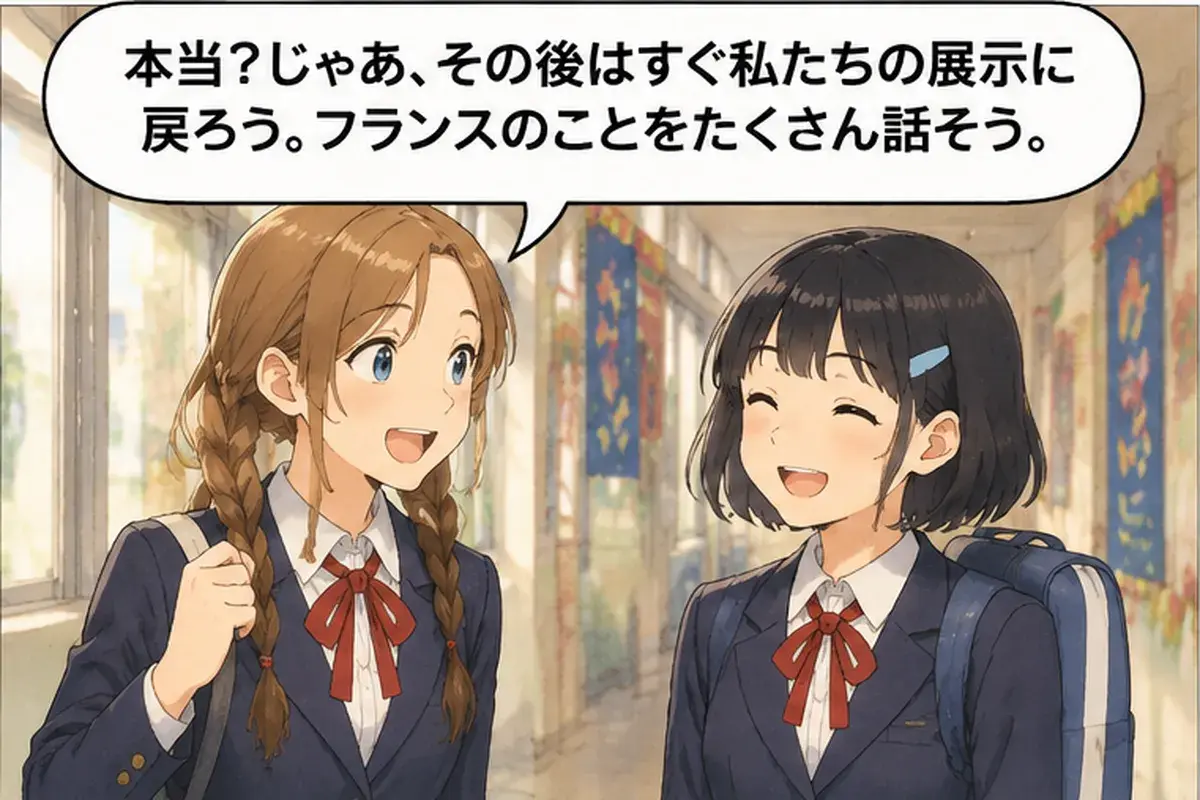
本当?じゃあ、その後はすぐ私たちの展示に戻ろう。フランスのことをたくさん話そう。
Really? Then right after that, let's go back to our exhibit. Let's talk a lot about France (casual).
- ゆい
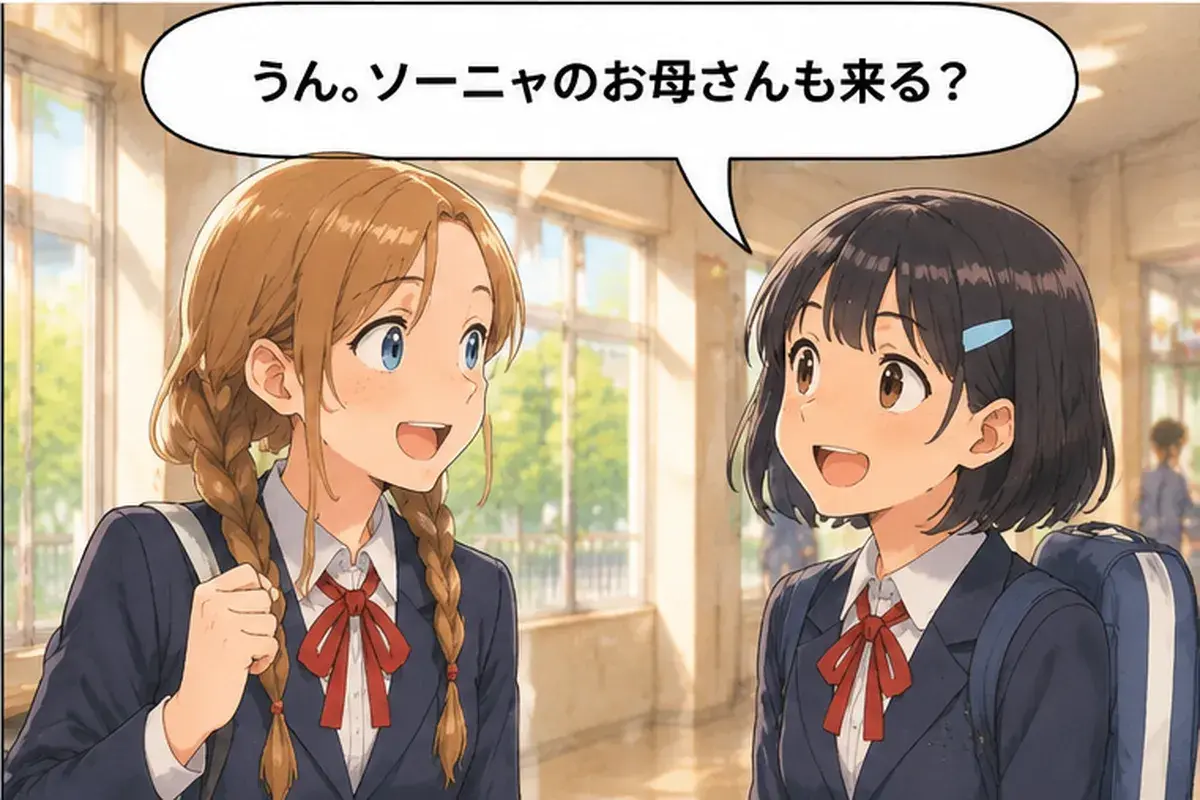
うん。ソーニャのお母さんも来る?
Yeah. Is your mom coming too? (casual)
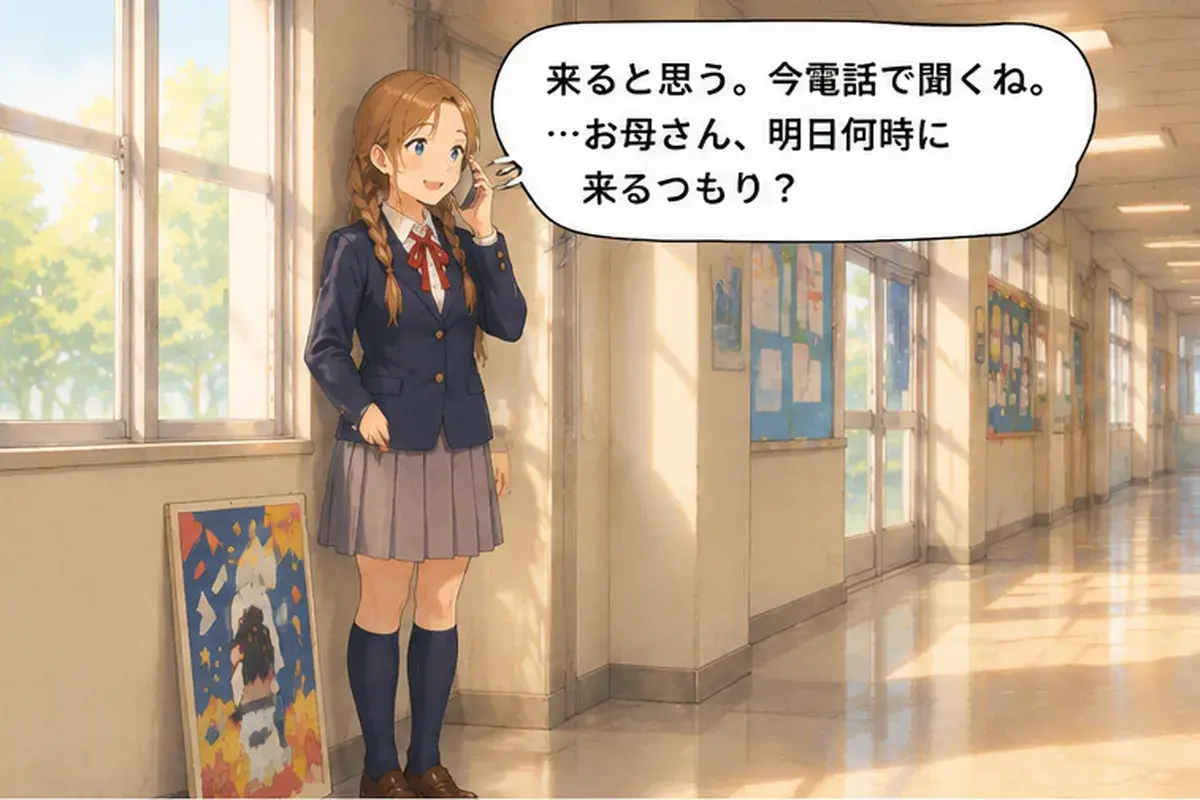
- ソーニャ
来ると思う。今電話で聞くね。…お母さん、明日何時に来るつもり?
I think she'll come. I'll ask her on the phone now. ...Mom, what time are you planning to come tomorrow? (casual)
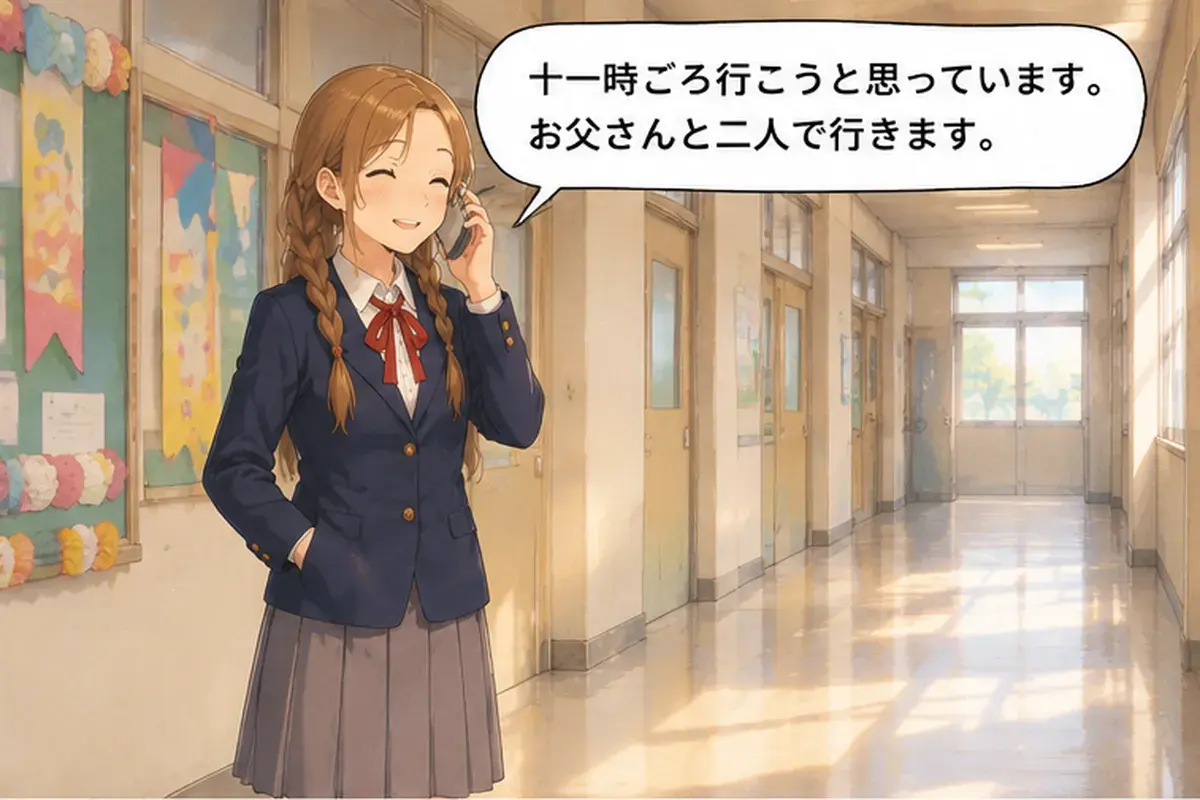
- アンナ
十一時ごろ行こうと思っています。お父さんと二人で行きます。
I'm thinking of going around 11. Your dad and I will go together.
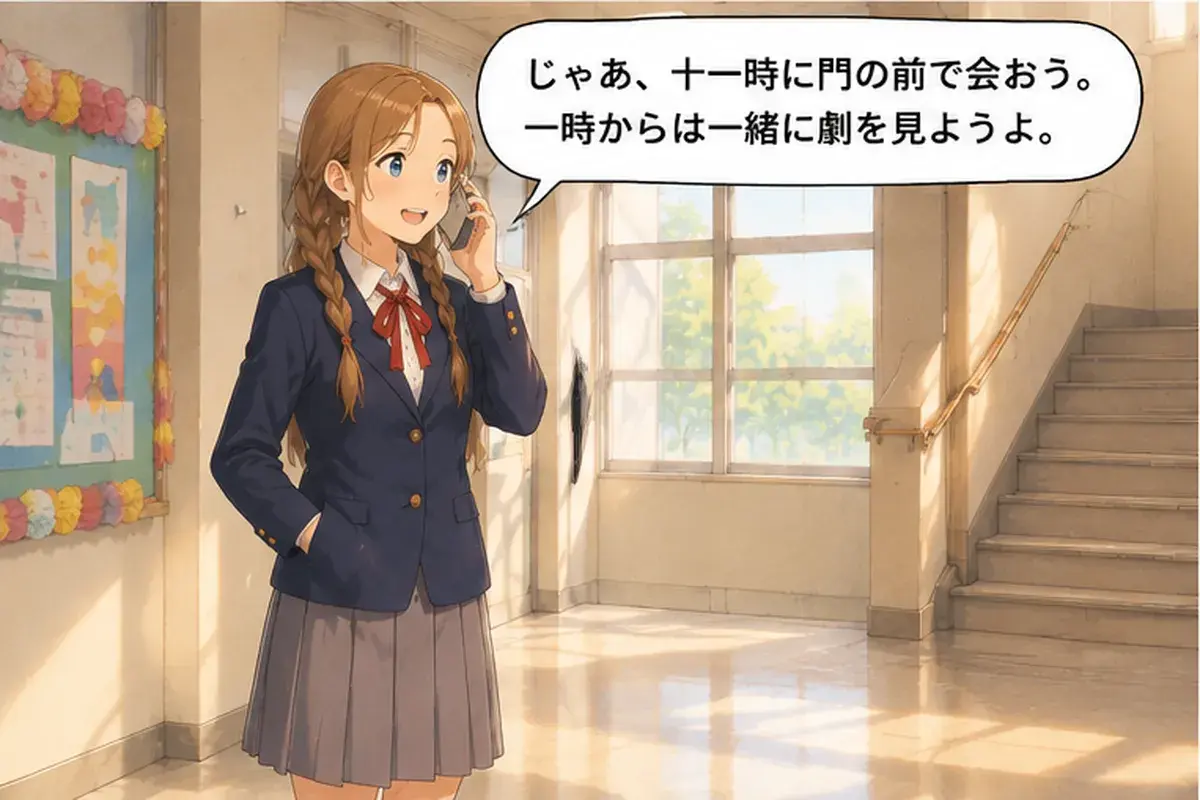
- ソーニャ
じゃあ、十一時に門の前で会おう。一時からは一緒に劇を見ようよ。
Then let's meet in front of the gate at 11. At one, let's watch the play together (casual).
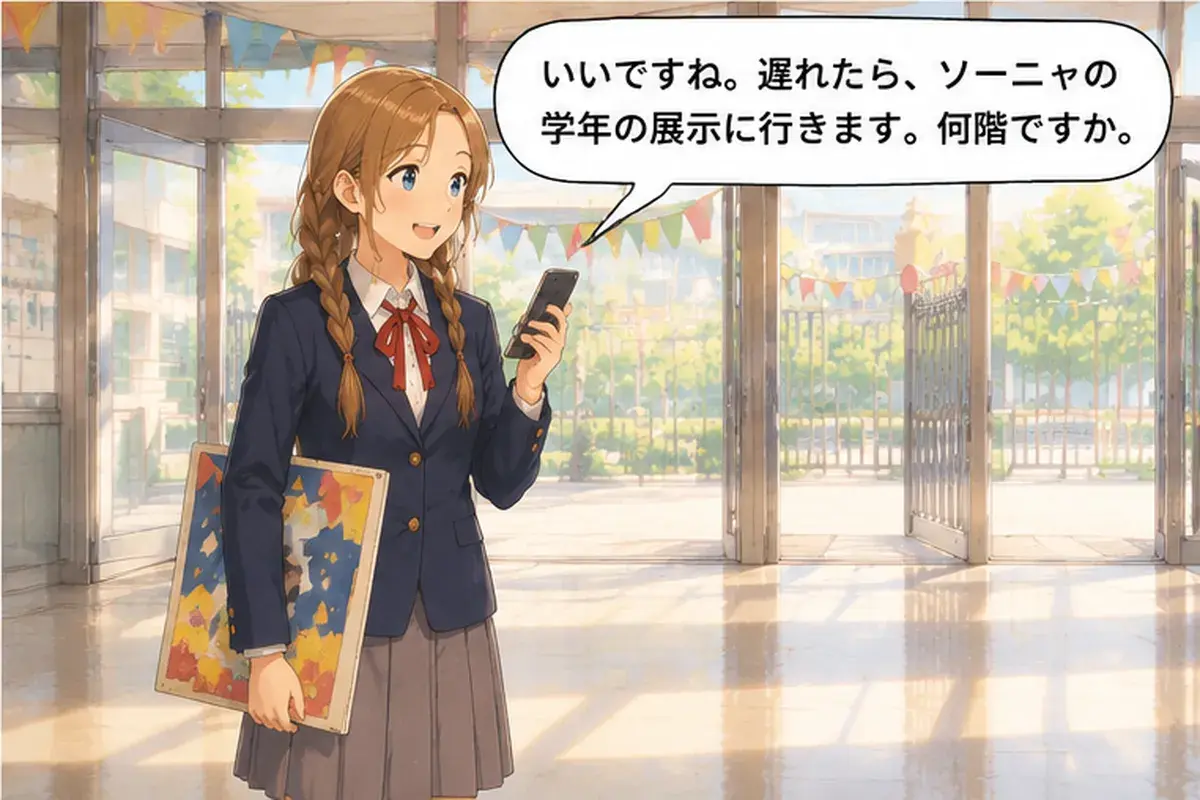
- アンナ
いいですね。遅れたら、ソーニャの学年の展示に行きます。何階ですか。
Sounds good. If I'm late, I'll go to your grade's exhibit. What floor is it on?
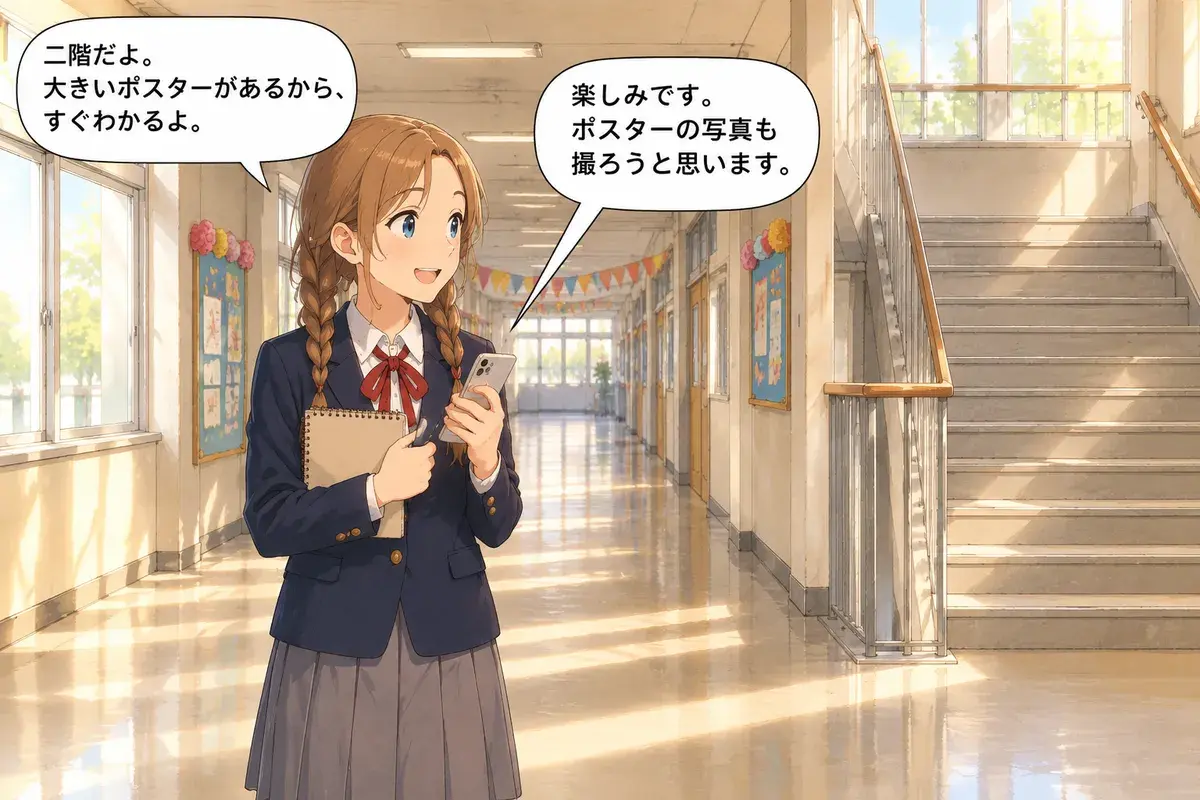
- ソーニャ
二階だよ。大きいポスターがあるから、すぐわかるよ。
It's on the second floor. There's a big poster, so you'll spot it right away (casual).
- アンナ
楽しみです。ポスターの写真も撮ろうと思います。
I'm looking forward to it. I'm thinking of taking a picture of the poster too.
Grammar for this text
貼ろう と 思う— I'm thinking of putting it up.〜よう と 思うmeans "I'm thinking of doing": you're leaning toward a plan, but it isn't final.貼る→貼ろう: for a u-verb, change the last sound to the o-sound and addう. Sonya talks to a friend, so she says思う; Anna is polite and says思います.行こう と 思って います— I'm thinking of going.行く→行こう.撮ろう と 思います— I'm thinking of taking a picture.撮る→撮ろう.一緒に 見よう よ— Let's watch together. The same form is used as an invitation:戻ろう,話そう,会おう. With a friend and with her mom, Sonya doesn't needましょう.明日 何時 に 来る つもり?— What time are you planning to come tomorrow? Withつもり, Sonya asks about her mom's plans. The dictionary form来るgoes beforeつもり.明日 は 本番 だ ね— Tomorrow's the big day, isn't it?本番is the day of the event itself, not the preparation.当日 はmeans "on the day itself".委員 の 私 は— I, as a committee member...受付is the reception desk where guests are greeted.主人公 の 役 を する 先輩— the senpai who plays the lead role.役means "role";先輩is a student who is ahead of you at school (here, a third-year).三年生 は 春 に 卒業する から— Because the third-years graduate in the spring.三年生are the students in the third and last year of junior high school. Sonya and Yui are second-years.フランス に 留学したい って 聞いた よ— I heard they want to study abroad in France.って(unit 7) means "I heard that...".見 に 来る って— They say they'll come to see it.ってat the end repeats someone else's words.その後 は— After that.ソーニャ の 学年 の 展示is the exhibit of the whole second year;学年means "school year, grade", not oneクラス.
Words and grammar of the unit: Talk about your plans.
Learn the words from the texts with flashcards
In the app, you can tap any word in a text to see its translation, forms and examples, and new words stick with flashcards. 15 minutes a day.
Start for freeEverything is open for free. No card needed to sign up.