

Japanese dialogue with translation · A1 · 12 lines
九時半です It's nine thirty
Comic · 11 panels
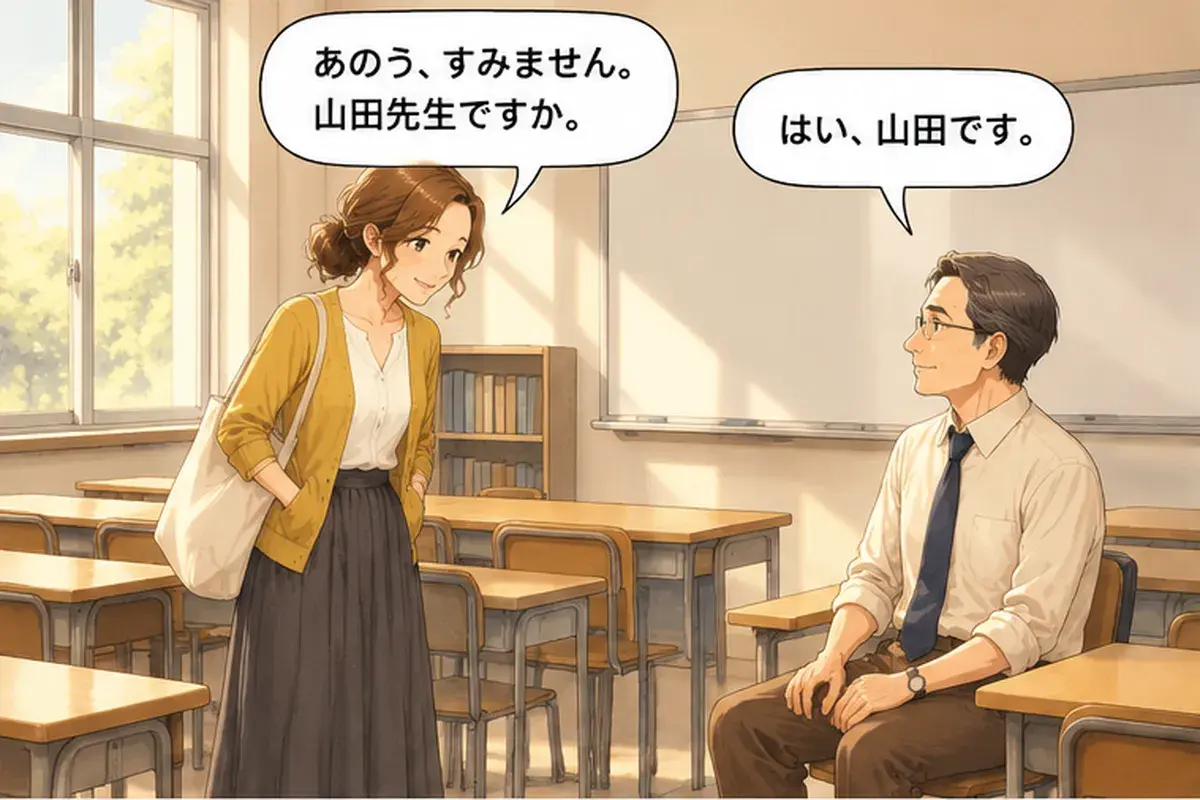
- アンナ
あのう、すみません。山田先生ですか。
Um, excuse me. Are you Yamada-sensei?
- 山田
はい、山田です。
Yes, I'm Yamada.
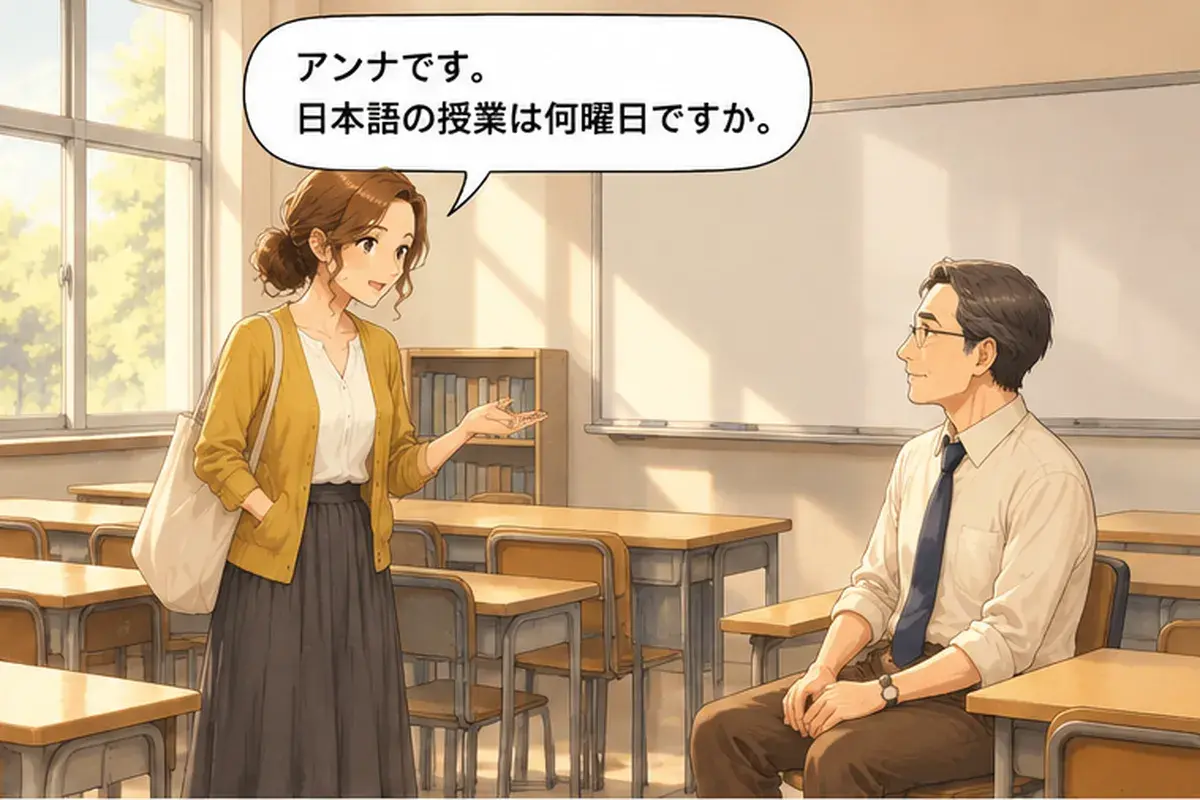
- アンナ
アンナです。日本語の授業は何曜日ですか。
I'm Anna. What day of the week is the Japanese class?
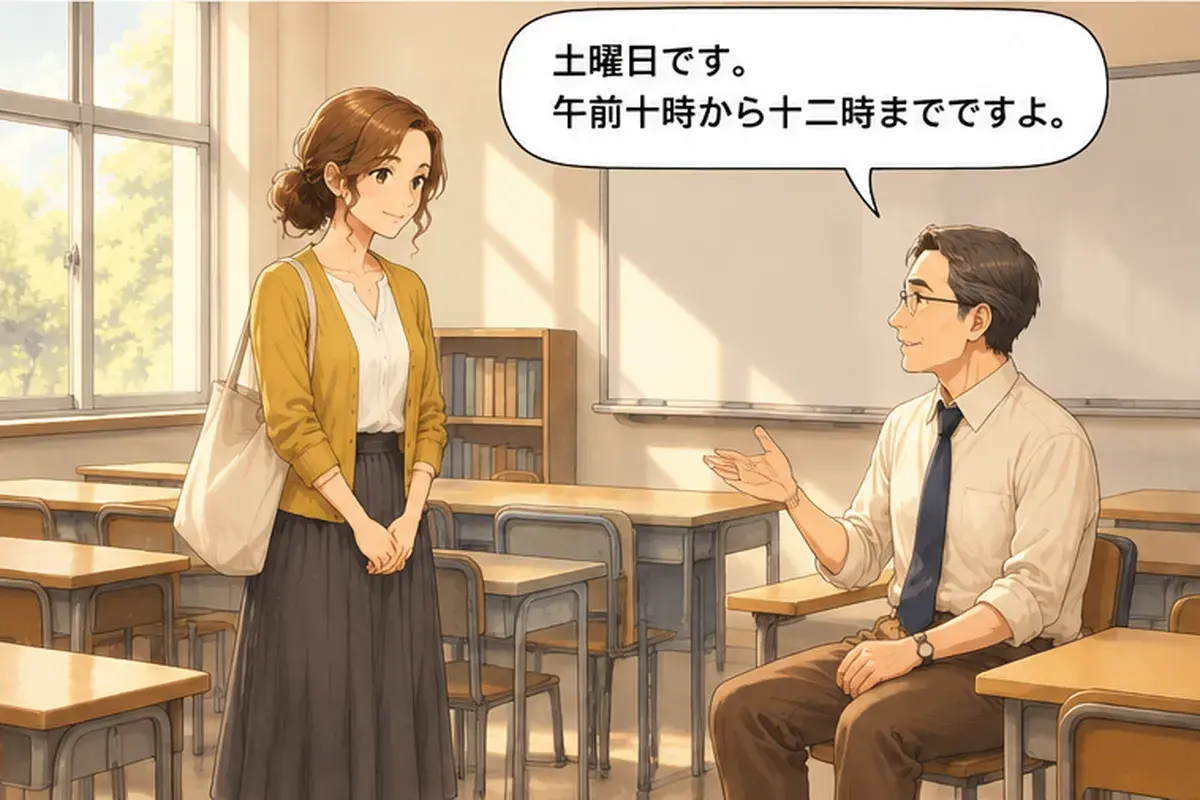
- 山田
土曜日です。午前十時から十二時までですよ。
It's on Saturday. From 10 a.m. to 12 noon.
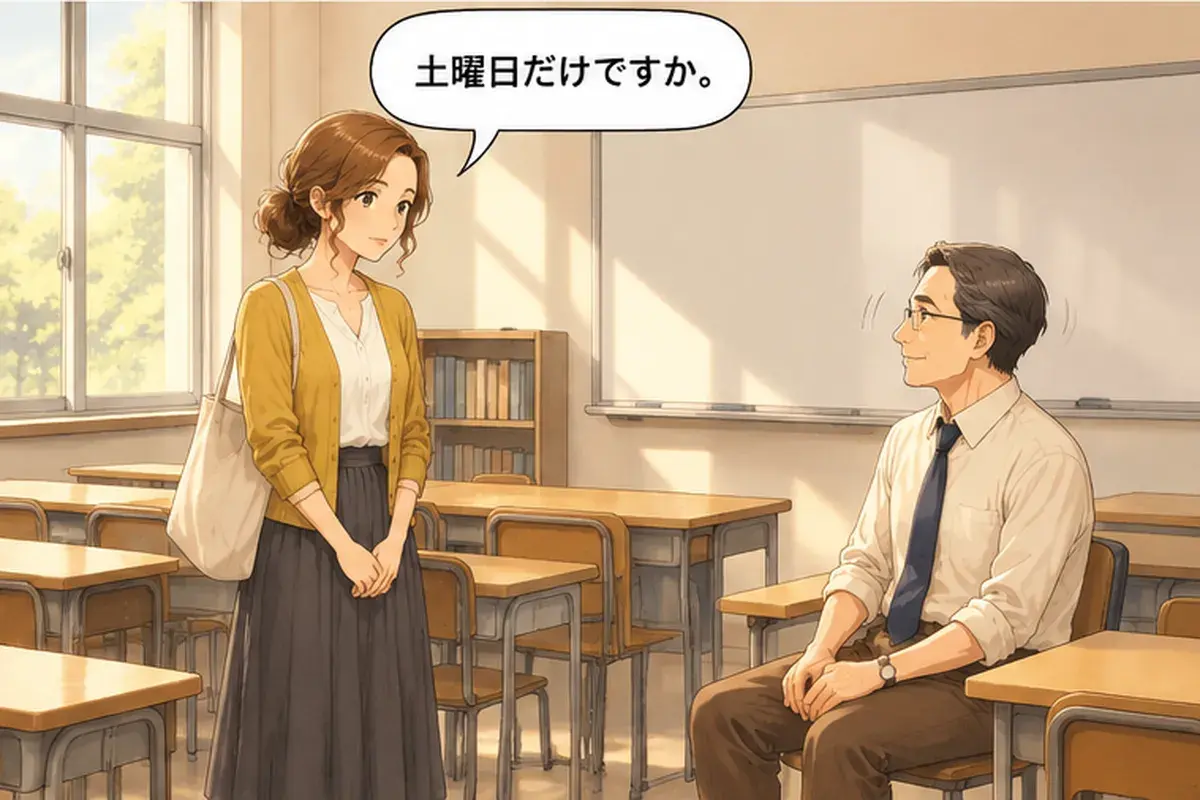
- アンナ
土曜日だけですか。
Only on Saturday?
- 山田
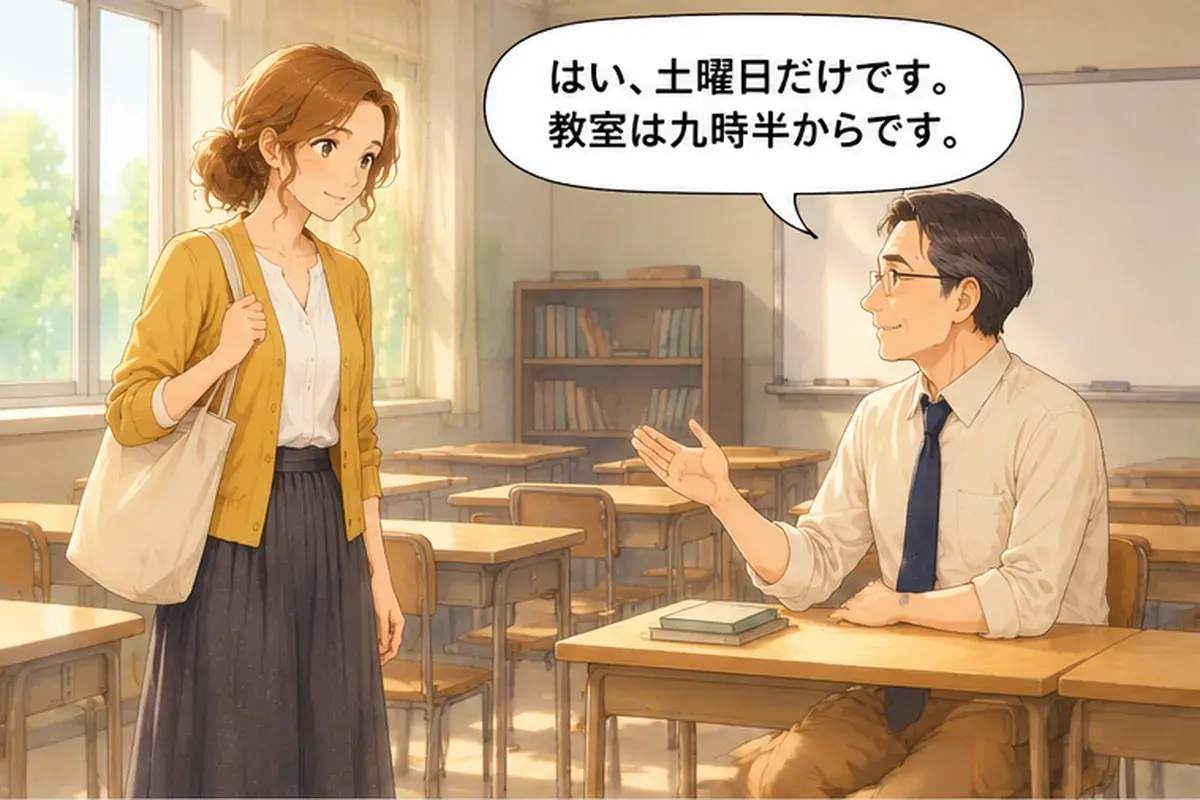
はい、土曜日だけです。教室は九時半からです。
Yes, only on Saturday. The classroom is open from nine thirty.

- アンナ
ええと、四時半ですか。
Um, four thirty?
- 山田
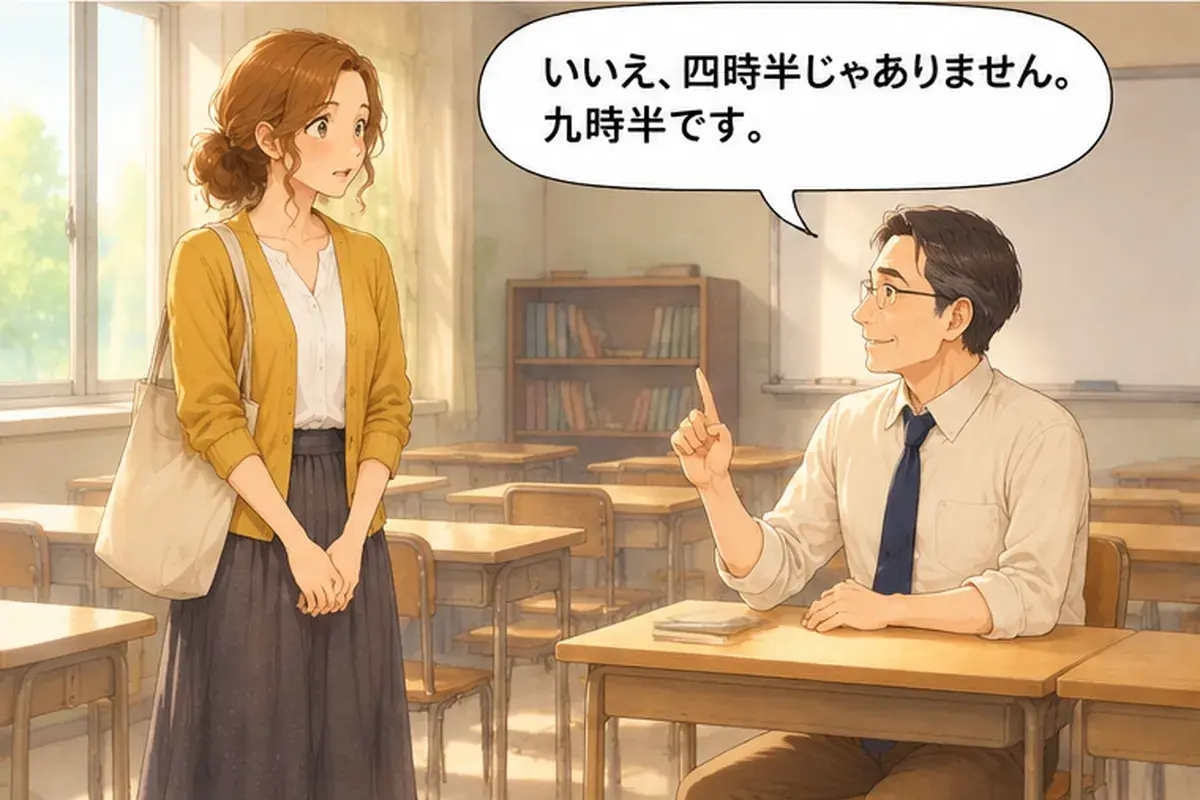
いいえ、四時半じゃありません。九時半です。
No, it's not four thirty. It's nine thirty.
- アンナ
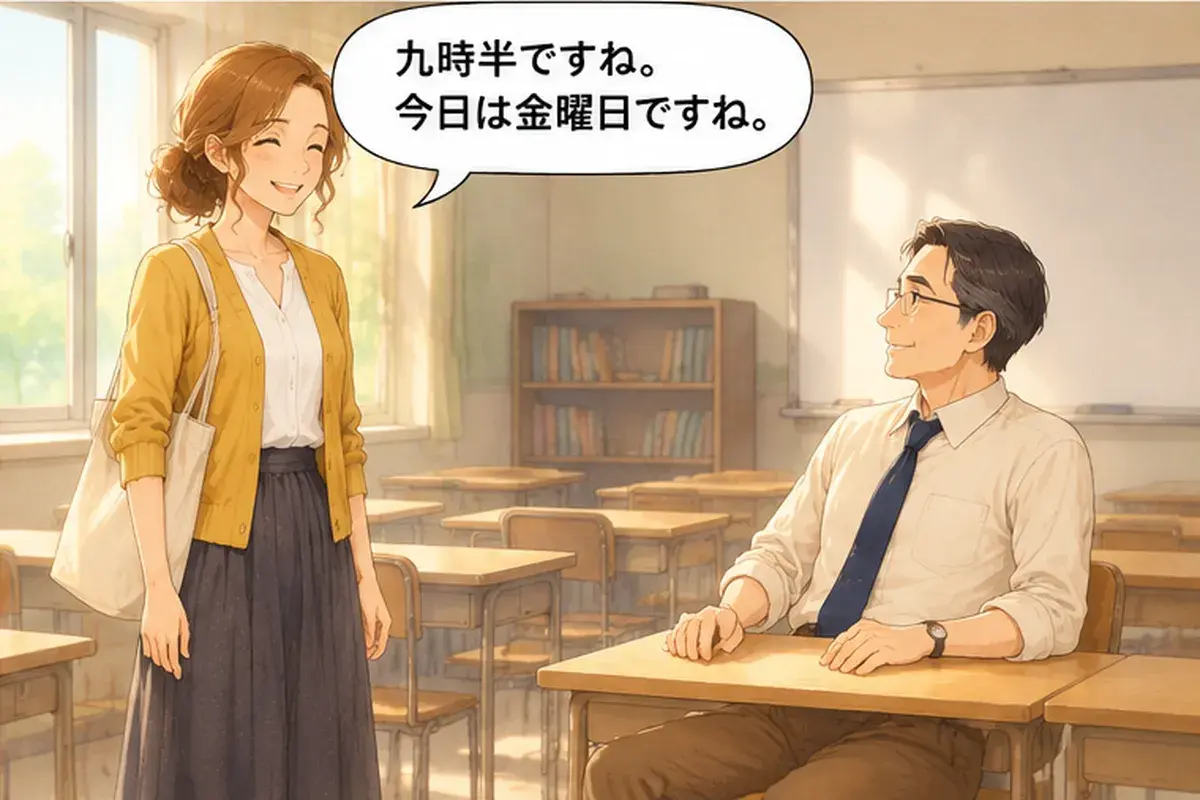
九時半ですね。今日は金曜日ですね。
Nine thirty, right. Today's Friday, isn't it?
- 山田
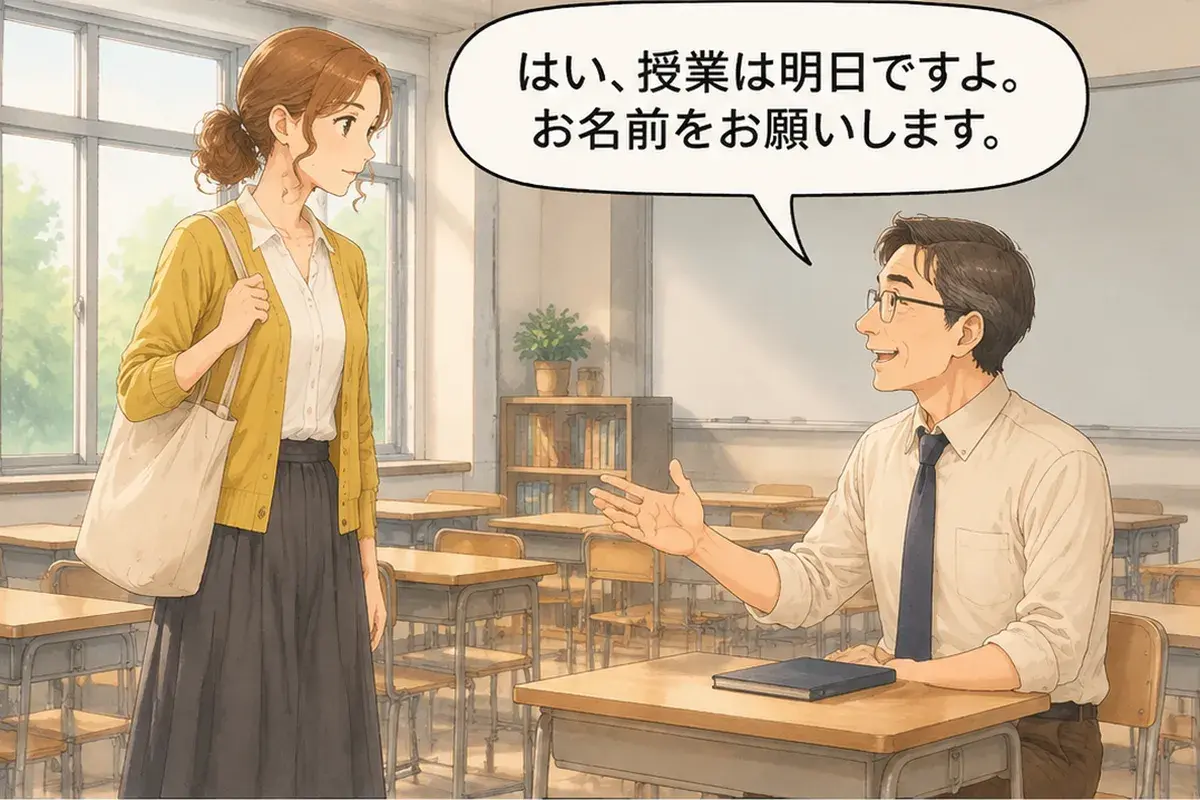
はい、授業は明日ですよ。お名前をお願いします。
Yes, the class is tomorrow. Your name, please.
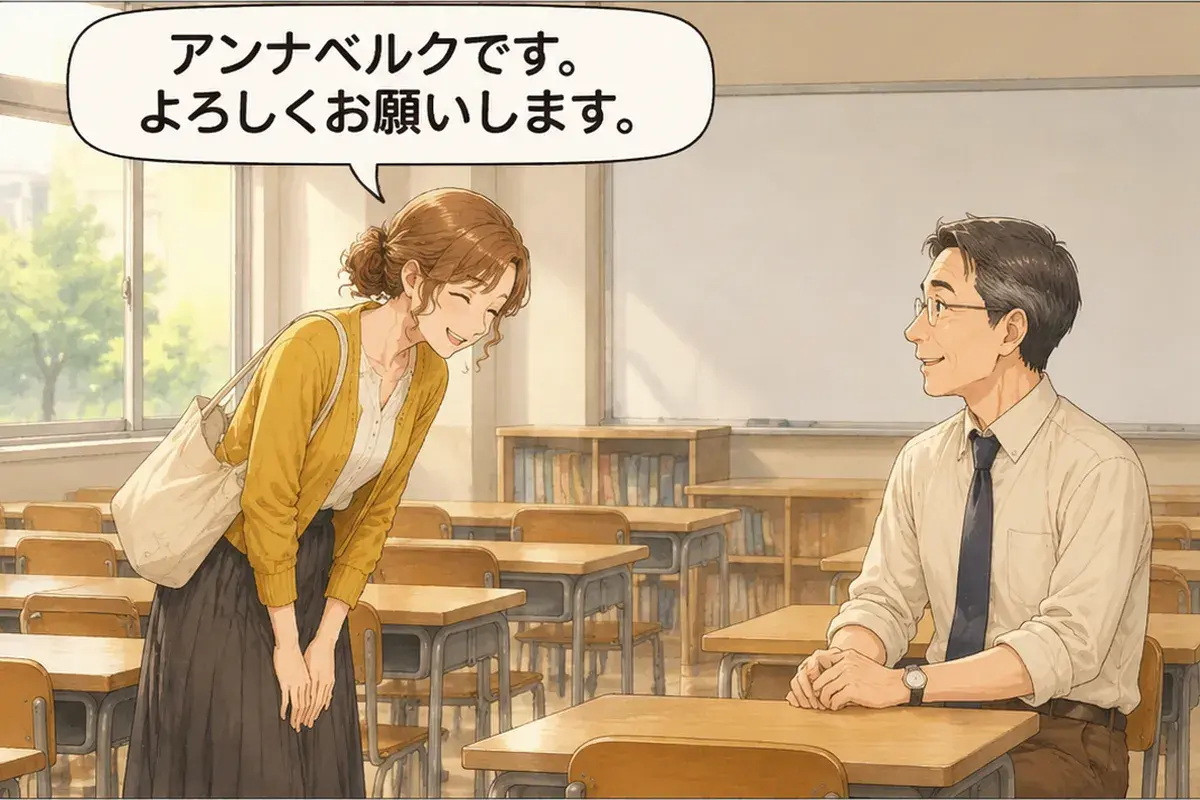
- アンナ
アンナベルクです。よろしくお願いします。
I'm Anna Berg. I look forward to working with you.
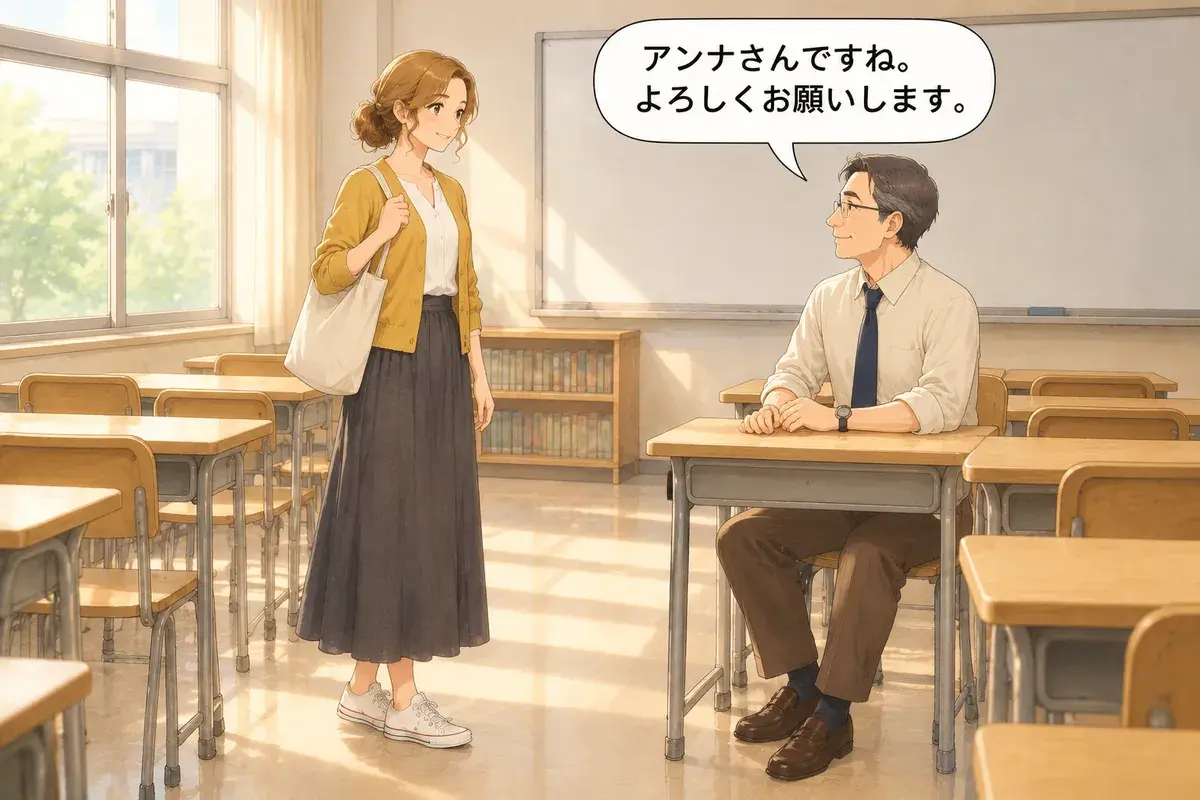
- 山田
アンナさんですね。よろしくお願いします。
Anna-san, right? I look forward to working with you.
Grammar for this text
何曜日 です か — 何曜日 ("what day of the week") is written as one word and read なんようび (nan'yōbi). The answer is the name of a day: 土曜日.
午前 十時 から 十二時 まで — から means "from", まで means "until". The word 午前 ("a.m.") goes before the hour, not after it as in English "10 a.m.".
教室 は 九時 半 から です — there's no verb. English adds "is open", but Japanese just says "the classroom — from nine thirty". 半 comes after the hour, like "thirty" in "nine thirty".
四時 半 です か — Anna hears 四時 (よじ) instead of 九時 (くじ): they really do sound alike. Yamada-sensei simply repeats the right time. ええと means "um": people say it to fill a pause while they look for words.
四時 半 じゃ ありません — じゃ ありません means "isn't" (unit 2): "it's not four thirty".
お名前 を お願いします — お名前 means "your name"; お is a polite prefix for someone else's name. With お願いします (unit 4) it's a request to say your name: "Your name, please."
よろしく お願いします — the set phrase from unit 1. Here Anna says it as a new student to her teacher: "I look forward to working with you."
Words and grammar of the unit: Ask when and at what time.
Learn the words from the texts with flashcards
In the app, you can tap any word in a text to see its translation, forms and examples, and new words stick with flashcards. 15 minutes a day.
Start for freeEverything is open for free. No card needed to sign up.