
Japanese dialogue with translation · A1 · 11 lines
一万円で大丈夫ですか Is it all right to pay with 10,000 yen?
Comic · 6 panels
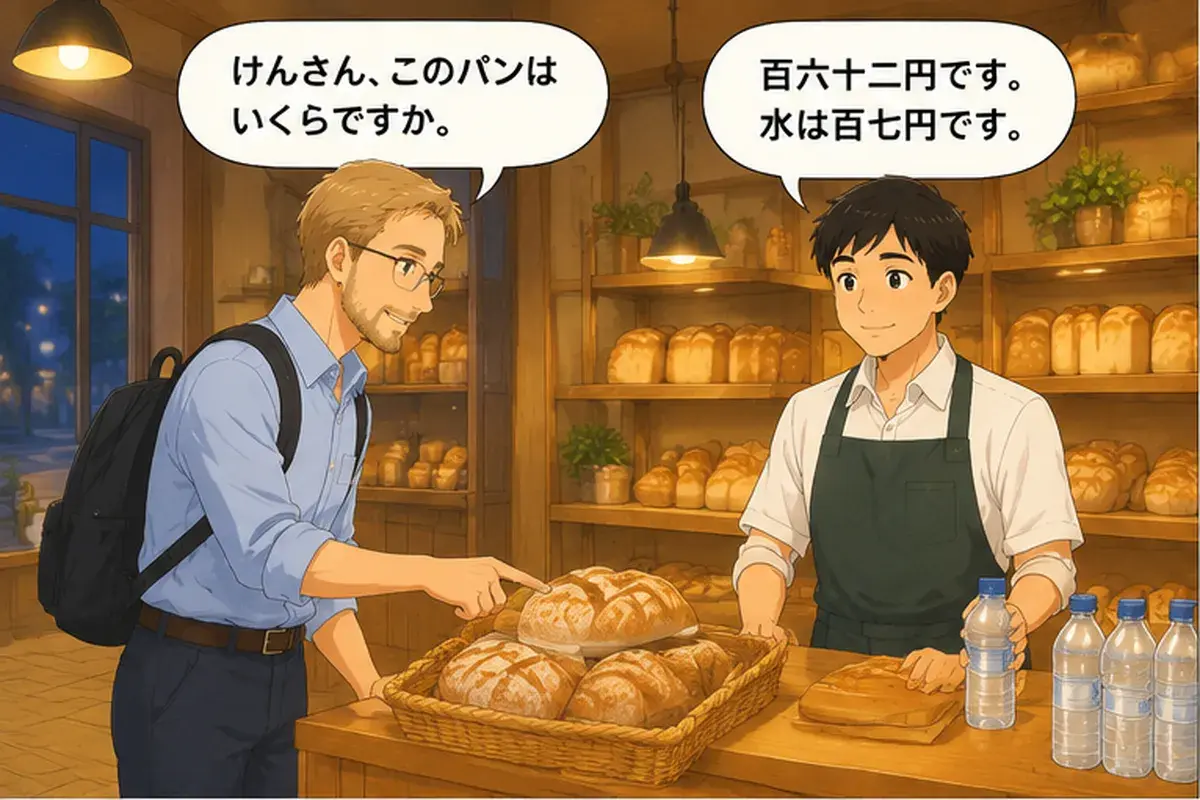
- マルク
けんさん、このパンはいくらですか。
Ken-san, how much is this bread?
- けん
百六十二円です。水は百七円です。
It's 162 yen. The water is 107 yen.
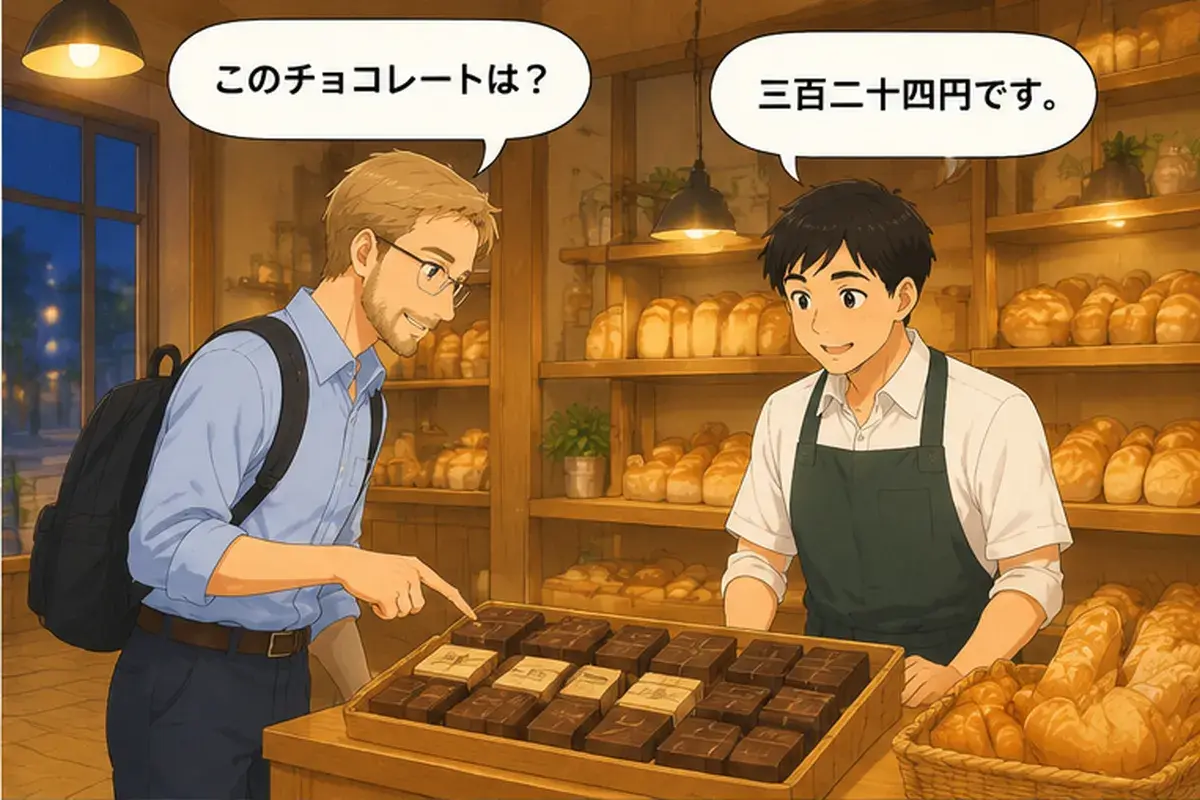
- マルク
このチョコレートは?
And this chocolate?
- けん
三百二十四円です。
It's 324 yen.
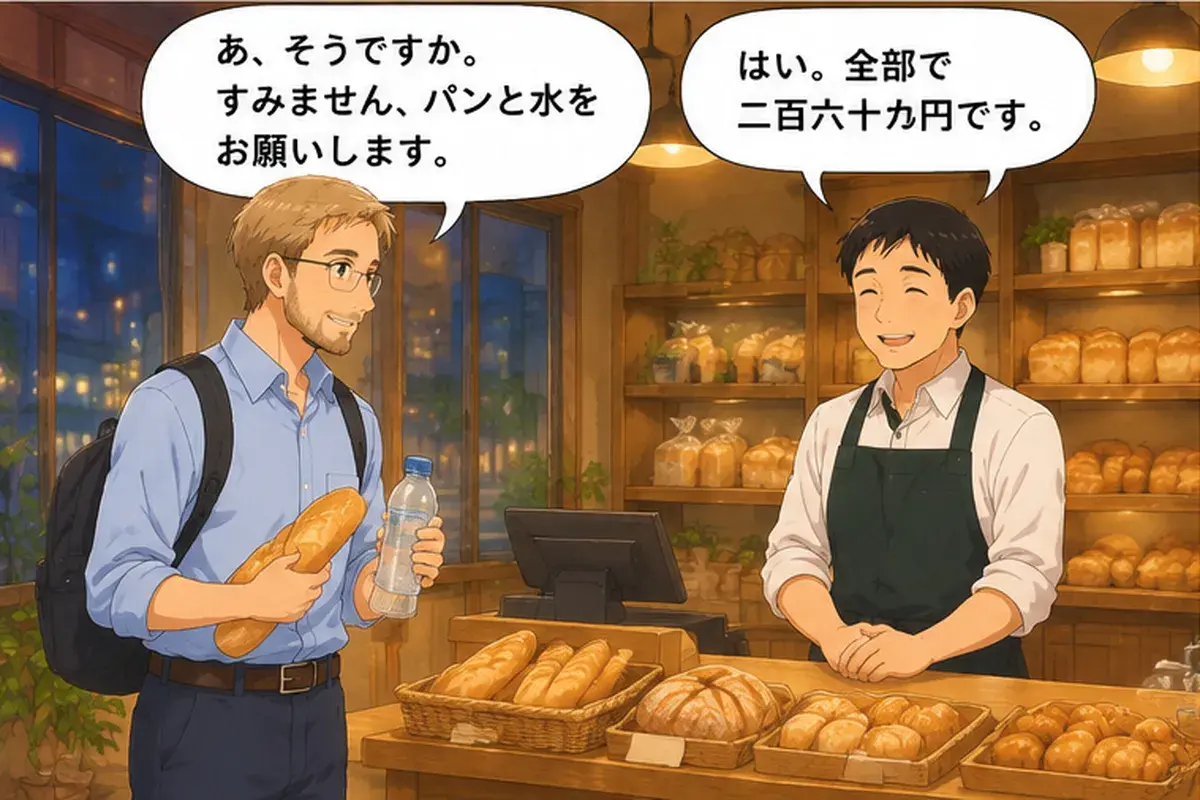
- マルク
あ、そうですか。すみません、パンと水をお願いします。
Oh, I see. Excuse me, bread and water, please.
- 店員
はい。全部で二百六十九円です。
OK. That's 269 yen in total.
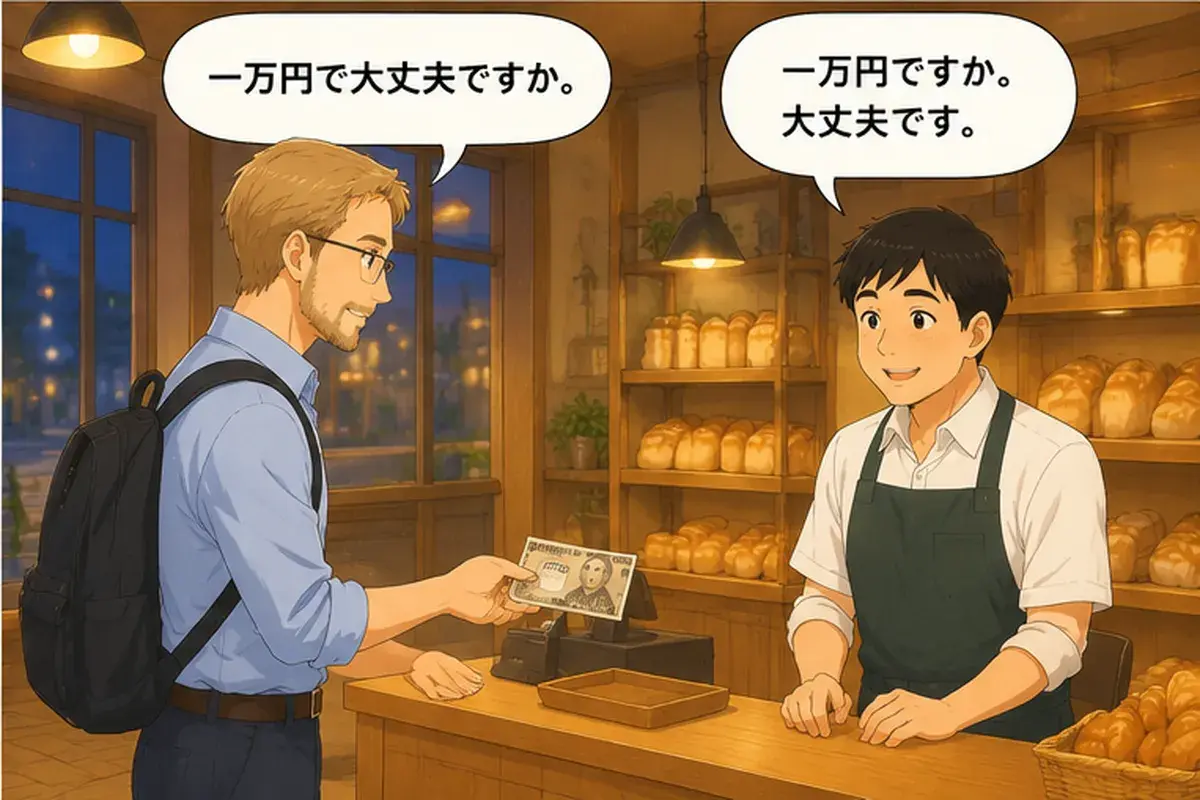
- マルク
一万円で大丈夫ですか。
Is it all right to pay with 10,000 yen?
- 店員
一万円ですか。大丈夫です。
10,000 yen? That's all right.
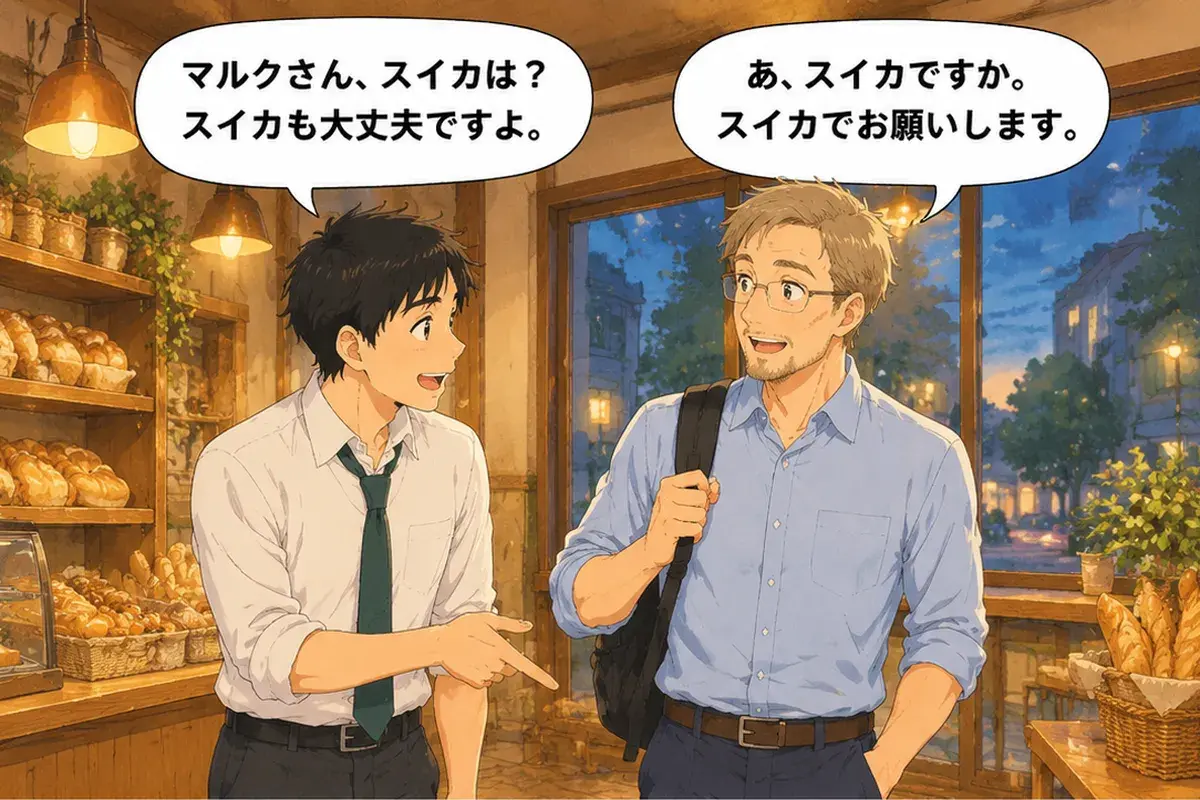
- けん
マルクさん、スイカは?スイカも大丈夫ですよ。
Mark-san, what about Suica? Suica is all right too.
- マルク
あ、スイカですか。スイカでお願いします。
Oh, Suica? With Suica, please.
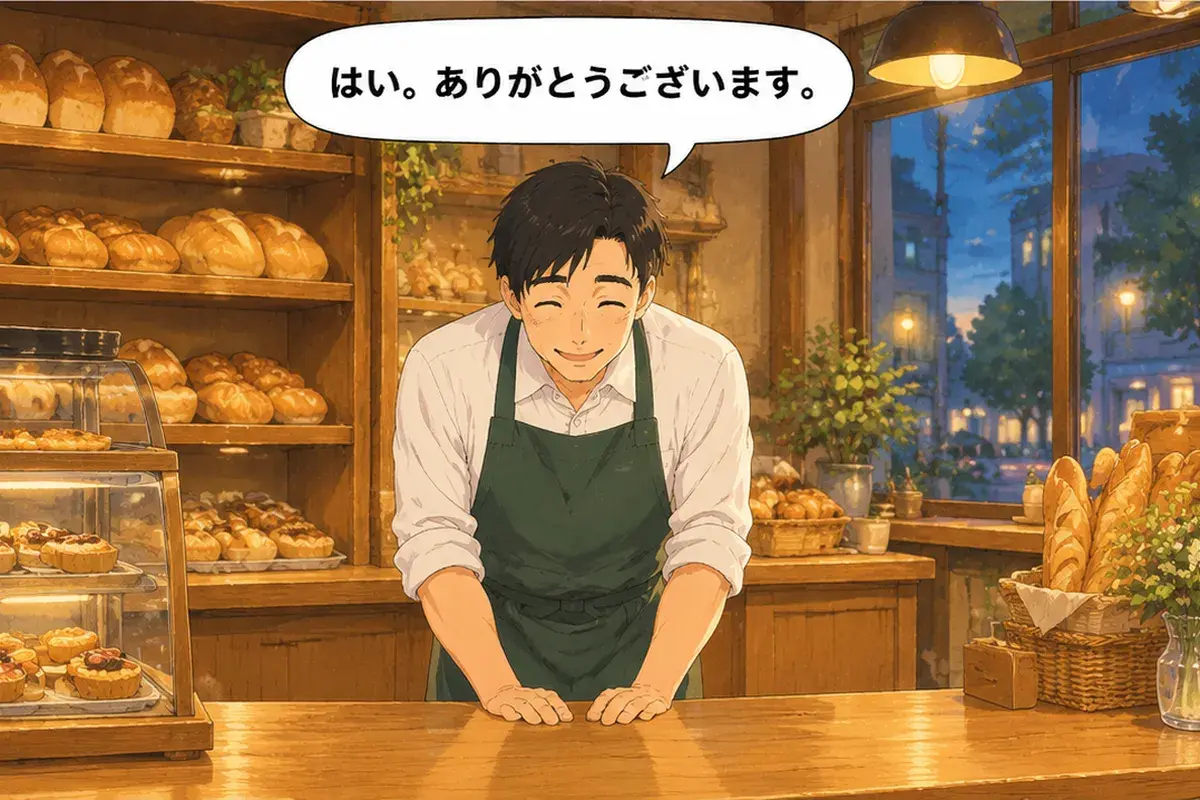
- 店員
はい。ありがとうございます。
OK. Thank you.
Grammar for this text
百 六十 二 円 — 162 yen: 百 (without 一) + 六十 + 二. And 百 七 円 is 107, not 170: if there are no tens, the ones come right after 百. 170 would be 百 七十 円. Watch for 十: it adds the tens. 三百 二十 四 円 follows the same order: hundreds, tens, ones. Prices with "odd" yen are normal: tax is already included. Mark can't read price tags yet, so he asks Ken.
この チョコレート は? — a short question with は: "and what about this chocolate?". You can leave out いくら です か: it's clear anyway.
一万 円 で 大丈夫 です か — 万 is 10,000. Here 一 is required: 一万 円 is the biggest bill. Paying for a small purchase with it is awkward: the clerk has to give change. The clerk answers politely: 大丈夫 です, "that's all right".
スイカ は? スイカ も 大丈夫 です よ。 — スイカ は? is a short question with は: "what about Suica?"; the end of the question, 大丈夫 です か, is clear anyway. スイカ (Suica) is a transit card: you put money on it, and you can pay with it in stores too. も means "too": "Suica is all right too", just like the bill. Ken gives a gentle hint: paying with a card is easier than with a big bill. よ adds "you know": Mark didn't know this.
けん さん, マルク さん — Mark and Ken call each other by first name with さん.
Words and grammar of the unit: Ask prices and pay.
Learn the words from the texts with flashcards
In the app, you can tap any word in a text to see its translation, forms and examples, and new words stick with flashcards. 15 minutes a day.
Start for freeEverything is open for free. No card needed to sign up.