
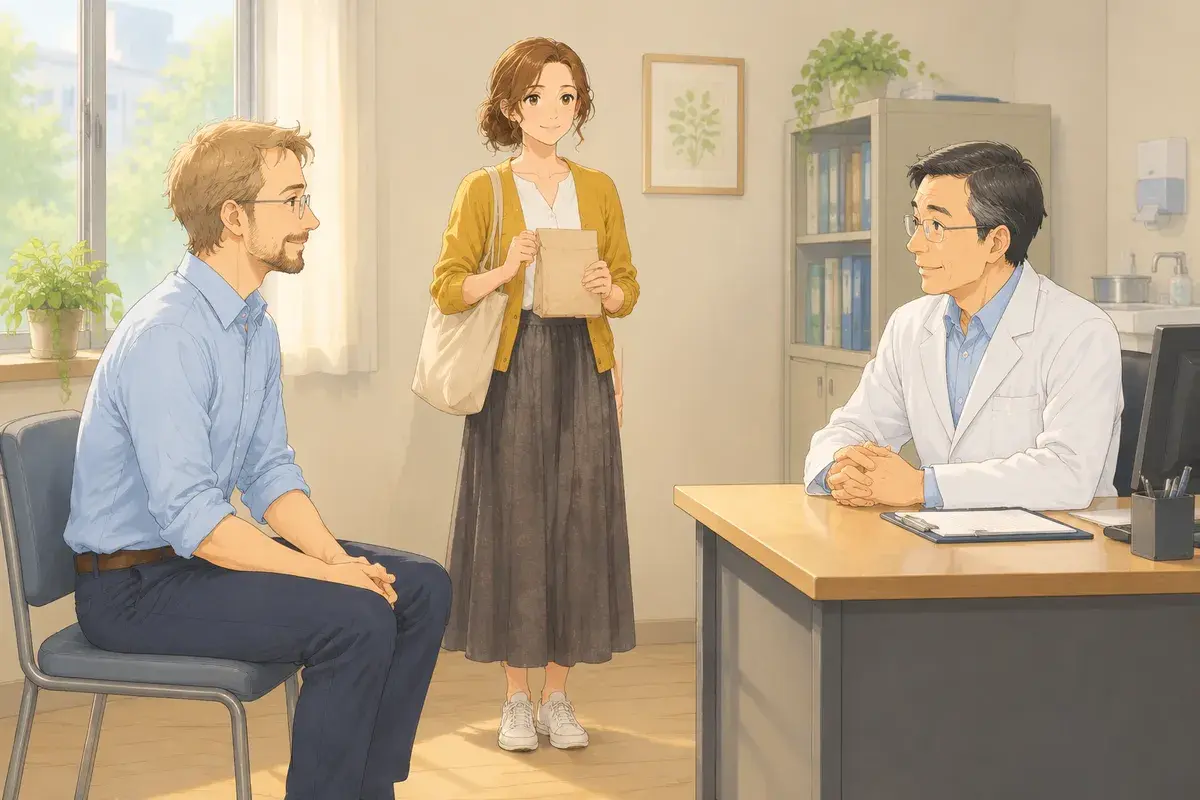
Japanese dialogue with translation · A1 · 14 lines
一日三回飲んでください Please take it three times a day
Comic · 10 panels
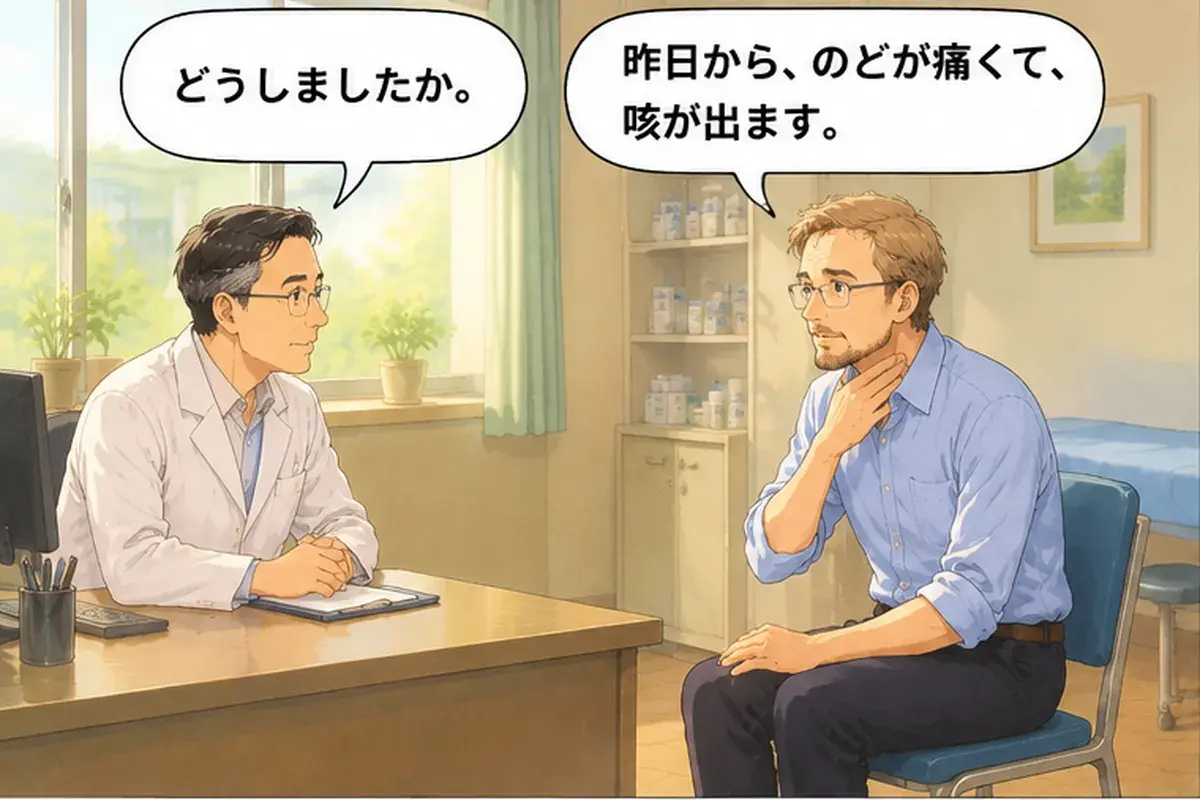
- 医者
どうしましたか。
What's wrong?
- マルク
昨日から、のどが痛くて、咳が出ます。
My throat has been hurting since yesterday, and I have a cough.
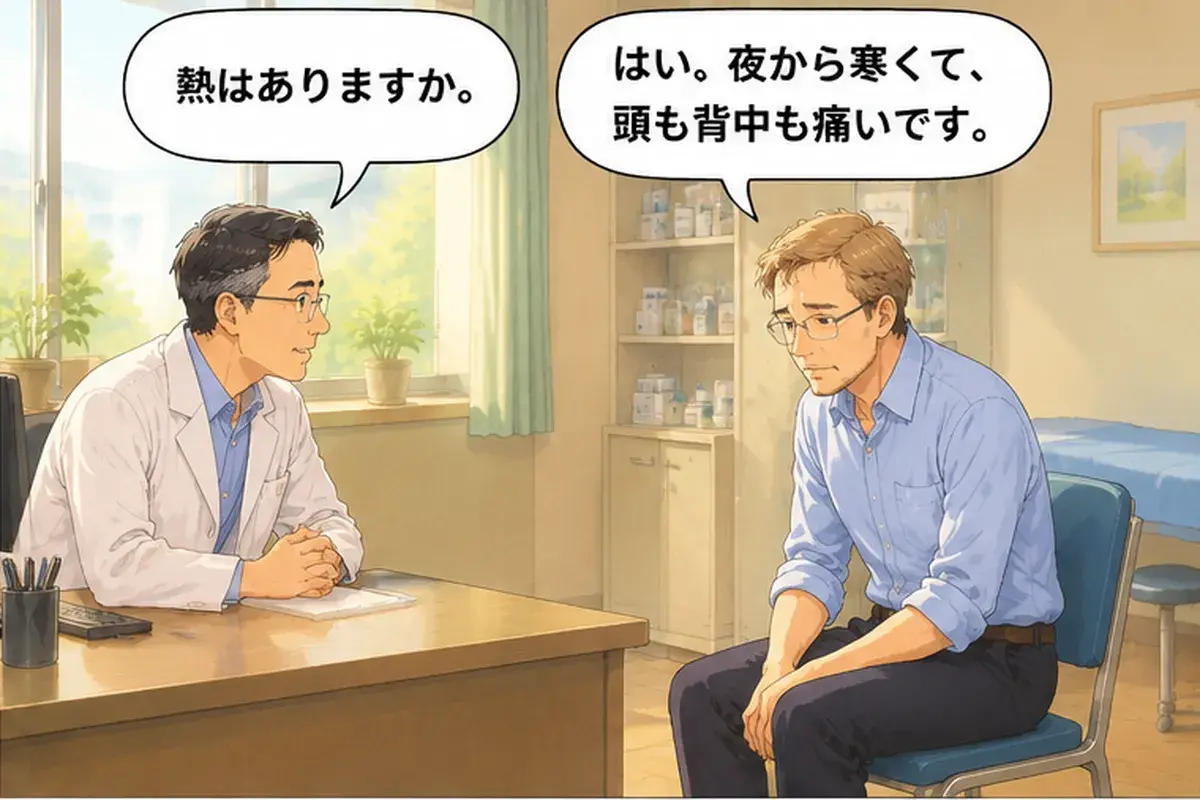
- 医者
熱はありますか。
Do you have a fever?
- マルク
はい。夜から寒くて、頭も背中も痛いです。
Yes. I've had chills since last night, and both my head and my back hurt.
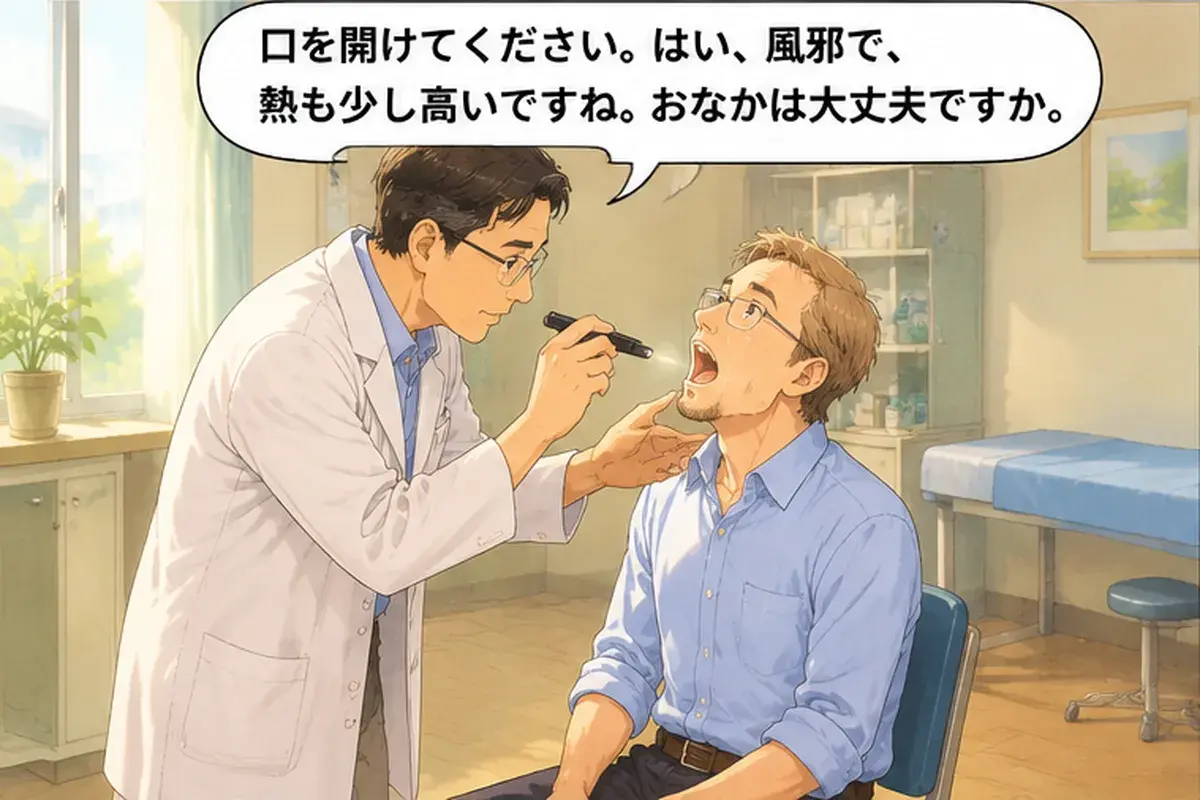
- 医者
口を開けてください。はい、風邪で、熱も少し高いですね。おなかは大丈夫ですか。
Please open your mouth. OK, it's a cold, and the fever is a little high too. Is your stomach all right?
- マルク
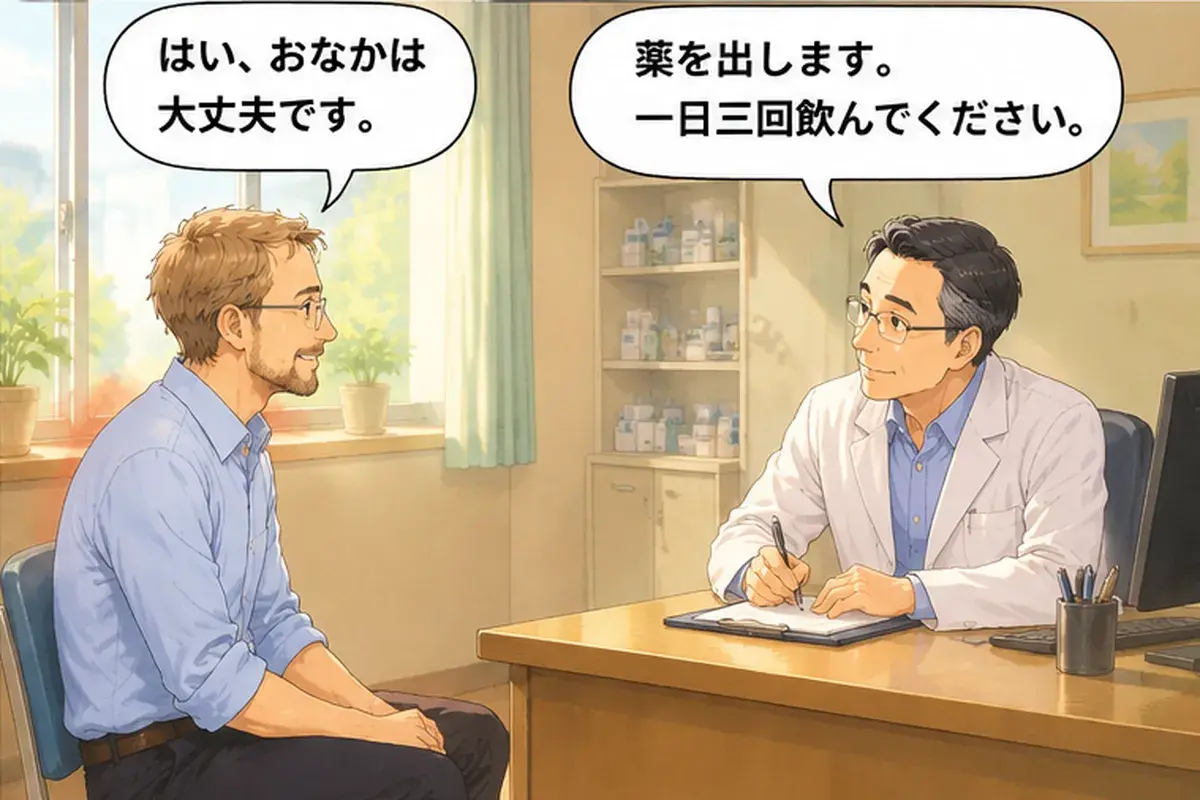
はい、おなかは大丈夫です。
Yes, my stomach is all right.
- 医者
薬を出します。一日三回飲んでください。
I'll prescribe some medicine. Please take it three times a day.
- マルク
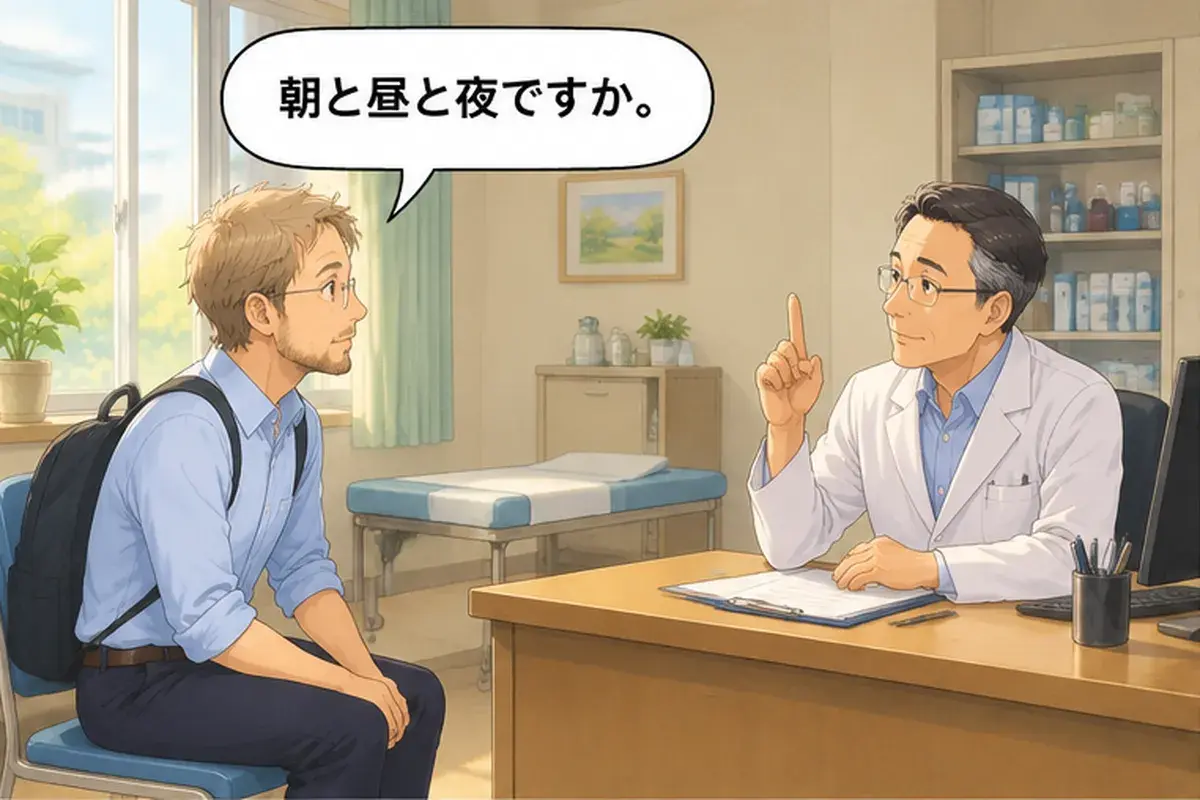
朝と昼と夜ですか。
Morning, noon and night?
- 医者
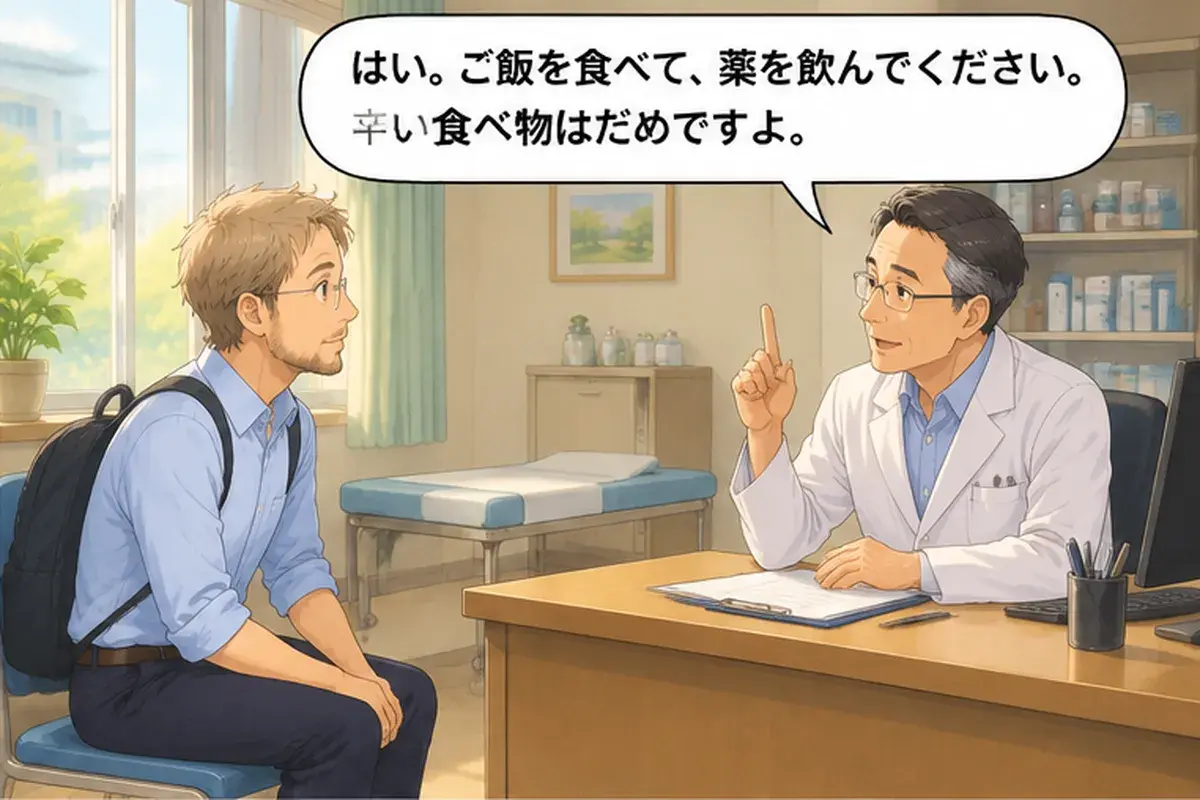
はい。ご飯を食べて、薬を飲んでください。辛い食べ物はだめですよ。
Yes. Please eat a meal and then take the medicine. Spicy food is not allowed.
- マルク
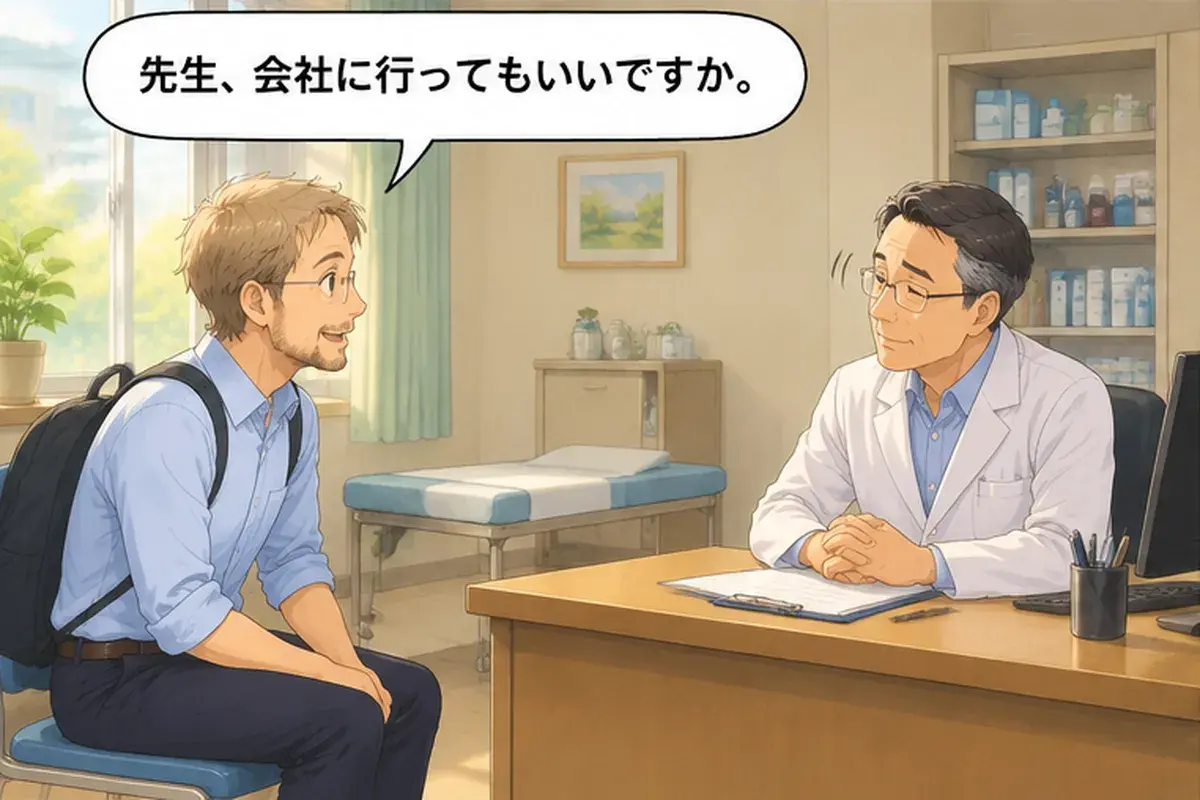
先生、会社に行ってもいいですか。
Doctor, can I go to work?
- 医者
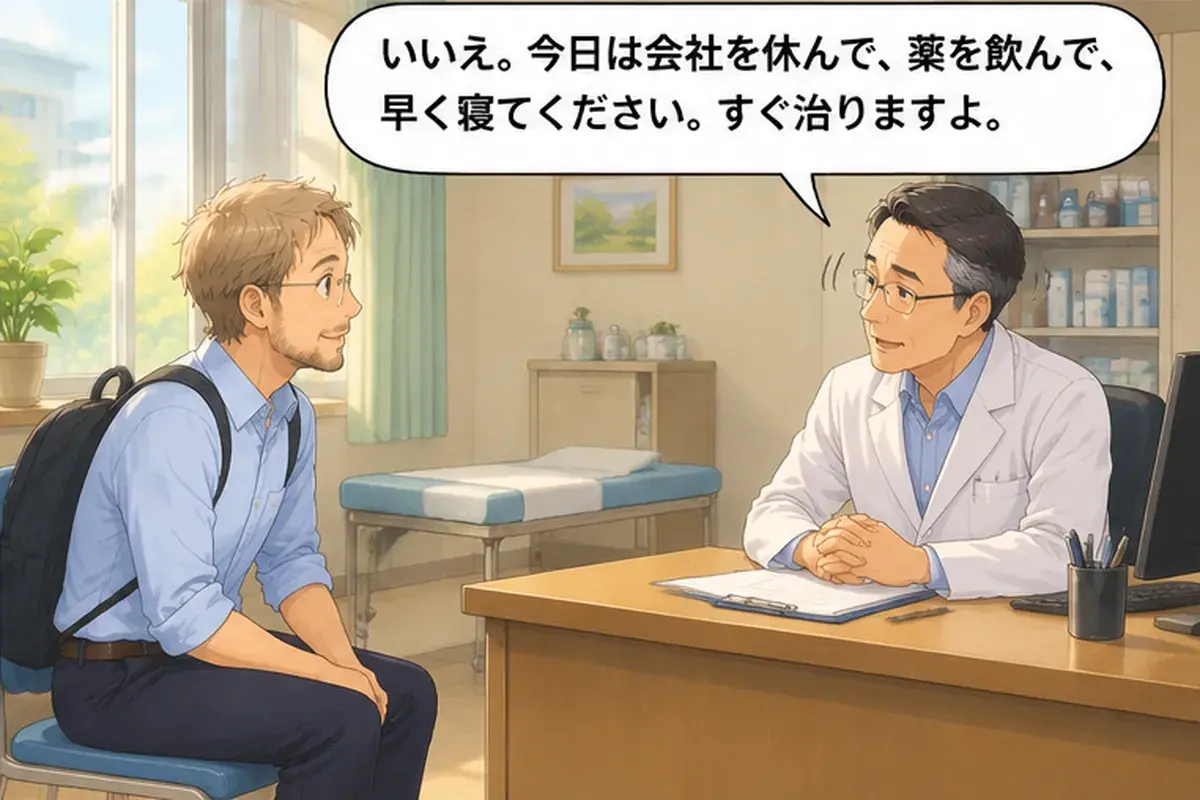
いいえ。今日は会社を休んで、薬を飲んで、早く寝てください。すぐ治りますよ。
No. Please stay home from work today, take the medicine and go to bed early. It'll get better soon.
- マルク
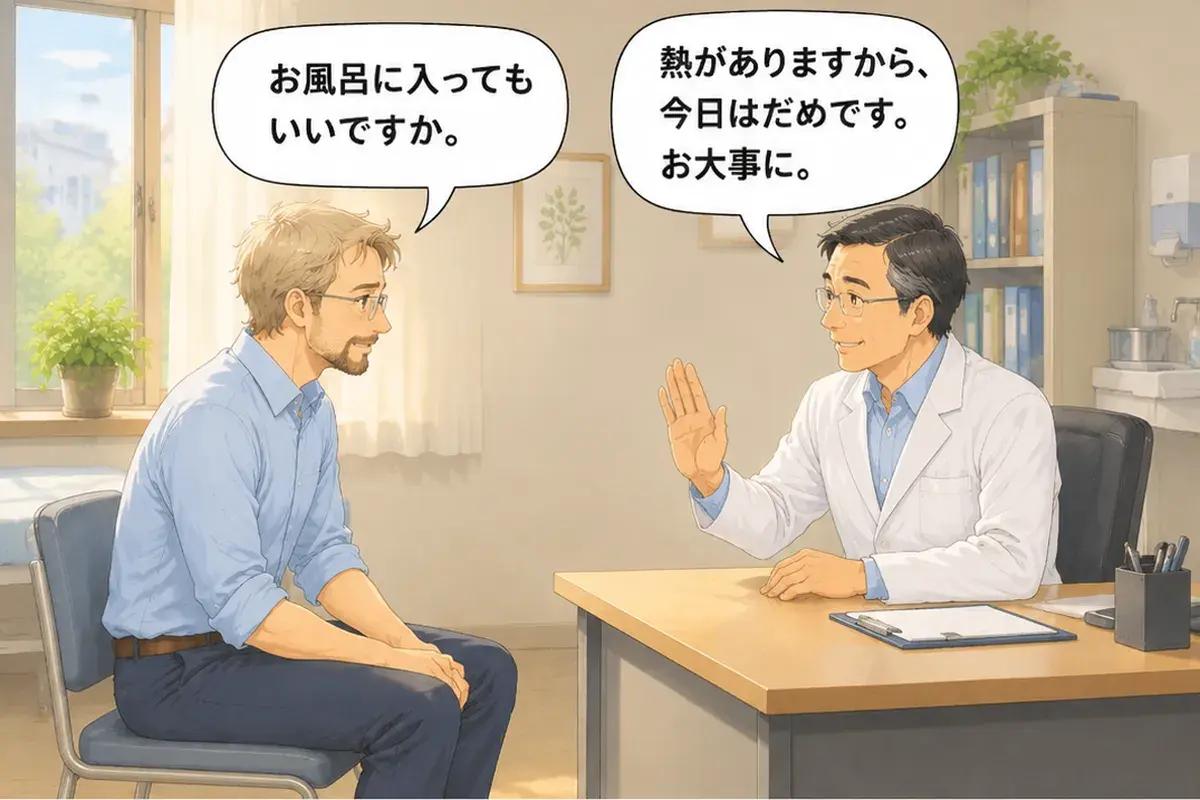
お風呂に入ってもいいですか。
Can I take a bath?
- 医者
熱がありますから、今日はだめです。お大事に。
You have a fever, so not today. Take care.
- マルク
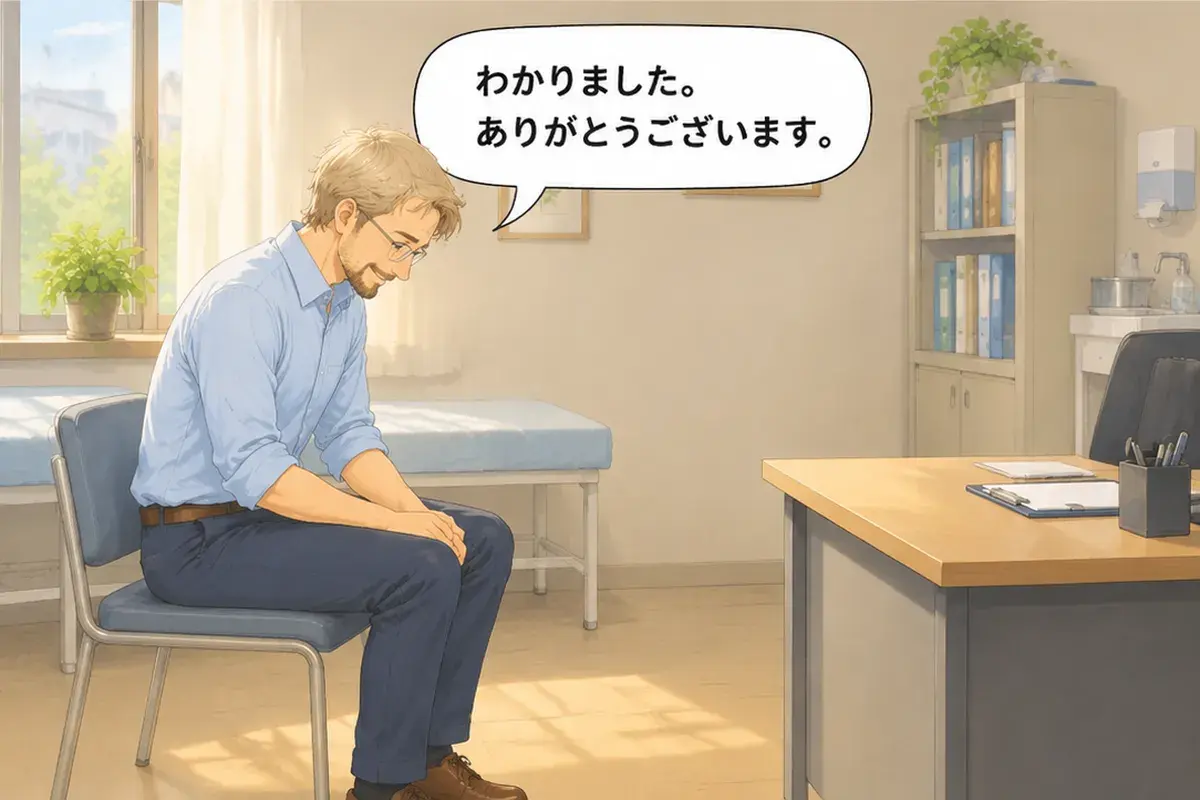
わかりました。ありがとうございます。
Understood. Thank you.
Grammar for this text
どう しましたか — this is how a doctor starts an appointment: "What's wrong?" It's a set phrase: しました is the past of する, so literally "what did you do?". Learn it as a whole for now; you'll see how it works at A2.
のど が 痛くて、咳 が 出ます — "my throat hurts, and I have a cough". 痛くて is 痛い with the ending くて: this is how you join two descriptions (see the unit grammar). What hurts takes が. 咳 が 出ます is literally "a cough comes out".
夜 から 寒くて — here 寒い isn't about the weather but about the person: "I've had chills". 頭 も 背中 も 痛い です — A も B も means "both A and B".
風邪 で、熱 も 少し 高い です ね — で after a noun joins two descriptions: "it's a cold, and the fever is also...". おなか は 大丈夫 です か — the doctor asks about the stomach because cold medicine can be hard on it.
薬 を 出します — 出す means "to take out"; at the doctor's it means "to prescribe medicine". 一日 三回 飲んで ください — "three times a day": 一日 alone is "a day". In Japanese you "drink" medicine (飲む), even a pill.
ご飯 を 食べて、薬 を 飲んで ください — two actions in order: eat first, then take the medicine. Most medicine in Japan says this on the package. 辛い 食べ物 は だめ です よ — だめ means "not allowed, no good"; spicy food irritates the throat.
お風呂 に 入って も いい です か — asking for permission (unit 15). In Japan people usually skip the bath when they have a fever. 熱 が あります から — から means "because" (unit 10).
お大事に — a set phrase you say to a sick person when you say goodbye: "take care, get well soon". It comes from the word 大事 ("important").
Words and grammar of the unit: Say what hurts.
Learn the words from the texts with flashcards
In the app, you can tap any word in a text to see its translation, forms and examples, and new words stick with flashcards. 15 minutes a day.
Start for freeEverything is open for free. No card needed to sign up.