

Italian dialogue with translation · B1 · 17 lines
Non so se mi senti I don't know if you can hear me
Comic · 16 panels
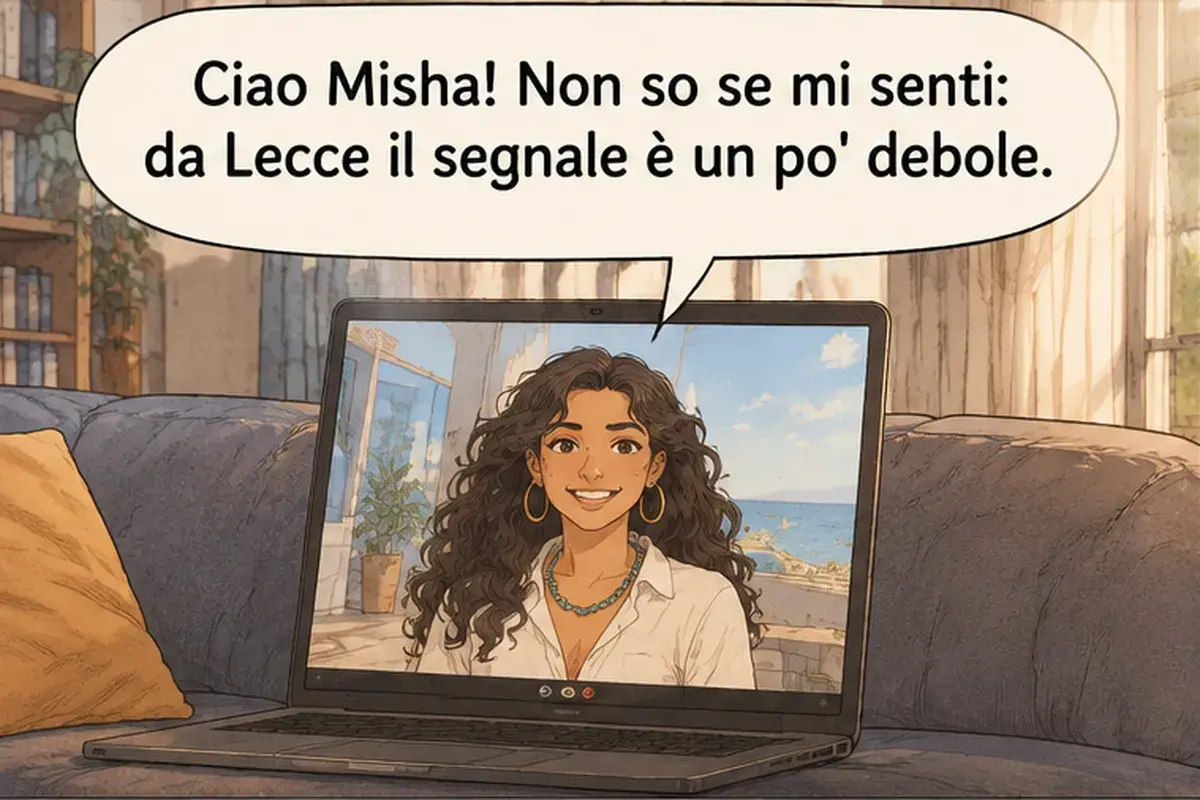
- Antonella
Ciao Misha! Non so se mi senti: da Lecce il segnale è un po' debole.
Hi, Misha! I don't know if you can hear me: the signal from Lecce is a bit weak.
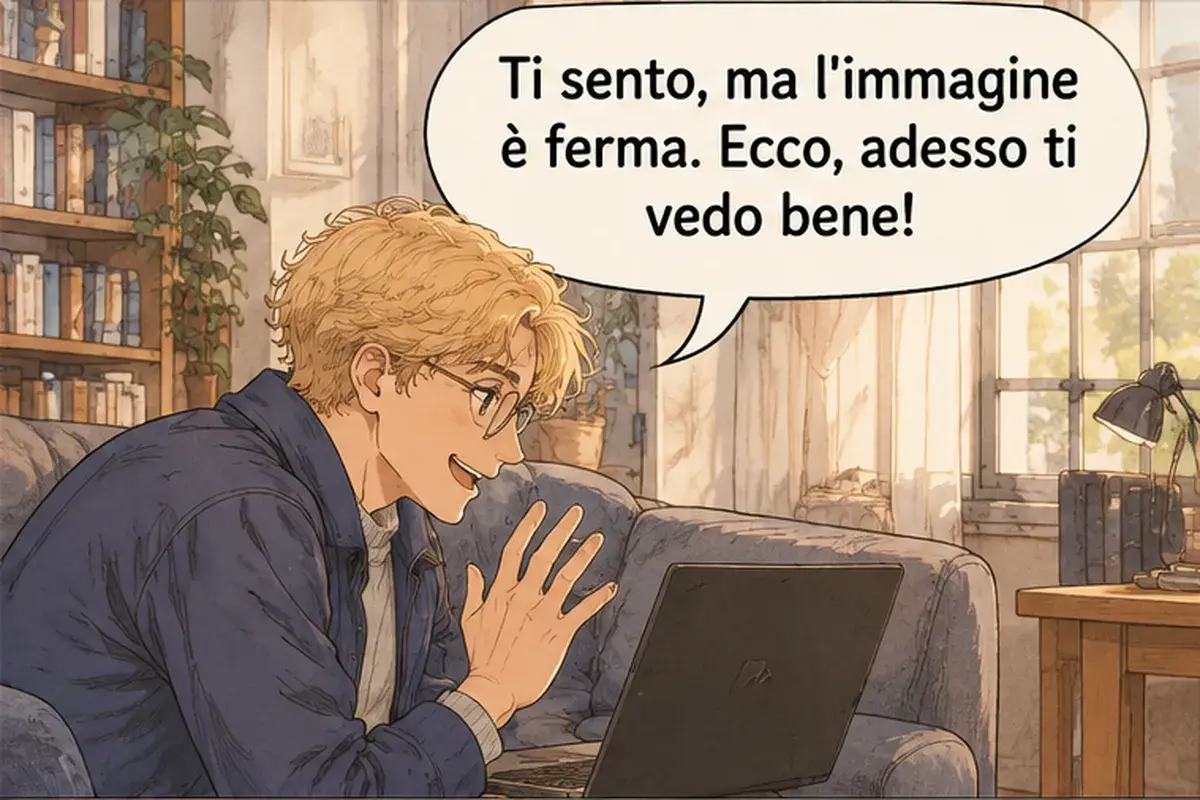
- Misha
Ti sento, ma l'immagine è ferma. Ecco, adesso ti vedo bene!
I can hear you, but the picture is frozen. There, now I can see you fine!
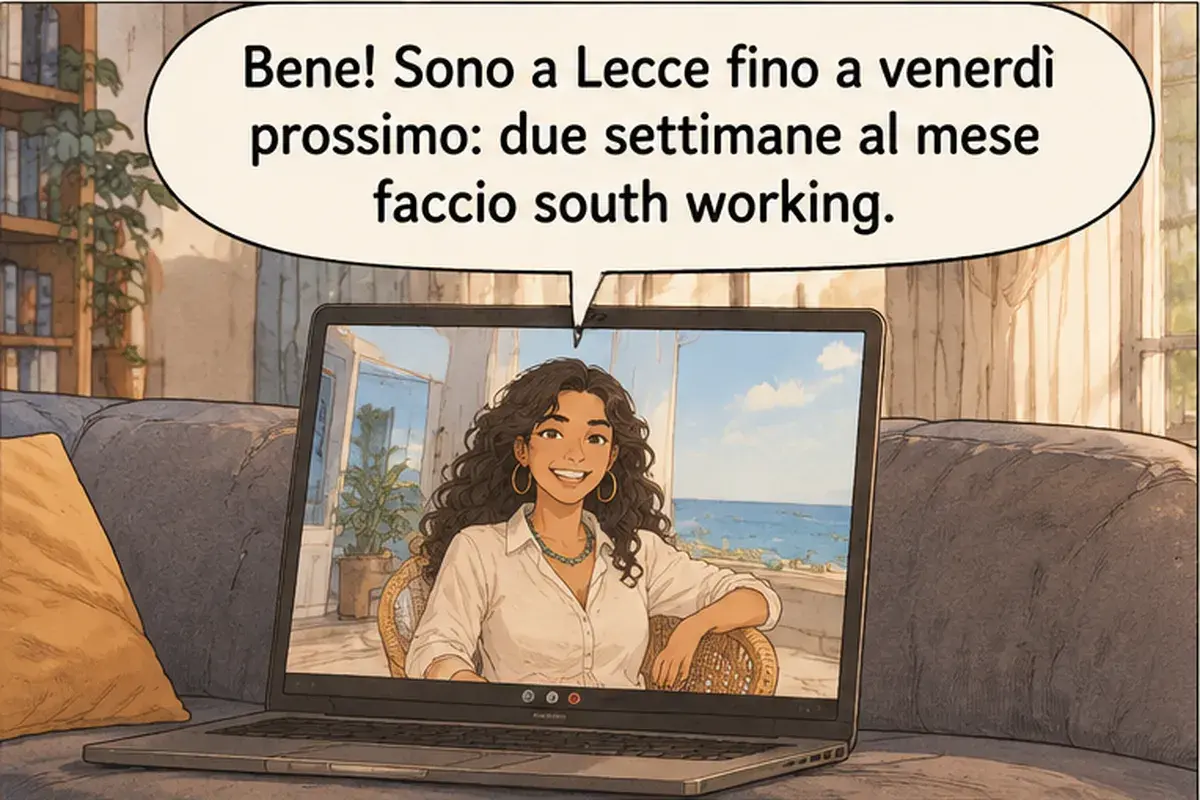
- Antonella
Bene! Sono a Lecce fino a venerdì prossimo: due settimane al mese faccio south working.
Good! I'm in Lecce until next Friday: two weeks a month I do south working.
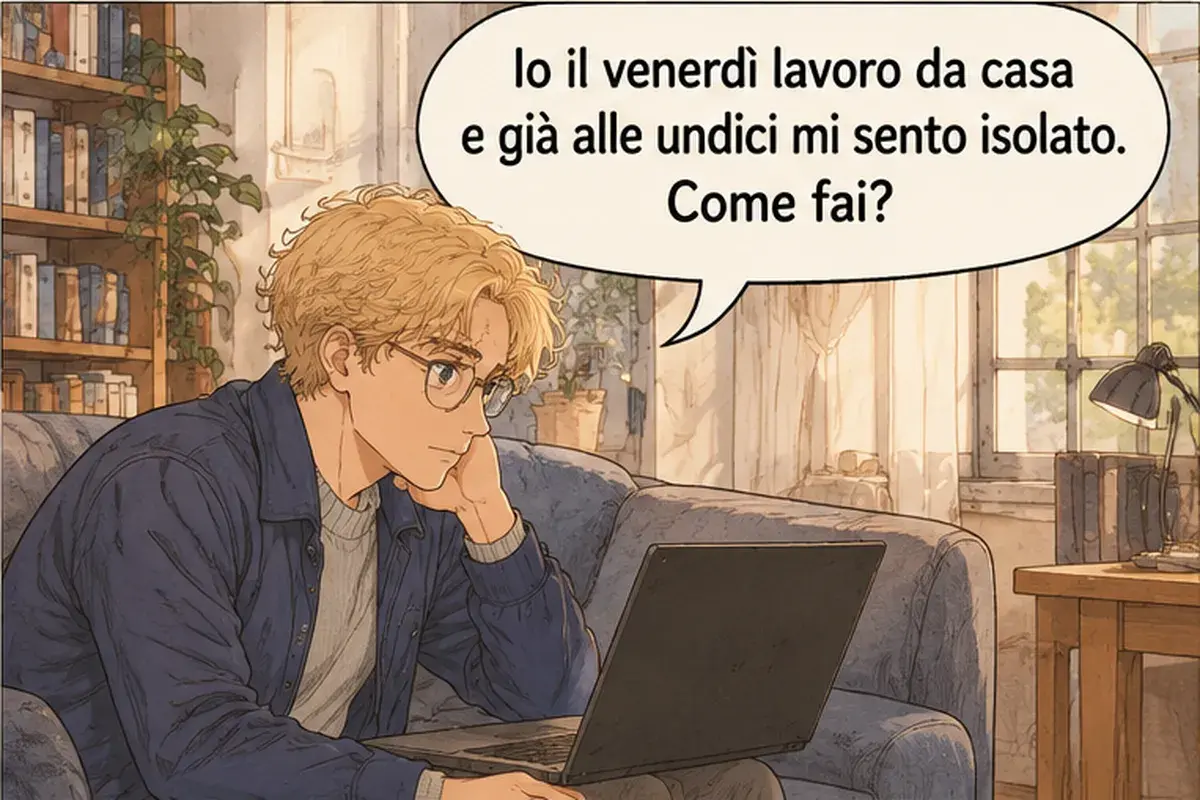
- Misha
Io il venerdì lavoro da casa e già alle undici mi sento isolato. Come fai?
On Fridays I work from home, and by eleven I already feel isolated (man speaking). How do you do it?
- Antonella
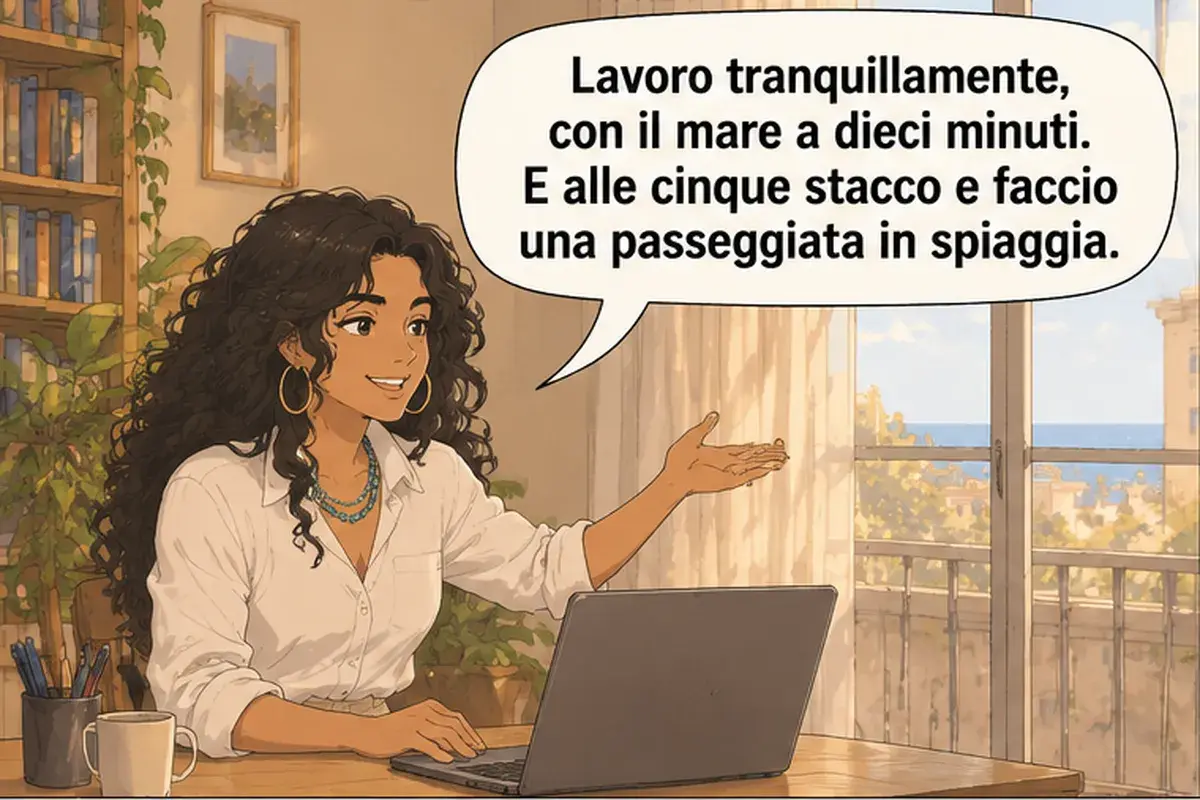
Lavoro tranquillamente, con il mare a dieci minuti. E alle cinque stacco e faccio una passeggiata in spiaggia.
I work calmly, with the sea ten minutes away. And at five I finish work and take a walk on the beach.
- Misha
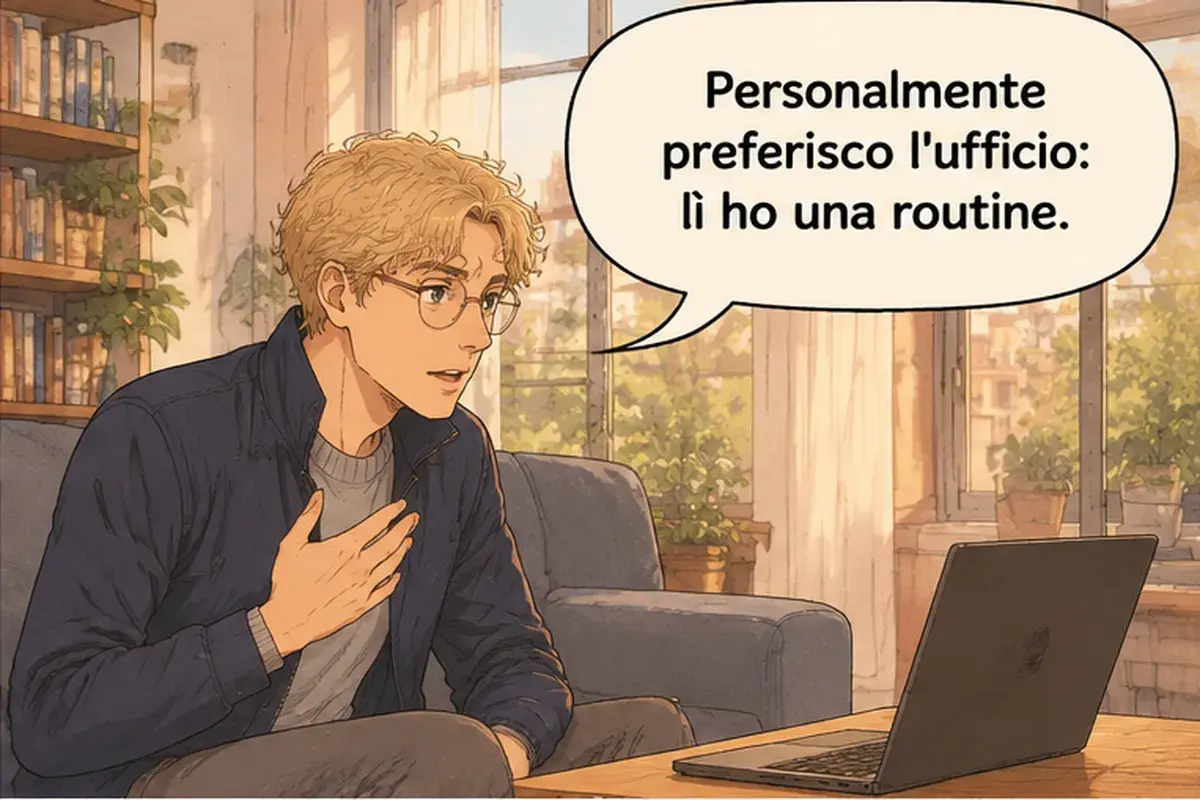
Personalmente preferisco l'ufficio: lì ho una routine.
Personally, I prefer the office: I have a routine there.
- Antonella
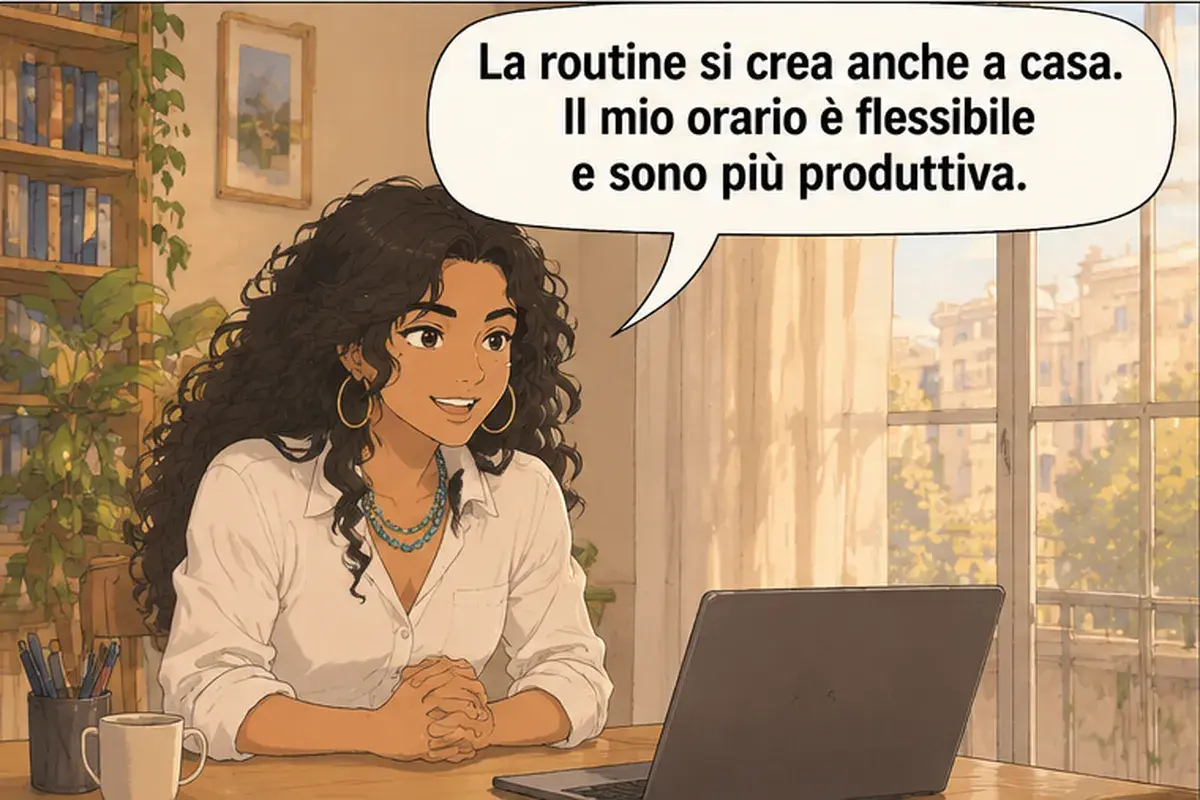
La routine si crea anche a casa. Il mio orario è flessibile e sono più produttiva.
A routine can be built at home too. My schedule is flexible, and I'm more productive (woman speaking).
- Misha
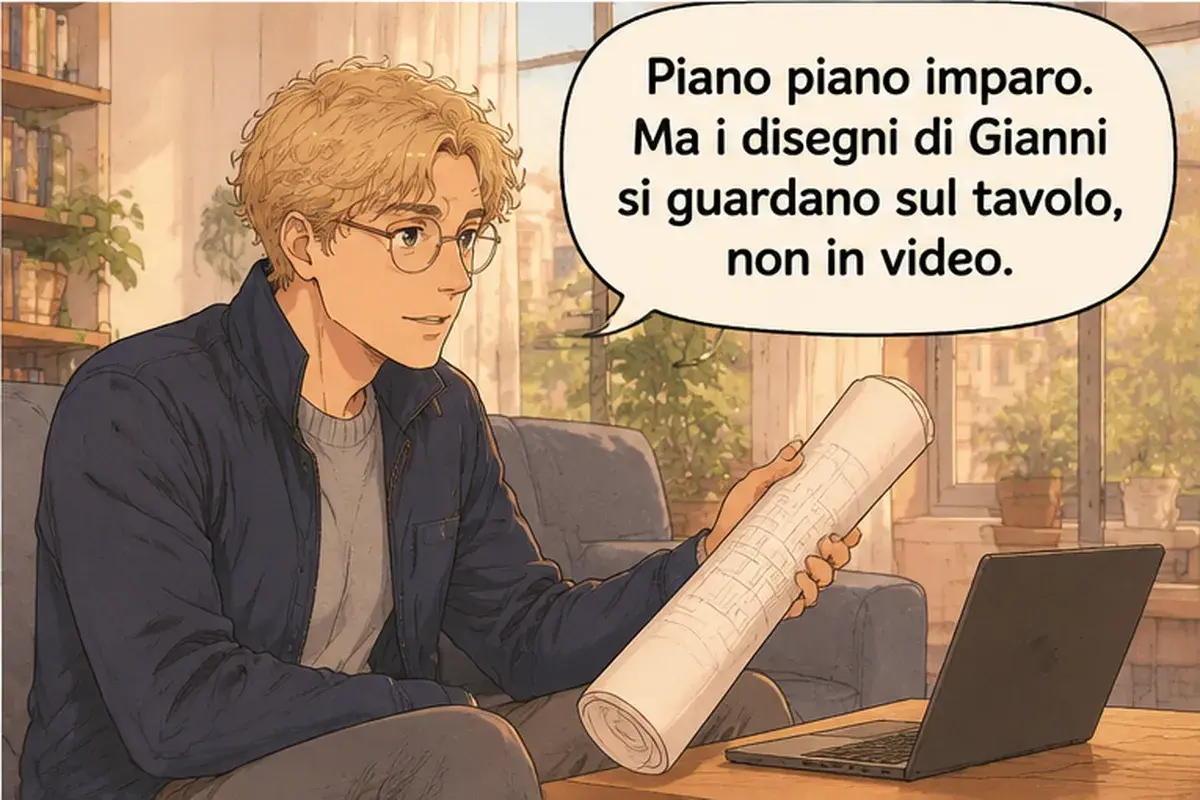
Piano piano imparo. Ma i disegni di Gianni si guardano sul tavolo, non in video.
I'm learning little by little. But Gianni's drawings are looked at on the table, not on video.
- Antonella
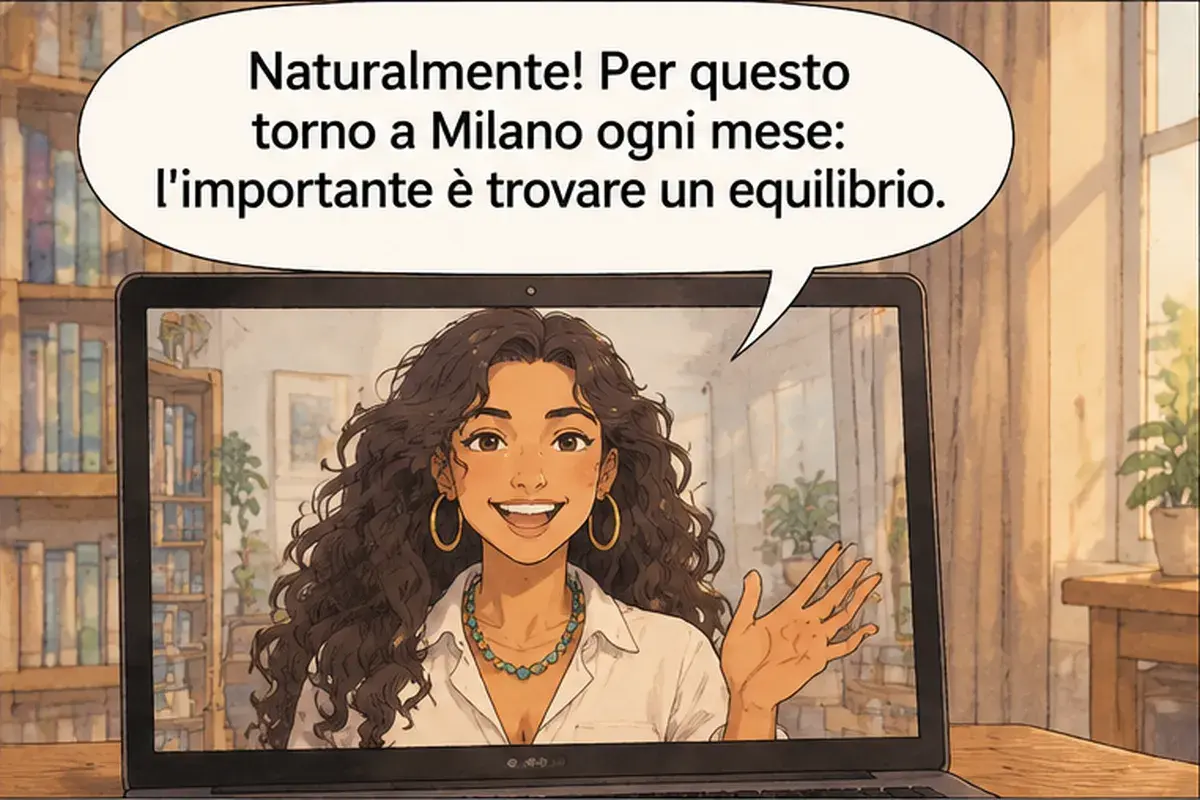
Naturalmente! Per questo torno a Milano ogni mese: l'importante è trovare un equilibrio.
Of course! That's why I come back to Milan every month: the important thing is to find a balance.
- Misha
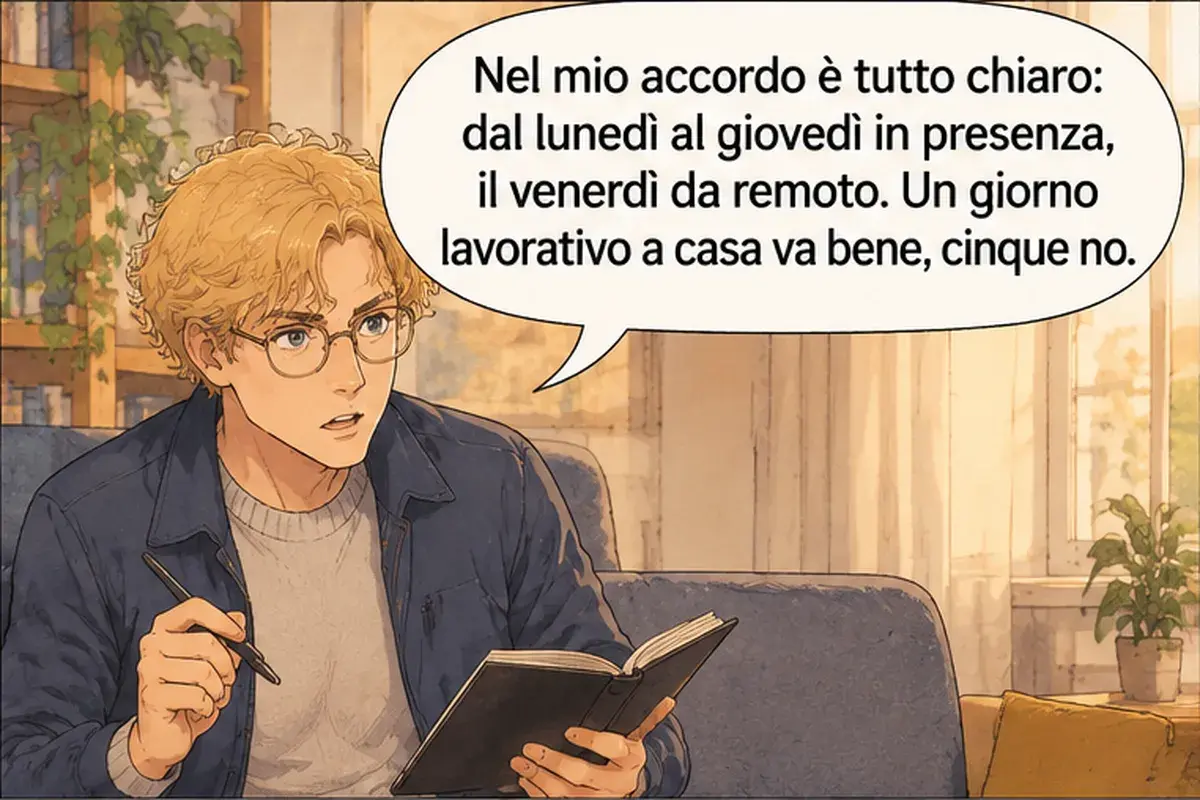
Nel mio accordo è tutto chiaro: dal lunedì al giovedì in presenza, il venerdì da remoto. Un giorno lavorativo a casa va bene, cinque no.
In my agreement, everything is clear: Monday to Thursday in person, Fridays remotely. One workday at home is fine, five aren't.
- Davide
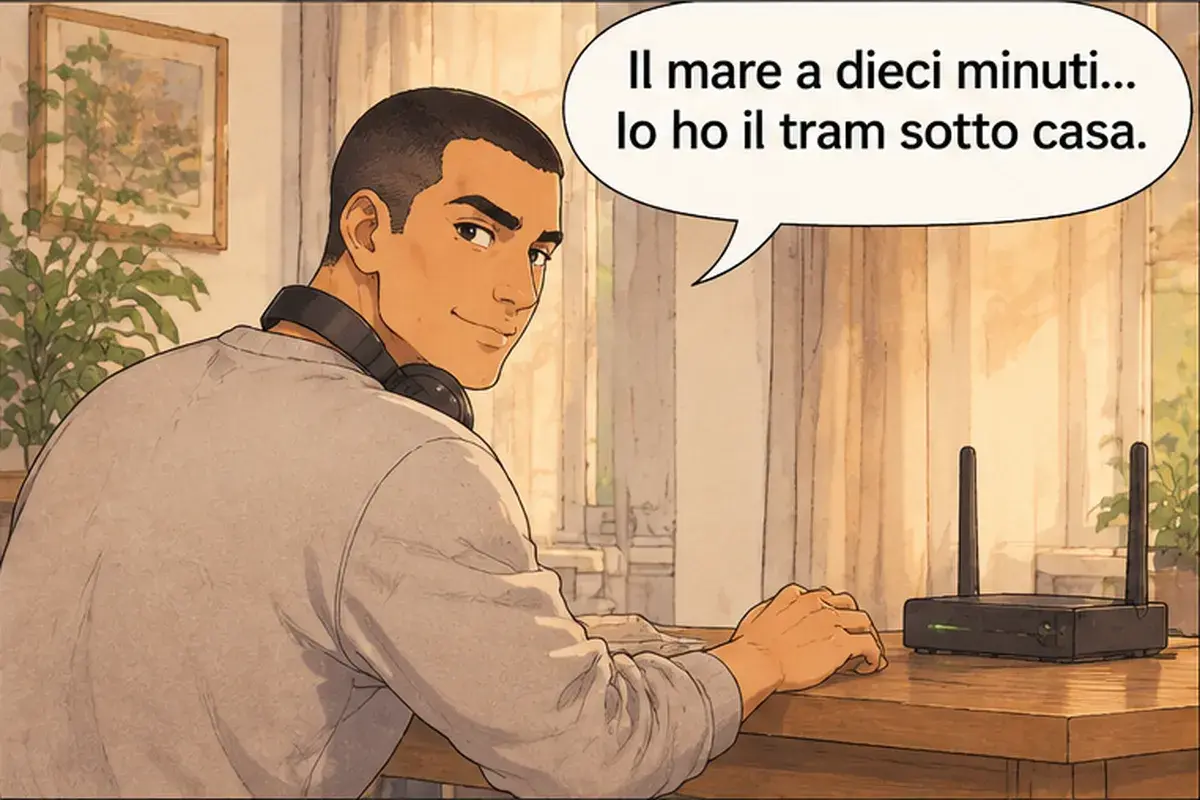
Il mare a dieci minuti... Io ho il tram sotto casa.
The sea ten minutes away... I've got the tram right outside my door.
- Misha
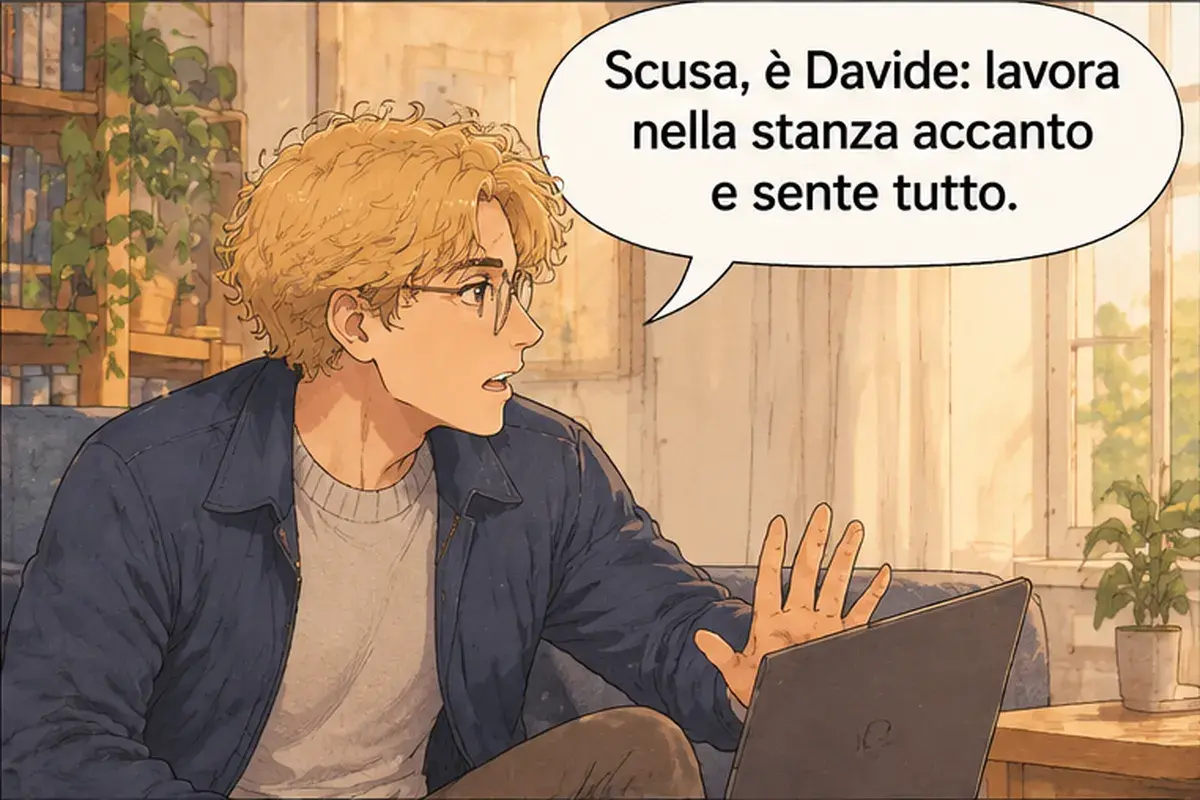
Scusa, è Davide: lavora nella stanza accanto e sente tutto.
Sorry, that's Davide: he works in the next room and hears everything.
- Antonella
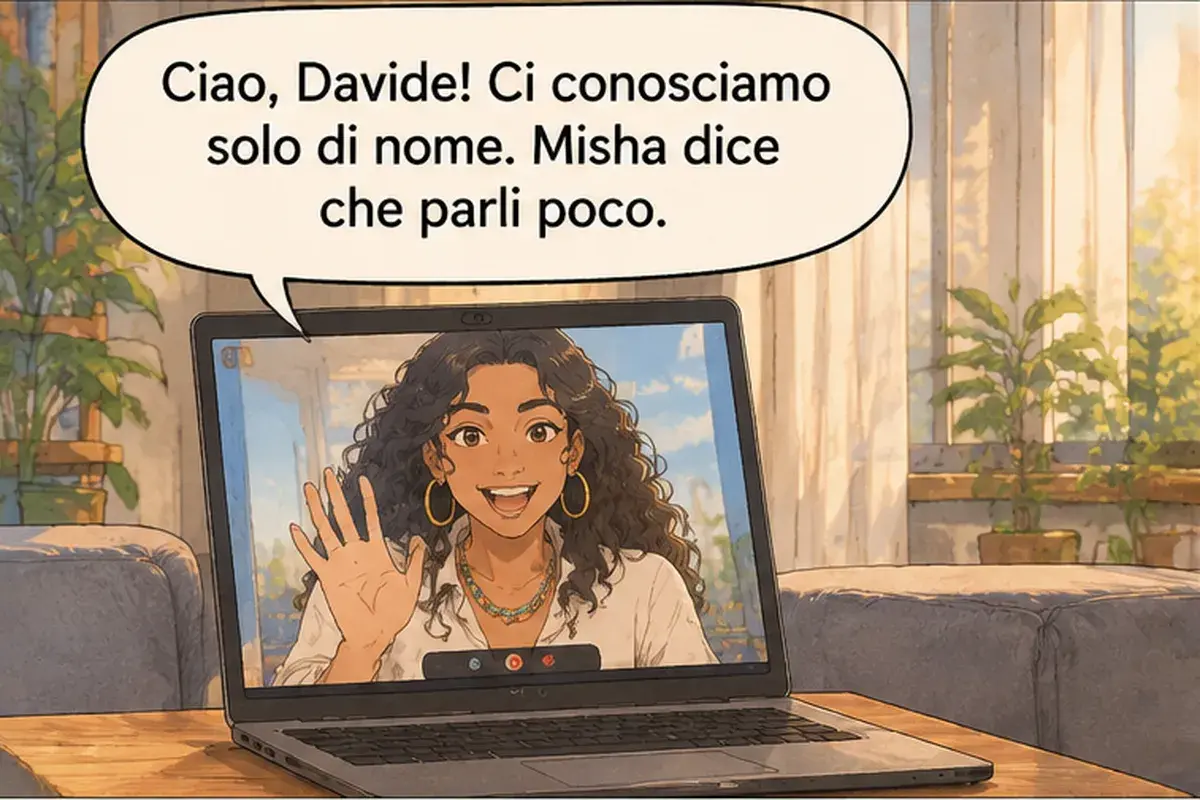
Ciao, Davide! Ci conosciamo solo di nome. Misha dice che parli poco.
Hi, Davide! We only know each other by name. Misha says you don't talk much.
- Davide
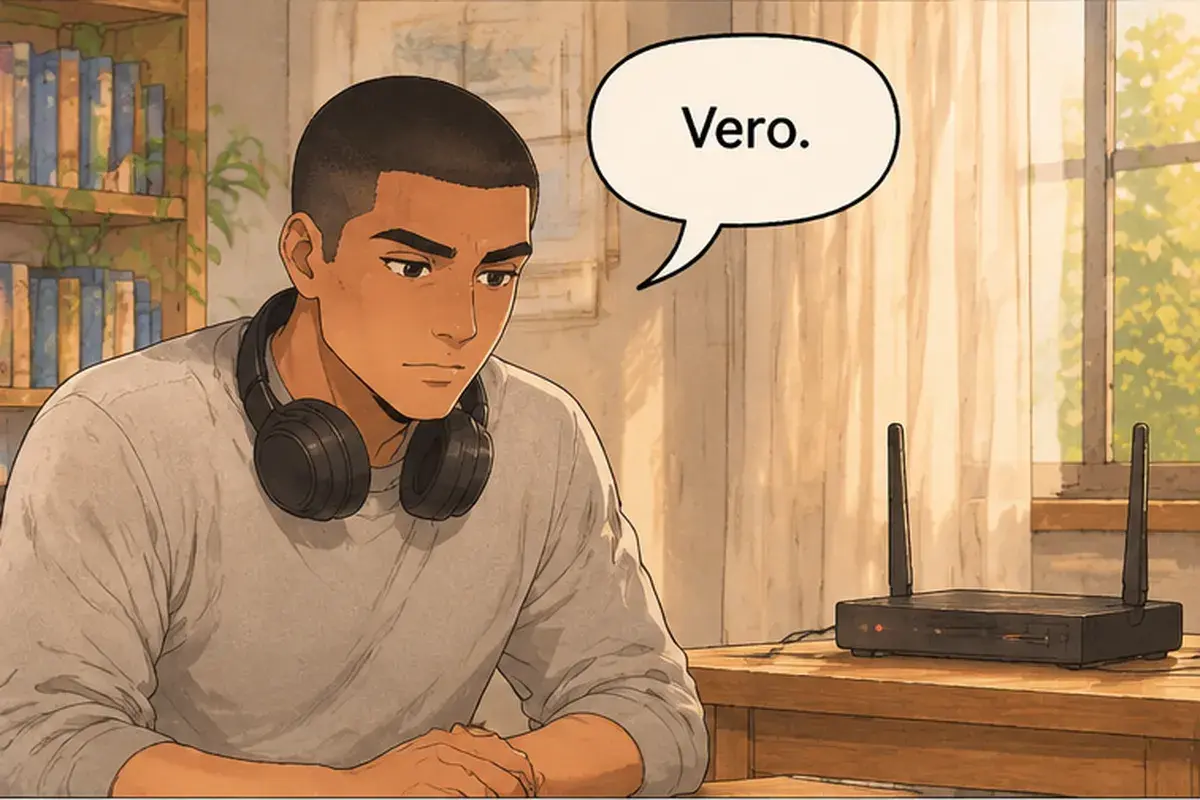
Vero.
True.
- Antonella
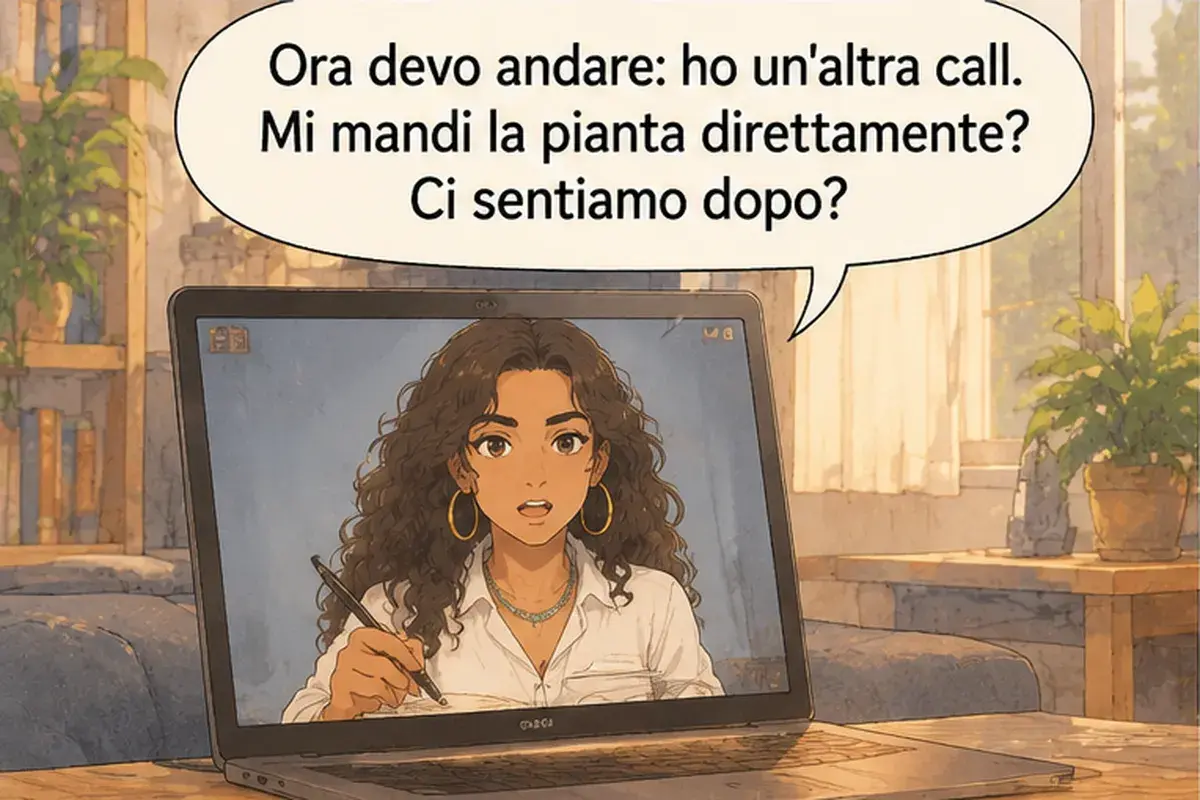
Ora devo andare: ho un'altra call. Mi mandi la pianta direttamente? Ci sentiamo dopo?
I have to go now: I have another call. Will you send me the floor plan directly? Talk later?
- Misha
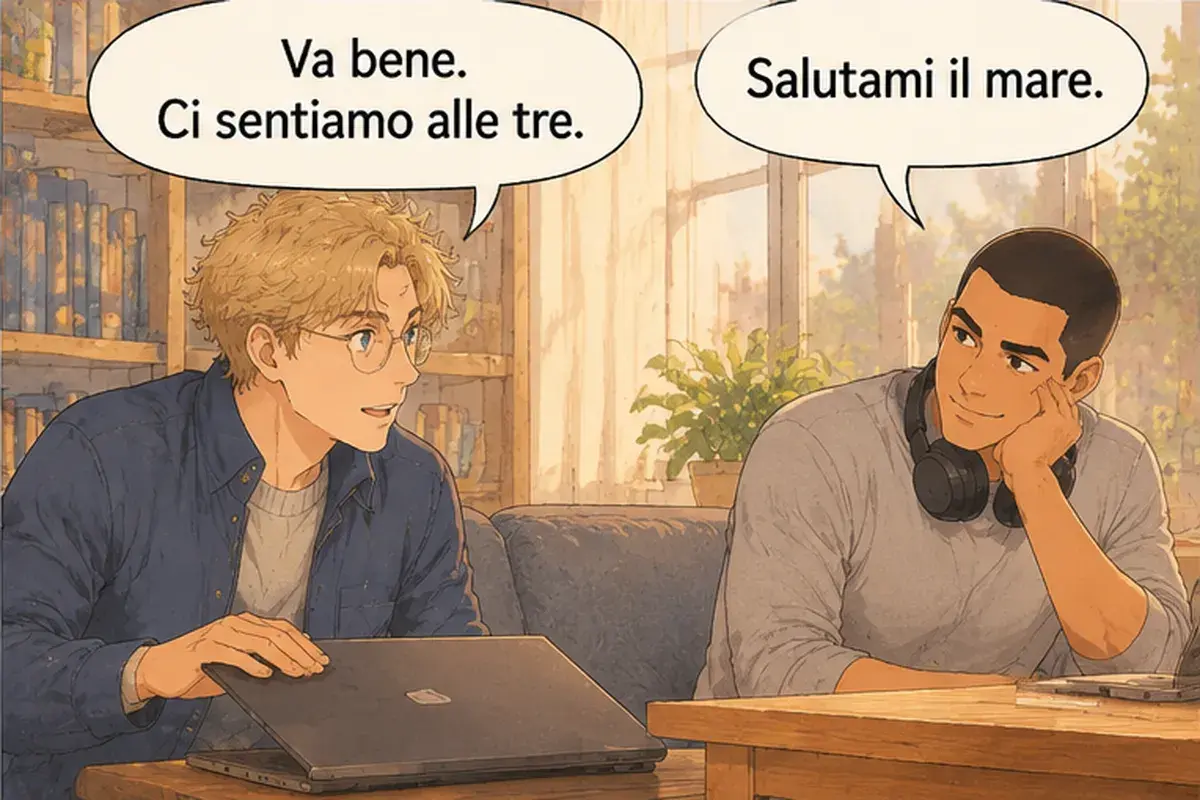
Va bene. Ci sentiamo alle tre.
OK. Talk to you at three.
- Davide
Salutami il mare.
Say hi to the sea for me.
Grammar for this text
- Non so se mi senti — here se means "whether": "I don't know if you can hear me". After it comes the plain present (this unit's rule). English says "can hear"; Italian just says senti.
- Ci conosciamo solo di nome — ci conosciamo comes from conoscersi: "we know each other"; here ci means "each other", not "there".
- Ci sentiamo dopo? — a set phrase, "talk later?"; it comes from sentirsi, but here it doesn't mean "we feel". When people meet face to face, they say ci vediamo.
- La routine si crea anche a casa — si crea is the passive si (unit 5): "is created, can be built". The same in i disegni di Gianni si guardano — "Gianni's drawings are looked at (on a table)".
- Piano piano imparo — piano piano — little by little.
- alle cinque stacco — staccare means "to unplug", and when people talk about work, "to finish work".
- Nel mio accordo — accordo — agreement; don't mix it up with d'accordo — OK, agreed.
- Salutami il mare — salutami is saluta + mi: "greet … for me", in English "say hi to … for me". More on these forms in unit 14.
- Misha dice che parli poco — parli — you talk: after dice che Italian uses the normal tense.
Words and grammar of the unit: Complain about bad internet.
Learn the words from the texts with flashcards
In the app, you can tap any word in a text to see its translation, forms and examples, and new words stick with flashcards. 15 minutes a day.
Start for freeEverything is open for free. No card needed to sign up.