

Italian dialogue with translation · B1 · 17 lines
Abbiamo fatto pace! We made up!
Comic · 17 panels
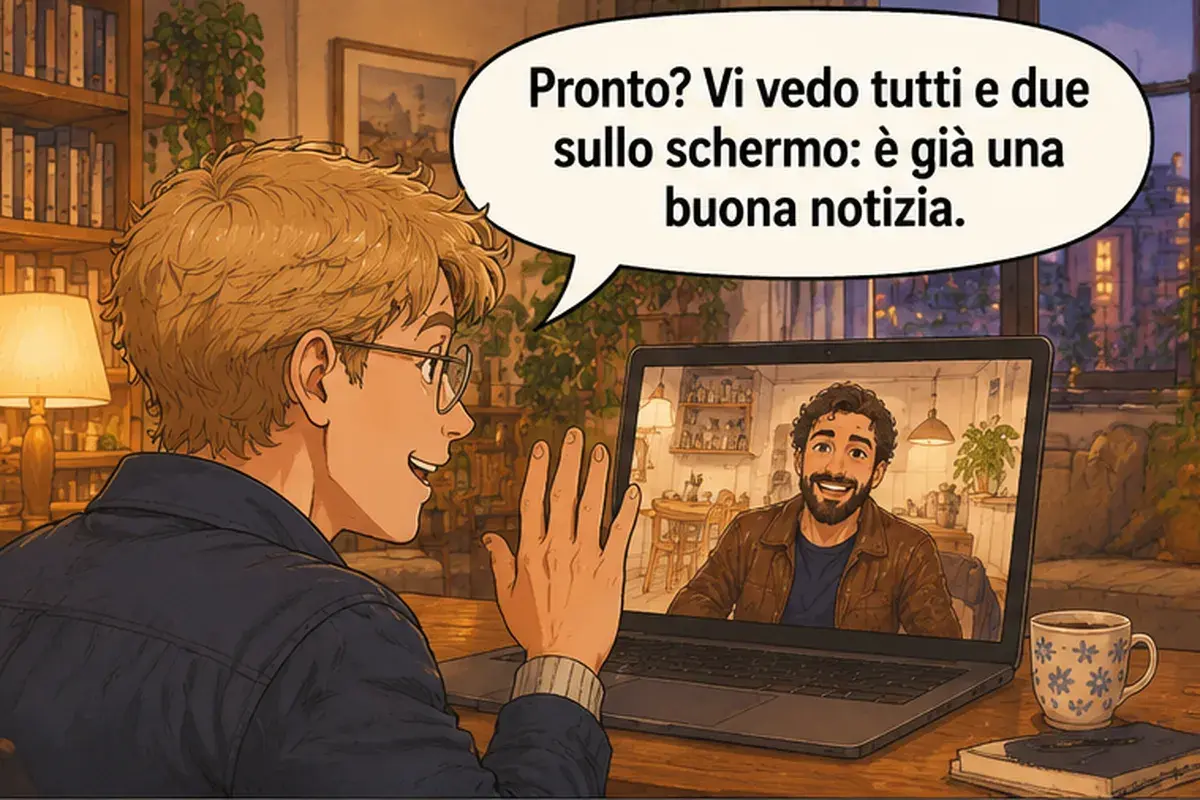
- Misha
Pronto? Vi vedo tutti e due sullo schermo: è già una buona notizia.
Hello? I can see you both on the screen: that's already good news.
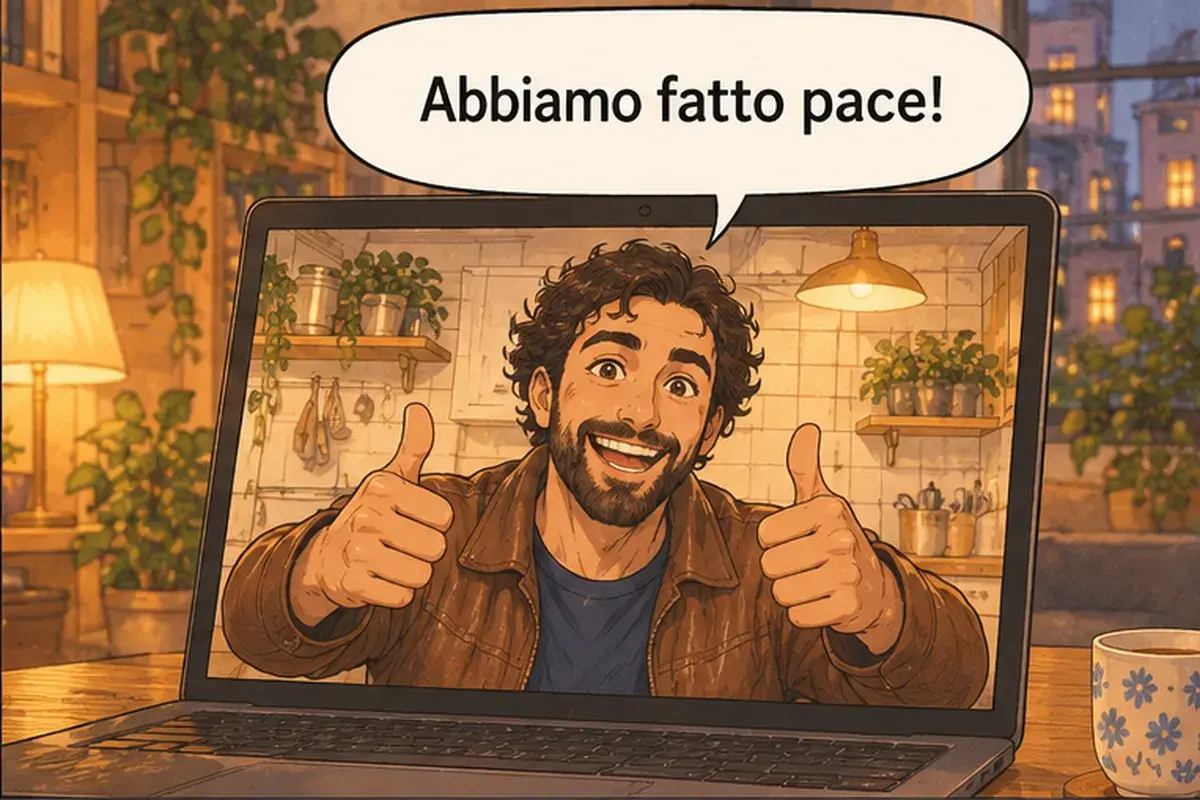
- Luca
Abbiamo fatto pace!
We made up!
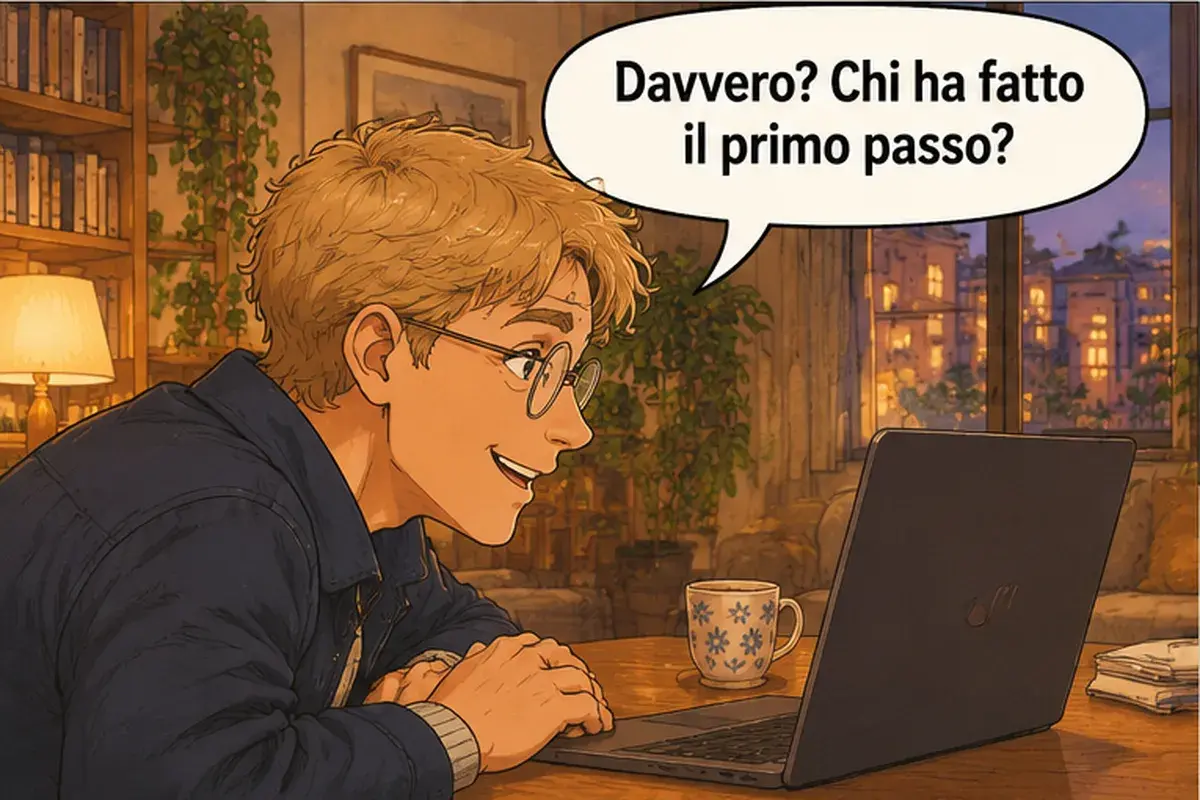
- Misha
Davvero? Chi ha fatto il primo passo?
Really? Who took the first step?
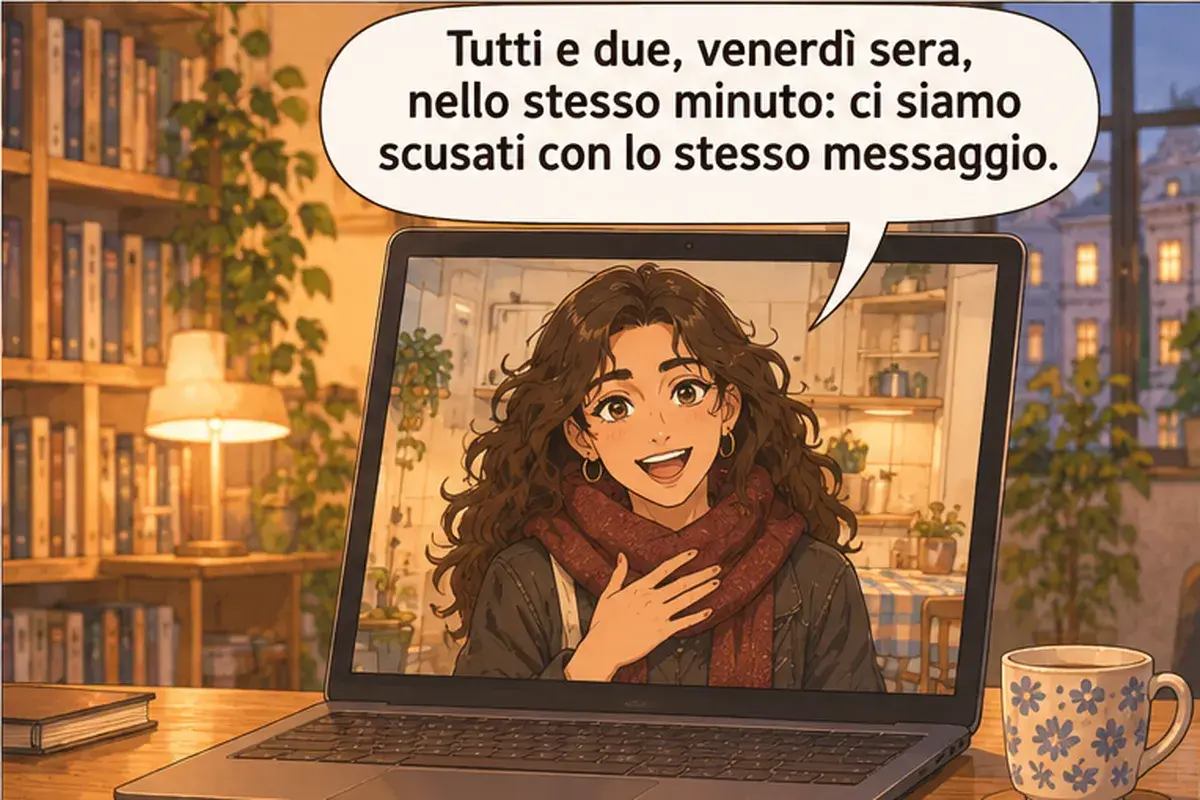
- Giulia
Tutti e due, venerdì sera, nello stesso minuto: ci siamo scusati con lo stesso messaggio.
Both of us, on Friday evening, in the same minute: we apologized with the same message.
- Misha
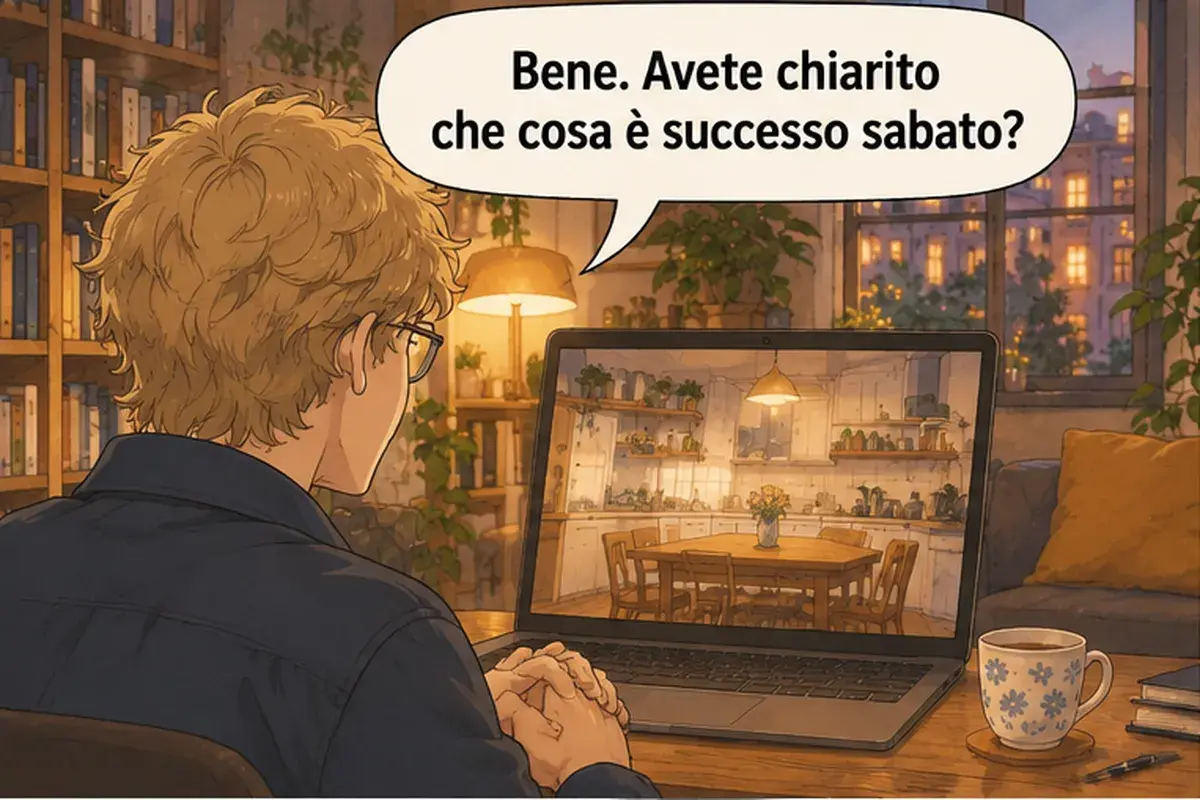
Bene. Avete chiarito che cosa è successo sabato?
Good. Did you clear up what happened on Saturday? (to several people)
- Giulia
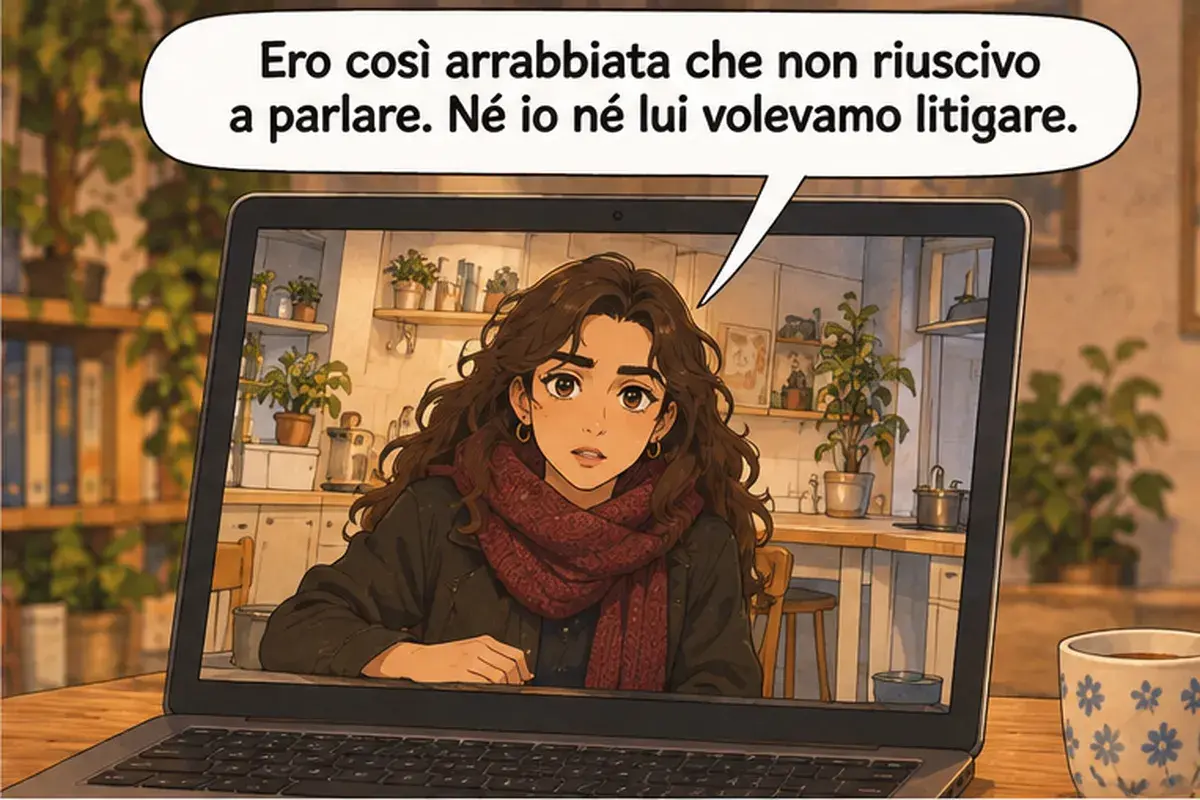
Ero così arrabbiata che non riuscivo a parlare. Né io né lui volevamo litigare.
I was so angry that I couldn't speak (woman speaking). Neither he nor I wanted to argue.
- Luca
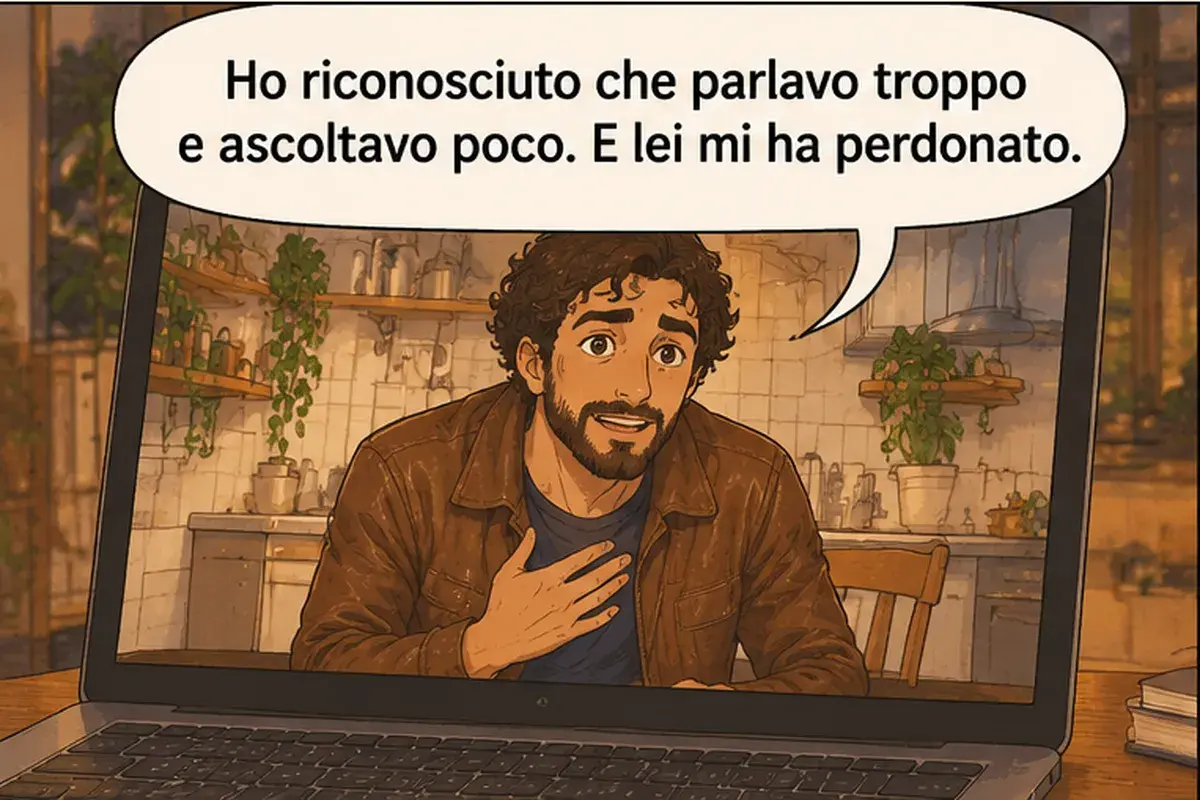
Ho riconosciuto che parlavo troppo e ascoltavo poco. E lei mi ha perdonato.
I admitted that I was talking too much and listening too little. And she forgave me.
- Misha
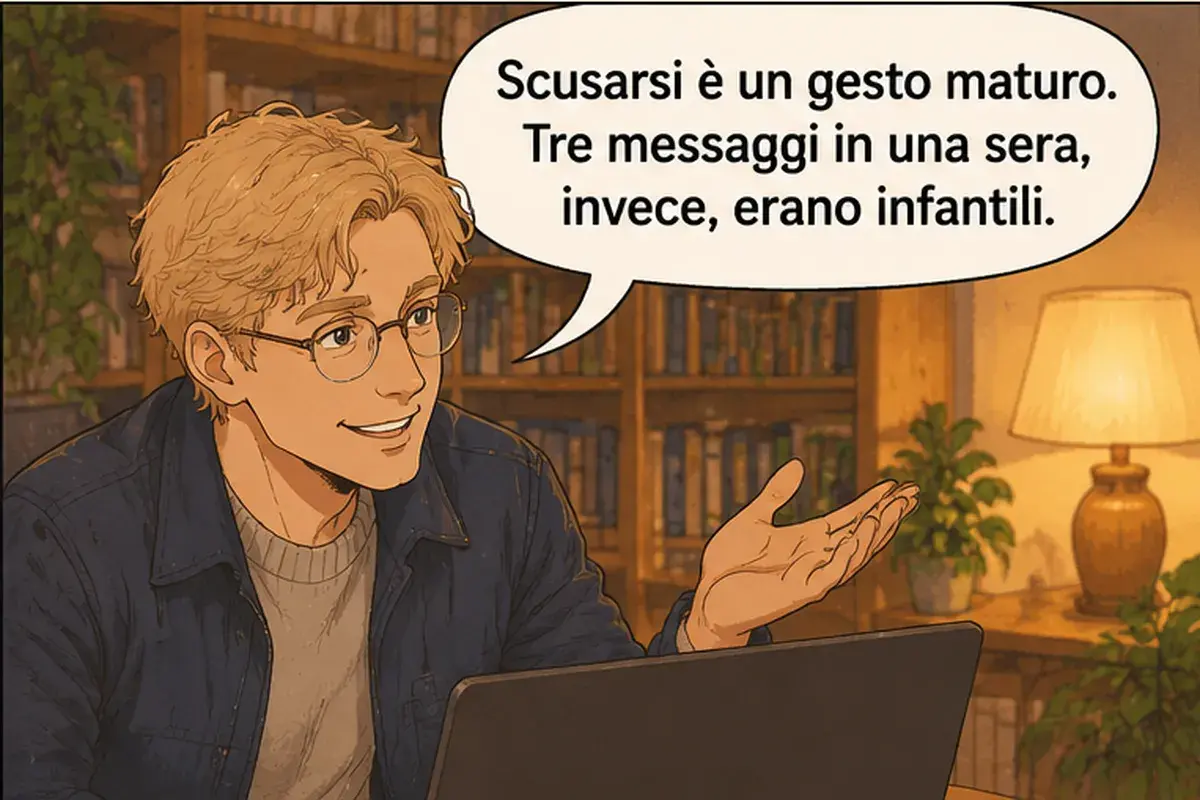
Scusarsi è un gesto maturo. Tre messaggi in una sera, invece, erano infantili.
Apologizing is a mature gesture. Three messages in one evening, on the other hand, were childish.
- Luca
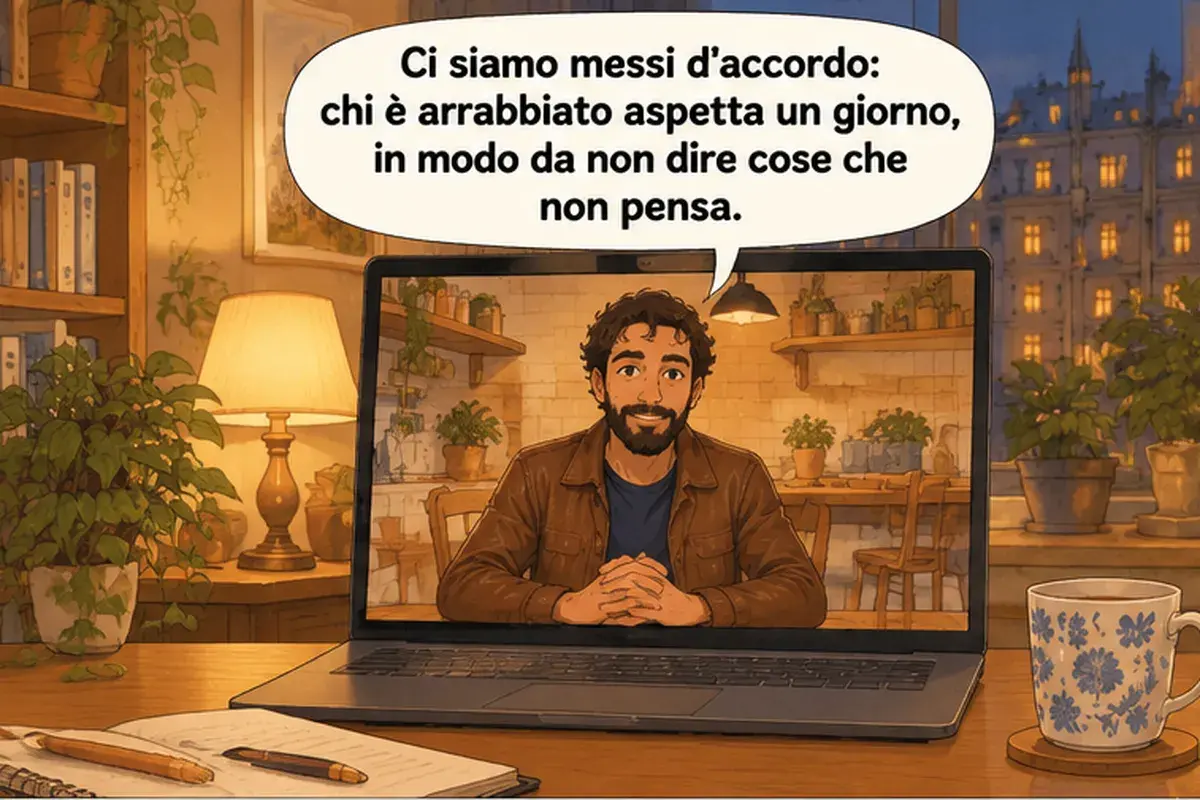
Ci siamo messi d'accordo: chi è arrabbiato aspetta un giorno, in modo da non dire cose che non pensa.
We came to an agreement: whoever is angry waits a day, so as not to say things they don't mean.
- Misha
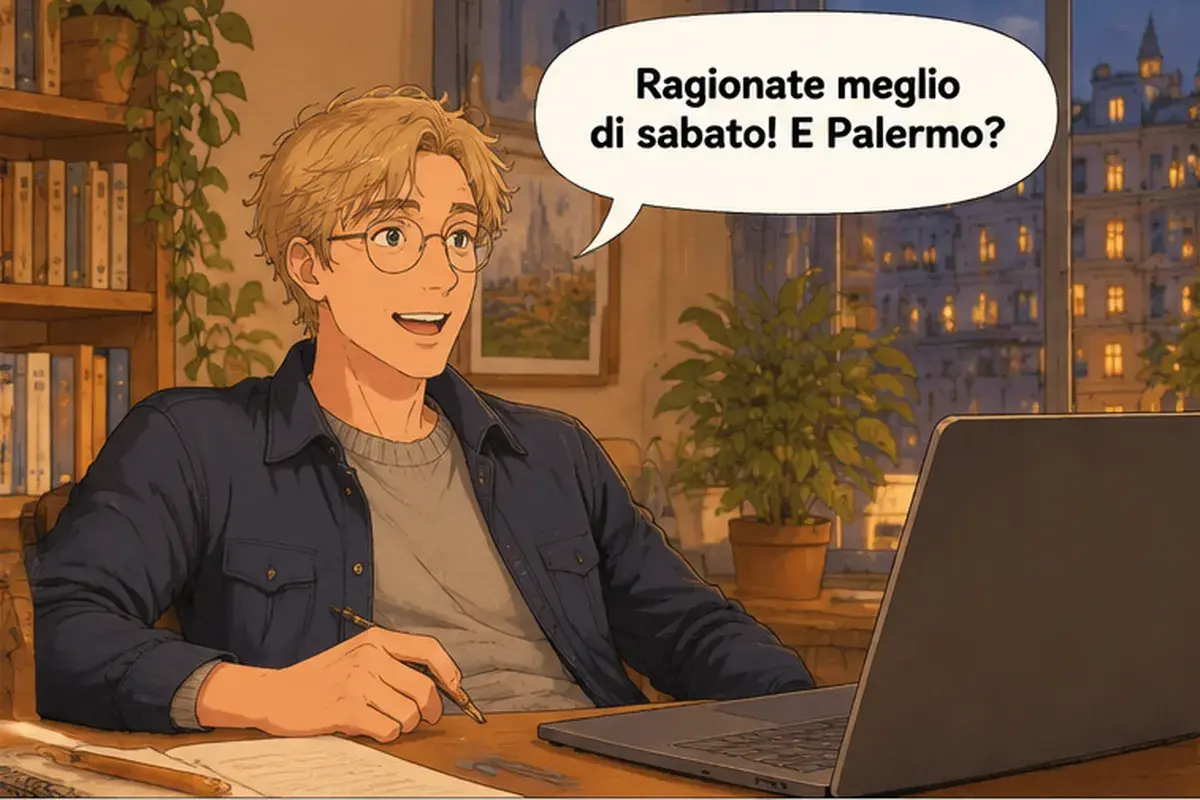
Ragionate meglio di sabato! E Palermo?
You're thinking more clearly than on Saturday! And what about Palermo? (to several people)
- Giulia
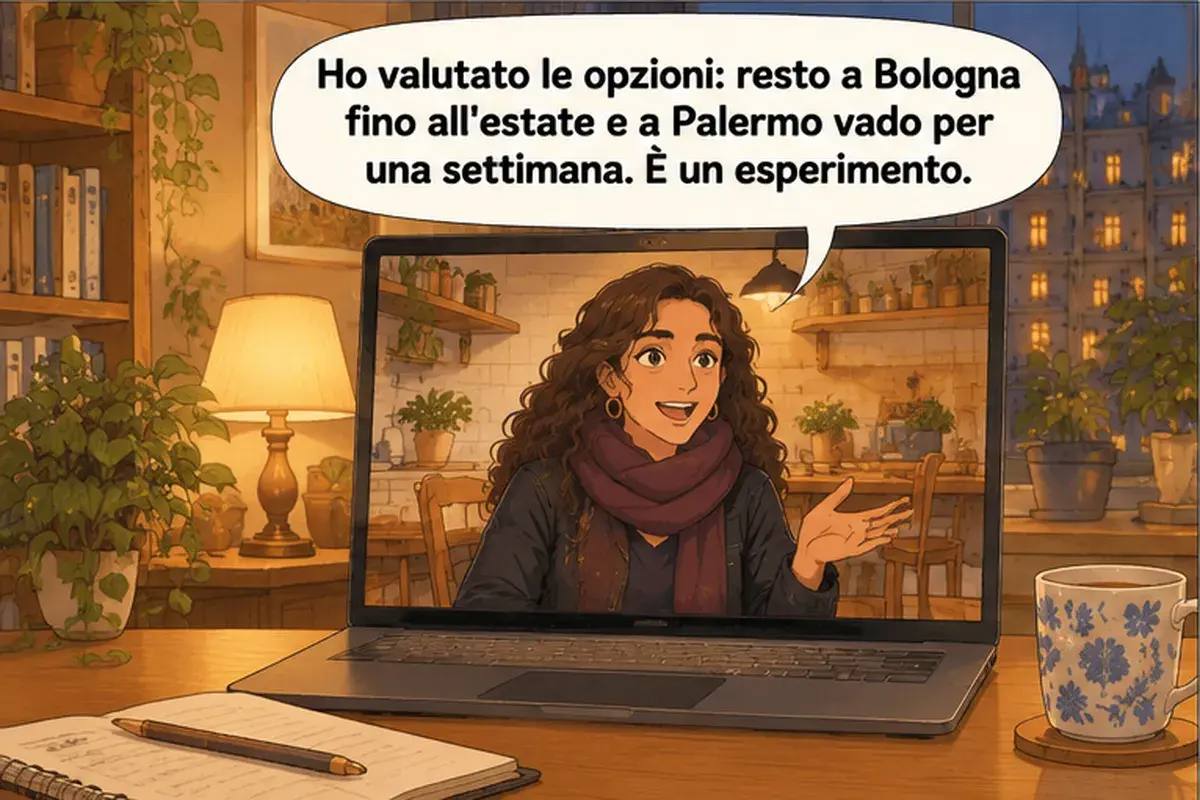
Ho valutato le opzioni: resto a Bologna fino all'estate e a Palermo vado per una settimana. È un esperimento.
I weighed the options: I'm staying in Bologna until summer, and I'm going to Palermo for a week. It's an experiment.
- Luca
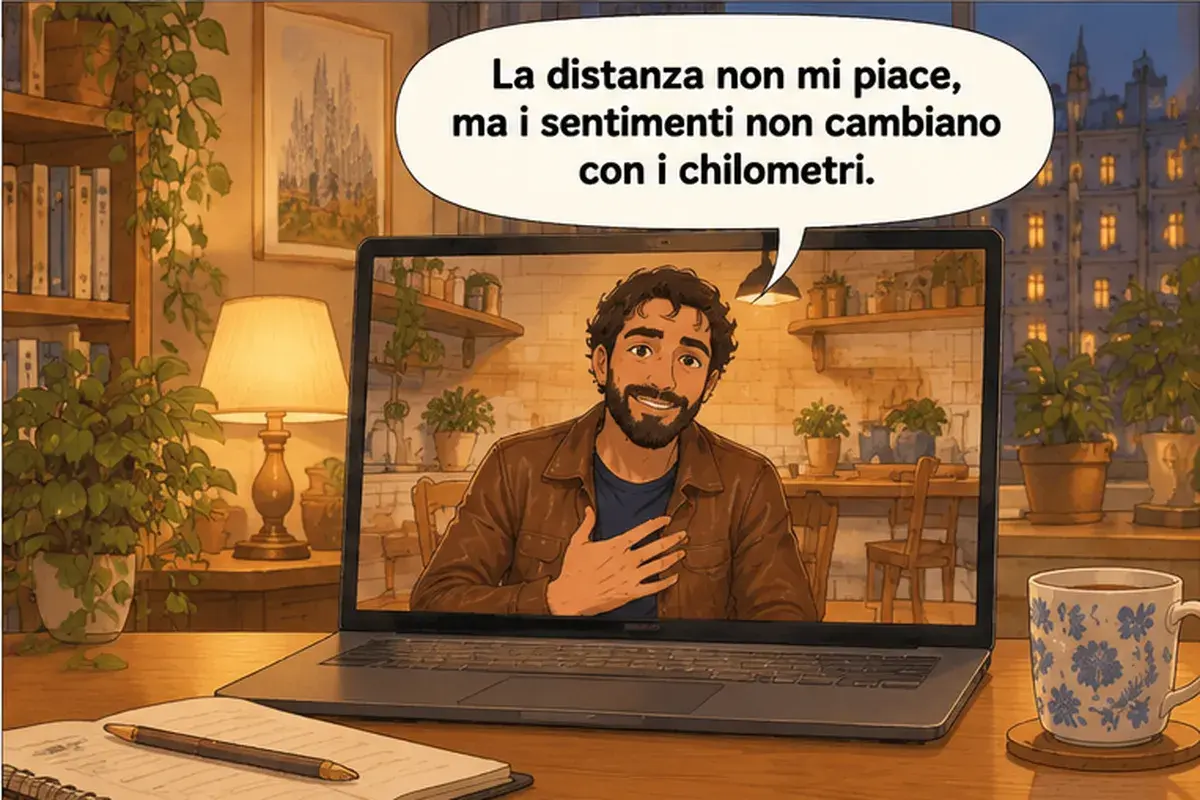
La distanza non mi piace, ma i sentimenti non cambiano con i chilometri.
I don't like the distance, but feelings don't change with the kilometers.

- Giulia
Ora ci capiamo meglio. Ma è probabile che litighiamo ancora, Misha.
Now we understand each other better. But it's likely that we'll argue again, Misha.
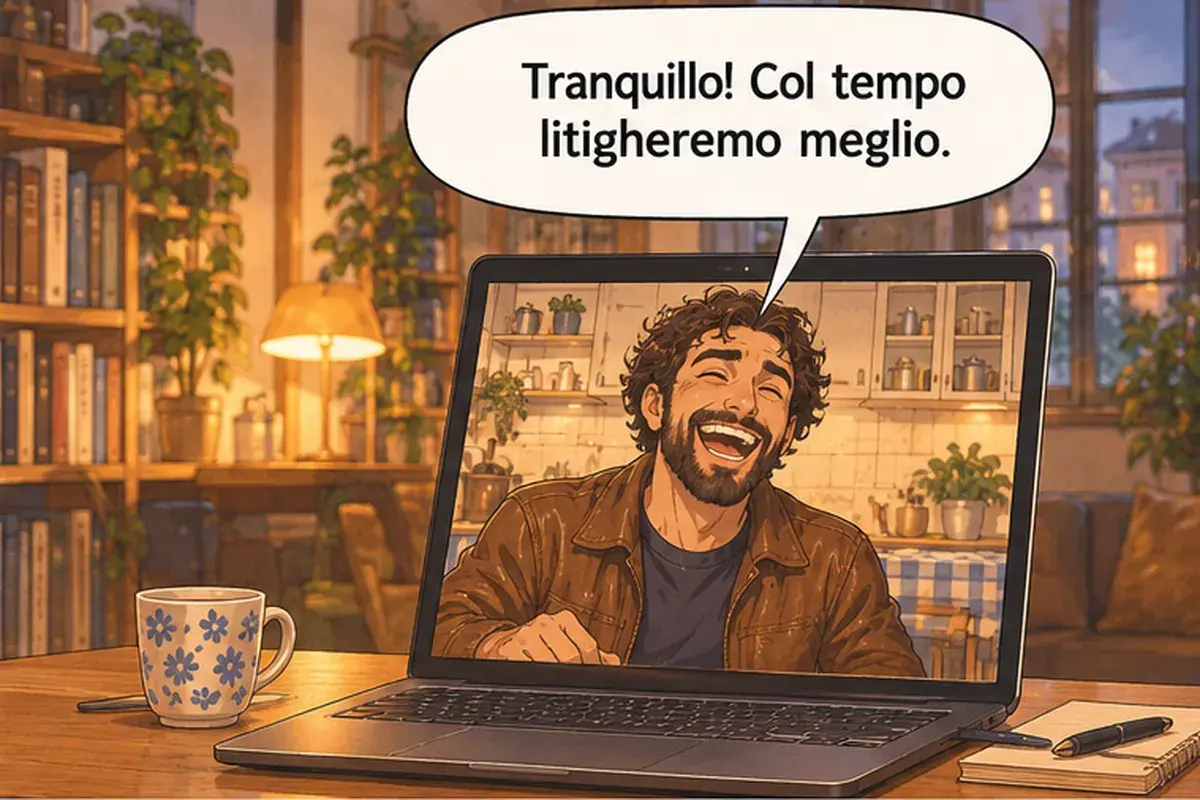
- Luca
Tranquillo! Col tempo litigheremo meglio.
Don't worry! With time, we'll argue better (to a man).
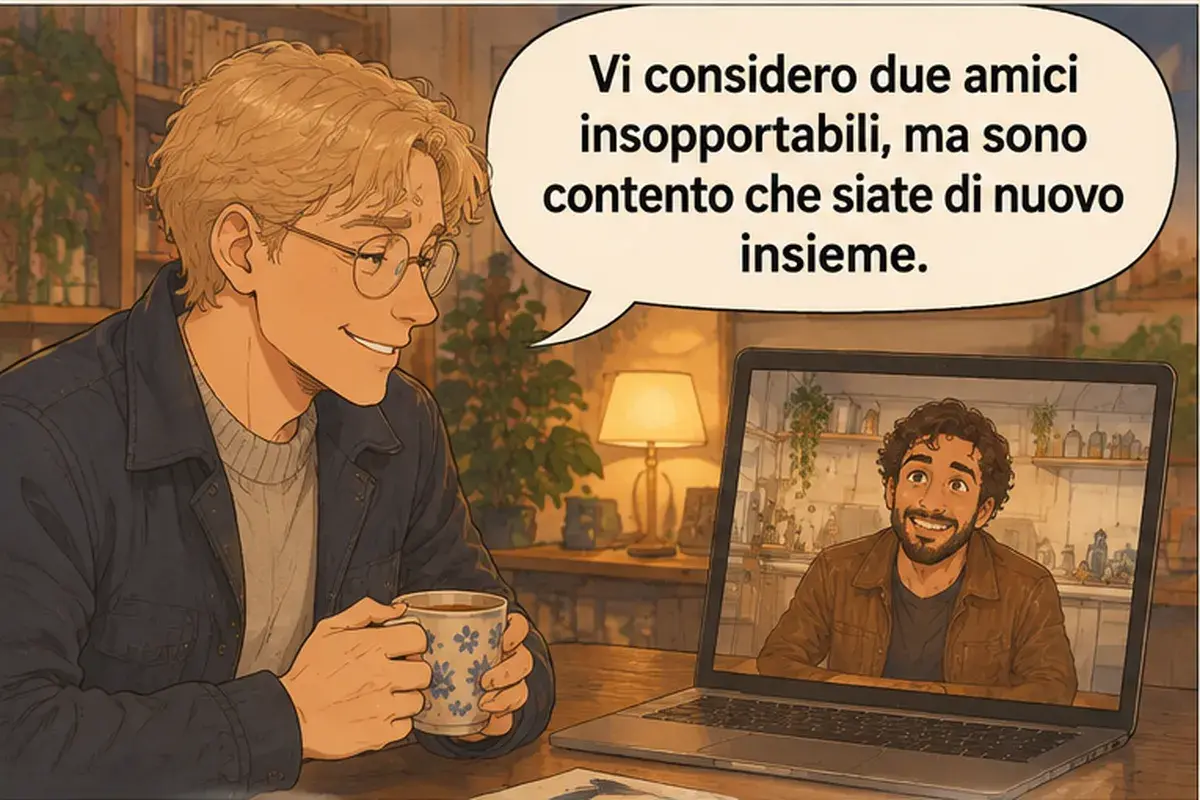
- Misha
Vi considero due amici insopportabili, ma sono contento che siate di nuovo insieme.
I consider you two unbearable friends, but I'm glad you're back together (man speaking).
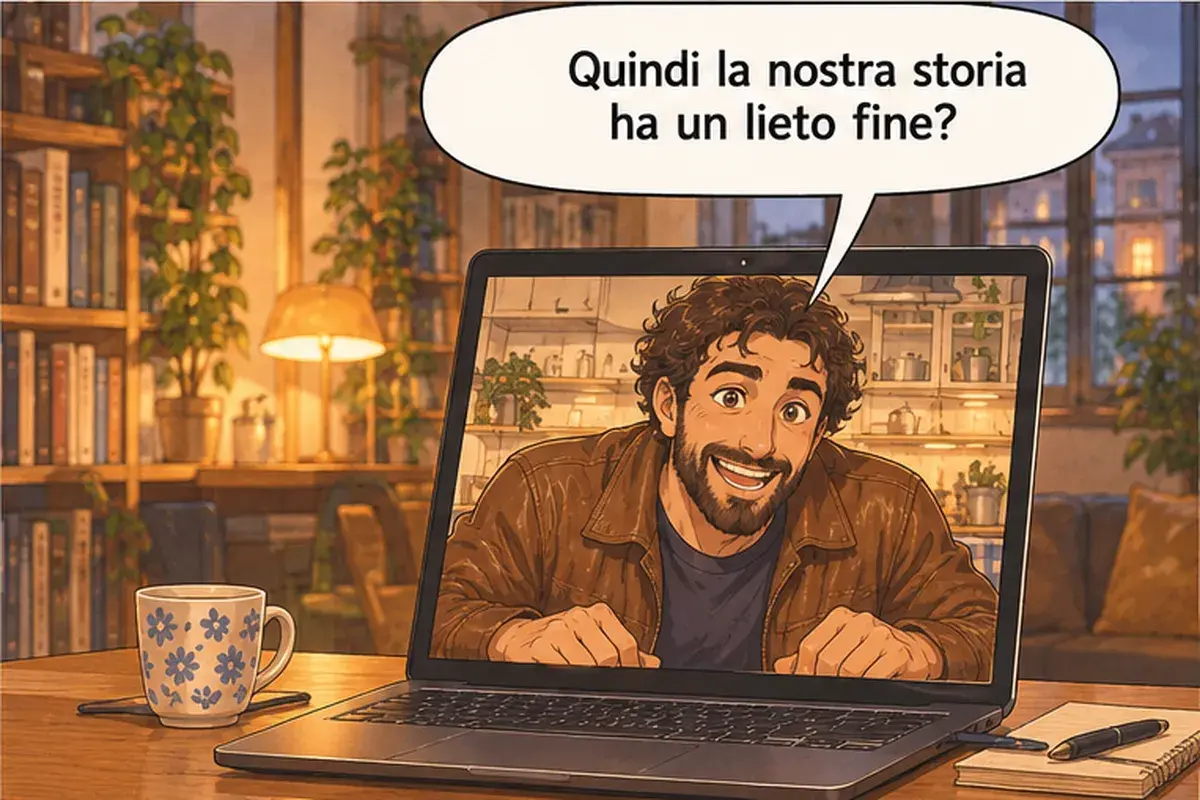
- Luca
Quindi la nostra storia ha un lieto fine?
So our story has a happy ending?

- Giulia
Per ora sì. Ma è una serie lunga.
For now, yes. But it's a long series.
Grammar for this text
- Né io né lui volevamo litigare —
né… né— "neither… nor". Before the verb,nonisn't needed; after the verb, it is:non voglio né scrivere né chiamare. Ero così arrabbiata che non riuscivo a parlare —così… che— "so … that". - Ci siamo messi d'accordo —
mettersi d'accordo— "to come to an agreement";messiis the past participle ofmettere, masculine plural. In modo da non dire cose che non pensa —in modo da+ infinitive — "so as not to…". - Scusarsi è un gesto maturo —
gestohere means "an act, a thing you do";maturoabout a person is "mature" (about fruit, "ripe");infantili— "childish". - Ma è probabile che litighiamo ancora — after
è probabile chethe verb is in thecongiuntivo(subjunctive), as afterpenso che(unit 8). Forlitigare, the noi form looks the same as the normal present. - Col tempo litigheremo meglio —
col=con+il, written as one word: "with time".litigheremois the future oflitigare; thehkeeps theghard. - Abbiamo fatto pace! —
fare pace— "to make up" (notlasciare in pace— "to leave alone"). Quindi la nostra storia ha un lieto fine? —lieto fine— "happy ending";lietois a literary word for "glad", heard mostly inlieto fine.
Words and grammar of the unit: Help friends make up.
Learn the words from the texts with flashcards
In the app, you can tap any word in a text to see its translation, forms and examples, and new words stick with flashcards. 15 minutes a day.
Start for freeEverything is open for free. No card needed to sign up.