

Italian dialogue with translation · B1 · 18 lines
Quando arriverà il tuo primo rimborso, mi paghi When your first reimbursement comes in, you pay me
Comic · 18 panels
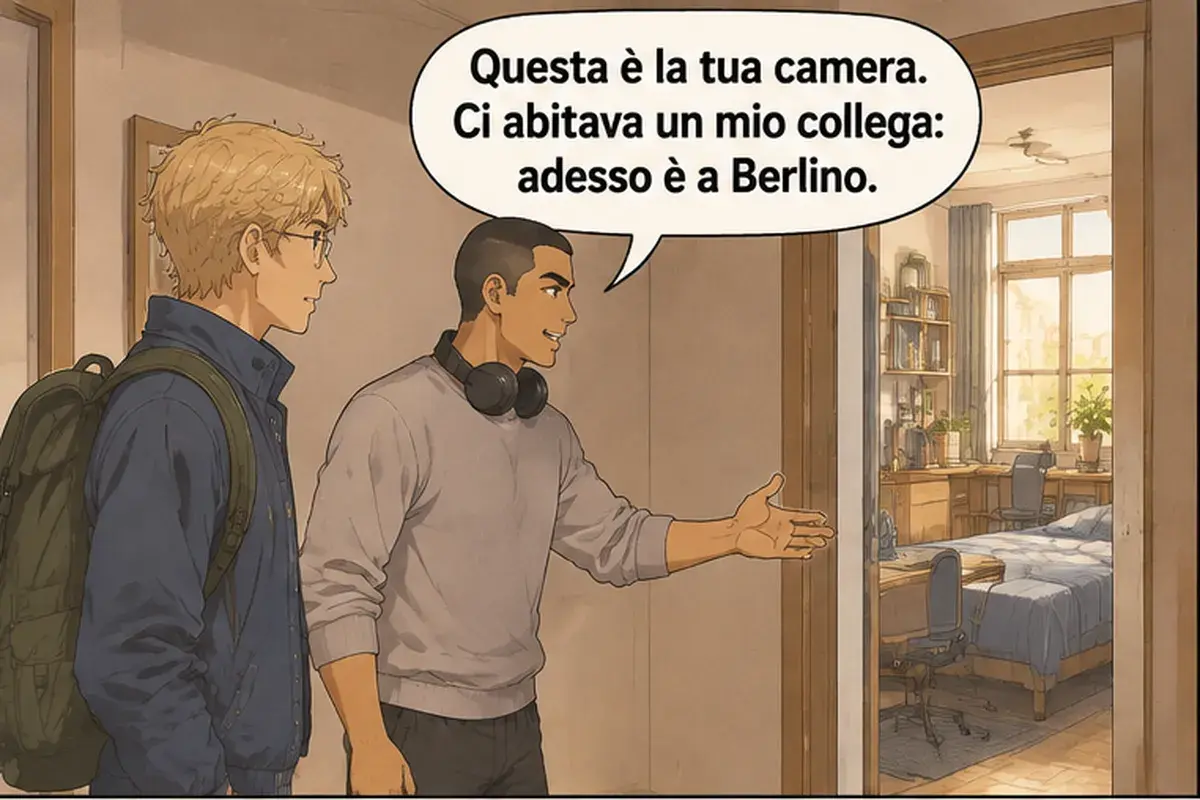
- Davide
Questa è la tua camera. Ci abitava un mio collega: adesso è a Berlino.
This is your room. A colleague of mine used to live here: now he's in Berlin.
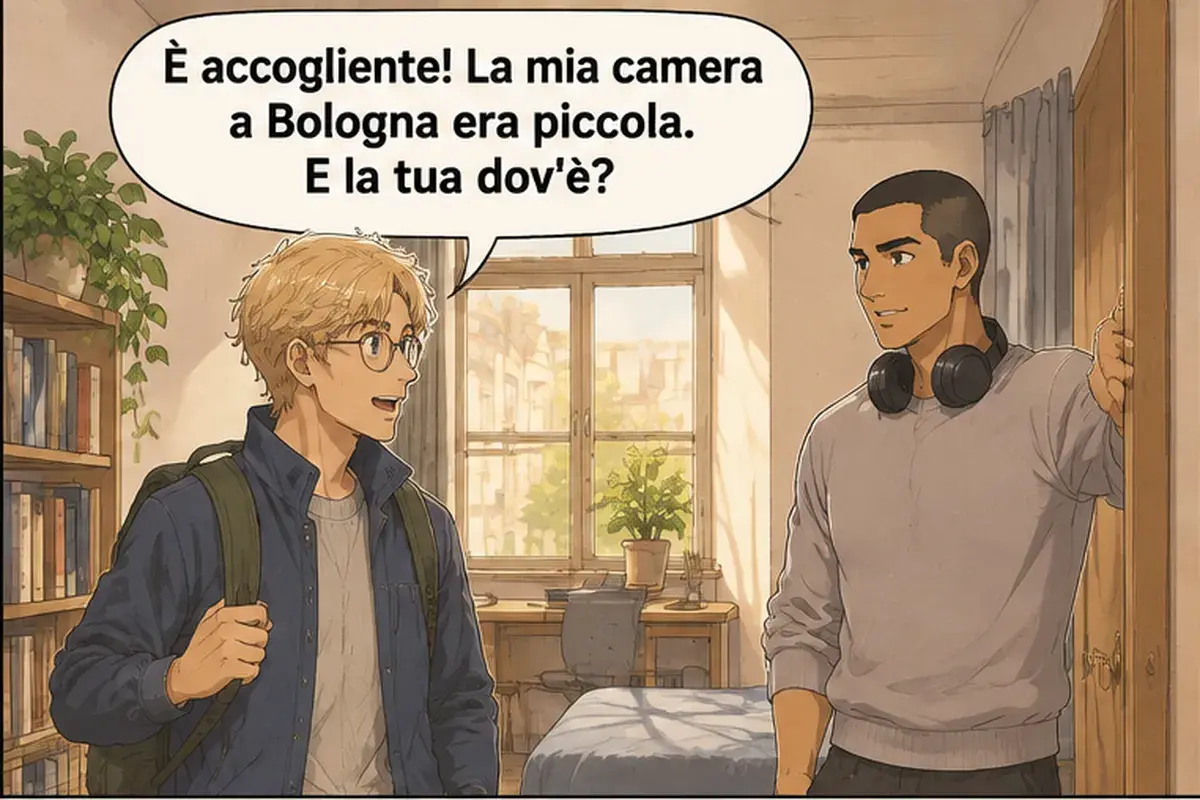
- Misha
È accogliente! La mia camera a Bologna era piccola. E la tua dov'è?
It's cozy! My room in Bologna was small. And where's yours?
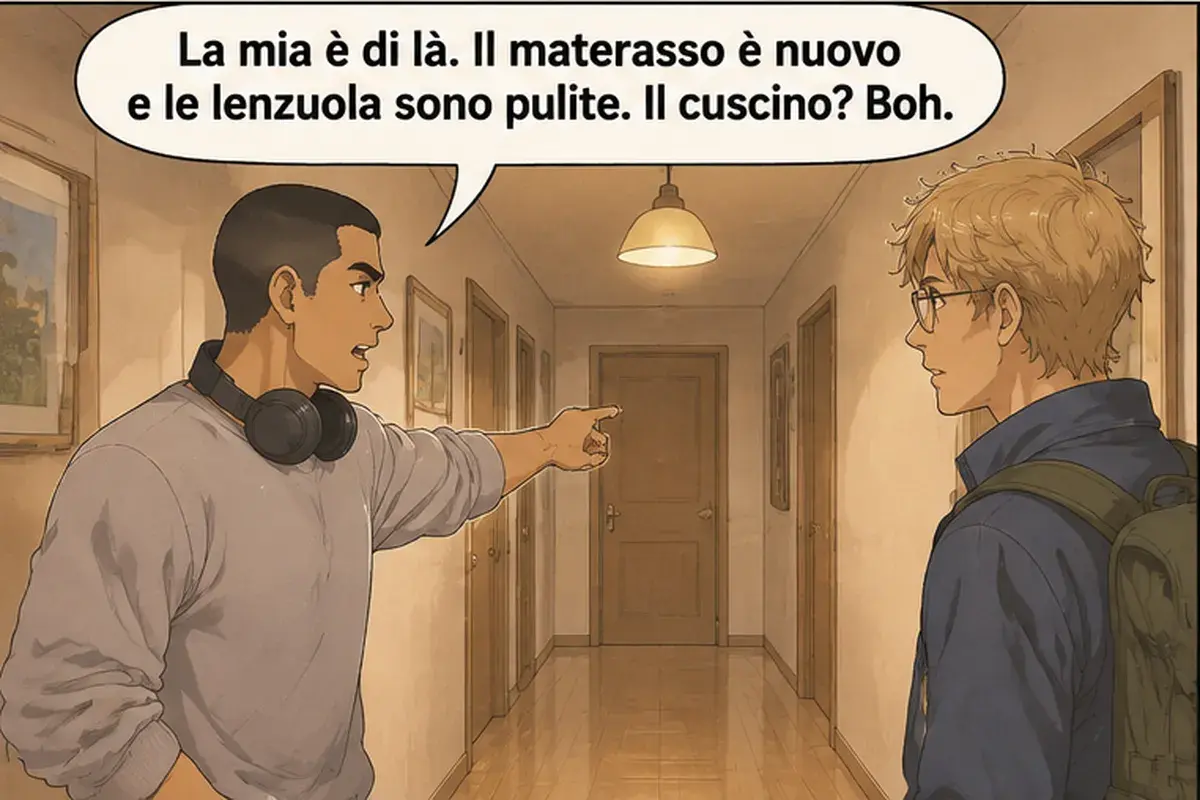
- Davide
La mia è di là. Il materasso è nuovo e le lenzuola sono pulite. Il cuscino? Boh.
Mine's in the other room. The mattress is new and the sheets are clean. The pillow? Dunno.
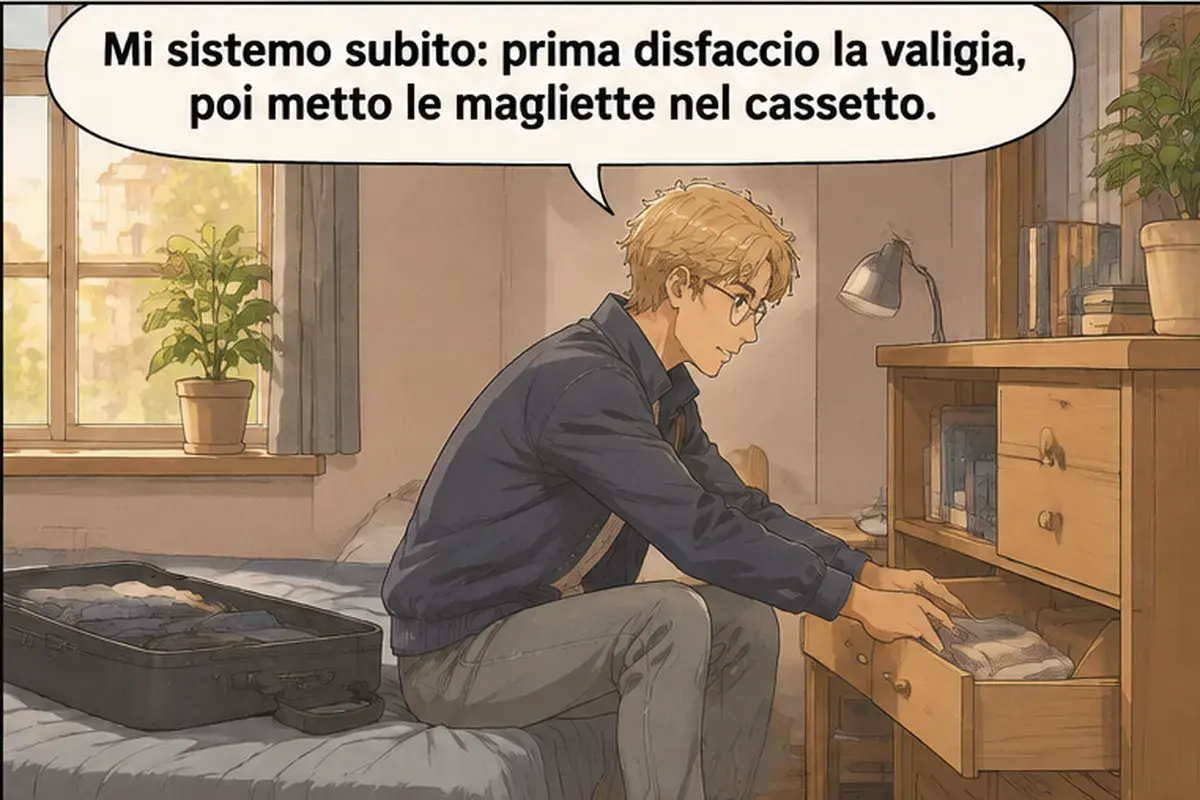
- Misha
Mi sistemo subito: prima disfaccio la valigia, poi metto le magliette nel cassetto.
I'll settle in right away: first I'll unpack my suitcase, then I'll put my T-shirts in the drawer.
- Davide
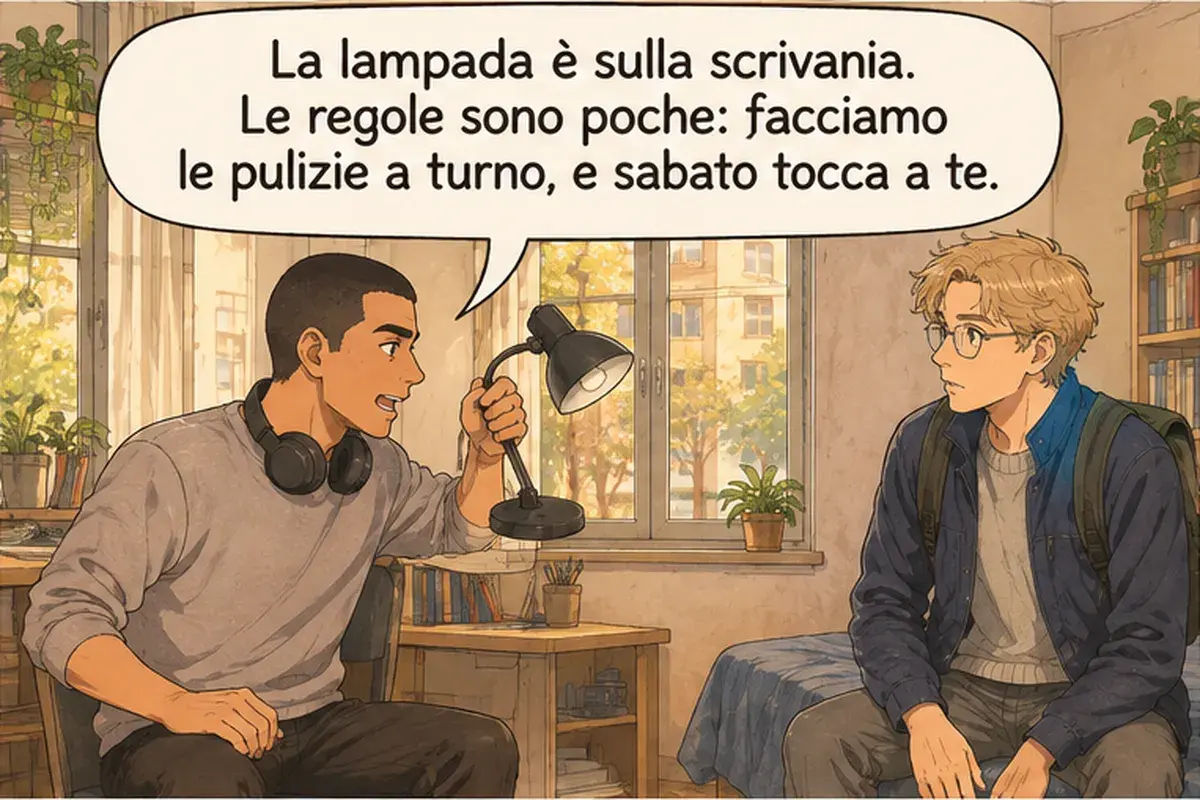
La lampada è sulla scrivania. Le regole sono poche: facciamo le pulizie a turno, e sabato tocca a te.
The lamp is on the desk. There are just a few rules: we take turns doing the cleaning, and on Saturday it's your turn.
- Misha
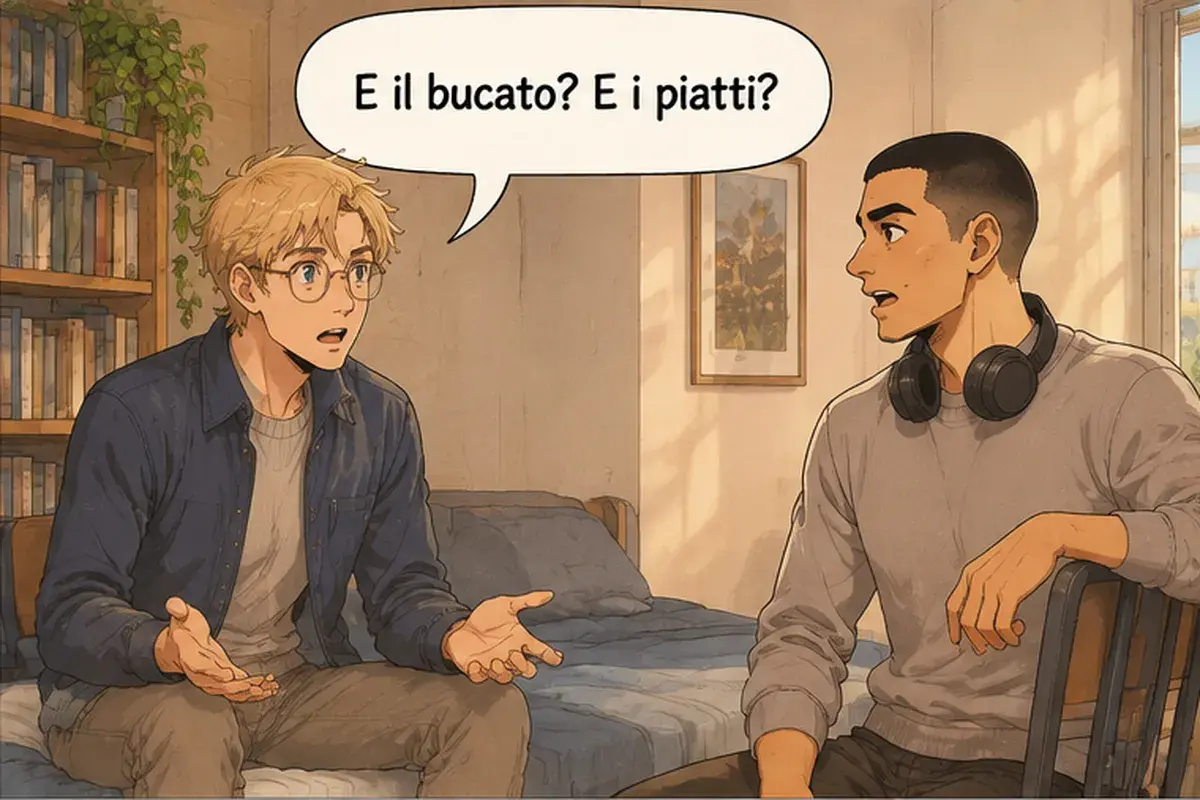
E il bucato? E i piatti?
And the laundry? And the dishes?
- Davide
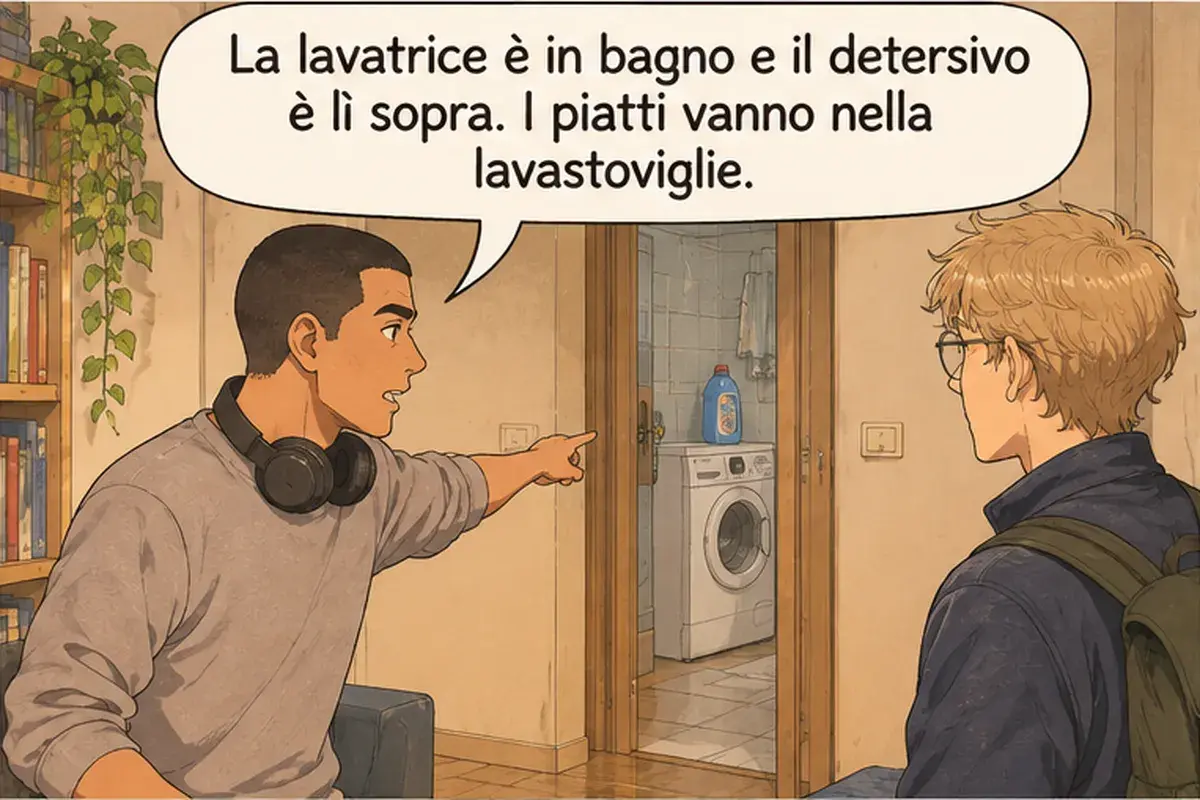
La lavatrice è in bagno e il detersivo è lì sopra. I piatti vanno nella lavastoviglie.
The washing machine is in the bathroom and the detergent is up there, on top. The dishes go in the dishwasher.
- Misha
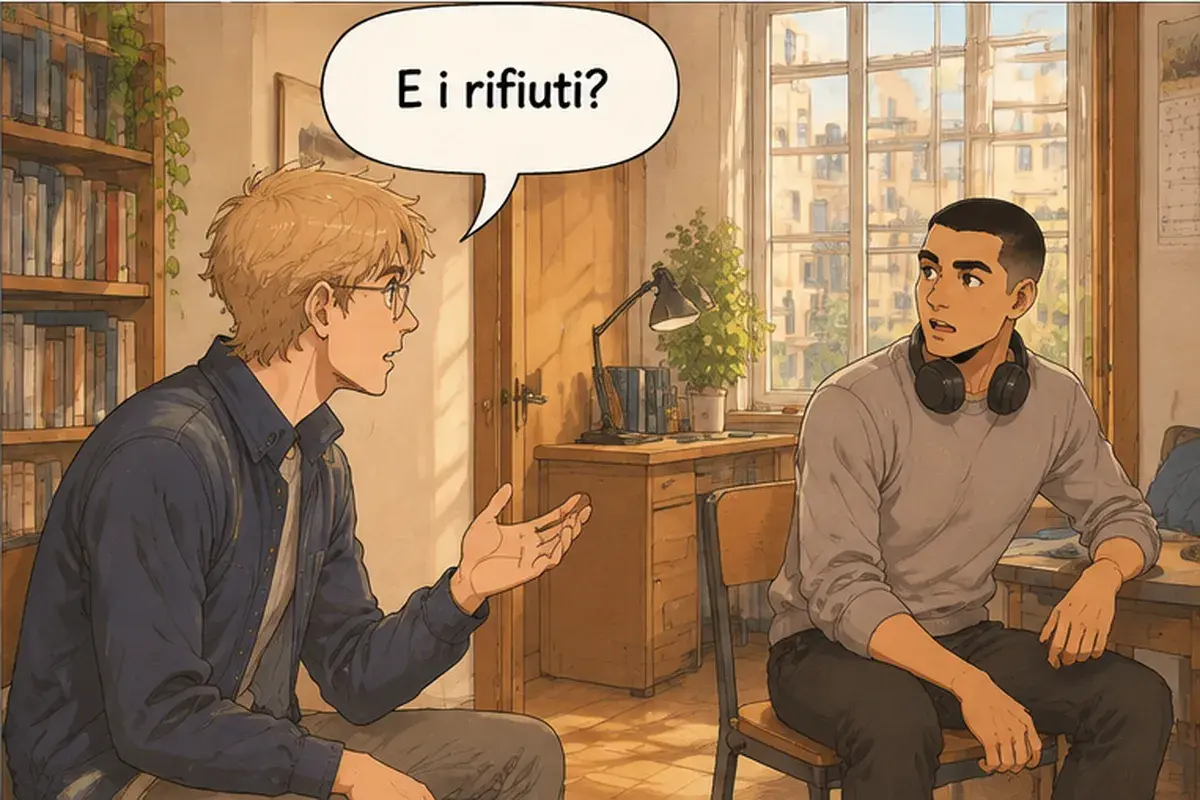
E i rifiuti?
And the trash?
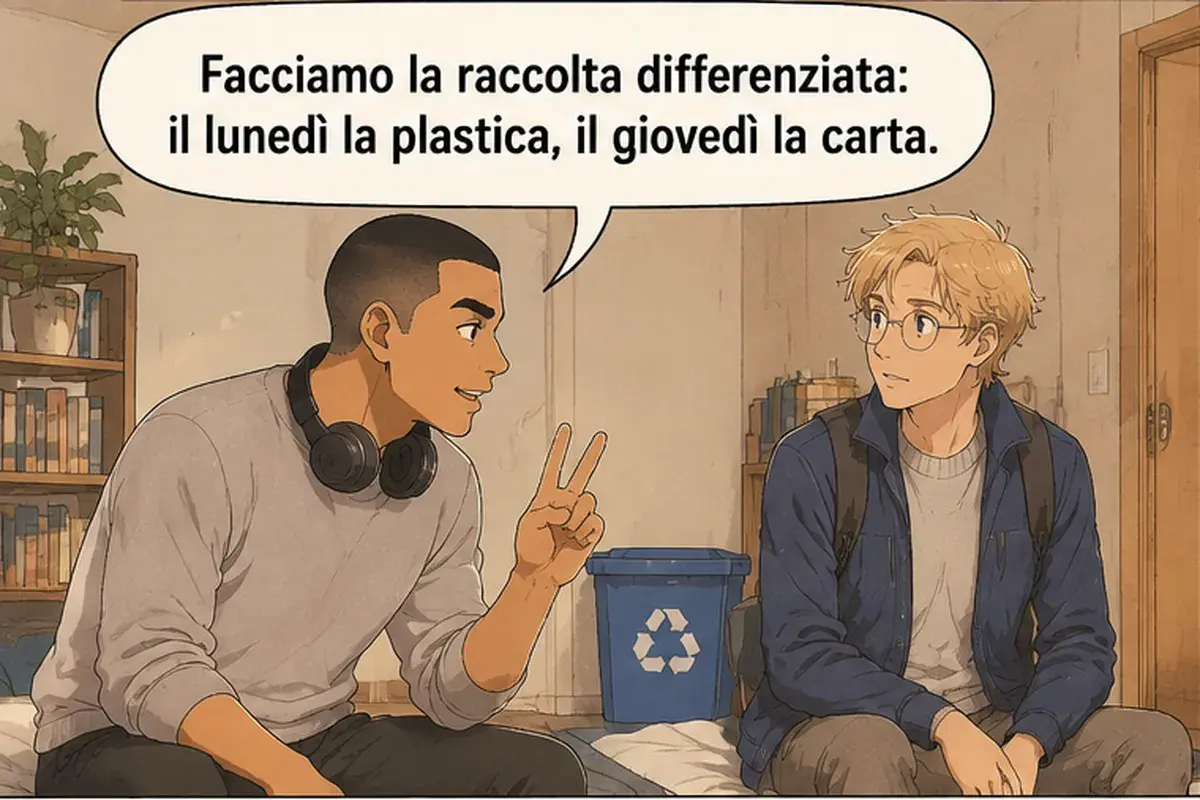
- Davide
Facciamo la raccolta differenziata: il lunedì la plastica, il giovedì la carta.
We sort the trash for recycling: plastic on Mondays, paper on Thursdays.
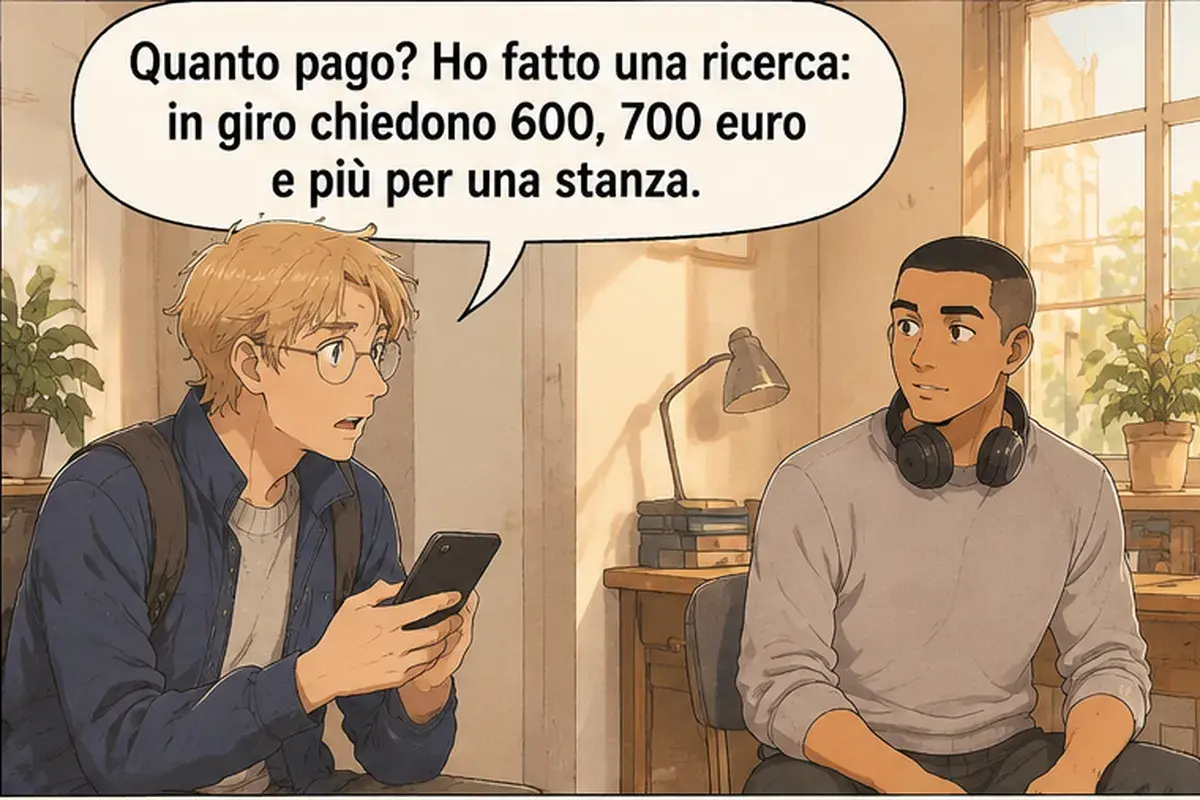
- Misha
Quanto pago? Ho fatto una ricerca: in giro chiedono 600, 700 euro e più per una stanza.
How much do I pay? I did some research: out there they're asking 600, 700 euros or more for a room.
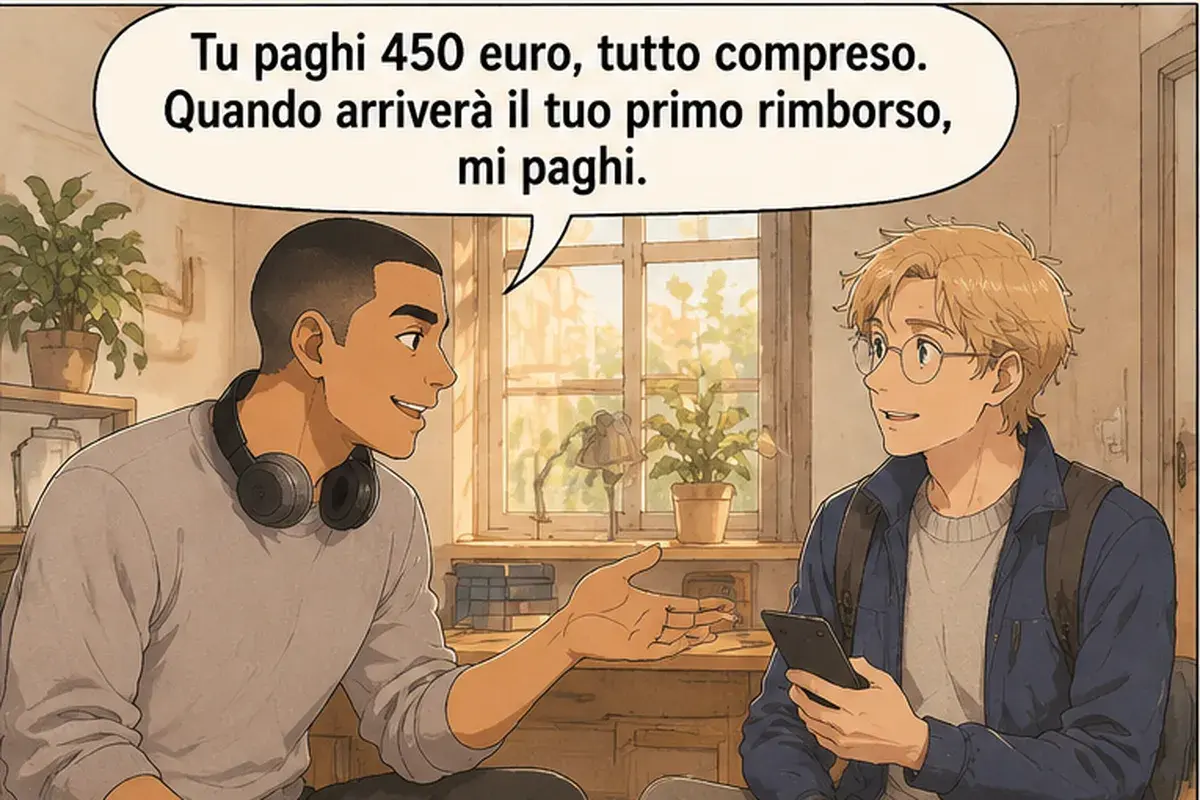
- Davide
Tu paghi 450 euro, tutto compreso. Quando arriverà il tuo primo rimborso, mi paghi.
You pay 450 euros, everything included. When your first reimbursement comes in, you pay me.
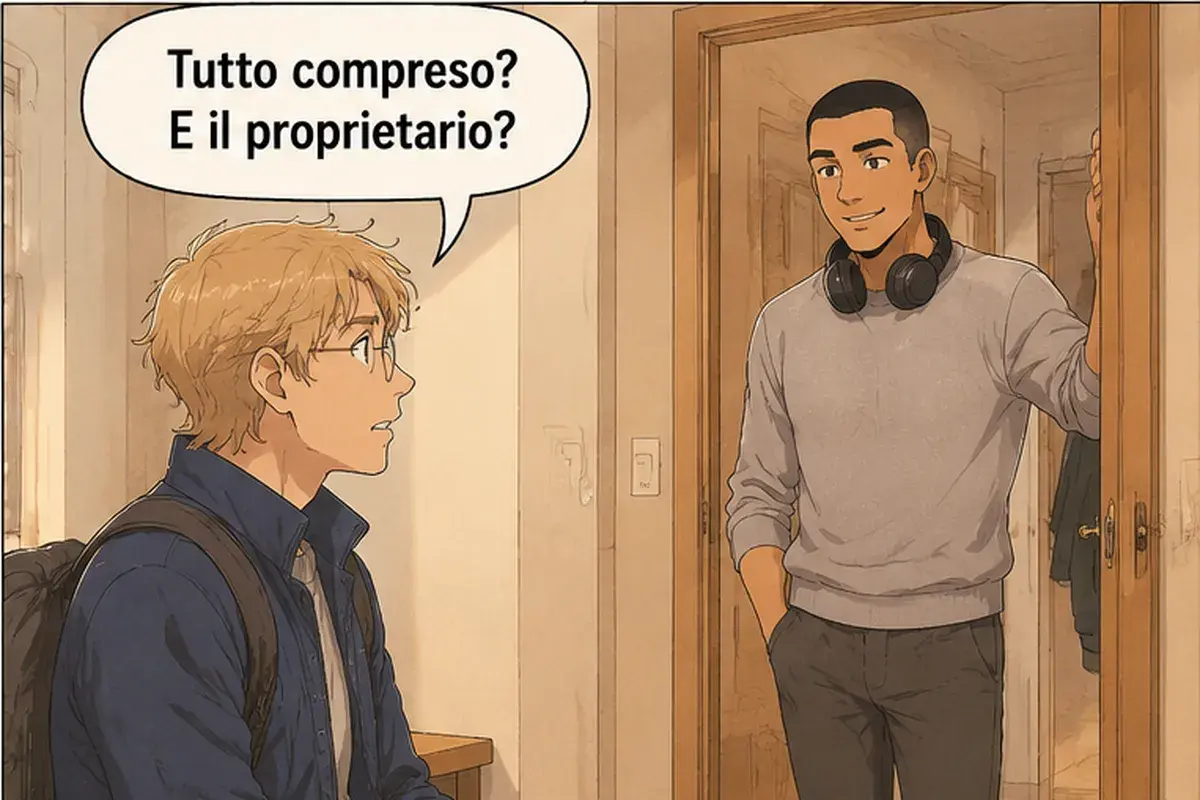
- Misha
Tutto compreso? E il proprietario?
Everything included? And the owner?
- Davide
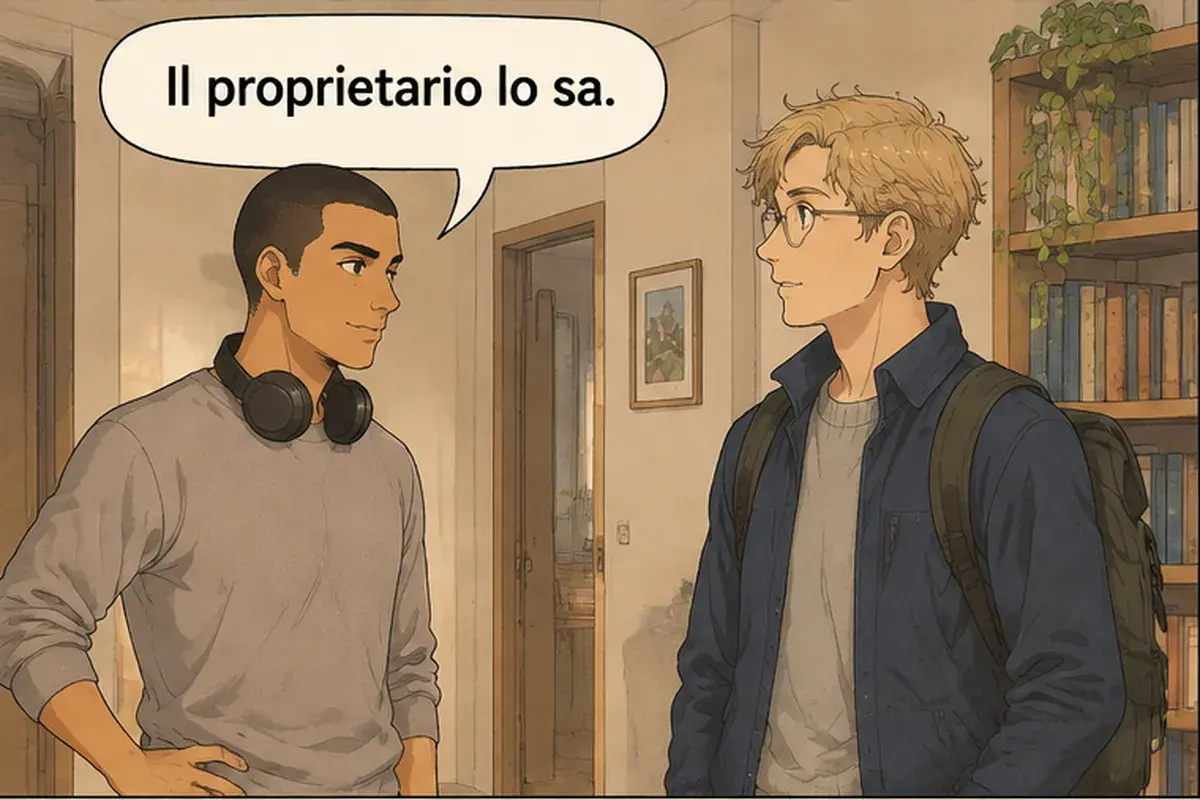
Il proprietario lo sa.
The owner knows.
- Misha
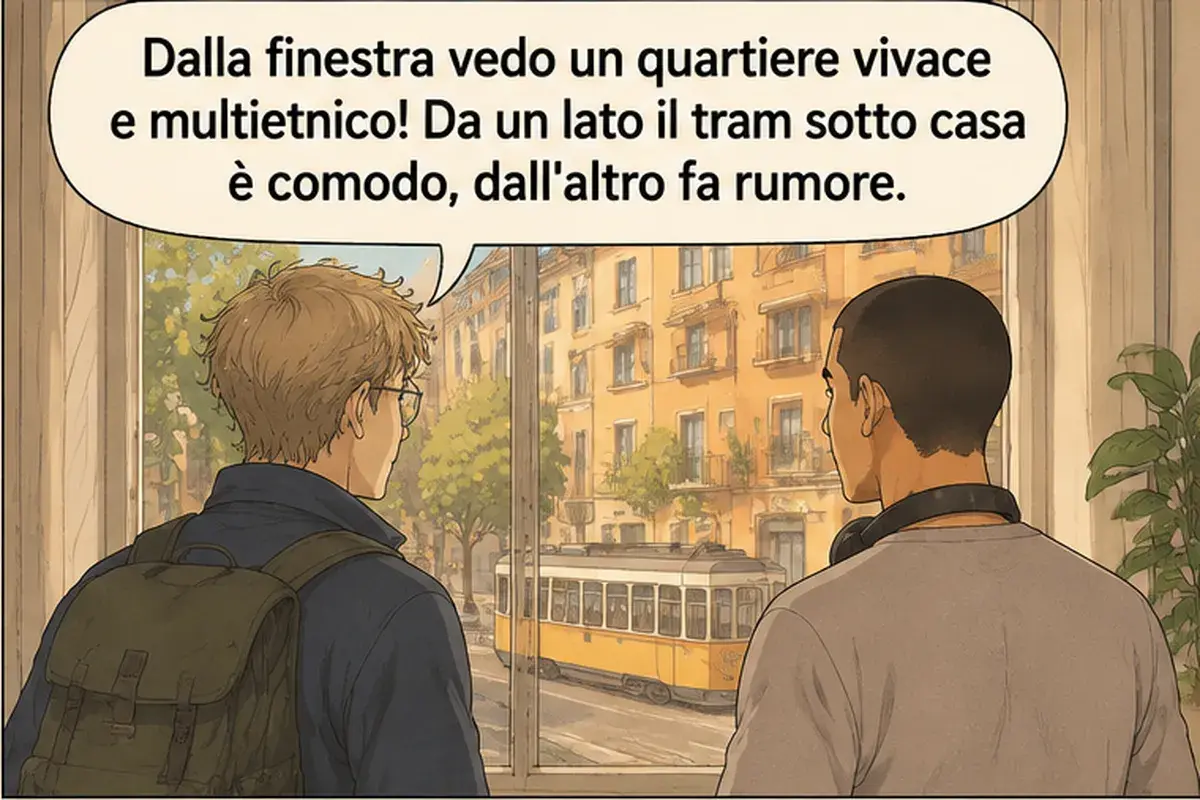
Dalla finestra vedo un quartiere vivace e multietnico! Da un lato il tram sotto casa è comodo, dall'altro fa rumore.
From the window I can see a lively, multiethnic neighborhood! On the one hand the tram right outside is convenient, on the other it's noisy.
- Davide
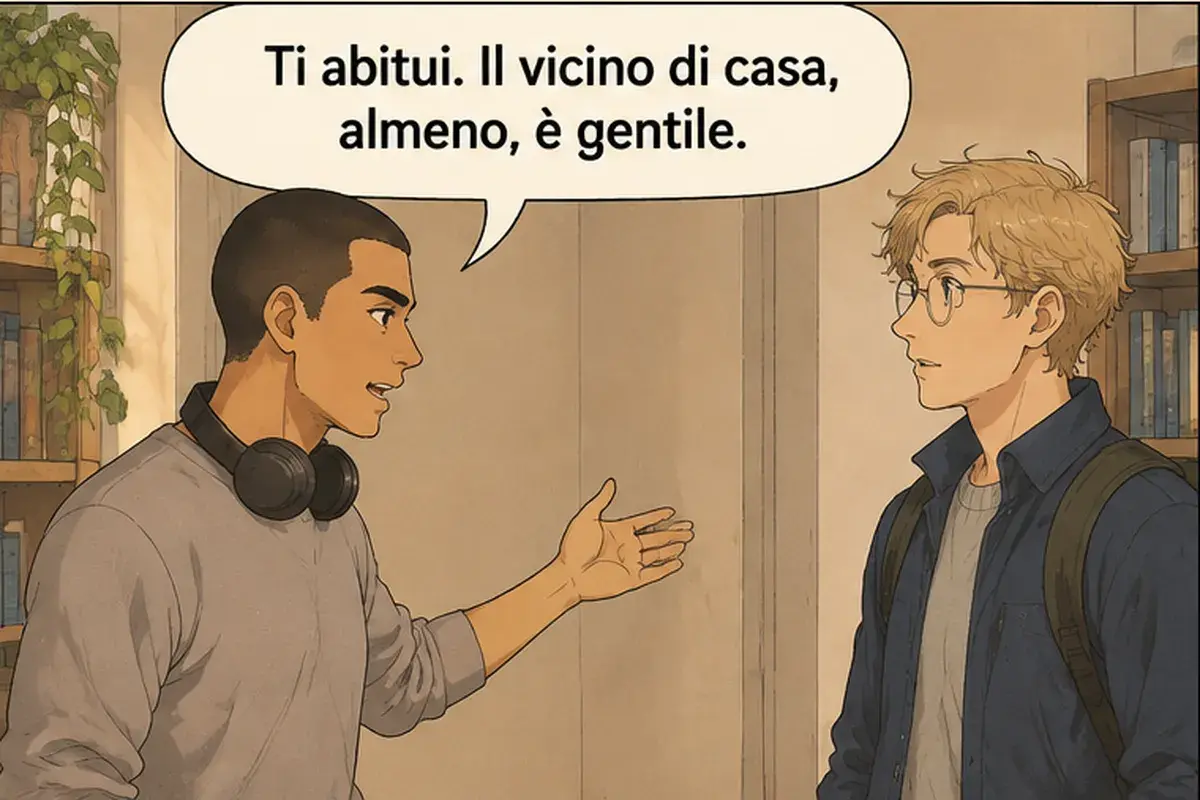
Ti abitui. Il vicino di casa, almeno, è gentile.
You'll get used to it. At least the neighbor is kind.
- Misha
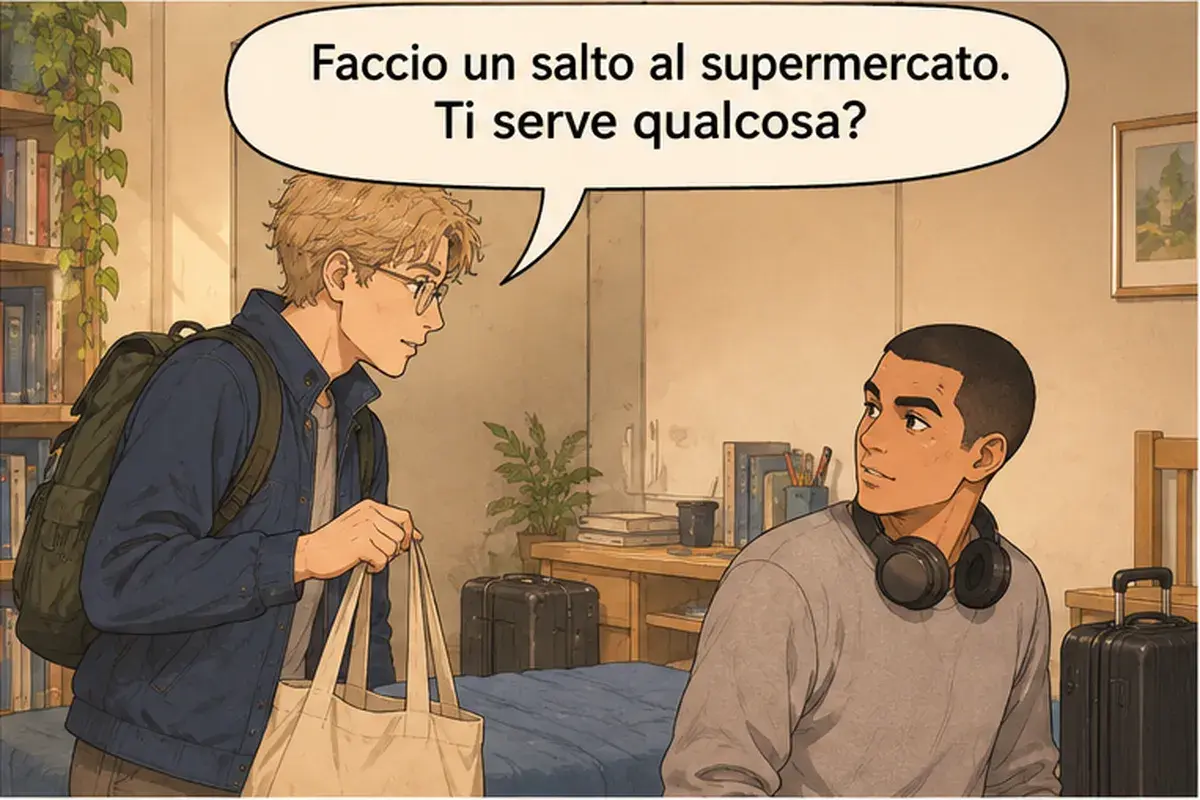
Faccio un salto al supermercato. Ti serve qualcosa?
I'll pop over to the supermarket. Do you need anything?
- Davide
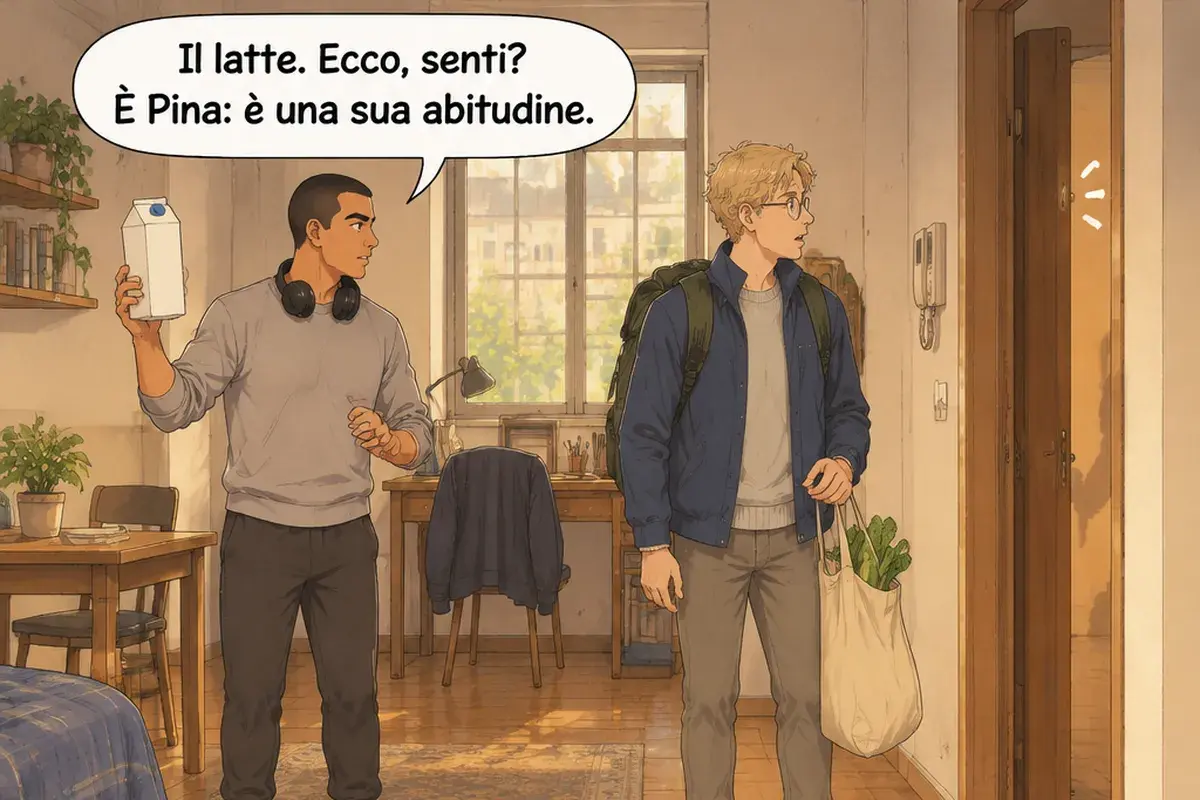
Il latte. Ecco, senti? È Pina: è una sua abitudine.
Milk. There, hear that? It's Pina: it's a habit of hers.
- Portinaia
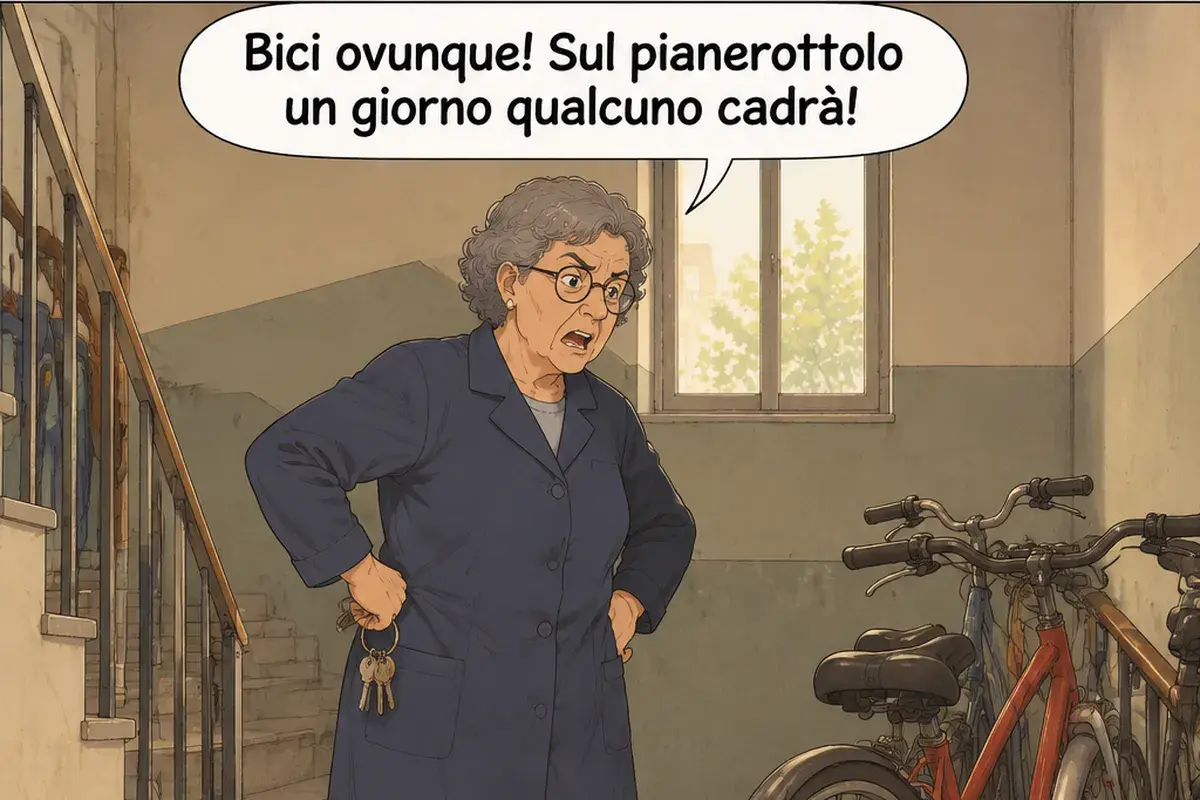
Bici ovunque! Sul pianerottolo un giorno qualcuno cadrà!
Bikes everywhere! Someday someone's going to fall on the landing!
Grammar for this text
- Quando arriverà il tuo primo rimborso, mi paghi. — after
quando(when) Italian uses the future (arriverà), where English uses the present: "when it comes in". The main part stays in the present:mi paghi— "you pay me", just like in English. rimborso — a reimbursement: the money an intern gets back for expenses. - La mia è di là. —
la mia— "mine" (my room): the word camera isn't repeated, but the article stays. Ci abitava un mio collega —un mio collega— "a colleague of mine";ci— "there" (in this room). Pina's habit works the same way: una sua abitudine — "a habit of hers". - prima disfaccio la valigia —
disfacciois the irregular io form ofdisfare(to unpack), likefacciofromfare. - sabato tocca a te —
toccare a— "to be someone's turn";a turno— "taking turns". - Il proprietario lo sa. —
lostands for the whole idea: "the owner knows (about it)". English just says "knows". - Da un lato il tram sotto casa è comodo, dall'altro fa rumore. — "on the one hand… on the other";
dall'altro=da + l'altro. In giro — "around, out there". - Sul pianerottolo un giorno qualcuno cadrà! —
cadràis the irregular future ofcadere(to fall): the stem iscadr-. There are five verbs like this; see the unit grammar.
Words and grammar of the unit: Move into a room at a friend's place.
Learn the words from the texts with flashcards
In the app, you can tap any word in a text to see its translation, forms and examples, and new words stick with flashcards. 15 minutes a day.
Start for freeEverything is open for free. No card needed to sign up.