

Italian dialogue with translation · B1 · 17 lines
Avrei voluto restare I would have liked to stay
Comic · 17 panels
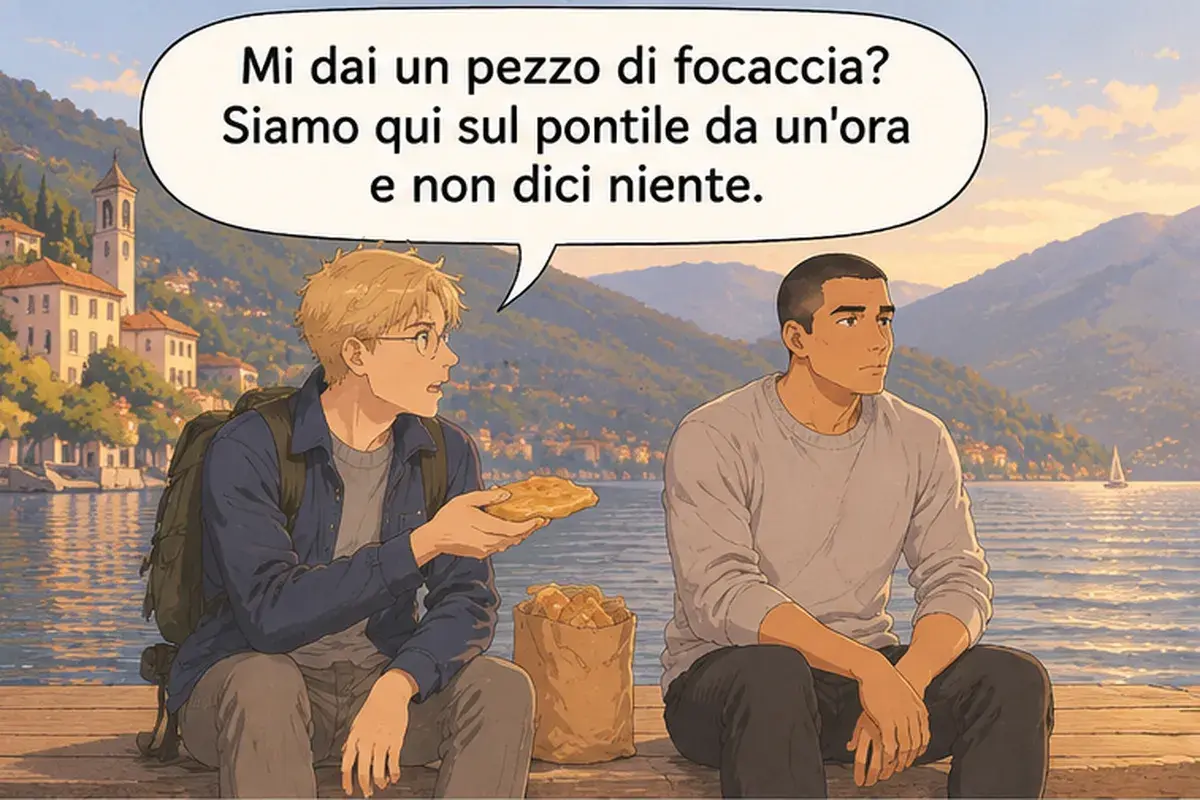
- Misha
Mi dai un pezzo di focaccia? Siamo qui sul pontile da un'ora e non dici niente.
Can you give me a piece of focaccia? We've been here on the pier for an hour and you're not saying anything.
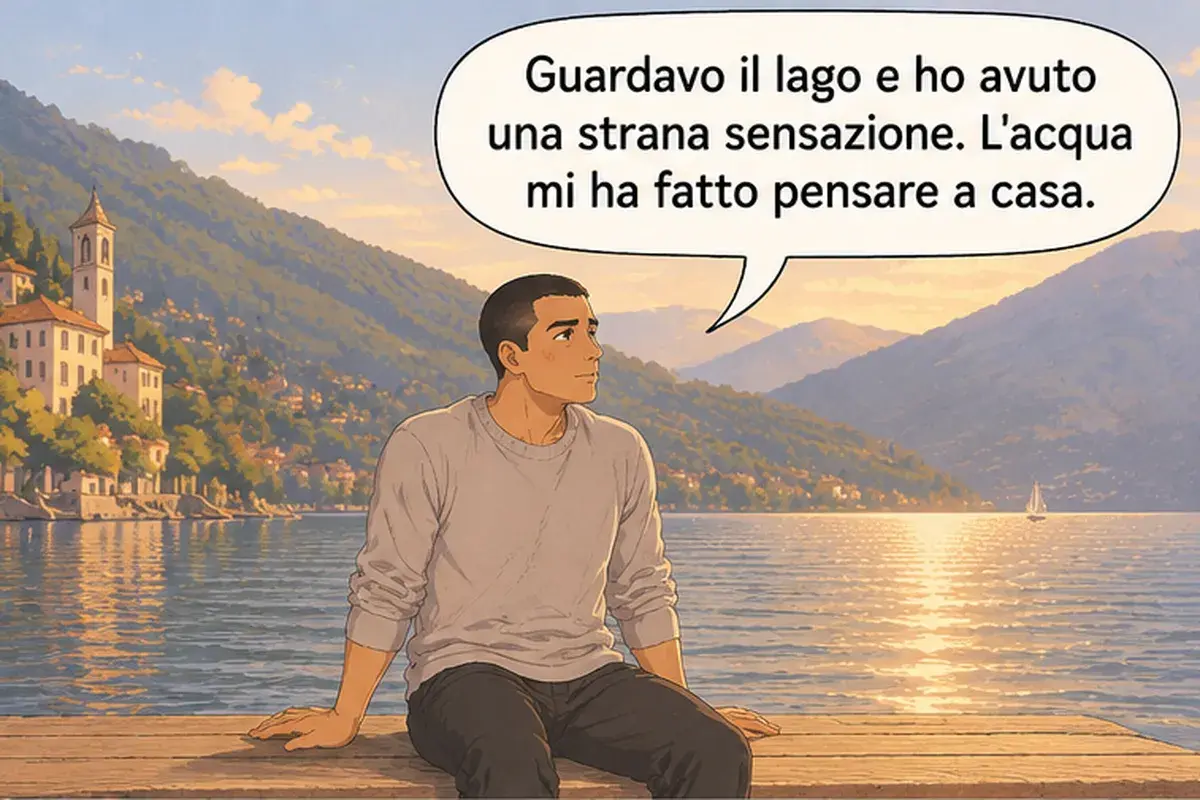
- Davide
Guardavo il lago e ho avuto una strana sensazione. L'acqua mi ha fatto pensare a casa.
I was looking at the lake and I got a strange feeling. The water made me think of home.
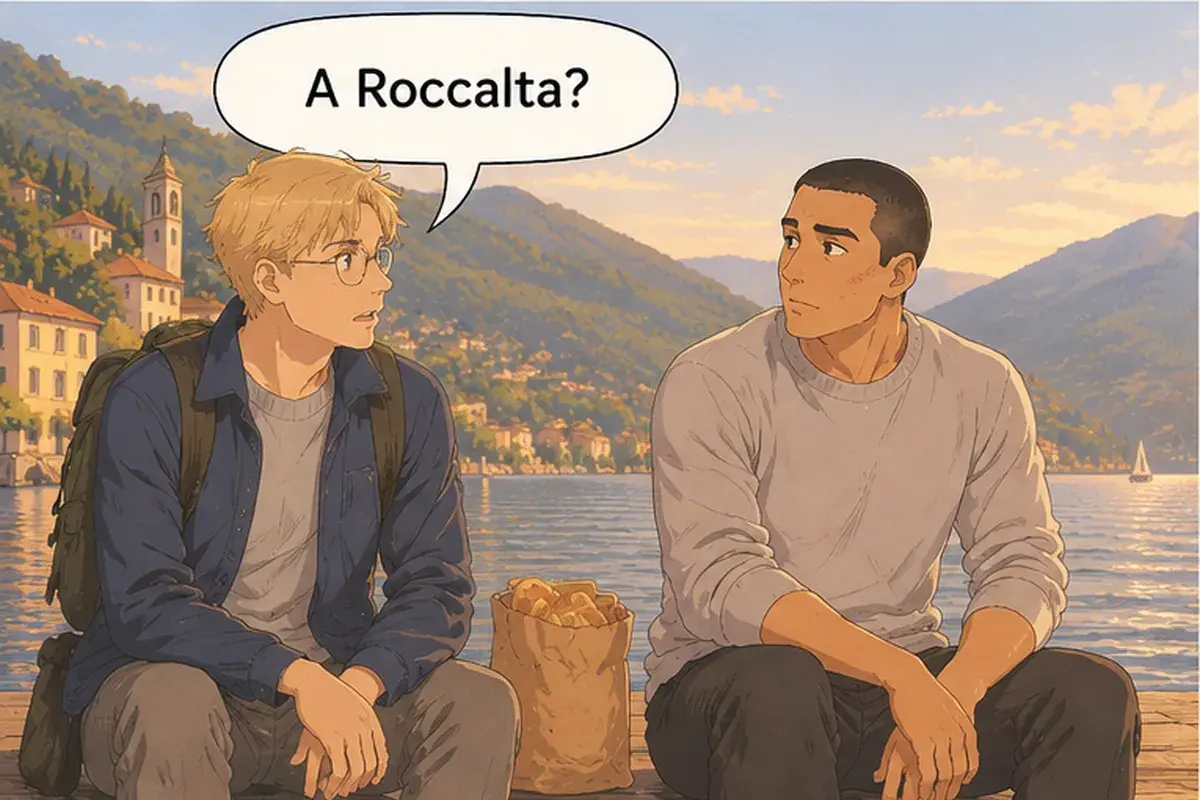
- Misha
A Roccalta?
Roccalta?
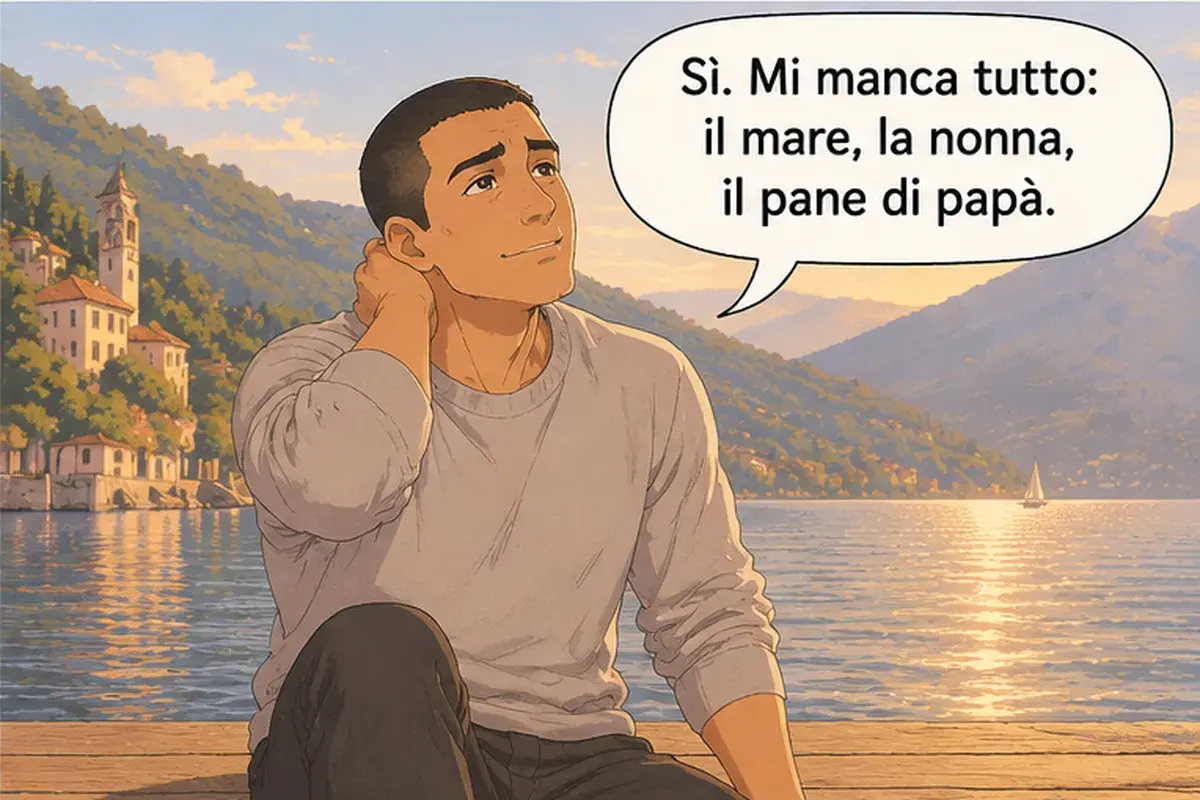
- Davide
Sì. Mi manca tutto: il mare, la nonna, il pane di papà.
Yes. I miss everything: the sea, grandma, Dad's bread.
- Misha
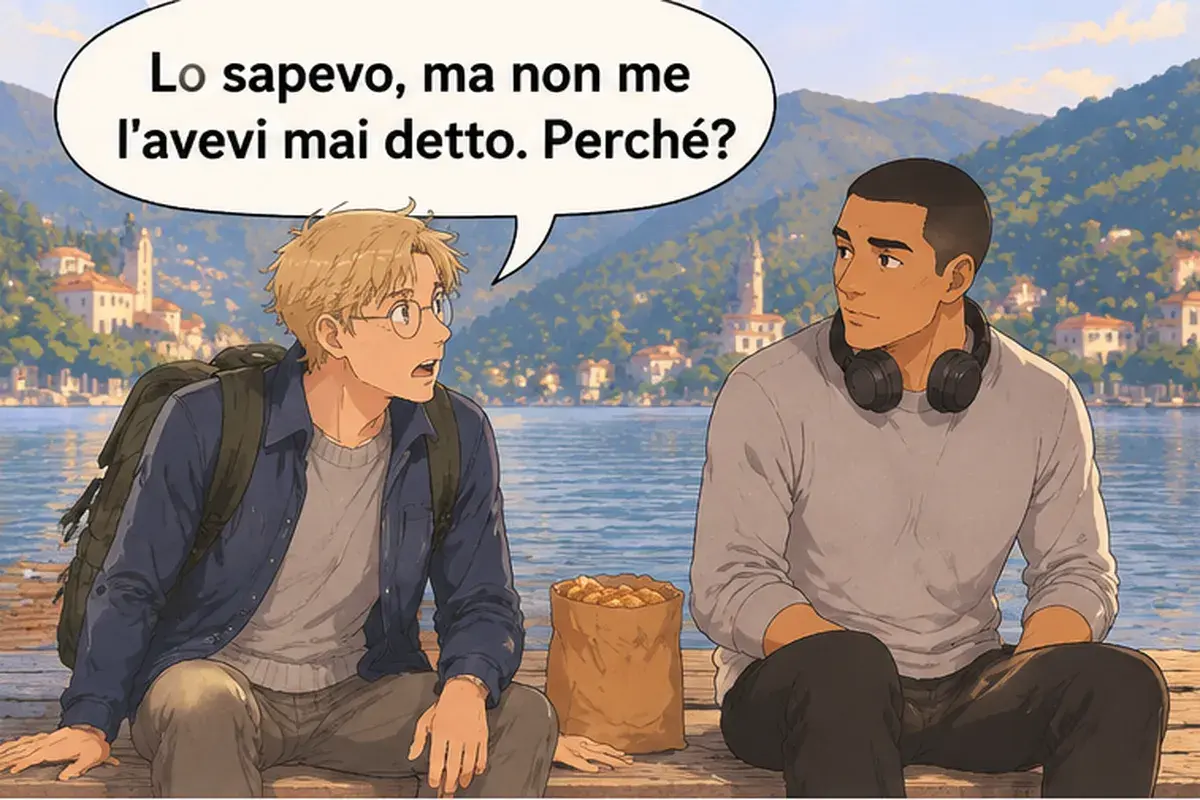
Lo sapevo, ma non me l'avevi mai detto. Perché?
I knew, but you had never told me. Why?
- Davide
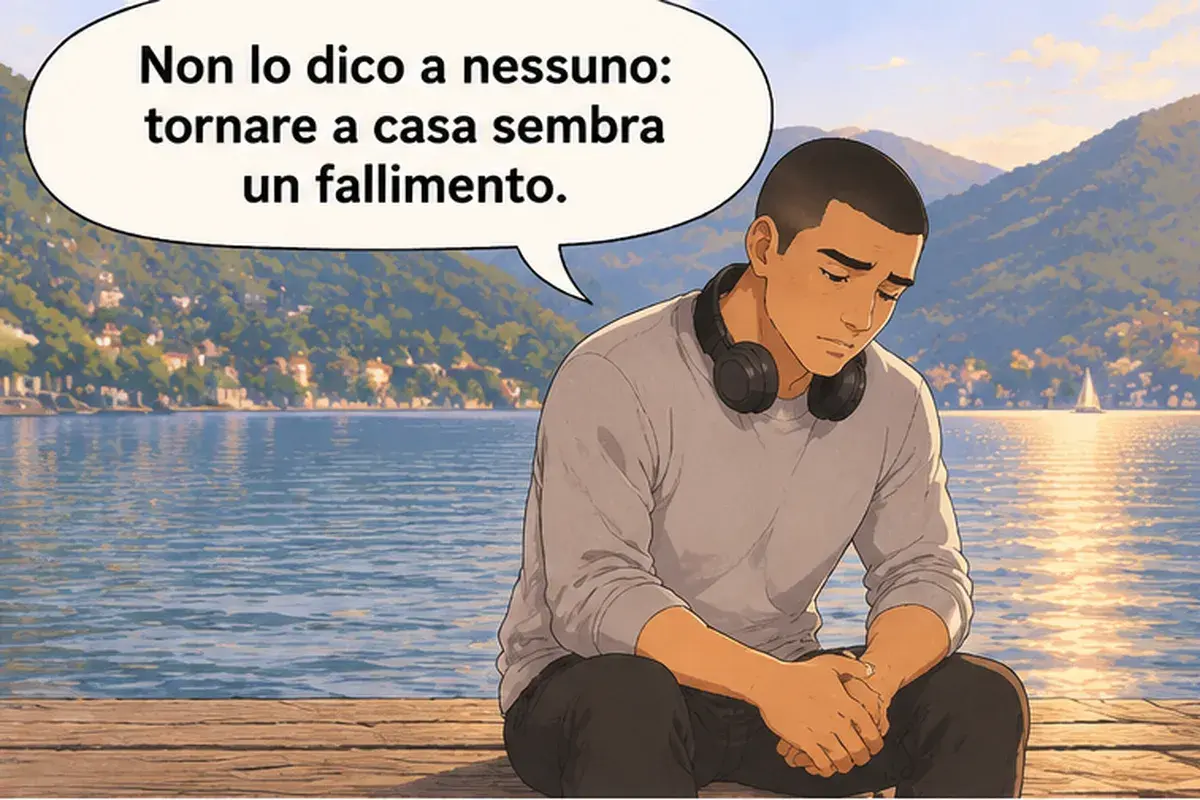
Non lo dico a nessuno: tornare a casa sembra un fallimento.
I don't tell anyone: going back home feels like a failure.
- Misha
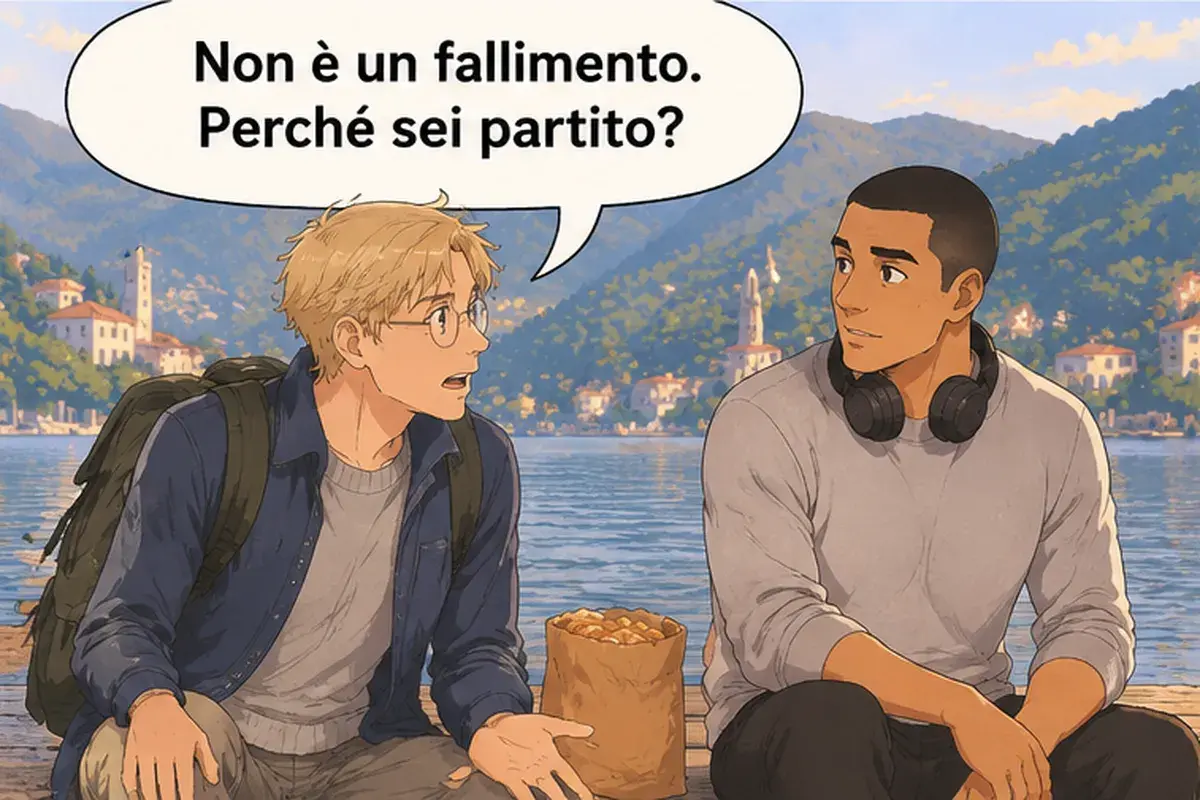
Non è un fallimento. Perché sei partito?
It's not a failure. Why did you leave? (to a man)
- Davide
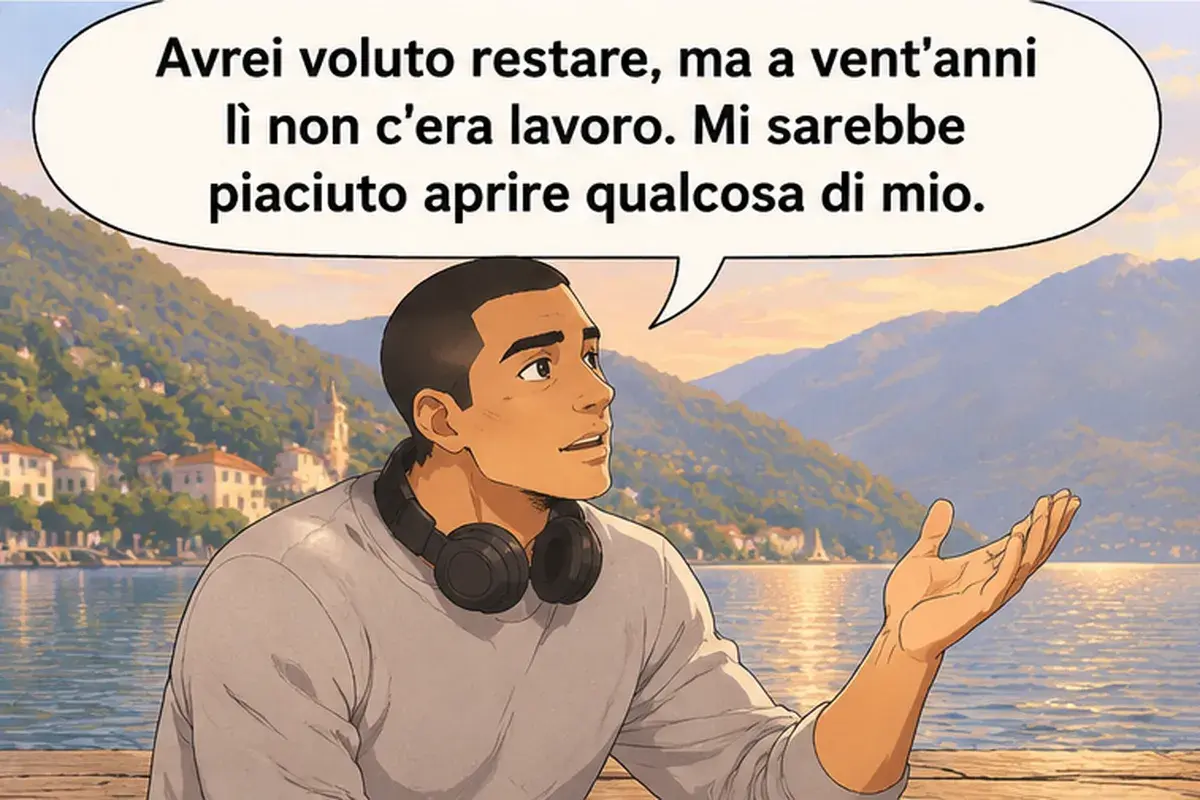
Avrei voluto restare, ma a vent'anni lì non c'era lavoro. Mi sarebbe piaciuto aprire qualcosa di mio.
I would have liked to stay, but at twenty there was no work there. I would have loved to open something of my own.
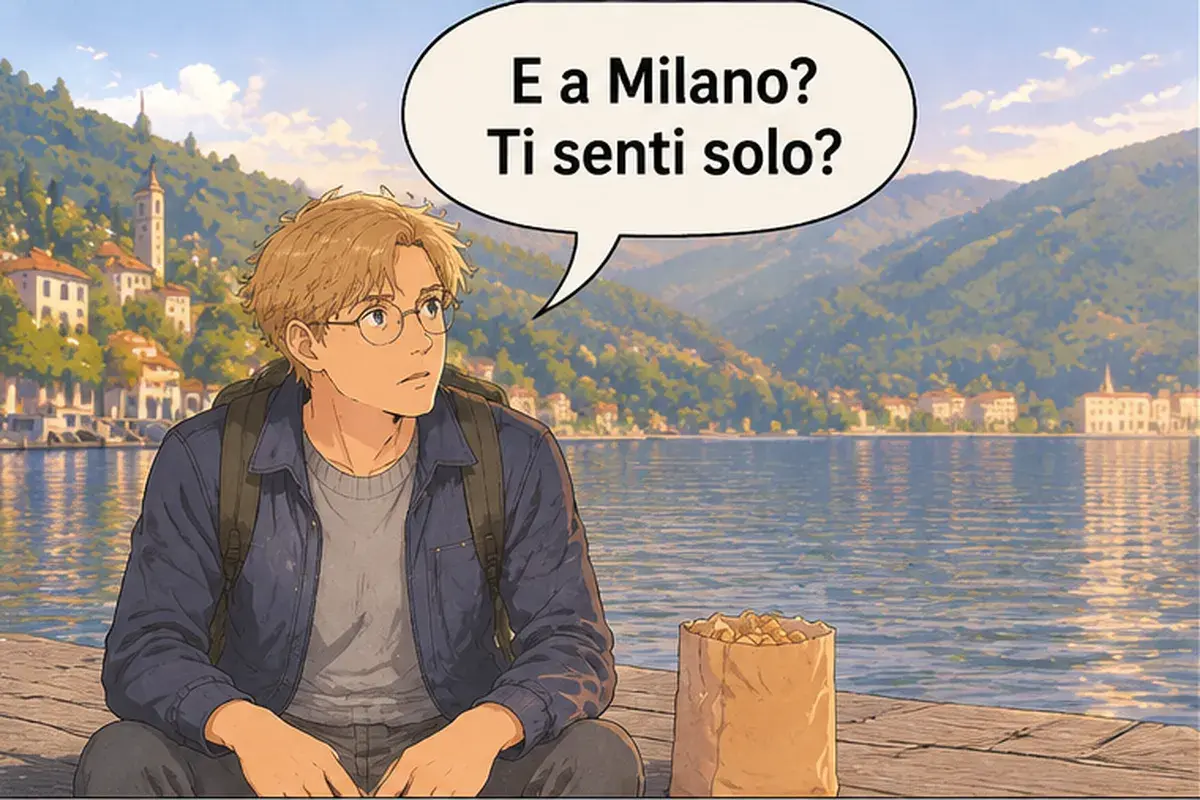
- Misha
E a Milano? Ti senti solo?
And in Milan? Do you feel lonely? (to a man)
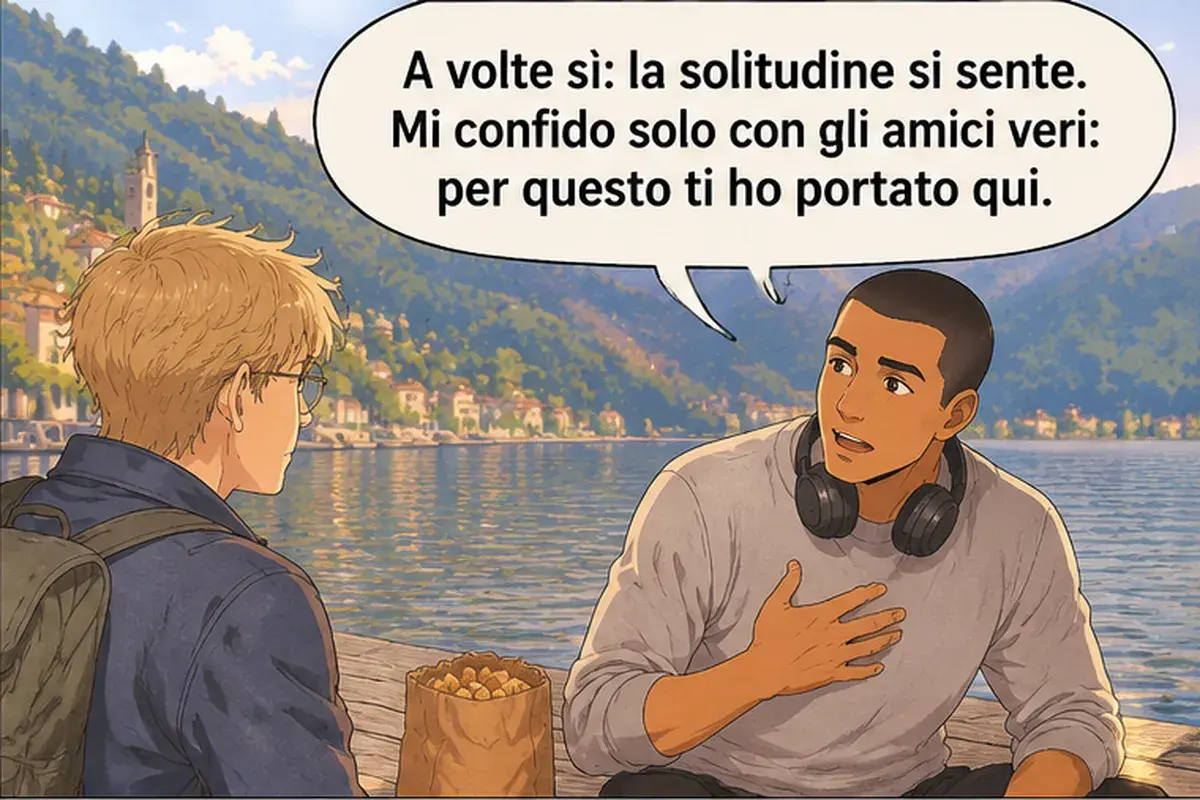
- Davide
A volte sì: la solitudine si sente. Mi confido solo con gli amici veri: per questo ti ho portato qui.
Sometimes, yes: you can feel the loneliness. I only confide in real friends: that's why I brought you here.
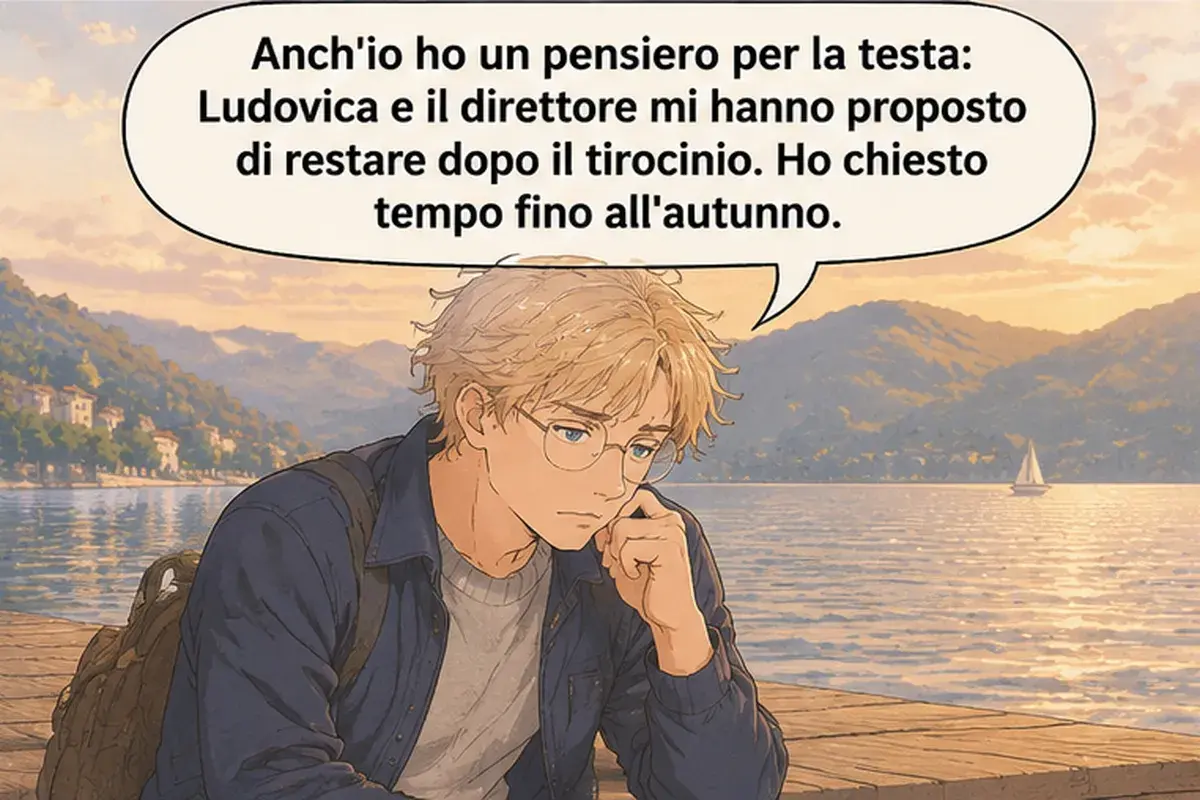
- Misha
Anch'io ho un pensiero per la testa: Ludovica e il direttore mi hanno proposto di restare dopo il tirocinio. Ho chiesto tempo fino all'autunno.
I have something on my mind too: Ludovica and the director offered me a chance to stay after the internship. I asked for time until fall.

- Davide
Ti vogliono tenere? Bravo! E il lavoro ti piace?
They want to keep you? Good for you! (to a man) And do you like the work?
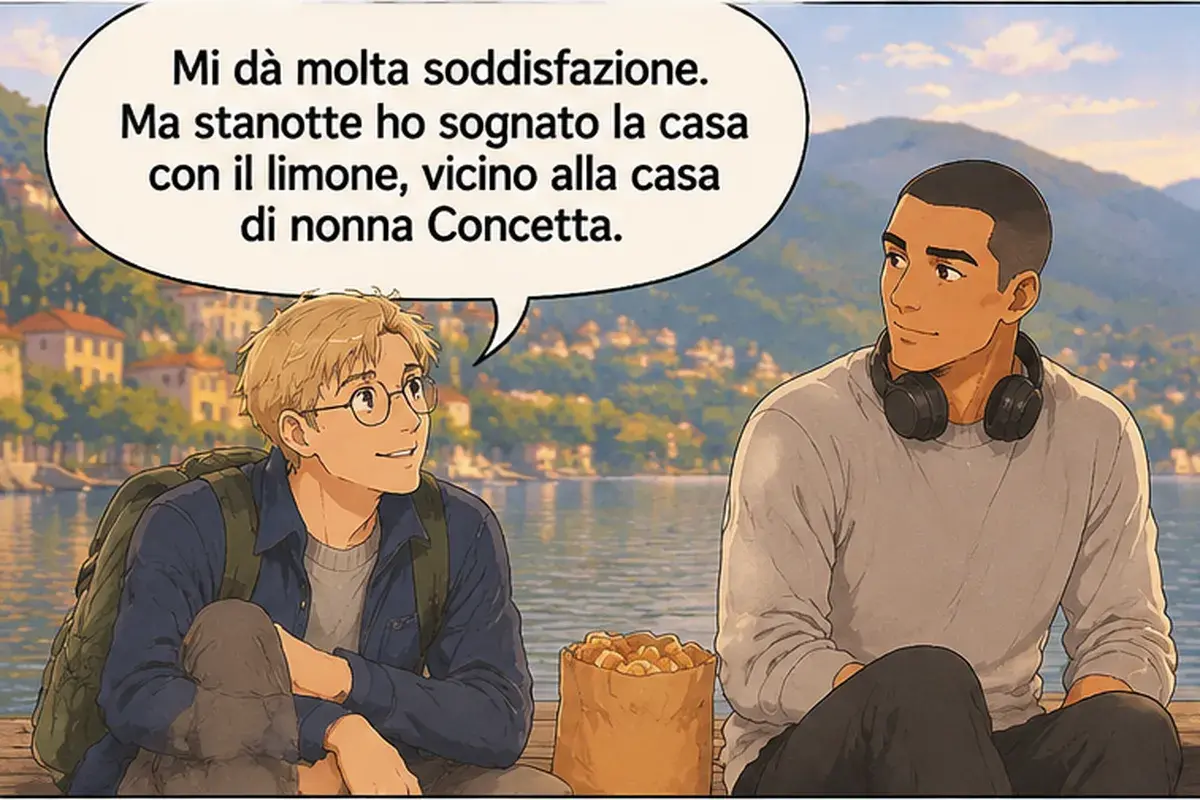
- Misha
Mi dà molta soddisfazione. Ma stanotte ho sognato la casa con il limone, vicino alla casa di nonna Concetta.
It gives me a lot of satisfaction. But last night I dreamed about the house with the lemon tree, next to Nonna Concetta's house.

- Davide
L'incertezza è la cosa più difficile. Ma il destino non decide: decidiamo noi.
Uncertainty is the hardest thing. But destiny doesn't decide: we decide.

- Misha
A pensarci bene, è la prima volta che parliamo così.
If you think about it, this is the first time we've talked like this.
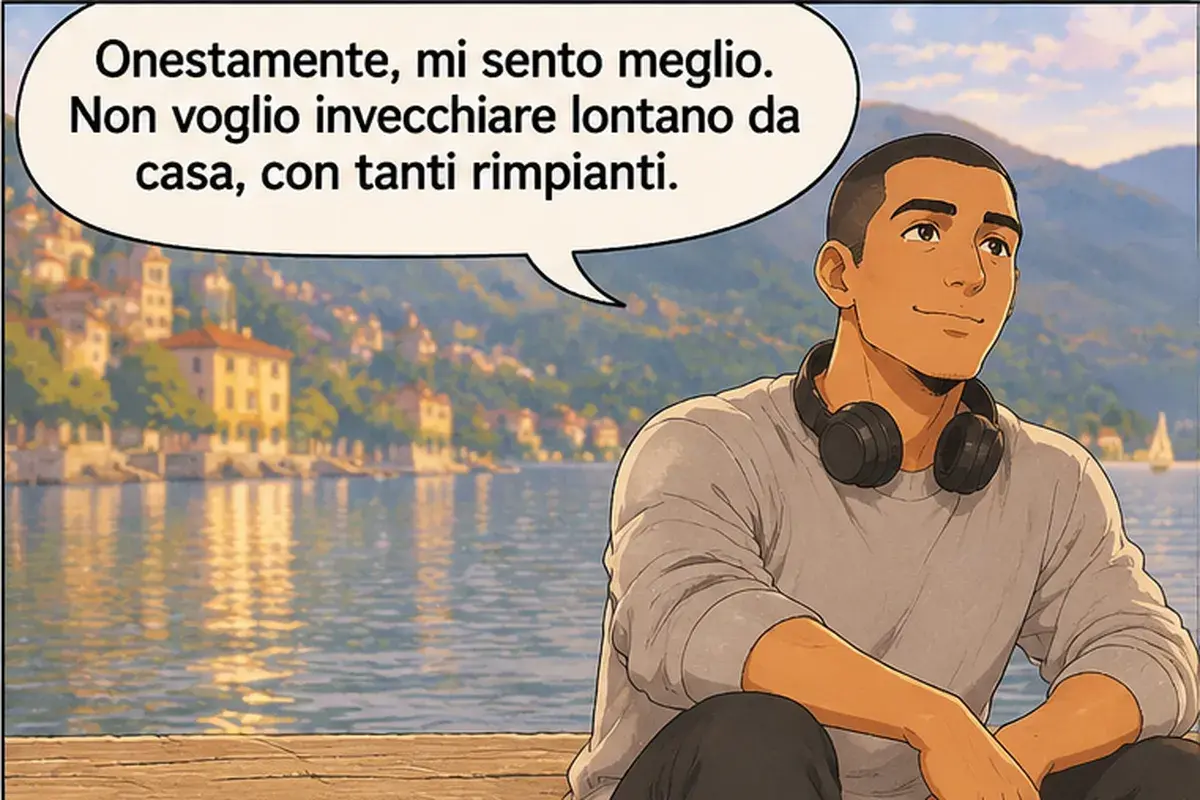
- Davide
Onestamente, mi sento meglio. Non voglio invecchiare lontano da casa, con tanti rimpianti.
Honestly, I feel better. I don't want to get old far from home, with so many regrets.
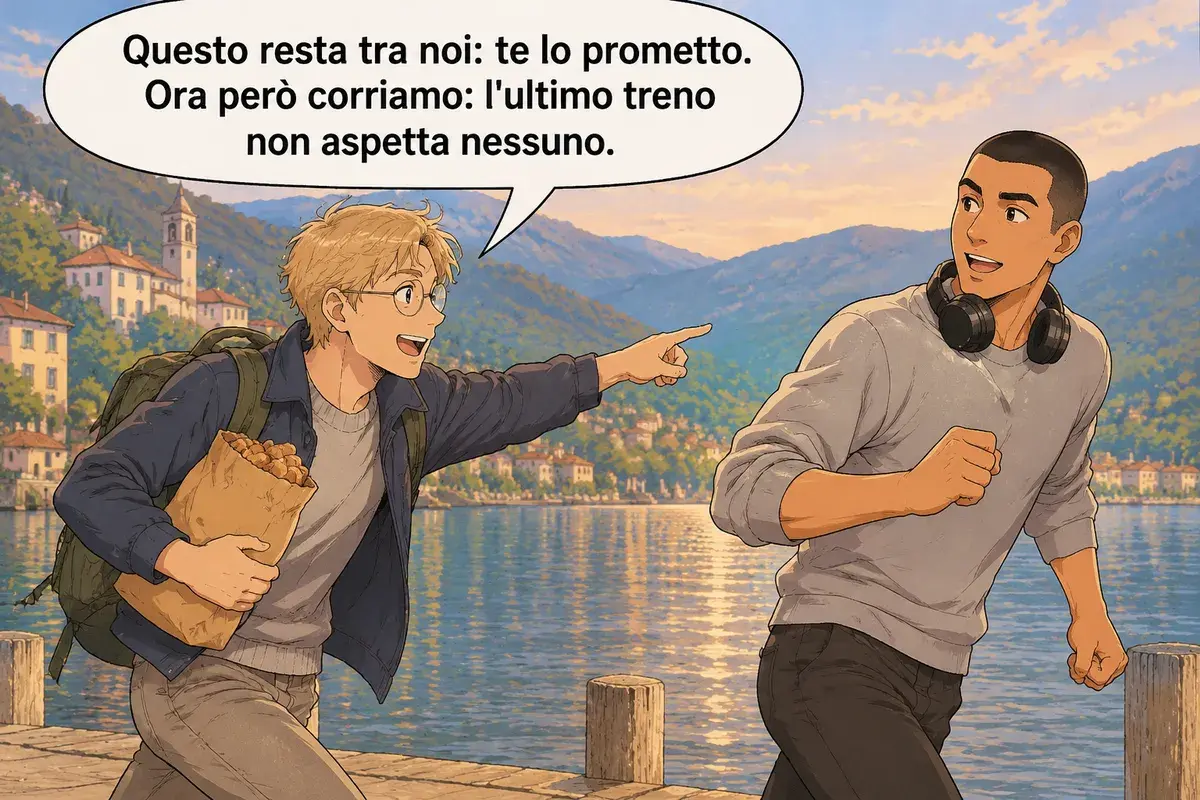
- Misha
Questo resta tra noi: te lo prometto. Ora però corriamo: l'ultimo treno non aspetta nessuno.
This stays between us: I promise you. But now let's run: the last train doesn't wait for anyone.
Grammar for this text
- Avrei voluto restare —
avrei volutomeans "I would have liked to, but it didn't happen": the condizionale passato (past conditional) ofvolere;avreiisaverein the conditional,volutois the past participle. Compare vorrei restare — "I'd like to stay" (now). The rule for this form comes at level B2; for now learn the phrase whole. - Mi sarebbe piaciuto aprire qualcosa di mio — the same idea with
piacere:sarebbeisesserein the conditional,piaciutois the past participle; "I would have loved to open something of my own, but it didn't happen." Don't mix it up with mi piacerebbe (unit 3), which is a dream about now. Afterqualcosacomesdi. - Lo sapevo, ma non me l'avevi mai detto. —
lomeans "it", a whole idea (that Davide misses home).me l'ismiandlotogether (unit 4);avevi dettois the trapassato prossimo (past perfect, unit 7): "you had never told me." - Non lo dico a nessuno —
loagain stands for a whole idea. Italian uses a double negative,non … a nessuno; English uses just one: "I don't tell anyone." See the grammar block of this unit. - te lo prometto — before
lo,titurns intote: "I promise you." - A pensarci bene — "if you think about it";
pensarcimeans "to think about it." The topiccicomes in unit 19. - Mi dà molta soddisfazione —
dàwith an accent isdare("gives");dawithout an accent is a preposition.
Words and grammar of the unit: Talk openly about dreams and regrets.
Learn the words from the texts with flashcards
In the app, you can tap any word in a text to see its translation, forms and examples, and new words stick with flashcards. 15 minutes a day.
Start for freeEverything is open for free. No card needed to sign up.