

Italian dialogue with translation · B1 · 16 lines
Sbagliando si impara You learn by making mistakes
Comic · 16 panels
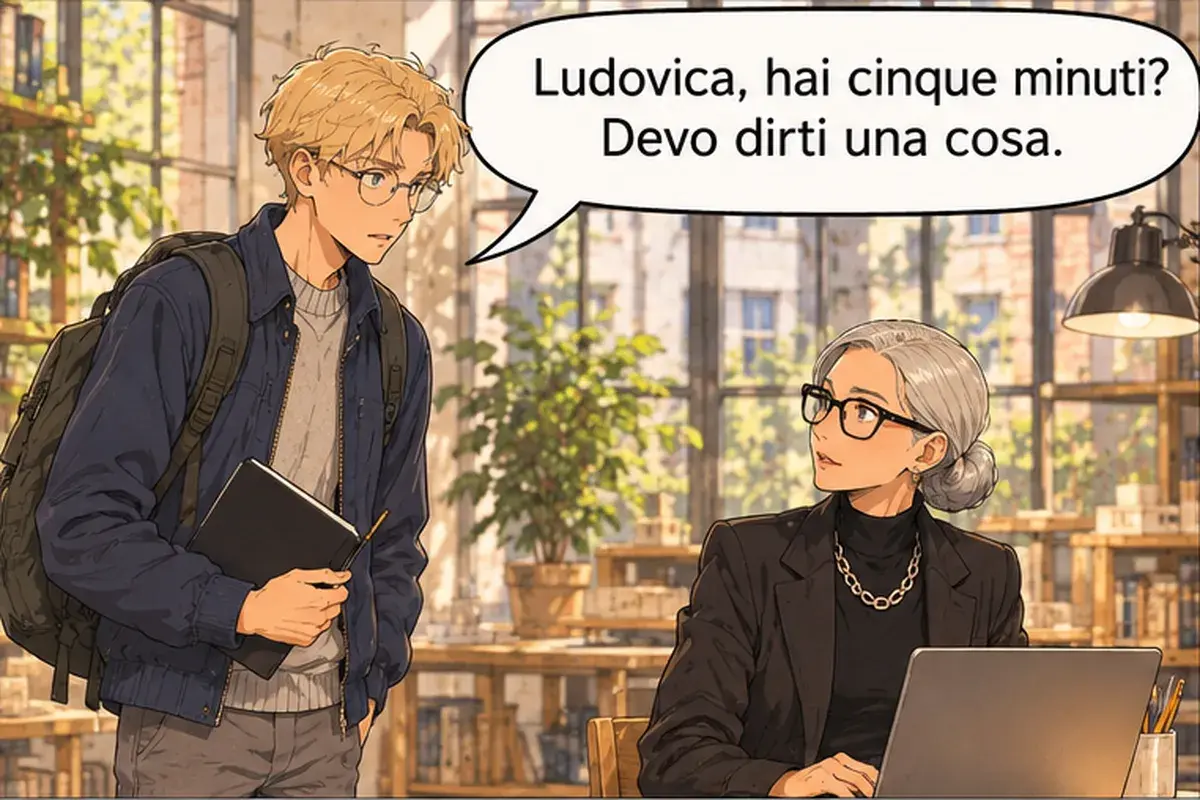
- Misha
Ludovica, hai cinque minuti? Devo dirti una cosa.
Ludovica, do you have five minutes? I need to tell you something.
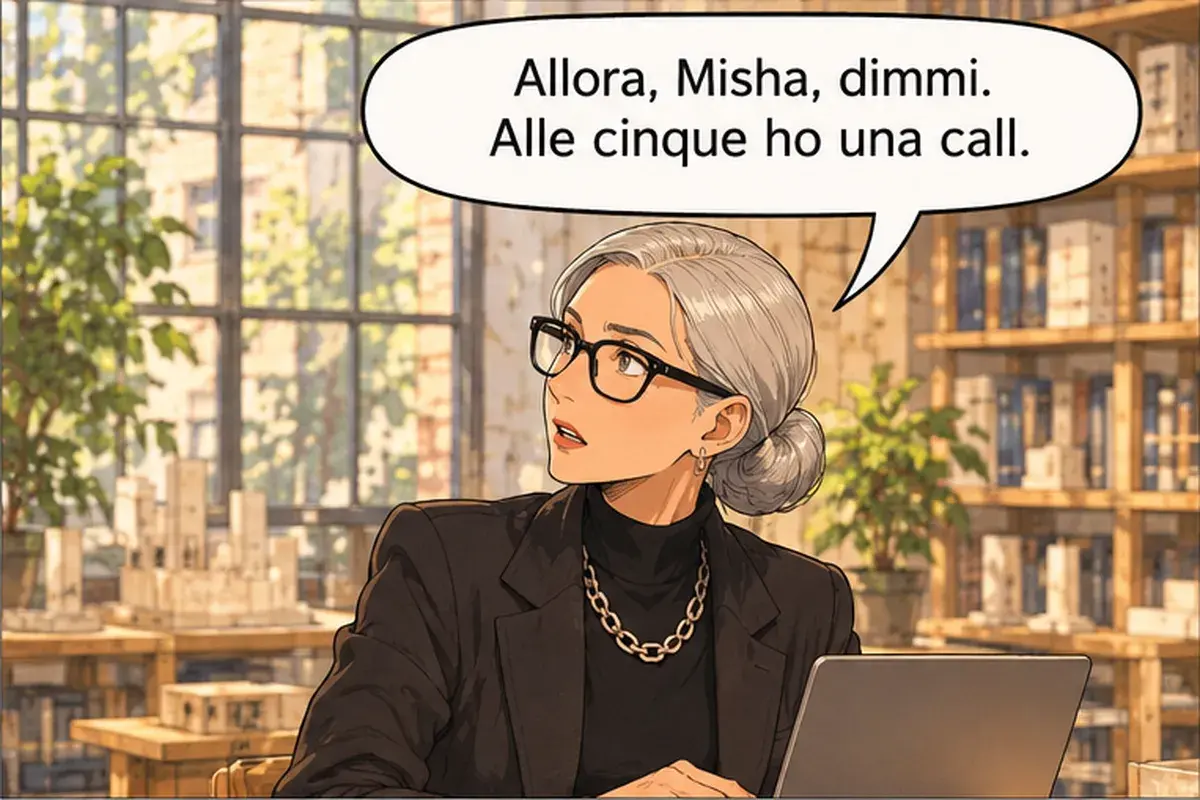
- Ludovica
Allora, Misha, dimmi. Alle cinque ho una call.
So, Misha, tell me. I have a call at five.
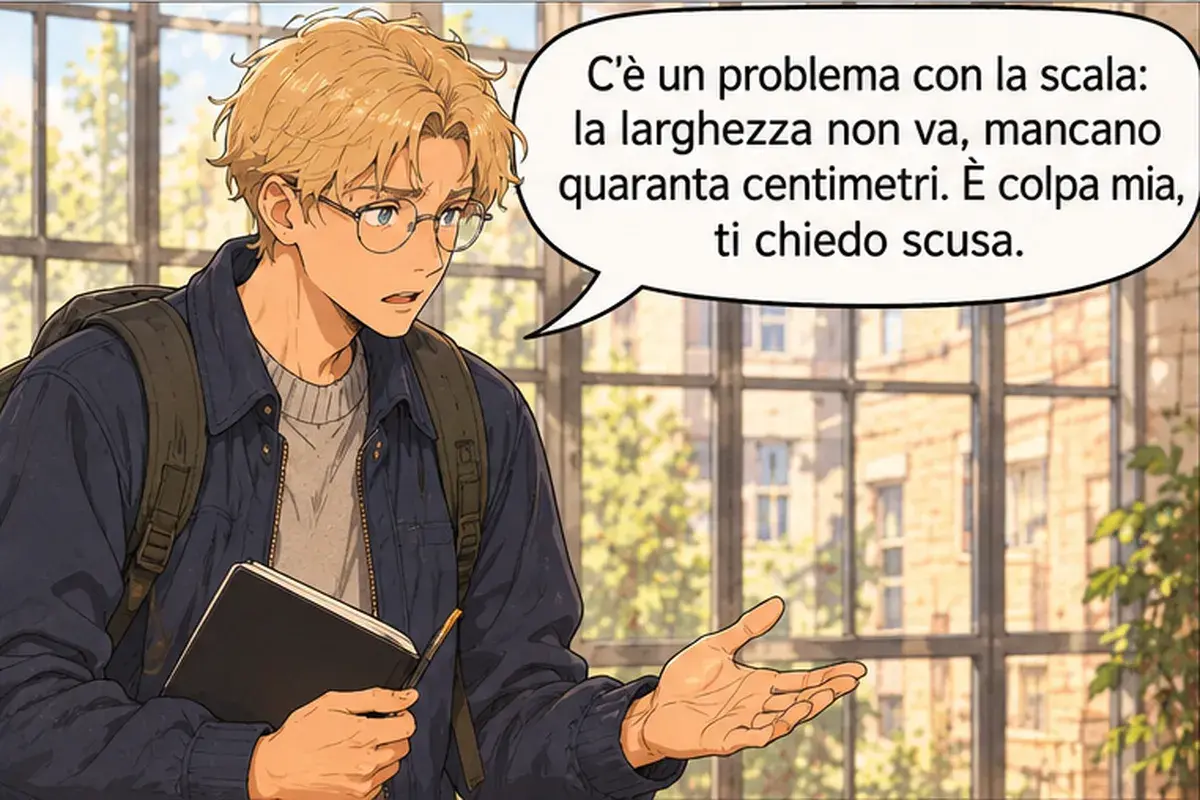
- Misha
C'è un problema con la scala: la larghezza non va, mancano quaranta centimetri. È colpa mia, ti chiedo scusa.
There's a problem with the staircase: the width is wrong, forty centimeters are missing. It's my fault, I apologize.

- Ludovica
Come è successo?
How did it happen?
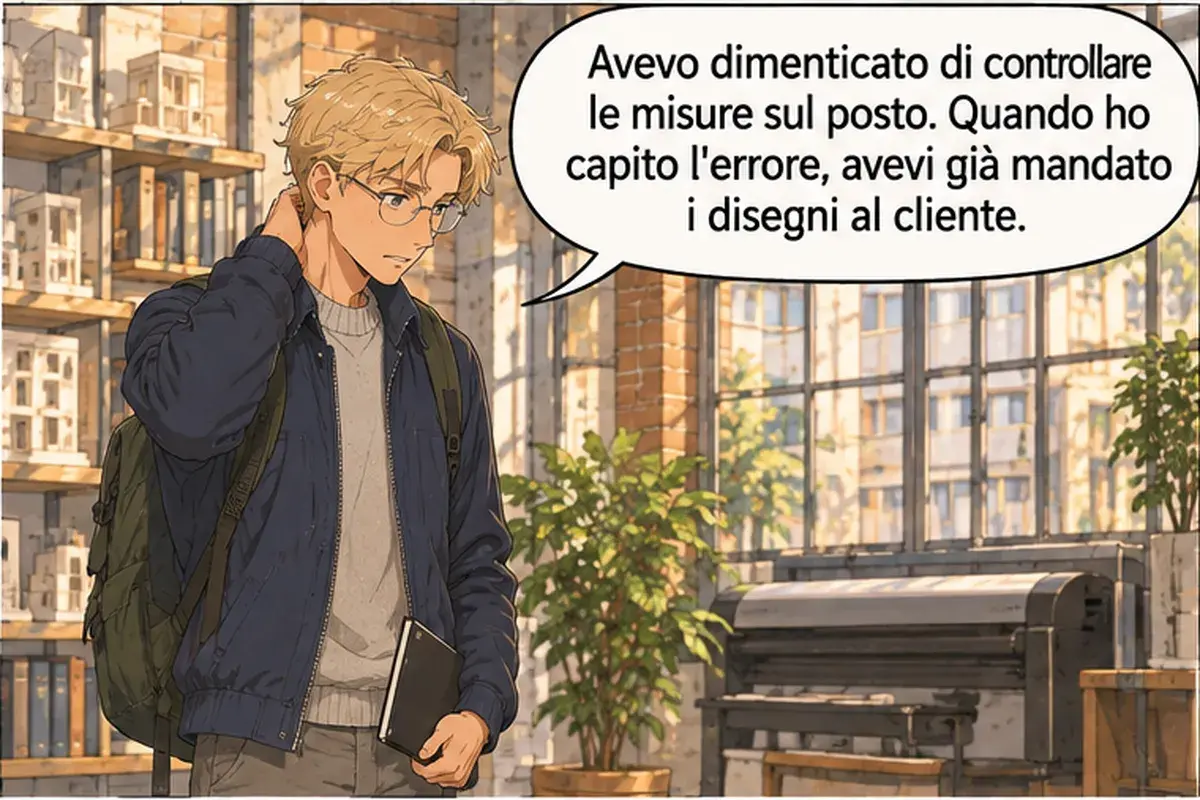
- Misha
Avevo dimenticato di controllare le misure sul posto. Quando ho capito l'errore, avevi già mandato i disegni al cliente.
I had forgotten to check the measurements on site. When I understood the mistake, you had already sent the drawings to the client.
- Ludovica
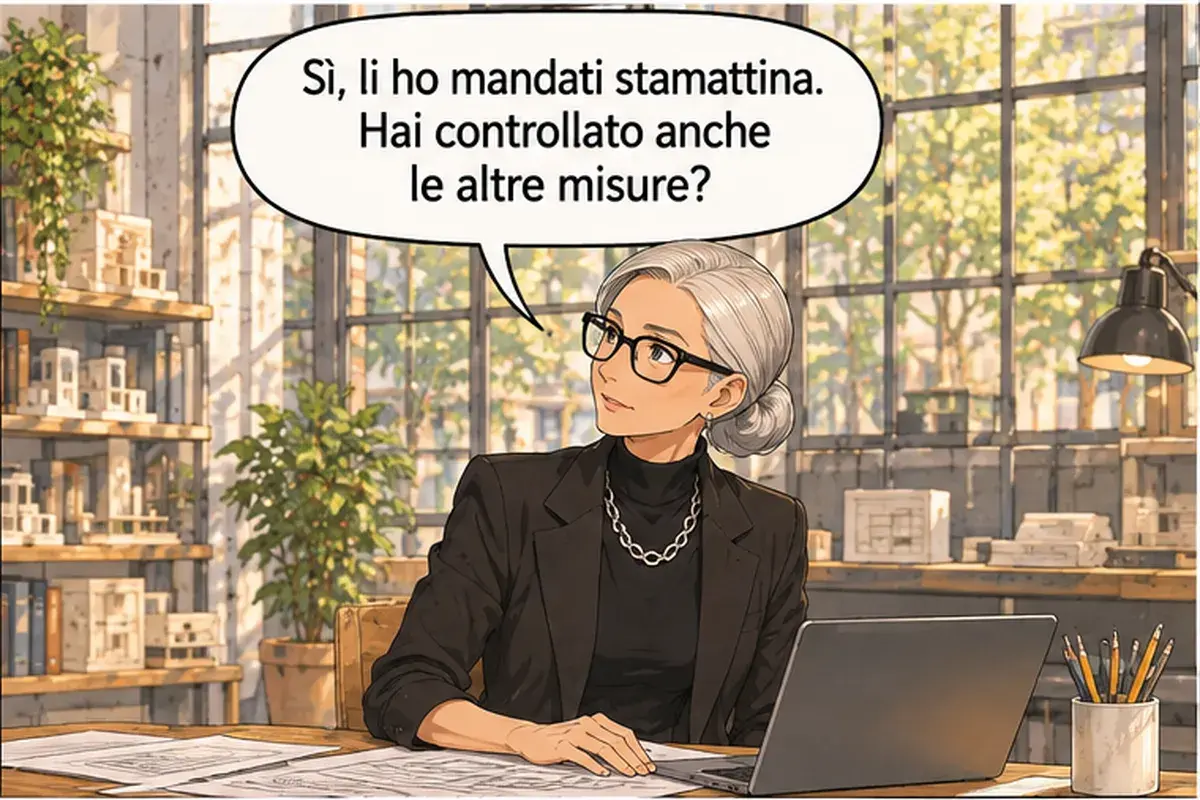
Sì, li ho mandati stamattina. Hai controllato anche le altre misure?
Yes, I sent them this morning. Did you check the other measurements too?
- Misha
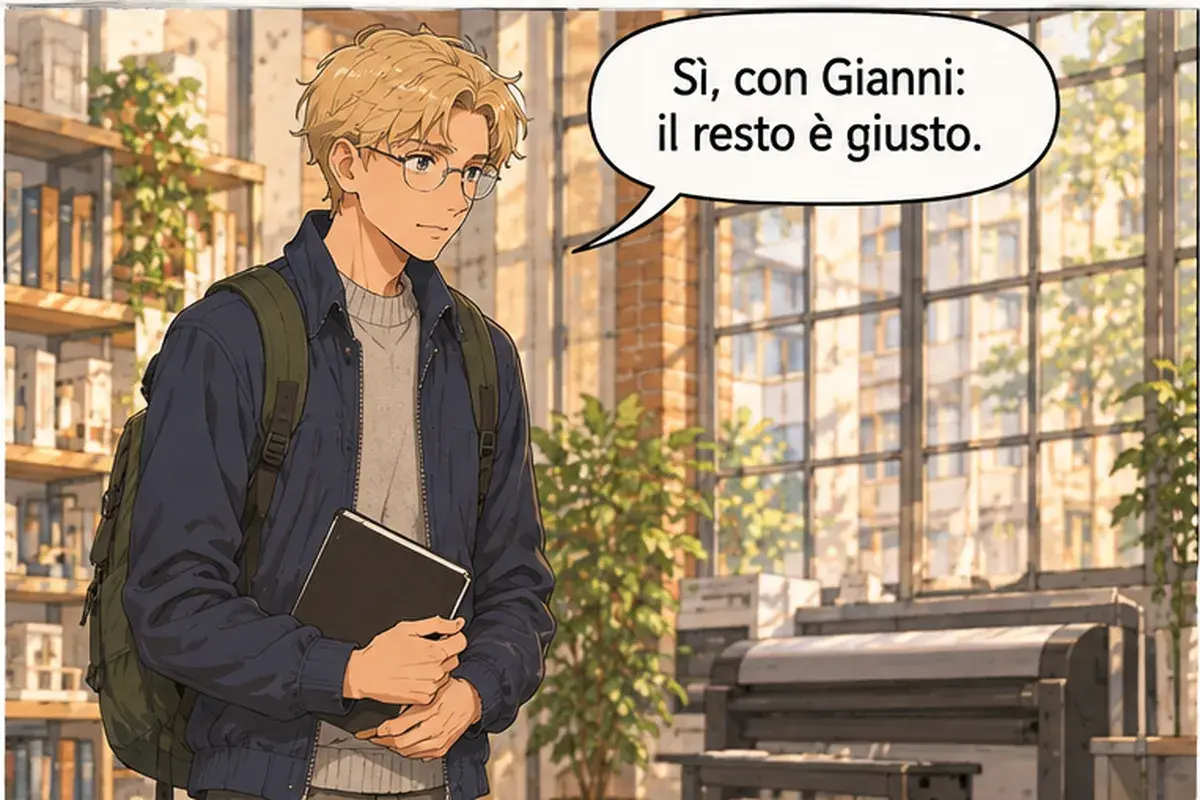
Sì, con Gianni: il resto è giusto.
Yes, with Gianni: the rest is right.
- Ludovica
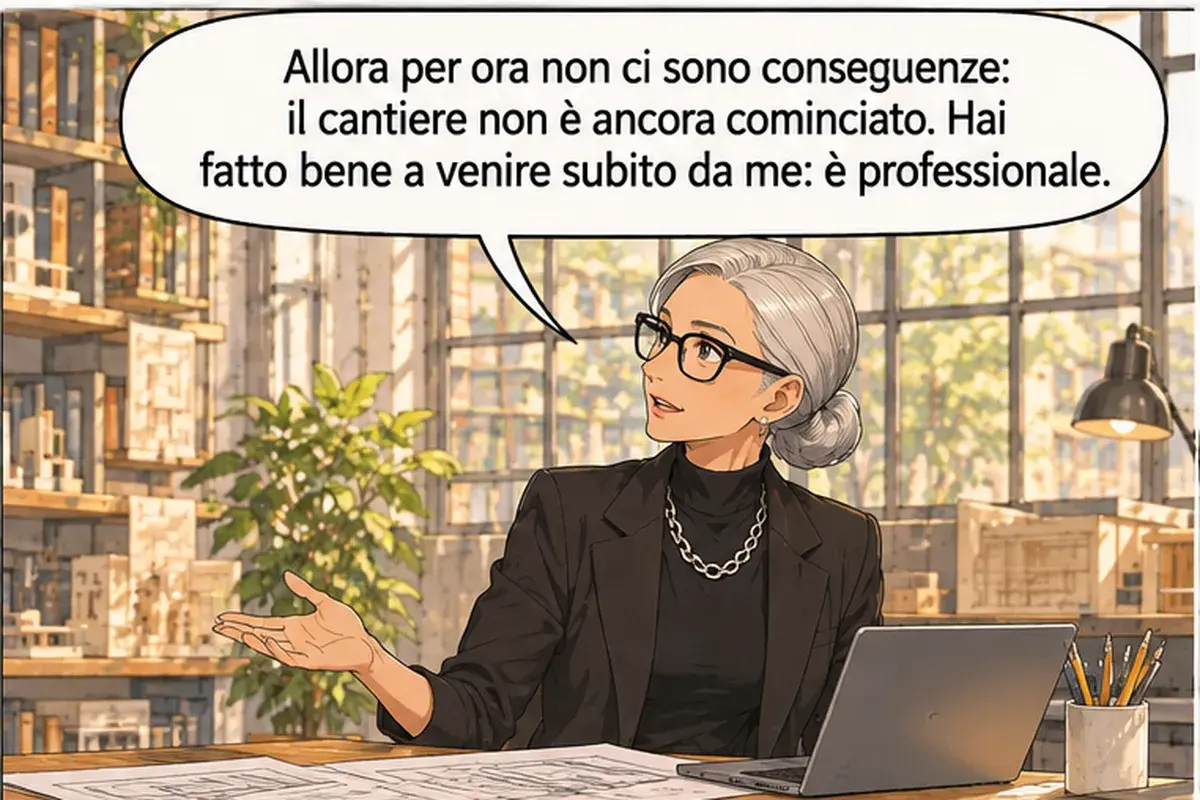
Allora per ora non ci sono conseguenze: il cantiere non è ancora cominciato. Hai fatto bene a venire subito da me: è professionale.
Then there are no consequences for now: the construction work hasn't started yet. You did the right thing coming to me right away: that's professional.
- Misha
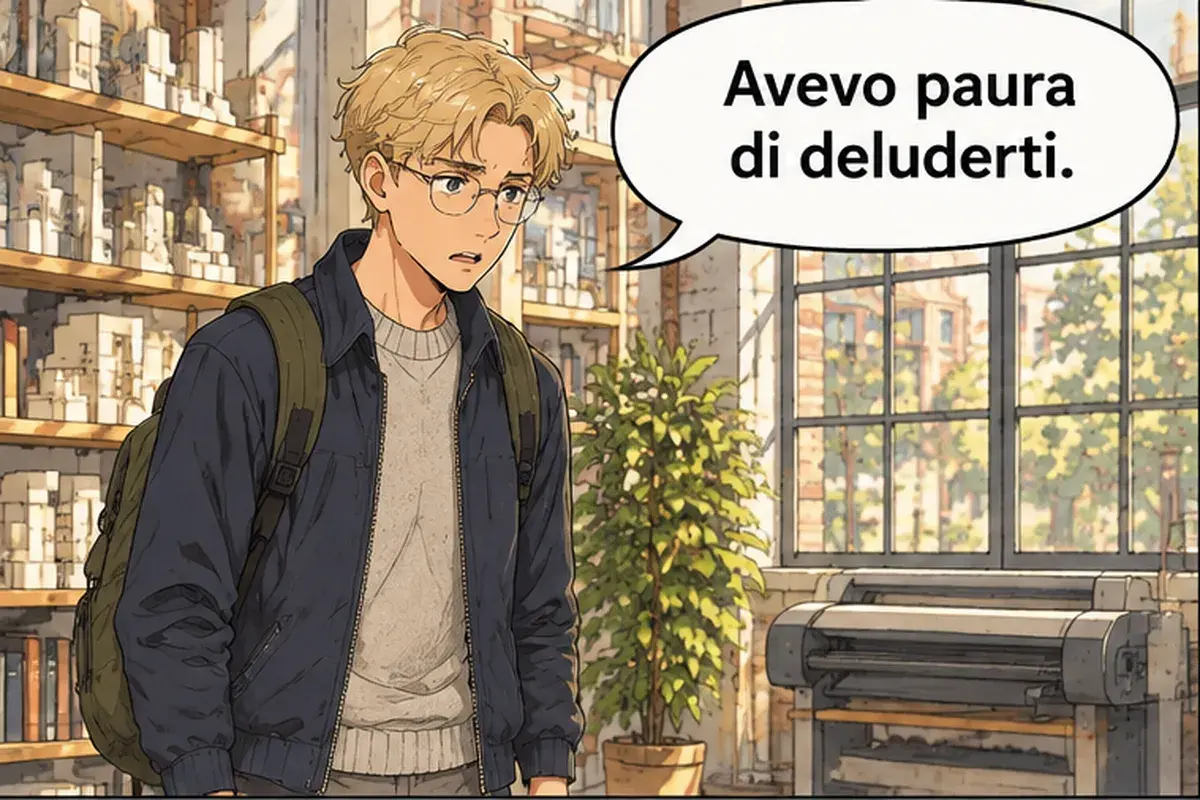
Avevo paura di deluderti.
I was afraid of disappointing you.
- Ludovica
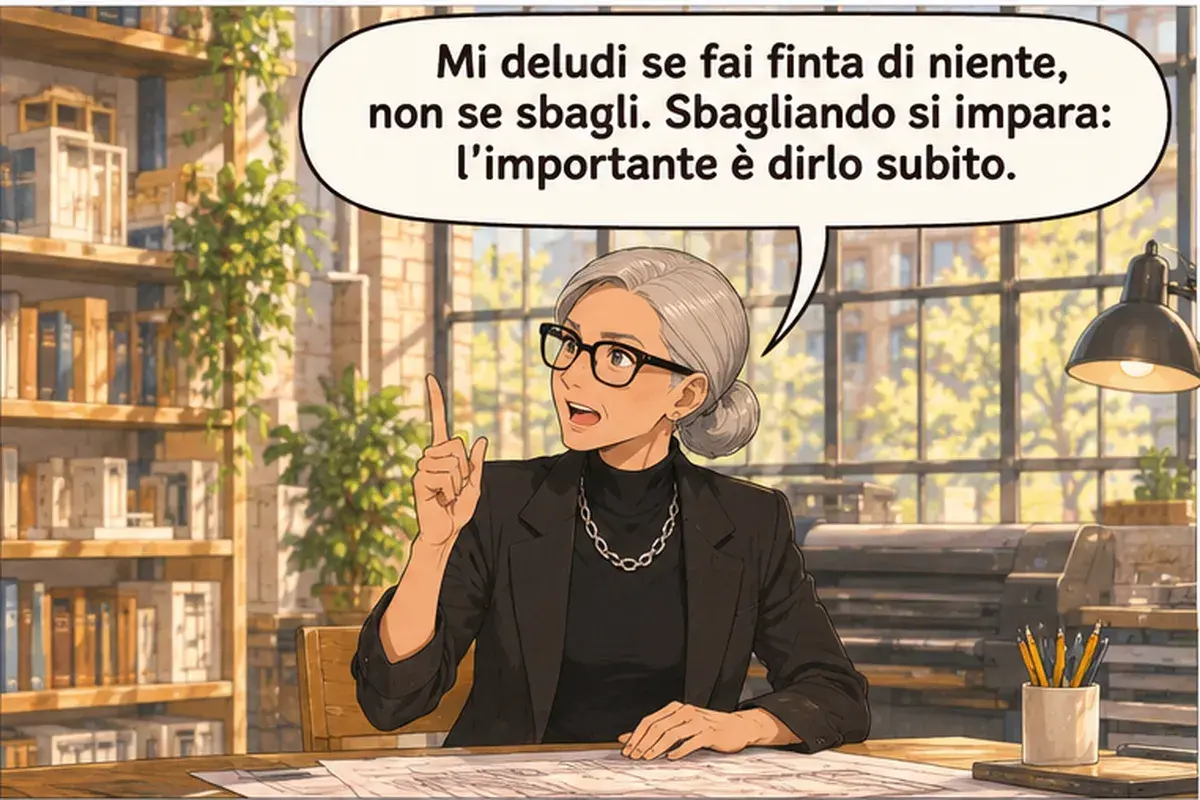
Mi deludi se fai finta di niente, non se sbagli. Sbagliando si impara: l'importante è dirlo subito.
You disappoint me if you pretend nothing happened, not if you make a mistake. You learn by making mistakes: the important thing is to say it right away.
- Misha
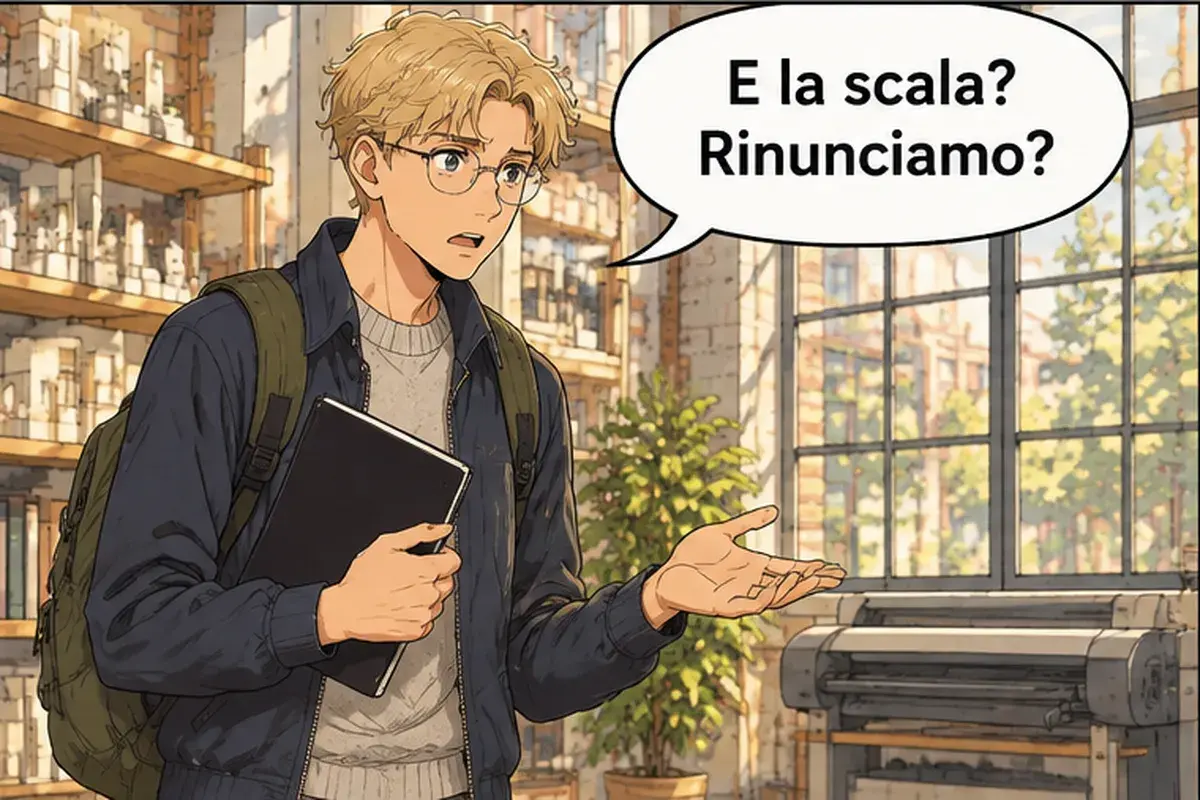
E la scala? Rinunciamo?
And the staircase? Do we give up on it?
- Ludovica
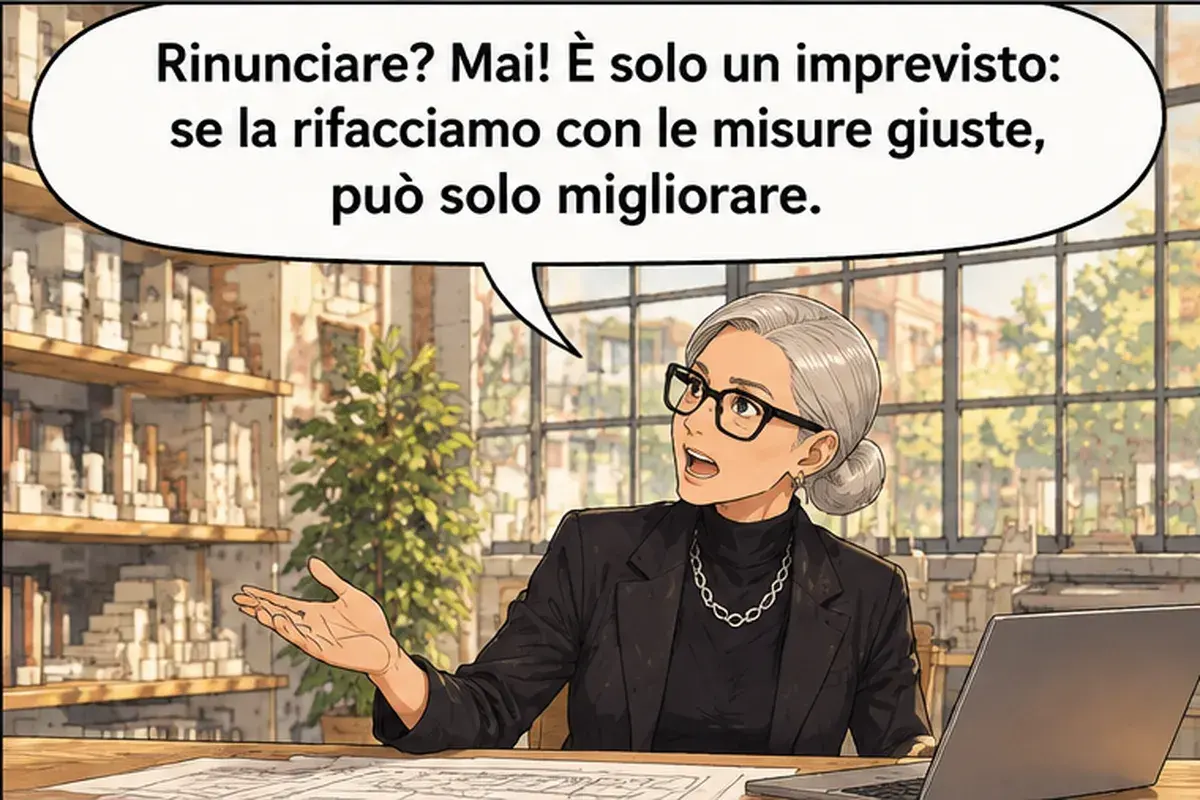
Rinunciare? Mai! È solo un imprevisto: se la rifacciamo con le misure giuste, può solo migliorare.
Give up? Never! It's just an unexpected problem: if we redo it with the right measurements, it can only get better.
- Misha
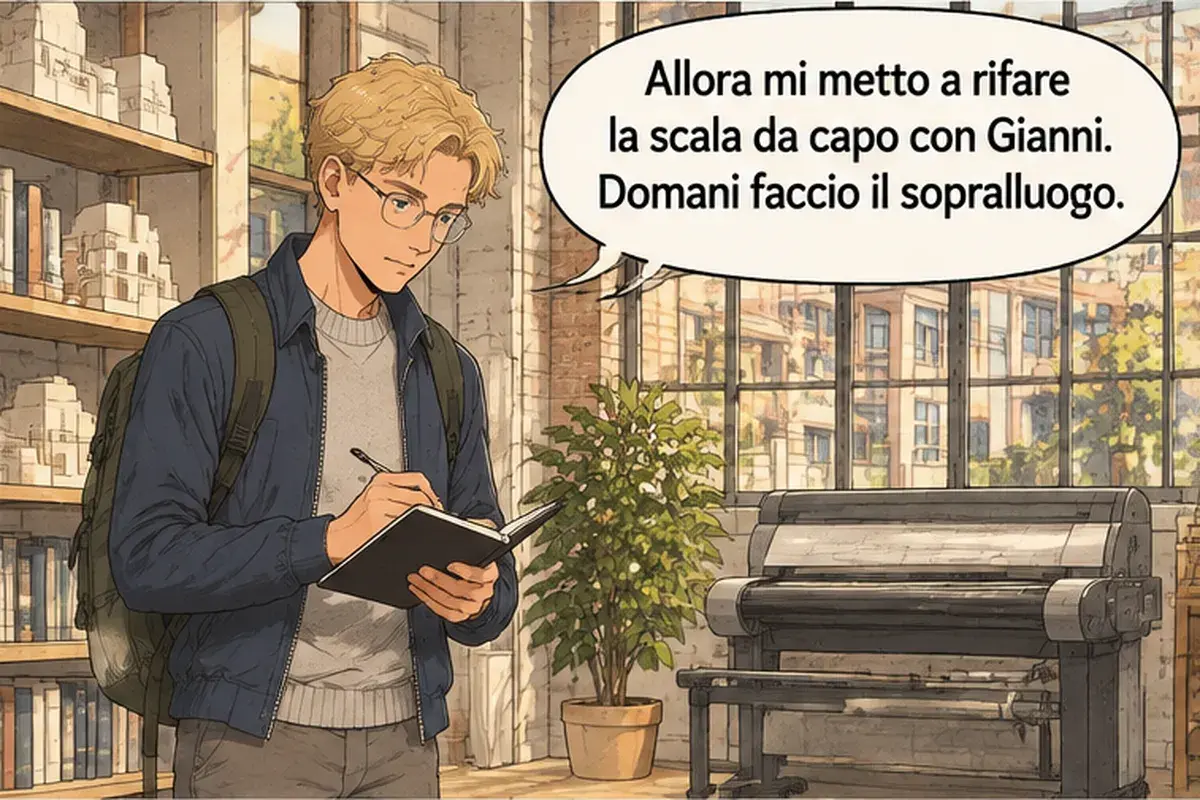
Allora mi metto a rifare la scala da capo con Gianni. Domani faccio il sopralluogo.
Then I'll get down to redoing the staircase from scratch with Gianni. I'm doing the site visit tomorrow.
- Ludovica
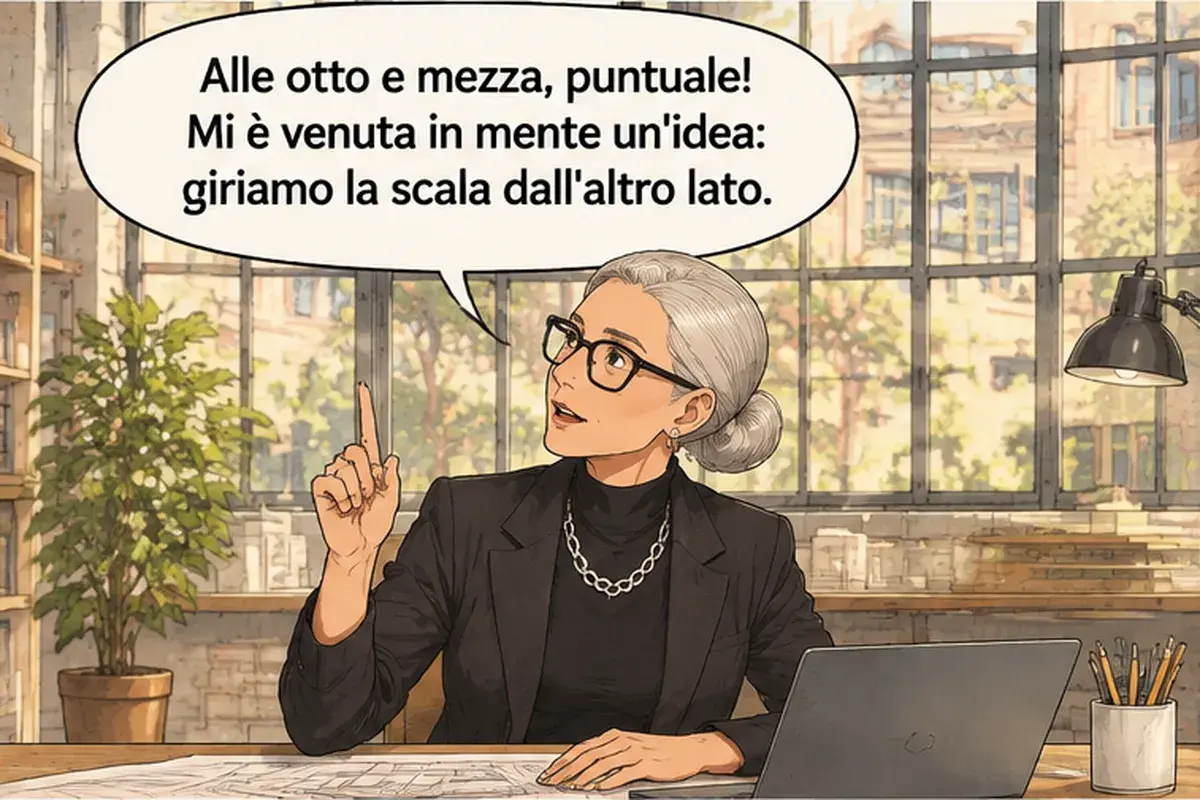
Alle otto e mezza, puntuale! Mi è venuta in mente un'idea: giriamo la scala dall'altro lato.
At eight thirty, on time! An idea came to mind: let's turn the staircase the other way.
- Misha
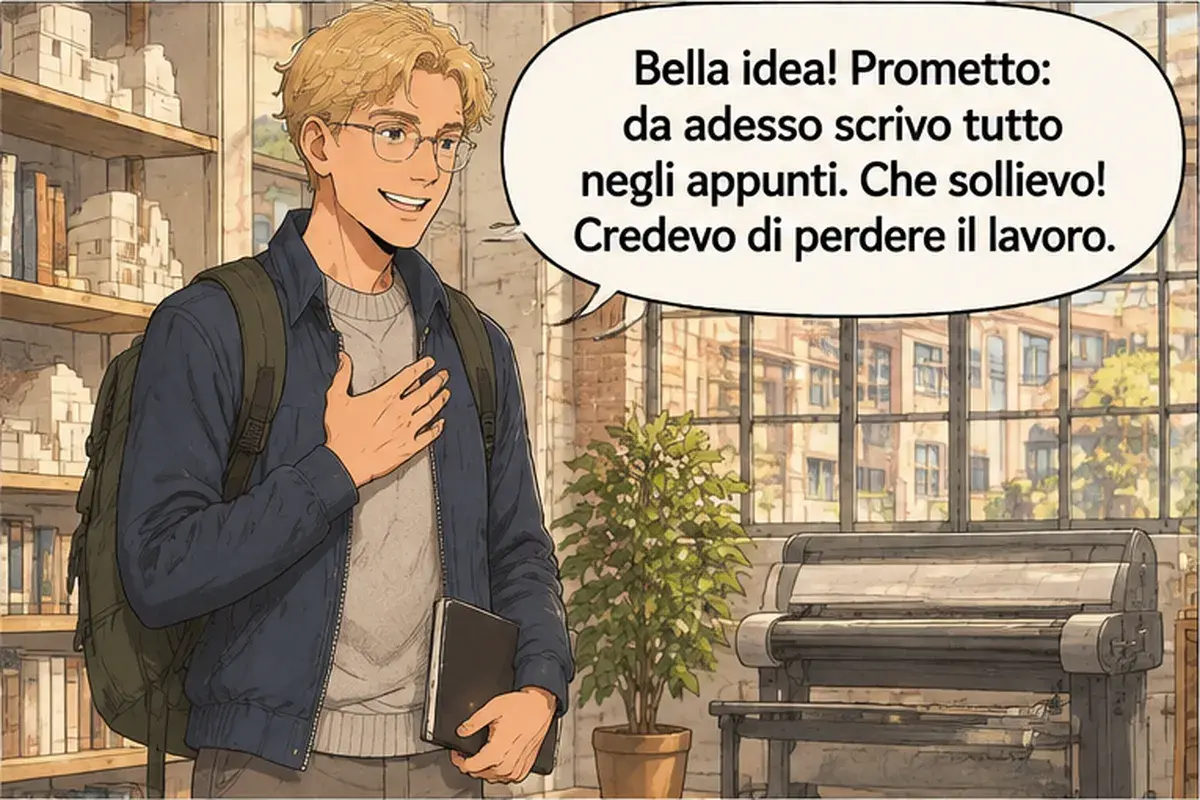
Bella idea! Prometto: da adesso scrivo tutto negli appunti. Che sollievo! Credevo di perdere il lavoro.
Great idea! I promise: from now on I'll write everything down in my notes. What a relief! I thought I was going to lose my job.
- Ludovica
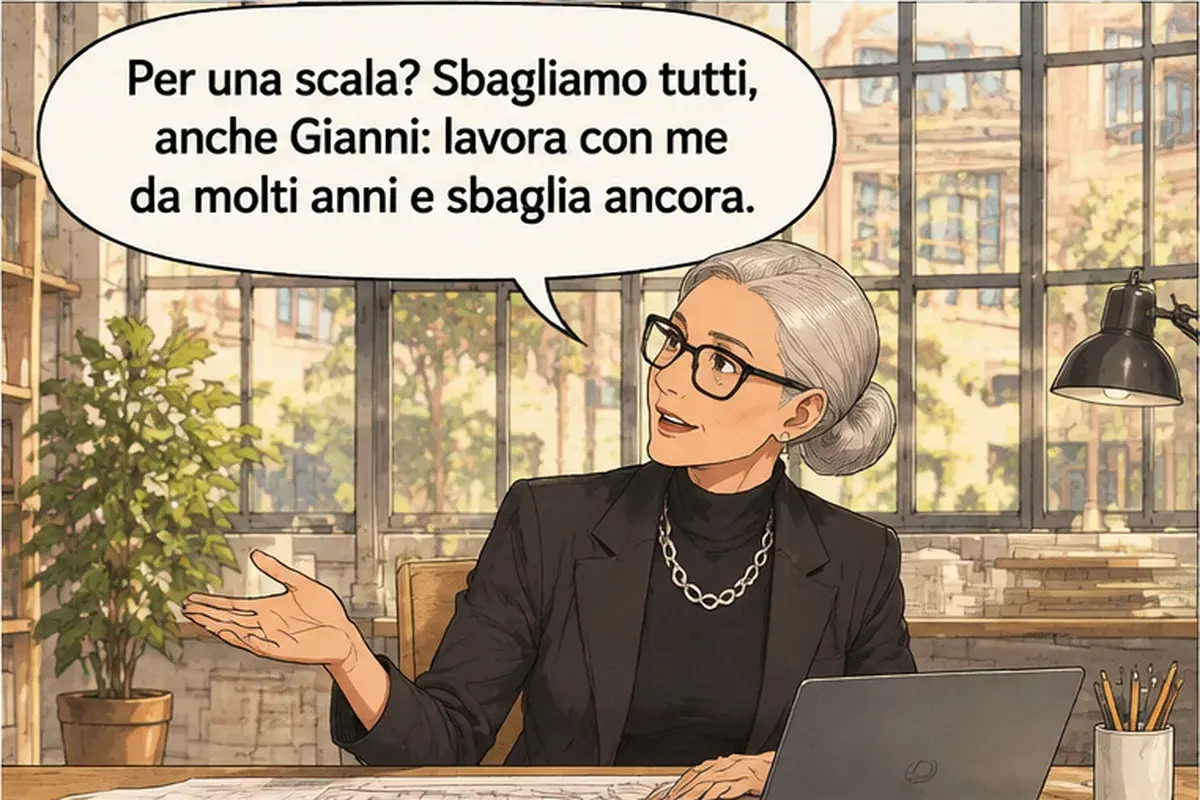
Per una scala? Sbagliamo tutti, anche Gianni: lavora con me da molti anni e sbaglia ancora.
Over a staircase? We all make mistakes, even Gianni: he's worked with me for many years and he still makes mistakes.
Grammar for this text
- Avevo dimenticato di controllare — avevo dimenticato is the trapassato prossimo (past perfect): "I had forgotten", before the rest happened. dimenticare di + infinitive: learn the preposition di together with the verb (block 3).
- Quando ho capito l'errore, avevi già mandato i disegni al cliente — two events: the later one (ho capito) is in the passato prossimo, the earlier one (avevi mandato) in the trapassato. i disegni — drawings (a noun that looks like a form of disegnare).
- Sbagliando si impara — a proverb. sbagliando is the -ando form of sbagliare (the gerundio): "by making mistakes". For now, just recognize such forms; the rule comes in B2. si impara — impersonal si: "you learn", "people learn" (unit 5).
- Mi è venuta in mente un'idea — with venire in mente the subject is what comes to mind (un'idea), and the person is mi (to me). The helper verb is essere, so venuta is feminine, like idea.
- Mi deludi se fai finta di niente — deludi is the tu form of deludere (to disappoint); in deluderti the infinitive and ti are written as one word. fare finta di niente — to pretend nothing happened.
- se la rifacciamo — here la means "it" (the staircase), not the article; rifacciamo is the noi form of rifare (to redo).
- Credevo di perdere il lavoro — credevo is the imperfetto of credere: "I thought"; credere di + infinitive when both verbs have the same subject.
Words and grammar of the unit: Admitting a mistake at work.
Learn the words from the texts with flashcards
In the app, you can tap any word in a text to see its translation, forms and examples, and new words stick with flashcards. 15 minutes a day.
Start for freeEverything is open for free. No card needed to sign up.