

Italian dialogue with translation · B1 · 18 lines
Una relazione senza fiducia non funziona A relationship without trust doesn't work
Comic · 18 panels
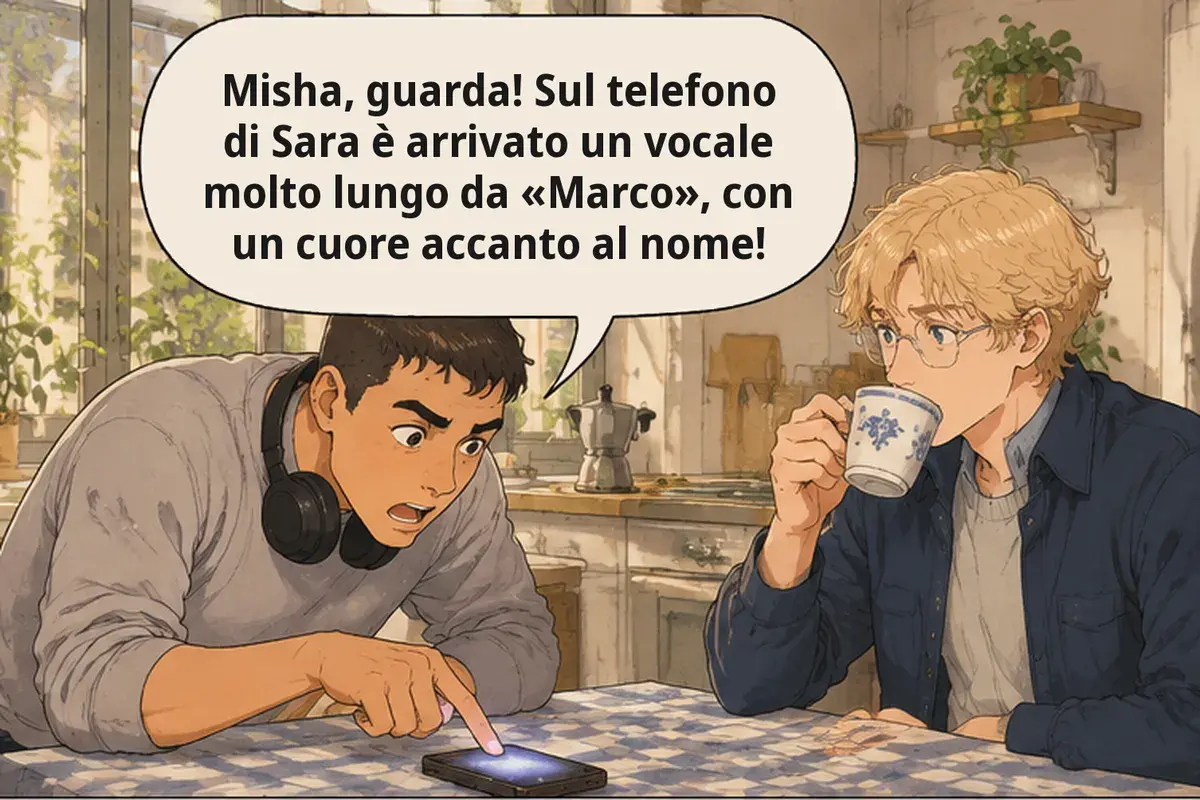
- Davide
Misha, guarda! Sul telefono di Sara è arrivato un vocale molto lungo da «Marco», con un cuore accanto al nome!
Misha, look! A very long voice message came in on Sara's phone from "Marco", with a heart next to the name!
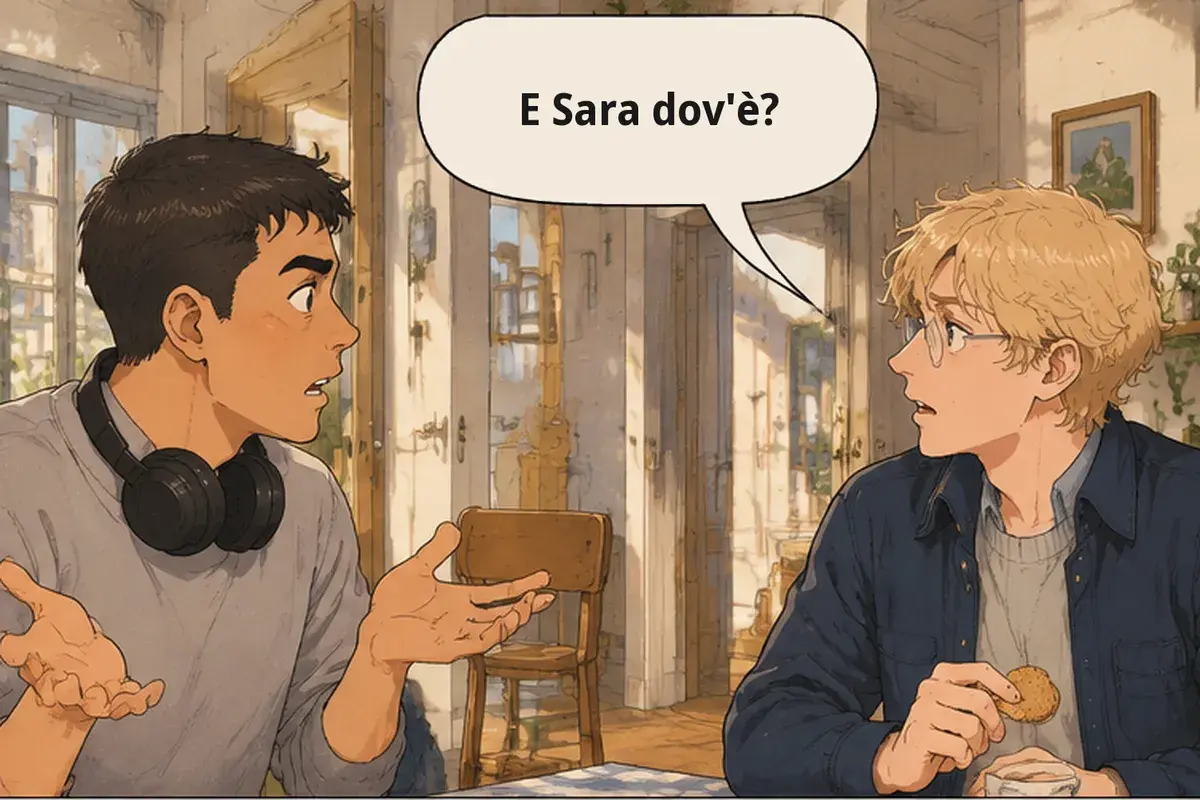
- Misha
E Sara dov'è?
And where's Sara?
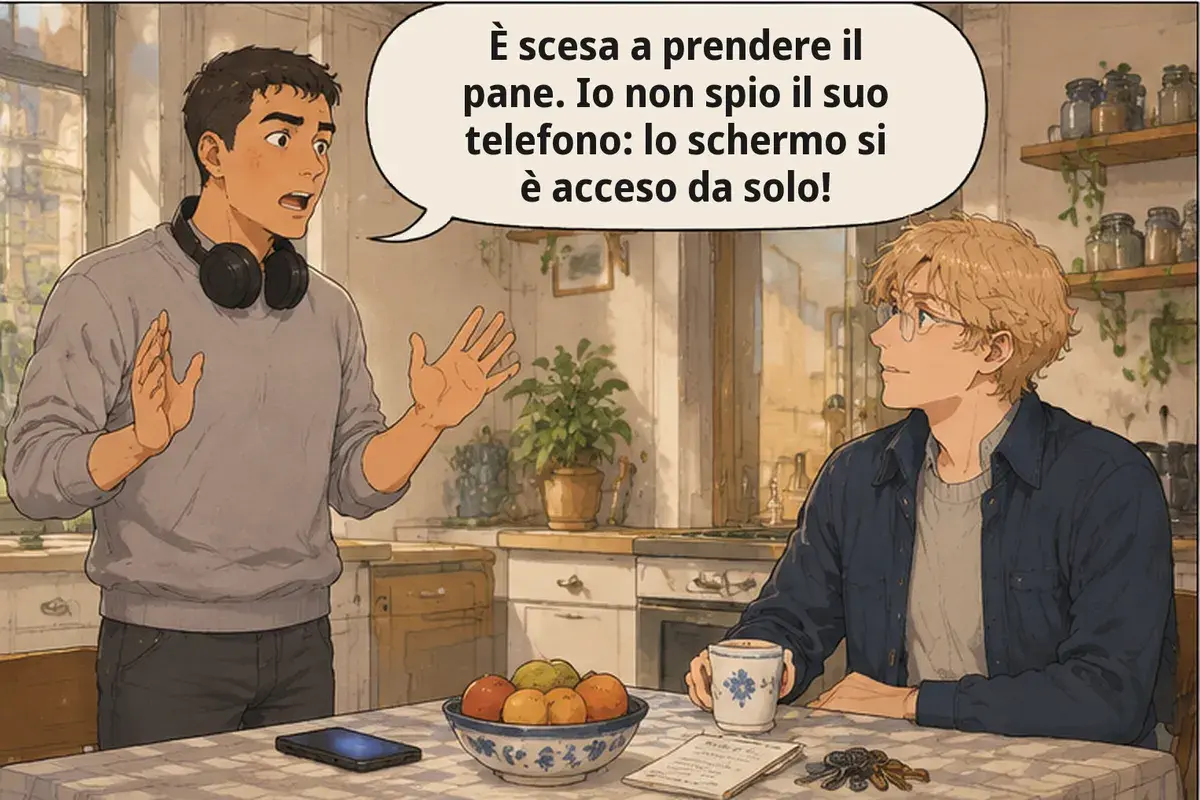
- Davide
È scesa a prendere il pane. Io non spio il suo telefono: lo schermo si è acceso da solo!
She went downstairs to get the bread. I'm not spying on her phone: the screen lit up by itself!
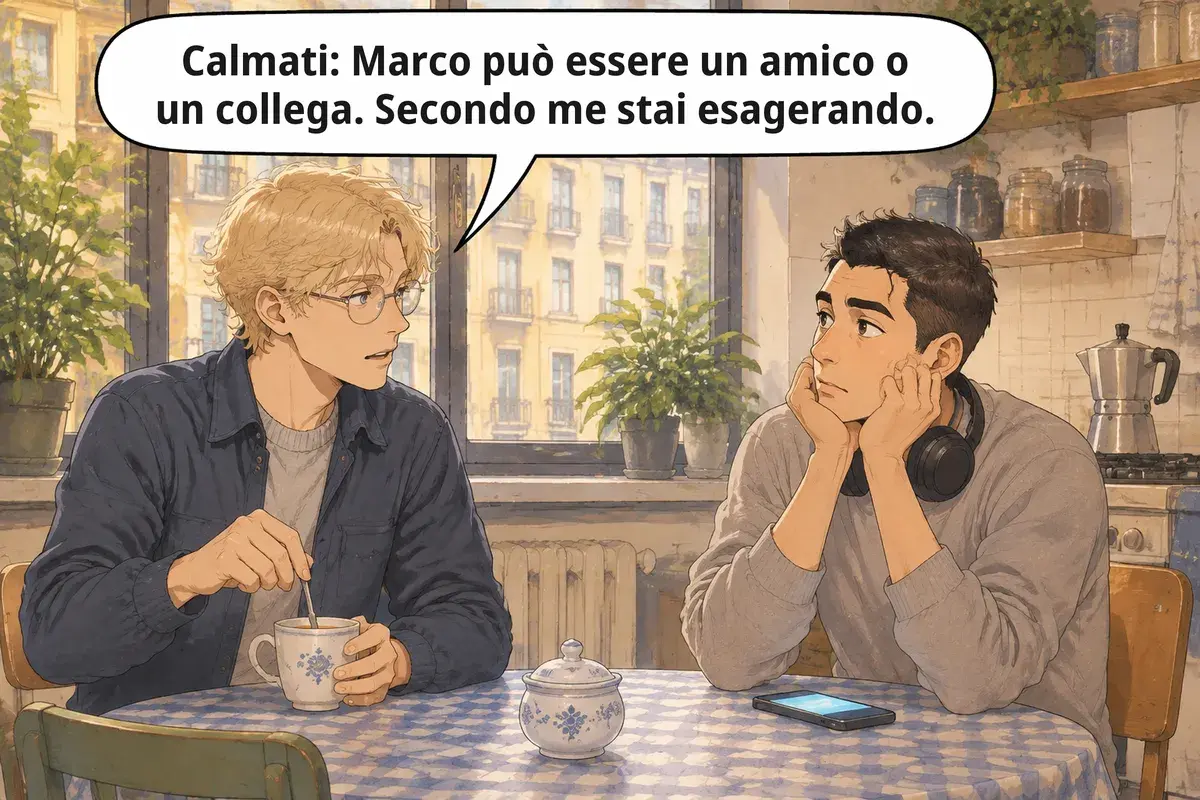
- Misha
Calmati: Marco può essere un amico o un collega. Secondo me stai esagerando.
Calm down: Marco could be a friend or a coworker. I think you're overdoing it.
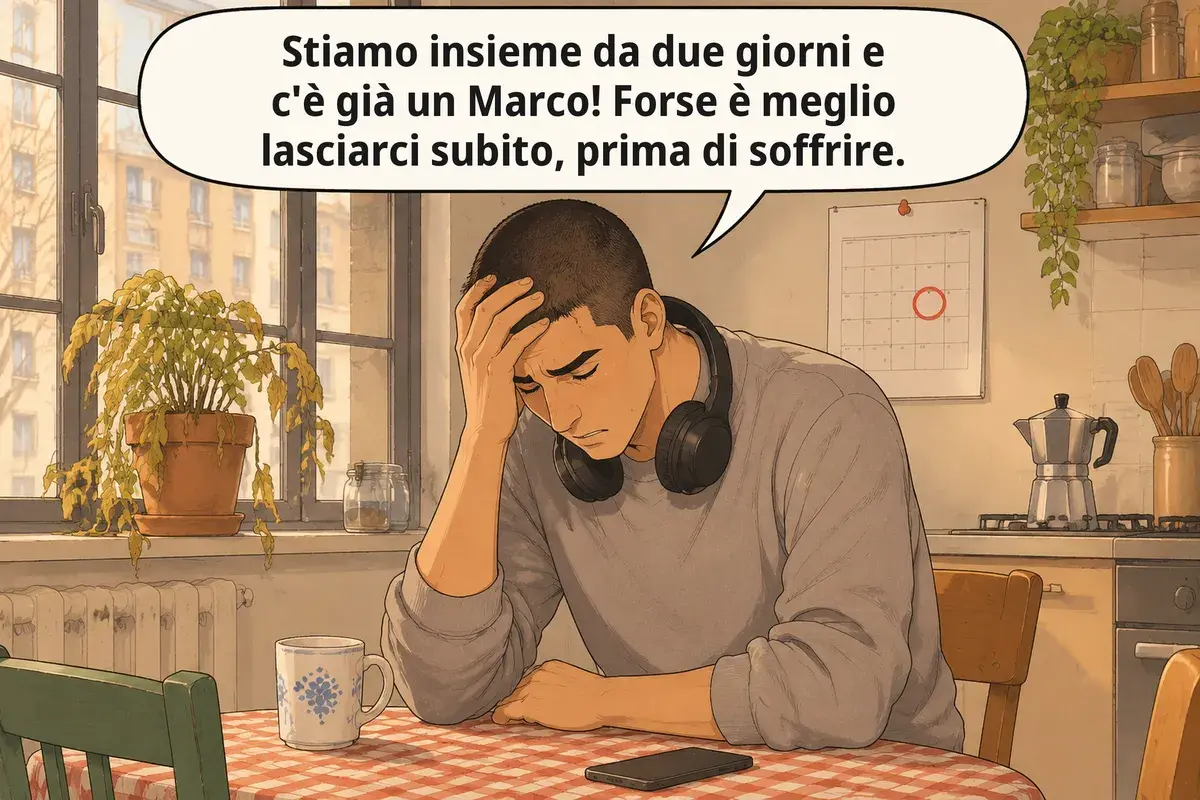
- Davide
Stiamo insieme da due giorni e c'è già un Marco! Forse è meglio lasciarci subito, prima di soffrire.
We've been together for two days and there's already a Marco! Maybe it's better to break up right away, before suffering.
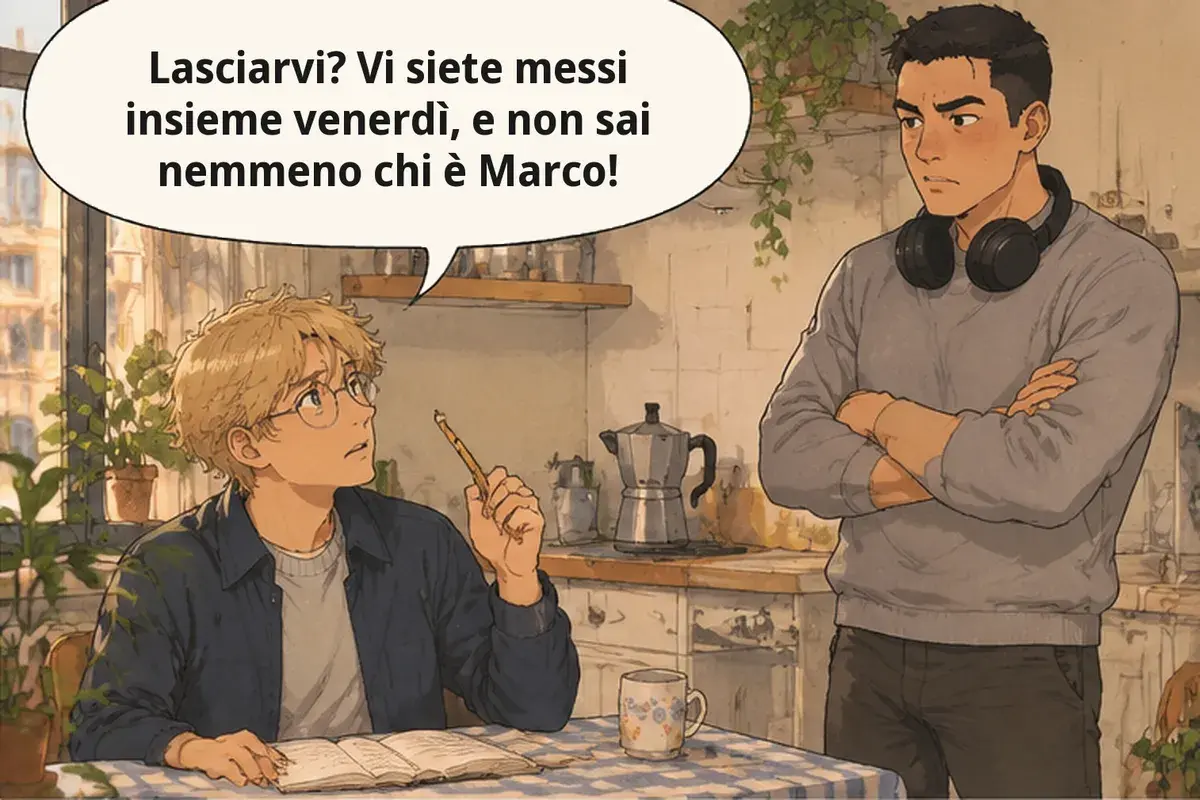
- Misha
Lasciarvi? Vi siete messi insieme venerdì, e non sai nemmeno chi è Marco!
Break up? You got together on Friday (to several people), and you don't even know who Marco is!
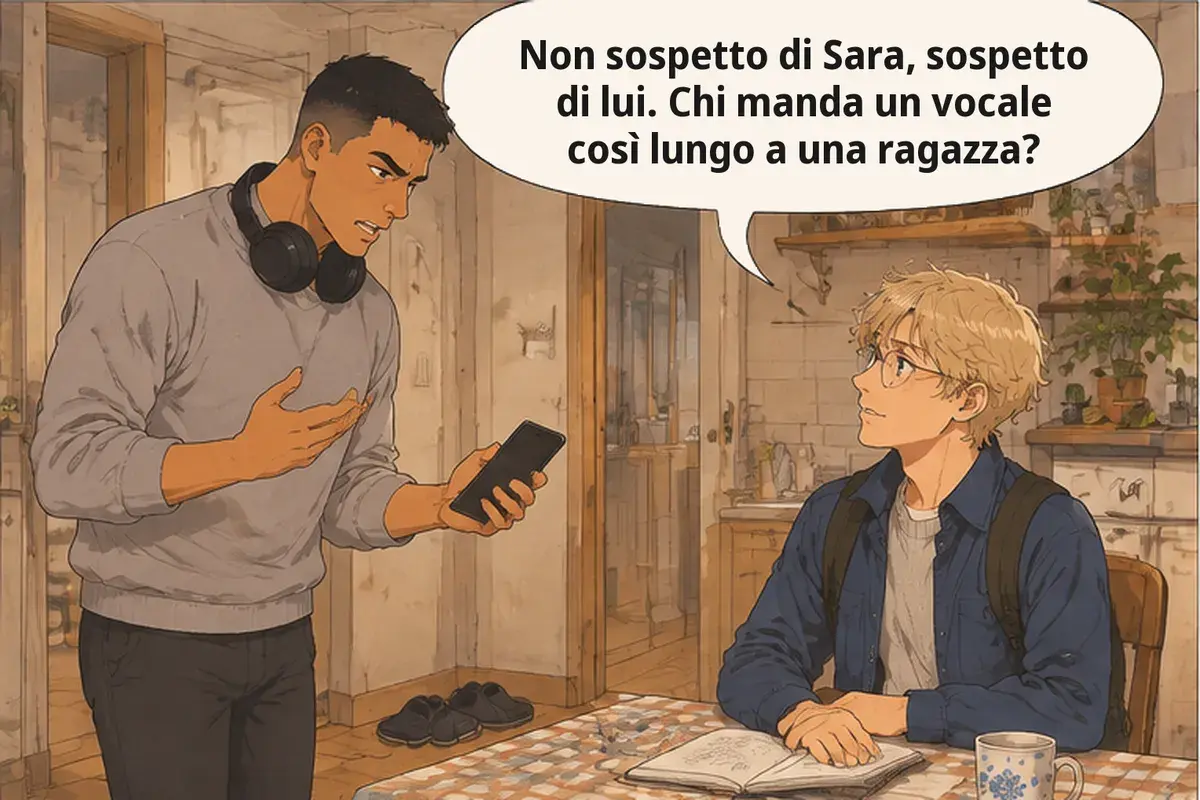
- Davide
Non sospetto di Sara, sospetto di lui. Chi manda un vocale così lungo a una ragazza?
I don't suspect Sara, I suspect him. Who sends a girl a voice message that long?
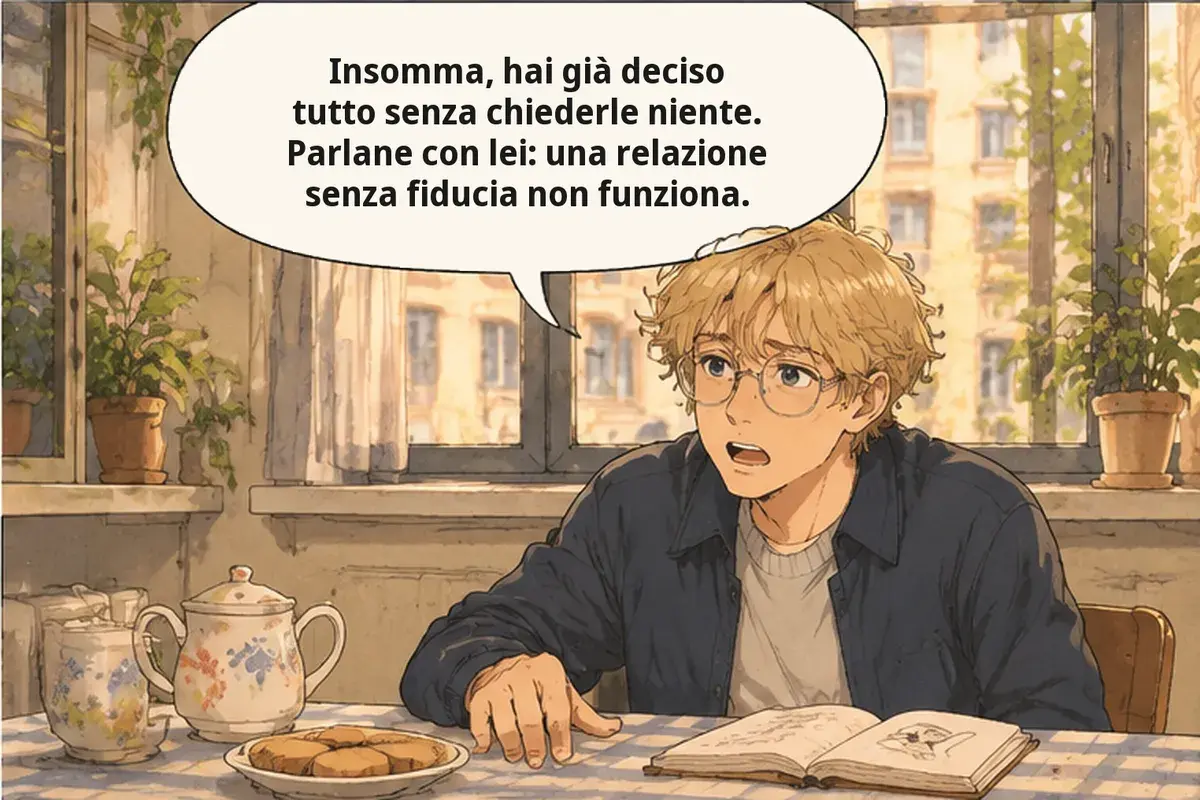
- Misha
Insomma, hai già deciso tutto senza chiederle niente. Parlane con lei: una relazione senza fiducia non funziona.
In short, you've already decided everything without asking her anything. Talk to her about it: a relationship without trust doesn't work.
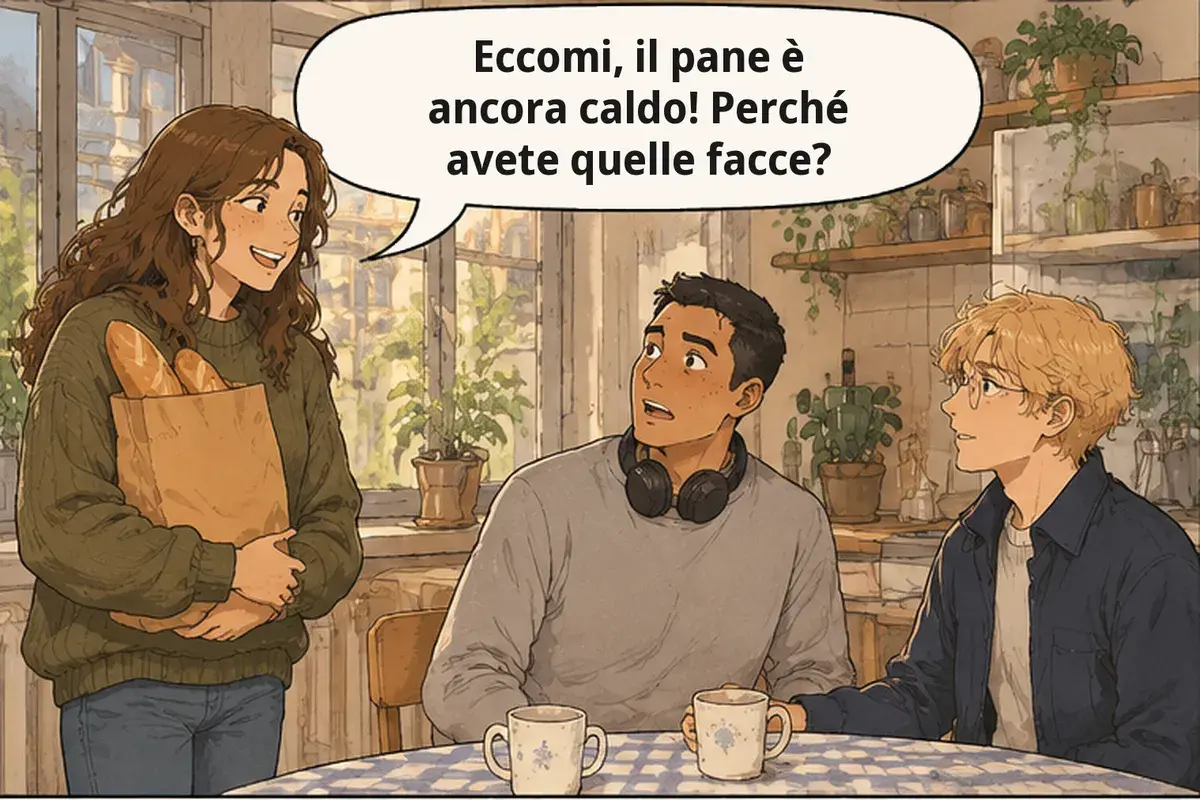
- Sara
Eccomi, il pane è ancora caldo! Perché avete quelle facce?
Here I am, the bread's still warm! Why do you have those looks on your faces? (to several people)
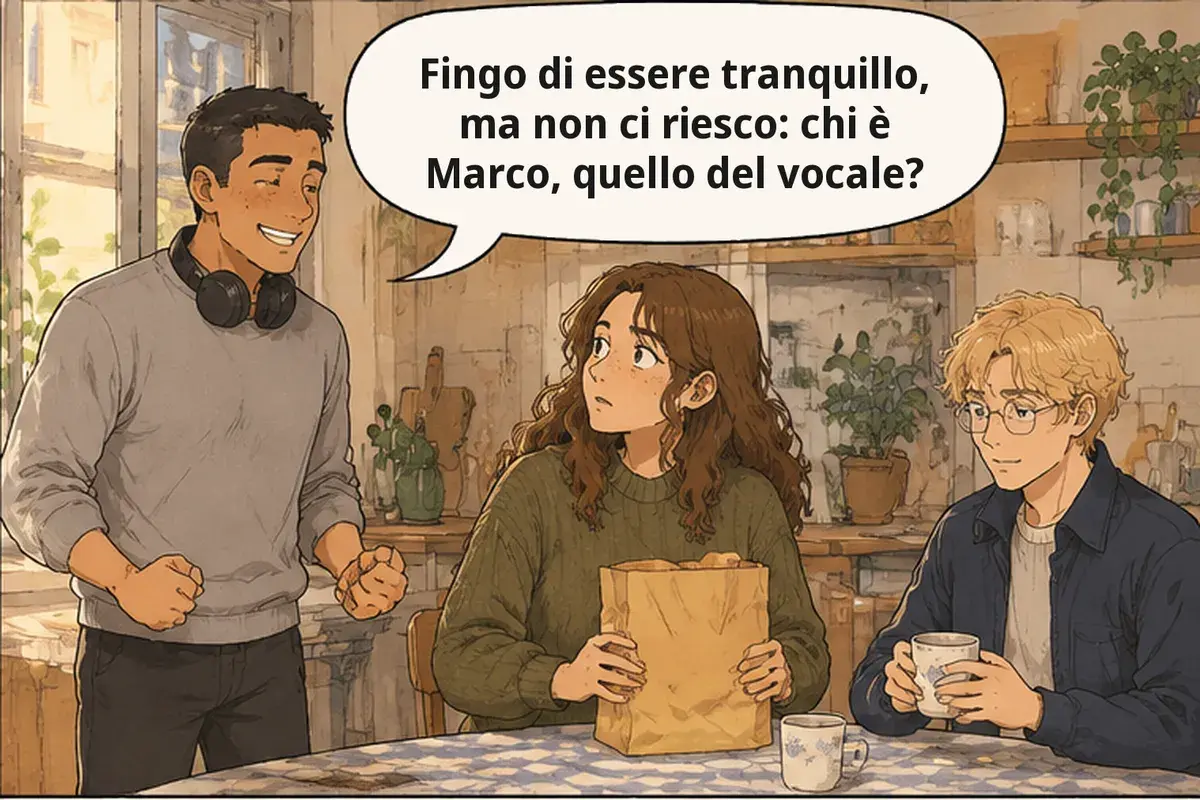
- Davide
Fingo di essere tranquillo, ma non ci riesco: chi è Marco, quello del vocale?
I'm pretending to be calm (man speaking), but I can't manage it: who is Marco, the one from the voice message?
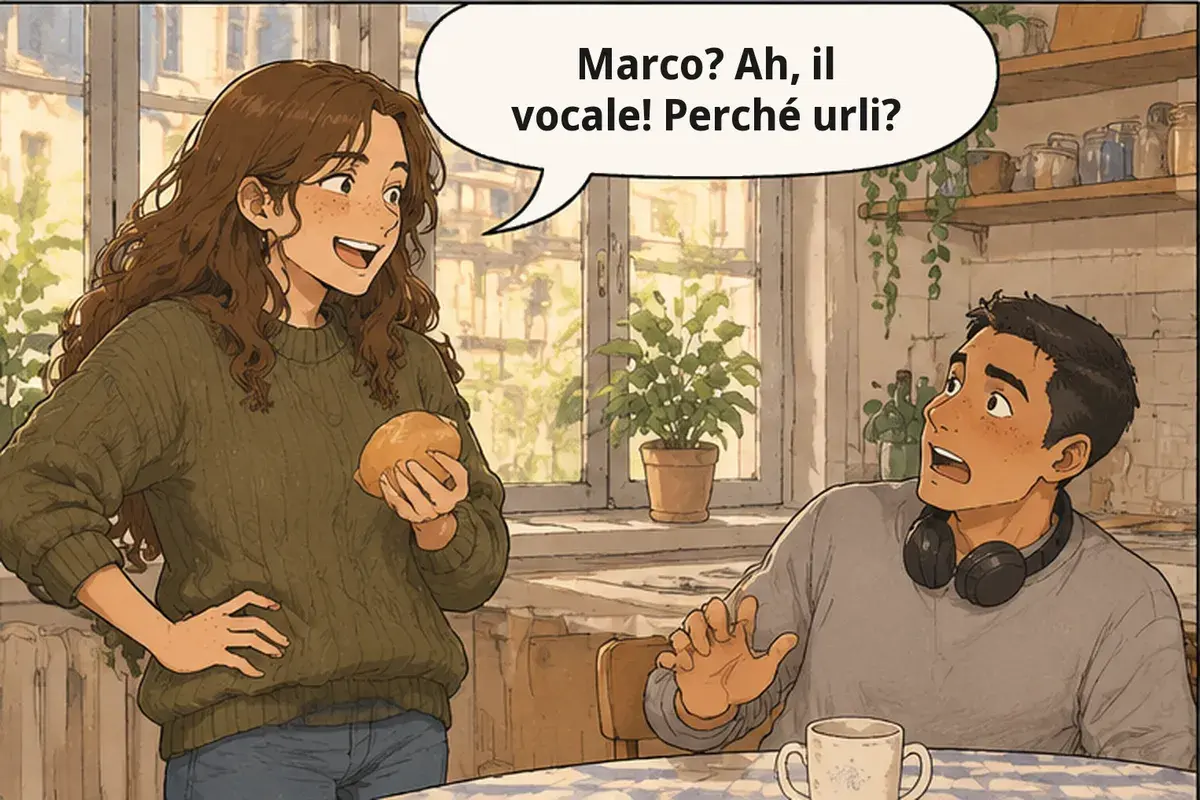
- Sara
Marco? Ah, il vocale! Perché urli?
Marco? Oh, the voice message! Why are you yelling?
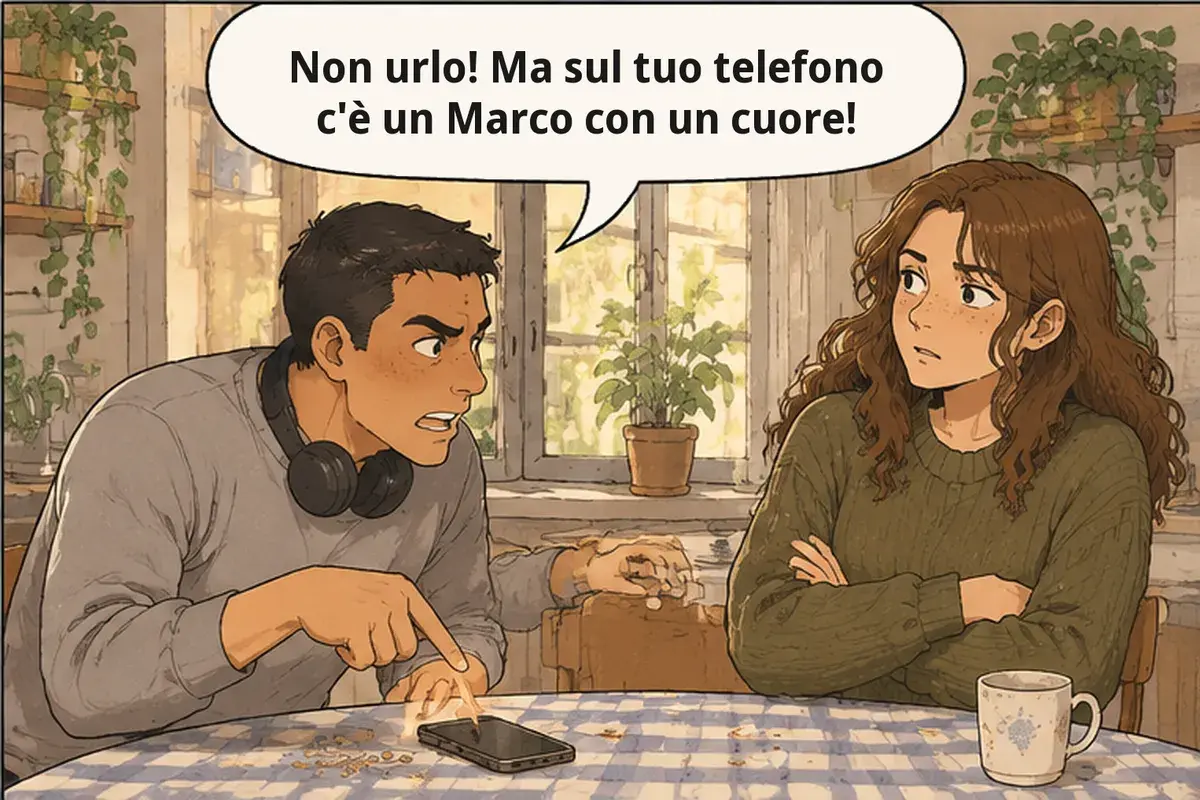
- Davide
Non urlo! Ma sul tuo telefono c'è un Marco con un cuore!
I'm not yelling! But there's a Marco with a heart on your phone!
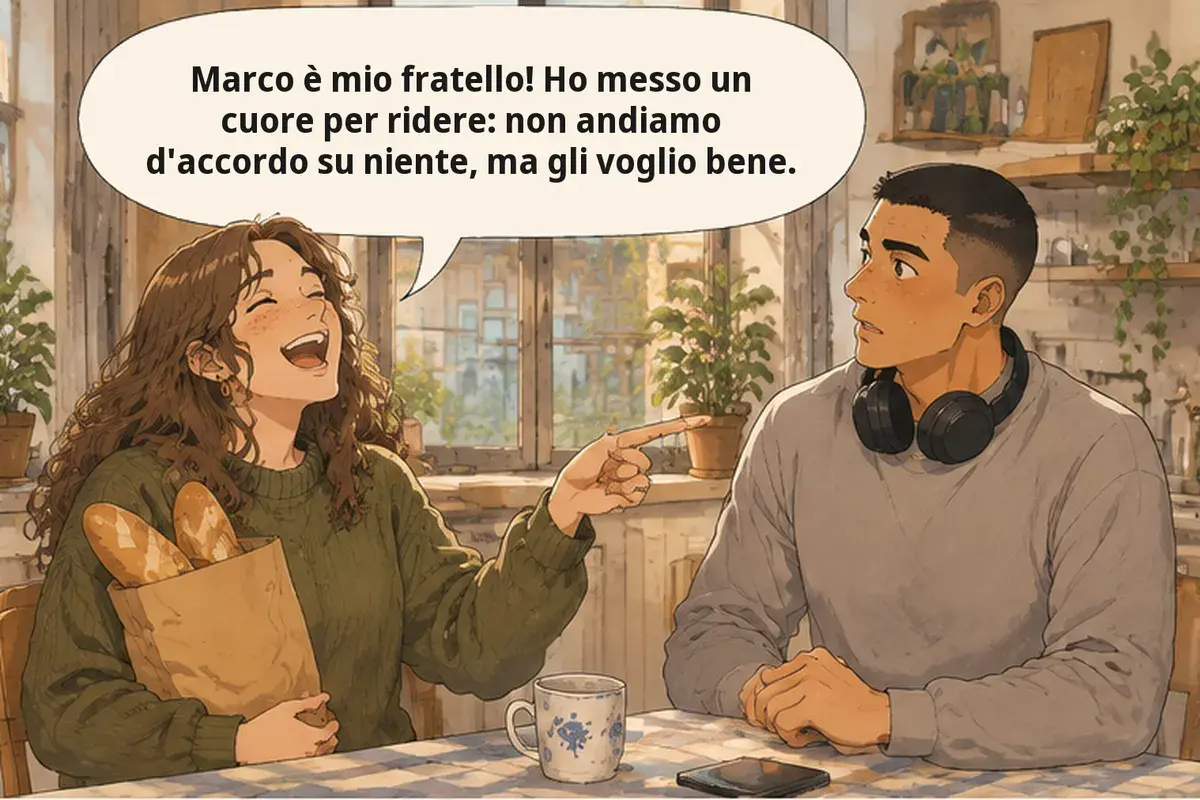
- Sara
Marco è mio fratello! Ho messo un cuore per ridere: non andiamo d'accordo su niente, ma gli voglio bene.
Marco is my brother! I put a heart as a joke: we don't get along about anything, but I love him.
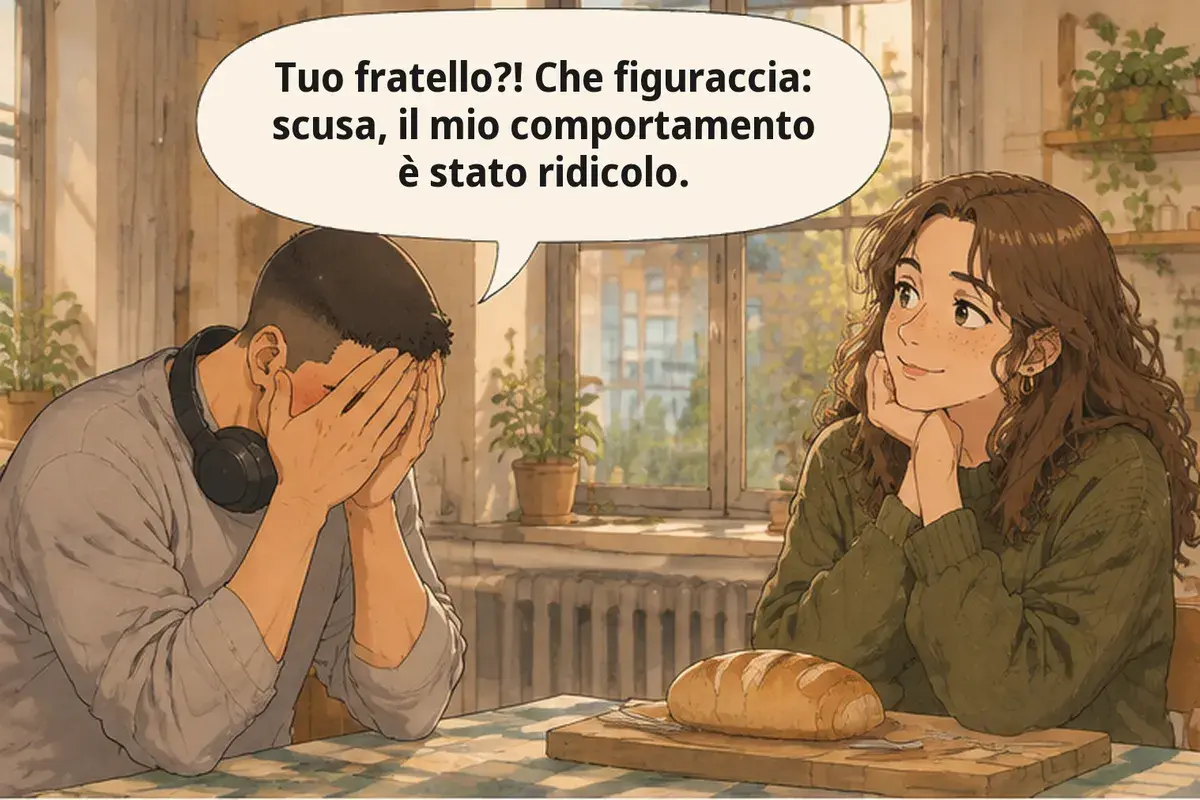
- Davide
Tuo fratello?! Che figuraccia: scusa, il mio comportamento è stato ridicolo.
Your brother?! How embarrassing: sorry, my behavior was ridiculous.
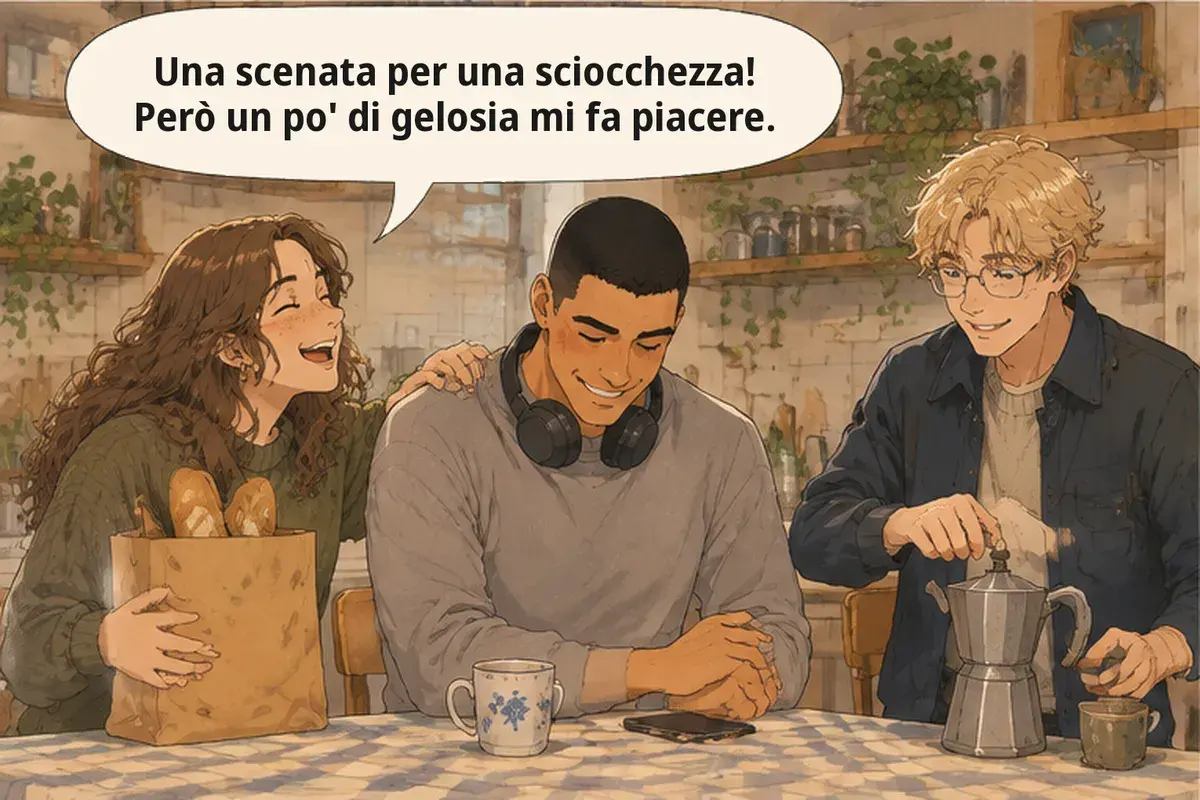
- Sara
Una scenata per una sciocchezza! Però un po' di gelosia mi fa piacere.
A scene over something silly! But a little jealousy makes me happy.
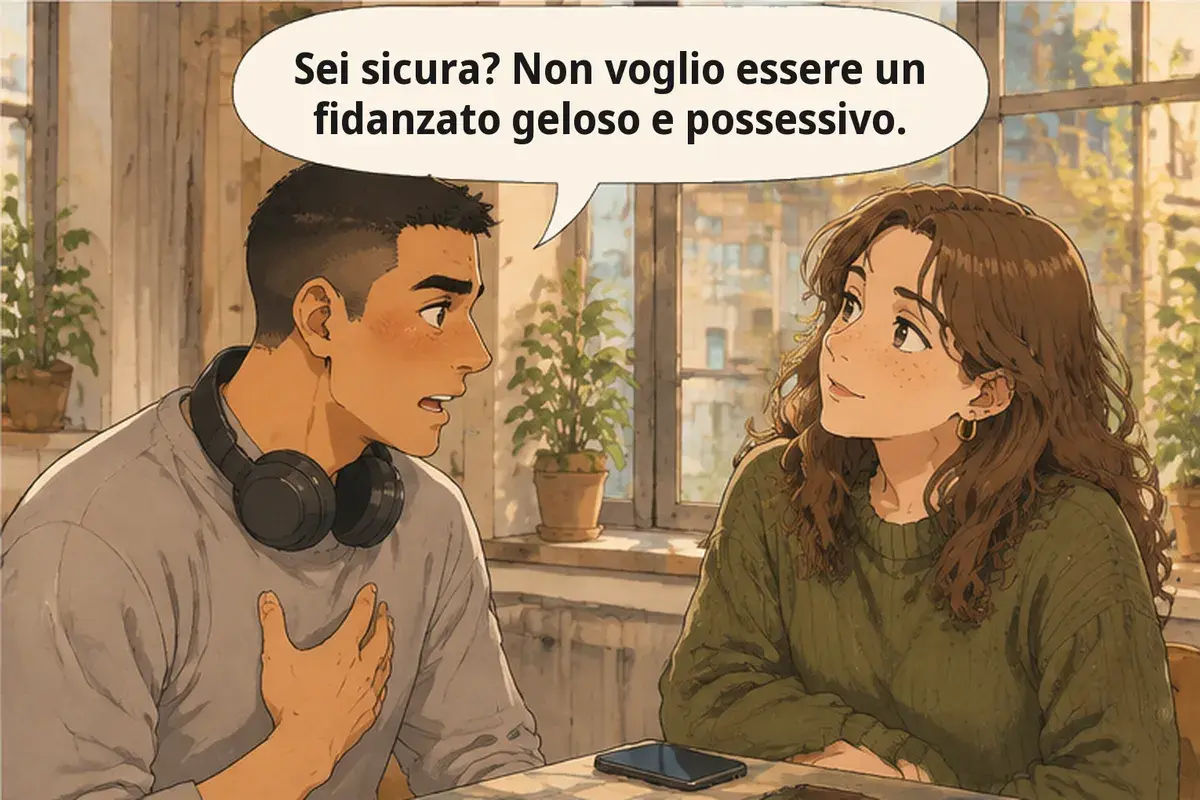
- Davide
Sei sicura? Non voglio essere un fidanzato geloso e possessivo.
Are you sure? (to a woman) I don't want to be a jealous, possessive boyfriend.

- Sara
Ti rassicuro: sono fedele. Voglio solo che ti fidi di me.
I reassure you: I'm faithful. I just want you to trust me.
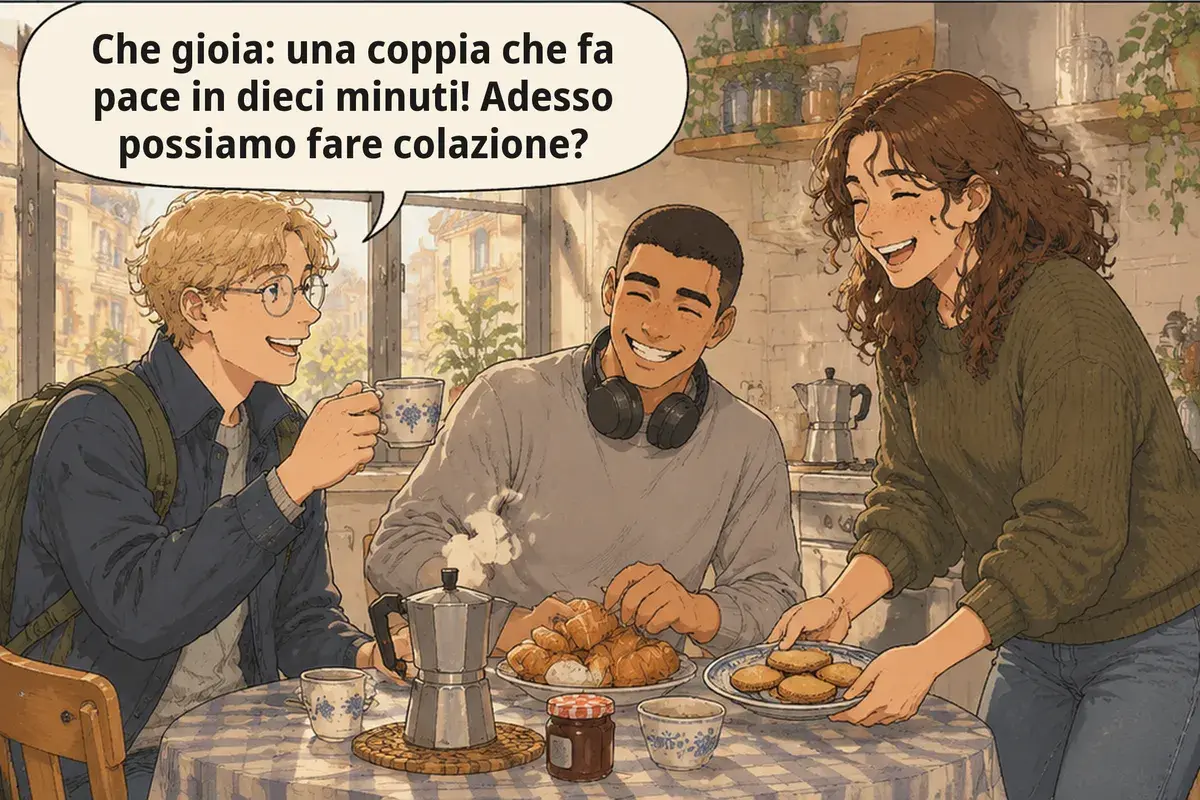
- Misha
Che gioia: una coppia che fa pace in dieci minuti! Adesso possiamo fare colazione?
What a joy: a couple that makes up in ten minutes! Now can we have breakfast?
Grammar for this text
- Forse è meglio lasciarci subito, prima di soffrire —
lasciarci=lasciarsi("to break up", about a couple) as an infinitive:lasciare+ci("each other"). Don't mix it up withlasciare(A2), which means "to leave" or "to dump".prima di+ infinitive means "before" + -ing. - Stiamo insieme da due giorni —
stare insiememeans "we're a couple" (the state). - Vi siete messi insieme venerdì —
mettersi insiememeans "got together" (the start).mettersitakesessere, and the past participle agrees:messi— the two of you. - Non sospetto di Sara, sospetto di lui —
sospettare di+ a person means "to suspect someone". - senza chiederle niente —
chiederle=chiedere+le("her"), unit 2. - Parlane con lei — the tu imperative with
ne("about it") joined to the end:parla+ne(units 10 and 14). - non ci riesco —
ci riescomeans "I manage it" (unit 19). - non andiamo d'accordo su niente —
andare d'accordomeans "to get along". - Eccomi —
ecco+mi: "here I am". - Voglio solo che ti fidi di me —
voglio che+ congiuntivo (unit 12). For-areverbs the tu form looks just like the present tense. - gli voglio bene —
glimeans "him" (to him);volere benemeans "to love" (unit 13).
Words and grammar of the unit: Talk about love and jealousy.
Learn the words from the texts with flashcards
In the app, you can tap any word in a text to see its translation, forms and examples, and new words stick with flashcards. 15 minutes a day.
Start for freeEverything is open for free. No card needed to sign up.